Gawain, King Arthur’s Nephew

In the Arthurian legends, Gawain is the young nephew of King Arthur who serves as one of his knights. Despite dying shortly after reaching adulthood in one of the earliest Arthurian accounts, he features quite prominently in many of the legends. He also appears extensively in Welsh tradition, providing us with plenty of information about him and the historical context in which he lived. Who was he? Where did his family come from? Where is Gawain’s final resting place? This article will examine the answers to those questions and others.
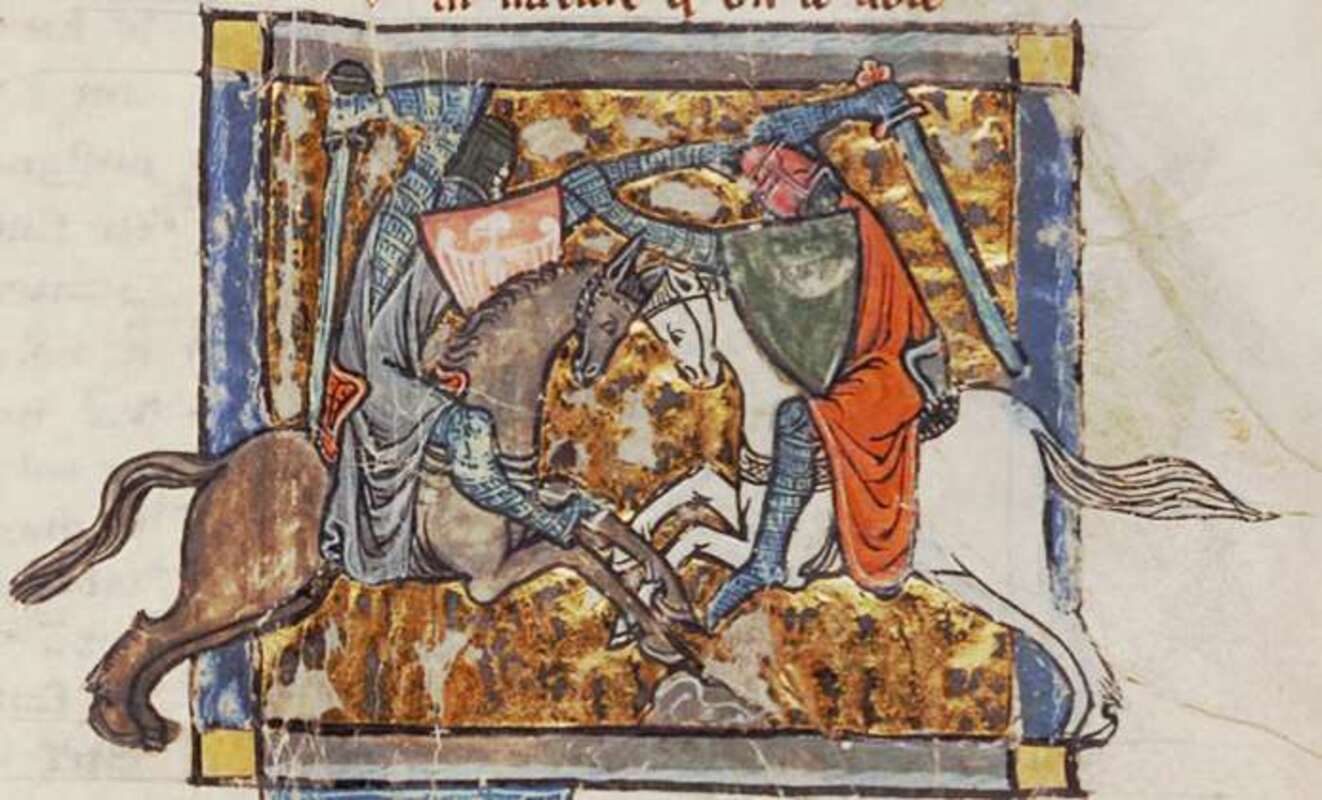
Who Was Gawain?
Gawain was King Arthur’s nephew and one of his knights. He was completely loyal to Arthur, literally fighting for him until the death. In fact, he was perhaps Arthur’s most loyal knight. Being the king’s nephew, he is frequently depicted as a young man in the Arthurian legends.
Partly due to his youth, he is depicted as innocent and even holy. Furthermore, he was said to have been educated by the pope. Therefore, he was viewed as morally and religious upright, as well as an excellent and loyal warrior.
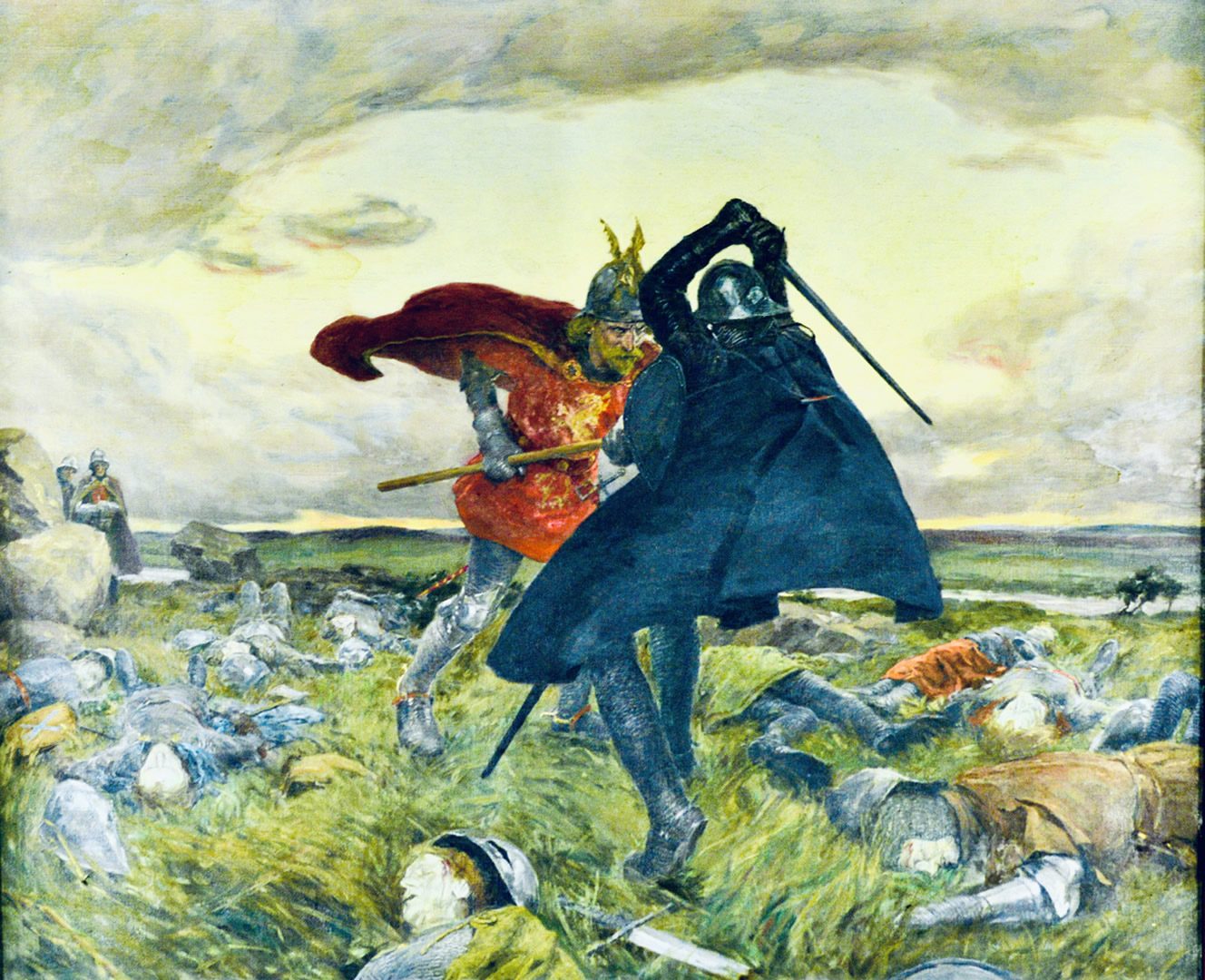
Gawain is said to have accompanied his uncle on many adventures. In the earliest account of his life, he is shown to have died during Arthur’s civil war against Mordred, one of Arthur’s other nephews. He did not die at the Battle of Camlann, but he died in the initial clash between Arthur and Mordred’s forces as the former attempted to return to Britain.
In some later versions of the Arthurian legends, Gawain is not depicted as being so young in comparison to Arthur. Rather, he is portrayed as having grown children before his death.
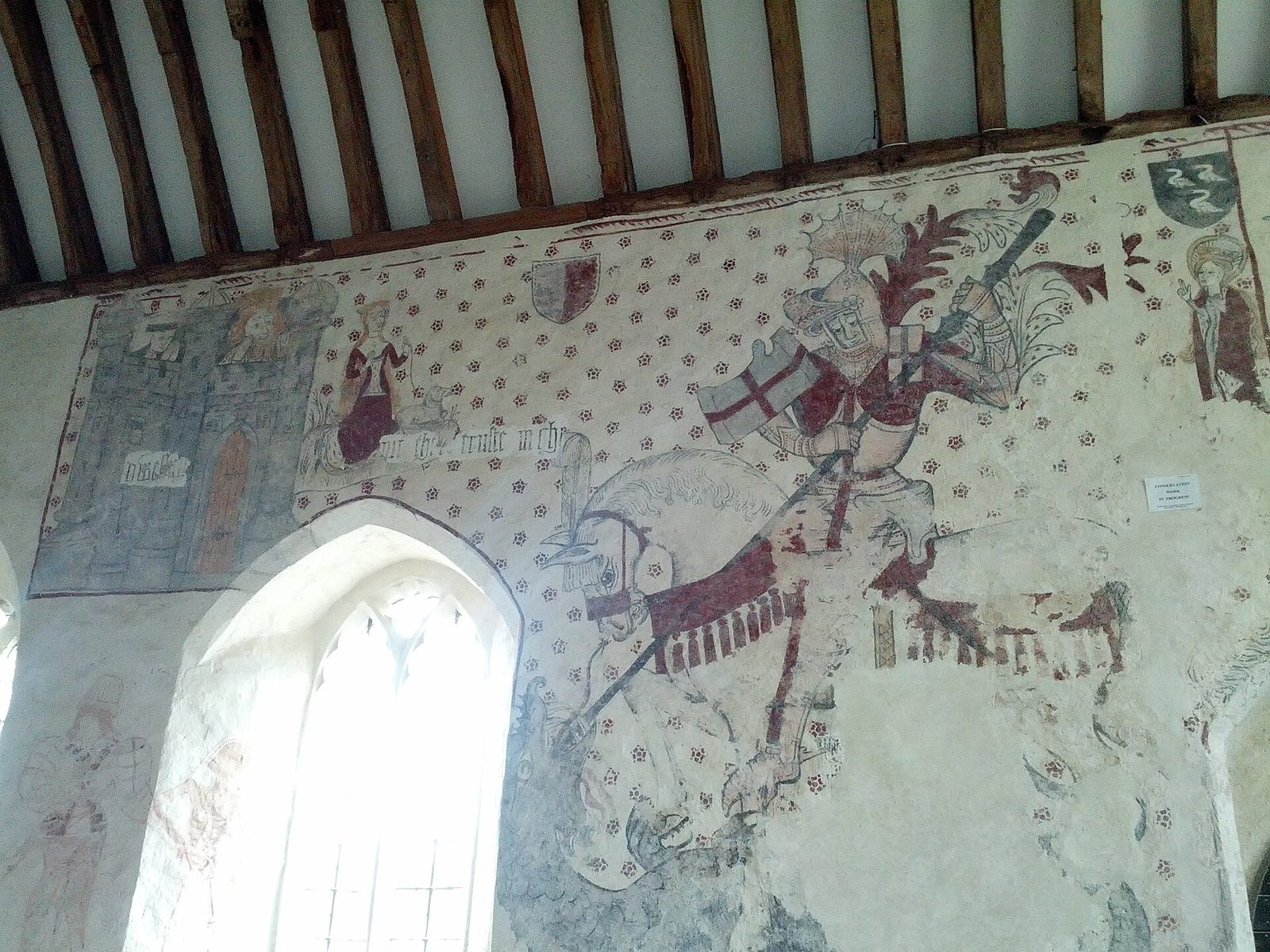
Without doubt, the most famous story involving Gawain is the story of Gawain and the Green Knight. This tells the tale of Gawain’s conflict with the magical Green Knight whose head he cut off in Arthur’s court, but who challenged Gawain to receive the same blow to the neck a year and a day later.
Name
Gawain’s name appears in many, many different forms across the various medieval sources. This is so even without taking into consideration the Welsh sources. In those texts, his name usually appears:
Gwalchmai
Gwalchmei
Gualchmei
Gwall
In the non-Welsh sources, there are many more variations, most of which are quite far removed from the original Welsh spelling. The closest would appear to be the attested Breton spelling, ‘Walcmoei’. It has been suggested that this was the origin of the spelling used by continental sources. These sources, and insular Latin texts, use the following spellings:
Galvaginus
Gualguanus
Gualgwinus
Walwanus
Walwen
Gauvains
Gawain
Gavan
Galvano
These are just some of the many, many variations of this name that appear in the sources.
Family
What do we know about the family of Gawain? This is actually one of the best attested families in the Arthurian legends, both from the perspective of the Welsh sources and the non-Welsh sources. We know who his father, mother, and brothers were, and many of them are attested in non-Arthurian sources and were likely historical.
Father
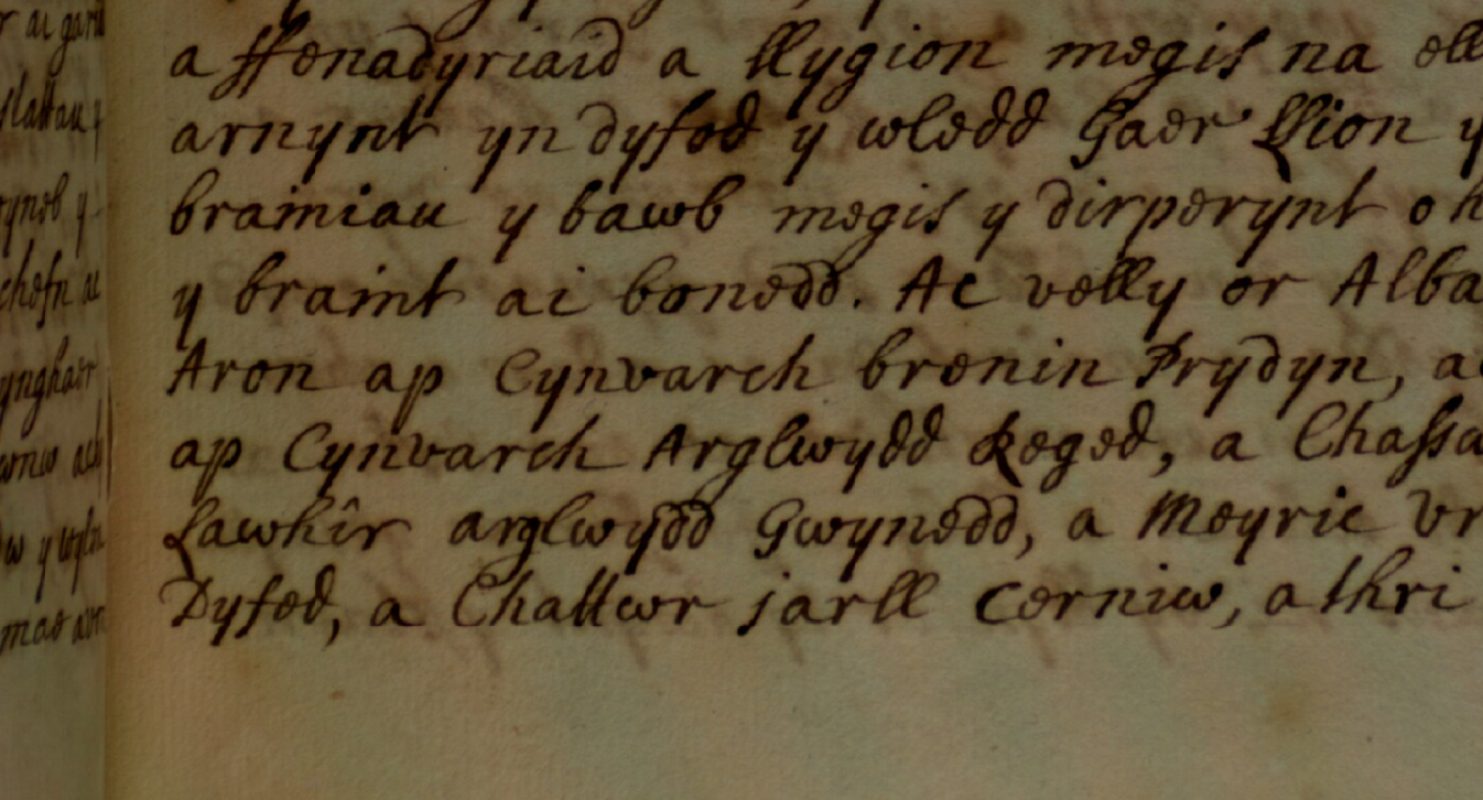
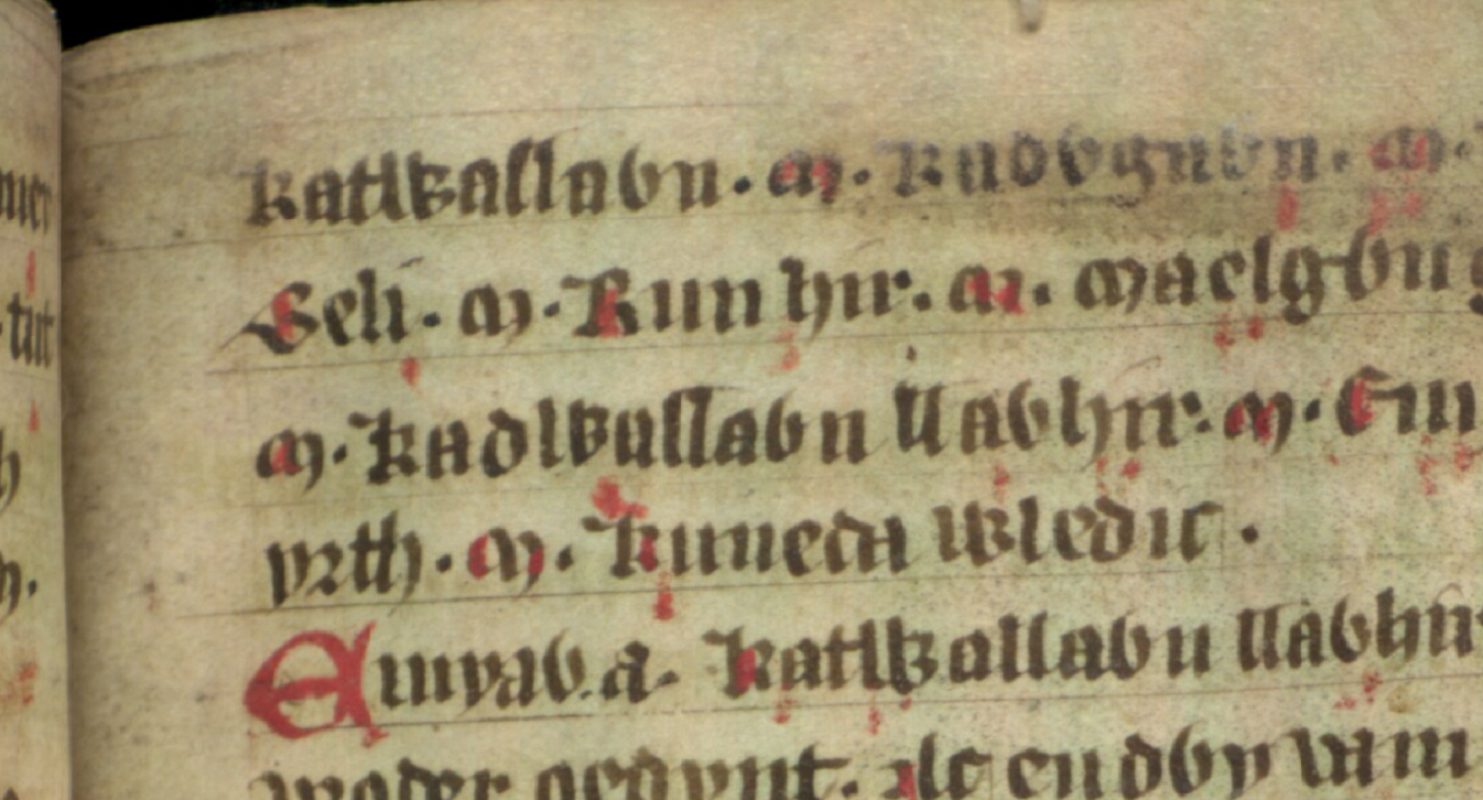
Gawain’s father was Lot of Lothian. This is stated clearly in Geoffrey of Monmouth’s Historia Regum Britanniae, written in c. 1137. In Welsh sources, Lot is known as Llew ap Cynfarch. He was the brother of Arawn and Urien, these therefore being the uncles of Gawain.
Based on this information, it is evident that Lot can be identified as a figure who appears in non-Arthurian texts as Lleuddun, or Leudonus, king of Leudonia. Since Leudonia is Lothian, then it is evident that its king, Leudonus, should be identified as Lot or Llew, the king of Lothian in the Arthurian sources.
Evidently then, ‘Lot’ is Geoffrey’s shortening and simplification of ‘Leudonus’, while ‘Llew’ is a different shortening of that same name.
Mother
Gawain’s mother is more complicated. According to Geoffrey of Monmouth, she was Arthur’s sister Anna. In later sources, she is given various different names, the most famous of which is ‘Morgause’.
However, Welsh sources give her a completely different name. The name they provide for her is ‘Gwyar’. This frequently appears in Welsh texts as the matronymic of Gwalchmai (that is, Gawain). Hence, this is the version which has by far the best support.
Another Welsh text makes Gwyar ferch Amlawdd Wledig the wife of Geraint of Dumnonia and mother of Cador. There is reason to believe that this is the same Gwyar. For one thing, it is not a common name. Furthermore, Welsh tradition states that Cador was the nephew of Arthur on Cador’s mother’s side. Hence, Cador’s mother was apparently a sister of Arthur.
Putting these two pieces of Welsh tradition together, it is evident that Gwyar ferch Amlawdd Wledig is identical to Gwyar the sister of Arthur, mother of Gawain. Apparently, then, the use of Amlawdd Wledig in her patronymic is actually a reference to him as an earlier ancestor, since Arthur was indeed said to have been descended from Amlawdd.
What we can discern about Gwyar from this information is that she was apparently married to Geraint first. After giving birth to Cador and some other children, Geraint appears to have divorced her. Later, she married Lot.
Brothers
What do we know about the brothers of Gawain? His most famous brother, undoubtedly, was Mordred. His name also appears as Modred, Medrawd, and Medraut. At first, Mordred was loyal to Arthur. However, he then took the opportunity to seize the throne for himself while Arthur was away.
This led to a civil war which ultimately climaxed at the infamous Battle of Camlann. It was at this battle that Mordred died. Arthur was wounded, but there is good reason to believe that he survived the battle.
Another one of Gawain’s brothers in Welsh tradition was Gwalhafed. Very little is known about him. He appears to have been the origin behind Gaheris and Gareth, two brothers of Gawain in the non-Welsh romance tales who appear to have originally been the same character.
As well as Gaheris and Gareth, the Arthurian romances also give Gawain a brother called Agravain. This latter figure is notable for his strife with other knights who serve Arthur and also for his role in exposing Lancelot’s affair with Guinevere.
Children
As mentioned earlier, the Arthurian legends generally portray Gawain as being a young knight in Arthur’s service. However, there are some texts which give him children.
Henec the Skilful
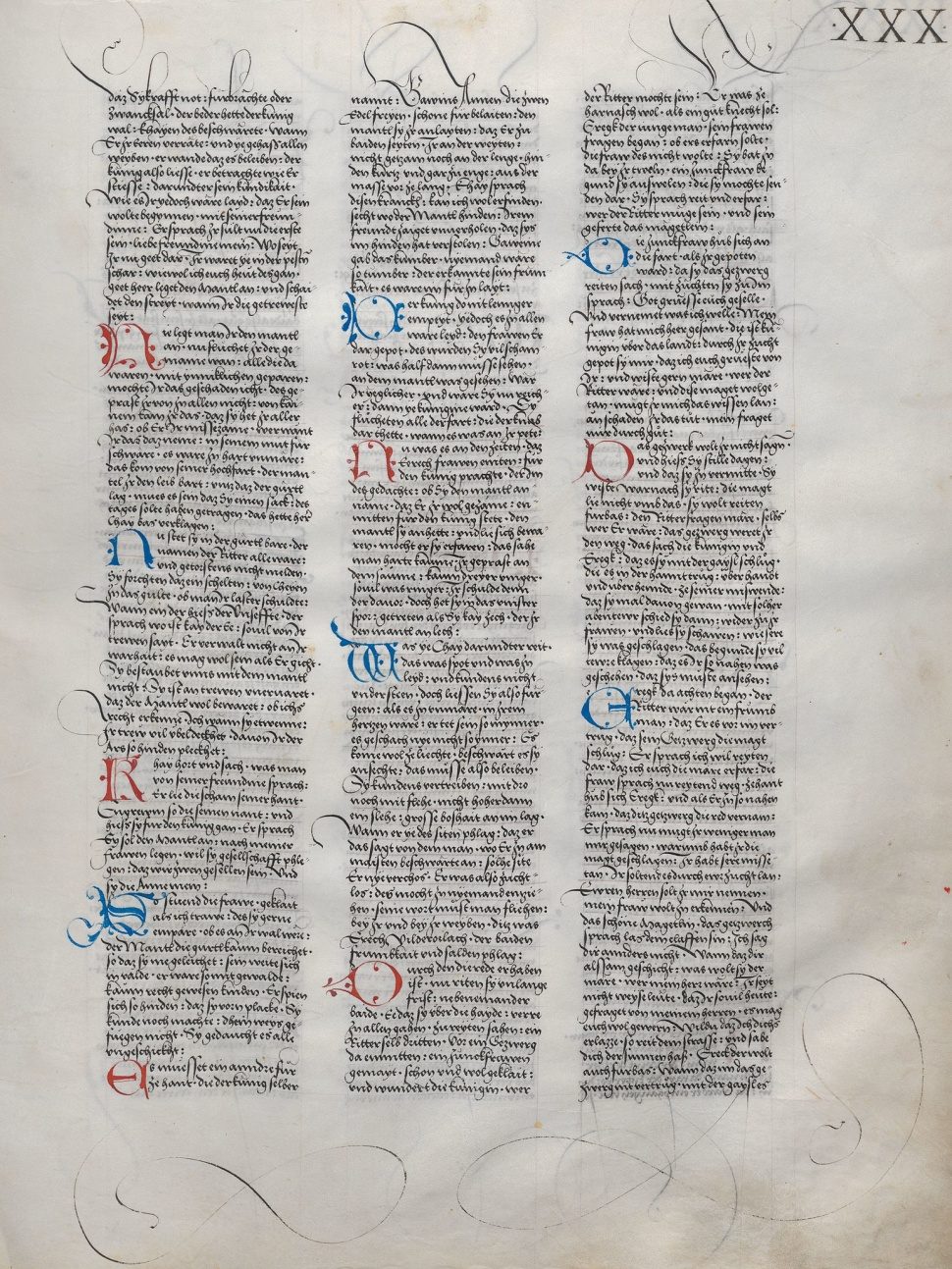
It appears that the earliest text to do so is Hartmann von Aue’s Erec, written in c. 1185. This gives Gawain a son named Henec the Skilful.
It is tempting to identify this son as a historical figure of the sixth century named Henoc. He appears in the Life of St Samson as the cousin of the titular religious figure. Since Samson was the son of a certain prestigious Anna of Gwent, there is good reason to consider him to have been King Arthur’s nephew, his mother being Arthur’s sister by that name.
Hence, any son of Gawain would have been the first cousin once removed of Samson. We know that Medieval Latin texts could refer to this kind of relationship simply as ‘cousin’. Hence, Gawain’s son Henec could have been Samson’s ‘cousin’ Henoc.
Unfortunately, chronological considerations make this identification impossible. Nevertheless, ‘Henoc’ was evidently a name used by this family, if we accept Samson’s mother Anna as the same as Arthur’s sister by that name.
Plausibly, Gawain’s son Henec (as spelt by Hartmann, at least) was named after Samson’s cousin Henoc, who would also have been a cousin of Gawain. The fact that this rare name was used by Hartmann in a context which makes sense given the available historical facts supports the notion that Gawain really did have a son named Henec, or Henoc, even without direct confirmation of his existence.
Other Sons
Other sources give Gawain some other sons who do not appear to be particularly historically plausible. In Thomas Malory’s Le Morte d’Arthur, written in the fifteenth century, Gawain is given three sons. Their names are Sir Florence, Sir Lovell and Sir Gingalain.
The latter two also appeared in earlier sources, such as the Livre d’Artus. However, Gingalain is the only one who received any prominence in the tales. He is the protagonist of a French tale entitled Le Bel Inconnu, written in c. 1200.
In this story, Gingalain is unaware of his parentage and even his name. He visits Arthur’s court in hopes of becoming a knight. He is sent on a quest to save the queen of Wales, during which he engages on many adventures.
Another son, not mentioned by Malory, is Beaudous. He is mentioned by Robert de Blois in the thirteenth century.
Gawain in the Arthurian Legends
Gawain appears in countless Arthurian tales; we could not possibly examine them all. However, in this section, we will examine some of the most important and notable appearances of Gawain in the Arthurian legends.
Culhwch and Olwen
Gawain’s first appearance in the Arthurian legends is seen in the Welsh prose tale Culhwch and Olwen. This likely dates to c. 1100. This romance tells the story of Arthur helping Culhwch win Olwen’s hand in marriage by completing numerous seemingly-impossible tasks.
At one point, after a list of Arthur’s numerous allies, Gwalchmai receives the following mention:
“He called Gwalchmai the son of Gwyar, because he never returned home without achieving the adventure of which he went in quest. He was the best of footmen and the best of knights. He was nephew to Arthur, the son of his sister, and his cousin.”
According to this, Gawain was famous for always accomplishing what he set out to do. He was also a very capable warrior. Furthermore, this provides us with the interesting detail that he was not only the son of Arthur’s sister, but also “his cousin”.
This could be interpreted to mean that Gawain was Arthur’s cousin, or it could mean that he was the son of “Arthur’s sister and his cousin”, Gawain’s father being Arthur’s cousin.
Was Gawain the Son of Arthur’s Cousin?
Scholar Peter Bartrum understood this line in the latter sense – that is, Gawain was the son of Arthur’s sister and Arthur’s cousin. This would mean that Lot, or Llew ap Cynfarch, was apparently Arthur’s cousin.
For them to be first cousins, Arthur’s mother or father would have to be the sibling of Lot’s mother or father. Is this plausible?
Lot’s father was Cynfarch ap Meirchion, while his mother was Nyfain ferch Brychan. Neither of them were the sibling of Arthur’s mother or father. However, there are two possibilities.
Firstly, it should be noted that many of the ‘children’ of Amlawdd Wledig were actually his later descendants, as we saw earlier in the case of Gwyar. It appears that this also applies to Eigr, the mother of Arthur. Several of the daughters of Amlawdd can actually be identified as daughters of Brychan, since he was a descendant of Amlawdd.
That being the case, Nyfain ferch Brychan might possibly have been known as ‘ferch Amlawdd’ in some traditions. Since this was also Eigr’s patronymic, they might have sometimes been mistaken for sisters. This would mean that Nyfain’s son, Lot, could have been mistakenly described as a cousin of Arthur.
Alternatively, the explanation might lie in the identification of King Arthur with the historical Athrwys ap Meurig. He was the cousin of Brychan. This would make Lot his first cousin twice removed. The Life of St Samson proves that the son of a cousin could still be referred to simply as ‘cousin’. However, whether an extra generation would push that word too far is unknown.
Modena Archivolt
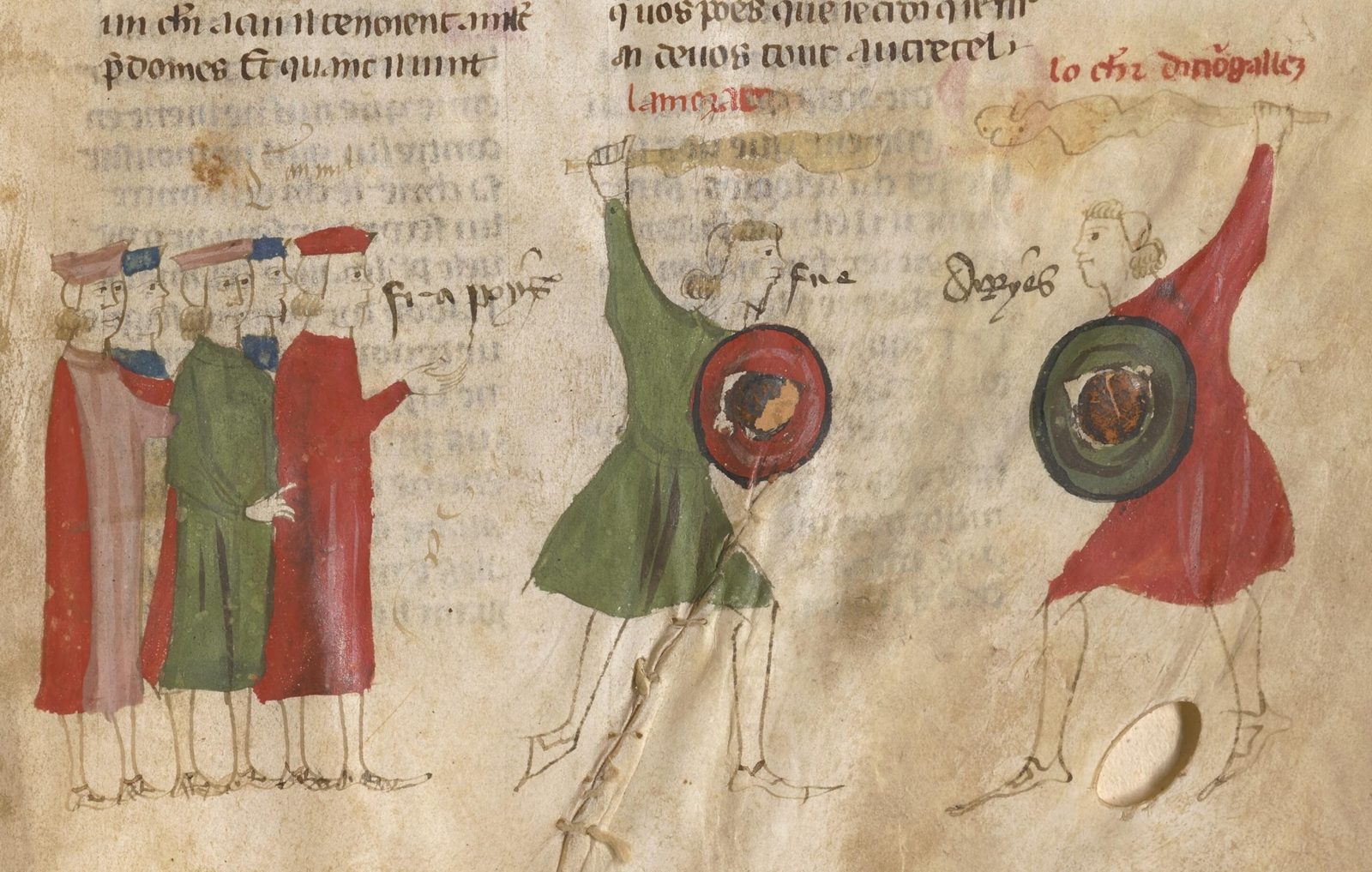
One particularly early and enigmatic source for Gawain is the Modena Archivolt. This is part of the Modena Cathedral in Modena, Italy. The archivolt contains a fascinating Arthurian scene, with the characters depicted clearly labelled. For instance, there is ‘Artus de Bretania’, clearly King Arthur.
A knight labelled as Carrado is depicted as jousting with a knight named Galvagin, or Galvaginus. This latter character is widely accepted as being Gawain.
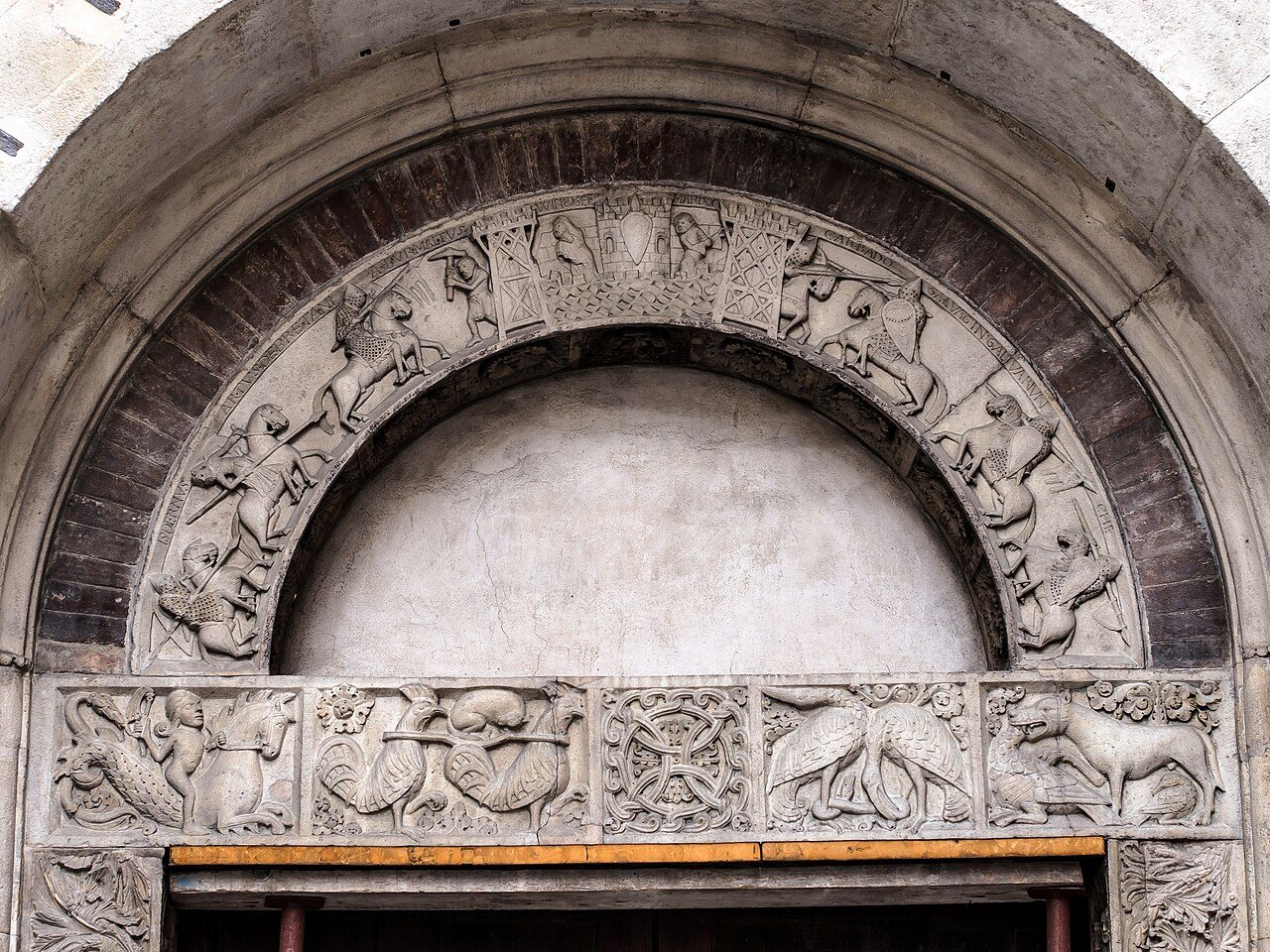
The reason that this Arthurian source is so interesting is that it predates Geoffrey of Monmouth. The evidence shows that the Modena Archivolt was completed by 1126, a full decade before Geoffrey wrote the Historia Regum Britanniae.
It seems remarkable that legends about King Arthur and Gawain had spread as far as Italy by such an early date.
The best explanation for the scene depicted on the Modena Archivolt appears to be that it is a version of the story of Gawain’s conflict with the giant knight Carado of the Dolorous Tower, which appears in the Vulgate Lancelot.
Geoffrey of Monmouth
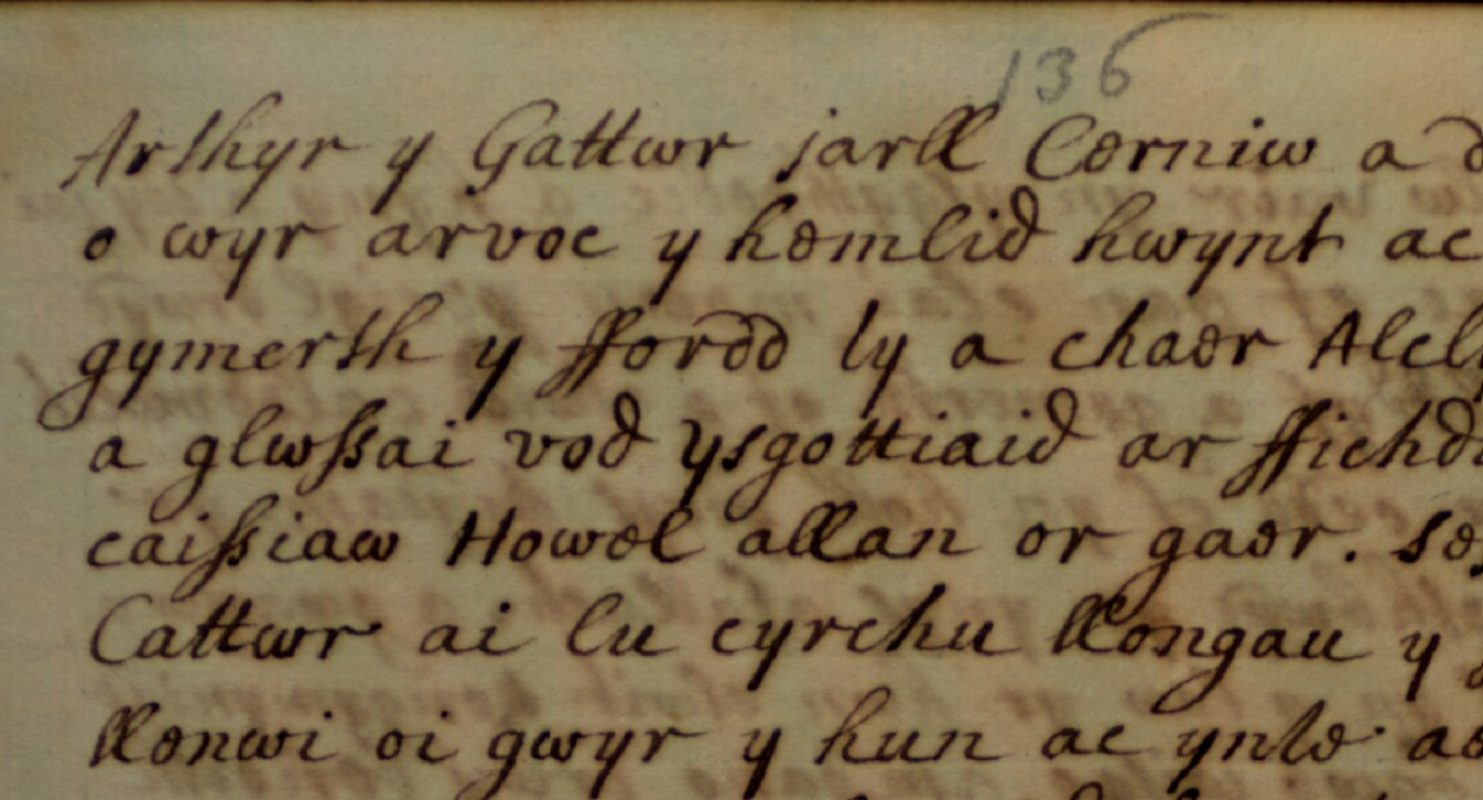
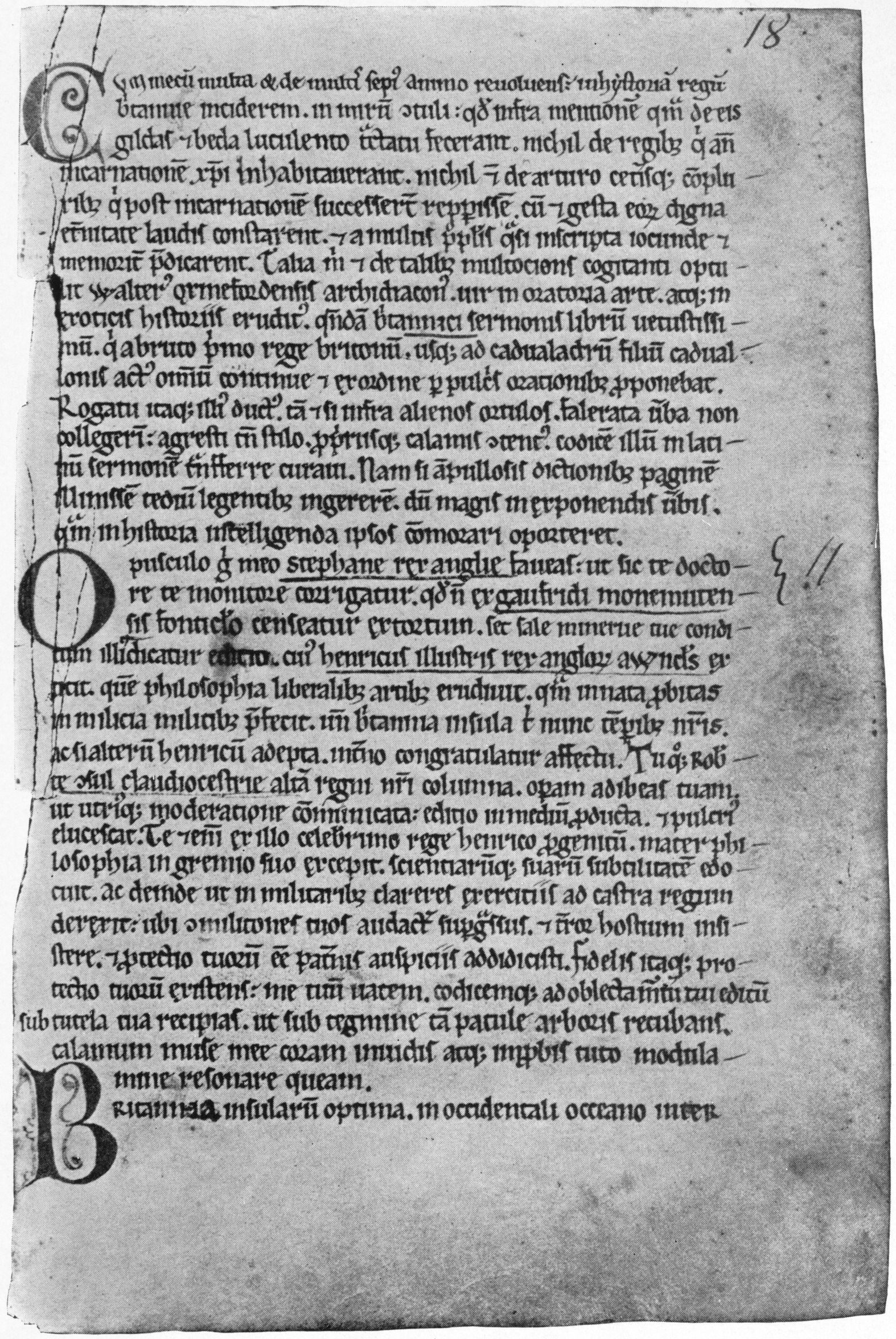
One of the most useful sources for Gawain is Geoffrey of Monmouth’s twelfth-century Historia Regum Britanniae. Although Geoffrey does not explain the story of his life comprehensively, he does provide us with some important details.
The first mention of Gawain (called Gualguanus by Geoffrey, although sometimes seen as ‘Walgan’ in modern translations) comes in Book 9. Here, he is mentioned along with his brother Mordred as sons of Lot.
Later, after presenting Arthur as having ruled his kingdom in peace for twelve years, Geoffrey states the following:
“Walgan, the son of Lot, was then a youth twelve years old, and was recommended by his uncle to the service of pope Supplicius, from whom he received arms.”
The period of twelve years of peace begins just one or two years after the Battle of Badon in Geoffrey’s account. This means that Gawain, according to Geoffrey of Monmouth, was born shortly after the Battle of Badon.
In The Service of Pope Supplicius
Who was the ‘Pope Supplicius’ to whom the young Gawain was sent according to the Historia Regum Britanniae? It has been suggested that this was the historical Pope Simplicius. However, his career as pope was in the fifth century, long before Gawain was alive.
When we bear in mind that Gawain was the nephew of Urien Rheged, a famously mid to late sixth century king, it is obvious that Gawain himself must have been born in approximately the middle of the sixth century.
This is consistent with the timing of the Battle of Badon as indicated by the earliest available evidence, which places it in c. 549. See the article When Did King Arthur Really Live? This would indicate that the bishop of Rome to whom Gawain was sent was Pope Pelagius I, whose tenure as pope lasted from 556 until 561.
The name ‘Supplicius’ used by Geoffrey of Monmouth likely came from a corruption of ‘Escob Pelagius’. The name ‘Pelagius’ could easily have become corrupted into ‘Plicius’ through common errors and variations of spelling that appear in medieval manuscripts. The prefix, ‘Sup’, can be explained as a corruption of ‘Escob’, the Welsh word for ‘bishop’.
Participation in Arthur’s Roman War
Gawain next appears as a key participant in King Arthur’s war against the Romans. His first mention comes during Arthur’s campaign into Gaul to attack Rome itself. Partway during the campaign, Walgan and certain others from Arthur’s army come into conflict with the Romans under the leadership of a certain Caius Quintilianus.
In a rage, Walgan cut off this Roman leader’s head, thus causing a battle to ensue between the Britons and the Romans.
After this, Walgan, or Gawain, next appears as the joint leader of one of the main divisions of Arthur’s army. He is joined by Hoel of Brittany. Incidentally, Hoel was also one of Arthur’s nephews, making him Gawain’s first cousin.
During the fighting, Geoffrey portrays Gawain as leading the Britons of Brittany along with Hoel in battle against the Romans. At one point, Gawain pushed his way through to Lucius Tiberius himself, the leader of the Roman army. The two men fought fiercely, until the Romans managed to aid Lucius and give him the upper hand against Gawain.
Death in Mordred’s Rebellion
Gawain is not mentioned again until the narrative about Mordred’s rebellion. News of this rebellion is what caused Arthur to abandon his attempt to reach Rome and return swiftly to Britain. Upon attempting to land at Rutupi (Richborough), Mordred’s forces fiercely opposed him.
At this battle, many of Arthur’s allies were killed. Geoffrey writes:
“For the same day fell Augusel, king of Albania, and Walgan, the king’s nephew, with innumerable others.”
According to this, Walgan – that is, Gawain – was one of the most notable of Arthur’s allies to die at this initial clash between the forces of Arthur and the forces of Mordred.
Later Romances
Gawain proved to be an extremely popular character. He is easily one of the most frequently mentioned figures in the Arthurian romance tales written in England and on the continent.
To be sure, Geoffrey hinted at Gawain’s virtues, presenting him as courageous. However, it was really Wace, in his Roman de Brut of 1155, who portrayed Gawain as exceptionally courteous. He came to be viewed as essentially the standard for what a chivalrous knight should be.
This was so much the case that some tales presented Gawain as being morally bested by others simply as a way of showing the virtue of those who bested him. One Arthurian scholar described him as the touchstone “against whom the prowess of the hero-knight is measured.”
The great respect that was given to the character of Gawain is exemplified by the fact that one German romance, Diu Crône, written in the thirteenth century, makes Gawain the hero who successfully finds the Holy Grail. This was generally reserved for the most holy of all the knights.
De Ortu Waluuanii Nepotis Arturi
One particularly notable romance tale about Gawain is De Ortu Waluuanii Nepotis Arturi, which translates to The Rise of Gawain, Nephew of Arthur. It is often known simply as De Ortu Waluuanii. It dates to the late twelfth or early thirteenth century, written in Latin.
This tale is specifically devoted to the story of Gawain’s youth, inspired by Geoffrey of Monmouth’s reference to Gawain spending time in the service of the pope.
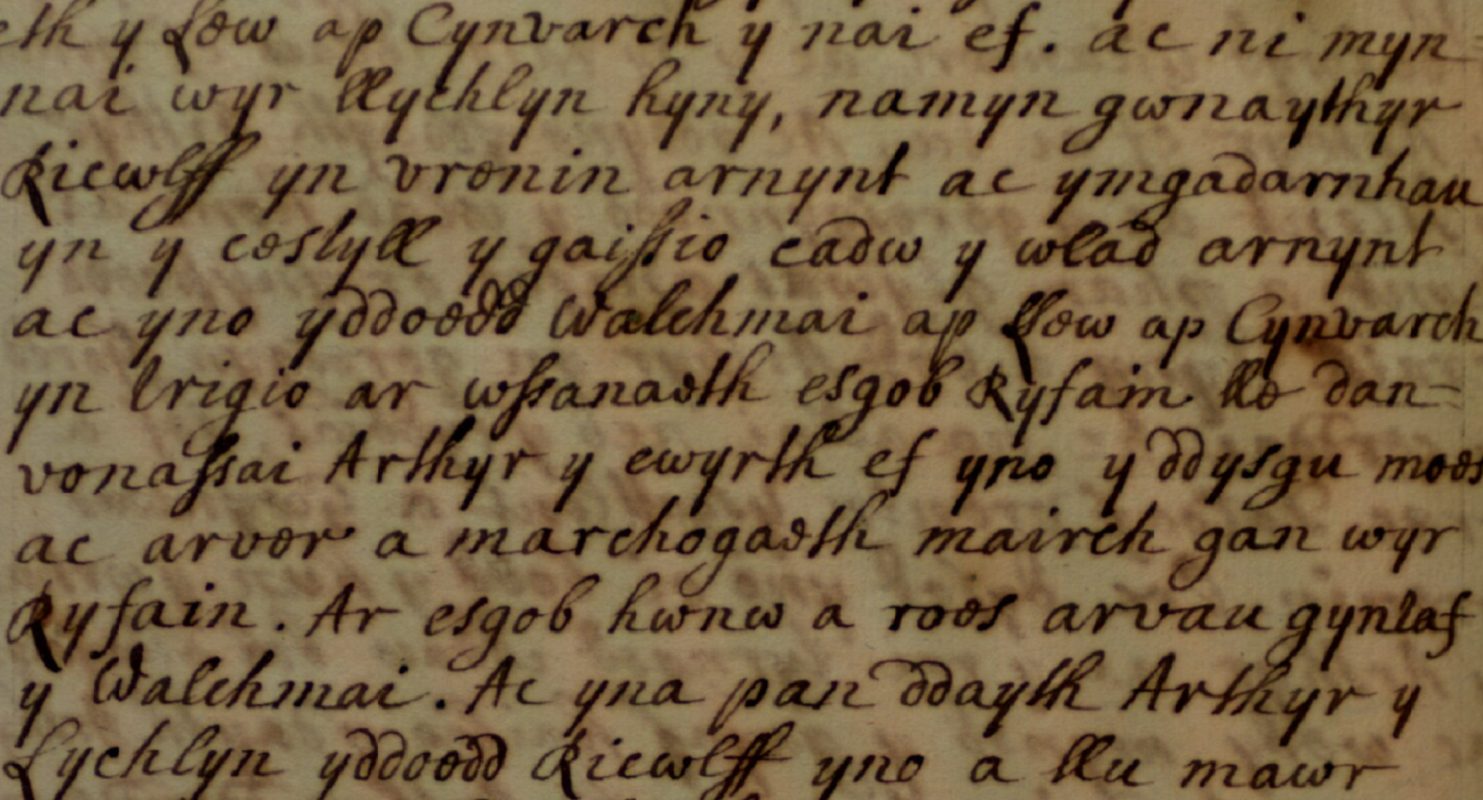
De Ortu Waluuanii presents this same basic picture of his upbringing, although one key difference is that it clarifies that Gawain did not actually know his parentage or relationship to King Arthur until later in his life. It also presents Gawain as serving the Roman emperor in the east, defending Jerusalem. Evidently, this part of the tale was inspired by the contemporary Crusades.
After this, Gawain travels to Britain and fights against Arthur and Sir Kay. After doing so, Arthur rewards him by revealing his true identity, that he is the nephew of the king.
Vulgate Cycle
Gawain’s portrayal in the Vulgate Cycle, dating to c. 1215-35, differs in some respects from many other versions. His characterisation is much less controlled and courteous. He is shown to be proud and far less concerned with religious matters.
Particularly notable is Gawain’s role in the story of the war between Arthur and Lancelot. In fact, Gawain is largely responsible for this war, which ends up completely breaking up the Knights of the Round Table and bringing the downfall of Camelot.
At first, Gawain’s actions are advantageous to the preservation of Camelot, since he tries to prevent his brothers Mordred and Agravain from exposing the affair between Lancelot and Guinevere, Arthur’s queen. Yet despite his best efforts, the affair is exposed all the same.
When Guinevere is to be executed, Lancelot and his men arrive to save her, but in the process, some of Gawain’s brothers are killed. This results in Gawain hating Lancelot. In turn, Gawain compels Arthur to wage war against Lancelot, chasing him all the way to France. This gives Mordred the perfect opportunity to take the throne of Britain for himself, ultimately leading to the tragic Battle of Camlann.
Similarly to how Geoffrey of Monmouth presents Gawain as dying shortly before the Battle of Camlann, the Vulgate Cycle presents Gawain as dying in battle against Lancelot at about this same time.
Gawain and the Green Knight
By far the most famous story related to Gawain is the tale known as Gawain and the Green Knight. This is preserved in just two medieval manuscripts. The primary source is the Pearl Manuscript, dating to the late fourteenth or early fifteenth century. However, a simplified and slightly altered version, which is less well known, is found in the Percy Folio Manuscript.
The Green Knight’s Challenge
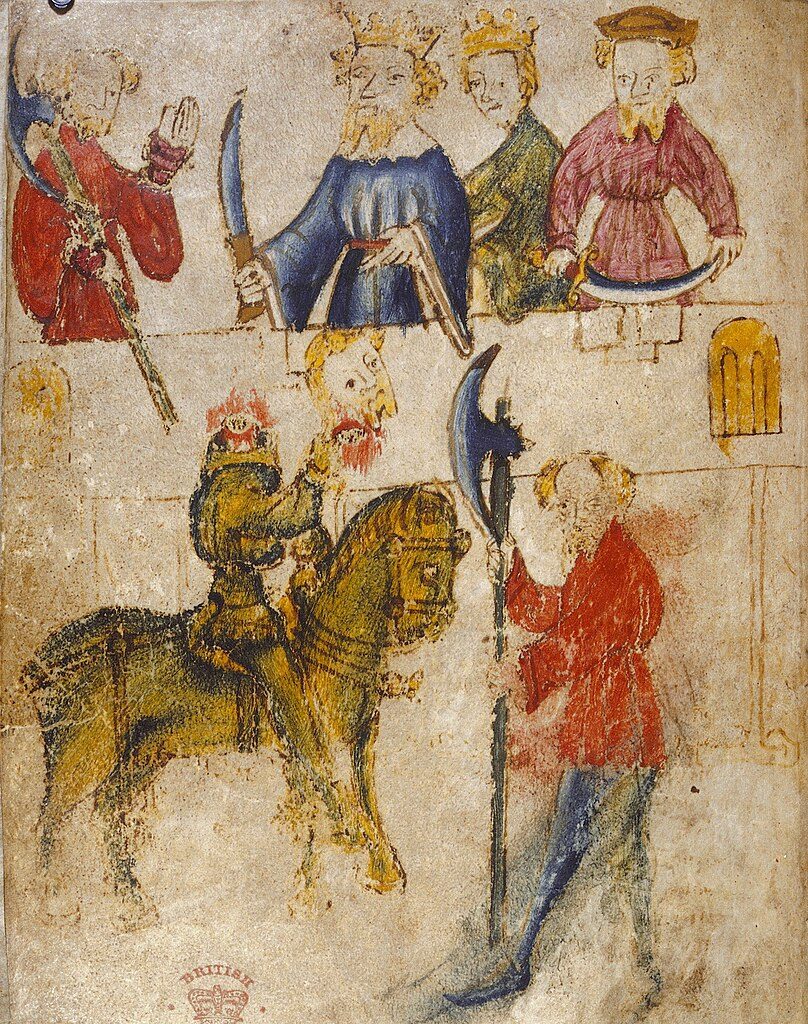
The story begins at Arthur’s court at Camelot during a Christmas feast. As the knights are exchanging gifts, the Green Knight enters the court. He is completely green all over, even his skin, and his horse is also green. He has no armour, and his only weapon is an axe.
The Green Knight offers a challenge to the knights. He will allow one of them to take his axe and strike his neck with it so as to behead him. However, they must then submit themselves to the same blow after a year and a day.
Gawain is the only knight brave enough to accept the challenge. He cuts off the Green Knight’s head. However, rather than falling down dead, the Green Knight picks up his own head and carries it with him as he leaves Arthur’s court, but not before reminding Gawain that he needs to offer his own neck in a year and a day. He must meet him at the Green Chapel.
The Arrangement between Gawain and Lord Bertilak
As the time approaches, Gawain musters up the courage to fulfil his word. He travels towards the Green Chapel and arrives at a castle nearby a few days before his appointment with the Green Knight. The castle is the home of a lord and a lady.
The unnamed lord, later revealed to be Lord Bertilak, presents Gawain with a deal. He will give Gawain whatever he hunts during the day, and in return, Gawain will give Bertilak whatever he received while Bertilak was out hunting.
Over the course of the next few days, Bertilak’s wife attempts to seduce Gawain. While Gawain largely refuses her advances, he does accept a kiss. Each day, Gawain gives these kisses to Bertilak in exchange for what he has hunted, not revealing where they came from.
On the final day, Bertilak’s wife also gives Gawain a magical green sash which will protect him from physical harm. Gawain accepts it and does not pass it on to Bertilak, not even mentioning it. He does this out of fear of what will happen to him when he faces the Green Knight.
The End of the Green Knight’s Challenge
Finally, a year and a day after the Green Knight had entered Arthur’s court, Gawain goes to the Green Chapel and meets the Green Knight once more. He is waiting for him, brandishing his axe.
Gawain offers his neck to the Green Knight, who fakes a swing at him. This makes Gawain flinch, for which the Green Knight belittles him. Once again, a fake strike is given, although Gawain does not flinch this time. He demands that the Green Knight stop faking the blows and strike him for real.
At this, the Green Knight really does strike Gawain’s neck with the axe. However, due to the magical green sash that he is wearing, he is essentially unharmed. He is left with only a tiny cut, which is revealed to be due to his dishonesty.
With the challenge being over, the Green Knight reveals himself to be Lord Bertilak of the castle, transformed by magic into his giant, green appearance. He reveals that the entire event was orchestrated by Morgan le Fay, Arthur’s evil half-sister, to scare Guinevere to death.
Although Gawain is remorseful for being dishonest, Bertilak assures him that he is the most virtuous of all the knights in the land.
Gawain’s Death and Burial
One of the most fascinating things about Gawain is the story of his death. As we have seen, Geoffrey presents him as dying in the initial conflict between Arthur and Mordred, before the Battle of Camlann. The Vulgate Cycle presents him as dying in battle against Lancelot in the same general part of Arthur’s reign, although somewhat before Geoffrey’s placement.
Of course, since Geoffrey’s account is by far the older of the two traditions, it has much more weight. Furthermore, several later romances likewise place his death in the context of Mordred’s rebellion.
Gawain’s Tomb in Dyfed
With this being the case, let us consider what William of Malmesbury wrote about Gawain in Gesta Regum Anglorum, written in c. 1125. He referred to a nephew of King Arthur who also fought in his service named Walwen. This is clearly Gawain, Geoffrey’s Gualguanus. William wrote:
“At this time was found in the province of Wales called Ros the tomb of Walwen, who was the not degenerate nephew of Arthur by his sister… [The tomb] was found in the time of King William upon the sea-shore, fourteen feet in length; and here some say that he was wounded by his foes and cast out in a shipwreck, but according to others he was killed by his fellow-citizens at a public banquet.”
It is widely accepted that the province of Ros mentioned by William of Malmesbury here is the region of Rhos in Dyfed, southeast Wales, and not the Rhos in North Wales.
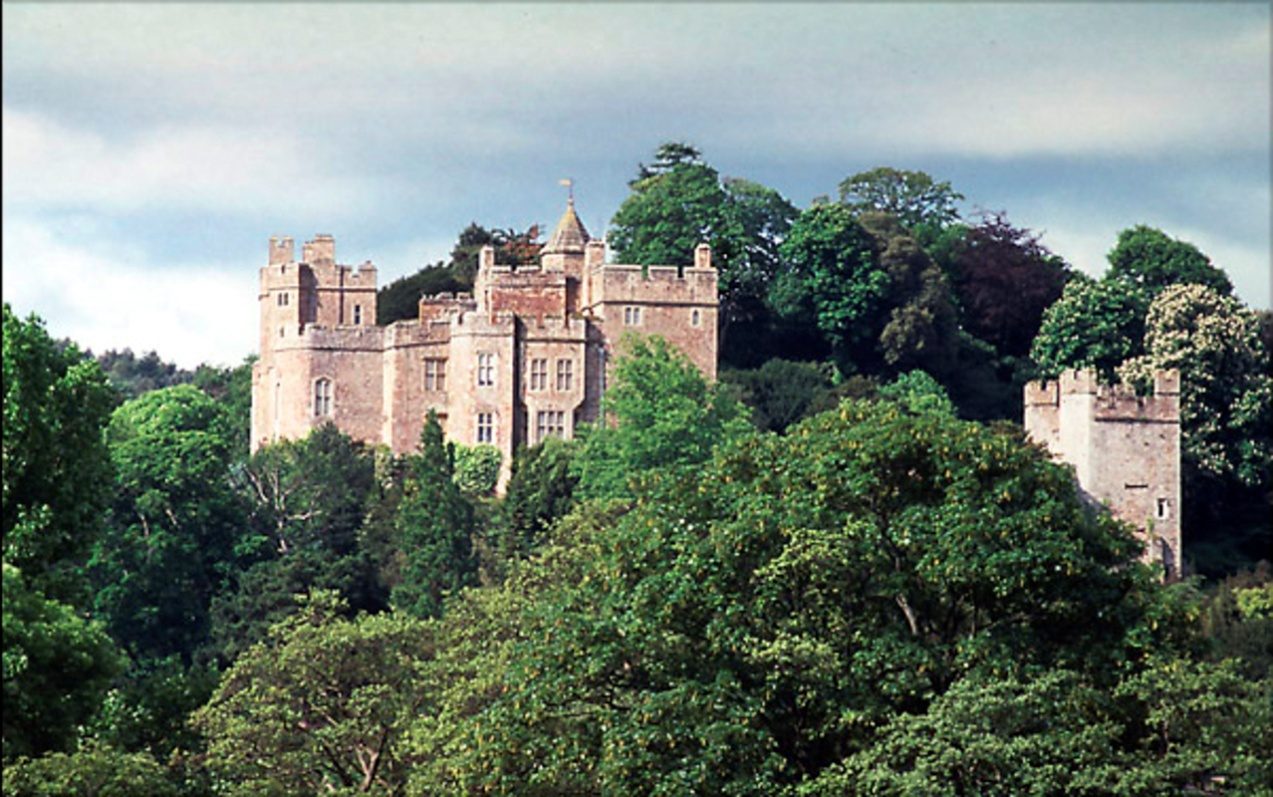
Supporting evidence from the tradition that Gawain was buried in this area comes from the fact that in this area there is a parish called Castell Gwalchmai in Welsh, while in English it is called Walwyn’s Castle. The exact site of Gawain’s tomb is, unfortunately, unknown.
The Stanzas of the Graves
Gawain’s tomb is also mentioned in a Welsh source, the Stanzas of the Graves. This is a long poem which refers to the resting places of numerous figures from Welsh history and legend. One of the lines refers to Gawain, referring to him by the Welsh form of his name, Gwalchmai. It says:
“The grave of Gwalchmai is in Peryddon,
Where the ninth wave flows.”
According to this, Gawain was buried in a place called Peryddon. The actual spelling used in the Welsh text is ‘Periton’, but ‘Peryddon’ is considered to be the Modern Welsh form.
The location of Peryddon is controversial and still debated. In southeast Wales, in Gwent, a river with this name is attested. However, this is inconsistent with the location in southwest Wales claimed by William of Malmsebury.
This place name is also attested as another name for the River Dee, which flows through much of North Wales. Just as with the previous identification, this is inconsistent with the location indicated by William of Malmesbury.
However, the tenth-century poem Armes Prydein mentions a certain Aber Perydon, and the context of the poem has been used to argue that this was in South Wales, likely close to St David’s in the southwest. This would support a location right in the south-western corner, close to the region of Rhos.
Following this line of evidence, one scholar suggested that Peryddon may have been the old name for the Sandyhaven Pill, which flows down to the sea from Castell Gwalchmai.
Understanding Gawain’s Death
This likely location for Gawain’s tomb helps us understand its relation to other Arthurian sources and events. Recall that Geoffrey of Monmouth placed his death at the initial conflict between Arthur and Mordred, supposedly at Rutupi. For historical reasons, it is obvious that Geoffrey was incorrect about the location.
In fact, the evidence strongly suggests that this initial fight between Arthur and Mordred can be identified with a battle known in Welsh tradition as the Battle of Llongborth. This almost certainly occurred at Penbryn Beach, where the name is preserved in modern-day Llamborth, just a few miles up the coast from Cardigan.
Significantly, the battle between Arthur and Mordred occurred when Arthur attempted to return to Britain after being away in Gaul. Hence, he would have arrived at Llongborth from the south, sailing around Dyfed and along the coast of Wales until arriving at Penbryn Beach. This would take him right past the traditional location of Gawain’s grave.
Notably, Geoffrey of Monmouth did not actually say that Gawain died after Arthur had arrived at the port. Rather, he says that Gawain was one of those who died that same day. Perhaps, then, Arthur attempted to get ashore at Dyfed, resulting in a clash which left Gawain dead. Arthur’s forces then would have continued along the coast until arriving at Llongborth.
The tradition recorded by William of Malmesbury that Gawain died in a shipwreck is potentially compatible with this scenario. However, it would be even more compatible with the idea that Gawain’s ship was attacked by Mordred’s forces on the way from Gaul to Llongborth, as Arthur’s forces were rounding Dyfed.
Conclusion
In conclusion, Gawain was one of Arthur’s most loyal knights, and also one of the most popular characters in all of Arthurian literature. He was the nephew of the king by his sister. His father was King Lot of Lothian. Gawain’s name is extremely variable in the sources, with the original Welsh form being ‘Gwalchmei’, also known as Gwalchmai.
Gawain was known for being raised in Rome in the service of Pope Supplicius. Historically, this was probably Pope Pelagius I. Partly for this reason, Gawain was famous for being exceptionally morally upright and holy. A story which tested his morals to the limit is the famous tale of Gawain and the Green Knight.
Gawain appears to have died just prior to the Battle of Llongborth, right at the start of Arthur’s conflict with his nephew, Gawain’s brother, the treacherous Mordred. He was buried near Castell Gwalchmai in Dyfed.
Sources
Bartrum, Peter, A Welsh Classical Dictionary, 1993
Bromwich, Rachel, Trioedd Ynys Prydein: The Triads of the Island of Britain, 2014
Bromwich, Rachel; Jarman, A O H; Roberts, Brynley F, The Arthur of the Welsh: The Arthurian Legend in Medeival Welsh Literature (Second Edition), 2008
Howells, Caleb, King Arthur: The Man Who Conquered Europe, 2019
https://clasmerdin.blogspot.com/2011/05/modena-archivolt.html