The Mystery of Cador’s Role as King Arthur’s Ally

Cador, duke of Cornwall, is a prominent character in the Arthurian legends. He is presented as one of King Arthur’s most trusted allies. He is one of the major kings of Britain who fights alongside Arthur in his wars against the Anglo-Saxons around Britain. Yet, there is an apparent mystery associated with this figure. For one thing, the chronological evidence about Cador indicates that he was born much too late to be involved in some of the key events in which he supposedly participated. Secondly, there is evidence that his father was not who the legends generally present him as being. What is the explanation for these issues?
Cador’s Role in the Arthurian Legends
To understand this mystery better, we need to understand what Cador’s role in the legends really was. The earliest record which definitely describes him is Geoffrey of Monmouth’s Historia Regum Britanniae, dated to c. 1137. According to this detailed account of King Arthur’s career, Cador was one of Arthur’s allies right at the start of his career.
His First Appearance
Geoffrey introduces Cador in the context of Arthur’s siege of the city of York. This occurred right near the start of his wars against the Anglo-Saxons. It comes after a battle on the Duglas River (one of the four Battles of the River Douglas mentioned in the Historia Brittonum), the first of Arthur’s battles against the Saxons mentioned by Geoffrey.
The Saxon leader being besieged by Arthur at York was Colgrin. His brother, Baldulph, was said to have been in the same region of Britain but much closer to the coast. Geoffrey says that he was waiting for Cheldric, another Saxon leader, to arrive with reinforcements.
Baldulph intended to attack Arthur by surprise that night, but Arthur somehow came to know of the plot. He thus sent Cador, duke of Cornwall, to intercept Baldulph. This is when Cador is first mentioned.
Cador is described as attacking the Saxons with great success, completely routing them.
Subsequent Appearances
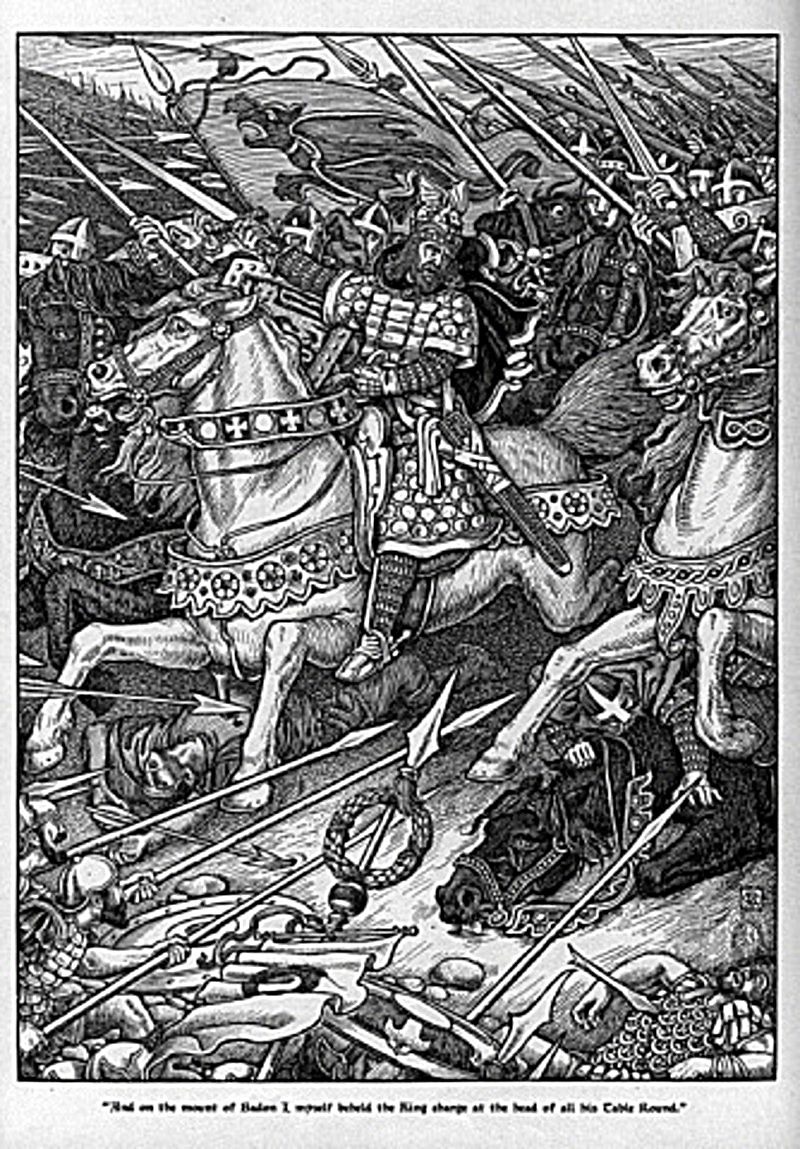
After this, Cador makes his next appearance in the aftermath of the Battle of Badon, which was Arthur’s final battle against the Anglo-Saxons. At that battle, Colgrin and Baldulph are said to have been killed, while Cheldric fled.
Cador, duke of Cornwall, was sent after Cheldric. First, he took possession of the Saxons’ ships to stop them from fleeing from the island. He then chased them all across the south of Britain, finally catching up to them at the Isle of Thanet and slaughtering them there.
Later, Cador is one of them most prominent allies at Arthur’s special coronation. He also shows himself to be an important advisor in the matter of Arthur’s conflict against the Romans on the continent.
The Mystery Surrounding Cador’s Role
The problem with Geoffrey’s account is that it ascribes to Cador things which he simply cannot have done. This is evident when we examine the chronology of these events and the genealogical information about Cador himself.
The evidence suggests that Cador was probably not even born when Arthur’s siege of York took place. He was likely in his late-teens or possibly as old as twenty when the Battle of Badon took place. This is just about old enough to have been involved in the fighting, but it is not reasonable to believe that he led a contingent to pursue Cheldric.
This is not merely a case of Cador appearing in a list of Arthur’s allies, which easily lends itself to anachronisms. Rather, this is a case of Cador being explicitly described as participating – in a leading role – in events which he simply could not really have been involved in.
Is this just a case of Geoffrey’s account being historical inaccurate? It would certainly appear that his account is in error regarding Cador, but should we just dismiss this as a random error, or can we discern a specific origin for this mistake?
Cador’s Supposed Identity
To understand this issue fully, we need to understand who Cador’s father really was. Otherwise, we will not be able to understand why there is a chronological issue in the first place.
Geoffrey does not explicitly tell us which dynasty Cador was from or who he was related to. He merely mentions in one place that his son, Constantine, was Arthur’s kinsman.
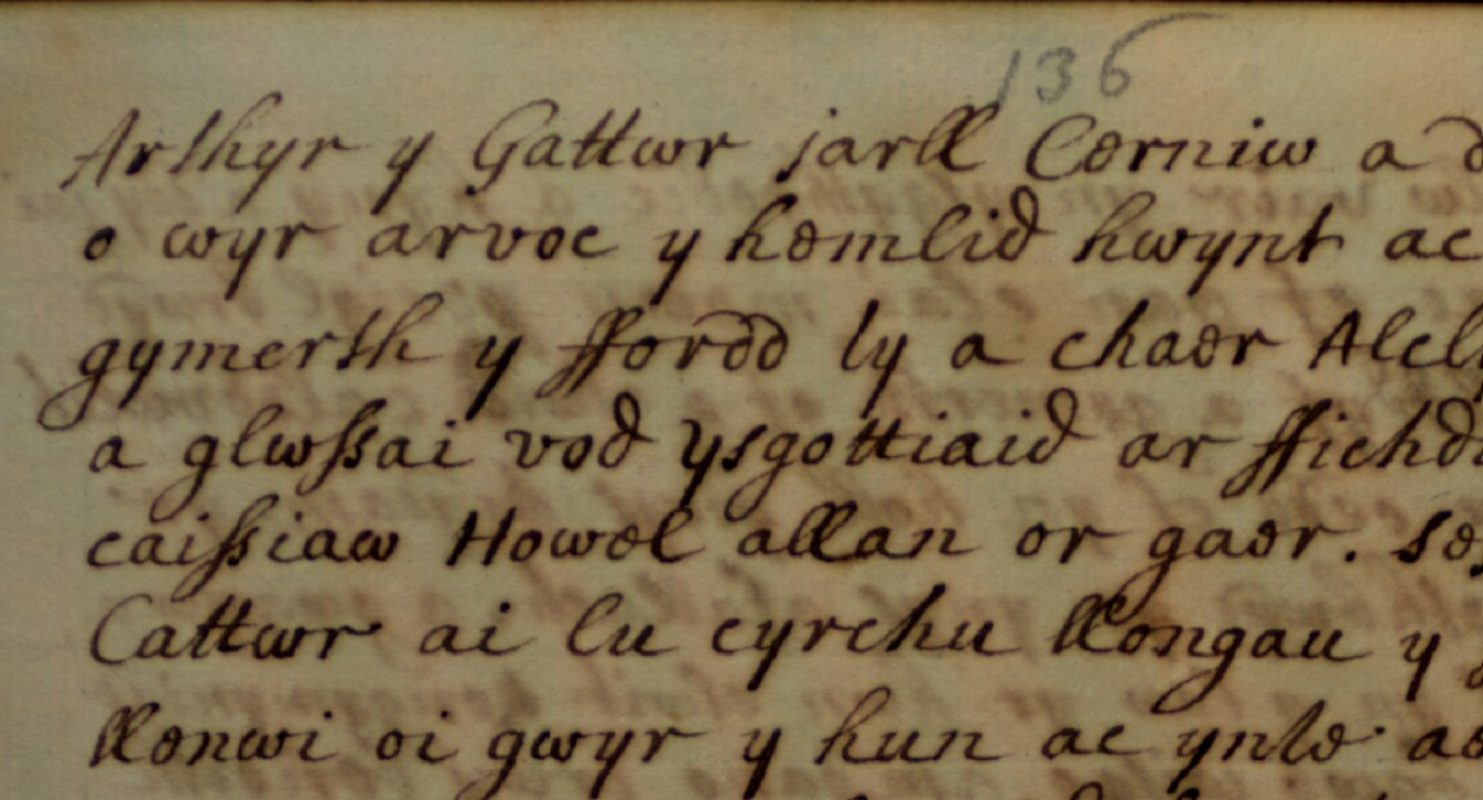
However, in later documents, Cador is claimed to have been the son of Gorlois. In Geoffrey’s own account, Gorlois appears as the duke of Cornwall in the time of Uther Pendragon, Arthur’s father. Geoffrey never says that Cador was the son of Gorlois, but in the absence of any other information, this familial connection is a perfectly reasonable conclusion to come to.
It appears that the first source which explicitly described Cador as the son of Gorlois was John Hardyng’s Chronicle in the fifteenth century. A few Welsh sources subsequently presented the same familial relationship, such as in a fifteenth century text by Gutun Owain.
When Was Cador Active in Battle?
Based on the information presented in Geoffrey of Monmouth’s account, what can we say regarding when Cador was active in battle? As we saw earlier, Geoffrey presents Cador as having an important role in fighting against the Saxons during Arthur’s siege of York, which occurred early in Arthur’s career.
Thus, to establish when Cador was said to have been active in battle, we need to know when Arthur’s campaigns against the Saxons occurred.
Evidence from Gildas and the Historia Brittonum
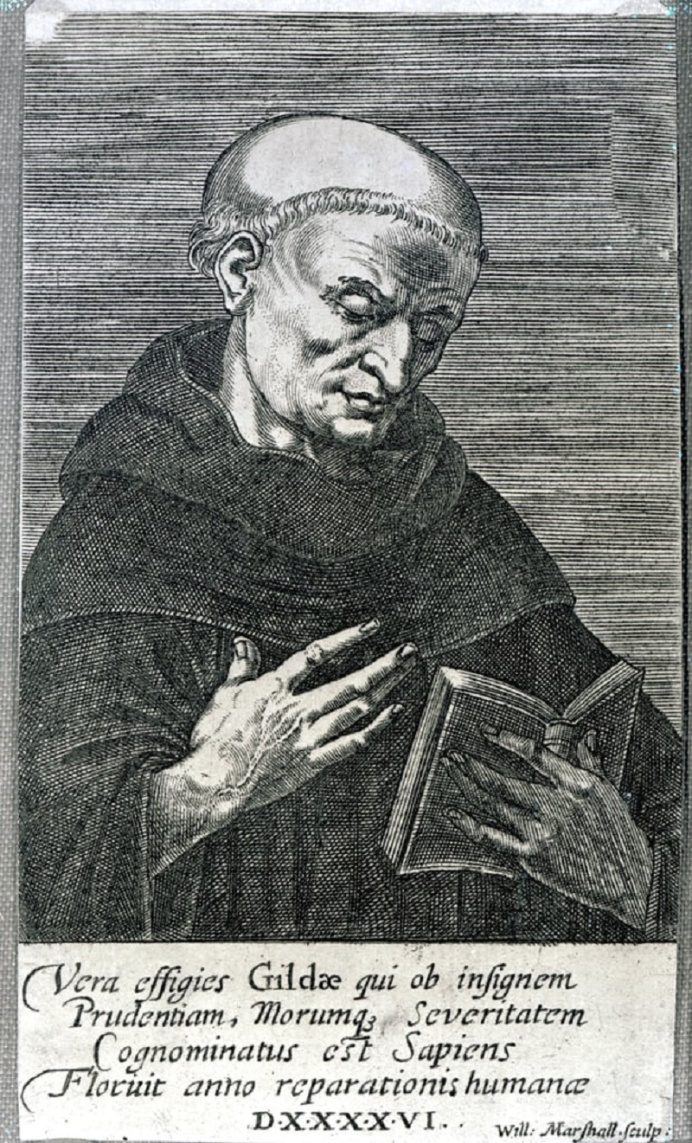
The earliest source which gives us any indication of this is Gildas’ De Excidio, written in the sixth century. He places the Battle of Badon forty-three years before the time he was writing. When he was writing, a king named Maelgwn was reigning.
The earliest source which provides information about when Maelgwn reigned is the Historia Brittonum. Contrary to the date of 547 for his death as recorded in the later Annales Cambriae, the earlier Historia Brittonum indicates that Maelgwn’s reign began after 570. By the time Gildas was writing, he tells us that Maelgwn had already reigned for a time, left the throne to become a monk, and then finally returned to the throne again after some time.
Hence, we can conclude that Gildas was probably writing fairly close to the end of the sixth century. With the Battle of Badon occurring forty-four years before this, we can conclude that Badon occurred in approximately the middle of the century.
Other evidence from the Historia Brittonum supports this conclusion. For example, in the passage about Arthur’s twelve battles (the last of which was the Battle of Badon), it says that the more the Saxons were defeated in these engagements, the more they sought for aid from Germany. It then says that this continued until the reign of Ida of Bernicia.
This strongly implies that the final one of ‘these engagements’, the Battle of Badon, occurred during the reign of Ida. The Anglo-Saxon Chronicle shows that his reign began in 547.
Therefore, the earliest evidence places that Battle of Badon in about the middle of the sixth century. If so, then this would mean that Cador must have been active in battle by at least as early as that time, since he was involved in fighting against Cheldric immediately after the Battle of Badon.
Of course, it is important to recognise that the twelve battles fought by Arthur against the Anglo-Saxons must have taken place over many years. It seems reasonable to assume that they covered a span of at least ten years, if not more.
Evidence from Geoffrey of Monmouth
Does this conclusion match what Geoffrey of Monmouth wrote about Arthur’s career? Well, Geoffrey gave the explicit date of 542 for Arthur’s abdication. However, everything else that Geoffrey wrote about Arthur’s career and the reigns of those who came immediately after him shows that this date must be too early by several decades.
For example, Geoffrey puts the replacement of Bishop Dubricius with David, which other records associate with the Synod of Brefi, during Arthur’s special coronation more than a decade after the Battle of Badon. From other records, we can place the Synod of Brefi in c. 560.
Furthermore, Geoffrey refers to the deaths of David and Daniel, both prominent religious figures, in the reign of Constantine, Arthur’s immediate successor. Scholars agree, based on evidence from the Annales Cambriae and also the Irish annals, that David and Daniel both died in the 580s.
Therefore, the majority of Geoffrey’s information agrees with the conclusion that Arthur’s career ended well into the second half of the sixth century. Since the Battle of Badon occurred about twenty years prior to the end of his career (as per the Annales Cambriae), this agrees with placing the Battle of Badon in about the middle of the sixth century.
As with the previous corpus of evidence examined, this would mean that Cador must have been active in battle by c. 550.
When Did Cador’s Military Career Begin?
As we saw earlier, Cador did not begin his military career with the Battle of Badon. According to Geoffrey of Monmouth, Cador was sent out against Baldulph near the beginning of Arthur’s campaigns against the Saxons. Hence, he must have been active in battle quite some time before c. 550.
If we conclude that the battle near York occurred at least ten years before the Battle of Badon, which seems like a reasonable lower limit (the two battles could easily have been even further apart), then this would mean that Cador was already active in battle by c. 540.
In fact, there is reason to place the start of Arthur’s campaigns against the Saxons even further back than 540. An eleventh century record known as Deeds of the Bishops of the Church of Hamburg of Adam of Bremen reports the arrival of a large group of Saxons from Britain in the territory of King Theuderic I in the year 531.
This is one of the key pieces of evidence for a reverse migration from Britain, which is also evidenced by archaeology. This indicates that King Arthur was successfully driving the Anglo-Saxons out from c. 530 at the latest.
Therefore, on the basis of him being involved in one of Arthur’s first battles, it is very likely that we can place the start of Cador’s military career no later than the early 530s.
How This Chronology Ties in With Cador’s True Heritage
So far, we have seen that Geoffrey’s account essentially presents Cador as active in battle alongside Arthur from as early as the early 530s. We have also seen that he was allegedly the son of Gorlois, according to later medieval records. Geoffrey, however, does not provide his lineage.
Despite the assumption that Cador was the son of Gorlois, the previous duke of Cornwall, a full examination of the evidence makes it clear that this is not the case.
Geoffrey’s account presents Cador as the father of a king named Constantine, who rules as Arthur’s successor. Geoffrey’s narrative of the kings who ruled after Arthur’s reign are taken directly from Gildas’ De Excidio, in his condemnatory comments towards five reigning kings. He presents Constantine as being a king of Dumnonia.
Dumonia was a large kingdom which encompassed much of the West Country, far more than just Cornwall. Hence, although Geoffrey merely calls Cador the ‘duke of Cornwall’, he was evidently the king of Dumnonia.
In contrast, there is no evidence whatsoever that Gorlois was a king of that kingdom. He does not appear in any medieval king lists. Everything indicates that he was a relatively minor king in the West Country.
Cador’s True Identity
With these facts in mind, it is evident that Cador must have been from the line of kings of Dumnonia, which is a well-known dynasty. Various non-Galfridian sources testify to the fact that one of the kings of Dumnonia whose career overlapped considerably with that of Arthur’s was called Cado.
Other texts spell this king’s name Catovius, Cadwy, and Gadwr. The similarity between this king’s name and that of Geoffrey’s Cador is obvious. Like Cador, King Cado is presented as being a close ally of Arthur. One hagiography presents them as ruling together in one part of the West Country. He appears as one of Arthur’s allies in Culhwch and Olwen and The Dream of Rhonabwy, both Welsh prose Arthurian tales.
Since King Cado was the king of Dumnonia, it is evident that he was the father of the Constantine mentioned by Gildas as the king of that kingdom. Therefore, Geoffrey’s Cador can certainly be identified as the historical King Cado of Dumnonia.
The alternative, rejecting Cador’s identity as Cado, would mean that Arthur had two prominent allies from the same region with virtually the same name. This would also mean that Geoffrey made no mention of Arthur’s important alliance with the kingdom of Dumnonia. Given the prominence Geoffrey gives to the West Country in general, this is profoundly unlikely.
Therefore, the evidence very strongly supports the conclusion that Geoffrey’s Cador should be identified with the King Cado of Dumnonia who appears in a variety of other records as a contemporary and ally of King Arthur.
Cador’s True Lineage and Chronology
This King Cado appears in the records as a son of Geraint ap Erbin. Geraint is another one of the kings of Dumnonia who appears as an ally of King Arthur. In one particularly early Arthurian source, the elegy usually known as Geraint son of Erbin, Arthur and Geraint are presented as fighting alongside each other at the Battle of Llongborth. At this battle, Geraint dies.
This provides us with some very helpful chronological information regarding this dynasty. The evidence surrounding the Battle of Llongborth strongly suggests that it was the prelude to the Battle of Camlann. See the article The Battle of Llongborth for the detailed evidence for this conclusion.
In line with the revised Arthurian dates discussed above, the Battle of Camlann should have occurred in 570. This should therefore be the year in which Geraint died. Interestingly, independent evidence surrounding the death of Geraint supports this conclusion.
The Life of St Teilo tells us that Gereint died just as Teilo returned to Britain. The Life of St Oudoceus tells us that Oudoceus succeeded Teilo as bishop of Llandaff immediately upon Teilo returning to Britain, which therefore was at the same time as the death of Geraint.
Based on the information about Oudoceus’s family, he must have been born in c. 540 and was thus likely not made bishop any earlier than 570. Hence, Geraint cannot have died any earlier than that. Yet, he cannot have died any later either, since the Life of St Teilo presents Teilo as leaving the presence of Budic III of Brittany just as Geraint was dying, while Gregory of Tours shows that Budic died in c. 570.
Hence, we can confidently place Geraint’s death at the Battle of Llongborth in c. 570. Since he died in battle, in the absence of anything suggesting that he was old, we can probably place his birth no earlier than c. 510.
We should be especially cautious against placing his birth any earlier than that in view of the evidence that his wife, Gwyar, was identical to Arthur’s sister by the same name. Her marriage to Gerant was evidently her first marriage.
Given the fact that she was later married to Lot of Lothian and was the mother of Mordred and Gawain, the dates of those figures indicates that she was born no earlier than c. 517.
What This Means for Cador’s Chronology
The point of this evidence is that Cador was almost certainly not born any earlier than c. 532. This accounts for his mother being the same as the mother of Mordred and Gawain, who would have been born in the second half of the 540s. This also accounts for Geraint’s likely birth in c. 510.
With this being so, we can see how Geoffrey’s presentation of Cador as King Arthur’s ally from right near the start of his Anglo-Saxon wars is impossible. Even if we ignore the suggestion that these wars started as early as the beginning of the 530s, we have seen that the Battle of Badon evidently occurred in c. 550.
This would mean that Cador would have been about eighteen years old at the time of that event. While there is a slim possibility that he may have been a soldier in the battle, this surely precludes the possibility that he was leading any part of the army and led a pursuit of Cheldric.
Therefore, the true lineage of Cador leads to a notable mystery surrounding his role as King Arthur’s ally in the Arthurian legends. Geoffrey was clearly mistaken in making him involved in the siege of York and the Battle of Badon, but what caused this mistake?
The Mystery’s Solution
One simple explanation is that Geoffrey’s source text originally simply said ‘the duke of Cornwall’, with Geoffrey providing the name ‘Cador’ based on what he thought was correct.
This would mean that the references in the Historia Regum Britanniae to Cador in the first half of Arthur’s reign are actually references to Cador’s father, Geraint, or even his grandfather, Erbin.
The Other Cadors
However, this is not the only possible solution. Another entirely plausible solution is essentially the opposite. That is, the text originally referred simply to ‘Cador’, or someone with a similar enough name, and Geoffrey provided the description of ‘duke of Cornwall’ due to his assumption that the figure in question was the same as Cador the duke of Cornwall (that is, King Cado of Dumnonia).
In other words, Geoffrey’s character of Cador may have been a composite figure. In part, he was the historical King Cado, the father of Constantine of Dumnonia. However, he was also partially composed of a different figure, an older contemporary.
There are at least two possible figures who could have been the older contemporary in this potential composite figure.
Cadwry ap Gwrion
One possibility is the obscure figure known as Cadwry ap Gwrion. There is a possible reference to him in Culhwch and Olwen. In the long list of Arthur’s allies, three sons of Gwrion (spelt ‘Goryon’ and ‘Gwryon’ in the text) are mentioned separately. One of them is Culfanawyd, the other is Hunabwy, and the other is left unnamed.
In Geraint and Enid, the Welsh Mabinogion tale which is the Welsh version of Chretien’s Erec et Enide, Cadwry ap Gwrion appears by name. Some translations render his name ‘Hadwry’, but ‘Cadwry’ is used in Peter Bartrum’s A Welsh Classical Dictionary and other modern reference works.
Cadwry’s Name and Patronymic
The obvious attraction in this suggestion is the fact that Cadwry’s name is very similar to ‘Cador’. The only meaningful difference is the presence of the ‘y’ on the end, but this easily within the boundaries of what medieval scribes would have viewed as acceptable spelling variations.
Furthermore, Cadwry’s father was Gwrion, also spelt ‘Goryon’ and ‘Gwryon’. This is similar to the name of Cado’s father, Geraint. His name appears variously as ‘Gerran’, ‘Gerrenius’, and other spellings.
The fact that Cadwry and Cado had similar names and their respective fathers had similar names would have made it ever so easy for medieval scribes to erroneously conclude that they were the same person.
Cadwry’s Connection to Cornwall
In Geraint and Enid, Cadwry appears as one of Arthur’s men who accompanies Geraint ap Erbin, the prince of Dumnonia. This shows that he was remembered as an ally of Arthur.
The fact that he accompanied Geraint of Dumnonia does not necessarily prove that Cadwry himself was from Cornwall, or Dumnonia generally. After all, some of the allies mentioned in this passage are specifically said to have been from certain other locations, such as Brittany or Ireland.
Nevertheless, the passage in question is about those who were sent by Arthur to accompany Geraint on his journey to his home territory in Dumnonia, since circumstances required him to leave Arthur’s court. Therefore, this does show that Cadwry was connected with the territory of Dumnonia, even if he was not originally from there.
Therefore, while Cadwry was not the king of Cornwall, and certainly not of Dumnonia, he was an ally of Arthur who served in that territory. He could well, in fact, have been made a ‘duke’ or minor ruler of Cornwall, or part thereof.
When Did Cadwry Live?
What do we know about when Cadwry lived? This is important, since chronology is the entire reason why the issue of the identity of Cador, duke of Cornwall, needs to be investigated in the first place. Since Geoffrey presents Cador as being active in battle early in Arthur’s career, likely as early as the 530s, is there any basis for concluding that Cadwry was active in battle that early?
Unfortunately, very little is known about the chronology of Cadwry. The main problem is that we cannot be sure about the identity of his father, Gwrion. The only other person recorded as having a name precisely like his is the figure also named as Gwylawr ap Gwynnan.
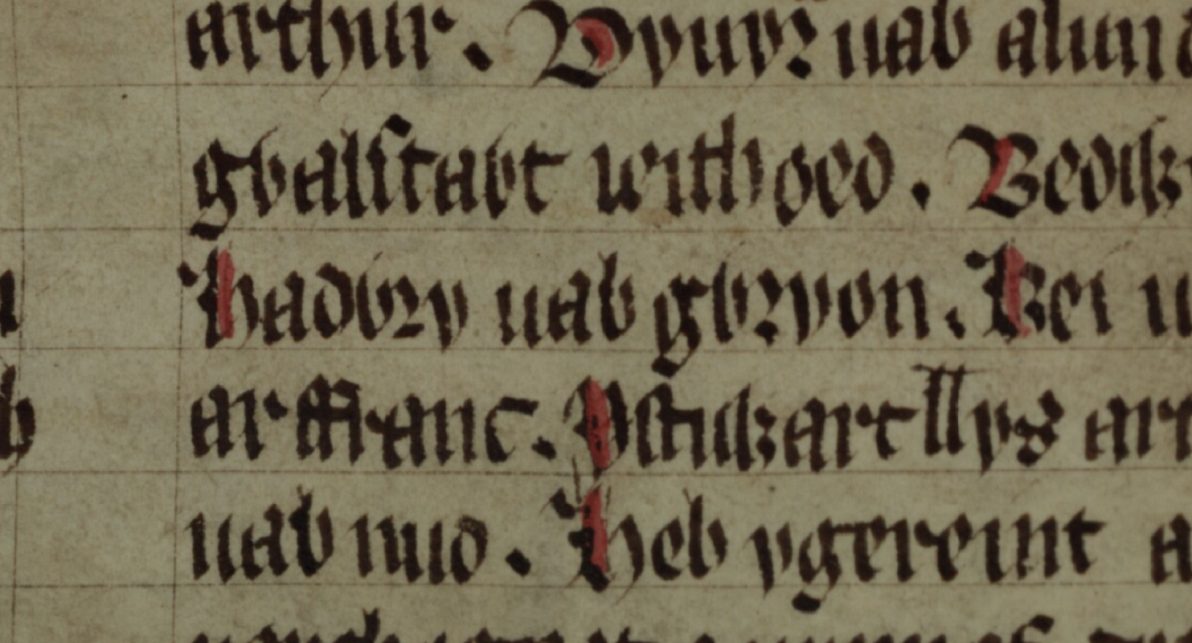
If we equate these two figures, then this would mean that Cadwry was the great-grandson of Cadell Ddyrnllug, king of Powys. He succeeded Benlli of Powys in approximately the year 500. If he was sixty years old when he became king (and this would be consistent with the fact that he was said to have had nine sons at the time), then his birth could have been in c. 440.
This birth is consistent with the fact that his grandfather appears to have been Vortigern, and Vortigern was likely born shortly before the turn of the fifth century.
That would allow Cadwry to have been born in c. 500-515, if we use an average of twenty to twenty-five years per generation. That would make it plausible for him to have been involved in the Anglo-Saxon wars as early as c. 530.
Therefore, although we cannot be certain about it, there is a good case to be made that Cadwry’s father Gwrion was the grandson of Cadell of Powys. This would allow Cadwry to have been old enough to have occupied the position of Geoffrey’s Cador of Cornwall in the early part of King Arthur’s career.
Cadyrieith ap Porth Gandwy
Although Cadwry ap Gwrion does seem like an attractive explanation for the role Geoffrey’s Cador, duke of Cornwall, there is another possibility. This is the figure known as Cadyrieith ap Porth Gandwy.
He appears as one of King Arthur’s chamberlains in Geraint and Enid. As Bartrum notes, he appears to act as Arthur’s chief servant later on in the story. He also appears in the Welsh Triads, where he is given a more prestigious position.
In Triad 9, he is referred to as one of the Three Chieftains of Arthur’s Court. This suggests that he was a prominent figure, which is missing in the case of Cadwry ap Gwrion.
Another figure from Welsh tradition is known as Cadyrieith ap Saidi. In the aforementioned triad, some manuscripts substitute ‘Porth Gandwy’ with ‘Saidi’, indicating that these figures were viewed as identical. This is notable, because Cadyrieith ap Saidi appears in the Dream of Rhonabwy as one of King Arthur’s counsellors.
In this passage, Cadyrieith is explicitly described as a youth. However, he is also presented as being very wise, and it is said that ‘there is no man throughout Britain more skilled in counsel’.
Furthermore, there is a triad which mentions Cadyrieith ap Saidi. This is Triad 75, entitled: ‘Three Men of the Island of Britain who were most courteous to Guests and Strangers’.
Cadyrieith’s Name
One notable aspect of this figure is that the first part of his name, ‘Cadyrieith’, could potentially have been shortened into ‘Cadyr’. Many other examples exist of figures having their names shortened. One of these examples is seen in Geoffrey of Monmouth’s own account in the figure of Lot of Lothian.
From Welsh and Latin records, we know that his name was actually Leudonus. Geoffrey shortened this into ‘Lot’, while some other Welsh records shortened it differently to ‘Llew’.
On this basis, Cadyrieith could have been Geoffrey’s Cador of Cornwall in the early part of Arthur’s career.
Furthermore, the Triads and the Mabinogion give him a more prominent position than Cadwry ap Gwrion.
Chronological Issues
However, we must once again consider the chronological issues involved in the potential identification of Cadyrieith with Geoffrey’s Cador.
In the Dream of Rhonabwy, as we have seen, Cadyrieith is called a youth. Yet, this narrative takes place at the time of the Battle of Badon. Taking this at face value, this would mean that Cadyrieith was remembered as being a youth at the time of that battle.
Therefore, it would seem very unlikely that he could have been involved in the siege of York, which occurred much earlier in Arthur’s campaigns against the Anglo-Saxons. Although we do not know for sure when he was born, this does place some serious doubt on using him to explain Geoffrey’s depiction of Cador, duke of Cornwall.
On this basis, it would seem that Cadwry ap Gwrion is the most likely candidate for the historical figure who occupied the place of Cador of Cornwall in the early part of Arthur’s career in the Historia Regum Britanniae. Also in favour of this is the name, since ‘Cadwry’ could have become ‘Cador’ far more easily than ‘Cadyrieith’ could have.
Conclusion
In conclusion, Geoffrey of Monmouth’s account of Arthur’s reign in the Historia Regum Britanniae presents Cador, duke of Cornwall, in roles that are incompatible with his true identity as Cado ap Geraint of Dumnonia. Cado was evidently born in c. 532, while Geoffrey’s account presents Cador as already being active in battle by that time.
Therefore, it is evident that Geoffrey’s account is mistaken. While it could be that Cador’s name has been mistakenly placed onto that of his father or grandfather, it is also possible that Geoffrey accidentally combined Cado ap Geraint with an older contemporary. On balance, the contemporary in question is most likely Cadwry ap Gwrion.
Not only are their names similar, but their patronymics are similar too. Furthermore, Arthurian tradition makes Cadwry one of Arthur’s allies and it also associates him with Dumnonia. Therefore, it would not have been difficult for Cadwry to be mistakenly combined with Cado ap Geraint.
Sources
Bartrum, Peter, A Welsh Classical Dictionary, 1993
Bromwich, Rachel, Trioedd Ynys Prydein: The Triads of the Island of Britain, 2014
Morris, John, Arthurian Period Sources, Vol 3: Persons, 1995
Sullivan, Tony, The Early Anglo-Saxon Kings, 2023
Howells, Caleb, King Arthur: The Man Who Conquered Europe, 2019
https://en.wikisource.org/wiki/The_Mabinogion/Geraint_the_Son_of_Erbin
https://en.wikisource.org/wiki/Celtic_Stories/The_Dream_of_Rhonabwy