Aschillus, King of Denmark

Aschillus is one of King Arthur’s allied kings in the Arthurian legends. While a fairly minor character, the records surrounding him point to the fascinating conclusion that he was likely identical to Bran the Blessed, a major king in the Mabinogion. In this article, we will examine what we know about this Arthurian character and how he appears in other sources.
Who Was Aschillus, King of Denmark?
Aschillus is a character in the Arthurian legends who appears as one of King Arthur’s allies in Geoffrey of Monmouth’s Historia Regum Britanniae, written in c. 1137. He is presented as the king of Denmark.
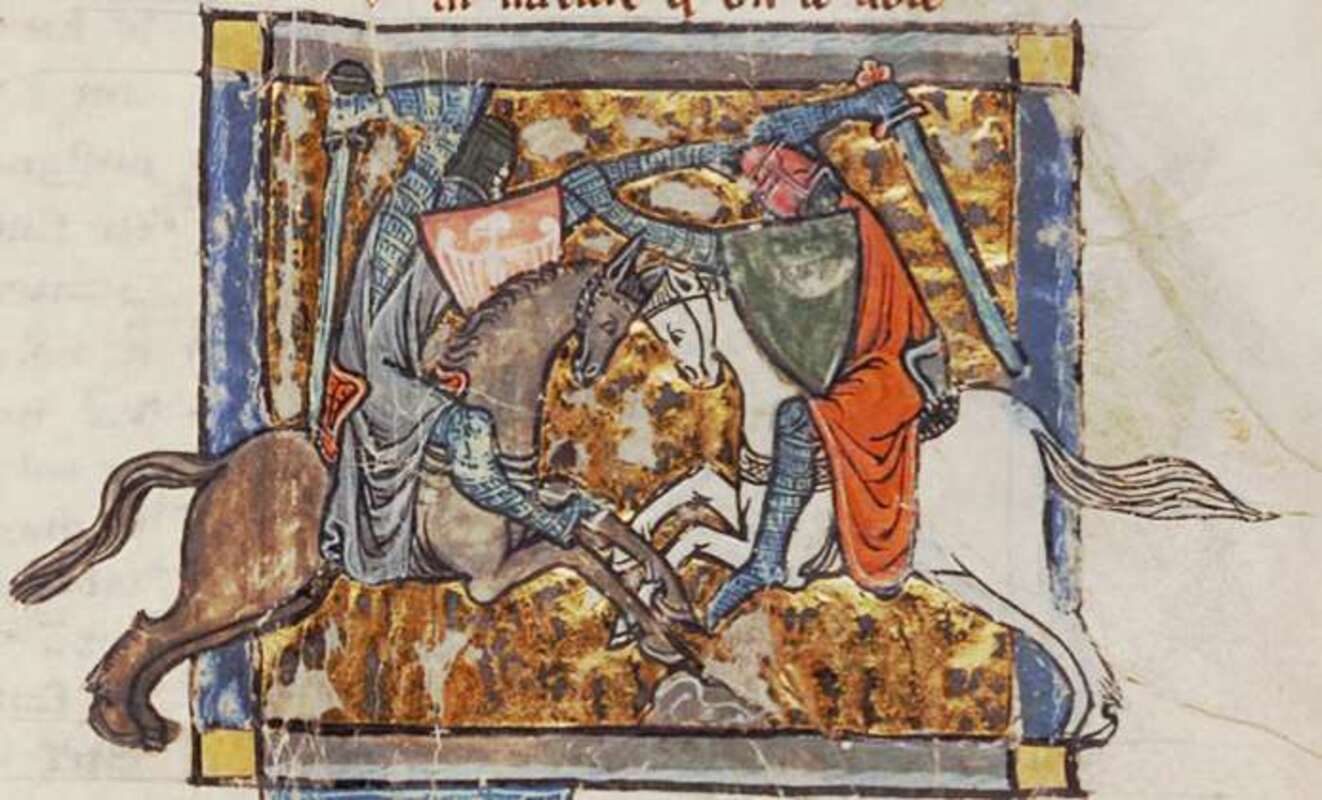
According to some versions of the legends, Arthur appoints Aschillus as the king of Denmark after conquering it. After attending Arthur’s special coronation, Aschillus is portrayed as leading one of the divisions of Arthur’s men in the war against the Romans on the continent.
Finally, Aschillus is named as one of those who died at the Battle of Camlann, the climax of the civil war between Arthur and Mordred.
Generally, Aschillus does not receive much attention by the writers of medieval Arthurian literature. However, there is evidence that he can be identified as an important figure from Welsh tradition, a figure known as Bran the Blessed.
Many sources refer to Aschillus as the king of Dacia, as this is what Geoffrey himself calls him. However, the place name ‘Dacia’ is best known today as the name for a region near the Black Sea. From the context, it is obvious that this is not what Geoffrey was referring to. The place name ‘Dacia’ was a medieval term for Denmark, and it is obvious from Geoffrey’s narrative that this is what he was describing (for instance, the narrative associates Dacia with Norway).
Name
Aschillus’ name takes numerous different forms in the records. Examples include:
Aschillius
Aschil
Eschyllus
Acil
Aschis
Askil
Echil
Many other minor variations along these lines are also attested. In Welsh texts, the form used is normally ‘Echel’ or ‘Achel’.
Aschillus in the Arthurian Legends
Although not given much prominence in the legends, there are quite a few different records which mention Aschillus. As we saw earlier, the first of these is Geoffrey of Monmouth’s Historia Regum Britanniae.
The Subjugation of Denmark
Aschillus does not actually appear in Geoffrey’s account of Arthur’s subjugation of Denmark. Nevertheless, later versions of the Arthurian tales specifically include Aschillus in this account.
According to Geoffrey of Monmouth, King Arthur defeated the Anglo-Saxons at the Battle of Badon and then used the resulting peace to extend his authority as far as possible. He subdued Ireland and the territories to the north. After establishing his rule across essentially all the British Isles, he decided to conquer Europe.
Arthur is said to have set his sights on Norway first. The reason for this is that Lot of Lothian, Arthur’s brother-in-law, was the nephew of Sichelin the king of Norway. That king had died, allowing Lot to become king. However, he had been expelled by a certain Riculf.
To assist his brother-in-law, Arthur attacked Norway and subdued it, along with Dacia (that is, Denmark). Geoffrey then says that Arthur appointed Lot as the king of Norway, although he does not specifically say what happened with Dacia.
Wace’s Roman de Brut
In c. 1155, the writer Wace wrote his own version of the Arthurian legend, based heavily on Geoffrey’s account. This is called Roman de Brut. While following Geoffrey’s account closely, Wace added many new elements to the legend. Regarding Arthur’s conquest of Denmark, Wace wrote:
“Acil, the Danish king, considered the Britons and the folk from Norway. He considered Arthur, who had prevailed against so many kings. Acil knew and was persuaded that Arthur was mightier than he. He had no mind to suffer hurt himself, or to see his goodly heritage spoiled in a useless quarrel. What did it profit to waste wealth and honour alike, to behold slain friends and ruined towers? Acil wrought well and speedily. He sought peace, and ensued it. He gave costly gifts, and made promises which were larger still; till by reason of his words, his prayers, and supplications, concord was established between Arthur and the king.”
According to this version, Aschillus recognised that Arthur was a mighty king and desired to avoid a direct conflict with him. Hence, he willingly and eagerly sought peace with Arthur.
Wace goes on to explain that Aschillus became Arthur’s ally and was allowed to continue ruling over Denmark.
Geoffrey Gaimar’s L’Estoire des Engleis
Prior to Wace, very shortly after the Historia Regum Britanniae was written, Geoffrey Gaimar wrote L’Estoire des Engleis. Peculiarly, this version of Arthur’s conquest of Denmark differs quite substantially from Geoffrey of Monmouth’s and Wace’s versions.
According to Geoffrey Gaimar, Aschillus was the brother of Gunter and Odulf. Originally, Gunter was the king of Denmark and was subjected to Arthur. However, he stopped paying tribute to Arthur. Aschillus’ other brother, Odulf, informed Arthur of this, leading Arthur to attack Gunter and appoint Odulf in his place.
Strangely, Aschillus himself does not appear as the king of Denmark in this version. He is simply the brother of the two individuals whom Geoffrey Gaimar does present as Denmark’s kings. What the origin of this strange difference is remains unknown.
However, it is notable that ‘Odulf’ is similar to the ‘Riculf’ mentioned by Geoffrey of Monmouth, whose name is spelt ‘Ridulph’ by Wace. We could speculate that Geoffrey Gaimar’s Odulf originates from a misunderstanding of Riculf’s role in the earlier version of this legend.
Attends Arthur’s Special Coronation
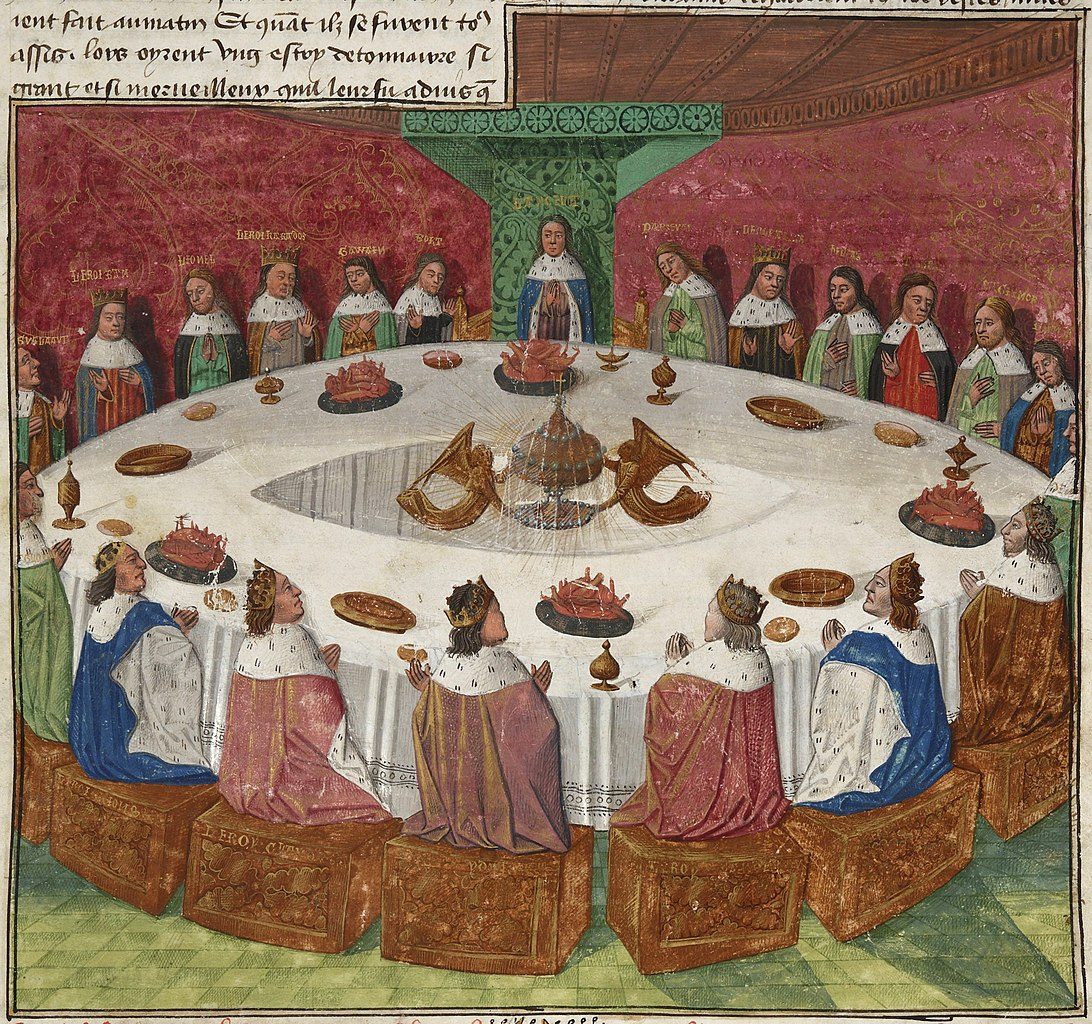
After completing his European conquests, Arthur decided to hold a special coronation at Caerleon-upon-Usk in southeast Wales, implied to be Arthur’s capital. Many allies from all over Britain and even further afield attend this event. After listing those from Britain itself, Geoffrey writes:
“From the adjacent islands came Guillamurius, king of Ireland; Malvasius, king of Iceland; Doldavius, king of Gothland; Gunfasius, king of the Orkneys; Lot, king of Norway; Aschillius, king of the Dacians.”
According to this, Aschillus was one of those who attended Arthur’s special coronation. The fact that he is listed right after Lot may well not be a coincidence, since he also appears in association with Lot later in Geoffrey’s account, as we will now go on to see.
Aschillus in King Arthur’s European War
After his special coronation, Arthur received a letter from the Romans to condemn him for conquering territory in Europe, including Gaul. As a result, Arthur decided to wage war directly against the Romans.
At this point, Geoffrey describes how the kingdoms within Arthur’s realm contributed troops to the army that would go across to Gaul. After mentioning the troops that the kingdoms of Britain itself contributed, Geoffrey states:
“From the six provincial islands, viz. Ireland, Iceland, Gothland, the Orkneys, Norway, and Dacia, were reckoned a hundred and twenty thousand.”
Although Aschillus is not specifically mentioned here, this shows that he is said to have contributed to Arthur’s large army that he took to Europe. In fact, Geoffrey’s account later goes on to show that Aschillus himself went with Arthur.
In his description of the divisions of Arthur’s army, Geoffrey writes:
“Over a third [part] were Aschillius, king of the Dacians, and Lot, king of the Norwegians.”
According to this, Aschillus and Lot jointly led part of King Arthur’s army. It was the third out of nine divisions in total. The fact that Aschillus and Lot jointly lead this division suggests that they may have been closely associated in general, which also ties in with Geoffrey placing them next to each other in his list of Arthur’s allies, as we saw earlier.
Aschillus does not feature prominently after this in Geoffrey’s account of Arthur’s European war, being mentioned only as the subject of an attack by the king of the Parthians.
Death
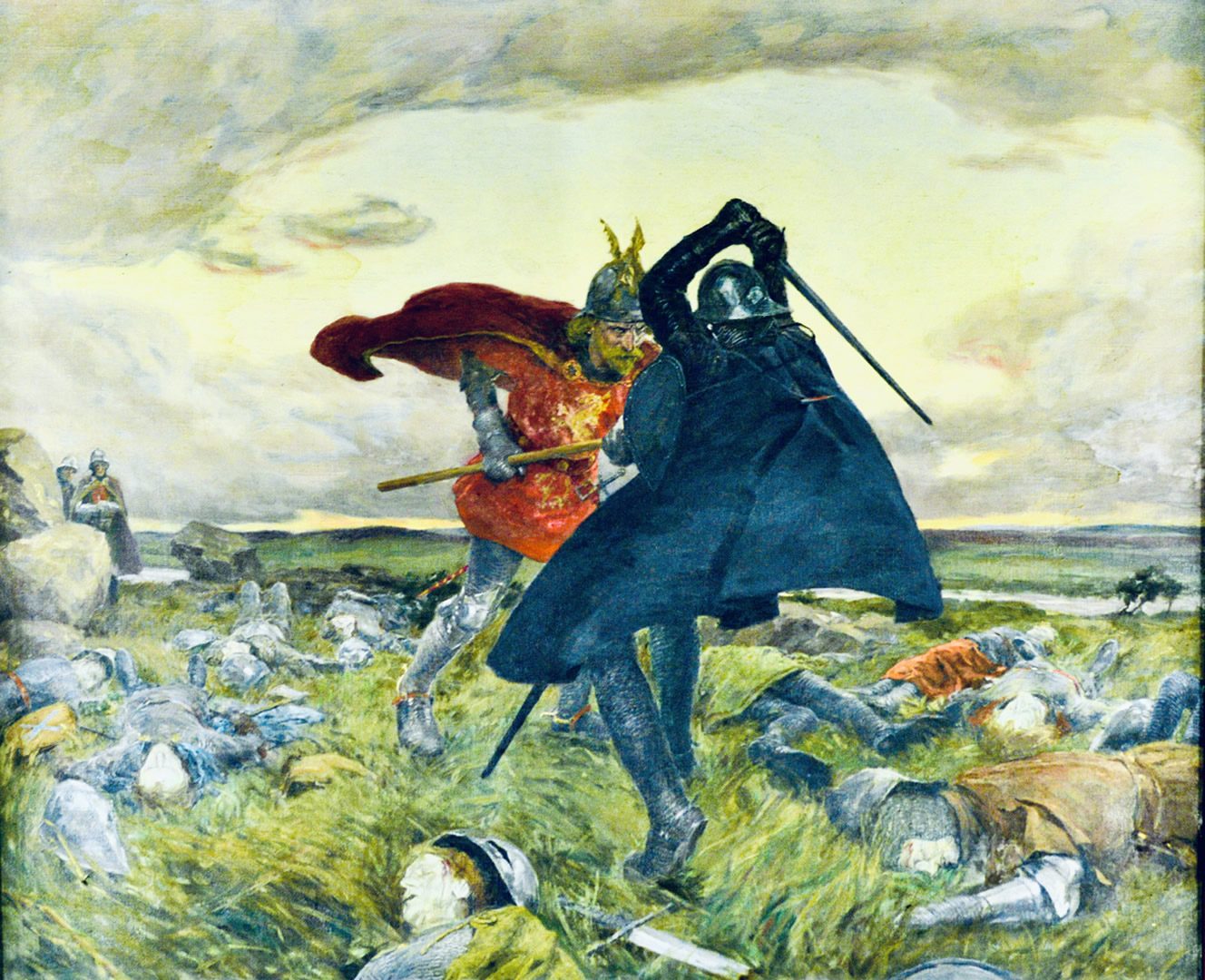
Aschillus’ last appearance is in Geoffrey of Monmouth’s account of Arthur’s final battle. This was the Battle of Camlann, which Arthur fought against Mordred, his treacherous nephew who tried to usurp him as high king.
Numerous allies of Arthur died at this battle. In Geoffrey’s list of those who died, he writes:
“On Arthur’s side, Olbrict, king of Norway; Aschillius, king of Dacia.”
Hence, this was the end of Aschillus’ career. He died at the Battle of Camlann at the hands of Mordred’s rebel forces.
The Real Territory of Aschillus, King of Denmark
Despite being referred to by Geoffrey and various later sources as the king of Dacia, or Denmark, there is very good reason for concluding that this is a mistake. After all, the idea that King Arthur, or any historical ruler, from sixth century Britain actually had diplomatic relations with the kings of Denmark to the point of actually invading and subduing that land is transparently unhistorical.
Therefore, unless this is simply a complete fiction, it is very likely that Aschillus actually ruled over a territory whose name was somehow replaced with Dacia in Geoffrey’s account.
His real territory, at least approximately, becomes quite apparent when we consider the surrounding contextual evidence. For instance, when Arthur subdued Denmark in the first place, this was in the context of restoring Lot to the throne of Norway.
However, Lot was not actually a historical king of Norway. Yet, he almost certainly was a historical figure, appearing in other records as Llew and Lleudonus. We know exactly who he was and where his territory really was. He was the king of Lothian, which was in southeast Scotland.
Consequently, it stands to reason that the ‘Norway’ of this account is actually Lothian, or possibly some adjacent territory of which Lot was also the ruler.
With the subjugation of Denmark appearing in this same context, and with Aschillus and Lot repeatedly connected, Aschillus’ real territory would logically have been somewhere in that area as well. It was likely in the south of Scotland or possibly northern England.
How Scotland Was Confused for Scandinavia
Is there any reasonable explanation for how territories in Scotland could have become confused for territories in Scandinavia? As it happens, there is a very straightforward explanation. This is partially revealed by looking at the wording used in Brut Tysilio, a Welsh version of Geoffrey’s narrative.
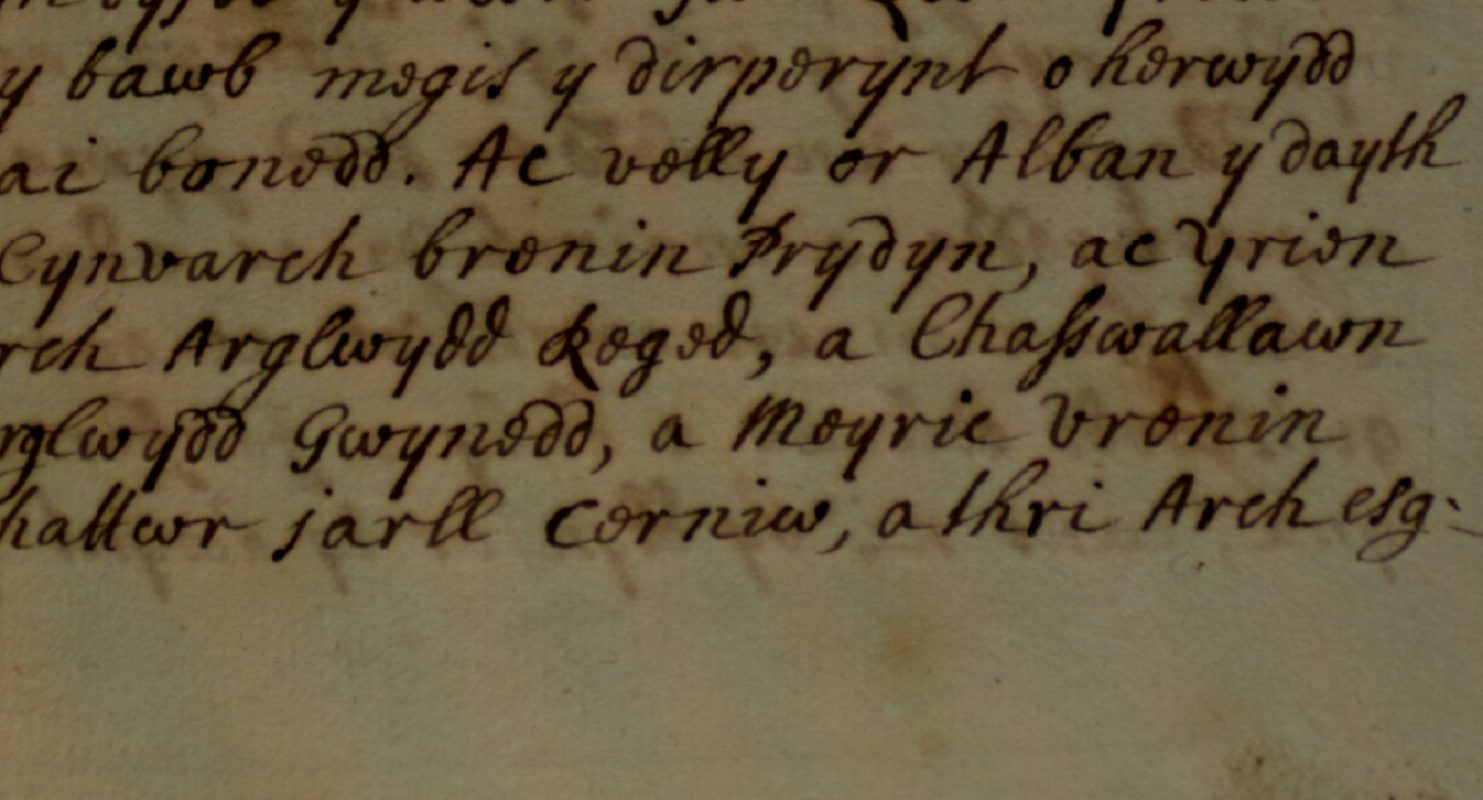
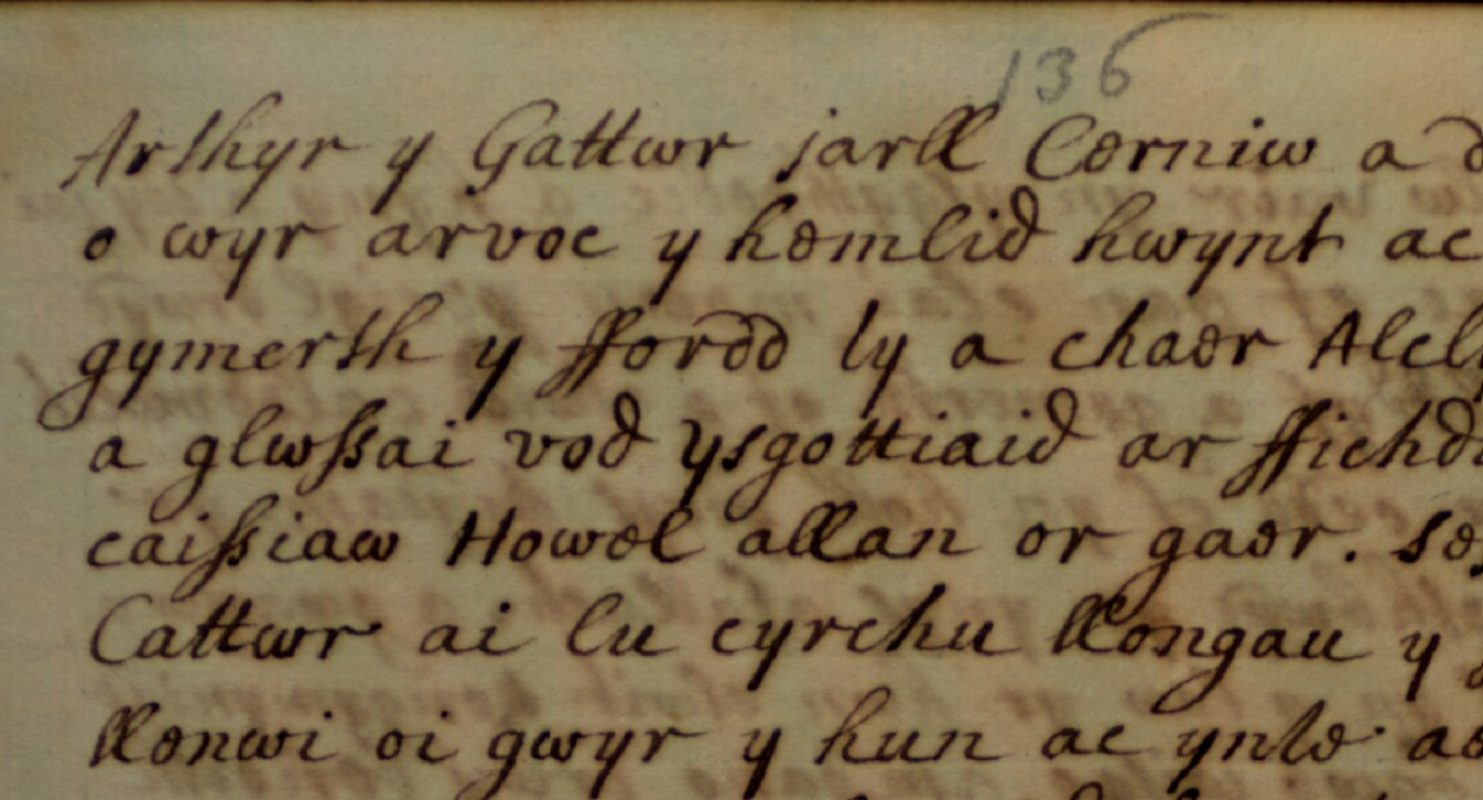
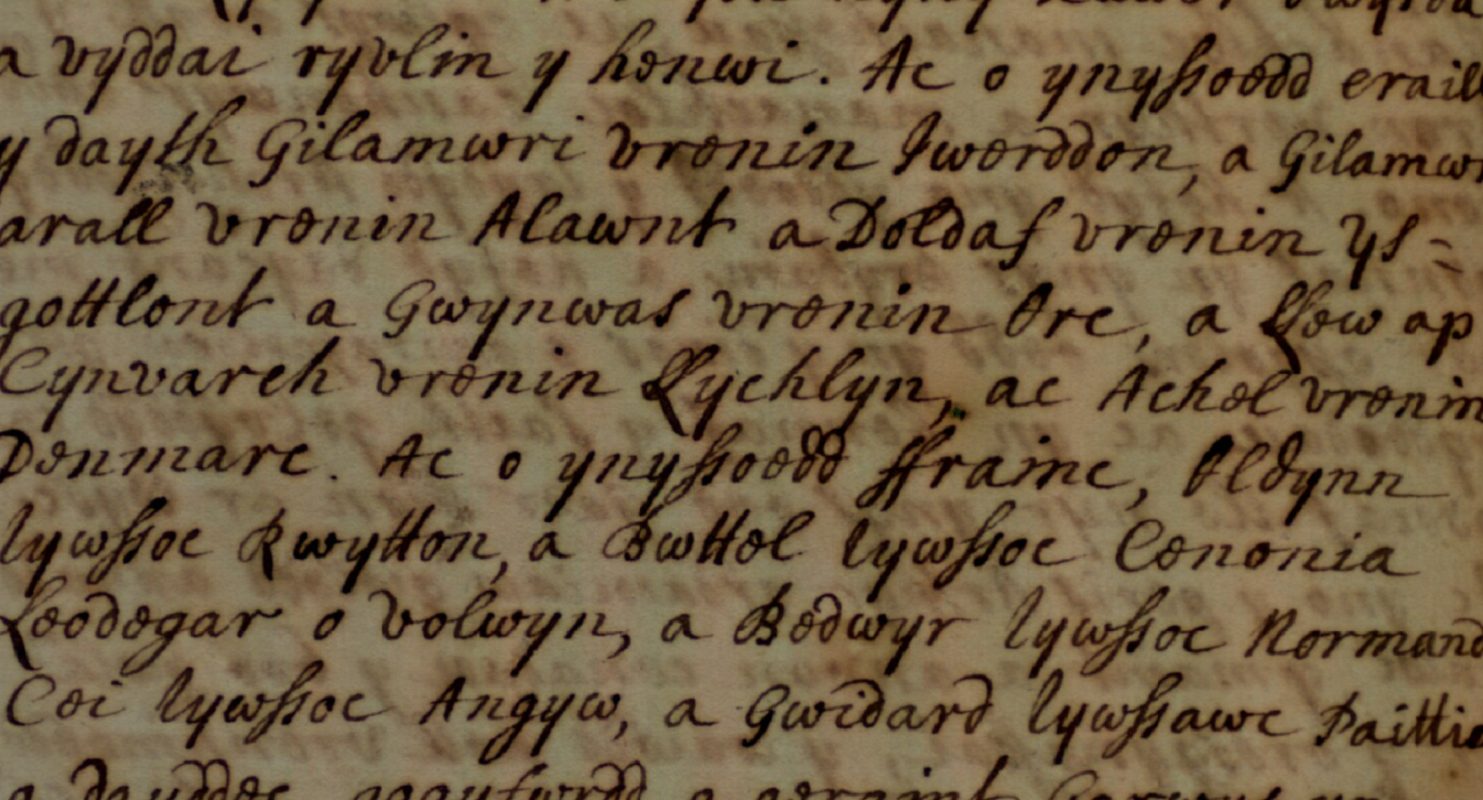
“And then Arthyr fitted out a fleet to go to Llychlyn, because Assychlym, the King of Prydarn, was dead, and had committed the kingship to Llew, son of Kynvarch, his nephew… And living there was Gwalchmai, the son of Llew, son of Kynvarch.”
There are three important things to note here. The first is that the king whom Llew (Lot) succeeds is called ‘Assychlym, the King of Prydarn’. He is said to have given the kingship to Llew, meaning that Llew’s kingdom, ‘Norway’ in Geoffrey’s account, is Prydarn.
This word is clearly a misspelling of ‘Prydyn’, which was the normal Welsh word for Scotland. This confirms that Geoffrey’s ‘Norway’ is actually in Scotland.
The second notable thing from this passage in the Brut Tysilio is the fact that Gwalchmai is said to have lived there. Since Gwalchmai ap Llew is a well established northern figure, this reinforces the conclusion that this conquest was actually of territories in modern-day Scotland, not Scandinavia.
The Importance of Llychlyn
However, the most important detail is the fact that the territory which Arthur goes to is also given another name, Llychlyn. Why is this so notable? The reason is that this place name appears numerous times in medieval records – not just Welsh ones – and its usage is very clear.
It is known that ‘Llychlyn’ was a name applied to Scotland, but it was also the name for Scandinavia. Hence, any record which referred to Scotland by this name would easily open itself up to confusion with Scandinavian territories.
This is evidently the simple explanation for how Aschillus, who was evidently a king of Scotland, came to be misidentified as a king of Denmark.
Aschillus in Welsh Tradition
As mentioned earlier, Aschillus’ name is spelt ‘Echel’ and ‘Achel’ in the Welsh versions of Geoffrey of Monmouth’s account, such as the Brut Tysilio. This is immensely significant, for it allows us to work out who, from other Welsh records, he may have really been.
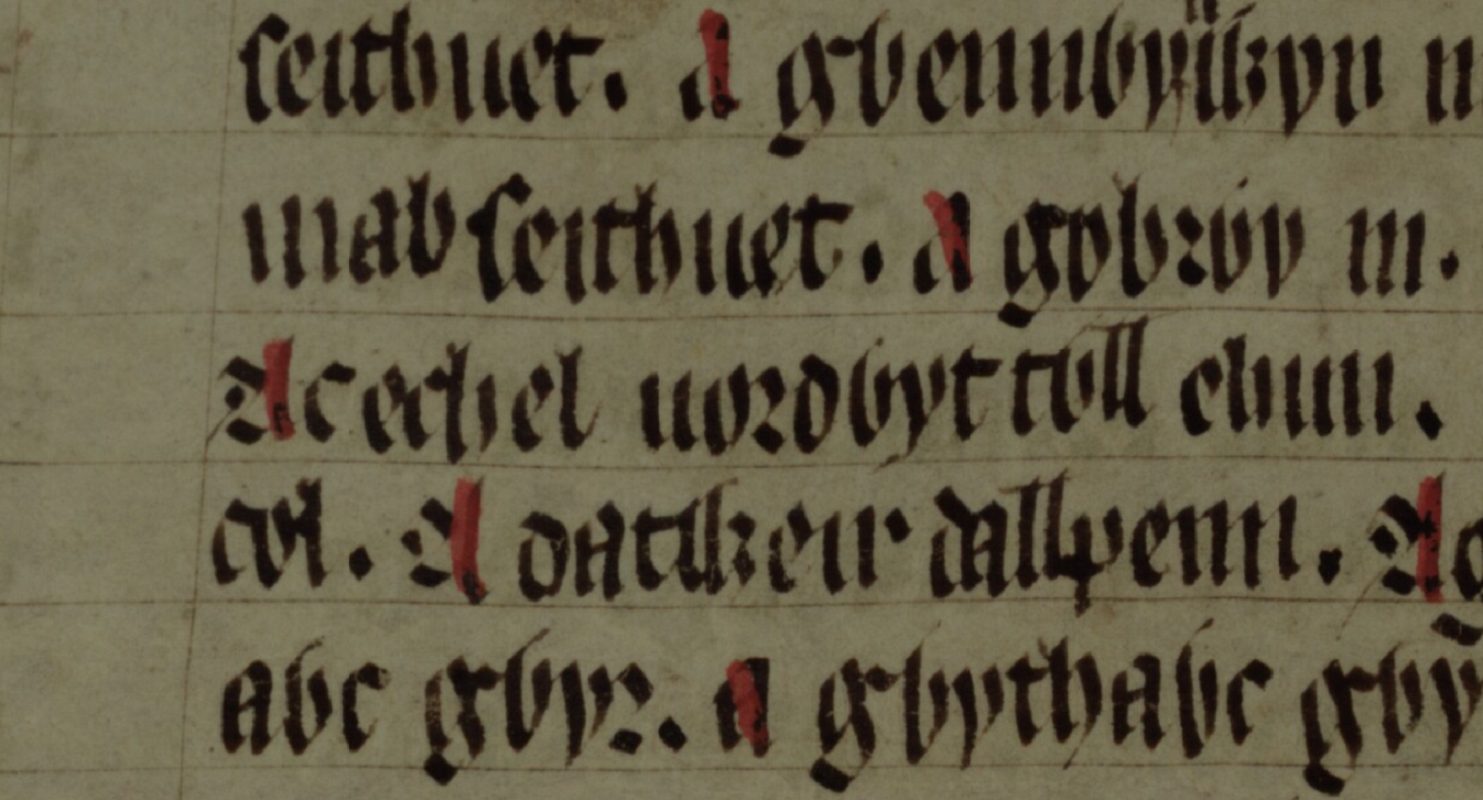
The name ‘Achel’ is entirely unknown, while the name ‘Echel’ is extremely rare. In fact, it appears that there is only one single person in all of Welsh tradition with the name ‘Echel’, and he just so happens to have been a contemporary of Arthur in those records.
Based on the extreme rarity of the name and the chronological match, it is very likely that we can identify Geoffrey’s Aschillus with the Echel who appears in Welsh tradition. Who was this Echel?
What We Know about Echel from Welsh Tradition
This character’s full name is given as Echel Forddwyd-Twll. This epithet means ‘Mighty-Thigh’. He appears in the Welsh prose tale Culhwch and Olwen. The first place in which he is mentioned is a very long list of all of Arthur’s allies. Not only does Echel himself appear, but his son Gobrwy is also mentioned as one of the men upon whom Arthur could call for help.
Part of this story is about the hunt for a monstrous boar which was attacking the Irish. Arthur and his men sailed over to Ireland to capture it, but it swiftly travelled over to South Wales and started attacking that land.
Arthur and his men pursued the boar, called Twrch Trwyth, across most of South Wales. Finally, at one point, we read:
“Thence he went on to Llwch Ewin, and Arthur overtook him there, and he made a stand. And there he slew Echel Forddwytwll, and Garwyli the son of Gwyddawg Gwyr, and many men and dogs likewise.”
According to this, Echel died at the hands of Twrch Trwyth in South Wales. Specifically, the site of his death was Llwch Ewin. This location is believed to be the modern-day Llyn Llech Owain, which is near Gorslas, just above the Gower Peninsula.
Echel’s Death
As we saw, the name ‘Echel’ is extremely rare, so the idea of there being two Echels who both lived at the same time and were both allies of Arthur is highly implausible. Yet, the death of Echel here does not agree with the death of Aschillus in Geoffrey of Monmouth’s narrative.
The events of Culhwch and Olwen are clearly set long before the Battle of Camlann. In fact, this story would appear to be set just after the Battle of Badon. This explains why Osla, Arthur’s Saxon enemy at the Battle of Badon, is shown to be in Arthur’s service during this tale. Since Osla dies during Culhwch and Olwen, the Battle of Badon obviously must have happened earlier.
Within Geoffrey of Monmouth’s narrative, Arthur is only depicted as leading a military force to Ireland once, and it is indeed after the Battle of Badon. Hence, the most logical conclusion is that the story of Culhwch and Olwen can be placed in that part of Geoffrey’s narrative, which is years prior to the Battle of Camlann, where Geoffrey places Aschillus’ death.
Is there any way of harmonising these two conflicting traditions? Well, if we maintain the identification of Aschillus with Echel Fforddwyd-Twll, then there are two obvious possibilities. Either Culhwch and Olwen is wrong about Echel’s death, or Geoffrey is wrong about Aschillus’ death.
Evidence That Echel May Not Have Died at Llwch Ewin
In fact, an argument could be made against the accuracy of both records. Regarding Echel’s death at Llwch Ewin, scholar Peter Bartrum observed the following:
“The use of his name in the story may have been intended to explain the name of the stream, Egel, which falls into the Clydach, and apparently lay on the course of the hunt through Glamorgan.”
If we follow this argument, then it is evident that Culhwch and Olwen does not really tell us when Echel died. His inclusion in the tale – or, at least, his death in the story – is a fiction designed to explain a place name.
Of course, this is only a theory based on speculation. It is not necessarily correct. Nevertheless, it does cast some doubt on accepting this as an authentic tradition regarding when and where Echel died.
Evidence That Aschillus Did Not Really Die at Camlann
Likewise, when it comes to Aschillus, there is active reason to doubt Geoffrey’s claim that he died at the Battle of Camlann. The evidence that Geoffrey may have been wrong on this point comes from the Brut Tysilio, the very same source which indicates the Aschillus was the Echel of Welsh tradition.
As a reminder, Geoffrey of Monmouth’s line about Aschillus’ death at Camlann reads as follows:
“On Arthur’s side, Olbrict, king of Norway; Aschillius, king of Dacia; Cador Limenic.”
However, in the equivalent line in the Brut Tysilio, we find a very interesting difference:
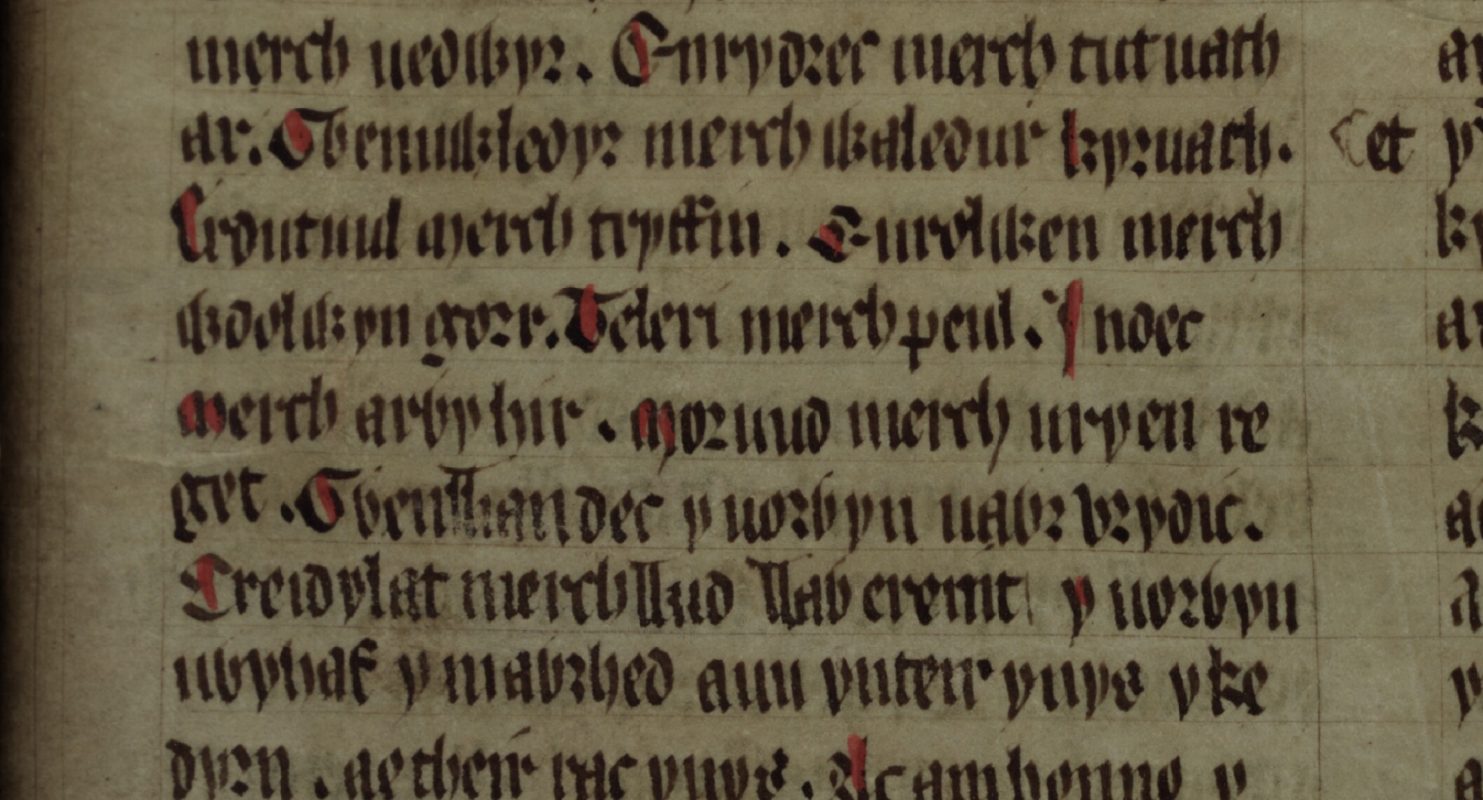
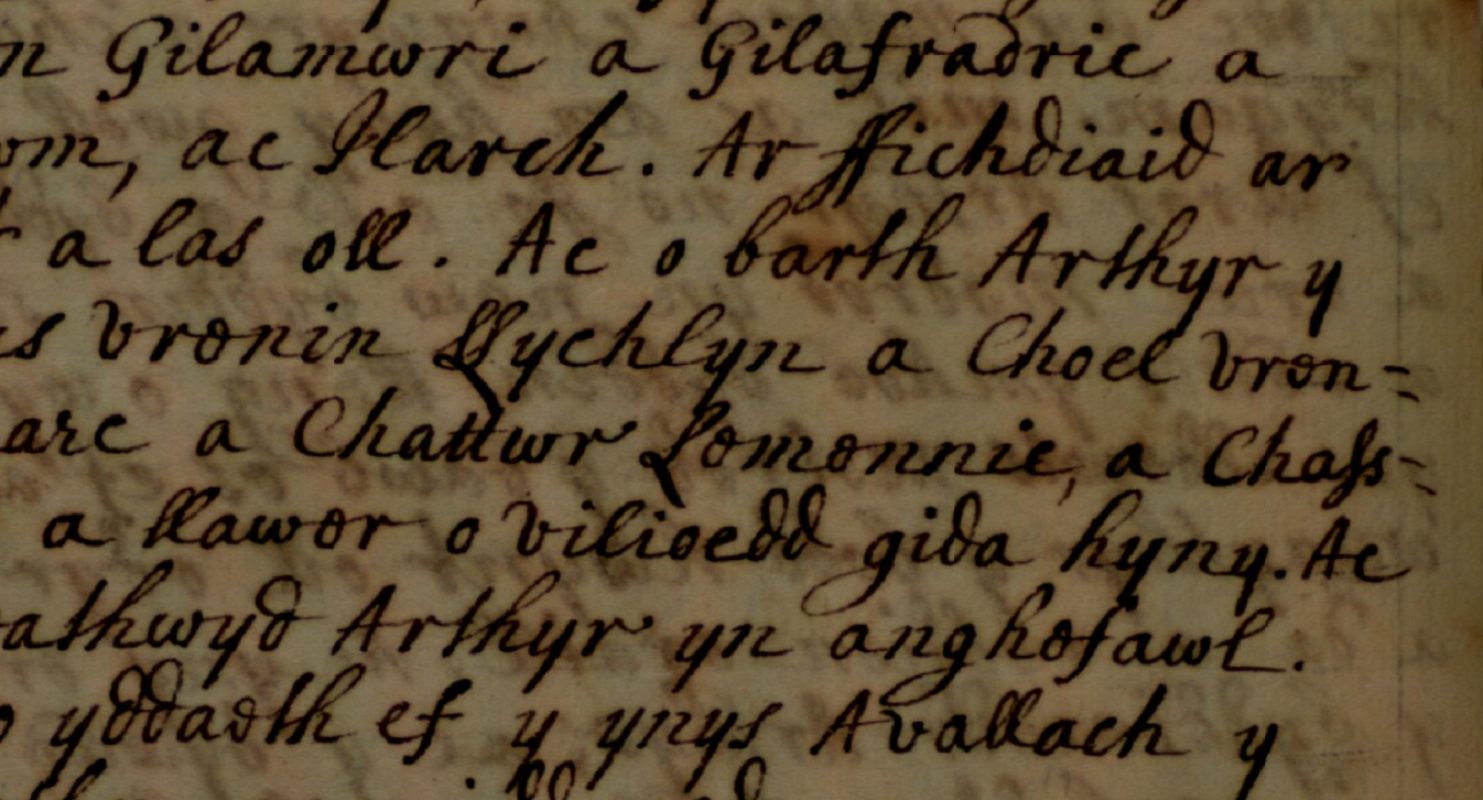
“And on Arthyr’s side were killed Ebras, king of Llychlyn; and Choel, King of Dennmark; and Kattwr Lemennic.”
While ‘Ebras’ and ‘Olbrict’ are probably just variant spellings of the same name, and ‘Cador’ and ‘Kattwr’ are clearly equivalent, it is notable that this Welsh text uses the completely different ‘Choel’ in the place of Geoffrey’s ‘Aschillus’.
This is not the Welsh equivalent of that name, since the Brut Tysilio elsewhere uses ‘Achel’ in the place of Geoffrey’s ‘Aschillus’, and it does so consistently on a number of occasions, as do other Welsh translations of Geoffrey’s work.
It could be the case that the text is simply corrupt, and that ‘Choel’ is a mistake that originated from the first letter of ‘Achel’ being dropped and then the rest, ‘Chel’, being expanded into the more familiar ‘Choel’.
Nevertheless, the fact that ‘Achel’ is used consistently throughout the rest of the text makes this seem unlikely. A more likely scenario is that Geoffrey misinterpreted ‘Choel’ (or whatever similar spelling was used in his source text) as an alternative spelling of ‘Achel’, and thus applied his form ‘Aschillus’ to this character.
This would be an especially easy mistake to make in view of the fact that this Choel is referred to as the king of Denmark.
Echel’s Son
To understand the figure of Echel – and thus Aschillus – a bit better, let us briefly examine what we know about his son, Gobrwy.
He appears in the Dream of Rhonabwy, a Welsh prose Arthurian tale. In that source, Gobrwy is presented as one of King Arthur’s many counsellors.
He also appears in one of the triads, Triad 9, entitled ‘Three Chieftains of Arthur’s Court’. The first entry reads:
“Gobrwy son of Echel Forddwyd-Twll.”
This shows that Echel’s son evidently had a respected position at King Arthur’s court. This indicates that Echel, likewise, was probably a respected figure.
Bran the Blessed
This now brings us to a significant conclusion regarding the identity of Geoffrey’s Aschillus, king of Denmark. The epithet ‘Forddwyd-Twll’ is extremely rare, just like the name ‘Echel’. It appears that there is only one other character in Welsh tradition known to have been called by that epithet.
The figure in question is Bran the Blessed. He is a prominent figure in the Four Branches of the Mabinogion, especially the Second Branch. This is the tale entitled Branwen ferch Llyr. In this tale, Bran is presented as the high king of Britain.
His sister, Branwen, is sent to Ireland to be married to Matholwch, the Irish king. However, this marriage soon turns highly abusive, with Branwen suffering greatly at the hands of Matholwch. Eventually, Bran comes to learn of this severe mistreatment, leading him to take an army to Ireland.
A fierce battle breaks out between the Britons and the Irish, with the Irish using a magical cauldron to revive their dead. One of the Britons manages to destroy the cauldron from the inside, killing himself in the process.
Eventually, only a few Britons manage to return to Britain.
Identifying Bran as Echel
The primary reason for identifying Bran as Echel Forddwyd-Twll is seen from the text of Branwen ferch Llyr. As Peter Bartrum explained:
“When Branwen’s son, Gwern, was thrown into the fire by Efnisien, a tumult arose and Morddwyd Tyllion (who has not been mentioned before) suddenly said ‘Dogs of Gwern, beware of Morddwyd Tyllion’. There is no further mention of him.”
Based on this, it seems as if Morddwyd Tyllion is another name for one of the other characters in the tale, and evidently an important one. Supporting this is the fact that a poem attributed to Taliesin refers to Bran in Ireland in one line, and then Morddwyd Tyllion getting wounded or slain in the next line.
This appears to be a case of parallelism, referring to the same figure by two different names. This is especially likely in view of the fact that Bran was famously mortally wounded in Ireland during the fight with the Irish. Bartrum noted the following:
“Proinsias Mac Cana suggested with some plausibility that Morddwyd Tyllion is a name or cognomen of Brân himself (Branwen daughter of Llŷr, 1958, pp.162-5). Rachel Bromwich agreed (TYP p.336). Tyllion can be regarded as a variant of twll.”
Therefore, there is a very good case for interpreting Echel Forddwyd Twll as another name for Bran the Blessed. In other words, Bran the Blessed seems to be identical to Geoffrey of Monmouth’s Aschillus, king of Denmark.
When Bran Lived
Needless to say, this identification would only make sense if Bran and Echel are both placed in the same era.
One popular idea is that Bran the Blessed lived in the Iron Age, the pre-Roman era of Britain. The basis for this is that his son in the legends is named Caradog, and he is often interpreted as Caratacus, the British king who fought against the Romans in the first century CE.
Furthermore, Bran appears as a contemporary of Caswallon in the Mabinogion. This character is often viewed as a legendary version of Cassivellaunus, the British king who fought against Julius Caesar in the first century BCE.
Although the tale presents Caradog ap Bran as dying during the reign of Caswallon, which obviously does not match the historical Caratacus and Cassivellaunus, this is often dismissed as simply the result of the medieval legends mixing up the time periods.
In reality, a close examination of the sources makes it clear that the Four Branches of the Mabinogion are set in King Arthur’s time, the sixth century CE. For example, one of the men who return from Ireland after Bran’s attack on the country was Taliesin, King Arthur’s chief bard.
One of the main characters in the Four Branches, Pryderi ap Pwyll, actually appears as one of Arthur’s allies in Culhwch and Olwen, along with his foster father Teyrnon. These are just some of the numerous pieces of evidence that the story told in the Four Branches is set in King Arthur’s time.
How This Identification Clarifies When Aschillus Died
As we saw earlier, there is some difficulty in establishing when Aschillus really died. While his identification as Echel Forddwyd-Twll seems secure, this character is said to have died during Twrch Trwyth’s devastation of South Wales, which contradicts Geoffrey’s claim regarding Aschillus dying at the Battle of Camlann.
If we accept the identification of Echel (and thus Aschillus) with Bran, then the balance of probability is firmly tipped to one side. The invasion of Ireland in Culhwch and Olwen, as mentioned earlier, likely corresponds to Arthur’s invasion of Ireland in the Historia Regum Britanniae.
Logically, this would also correspond to Bran’s invasion of Ireland in Branwen ferch Llyr, especially in view of the presence of Taliesin, King Arthur’s chief bard, in that tale.
Since Bran is said to have been mortally wounded at the time of this invasion, this places his death at about the same time as when Culhwch and Olwen places Echel’s death. The two are only separated by a very short time, and they are both associated with the same wider event.
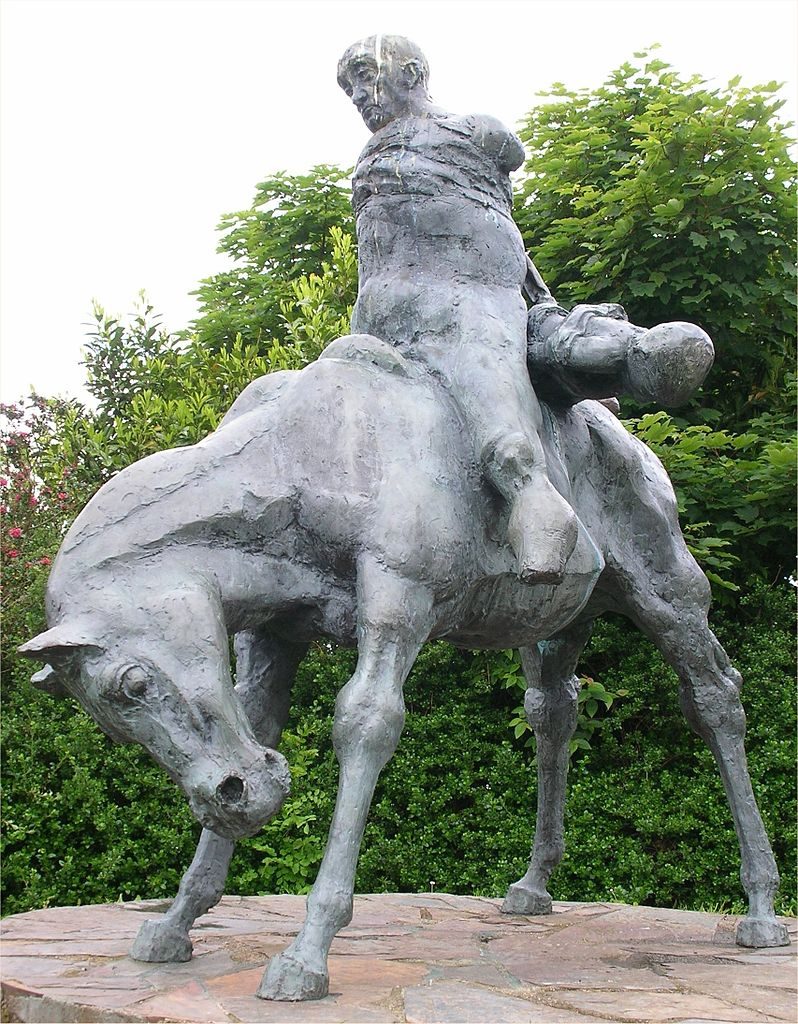
The invasion of Ireland in Culhwch and Olwen is the start of the boar hunt. If Bran died in that invasion, as per Branwen ferch Llyr (although not presenting it as a boar hunt in that tradition), then this would mean that one line of tradition could have remembered Bran as having been killed at the hands of the Twrch Trwyth.
This ties in well with Echel’s death in Culhwch and Olwen. Although placing his death after Arthur and his men return from Ireland, it is still part of the same hunt. Perhaps, then, we may accept Bartrum’s suggestion that he was connected with the particular spot of Llych Ewin because of the nearby place name Egel.
Understanding Aschillus’ True Role in Arthurian Tradition
Now that we have established that Aschillus appears in Welsh tradition as Echel, and that Echel Forddwyd-Twll is almost certainly identical to Bran the Blessed, let us see how we can make sense of the various piece of information about this figure.
According to Geoffrey of Monmouth, Aschillus was the king of Denmark. This must be a reference to part of Scotland, evidently in the south. Meanwhile, Bran is presented as the High King of Britain in Welsh tradition.
Given that most other traditions make King Arthur the High King of Britain at this time, this strongly indicates that the story of Bran was written from the point of view of someone from another part of Wales.
Indeed, the Four Branches are particularly focused with west Wales, especially the northwest. This would explain why Caswallon, a legendary version of the historical Cadwallon Lawhir ap Einion Yrth of Gwynedd, is presented as the High King of Britain after Bran.
With these facts in mind, it seems likely that Bran was from the kingdom of Gwynedd but had expanded his rule up into Scotland. Bran’s father, Llyr, may have been Llyr ap Einion Yrth, Cadwallon’s brother (probably an older brother).
Contrary to what Geoffrey presents, Aschillus – that is, Bran the Blessed – seems to have died or was mortally wounded during the invasion of Ireland shortly after the Battle of Badon. His presence at Arthur’s coronation (where he is nothing more than a name in a list of allies) must be anachronistic.
The account of Arthur’s European conquest is historically worthless for the Arthurian period, since it is evidently drawn from Magnus Maximus’ much earlier invasion of Europe, as concluded by David Dumville and other scholars.
Hence, the only potentially significant mention of Aschillus after the special coronation is the mention of his death at the Battle of Camlann. However, as we have seen, the Welsh Brut Tysilio gives this death to a different figure, named Choel. Notably, there is another record of a Coel who was contemporary with King Arthur, who could have been this Choel of the Brut Tysilio.
Geoffrey Gaimar
This understanding of Aschillus’ true role in the Arthurian legends makes sense of the peculiar statements about him in Geoffrey Gaimar’s L’Estoire des Engleis. As we saw earlier, for some unknown reason, he presents a king named Gunter as the king of Denmark rather than Aschil.
It is this Gunter who is ruling Denmark when Arthur goes to subdue it, and he sets up Odulf in his place. Aschillus, meanwhile, is the brother of these characters, and he never actually features in as the king of Denmark nor plays a part in the story.
If Aschillus was really Echel Forddwyd-Twll and Bran the Blessed, then the explanation for this is quite simple. Aschillus was already dead when Arthur subdued ‘Denmark’, or that region of southern Scotland.
Who, then, was Gunter? He would presumably have been the successor of Aschillus. Notably, Echel Forddwyd-Twll is recorded as having a son named Gorbwy. As discussed earlier, he is listed as one of the Three Chieftains of Arthur’s Court. His name appears variously as ‘Goronwy’, ‘Goronw’, ‘Gronw’, and other variations.
In other words, Geoffrey Gaimar may have preserved a tradition that was very confused but nonetheless historically valuable, showing Aschillus to have already been out of the picture at the time of Arthur’s subjugation of that territory.
Assychlym
The concept of Aschillus actually dying very shortly before Arthur’s invasion of ‘Norway’ and ‘Denmark’ ties in very well with another detail. The king whose death caused the succession struggle in Geoffrey of Monmouth’s account is a certain Sichelin. No such figure from Welsh tradition is known.
Notably, in the Brut Tysilio, this figure’s name is written as Assychlym. This is not far from Geoffrey’s ‘Aschillus’.
Given that Sichelin is said to have just recently died, his death is placed at about the time of Arthur’s invasion of Ireland. He is presented as the ruler of essentially the same territory as that assigned to Aschillus, and his name is similar.
Therefore, it may well be that this is actually a reference to the death of Aschillus, and that Geoffrey accidentally duplicated the character in referring to Aschillus, king of Denmark, as a separate figure.
Conclusion
In conclusion, Aschillus, king of Denmark, is a very enigmatic figure in the Arthurian legends. In the traditional understanding of his role, he submitted himself to Arthur’s rule when the latter invaded that region in favour of his brother-in-law, Lot. Later, Aschillus attended Arthur’s special coronation, participated in the Roman war, and then died at the Battle of Camlann.
However, when we look more closely at the evidence from all the available sources, we see that Aschillus can almost certainly be identified as a figure named Echel Forddwyd-Twll. He, in turn, can very likely be identified as Bran the Blessed. Rather than dying at the Battle of Camlann, he appears to have died at about the time of Arthur’s invasion of Ireland, thus identifying him as Sichelin, or Asschylm, the king whose death caused a succession struggle in the North. The figure who died at the Battle of Camlann, on the other hand, was likely an unrelated figure named Coel.
Sources
Bartrum, Peter, A Welsh Classical Dictionary, 1993
Bromwich, Rachel, Trioedd Ynys Prydein: The Triads of the Island of Britain, 2014
Mason, Eugene, Wace: The “Arthurian” Portion of the Roman de Brut, 1999
Howells, Caleb, King Arthur: The Man Who Conquered Europe, 2019
Bromwich, Rachel & Simon Evans, D, Culhwch ac Olwen, 2012
https://nightbringer.se/the-legend-of-king-arthur/arthurian-characters/o-arthurian-characters/odulf/