Arawn, King of Scotland

Arawn, the king of Scotland, was a powerful king in the Arthurian legends and a brother-in-law of King Arthur himself. He came from one of the most prominent dynasties of sixth-century Britain and was the brother of two well-attested monarchs of the North. Despite being powerful, there are relatively few references to Arawn. In this article we will examine what we know about him by piecing together various pieces of evidence.
Who Was Arawn, King of Scotland?
Arawn appears in the Arthurian legends as one of the brothers-in-law of King Arthur. He was one of three brothers who were allies of Arthur and who all ruled in the north of Britain. While Arawn tends to get less prominence in the Arthurian legends compared to his two brothers, Lot and Urien, he is arguably presented as the most powerful of them, at least in some sources.
He was not the king of all of Scotland, but he was the king of a prominent part of it. One source which mentions him is Geoffrey of Monmouth’s Historia Regum Britanniae, written in c. 1137. While useful in many respects, this source is not particularly helpful in determining where exactly Arawn ruled.
It is also very likely that this same Arawn can be identified as the Arawn who appears in Welsh mythological texts as the ruler of Annwn, the Welsh Otherworld.
Name and Identity
The name of this figure is the subject of some controversy. In Geoffrey of Monmouth’s Historia Regum Britanniae, Arawn appears as ‘Augusel’. Some manuscripts spelt it ‘Angusel’. Both spellings are seen in modern reference works.
Of course, there is a considerable difference between ‘Arawn’ and ‘Augusel/Angusel’. Where does the spelling ‘Arawn’ come from, and what basis do we even have for concluding that they are really the same figure?
In Welsh versions of Geoffrey of Monmouth’s book, such as the Brut Tysilio, the names used by Geoffrey are often altered or replaced entirely, so as to bring the names more in line with those that were more familiar to the Welsh readers. Since the Arthurian legends originate from Wales in the first place, this often provides insight into things that Geoffrey may have inadvertently corrupted or intentionally changed in his Latin work.
In the Brut Tysilio, we find the name ‘Arawn’ in the place of Geoffrey’s ‘Augusel’. This shows that Geoffrey’s Augusel is identical to the figure named Arawn who appears in Welsh tradition.
Further evidence of this is the fact that Welsh tradition provides Arawn with brothers who correspond to the brothers of Augusel in Geoffrey of Monmouth’s narrative. For instance, the Welsh Triads – a medieval collection of Welsh traditions grouped into threes – provides Arawn with brothers named Urien and Llew.
The first is clearly identical to Augusel’s brother Urien, while the second, Llew, can be confidently connected to Augusel’s brother Lot. This is especially so when we realise that the full spelling of Llew’s name was ‘Leudonus’, making it easy to see how Geoffrey could have shortened that to ‘Lot’.
Therefore, the evidence is clear that Geoffrey’s Augusel was identical to the Arawn from Welsh tradition.
How Arawn Became Augusel
However, this still leaves unresolved one key issue. How, exactly, did the Arawn from Welsh tradition come to be known as ‘Augusel’ or ‘Angusel’ in Geoffrey’s Latin work?
No one really knows the answer to this question. Some of Geoffrey of Monmouth’s corruptions (of which there are many) can simply be attributed to random errors. For example, he refers to Aulus Plautius as ‘Lelius’, an extra ‘L’ having been added to the start of the name.
Confusion with Another King
Nevertheless, aside from random mistakes, one popular theory is that Geoffrey was influenced by the attested name ‘Angus’. This was the name of a prominent king of part of Scotland in the fifth or sixth centuries. As Peter Bartrum explained:
“It seems that Geoffrey formed the name from Angus, and he may have had some knowledge of the historical Angus son of Erc, who, with his brothers Loarn and Fergus, founded the germ of the Scottish kingdom of Dál Riada in Cantyre in about A.D.464.”
This figure’s name also appears as ‘Oengus’ in many sources. According to at least one record, Angus son of Erc succeeded his brother Fergus as king of Dal Riada at the very start of the sixth century. More details about Angus’ reign, such as how long he ruled for, are difficult if not impossible to find.
Interestingly, at least one record refers to a son of Erc named Aed who also had a son named Angus, or Oengus. This would therefore be a nephew of Bartrum’s Angus son of Erc. Therefore, this younger figure fits better as a contemporary of Arawn than Angus son of Erc does.
Therefore, it is possible that Geoffrey or his source got confused between Arawn and Angus son of Aed, or possibly Angus son of Erc. This would have led to him mistakenly calling this king ‘Angusel’ or ‘Augusel’.
Other Spellings
While the name of this figure is commonly written as ‘Arawn’, this is not the only spelling seen in Welsh sources. Other attested spellings include:
Aron
Araun
Arav
Family
Now that we have looked at who Arawn was and what his name really was, let us examine what we know about his family.
Parents
As mentioned earlier, Arawn’s family was one of the most powerful and prominent dynasties of Britain in the sixth century. His father was Cynfarch Oer, whose epithet (which only appears occasionally) means ‘Dismal’. Another epithet found for Cynfarch is ‘Hen’, meaning ‘Old’.
Cynfarch was a prominent king in the North, the area encompassing much of northern England and southern Scotland. The fact that Cynfarch was a prominent king is shown by the fact that he was remembered as a founding figure. His descendants were sometimes referred to in Welsh tradition as the Cynferchyn.
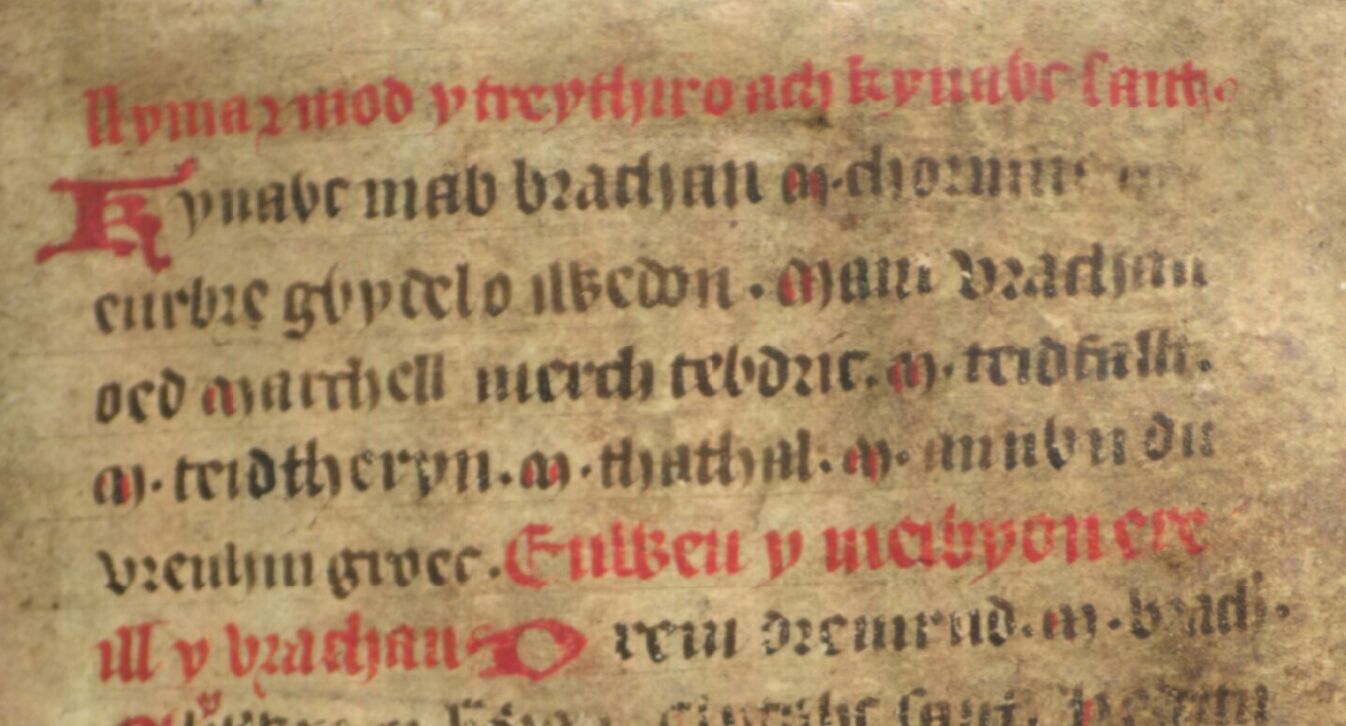
His wife, Arawn’s mother, was Nyfain ferch Brychan. This Brychan was the king of Brycheiniog, southeast Wales. He was the son of Marchell ap Tewdrig and the first cousin of Athrwys ap Meurig, one of the most prominent candidates for the historical King Arthur.
Interestingly, this union between Arawn’s father and a princess from southeast Wales may have laid the foundation for the alliance between Arawn and King Arthur – a king most firmly associated with southeast Wales in the records – as claimed in the Arthurian legends. In any case, it demonstrates that such alliances between dynasties as far north as Arawn’s and dynasties as far south as southeast Wales did sometimes occur.
This connection becomes even more relevant if we take the view that Athrwys ap Meurig really was the historical King Arthur, as many researchers support. Brychan was his first cousin. With his daughter marrying Arawn’s father, this demonstrates that Athrwys’ expanded dynasty had direct connections to Arawn’s dynasty. This could go a long way to explaining why Arawn and his two brothers were such close allies of King Arthur.
Brothers
What do we know about Arawn’s brothers? As we have already seen, they were Lot and Urien. Welsh tradition uses ‘Llew’ in the place of ‘Lot’.
Urien was perhaps the most powerful king of the North in the second half of the sixth century. He is recorded in the Historia Brittonum, written in c. 830, as leading an alliance of kings against the Anglo-Saxons, particularly those of Bernicia. Several poems written in his praise by the bard Taliesin still survive.
Like Arawn, Urien appears as one of Arthur’s most prominent allies in the Arthurian legends.
Lot was the king of Lothian in southeast Scotland. In some texts, he appears as Leudonus or Lleuddun.
Sons
Interestingly, there do not appear to be any recorded sons of Arawn in the available sources. Since Arawn was clearly an important king of part of Scotland, this is unusual.
The explanation for this mystery may well be that Arawn was overthrown, meaning that any sons he may have had were never able to succeed him.
Another possibility is that he died before he had any heirs, so his kingdom was given to another member of his dynasty, such as a brother or a nephew. Later, we will go on to see evidence that this is exactly what happened.
Arawn in the Arthurian Legends
Now that we have seen who Arawn and his family were, what do we know about Arawn’s own role in the sources?
Geoffrey of Monmouth’s Historia Regum Britanniae
Let us begin with Geoffrey of Monmouth’s Historia Regum Britanniae, written in c. 1137. This is the earliest source which presents Arawn in an Arthurian context. As we saw earlier, Geoffrey actually calls him ‘Augusel’ or ‘Angusel’ by mistake.
Restoration to the Throne
According to Geoffrey’s account, Augusel and his two brothers had been expelled from their kingdoms by the Anglo-Saxons during their conquests. After defeating them at the Battle of Badon and putting down a rebellion of Picts and Scots, Geoffrey explains that Arthur went on to restore the three brothers to their respective thrones.
Lot was restored to Lothian, Urien was restored to Mureif (Moray), and Augusel was restored to the kingdom of the Scots. Given the context, it is likely that this is a reference to the Irish kingdom of Dal Riada in western Scotland.
To be sure, Geoffrey’s geography is often a mess. The kingdom that he assigns to Urien, for example, is much too far north. In the case of Arawn, Geoffrey may well be wrong as well. It is entirely possible that Geoffrey making Arawn a king of the Scots is due to the same confusion that resulted in him calling him ‘Angusel’. In other words, this detail may actually be from the Angus or Oengus who was ruling in the sixth century.
Attending King Arthur’s Special Coronation
The next appearance of Arawn, or Augusel, is in Geoffrey’s account of King Arthur’s special coronation. This occurred some years later, after Arthur had conquered Gaul. He arranged for a massive ceremony in which he invited all his allies from all over Britain and even further afield.
When Geoffrey describes those who came to Arthur’s court for this special event, he begins:
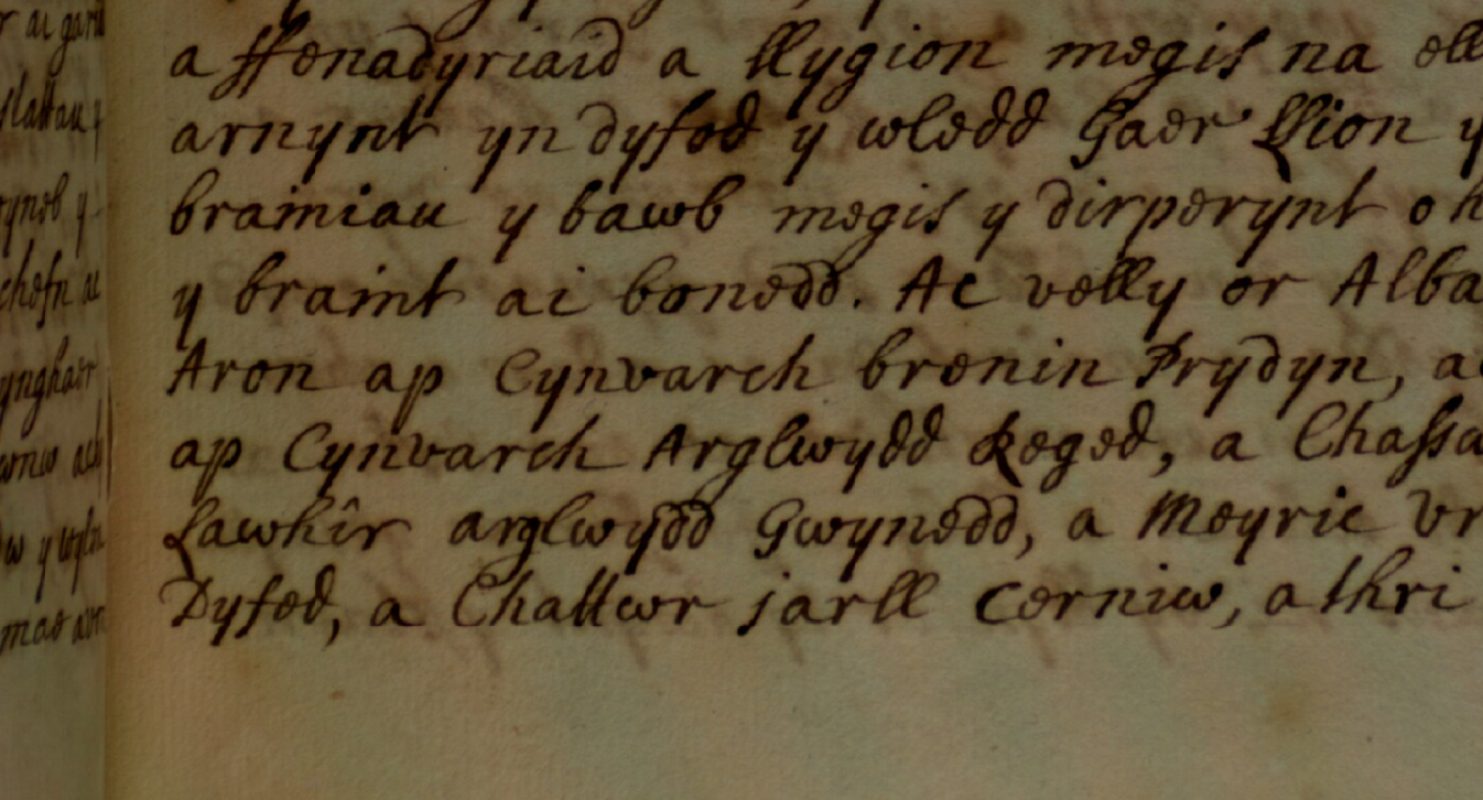
“Accordingly there came Augusel, king of Albania, now Scotland; Urian, king of Mureif; Cadwallo Lewirh, king of the Venedotians, now called the North Wales men; Stater, king of the Demetians, or South Wales men; Cador, king of Cornwall; also the archbishops of the three metropolitan sees, London, York, and Dubricius of the City of Legions.”
What follows is a long list of all the more minor allies of Arthur, generally referred to as ‘consuls’, although some other minor kings are mentioned too. The point is that these first figures in the quoted excerpt are the most important and prominent figures in Arthur’s kingdom.
There is the king of North Wales, the king of South Wales, the king of Cornwall, and the most prominent bishop of the time. There are also two major kings of the North. What is especially notable about this description is the fact that Augusel is the first one mentioned out of all of these.
Although Geoffrey does not expand on this point, this heavily implies that Augusel was one of the most powerful of all the kings in Britain during Arthur’s reign.
His prominence is highlighted even further a little bit later on, when Geoffrey describes the actual coronation ceremony. Arthur is said to have been accompanied by four kings, each with a golden sword. These kings are listed as the kings of Albania, Cornwall, Demetia, and Venedotia.
Here, Augusel is again referred to before the others, and Urien is excluded. This once again heavily implies that Augusel was an exceptionally powerful king, especially in view of how powerful Urien is known to have been.
Advice for King Arthur
The next time that Augusel (Arawn) makes an appearance in Geoffrey’s account, it is after Arthur receives a letter from the Romans condemning him for his conquest of Gaul. They demand that he pay them tribute, since they view it as their rightful territory.
This letter infuriates Arthur, leading him to entertain the possibility of going to war against the Romans directly. After he expresses his feelings on the matter, two kings stand up to declare their opinion. The first is Hoel of Brittany, Arthur’s nephew for whom the king had much affection.
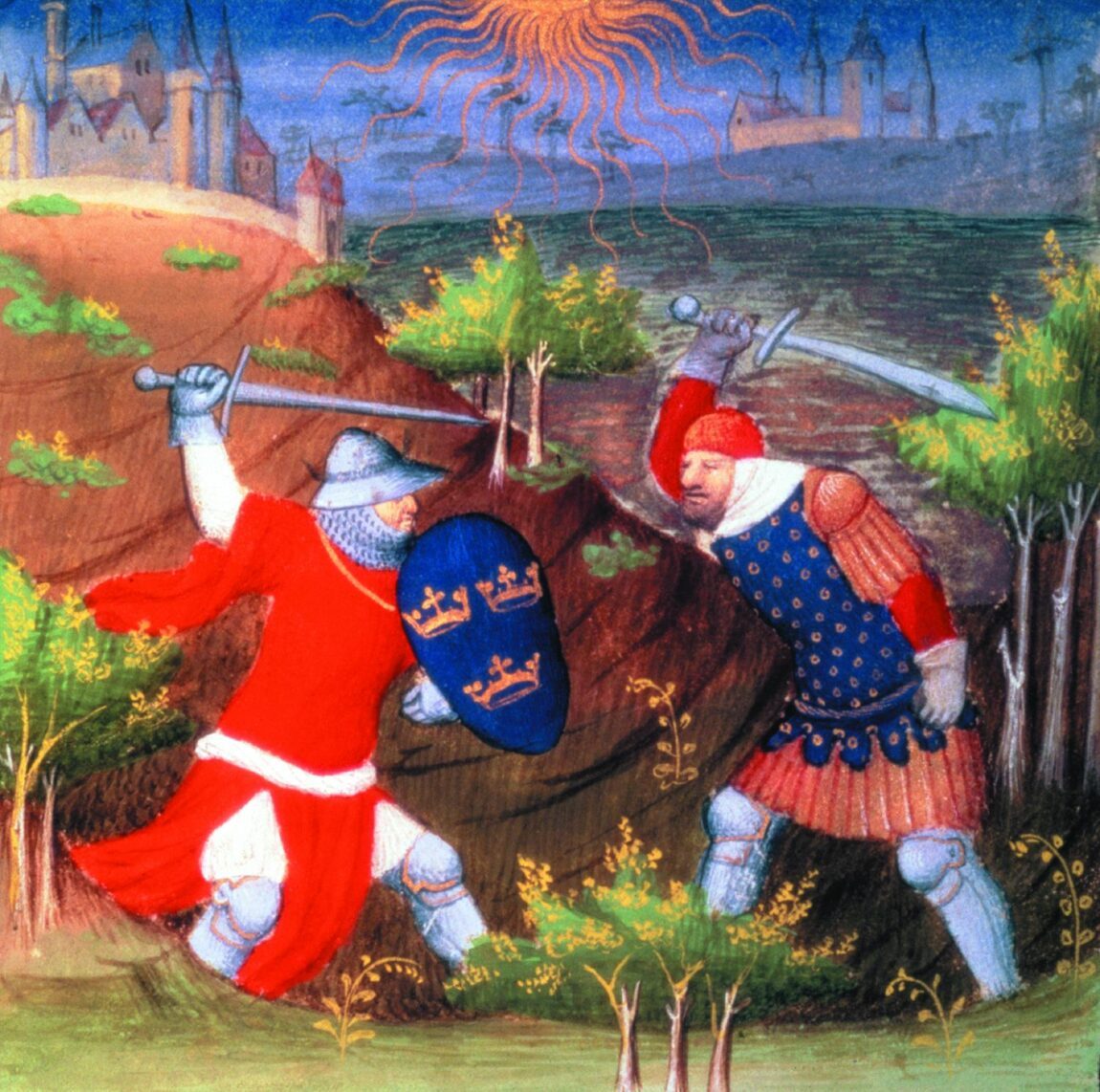
After Hoel, Augusel spoke up. He declared that nothing would make him happier than to engage in warfare against the Romans and the Germans. He explained that they deserved retribution for the sufferings that they had inflicted on the Britons over the years.
Thus, he gave his full and unwavering support for the suggestion of going to war against the Roman Empire. He even declared that he would happily die for such a cause.
War against the Romans
Augusel next appears in a prominent position in Arthur’s army as it set off for the Romans on the continent. Geoffrey explains that Arthur’s army was divided into two main bodies, one to the left and the other to the right. Augusel was the leader of one body, while Cador of Cornwall was the leader of the other.
Once again, this highlights Augusel’s prominence and prestige. It indicates that he was a strong king that could be trusted to fight powerfully in battle.
However, despite his evident importance as one of the main commanders in the battle, Geoffrey does not mention him again in the account of Arthur’s war against the Romans.
Death during Mordred’s Uprising
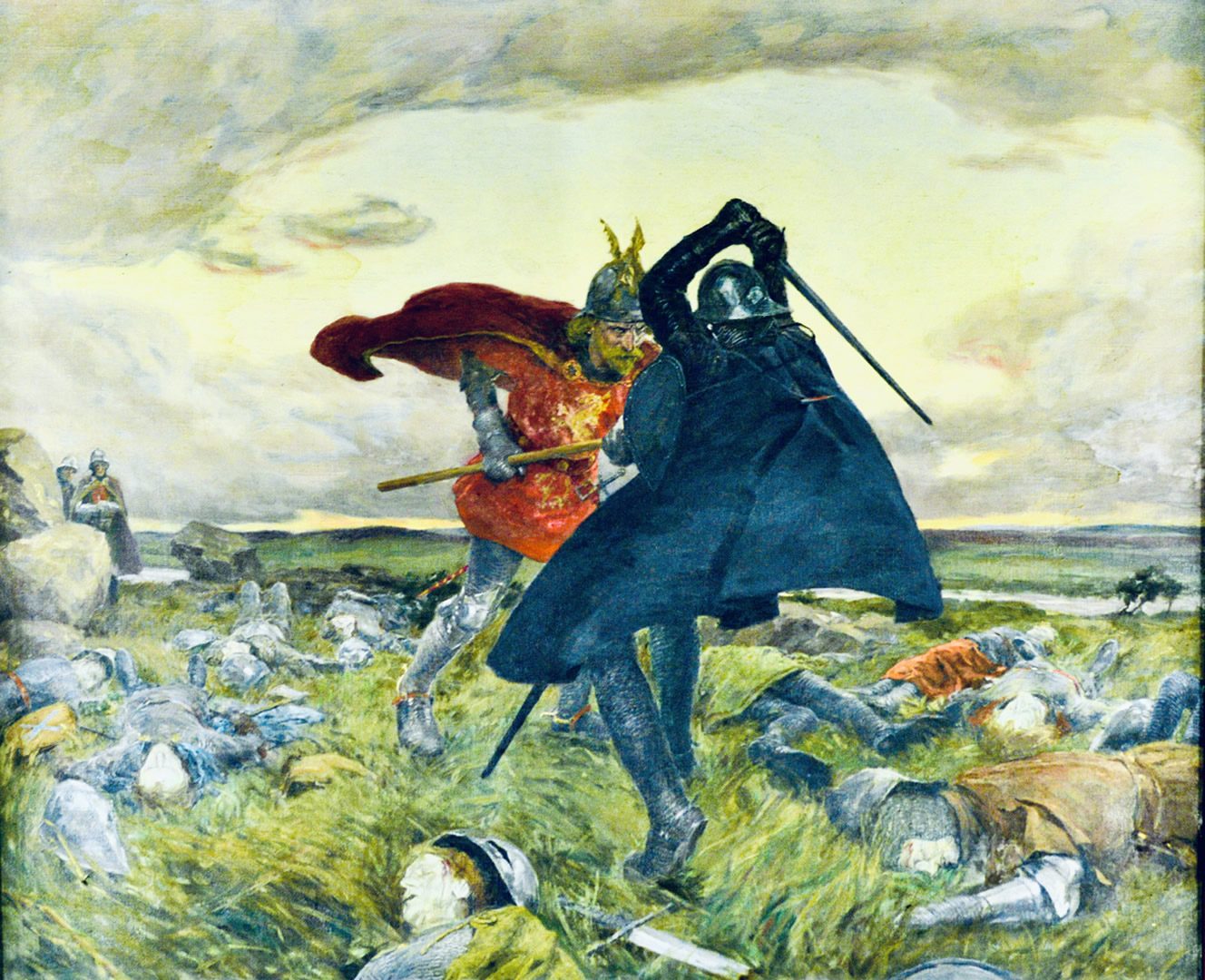
The next appearance of Augusel is in Geoffrey’s account of Mordred’s uprising against Arthur. While Arthur was away on the continent, Geoffrey explains that Mordred decided to usurp the throne, making himself king in Arthur’s place.
Arthur then rushed back to Britain to deal with this uprising. During the initial clash with Mordred’s forces as Arthur was attempting to land, a bloody battle broke out. This is presented as a particularly devastating battle. Many of Arthur’s allies died during this event.
Augusel, king of Scotland, was one of the casualties of this conflict. According to Geoffrey’s narrative:
“For the same day fell Augusel, king of Albania, and Walgan, the king’s nephew, with innumerable others. Augusel was succeeded in his kingdom by Eventus, his brother Urian’s son, who afterwards performed many famous exploits in those wars.”
Thus, according to this Arthurian source, this was the fate of Arawn, king of Scotland. He fell in battle against Mordred’s forces at the start of the conflict that eventually climaxed in the Battle of Camlann.
Once again, it is notable that Augusel is the first person to be named as falling in this battle. In fact, he and Walgan are the only two mentioned by name, despite Geoffrey claiming that ‘innumerable others’ also died.
Succeeded by His Nephew
In the quotation from Geoffrey’s account, we find the apparent solution to why there is no record anywhere of Arawn’s sons. We can see that he was succeeded to his kingdom by ‘Eventus’ the brother of Urian. This is the historical Owain ap Urien.
Hence, the evident explanation for why there is no record of Arawn’s sons is that he did not have any. Otherwise, why did Owain succeed him in his kingdom? Although Geoffrey does not go to the trouble of explaining this point, it is obvious that Arawn, or Augusel, did not have an heir. Hence, his kingdom had to go to a near relative, his nephew Owain.
The Battle of Llongborth
There is strong evidence that this battle in which Arawn supposedly died can be identified as the Battle of Llongborth, which is a conflict that appears in Welsh tradition.
According to the poem known as Geraint son of Erbin, this was the battle in which Geraint of Dumnonia was killed. Geraint’s death is also mentioned in the Life of St Teilo. This presents Geraint’s death as occurring just as Teilo returned to Britain after the end of the Yellow Plague, at the same time as the return of many other Britons who had fled to Brittany to escape the effects of that plague.
In Geoffrey of Monmouth’s narrative, he mentions the replacement of Teilo as bishop of Dol in the place of Samson. He places this at the time of Arthur’s special coronation, between his first invasion of Gaul and his second. The second one was the one which ended with Arthur returning to Britain to fight Mordred.
The significance of this is that the Life of St Teilo describes this as happening while Teilo was in Brittany during the Yellow Plague. If Geoffrey’s chronological placement of events is even roughly accurate, then this points towards a likely connection between Arthur’s presence in Gaul and the desertion of Britain due to the Yellow Plague.
The only period in Geoffrey’s narrative in which many from southern Britain travel to the continent for an extended period of time is in his account of Arthur’s war against the Romans. The correspondence with the timing of Teilo’s appointment as bishop of Dol appears to confirm the connection.
Therefore, this strongly suggests that Geraint’s death at the Battle of Llongborth, which the Life of St Teilo places right at the end of that period in which many had been away from Britain, occurred in the battle between Arthur and Mordred in which Arthur attempted to return to Britain.
This is further supported by the fact that the poem Geraint son of Erbin specifies that Arthur was there at the Battle of Llongborth. For more evidence, see the article The Battle of Llongborth.
What all of this means is that we can conclude that the Battle of Llongborth was the battle at which Arawn died – at least, if Geoffrey’s account is accurate on this point.
Where Did Arawn Die?
If Arawn died at the Battle of Llongborth, then this means that we can ascertain the site of his death. While there is debate about where exactly Llongborth was, by far the most likely location is Llamborth, at Penbryn Beach, just a few miles along the coast from the town of Cardigan.
One obvious reason for making this connection is that the name of Llamborth is very similar to the ‘Llongborth’ from the poem. Furthermore, several miles inland is the place name Bedd Geraint, meaning ‘Grave of Geraint’.

Additionally, the Life of St Teilo states that Geraint died at a location called Din Gereint. This was the old medieval name for the town of Cardigan.
Furthermore, Welsh translations of Geoffrey of Monmouth’s account provide place names which appear to support this conclusion. Two manuscript versions refer to the place in which this battle occurred as ‘Aber Temys’. This is the Welsh name for the River Thames.
Historically, it is impossible for Arthur’s battle against Mordred to have been fought there. That was deep within Saxon territory in Arthur’s time, so he obviously would not have attempted to land there. However, Aber Teifi was another name for Cardigan. Given the ease with which the letters ‘f’ and ‘m’ could be exchanged in the medieval Welsh manuscripts, it would be easy for ‘Aber Temys’ to be a mistake originating from ‘Aber Teifi’.
Therefore, the weight of evidence strongly supports the conclusion that Arawn died at Penbryn Beach near Cardigan. Perhaps further research will one day reveal where his grave is, as research has apparently already revealed in the case of Geraint.
Of course, there is always the possibility that Arawn’s body was taken back to the North for a burial in his own territory.
The Welsh Triads
Now that we have seen what Geoffrey of Monmouth’s account claims about Arawn, let us consider what we know from Welsh sources.
One of the main Welsh sources of information about Arthurian tradition is the Welsh Triads, which is a collection of brief references to larger, mostly lost, stories. Arawn appears in multiple entries.
One of these is Triad 70, entitled ‘Three Fair Womb-burdens of the Isle of Britain’. The first entry lists Arawn, Llew, and Urien as the three children of Nyfain ferch Brychan. This is the version found in the manuscript known as the Peniarth 47.
Another version is found in the Peniarth 50. In this latter version of the triad, the children in question are Urien and Efrddyl, a sister. In each of the three entries, the Peniarth 50’s version specifies that they were carried in the womb together.
Although the Peniarth 47’s version does not include this detail, it should probably be inferred. For one thing, all three entries mention multiple children. The very title of the triad, ‘womb-burdens’, is likely a reference to the burden of carrying multiple children at once. Finally, we can note that the second two entries are identical in both versions of the triad.
Therefore, this is ostensibly a trace of a Welsh tradition that Arawn, Llew, and Urien were triplets. Of course, there is no guarantee that the version in the Peniarth 47 is accurate. It is equally possible that the version in Peniarth 50 preserves the original tradition, meaning that Urien was believed to have been twins with his sister Efrddyl, with Llew and Arawn being from different pregnancies.
Rachel Bromwich argued that the Peniarth 50’s version, mentioning Urien and Efrddyl, was the correct one. However, her basis for doing so was weak to the point of irrelevance. In reality, we simply do not know which version preserves the more authentic tradition.
One of King Arthur’s Counsellors
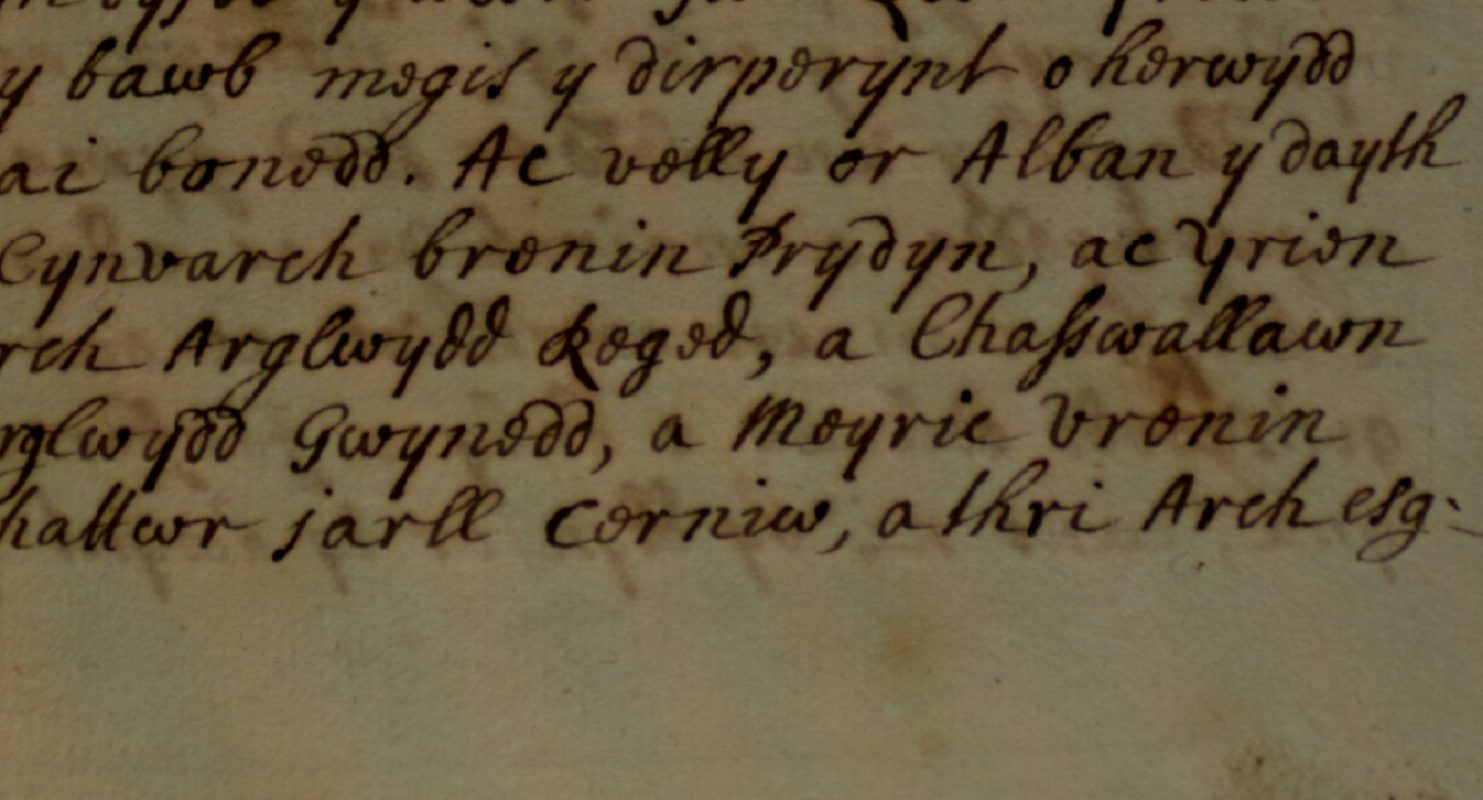
The other triad in which Arawn appears is a late triad entitled ‘The Three Counsellor Knights of King Arthur’s Court’. Arawn appears along with Cynon son of Clydno Eidyn and Llywarch Hen son of Elidir Lydanwyn. About these three, the triad says:
“And those three were counsellors to Arthur: whatever hardship came upon him, they counselled him, so that nobody could overcome him. And thus Arthur triumphed over everything, and in every feat, and over every nation in the world; through the strength of the powerful spirit and the faith and hope that were in his heart towards those men.”
According to this triad, Arawn was a greatly valued ally of Arthur, serving as one of his closest advisors. Although this does not seem to explicitly appear elsewhere, it does tie in well with Geoffrey of Monmouth’s depiction of Augusel as being one of two men who voiced their opinion regarding Arthur’s intention to wage war against the Romans.
When Did Arawn Live?
When did Arawn, king of Scotland, really live? As we have seen, the legends present him as a contemporary of King Arthur. Since his brother is said to have married one of Arthur’s sisters, this implies that he was of about the same generation as Arthur.
However, it is notable that Gawain, Lot’s son by Arthur’s sister, is shown in Geoffrey’s narrative to have been born just after the Battle of Badon, which was well into Arthur’s career. This suggests that the sister in question was much younger than Arthur, and that Lot, therefore, may also have been much younger than the king.
This would also apply to Augusel (Arawn), in the absence of any reason to believe that he was much older than his brother.
It is often said that the association of Urien, Lot, and Arawn with King Arthur is anachronistic. Supposedly, their careers would not have overlapped at all with Arthur’s. This is based on the fact that they appear to have been born in approximately the year 520, while Arthur supposedly died in c. 537.
Evidence that they were born no earlier than c. 520 is primarily seen in the case of Urien, the most well-recorded of the three brothers. He appears in the Historia Brittonum, where he is shown to have fought against several Anglian kings in the late-sixth century, as late as the 580s or even 590s.
A Revised Chronology
In reality, the earliest information about when Arthur was active suggests that his famous Battle of Badon was fought towards the middle of the sixth century. See the article When Did King Arthur Really Live?
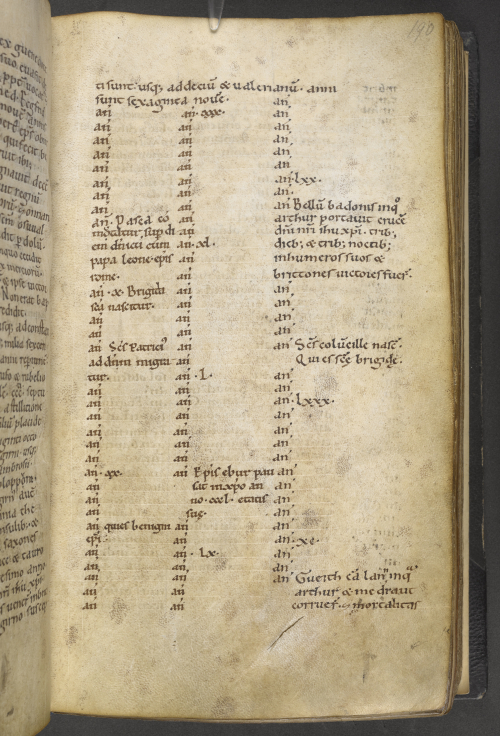
It would appear that the Arthurian dates in the Annales Cambriae have been accidentally backdated by thirty-three years due to confusion between Jesus’ birth and his death, since both events were sometimes used as anchor points for dates in medieval documents.
This would mean that the Battle of Badon should actually be dated to 549, while the Battle of Camlann was in 570. If Arawn was born in approximately the year 520, then he would have comfortably been a contemporary of Arthur.
When Arthur is said to have restored Augusel and his brothers to their respective thrones, this was shortly after the Battle of Badon. In other words, Augusel, or Arawn, would have been about thirty years old at the time, according to this chronological scenario.
Later, he would have been about forty years old at the time of Arthur’s special coronation, a king in his prime. This is consistent with the unusual prominence that he is given at that part of Arthur’s rule.
At the time of his death in the prelude to the Battle of Badon, he would have been approximately fifty years old.
What this shows is that every statement about Arawn’s role as Arthur’s ally throughout his reign is perfectly consistent with the chronological facts. The only issue is the need to recognise the strong evidence from early records that Arthur lived about three decades later than the clearly erroneous dates in the Annales Cambriae.
Arawn, King of Annwn
There is another figure in Welsh tradition who is virtually certain to be identical to Arawn ap Cynfarch, although he is strangely not often recognised as such. This is Arawn, king of Annwn. He appears in the Four Branches of the Mabinogion.
His Territory
In Welsh tradition, Annwn is the name of the mysterious Otherworld. In one text, Preiddeu Annwn, it is a strange land across the sea to which Arthur travels on a disastrous expedition. However, in many others, it is a territory within Britain.
The evidence indicates that it was a region in the North. One piece of evidence for this is the fact that Arawn of Annwn is said to have fought a war against a person named Amathaon. This war took place at a forest called Goddeu. This same place name appears in an early Welsh poem in association with Urien, a king of the North, and his northern territory of Rheged.
Furthermore, Urien’s wife is said to have been the daughter of the king of Annwn. Hence, the evidence suggests that Annwn was a region somewhere in the North, in southern Scotland or northern England. Although we do not know exactly where Arawn ap Cynfarch ruled, since he is simply called the ‘king of Scotland’ in most sources, this is consistent with Arawn of Annwn.
Chronology
Another observation is that Arawn of Annwn is definitely made a contemporary of King Arthur. The events of the Four Branches, although not involving many traditionally Arthurian characters, take place during Arthur’s reign.
We see this, for instance, from the fact that Pryderi, the central character of the tales, is made an ally of Arthur in Culhwch and Olwen. Furthermore, Arthur’s chief bard, Taliesin, accompanies Pryderi on a trip to Ireland in the Four Branches.
Therefore, Arawn of Annwn is an excellent chronological match for Arawn ap Cynfarch, king of Scotland. Based on the chronology, the geography, and the fact that the name is very rare, it is virtually certain that Arawn ap Cynfarch, king of Scotland, is the historical figure behind the legendary Arawn of Annwn, king of the ‘Otherworld’.
What This Reveals about Arawn, King of Scotland
This being so, we can use the information about Arawn of Annwn to further understand Arawn ap Cynfarch. For instance, the Mabinogion explains that Arawn fought a war against another king in Annwn, named Hafgan.
Arawn is then said to have switched places with Pwyll, a minor king from Dyfed, who is then able to defeat Hafgan. Arawn subsequently returns to his throne. This may well be another version of the story that Geoffrey preserved about Arawn being driven out from his kingdom and Arthur restoring him. This makes sense in view of that fact that Pwyll’s territory was adjacent to Arthur’s, and his family is presented in Culhwch and Olwen as allies of Arthur.
Therefore, the Four Branches may represent a mythologised version of this event, focusing entirely on Pwyll’s role in Arthur’s restoration of Arawn to his throne.
At some point in his reign, a king named Amathaon stole some livestock from Arawn, which led to a war between them. This was the Battle of Goddeu. An entire poem exists about this battle, although the outcome is not explained.
Nevertheless, it is mentioned in various records, including the Welsh Triads, so it was evidently a famous event. Yet, it was remembered as a ‘Futile Battle’, perhaps because it did not result in a definitive victory for either side, or because it was fought over something trivial.
Conclusion
In conclusion, Arawn, King of Scotland, was a powerful king of part of the North. He evidently ruled over a region in southern Scotland, although his exact territory is unknown. He was the son of Cynfarch and the brother of Lot (Llew) and Urien. He appears in Geoffrey of Monmouth’s narrative as Augusel, a name which might have occurred due to Geoffrey confusing Arawn with Angus, a king of the Scots in the sixth century. Despite claims that Arawn and his brothers could not have been contemporaries of Arthur, the earliest evidence about Arthur’s reign would have Arawn’s career overlap with most of Arthur’s.
Finally, we have seen that Arawn ap Cynfarch can almost certainly be identified as the Arawn who appears in the Mabinogion as the king of Annwn, a mysterious land in the North. Using this identification, it appears that Pwyll, a king of Dyfed, was involved in restoring Arawn to his throne. Furthermore, there was apparently a famous war between Arawn and a king named Amathaon at a forest called Goddeu.
Sources
Bartrum, Peter, A Welsh Classical Dictionary, 1993
Bromwich, Rachel, Trioedd Ynys Prydein: The Triads of the Island of Britain, 2014
Howells, Caleb, King Arthur: The Man Who Conquered Europe, 2019
Braun, Dauvit, The Irish Identity of the Kingdom of the Scots in the Twelfth and Thirteenth Centuries: Volume 18, 1999
Watson, William, The Celtic Placenames of Scotland, 2011