The Battle of Camlann

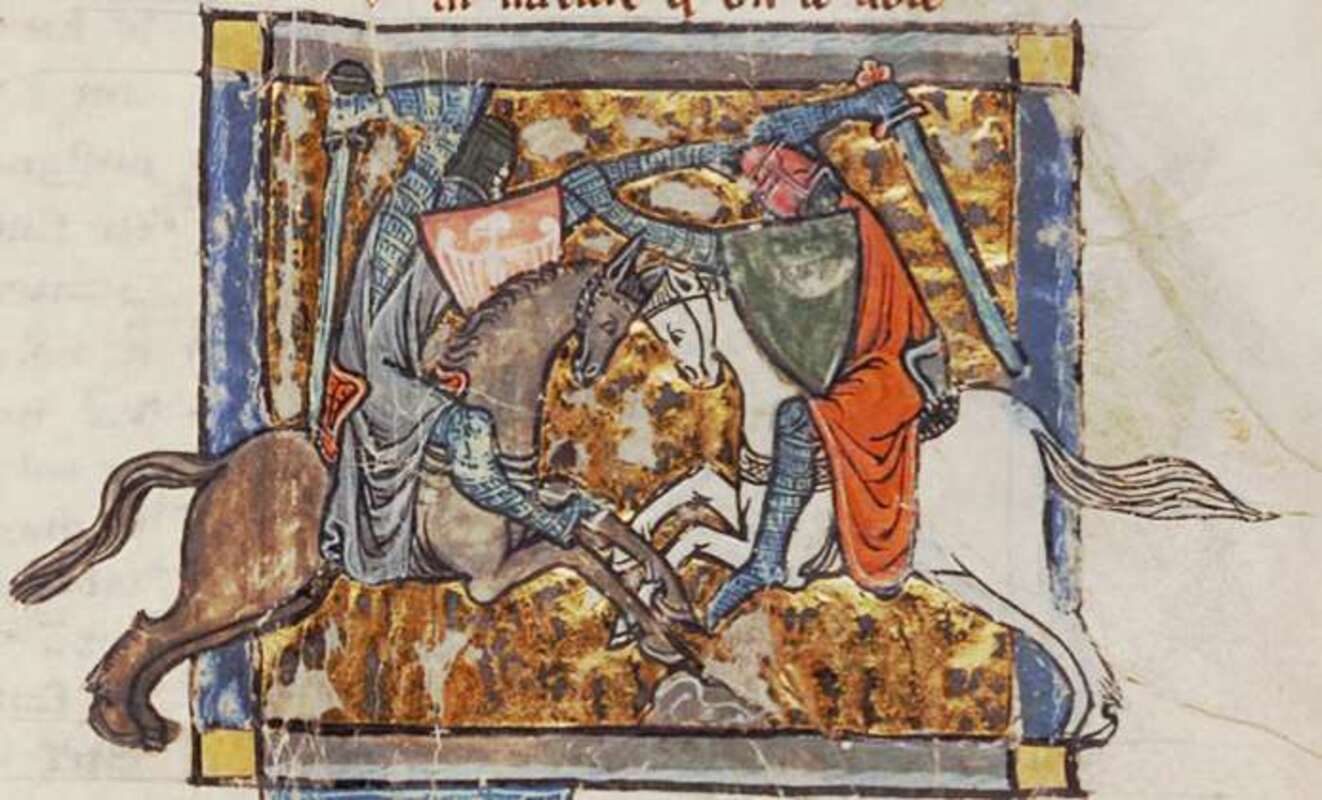
The Battle of Camlann is one of the most important battles in the Arthurian legends. It is the contrast to Arthur’s victory at the Battle of Badon. At Camlann, Arthur faced perhaps his most difficult challenge. This battle was the culmination of a civil war that tore his kingdom apart and ended the peace that he had worked so hard to establish. This battle was remembered by the Welsh as a great tragedy.
What was the Battle of Camlann?
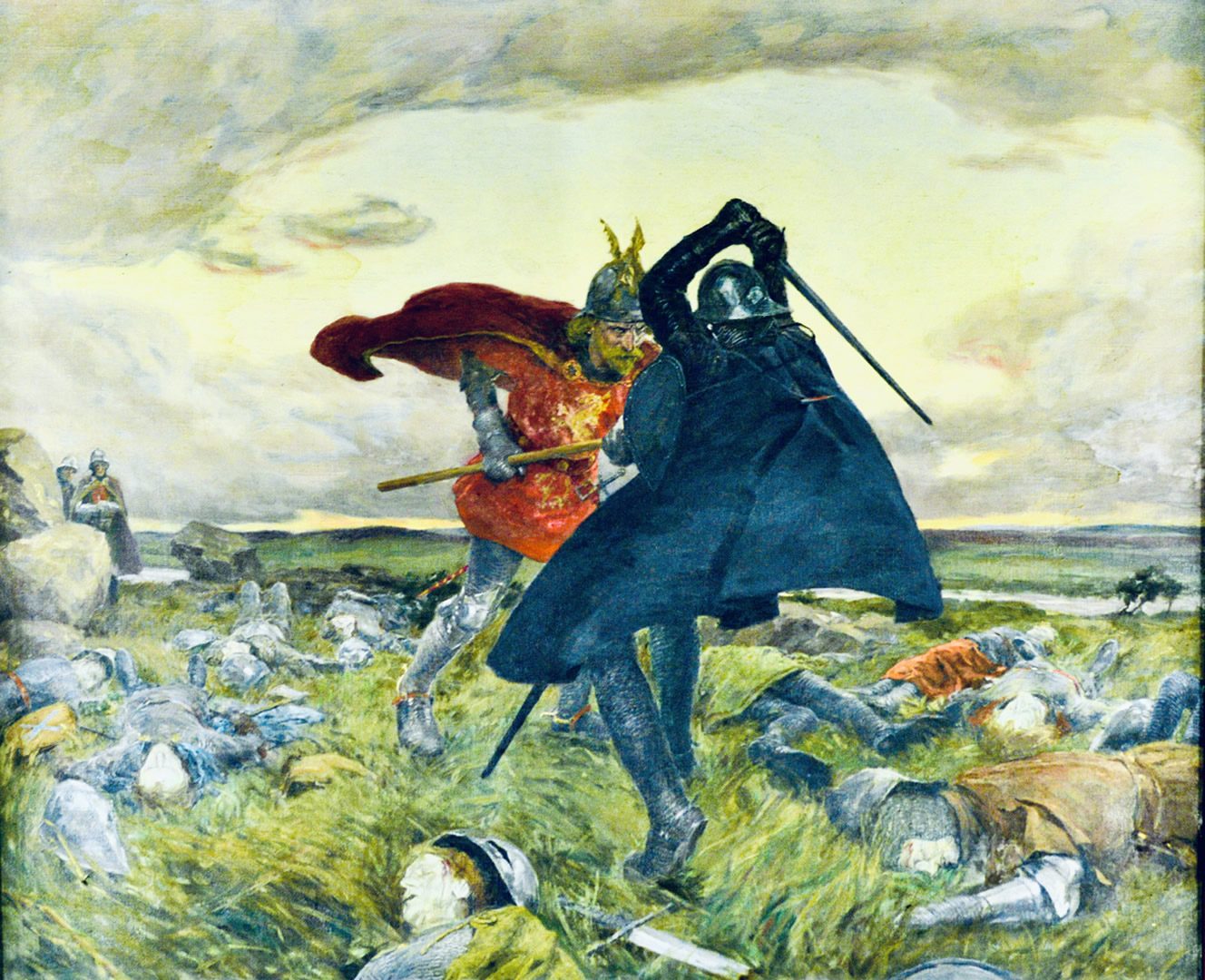
In the Arthurian legends, the Battle of Camlann was King Arthur’s final battle. However, it was not part of his famous series of 12 battles against the Anglo-Saxons as recorded by the Historia Brittonum. Rather, it was the climax of a civil war between Arthur and his nephew Mordred. On Arthur’s side were his loyal Britons and various allied British kings and princes. On Mordred’s side were a variety of rebel kings along with Pictish and Anglo-Saxon leaders.
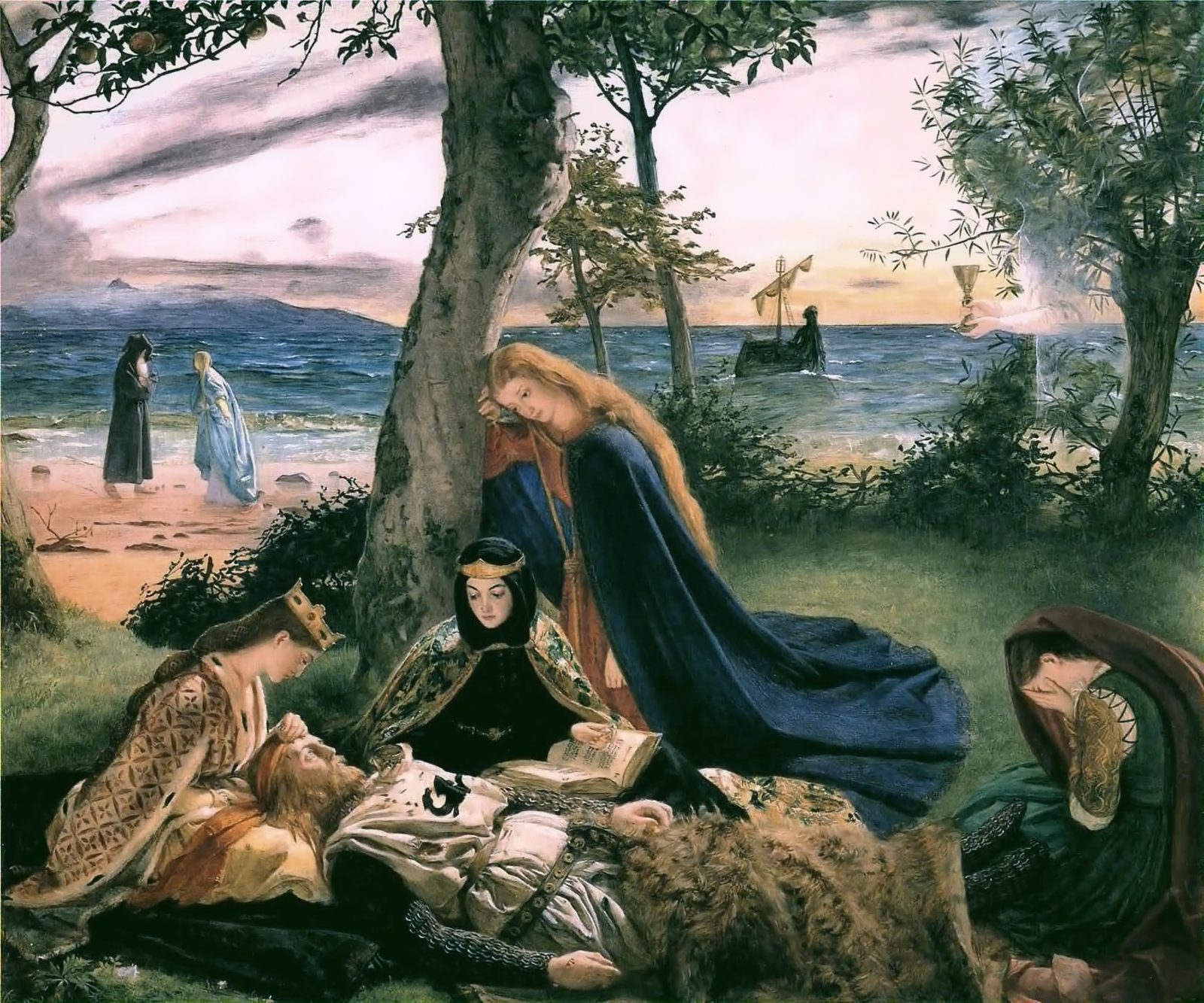
At this battle, neither Mordred nor Arthur came off as the clear victor. By all accounts, Mordred died at the battle, but Arthur was severely wounded and forced to abdicate as king. This war initiated an era of civil conflict that continued for decades, ending the relative peace and stability established by Arthur.
Unlike Arthur’s famous series of 12 battles, Camlann is not mentioned in the Historia Brittonum. This is undoubtedly because the 12 battles mentioned in that source were taken from a Welsh battle poem praising Arthur’s exploits. Whether it was actually composed in Arthur’s time or centuries later, the early Welsh battle poems generally took the perspective of the honorand still being alive and active. Therefore, Camlann was obviously not included in the poem.
Despite not being mentioned in that source, the Battle of Camlann was remembered as a very significant event among the Welsh. It was considered to be a terrible tragedy.
The Battle of Camlann in the Annales Cambriae
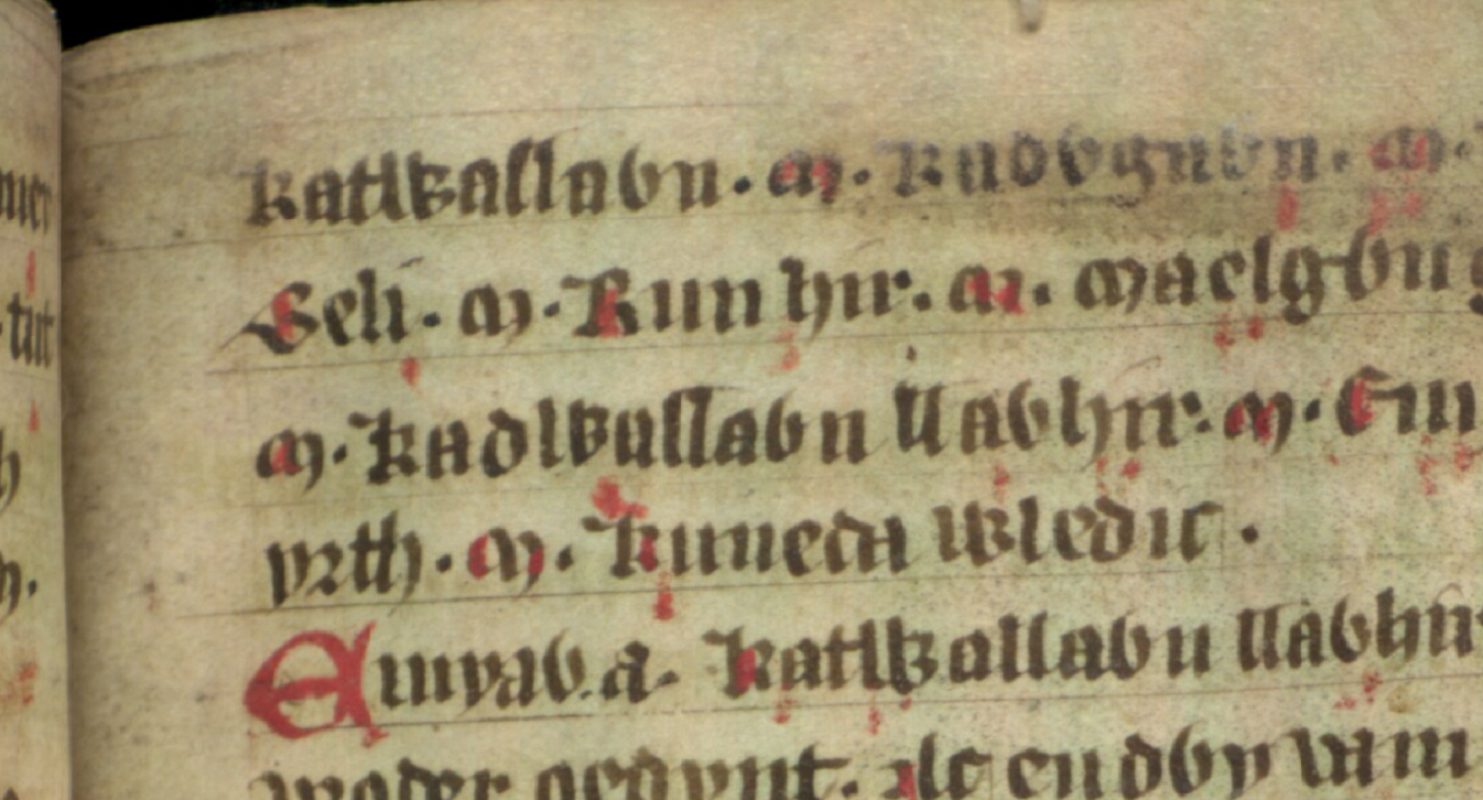
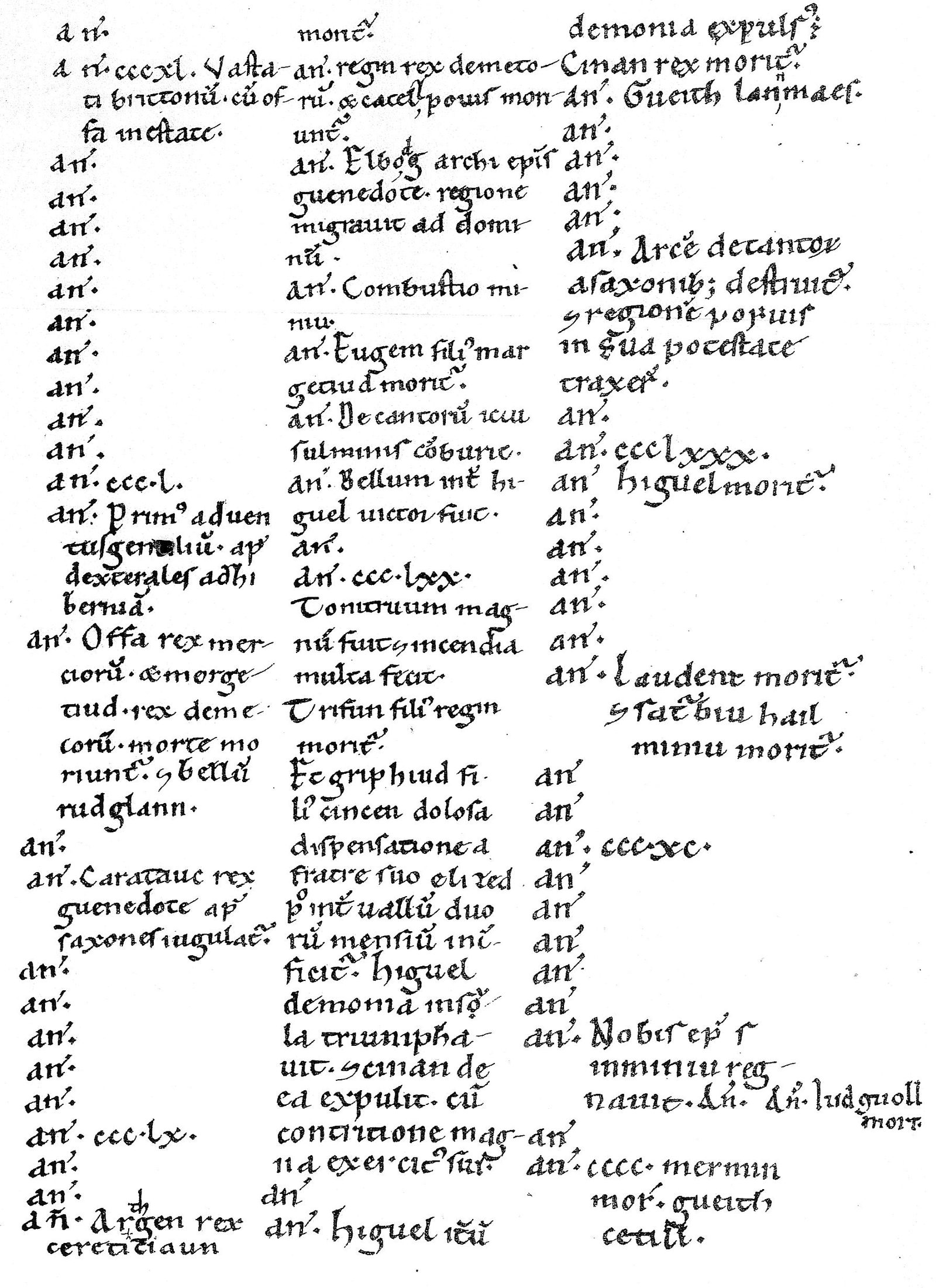
The Battle of Camlann first appears in the Annales Cambriae. This is a tenth-century chronicle of events in medieval Britain. It only has two Arthurian entries. The first is a reference to the Battle of Badon. The second is an entry twenty-one years later, dated to 537, in which we find the following statement:
“The battle of Camlann, in which Arthur and Medraut fell: and there was plague in Britain and Ireland.”
This brief entry does not tell us much. What it does tell us is that Arthur and Medraut were involved. However, it does not tell us whether they were fighting alongside each other or against each other. It also tells us that this battle occurred at the same time as a plague in Britain and Ireland.
This entry uses the Welsh word ‘gueith’, translated here as ‘battle’. This reveals at least one important fact. The Annales Cambriae is a Latin document. Therefore, the use of ‘gueith Camlann’ rather than ‘bellum [the Latin word for ‘battle’] Camlann’ is significant.
This demonstrates that the writer of this chronicle was not merely writing about a battle that he thought might have happened, and he was certainly not inventing a battle. The use of ‘gueith Camlann’ demonstrates that he was referring to a battle which was already a part of Welsh tradition. Evidently ‘gueith Camlann’ was the name by which the Welsh knew it, meaning that the writer of this chronicle used that name even though he was writing in Latin.
The Battle of Camlann in Later Records
In view of the evident fact that the Battle of Camlann was already a firm part of Welsh tradition even before the Annales Cambriae was written, it is unsurprising that this battle appears in later Welsh records. In fact, it is the Arthurian battle most frequently mentioned in surviving Welsh tradition. It also has a very firm place in the later romance tales.
Culhwch ac Olwen
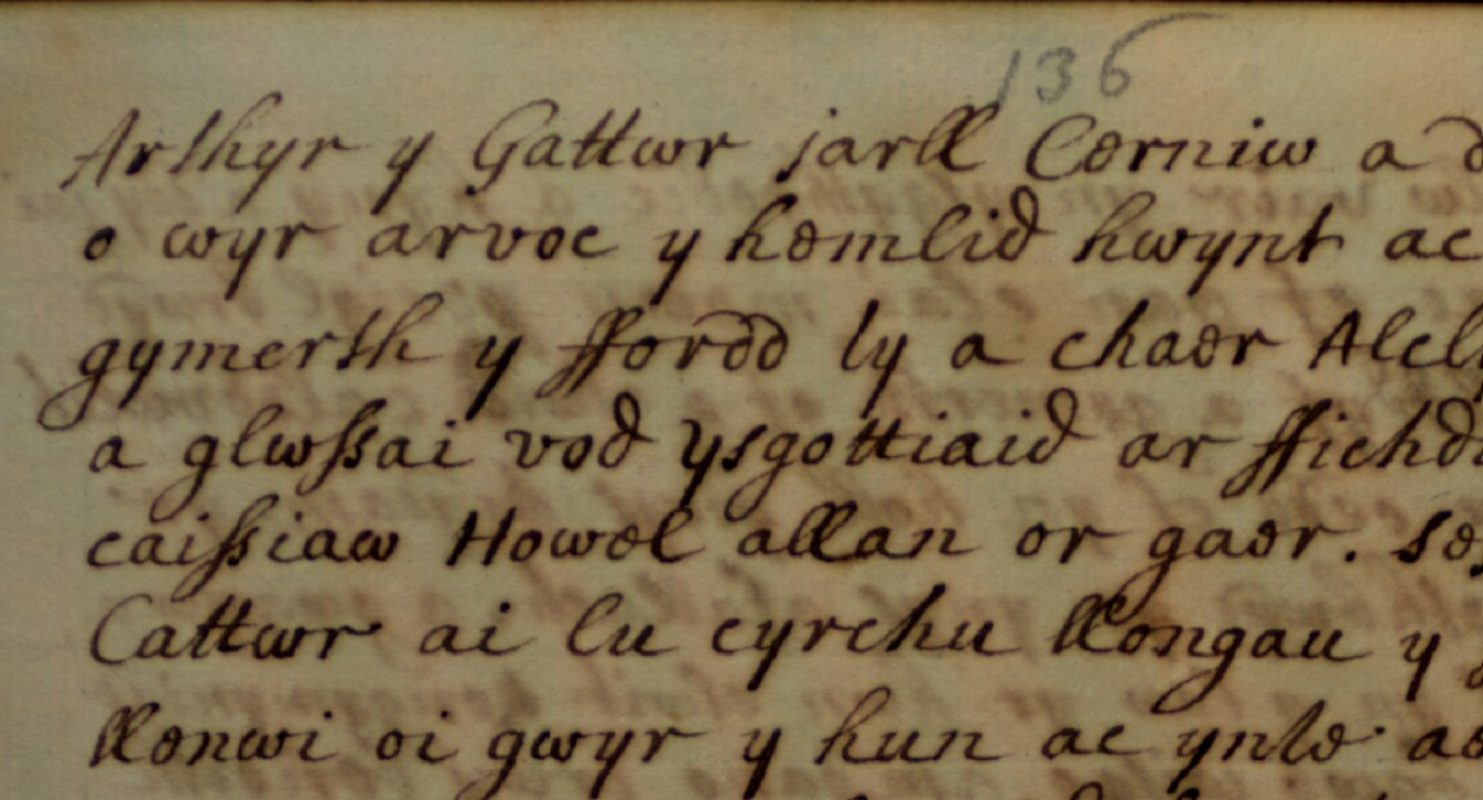
The Battle of Camlann received a brief mention in Culhwch ac Olwen, a Welsh tale which dates from about the 11th century. This is a story about an adventure that occurred during Arthur’s reign, and it contains a very long list of allies who helped Arthur during this event. Four of the people mentioned are described as having a connection to the Battle of Camlann.
The first person is Morfran son of Tegid. The story says:
“No man placed his weapon on him at Camlan, so exceedingly ugly was he; all thought he was a devil helping. There was hair on him like the hair of a stag.”
The second person is Sandde Bryd Angel, about whom the story says:
“No one touched him with a spear in the battle of Camlan because of his beauty; all thought he was a ministering angel.”
The third person is Cynwyl Sant. The narrative tells us:
“The third man that escaped from the battle of Camlan, and he was the last who parted from Arthur on Hengroen his horse.”
These first three people are all described as survivors of the Battle of Camlann. The fourth and final person mentioned in conjunction with the Battle of Camlann is Gwyn Hywar, whom the story describes thusly:
“The ninth man who plotted the Battle of Camlann.”
Interestingly, this appears to be the earliest surviving reference to the Battle of Camlann as a civil war. Gwyn Hywar is presented here as one of King Arthur’s allies, and his name is clearly British. Yet here it says that he was involved in plotting the Battle of Camlann. This not only indicates that it was a civil war, but also that it was a political conspiracy, as opposed to a war that broke out spontaneously.
Geoffrey of Monmouth’s Historia Regum Britanniae
The Battle of Camlann is next mentioned in the Historia Regum Britanniae, written by Geoffrey of Monmouth in c. 1137. This is the earliest source to present a full account of Arthur’s entire career, so it shows us exactly when the Battle of Camlann occurred in relation to other events in Arthur’s life and explains who was involved.
According to this account, King Arthur travelled to Gaul to fight a war against the Romans. He took with him a very large army and all his main allies. He left his nephew Mordred (spelt ‘Modred’ in the account) as the regent in charge of Britain during his absence.
Arthur defeated the Romans in battle, although at great loss to his own forces. At this point, he received news that Mordred had usurped the throne of Britain, declaring himself king. He even went so far as to take Arthur’s wife, Guinevere, for himself. At this, Arthur hurried back to Britain with his weakened army.
The Prelude to the Battle
At first, Arthur’s forces met with opposition from Mordred’s army as they attempted to land at a port. Geoffrey tells us that this was the port of Rutupi (modern-day Richborough), but this is historically impossible. This location was deep within Saxon territory in the sixth century, so it is illogical in the extreme for Arthur to have attempted a landing there.
There is, however, a Welsh poem which describes Arthur fighting a shore battle at a place called Llongborth at which his ally Geraint died. This apparently occurred at the end of a period of several years in which many Britons were away from Britain (as a comparison of the records about Geraint’s death shows), which indicates that this may well be the same battle described by Geoffrey of Monmouth.
After this shore battle, Arthur pursued Mordred to Winchester. A short siege occurred, and then the two armies engaged in pitched battle. Arthur’s army came off victorious, causing Mordred to flee again.
The Battle of Camlann
Eventually, Arthur caught up to Mordred at a place called Camlann. There, a fierce battle occurred, resulting in the deaths of many on both sides. The fighting dragged on for a while, but then Arthur led a detachment of men through to the part of the army where Mordred himself was. With this engagement, Arthur finally killed the usurper.
Despite the death of their leader, the rebel army did not give up. They continued fighting until, according to Geoffrey, ‘almost all their commanders and their forces were killed’. Eventually, Arthur’s army won the battle.
However, at some point during the fighting, Arthur himself was severely wounded. He did not die immediately, but he had no choice but to abdicate from the throne. Despite not achieving the throne for himself, Mordred nonetheless managed to end Arthur’s rule. In his place, Constantine of Dumnonia was chosen as the new high king.
The Welsh Triads
The Battle of Camlann appears in numerous pieces of Welsh literature dating from after Geoffrey of Monmouth. Yet, the vast majority of these references are held to preserve pre-Galfridian (that is, pre-Geoffrey of Monmouth) traditions. Many of these references are found in the Welsh Triads, a collection of records about various different parts of Welsh tradition.
One major triad in which the Battle of Camlann is mentioned is The Three Futile Battles of the Island of Britain. In this triad, the Battle of Camlann is listed last and is called the worst of the three. It is said to have been futile because it was caused by ‘Gwenhwyfar’s contention with Gwenhwyfach’. The former is Arthur’s wife Guinevere, and the latter is her sister according to other traditions.
Another major triad which features Camlann is The Three Men of Shame of the Island of Britain. The first was the British leader who requested the help of Julius Caesar. The second was Vortigern, who invited over the Anglo-Saxons as mercenaries. And the third was Mordred.
The narrative presented in the Triad is essentially the same as the narrative presented by Geoffrey of Monmouth. It refers to the war between Arthur and the Romans and the fact that Arthur lost many men. It then goes on to explain the following:
“When Medrawd heard that Arthur’s host was dispersed, he turned against Arthur, and the Saxons and the Picts and the Scots united with him to hold this Island against Arthur.”
This line is similar to Geoffrey of Monmouth’s version, but it adds the detail that Mordred usurped the throne specifically because he heard that Arthur’s army had been severely weakened.
The Striking of Guinevere
As the Three Futile Battles of the Island of Britain shows, Welsh tradition held that the Battle of Camlann was somehow related to a contention between Guinevere and her sister. Other triads also refer to this, and it is also an idea supported by Welsh records outside of the Triads.
One triad attributes the Battle of Camlann directly to Gwenhwyfach striking her sister Guinevere. Of course, this does not match the earlier reference from Culhwch ac Olwen, which shows that the Battle of Camlann was held to be a political conspiracy.
Interestingly, there is another triad which refers to Mordred as ravaging Arthur’s court and striking Guinevere. One scholar, Ifor Williams, made the suggestion that the reference to Gwenhwyfach striking her sister Guinevere is actually a mistake for Mordred committing such an act.
In line with this, Rachel Bromwich noted that there is evidence for confusion between the two women elsewhere, and that ‘Gwenhwyfach’ is simply a variant of the Welsh name of Guinevere, which is ‘Gwenhwyfar’. Consider, also, the fact that Geoffrey presents Mordred as taking Guinevere for himself as a wife. Yet, Gwenhwyfach is described as Mordred’s wife in the Welsh records.
All told, it appears that the most likely explanation for this confusion is simply that Geoffrey’s account is correct. Mordred took Guinevere as his wife, perhaps against her will. This may be the origin of the idea that Mordred invaded Arthur’s court and struck Guinevere.
The triad which mentions Guinevere being struck by her sister is likely a distorted version of this, based on an evidently mistaken idea that Guinevere the wife of Mordred was not the same person as Guinevere the wife of Arthur whom he struck. Her ‘sister’, then, likely never existed and was just a duplicate of Guinevere herself.
Did the Battle of Camlann Really Happen?
Of course, a big question to consider is whether or not the Battle of Camlann actually happened. Do these Welsh traditions that we have just considered actually have any bearing on the reality of sixth century Britain?
In short, no one can say for sure. Nevertheless, this battle does appear in one of the earliest sources that we have concerning the time period in question. It is mentioned in the Annales Cambriae in a perfectly innocuous entry. There is nothing about it which indicates that it derives from myth or that it is in any way less historical than the surrounding entries.
In fact, as we have already mentioned, the use of the word ‘gueith’ in the entry demonstrates that the Battle of Camlann was already part of Welsh tradition before the Annales Cambriae was written. Since the Annales Cambriae is a tenth-century document, this means that it is a safe assumption that the tradition of the Battle of Camlann goes back to at least before that century.
Of course, since this battle was supposed to have occurred in the sixth century, this is still far removed from when it would have really take place. Nonetheless, given the paucity of evidence from early Dark Age Britain, this is very early. Based on this alone, the weight of evidence –slight though it may be – supports the conclusion that it was a historical event.
Evidence from Gildas
Strong evidence for the historicity of this battle comes from Gildas. His De Excidio is the only sixth century document which survives, so it is very valuable. It mentions the Battle of Badon, which later records attribute to Arthur. This supposedly occurred some two decades before Camlann. Although Gildas does not specifically mention the Battle of Camlann, his description of the aftermath of the Battle of Badon is hugely significant.
Gildas explains that peace was established in Britain after the Battle of Badon. The Britons experienced relief from their foreign wars against the Saxons. As well as peace, there was also order. He explains:
“Kings, public magistrates, and private persons, with priests and clergymen, did all and every one of them live orderly according to their several vocations.”
However, Gildas then goes on to explain that a new generation rose up who were ignorant of the era of foreign warfare. They had only experienced the ‘present prosperity’. Therefore, they plunged Britain into an era of civil troubles which continued until the time Gildas was writing.
How This Matches the Arthurian Legends
Gildas’ description is a perfect match for the scenario presented by the Arthurian legends. As we have already noted, the Annales Cambriae places the Battle of Camlann 21 years after Badon. In other words, it took place about one generation after Badon.
Geoffrey of Monmouth’s Historia Regum Britanniae, which is the first source to describe Arthur’s career in detail, provides additional important information. He does not state when Mordred was born, but he places the birth of Mordred’s brother Gawain at about the time of the Battle of Badon. Mordred was presumably of a similar age. Therefore, Geoffrey’s account attributes the Battle of Camlann to someone who was of the generation that grew up after Badon. This perfectly matches the fact that Gildas attributed the civil troubles to that very generation.
After Camlann, Geoffrey’s account goes on to describe civil wars throughout the rest of the sixth century. This confirms that Camlann, according to Geoffrey’s account, was the start of a period of civil warfare. So although Gildas does not mention the Battle of Camlann by name, his general description perfectly matches what the Arthurian legends have to say concerning it.
When Did the Battle of Camlann Happen?
The issue of when the Battle of Camlann happened is not a common controversy, but it should be. As we have seen, the Annales Cambriae places it about two decades after the Battle of Badon, and most sources place Badon within two decades either side of the year 500. However, there is extensive evidence that the Battle of Camlann should be place substantially later than just two decades after that.
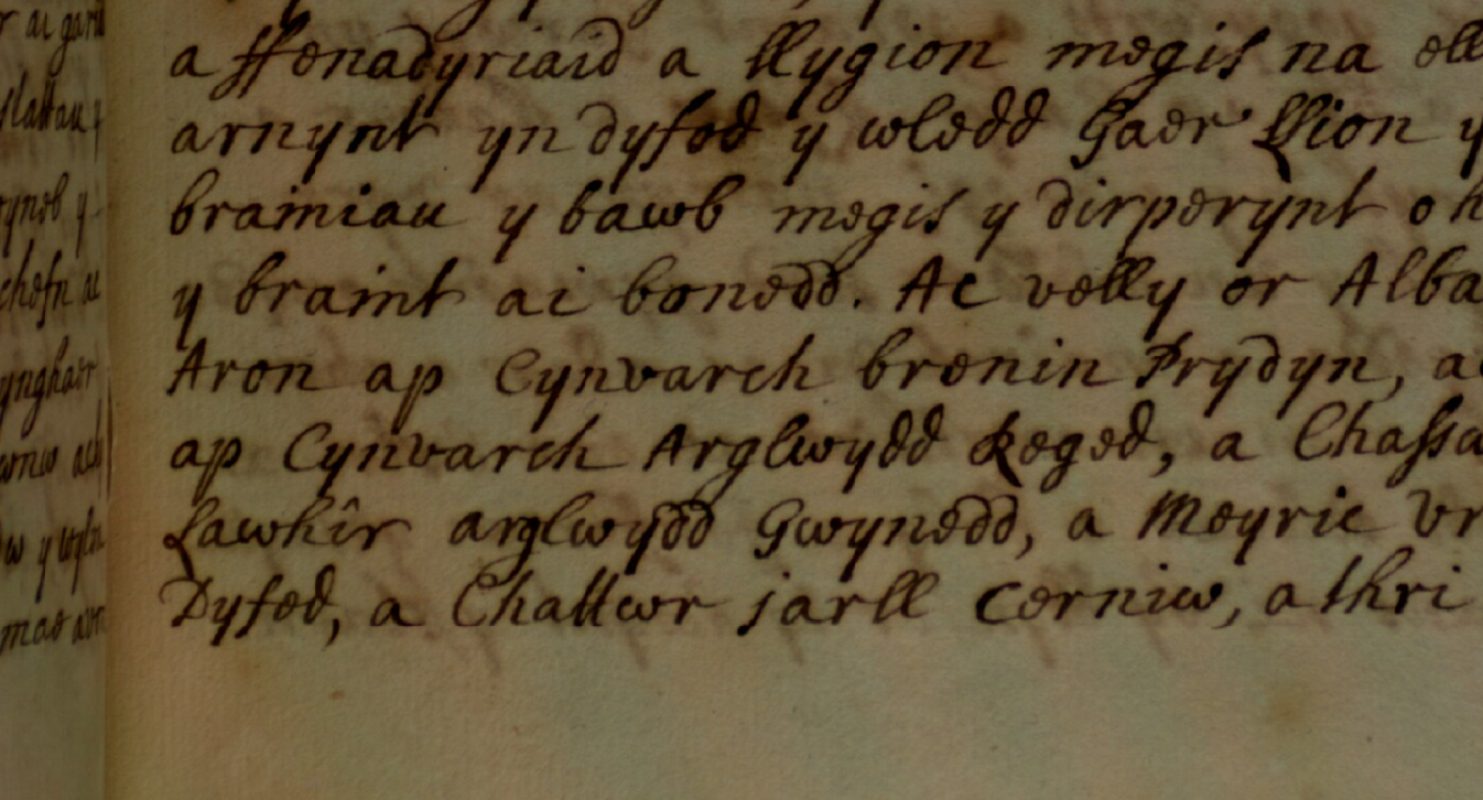
One major piece of evidence comes from the identity of Mordred himself. He is presented in virtually all sources as the son of Lot of Lothian, called Llew ap Cynfarch or Lleudun in Welsh sources. This Llew was the brother of the famous Urien Rheged. Urien was active in the mid to late sixth century. Llew’s daughter (Mordred’s sister) had relations with her cousin Owain (Urien’s son) and gave birth to Kentigern, a late sixth century religious figure.
This and plenty of other evidence concerning his dynasty shows that Mordred could not have realistically been born before about the middle of the sixth century. The Battle of Camlann, therefore, must have been an event of the late sixth century, perhaps around 570.
Interestingly, this also ties in with an obscure Welsh tradition which makes one of Arthur’s opponents at Camlann a certain ‘Eda’. This could easily be Adda, the historical king of Bernicia who is recorded as dying in about 568.
Where Does the Traditional Date Come From?
The traditional date for the Battle of Camlann comes from the Annales Cambriae, which puts it in 537. This date has generally been accepted relatively uncritically. However, there are many examples of dates in the Annales Cambriae being rejected on the weight of other evidence, and it is clear that that should be the case here.
A dating issue which is very visible in the ninth-century Historia Brittonum is the confusion between dating based on Jesus’ birth and dating based on his death. Since the two events were separated by 33 years, this can result in a dating error of that much, about three decades.
It would not be a stretch to assume that this type of error occurred in the case of the Battle of Camlann. If so, then the battle should really be placed about 33 years later on in the Annales Cambriae, or about 570. This is exactly when we would expect based on Mordred’s genealogy.
How This Accommodates the Evidence from Gildas
If the Battle of Camlann actually occurred in about 570, then how does this accommodate the apparent reference to it (or rather, to the period of civil warfare that it started) by Gildas? He is normally assumed to have written before 547, since he refers to Maelgwn as a living king and yet the Annales Cambriae places Maelgwn’s death in that year, caused by a plague.
In her landmark publication Trionedd Ynys Prydein, renowned scholar Rachel Bromwich made an interesting observation. She pointed out that the Historia Brittonum (which dates to the century before the Annales Cambriae) contains evidence that the reign of Maelgwn only began in the 570s at the earliest. She suggests that he died in a later plague which was confused for the one in 547.
Since Maelgwn was reigning when Gildas wrote, this would require Gildas to have been writing after the 570s at the earliest. This would easily accommodate a late Battle of Camlann. Therefore, there is every reason to accept the evidence from Mordred’s genealogy that requires the battle to have occurred in c. 570.
Where was Camlann?
Probably the biggest controversy today surrounding the Battle of Camlann is the question of where it happened. Just like with most of the other battles fought by King Arthur in the Arthurian legends, there is not enough information provided about the location of this battle to immediately and unambiguously connect it with any known location on modern maps.
Nonetheless, there are a few common theories. Here, we will examine the most popular suggestions for the location of Camlann.
River Camel, Cornwall
Geoffrey of Monmouth was the first writer to place Camlann in a specific part of Britain. In the Historia Regum Britanniae, he specifically says that the battle took place in Cornwall at ‘the River Cambula’. This is widely accepted as being a reference to the River Camel in Cornwall. Some scholars accept this identification.
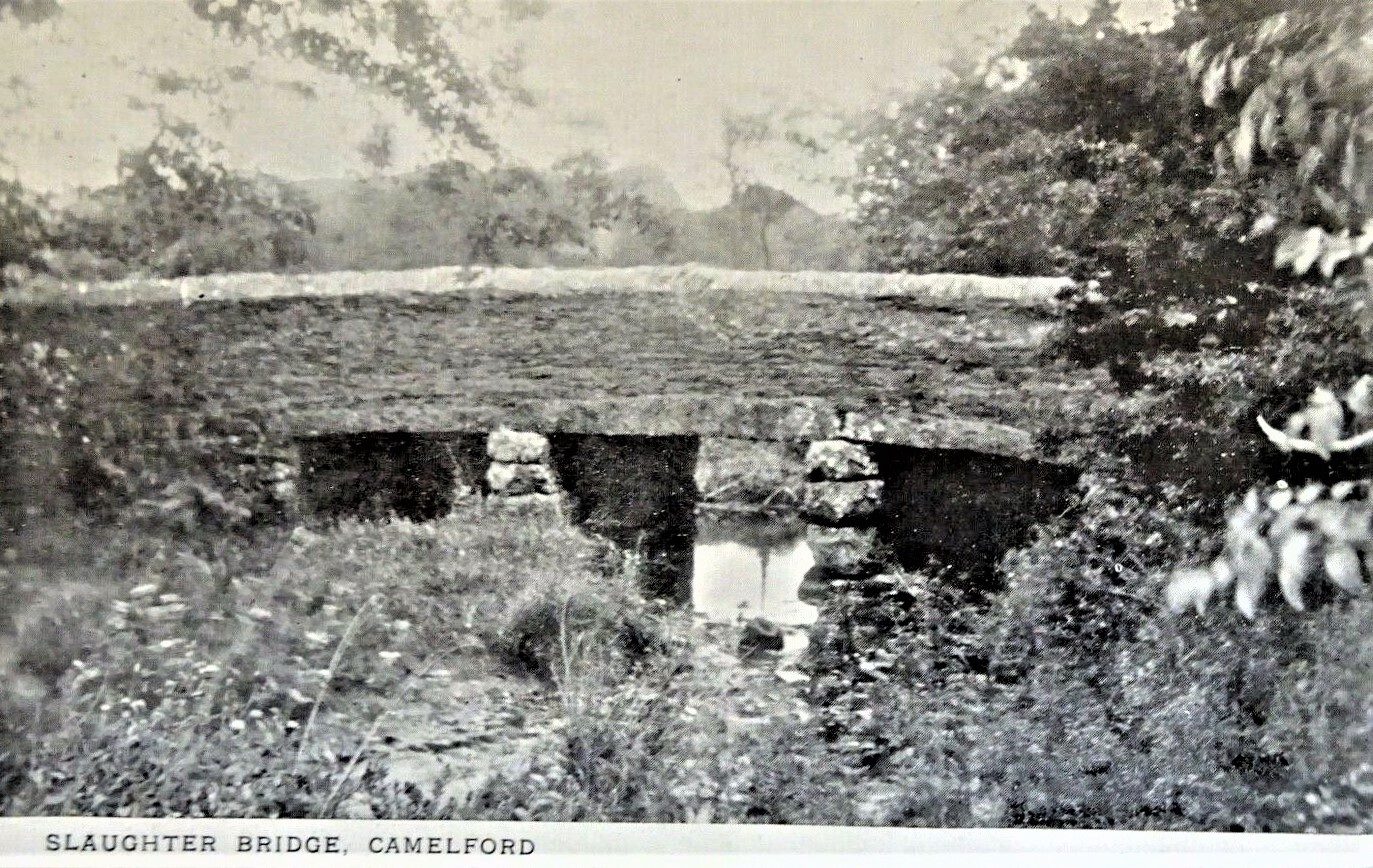
As scholar Peter Bartrum noted, this identification is seemingly backed up by plenty of local traditions. For example, on the River Camel is a spot called Slaughter Bridge. This supports the idea that a battle occurred there.
Furthermore, the form of Mordred’s name that Geoffrey used, ‘Modred’, is likely a Cornish form. This has been used to argue that the battle which defeated him likely occurred in Cornwall.
Objections to This Location
Despite the fact that quite a few scholars today do accept this identification, there are many who do not. Kenneth Jackson, in Once Again Arthur’s Battles, cited a number of linguists who considered the connection between ‘Camlann’ and ‘Camel’ to be impossible. One even described it as ‘wild philology’.
Jackson himself rejected the connection with the River Camel on the basis that it rested entirely on the authority of Geoffrey of Monmouth, whose authority Jackson described as ‘worthless’. In this, Jackson was surely exaggerating, since Geoffrey of Monmouth’s work demonstrably contains various instances of accurate geography within his account of the Roman Era. Yet, his authority is certainly questionable.
Similarly, Peter Bartrum objected to this identification on the basis that the supporting ‘traditions’ likely all post-date Geoffrey of Monmouth. Therefore, they cannot be taken as independent support.
Regarding the form of Mordred’s name used by Geoffrey appearing to be Cornish, this does not prove that the battle took place in Cornwall. After all, that is not how the name appears in the majority of sources (including the earliest one). This likely says more about Geoffrey’s source text than about where Mordred was from or where the Battle of Camlann occurred.
Camboglanna, Cumbria
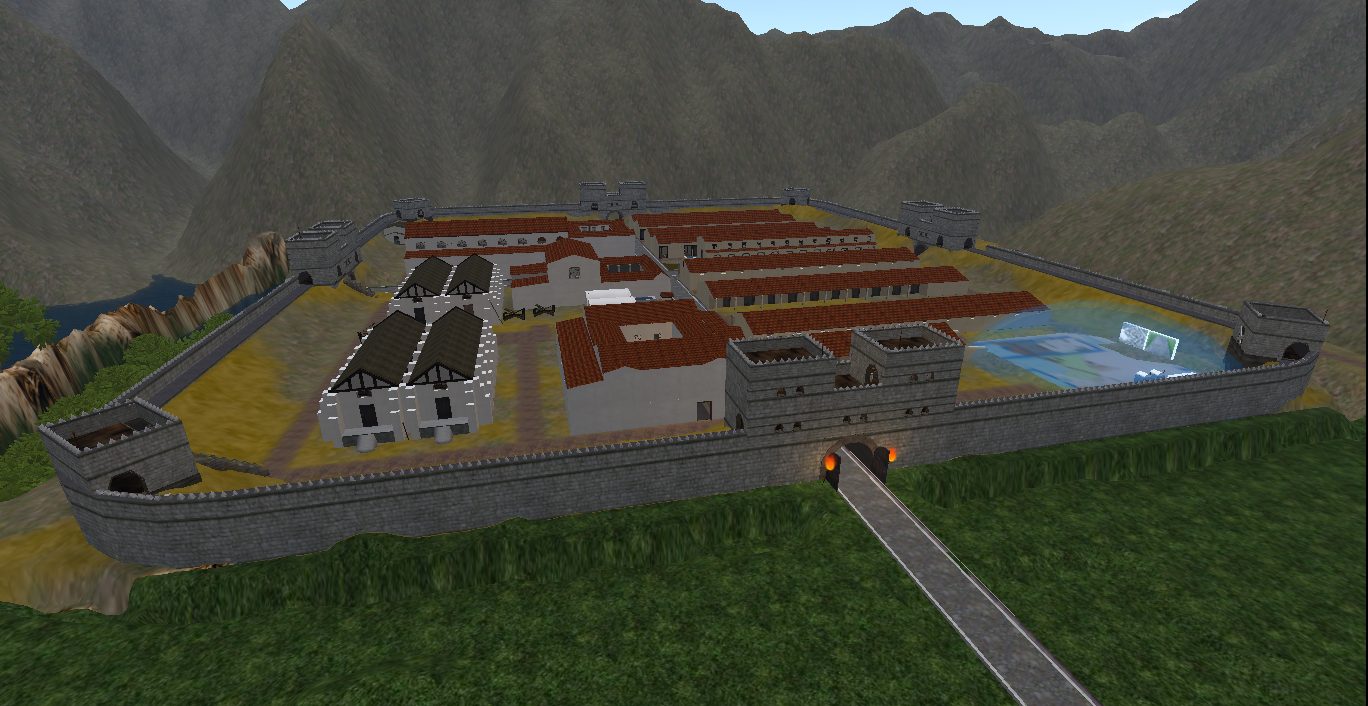
One of the most popular theories today is that Camlann can be identified with Camboglanna. This was a Roman fort along Hadrian’s Wall. The primary piece of evidence given in support for this identification is linguistic. The name ‘Camlann’ is believed to come from either ‘Cambolanda’ (meaning ‘Crooked Enclosure’) or ‘Camboglanna’ (meaning ‘Crooked Bank’).
Therefore, the name of this Roman fort is a perfect match for one of the two possible etymologies of the name of the Arthurian battle site. On this basis, it is a very attractive possibility. This is made all the more attractive by the fact that we know that it received this name before the Arthurian era.
In addition, a nearby Roman fort was called Aballava. The seventh century Ravenna Cosmography spells it ‘Avalana’. There is an obvious similarity between this name and ‘Avalon’, the name of the location to which Arthur was taken after the Battle of Camlann.
Furthermore, Mordred himself was supposedly a prince of Lothian, which is in southern Scotland. As such, Camboglanna would realistically have been en route to his home territory if Arthur was pursuing him from the south.
Objections to This Location
Just as the main support for this location is linguistic, so is the main objection to it. While it is true that ‘Camboglanna’ would naturally evolve into ‘Camlann’, the issue is whether or not this would have occurred as early as the tenth century, when the Annales Cambriae was written. As pointed out by numerous scholars, the word ‘Camboglanna’ would have evolved into ‘Camglann’ in Old Welsh, only becoming ‘Camlann’ later.
On this basis, some researchers have claimed that Camboglanna cannot be Camlann. The reality though, as is often the case, is more complicated than that. For one thing, we do not have the original text of the Annales Cambriae, but only later copies. A copyist could have updated the spelling of ‘Camglann’ into ‘Camlann’.
Furthermore, according to Kenneth Jackson:
“The spirant g was probably already ceasing to be pronounced, and a tenth-century scribe might have written Camlann, especially if he got the name from an oral source.”
Really, there is no strong objection to the identification of Camboglanna with Camlann. Nonetheless, that does not mean that it is the best theory.
Camlan, Merionethshire
Another popular theory connects Camlann with the region of Merionethshire in northwest Wales. As pointed out by Peter Bartrum, ‘there are two [Camlans] in the neighbourhood of Dolgellau [within Merionethshire] and there is an Afon Gamlan in the same area.’ This cluster of Camlans near Dolgellau supports the idea that there was originally a prominent Camlan here.
The presence of a single ‘n’ on the end rather than two is not a problem, since we find that same spelling in numerous Welsh texts about the battle. The appeal in this theory is that it seems to be the only place in Wales with a perfect match for the name of the battle site.
Strategic Evidence
A line of evidence that is often missed is that this location works very well with the theory that the Battle of Llongborth was the prelude to the Battle of Camlann, as discussed above. Llongborth itself can very likely be identified with Llanborth, which is in Penbryn on the west coast of Wales.
Recall that Arthur pursued Mordred after this coastal battle. Presumably, Mordred was trying to return to his home territory. From Llanborth in Penbryn, the nearest Roman road went north right past the Camlans in Merionethshire. Therefore, the overall course of events makes a lot of sense with this suggested location for Camlann.
Evidence from Welsh Tradition
Another piece of evidence that is usually ignored is that seven figures are specifically associated with the Battle of Camlann in Welsh tradition. They are said to have survived the battle. In other records, almost all of them are associated with northwest Wales.
The Welsh Stanzas of the Graves places the grave of the son of a certain Osfran at Camlann. The best suggestion for any connection to Osfran is Foel Isbri, formerly known as Moel Ysbryn. This is in Merioneth, just a few miles from Afon Gamlan.
Renowned scholar Patrick Sims-Williams argued that a 12th-century poet considered the Camlann of Welsh tradition to have been one of the ones in Merionethshire. He pointed out that the Welsh poet Llywelyn Fardd I referred to Osfran in a poem about a church at Tywyn, Merionethshire.
In contrast, it appears that none of the figures associated with the Battle of Camlann in Welsh tradition are definitely connected to the area around Hadrian’s Wall.
Objections to This Location
The main objection to this theory is the fact that there is no guarantee that the place names ‘Camlan’ and ‘Gamlan’ in this region date as far back as Arthur’s time, or at least the time of the Annales Cambriae. It appears that these locations are first recorded in the 16th century. It is on this basis that researcher Scott Lloyd rejected this location.
Of course, this does not prove that these place names did not exist earlier than that century; it simply means that we cannot confirm that this did. Given the paucity of information about place names in northwest Wales prior to the 16th century, this surely cannot be taken as particularly significant.
Notably, the evidence regarding the personal names which Welsh tradition connects with Camlann, which support this location in northwest Wales, long predates the 16th century.
Conclusion
In summary, the Battle of Camlann was the climax of a civil war between King Arthur and his nephew Mordred. At this battle, Mordred died and his rebellion was put down. Arthur himself was allegedly mortally wounded, forcing him to abdicate from the throne. No one today can say for certain whether it really happened, but it is mentioned in some of the earliest sources that we have for this period, so its historicity is well supported. It is also supported, albeit not confirmed, by Gildas. Additionally, there is good reason for concluding that it was always conceived of as a civil war, despite the Annales Cambriae not specifying this. And despite Camboglanna being a popular suggestion for the site of Camlann, the weight of evidence indicates that it was near Dolgellau in northwest Wales.
FREQUENTLY ASKED QUESTIONS
Who Won the Battle of Camlann?
The Battle of Camlann was won by King Arthur, although it was a Pyrrhic victory, ending his reign of stability and introducing an era of civil war.
Where was Camlann?
Camlann was almost certainly in Merionethshire, near Dolgellau, either identical with or close to one of the three surviving Camlans in that area.
When Did the Battle of Camlann Really Happen?
Despite the popular date of c. 537, the evidence from Mordred’s genealogy requires the battle to have taken place decades later than that. It is much more likely that the Battle of Camlann was an event of c. 570.
Sources
Reno, Frank, Historic Figures of the Arthurian Era: Authenticating the Enemies and Allies of Britain’s Post-Roman King, July 2015
Ashley, Mike, A Brief History of King Arthur, 2013
Jackson, Kenneth, Once Again Arthur’s Battles, 1945
Bartrum, Peter, A Welsh Classical Dictionary, 1993
Bromwich, Rachel, Trioedd Ynys Prydein: The Triads of the Island of Britain, 2014
Sims-Williams, Patrick, The Medieval Welsh Englynion Y Beddau: The ‘Stanzas of the Graves’, Or ‘Graves of the Warriors of the Island of Britain’, Attributed to Taliesin, 2023
Lacy, Norris, The New Arthurian Encyclopedia: New Edition, 2013
http://www.maryjones.us/ctexts/giants_wales.html
http://mistshadows.blogspot.com/2016/08/arthurs-thirteenth-battle-camlann.html