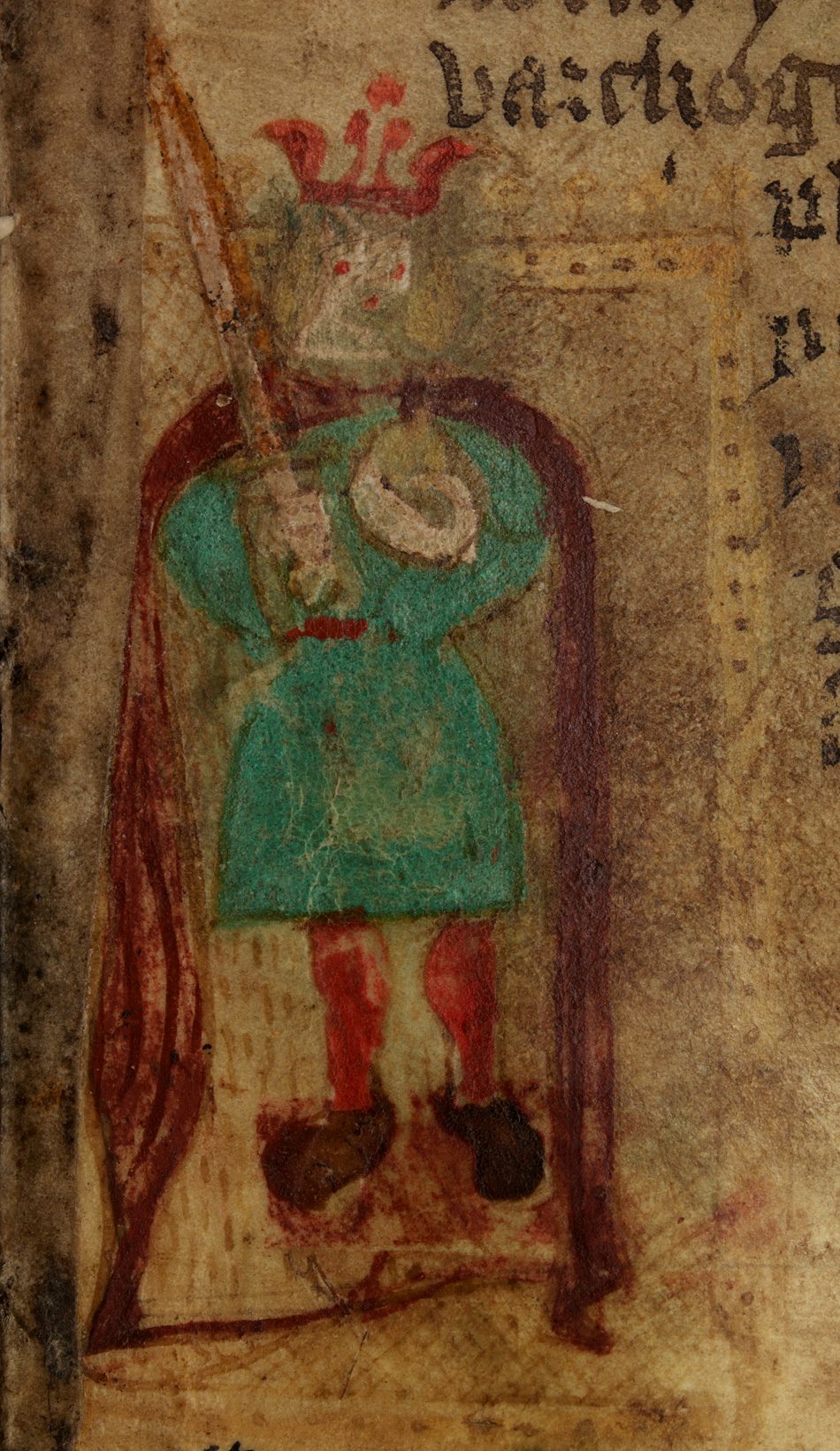
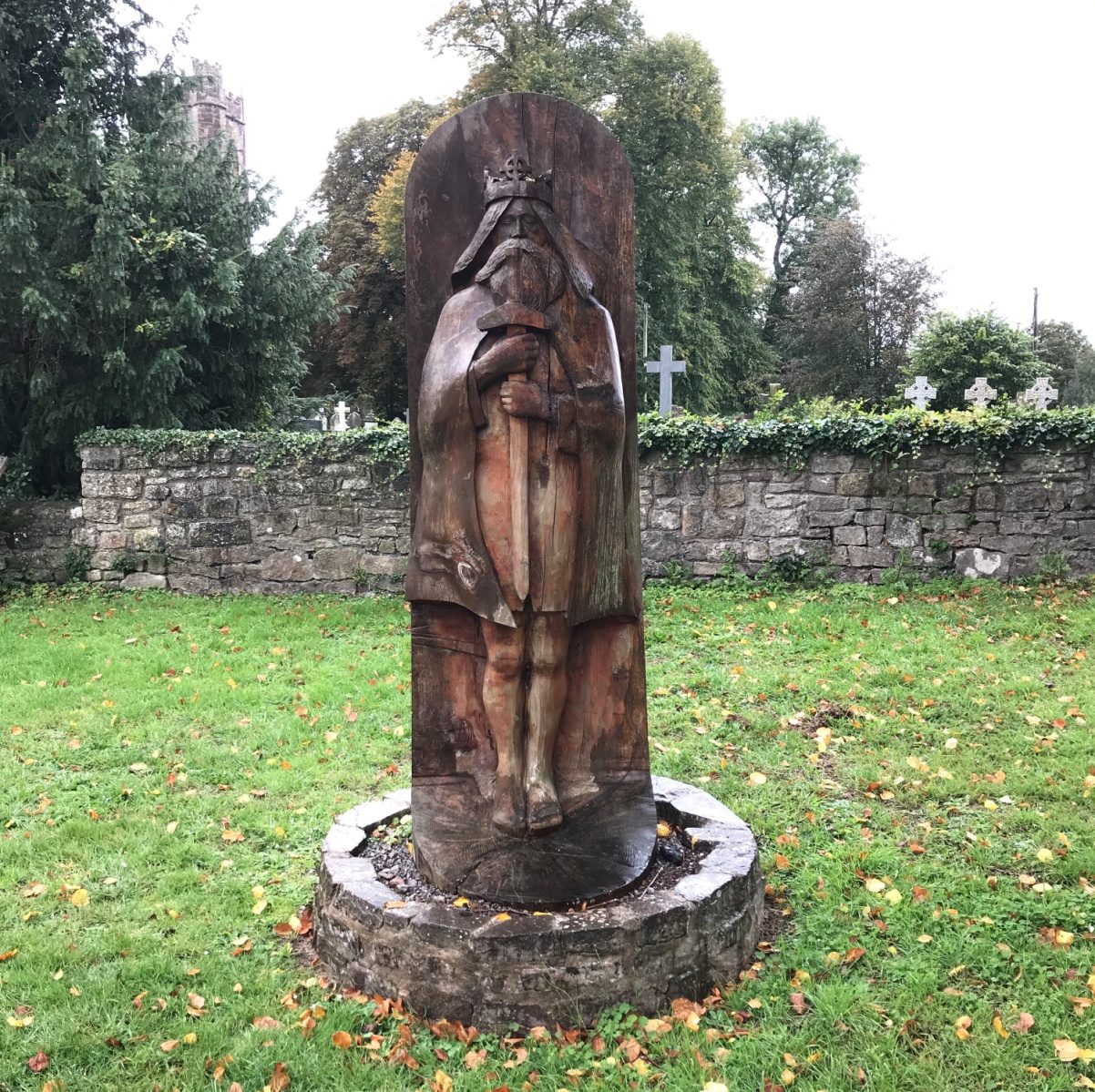
Was Athrwys son of Meurig the Real King Arthur?

One intriguing candidate for the historical King Arthur is Athrwys the son of Meurig of southeast Wales. He was a very popular candidate from the late-eighteenth century through to the early twentieth century. Today, while not being nearly as popular as he formerly was, he still has his supporters. What is the evidence used by proponents of this theory, and what are the counterarguments? This article will examine these and other questions.
Who Was Athrwys son of Meurig?
Athrwys was a member of the dynasty which ruled over southeast Wales in the early medieval period. Even though there are no contemporary documents about him, he is universally accepted as a historical figure by modern historians.
This historical figure is usually called Athrwys ap Meurig, since ‘ap’ is a Welsh term meaning ‘son of’. Meurig, his father, was also a king. There is some debate about whether Athrwys himself was ever king of his family’s kingdom, but we will go on to see that the evidence supports the conclusion that he was. In any case, both his father Meurig and his son Morgan were certainly kings.
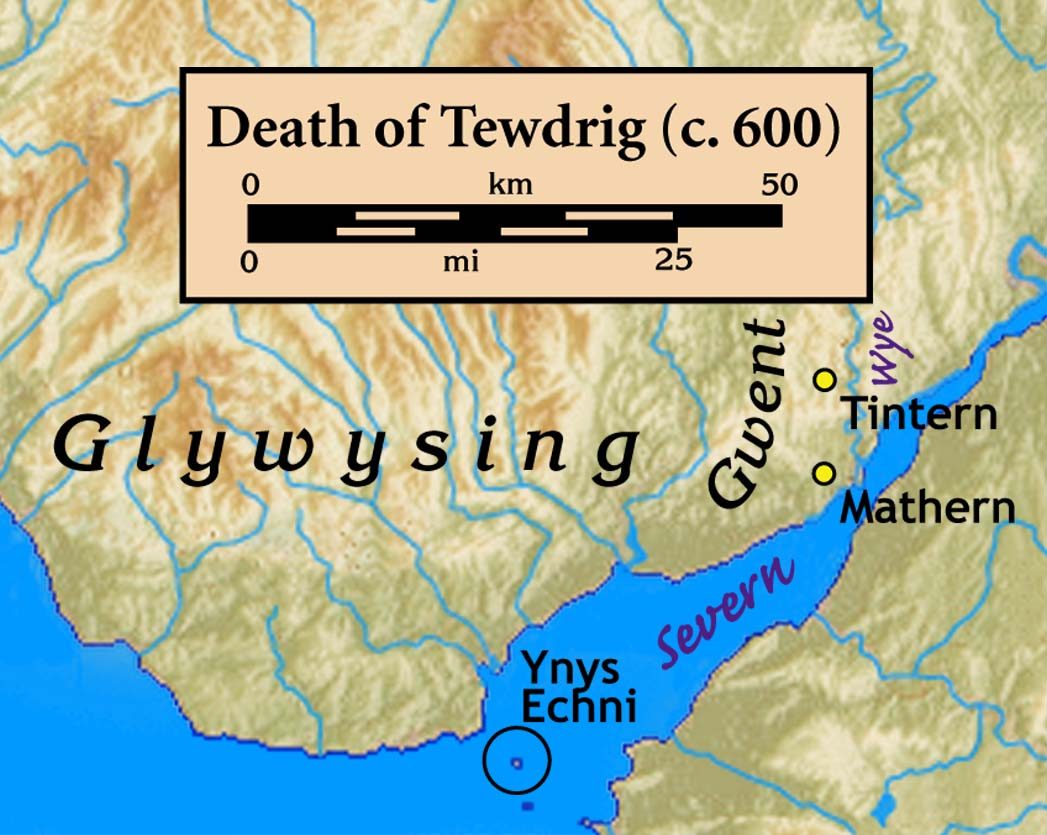
The kingdom in question encompassed a subkingdom called Glywysing, which is essentially equivalent to what is now Glamorgan, as well as the kingdom of Gwent to the east. Additionally, with the marriage of his father Meurig to the princess of a neighbouring kingdom, Athrwys was the heir to Ergyng. This region included the territory of much of Gloucestershire and Herefordshire.
Due to the traditional date in which Athrwys was believed to have lived, the territory he was active in, as well as his name being broadly similar to ‘Arthur’, many researchers have argued that he must be the real King Arthur.
The Family of Athrwys
Athrwys’s parents were Meurig and Onbrawst. King Meurig was the son of King Tewdrig, a powerful king about whom much is recorded. Queen Onbrawst was the daughter of Gwrgan Fawr, that is, Gwrgan the Great, the king of Ergyng.
Athrwys had at least two brothers, one named Frioc and one named Idnerth, also recorded as Aidnerth. He also seems to have had a brother named Atgan. According to late tradition, with some limited early support, he had sisters named Anna, Afrella, and Gwenonwy. They married into the royal family of Brittany.
Athrwys is recorded as having at least two sons, one named Morgan and the other named Ithel. His wife is not recorded anywhere.
Arguments That Athrwys Was King Arthur
Let us now consider some of the arguments used to support the identification of Athrwys son of Meurig with King Arthur. There are many arguments that have been put forth, so let us start with the basic profile of the two men.
Arthur’s Area of Activity
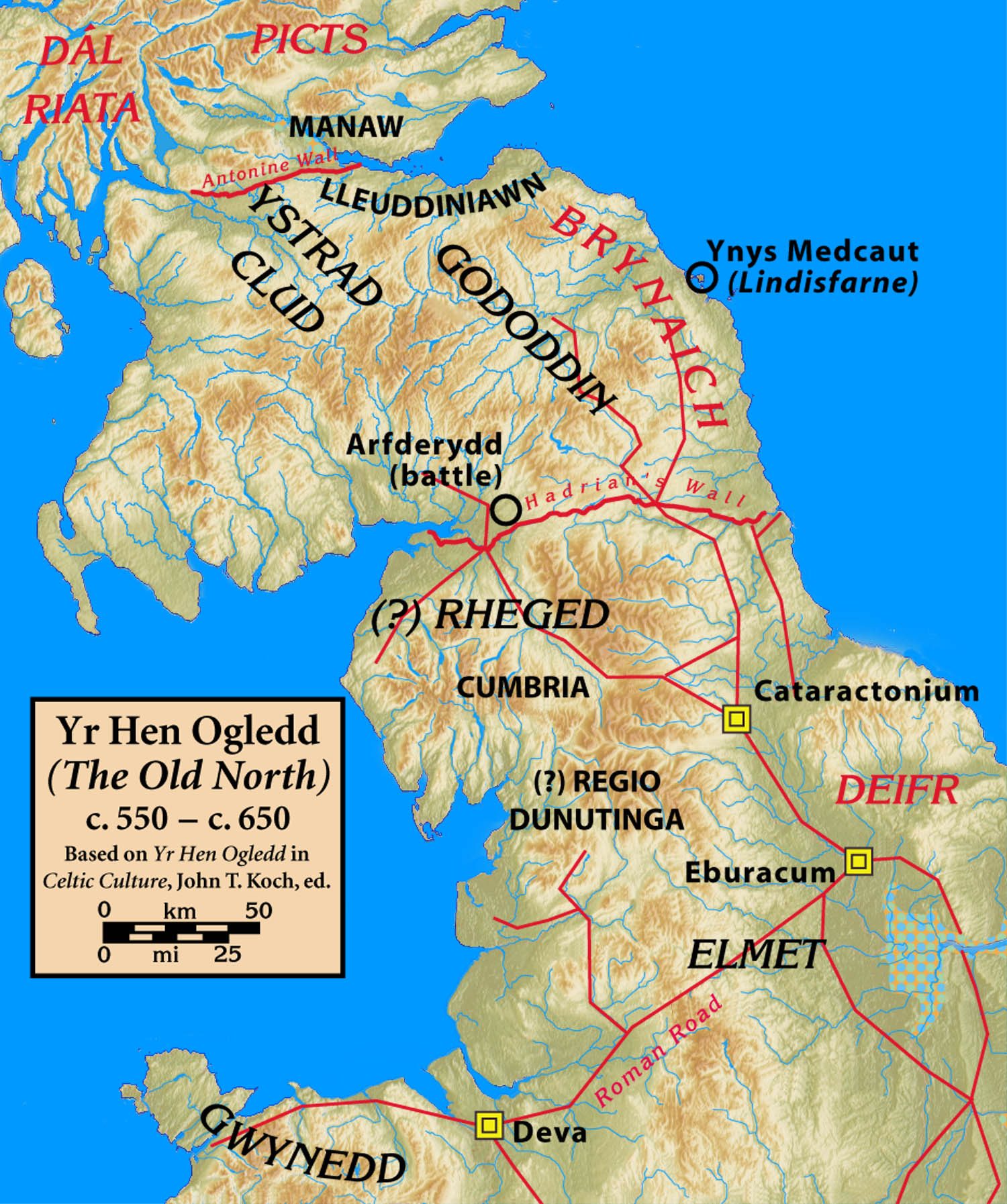
One key argument used by proponents of this theory is the fact that many early accounts of Arthur place him in the region of Athrwys’ kingdom.
The Wonders of Britain
For example, the Historia Brittonum, which is the earliest account of Arthur’s career, dating to 828, contains a section known as the Wonders of Britain. Here, we find two references to Arthur. One of these is about the location where Arthur hunted a legendary boar, putting him in about mid Wales, somewhat towards the south.
The other reference in the Wonders of Britain associates Arthur with Ergyng. So while the first reference is near Athrwys’ kingdom, this second one is actually inside it.
The Lives of the Saints
In addition, King Arthur appears in a number of documents known collectively as the Lives of the Saints. These are a type of biography called hagiographies, conveying the life stories of various religious figures.
The majority of religious figures shown to have interacted with Arthur were primarily associated with southeast Wales or the immediate vicinity. For instance, Arthur appears in the respective Lives of Illtud, Gildas, and Cadoc, all of whom were mainly active in Athrwys’ kingdom. In the latter, in fact, the account explicitly tells us where the interaction took place, placing it in southeast Wales.
King Arthur also appears in the Life of Carannog, which informs us clearly that the meeting with Arthur occurred at Dunster in Somerset. This is just across the Bristol Channel from Athrwys’ territory. Of the five insular Lives in which King Arthur is mentioned, the only one in which Arthur is placed notably outside Athrwys’ territory is in Padarn’s Life, but even this is only about two days’ walking distance from where Athrwys was based.
Welsh Tradition
Further support for the placement of Arthur in Athrwys’ territory comes from Welsh tradition. Here, we find a number of references to Arthur’s base of operations being at a place called Gelliwig in a region called Kerniw.
Kerniw is usually identified with Cornwall, with Gelliwig being identified as Callington, also recorded as Callywith. However, there was a region in southeast Wales named Cernyw (preserved today in the wood named Coedkernew). Within this region is a location which is recorded in several medieval documents as ‘Gelliwig’ and variants thereof.
Gelliwig appears as Arthur’s base in a Welsh tale known as Culhwch and Olwen. Here, Arthur is pursuing a boar named Twrch Trwyth. After rampaging through much of south Wales, Arthur declares that he will not let the boar reach Kerniw. This declaration is immediately followed by Arthur forcing the boar out of Wales and into the Bristol Channel.
If the Kerniw linked to Arthur was Cornwall, this would be illogical, for Arthur would actually be driving the boar closer towards it. On the other hand, Arthur’s statement and his subsequent actions are logical if the Kerniw with which he was concerned was the historical region of Cernyw in southeast Wales.
Caradoc the Chief Elder
The Welsh Triads also provide some support for this conclusion. These contain the following pieces of information about Arthur’s royal court at Gelliwig in Kerniw:
“Arthur the chief lord at Gelliwig in Kerniw, and Bishop Bedwini the chief bishop, and Caradoc Freichfras the chief elder.”
According to this, a figure named Caradoc Freichfras was the ‘chief elder’ at the royal court of Gelliwig. There is no known association between this Caradoc and Cornwall, but there are many connections between him and Wales.
Bedwini the Bishop
It is also notable that the chief bishop of Gelliwig is named Bedwini. Nothing is known about him outside of his service as one of Arthur’s bishops. However, in Gwent in southeast Wales, there is a shoreline called Bedwin Sands. This could plausibly preserve the name of this bishop, thus supporting the notion that the Kerniw and Gelliwig of Arthurian Welsh tradition was in southeast Wales, not Cornwall.
Historia Regum Britanniae
Another piece of support comes from the Historia Regum Britanniae, which was written in c. 1137 by Geoffrey of Monmouth. This has been severely criticised for its lack of historical value. Nevertheless, it is a fact that Geoffrey did preserve numerous genuine traditions, many of which can be verified by pre-existing or independent Welsh documents, or even by archaeology in some cases.
Therefore, it is worth noting that Geoffrey’s Historia Regum Britanniae explicitly placed King Arthur’s capital at Caerleon-upon-Usk. This was a Roman city in southeast Wales, the territory of Athrwys.
The Name of Athrwys
As well as living in the very location which is most closely associated with King Arthur in the earliest records, the name of Athrwys has also been used to support his identity as Arthur.
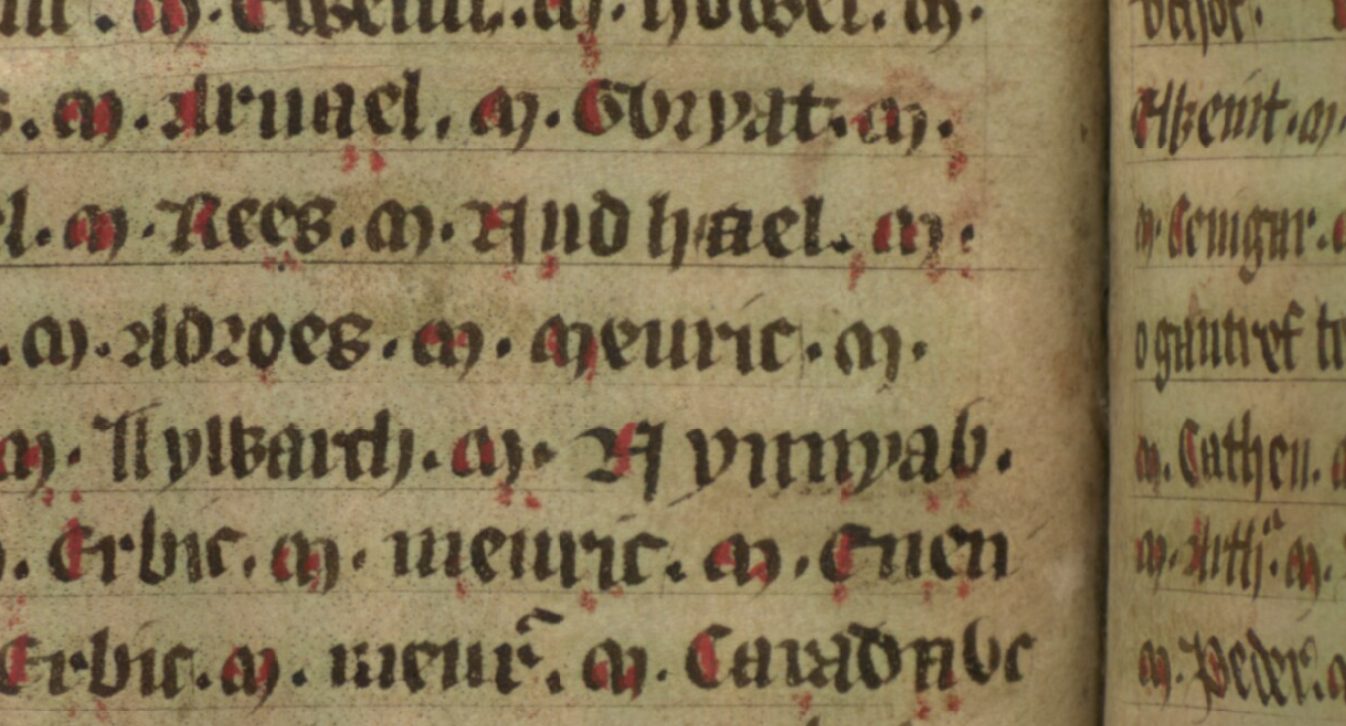
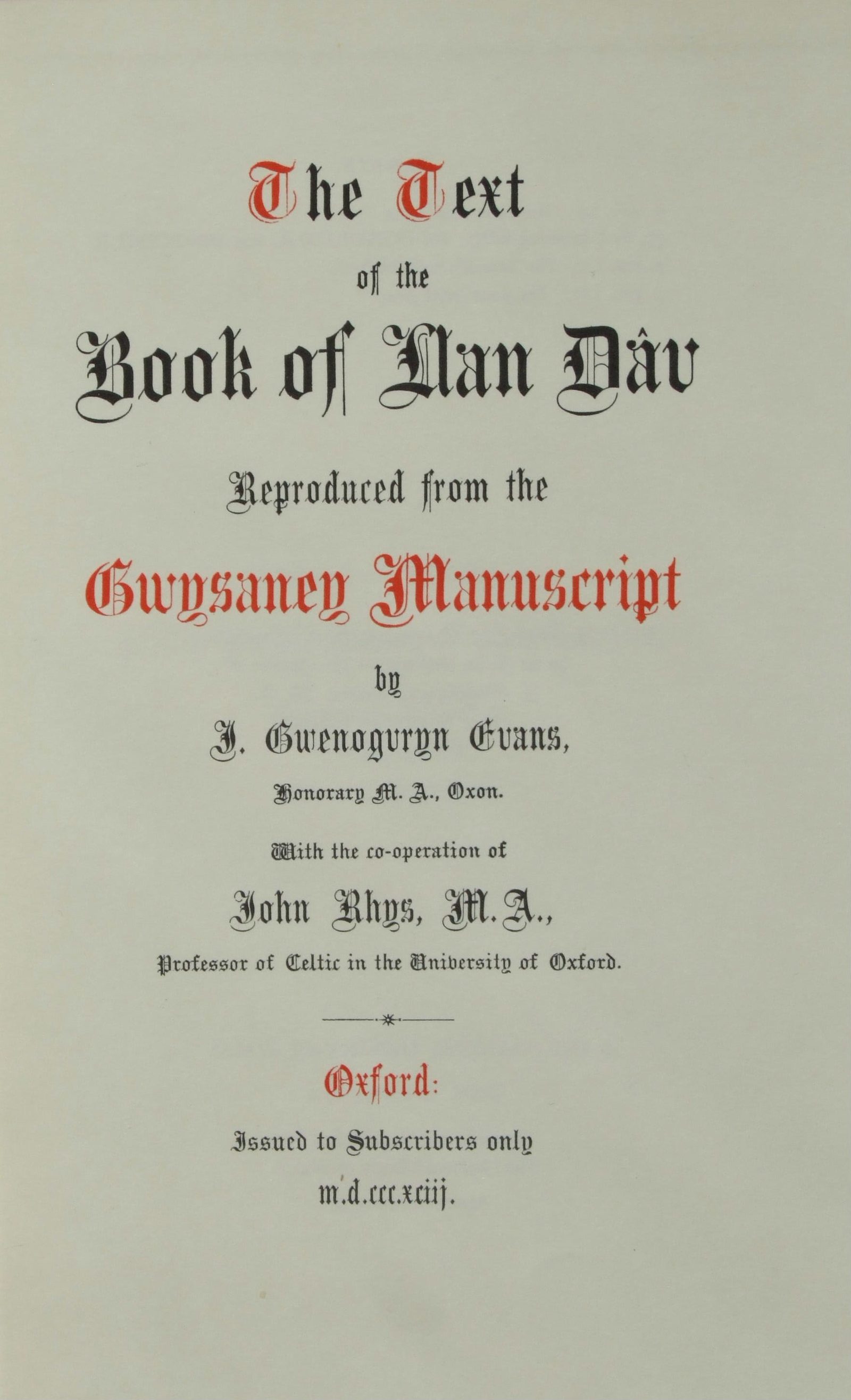
In the earliest source in which he appears, which is the tenth-century Welsh Harleian MS 3859, the name of this historical figure appears as ‘Atroys’. In the Book of Llandaff, written in the twelfth century in Latin, it appears as ‘Athruis’.
Evidence for a Corruption
Obviously, neither of these is identical to ‘Arthur’. However, proponents of this theory point out that this is not a very common name found in medieval Welsh and Latin records, indicating that it may not be a genuine name at all. Rather, it may be a corruption of some other name.
We see some evidence for this from another figure, Arthwys son of Mar. He appears in The Descent of the Men of the North with that spelling, yet in a later record, his name is spelt ‘Athrwys’. Notice the change from ‘rth’ to ‘thr’.
Another example of this phenomenon, albeit in reverse, is seen in ‘Urddawl’, an epithet which appears in medieval Welsh texts. Some historians believe that this is a corruption of the Welsh word ‘Uthrawl’.
Furthermore, the name of both Arthwys son of Mar and Athrwys son of Meurig appear in some later records as ‘Arthrwys’. This form is likewise seen as the name of two other individuals in certain Welsh genealogies. This evidence strongly indicates that the forms ‘Athrwys’, ‘Arthwys’, and ‘Arthrwys’ are all just corruptions of each other. What exactly the original form was is open to question.
Notably, in a manuscript known as Cardiff MS 3.77, which is a copy of a manuscript from c. 1200, the name of Athrwys son of Meurig appears as ‘Art___’. There is a gap where the original manuscript was evidently damaged, but nonetheless, this provides early evidence for his name starting with ‘Art’ rather than ‘Atr’.
Latin Influence
One suggestion regarding how exactly Athrwys’ name may have evolved from ‘Arthur’ is that it may be related to the Latin spelling of Arthur’s name. Across a variety of different documents, we see Arthur’s name spelt in the following ways:
Arturus
Arthurus
Arturis
It is not difficult to imagine that one of these forms could have become corrupted into ‘Arthrwys’, ‘Athruis’, and the other variations. Although it might seem remarkable to propose that the name of a mighty hero to the Welsh could have become corrupted in the genealogies, exactly the same thing occurred with the name of Magnus Maximus, who was likewise a famous hero in medieval Welsh tradition.
Irish Influence
Another suggestion is that his corrupt name comes from Irish influence. One form of the name ‘Arthur’ in Irish records was ‘Artuir’. The historical evidence is clear that there was considerable Irish settlement in south Wales. In fact, Athrwys’ aunt Marchell married an Irish king, Anlach. He moved to Wales and formed the kingdom of Brycheiniog, named after his son Brychan. This kingdom bordered Athrwys’ own territory.
Therefore, it would not be surprising if some of the genealogical records made by the scribes of these kings used this Irish form, ‘Artuir’, in the place of ‘Arthur’. From this form, the simple corruption of the ‘r’ to an ‘s’ would create ‘Artuis’.
We know that this was a common corruption in medieval manuscripts. In fact, the ‘s’ on the end of the name ‘Atroys’ in the Harleian MS 3859 looks almost identical to many of the ‘r’s seen elsewhere on the same page of that manuscript.
From the form ‘Artuis’, the change of ‘Art’ to ‘Atr’ (which, again, is an attested corruption not only in general but also specifically with the name of Arthwys son of Mar) would produce ‘Atruis’. This is merely another spelling of the attested form of Athrwys’ name (e.g. ‘Atroys’ and ‘Athruis’).
Breton Influence
A third possibility that has been proposed is that Breton influence is responsible. On the Modena Archivolt, we find a reference to King Arthur dating to the twelfth century. There, his name is spelt ‘Artus’. This is commonly understood as being a Breton form of Arthur’s name.
We know that there was extensive contact between the Bretons of Brittany and the Britons of southeast Wales throughout the early medieval period. Therefore, it would not be surprising if Breton influence led to Arthur’s name being recorded as ‘Artus’ in some records written by court scribes, perhaps scribes who were actually Breton themselves.
From the form ‘Artus’, the intrusion of an ‘i’ would only be a small corruption. From the form ‘Artuis’, we again have to propose the attested swap of ‘Art’ to ‘Atr’.
Corrupted to an Existing Name
One final possibility is that ‘Athrwys’ and its variants (‘Arthwys’ and ‘Arthrwys’) actually is a genuine name. Whatever the original form, the comparison of the three main attested versions shows that it must have been at least fairly similar to one or more of the forms of Arthur’s name, such as ‘Artus’, ‘Arturus’ or ‘Arturis’.
The example of Magnus Maximus earlier is very relevant here. Originally, his name is seen correctly as ‘Maxim’ (the Latin ending simply being removed). However, he appears later, while still in fairly early Welsh tradition, as ‘Maxen’. This is the Welsh form of the Latin name ‘Maxentius’, not ‘Maximus’. Notably, this corruption stuck across most records that spoke of him, even becoming reinforced as ‘Macsen’.
Despite Magnus Maximus being a famous and important figure to the medieval Welsh, they misspelt his name, using a name which was similar but distinct. Therefore, there is no reason why this could not have occurred with Arthur.
Evidence from the Chronology of Athrwys
So far, we have seen that Athrwys son of Meurig lived in the same area as where most early evidence places King Arthur. We have also seen that the name of this historical figure could plausibly have originally been ‘Arthur’. However, none of this matters if he did not actually live when Arthur was supposed to have lived.
The Life of Saint Cadoc
Fortunately, there is a lot of evidence concerning this dynasty. One early piece of evidence comes from the Life of Saint Cadoc, mentioned earlier. This provides some useful genealogical information. According to this document, Cadoc himself was the great-great-grandson of Tewdrig.
As we saw earlier, Tewdrig was the grandfather of Athrwys. However, could this just be a different Tewdrig? No, the document specifically says that this Tewdrig was made a martyr at Gwent and connects his martyrdom with the place called Merthyr Tewdrig. In the Book of Llandaff, this same information is provided about Tewdrig the grandfather of Athrwys.
Furthermore, the genealogy of Tewdrig in the Life of Saint Cadoc also corresponds to that given to Tewdrig the grandfather of Athrwys in other records, such as the Jesus College MS 20. Therefore, there can be no doubt that the Life of Saint Cadoc is referring to the same Tewdrig.
This being the case, placing Athrwys two generations before Cadoc is highly significant. Cadoc himself was born in the early sixth century. Therefore, this would definitely place Athrwys active throughout the first half of the sixth century, just like King Arthur.
The Book of Llandaff
More evidence for this chronology comes from the Book of Llandaff. This was written in the early twelfth century. It contains numerous records of land grants from the kings of southeast Wales to the church. These land grants are followed by a list of witnesses of both the clergy and the laity.
One of these land grants is recorded as being given by Athrwys son of Meurig, described here as the king of Gwent (this refutes the idea that Athrwys was never king). This grant of land is witnessed by several abbots, all of whom are elsewhere recorded as the disciples of Bishop Dubricius.
Most modern authorities agree that Dubricius was born in the second half of the fifth century and died in the first half of the sixth century. Therefore, his disciples would logically have been active in the early- and mid-sixth century.
Thus, the fact that Athrwys’ land grant as king of Gwent was witnessed by these disciples of Dubricius shows that he must have been active as king at least as early as the mid-sixth century. Respected scholar Peter Bartrum acknowledges this point in A Welsh Classical Dictionary.
Bishop Oudoceus
The bishop who appears most commonly as a witness to the grants of Athrwys’ father Meurig and his son Morgan is Oudoceus. He is presented as the immediate successor of a bishop called Teilo, who was himself the immediate successor of Dubricius.
In view of Dubricius’ dates as discussed earlier, this clearly indicates that Oudoceus was active in the mid- to late-sixth century. This is confirmed by two pieces of information contained in another twelfth century document, called the Life of Saint Oudoceus.
One piece of information is that Oudoceus succeeded Teilo at the end of the Yellow Plague, which other records place in the mid sixth century. The second is that Oudoceus was the son of a king of Brittany named Budic. Bartrum places Budic’s birth in c. 500. This would indicate that Oudoceus was likely born no later than 540 at most.
Therefore, Oudoceus’ career would have stretched from the mid sixth century to the early seventh century, but no later. Athrwys was king near the beginning of his career, since Oudoceus continued to serve as bishop until the reign of Athrwys’ grandson. This evidence clearly places Athrwys in the sixth century.
In line with this, the Oxford Dictionary of Saints: Fifth Edition dates the start of Oudoceus’s tenure as bishop to 570, which seems very reasonable.
The Llancarfan Charters
The Llancarfan charters are a collection of land grants attached to the Life of Saint Cadoc. Here, we find a reference to a man named Euan Buur. He is described as killing two sons of his sister. The sons are named as Aidnerth and Atgan. The account goes on to say that Euan was compelled to approach Cadoc for his crimes, along with several kings.
The involvement of kings in this event clearly shows the importance of the two victims. The only figure known from the records with a name like Aidnerth who was active in that area is Idnerth, the brother of Athrwys.
Given the strong likelihood that the Aidnerth of this record can be identified as Idnerth, it is significant to note that Cadoc was already dead by c. 580. This clearly places Idnerth, along with his older brother Athrwys, in the sixth century.
Evidence from the Family of Athrwys
Further support for this theory can be seen from the family members of Athrwys. Proponents of this theory have argued that many of the family members of King Arthur in the legends can be identified with figures who appear in records about Athrwys’ dynasty.
King Arthur’s Children
In the Arthurian legends, he is shown as having several children. In Welsh tradition, one of these is called Gwydre. He was said to have been slain during one of Arthur’s adventures. Nothing more is known about him.
Interestingly, in the Book of Llandaff, there is a land grant which is introduced by saying that Morgan came with his heir Gurhytyr to offer the land for the soul of said heir and for the soul of his father Meurig.
There is an argument to be made that this Gurhytyr was actually dead and that Morgan only ‘came’ with him in a figurative sense. He does not appear in the witness list that follows the description of this land grant, nor does he appear anywhere else. Furthermore, the statement that Morgan offered this land for Gurhytyr’s soul also suggests that he was dead, since the same is said concerning the soul of Meurig, who definitely was dead at this point.
Another figure recorded with this same name, spelt ‘Gurhydyr’ in his case, appears in a different document with the spelling ‘Gwydr’. This is virtually identical to the name of Arthur’s son, Gwydre.
Therefore, the ‘heir’ of Morgan named Gurhytyr, who appears to have actually been dead at the time, may well be the same as Arthur’s legendary son Gwydre. In any case, the Book of Llandaff shows that this name was used in this very era by the family of Athrwys.
In the early-fourteenth century Le Petit Bruit, two of Arthur sons are named Morgan and Adeluf. These clearly correspond to Athrwys’ sons Morgan and Ithel.
King Arthur’s Uncles
In Culhwch and Olwen, a Welsh tale of approximately 1100, Arthur is given a maternal uncle named Gwrfoddw Hen (‘Hen’ meaning ‘the Old’). The rest of Gwrfoddw’s family members are not specified.
It appears that the only other reference to a figure named Gwrfoddw in medieval Welsh literature is in the Book of Llandaff, where he appears as a king of Ergyng. His parentage is unfortunately not given. However, his placement in the charters makes it likely that he was the son of Gwrgan Fawr, since he appears to come just after him. That would make this Gwrfoddw a maternal uncle of Athrwys, just as Gwrfoddw Hen was the maternal uncle of Arthur.
Another possible uncle of Arthur’s is Iaen. He is mentioned in Culhwch and Olwen in the context of several of his children, who are said to be related to Arthur on ‘his’ or ‘their’ father’s side. The correct reading of the text is debated.
If the correct reading is ‘their’ father’s side, this would mean that Iaen was a relative of Arthur, old enough to have adult children in Arthur’s service.
As we saw earlier, the Life of Saint Cadoc presents Idnerth as dying at the hands of his uncle Euan Buur. The name ‘Euan’ appears in different records as ‘Ieuan’. On the other hand, the name ‘Iaen’ does not appear in any other records and seems to be a corruption. It is very plausibly a corruption of ‘Ieuan’, the name of Athrwys’ uncle.
King Arthur’s Forebears
King Arthur’s forbears, his immediate predecessors, play an important role in the Arthurian legends. His father, the previous king in the legend, is Uther Pendragon. Before him, there was Aurelius Ambrosius, the older brother of Uther. How do these figures support the identification of Athrwys with King Arthur?
Uther Pendragon
First of all, it should be noted that ‘Pendragon’ is widely acknowledged as a title. It comes from two Welsh words, which together mean ‘chief warrior’ or ‘chief leader’. However, there is also some evidence that ‘Uther’, too, is a title. In fact, the Old Welsh word ‘uthr’ meant ‘fearsome’. This works very well as a title in conjunction with ‘chief warrior’.
Therefore, this theory proposes that ‘Uther Pendragon’ was actually a hereditary title used by Athrwys’ father and his grandfather. Interestingly, Athrwys’ grandfather Tewdrig bears some striking similarities with the legendary Uther Pendragon.
For one thing, Uther was said to have fought a war against the Irish in southwest Wales and driven them out of that region. Some scholars have proposed the same thing regarding Tewdrig using records that are independent of the Arthurian legends.
Furthermore, the story of Tewdrig’s death is almost identical to that of Uther’s death. In both cases, the king retires from the kingship and leaves his son, or son-in-law, in charge of the kingdom. Due to the new king having difficulty fighting the Saxons, the elderly king comes out of retirement for one final battle. In both cases, the Britons are victorious, but the elderly king’s condition worsens after the battle. Being carried in a cart, he dies shortly afterwards by a well or spring.
Given the close connection between these two accounts, as well as the evidence from earlier in Tewdrig’s career, proponents of this theory argue that Tewdrig was the historical Uther Pendragon.
Ambrosius Aurelianus
Uther was the successor and supposed younger brother of Aurelius Ambrosius. Historically, we know that Aurelius Ambrosius (actually Ambrosius Aurelianus, as shown by the more contemporary De Excidio) did not have a brother who fought alongside him, since the sixth-century writer Gildas specifically refers to Ambrosius as being alone in that troubled period, and the last of the Romans.
On this basis, proponents of this theory argue that Ambrosius was actually the father, not older brother, of Uther. This would mean that Ambrosius should be identified as Teithfallt, the father of Tewdrig.
Compared to Tewdrig, we know relatively little about Teithfallt. However, there is a late document which describes the fact that he ordered the churches to be rebuilt after Wales was attacked by the Saxons in his time, which is exactly what the Arthurian legends describe concerning Ambrosius.
Furthermore, Teithfallt appears in a document known as the Descent of the Men of the North, in which he is described as the prince of Cerniw, the very territory with which Arthur is associated in the legends.
Objections to This Theory
There are two main objections to this theory. One of them is regarding the chronology of Athrwys, while the other is regarding his name. No notable objections have been made against the majority of other pieces of evidence used by proponents of this theory.
Did Athrwys’ Really Live in the Sixth Century?
The majority of those who argue against this theory insist that Athrwys was a seventh century figure, not a sixth century one. The pieces of evidence used in favour of a sixth century date, discussed above, are dismissed as mere mistakes in the records. They are rejected in favour of two primary pieces of evidence.
The Death of Ffernfael son of Ithel
The most common piece of evidence used comes from the Annales Cambriae, a tenth-century chronicle. The entry for the year 775 records the death of a certain Ffernfael son of Ithel. As it happens, Athrwys had a grandson named Ithel, who in turn had a son named Ffernfael.
Naturally, the two Ffernfaels have been identified as each other. If Athrwys’ great-grandson died in 775, then Athrwys himself must have been a figure of the 600s, not the 500s. This would appear to discount the possibility that he could be identified as King Arthur.
However, Patrick Sims-Williams, one of the leading scholars in this field today, highlighted the fact that this identification is far from certain. Both ‘Ithel’ and ‘Ffernfael’ were common names in this dynasty.
As a matter of fact, the Harleian MS 3859 records the existence of a later Ithel, three generations after Athrwys’ grandson by that name. There is no reason why the Ffernfael who appears as a son of Ithel in the Annales Cambrae could not have been a son of this later Ithel rather than Athrwys’ grandson Ithel.
This would accommodate the evidence from the Annales Cambriae without requiring all the evidence for a sixth century date for Athrwys to be mistakes in the records.
Ithel’s Contemporary Telpaldus
The second primary piece of evidence used in favour of a seventh century date for Athrwys is from the Book of Llandaff. One of the land grants is introduced with a brief narrative that explains that the border region of Wales suffered attacks from the Saxons in the time of Kings Ithel and Telpaldus of Britain.
The Ithel of this passage is explicitly Ithel the grandson of Athrwys. Therefore, the identity of Telpaldus is very important. Proponents of the late chronology identify Telpaldus with Aethelbald of Mercia. He was active in the mid-eighth century. The name ‘Telpaldus’ is considered to be a slight corruption of his name, with the first part missing.
However, Aethelbald of Mercia is not the only possible candidate for Telpaldus. As it happens, there is evidence that the name ‘Aethelbald’ could be a mistaken for the name ‘Aethelwald’. This would be especially easy in medieval Welsh documents, where ‘b’ was sometimes written as ‘u’ (for example, the name of Gwrfoddw is sometimes written as Gwrbothu and sometimes as Gwruodu).
In the century prior to Aethelbald of Mercia, there was Aethelwald of Deira. He was one of the most powerful kings of the time, and was an ally of the Welsh. Furthermore, there is a reference in the Annales Cambriae to Saxon attacks on the border region of southeast Wales at about the time Aethelwald became king.
Additionally, the Historia Brittonum and other records testify to an alliance of British kings at this time. The Book of Llandaff refers to the fact that such an alliance occurred after the attacks in the time of Ithel and Telpaldus. This supports the identification of Telpaldus with Aethelwald of Deira, since there is no attested alliance of British kings in the time of Aethelbald of Mercia.
Therefore, there is a strong case to be made that Ithel the grandson of Athrwys was a contemporary of Athelwald of Deira in the seventh century, not Aethelbald of Mercia in the eighth century.
The Supposed Origin of the Name of Athrwys
Earlier, evidence was presented that indicates that the original form of Athrwys’ name may well be a corruption of one of the forms of Arthur’s name, or at least that the names were sufficiently similar that one was swapped for the other.
However, critics of this theory argue that there is evidence that Athrwys’ name was originally ‘Antres’. The evidence for this comes from the Llancarfan charters found at the end of the Book of Cadoc. These record a land grant which was witnessed by ‘Mouric and his sons’. This Mouric is Meurig, the father of Athrwys.
Immediately after the word ‘sons’, the text mentions ‘Andrus’. In Old Welsh, this would be ‘Antres’. This has been interpreted by many researchers as a reference to Athrwys, the text specifying who the aforementioned sons of Mouric (that is, Meurig) were.
The problem is that the text uses the plural word for ‘sons’, not the singular ‘son’. Yet, after this word, the only figure mentioned in Andrus, with the following person being named as the son of someone else.
Therefore, ‘Andrus’ cannot be interpreted as one of the sons of Mouric. Rather, he must simply be the next person in the list. As it happens, the narrative leading up to this land grant specifically mentions a certain ‘Andres son of Morcant’. It is virtually certain that the Andrus mentioned as a witness to this charter is this Andres, not Athrwys son of Meurig.
Conclusion
In conclusion, this theory proposes that Athrwys son of Meurig was the historical King Arthur. This theory focuses on the fact that Athrwys appears to have lived at the same time as Arthur and in the same place as where Arthur was primarily located in the earliest sources. Furthermore, his name, although not identical to ‘Arthur’ in the attested medieval sources, is sufficiently close that this could be attributed to corruptions in the records.
This theory also uses supporting evidence from King Arthur’s associates, claiming that they can be identified with various historical individuals associated with Athrwys, such as his sons and his uncles.
Sources
Bartrum, Peter, A Welsh Classical Dictionary, 1993
Sims-Williams, Patrick*, The Book of Llandaf as a Historical Source*, 2019
Bromwich, Rachel, Trioedd Ynys Prydein: The Triads of the Isle of Britain – Fourth Edition, 2016
Howells, Caleb, King Arthur: The Man Who Conquered Europe, 2019
Wilson, Alan and Blackett, Baram*, Arthur: King of Glamorgan and Gwent*, 1981
https://www.ncregister.com/blog/king-arthur-in-the-lives-of-the-saints
https://mythbank.com/vita-sancti-euflami-life-of-saint-efflamm/