Gwrfoddw Hen, Uncle of King Arthur

Gwrfoddw Hen is a minor character from the Arthurian legends, but he is notable for being someone from King Arthur’s own family. In fact, he was said to have been the uncle of the king. What else do we know about him? And did he really exist?
Who Was Gwrfoddw Hen?
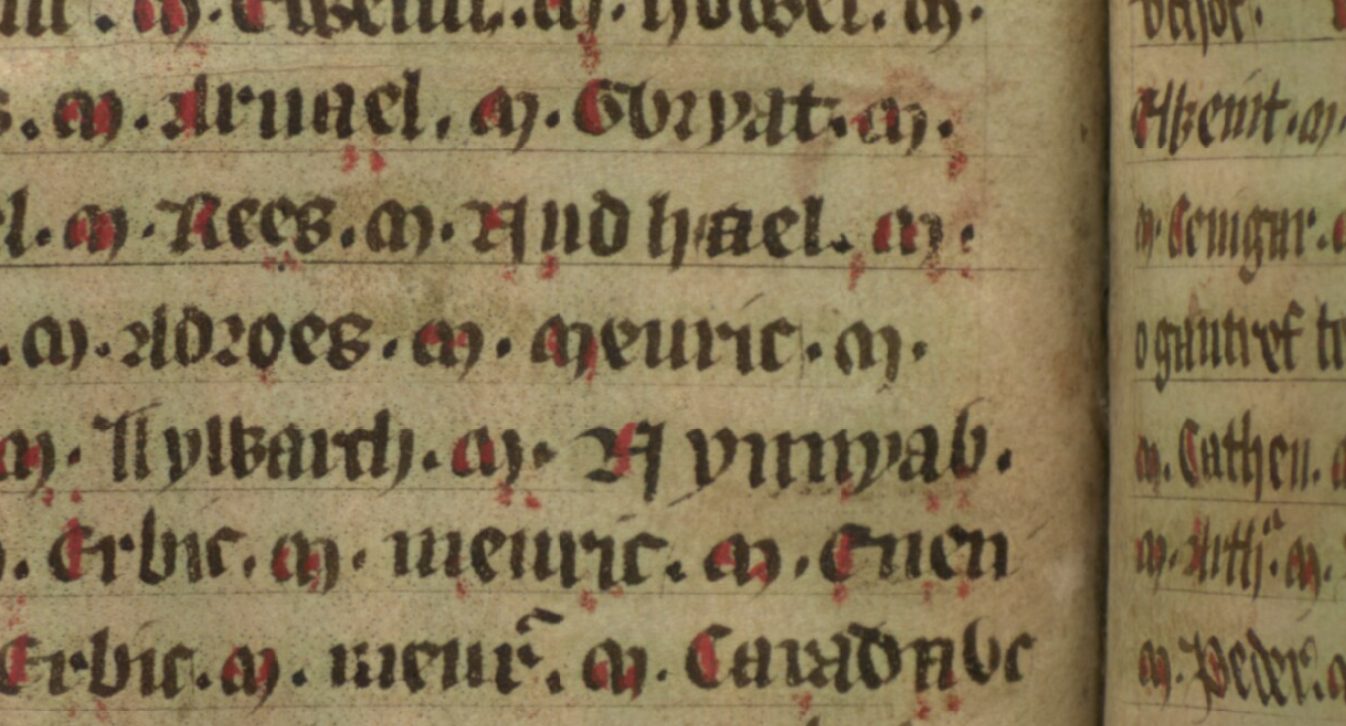
This minor character, Gwrfoddw Hen, appears in just one Arthurian source. He is mentioned as one of Arthur’s many allies in the Welsh tale known as Culhwch and Olwen. This source likely dates from about 1100.
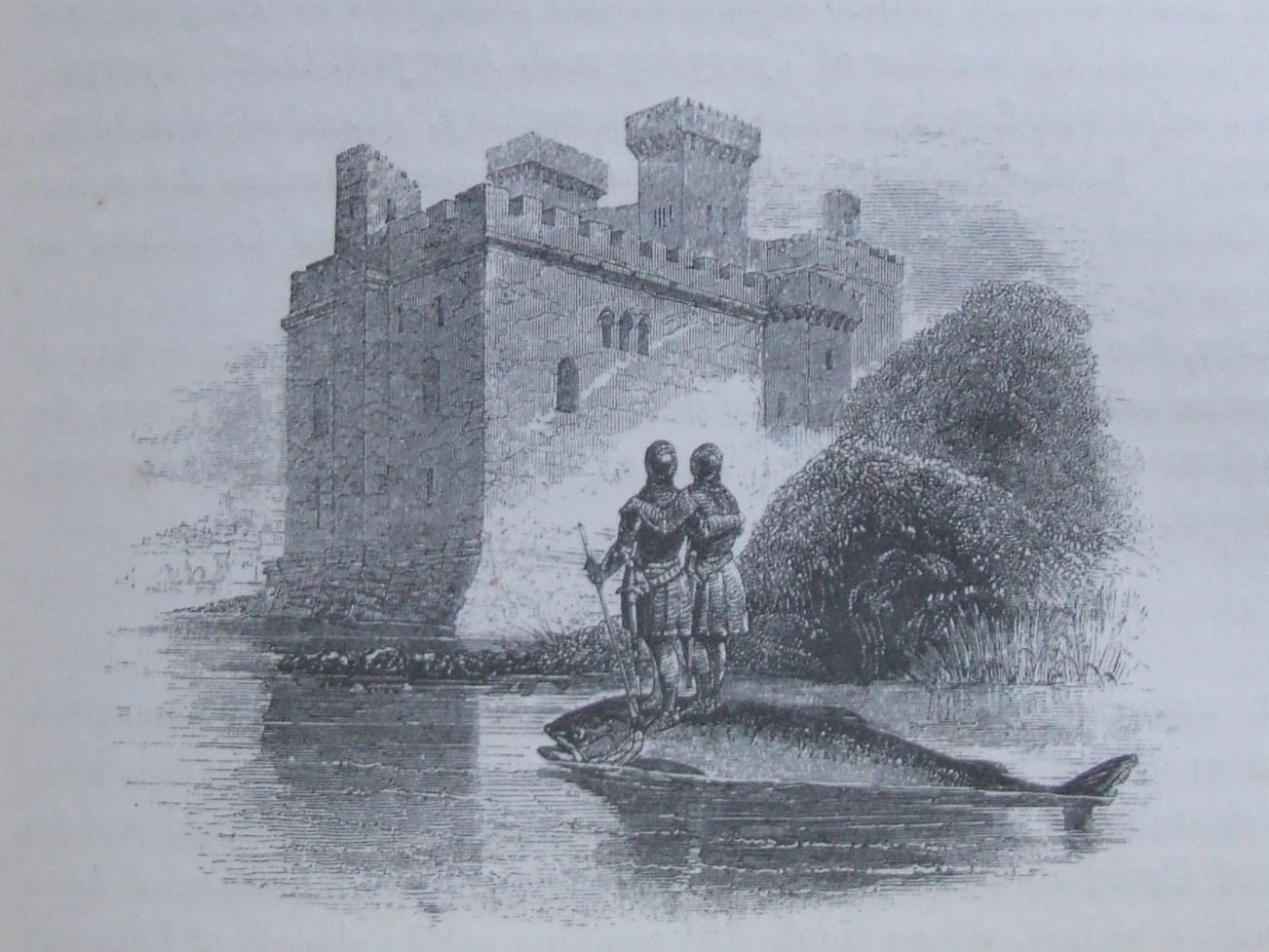
In this source, Arthur engaged on a series of adventures, the most notable of which was a dangerous boar hunt. He had with him many dozens of allies. Gwrfoddw Hen was one of them.
Later on in the tale, Gwrfoddw is listed as one of the people killed in the boar hunt at Ystrad Tywi, a location in southeast Wales. He was killed by Llwydog Gofynniad, one of the piglets of the monstrous boar.
Gwrfoddw is directly described as Arthur’s uncle, the brother of the king’s mother. Twice, he is mentioned in connection with his brother Llygadrudd Emys. No further information about either of them is provided.
Nonetheless, this shows that these uncles of Arthur were still alive and apparently active in battle during Arthur’s reign, which is a detail worth noting.
The Meaning of ‘Hen’
The epithet ‘Hen’ means ‘Old’. Therefore, Gwrfoddw Hen can also be referred to as Gwrfoddw the Old. This would suggest that he was known for living to a great age. However, this term is also sometimes used to refer to an ancestral figure who shared his name with a later member of his family, effective meaning ‘the Elder’. What exactly it meant in the case of Gwrfoddw, we cannot state with certainty.
How Was Gwrfoddw Related to Arthur?
The source in which he appears, Culhwch and Olwen, is very clear concerning the relationship between Gwrfoddw and Arthur. Not only does it call him Arthur’s uncle, it specifies that he was the brother of Arthur’s mother. This rules out the idea that he was his uncle through some other means, such as by being married to the sister of Arthur’s mother.
Welsh tradition makes Arthur’s mother Eigr, better known as Igerna or even Igraine. She is portrayed as the daughter of a figure called Amlawdd Wledig. Therefore, Gwrfoddw Hen is generally understood to be a son of this Amlawdd.
However, there is some evidence that would place Amlawdd firmly in the first half of the fifth century, such as the fact that his wife was the daughter of Cunedda Wledig, born in c. 370. Conversely, King Arthur can be firmly placed in the sixth century. Therefore, it is evident that the pedigree for Arthur going back to Amlawdd is somewhat abbreviated.
Did Gwrfoddw Hen Really Exist?
Did this legendary uncle of King Arthur really exist? The name ‘Gwrfoddw’ was not very common, but it was the name of a king of Ergyng in the Arthurian period.
In the Book of Llandaff, written in the early twelfth century but based on far earlier documents, there is a record of a certain King Gwrfoddw who ruled Ergyng and gave land grants to the church. He is not given the epithet ‘Hen’ in this document. Nonetheless, a number of scholars have suggested that the Gwrfoddw of Culhwch and Olwen should be identified as this historical king.
One point of controversy is the chronology of this king. Traditionally, he was believed to have reigned in the first half of the sixth century, thus allowing him to be easily identified with Arthur’s uncle. His father, for instance, was held to be a first cousin of Bishop Dubricius.
However, throughout the twentieth century, some influential scholars argued that these dates should be pushed forward by about a century. This would mean that Gwrfoddw the historical king of Ergyng cannot have been the figure who appears in Culhwch and Olwen.
Nevertheless, a number of scholars today argue in favour of the early dates, such as Timothy Venning, David Farmer, and others. There is indeed good reason for accepting this chronology, especially when the evidence concerning the bishops who are recorded as interacting with the kings is taken into account.
With this evidence in mind, the identification of the Arthurian Gwrfoddw Hen with the historical Gwrfoddw of Ergyng does seem logical and convincing.
Who Was the Historical Gwrfoddw?
Historically, we know very little about Gwrfoddw. He only appears in one charter in the Book of Llandaff. Yet, this record does reveal some interesting information.
In the narrative leading up to the grant of land to the church, we are told that Gwrfoddw had successfully fought the Saxons. In fact, it is because of this that he wanted to gift some land to the church, essentially as an act of appreciation for his victory.
This confirms that Gwrfoddw was active in battle. Although a generic point, it is consistent with the way Gwrfoddw is portrayed in Culhwch and Olwen.
The Book of Llandaff does not tell us who his father was. However, he appears in a charter which can be dated to shortly after the time of King Gwrgan of Ergyng. It thus appears that Gwrfoddw was the son of Gwrgan.
This apparent familial connection has been used by supporters of the theory that Athrwys ap Meurig was the real King Arthur. Athrwys’ mother was Onbrawst, the daughter of King Gwrgan. Therefore, any son of Gwrgan would be an uncle of Athrwys, the brother of his mother.
Since this appears to apply to Gwrfoddw, and yet Gwrfoddw is described in Culhwch and Olwen as the maternal uncle of King Arthur, this has been used to argue in favour of the identification of Athrwys as Arthur.
Gwrfoddw in a Poem by Taliesin
There is one more notable source concerning Gwrfoddw. It appears that he is mentioned in an obscure poem by Taliesin, a bard active from the mid to late sixth century. The poem is called Kanu y Cwrwf, which means ‘Song of Ale’.
This poem is not easily understood, nor does it appear to be the subject of much interest among scholars. Nonetheless, scholar Peter Bartrum noted that it mentions someone by the name of ‘Gwrwedw’, which appears to be another form of ‘Gwrfoddw’.
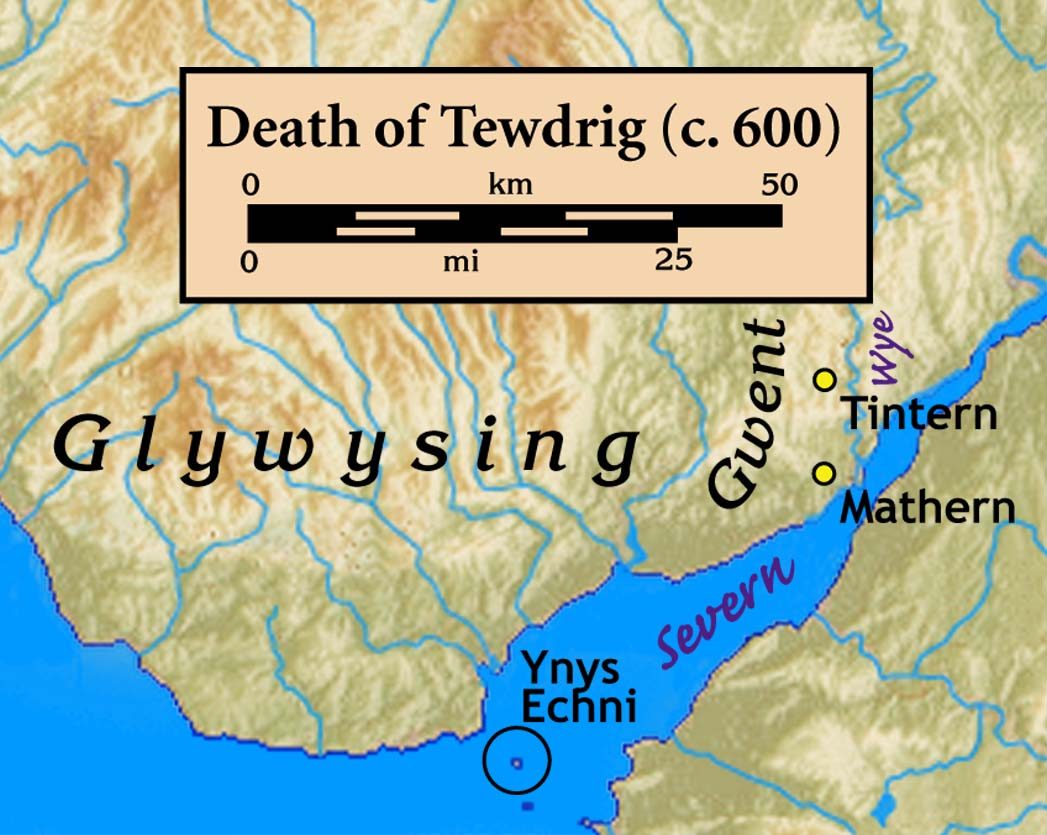
The poem also mentions the men of Gwent. Since Gwent bordered Ergyng, this supports the identification of this figure with Gwrfoddw of Ergyng. This also, incidentally, supports the early chronology for Gwrfoddw of Ergyng, since Taliesin would likely have been dead by the time Gwrfoddw was born according to the late dates for the Ergyng dynasty.
This poem also associates Gwrfoddw with Ynyr, likely meaning Ynyr of Gwent, a figure of the late fifth century known from other records. Also mentioned in the poem is Rhuddfedel. The only person of this name found in medieval Welsh records is shown to be a son of Catigern, son of Vortigern. This, again, points to the late fifth or early sixth century as the context of the poem.
Although the poem is obscure and its meaning is not fully understood, it is evident that this poem refers to Gwrfoddw and associates him with the region of Gwent and at least two other figures from the late fifth or early sixth century.
Conclusion
In conclusion, Gwrfoddw Hen is mentioned in Culhwch and Olwen as an uncle of King Arthur, specifically the brother of his mother. He was still alive well into Arthur’s reign, serving as one of his allies. Nothing more is known about him from the Arthurian sources other than that he died in Arthur’s boar hunt, but he can almost certainly be identified as the historical King Gwrfoddw of Ergyng, known from other records.
This king was likely the son of Gwrgan Fawr. There is controversy over the chronology of this dynasty, but the weight of evidence indicates that he lived in the late fifth and early sixth centuries. This is also supported by an obscure poem by Taliesin in which he appears, called Kanu y Cwrwf.
Sources
Bartrum, Peter, A Welsh Classical Dictionary, 1993
Howells, Caleb, King Arthur: The Man Who Conquered Europe, 2019
Parker, Will, Culhwch and Olwen Translation (footnote 158), 2016