Llygadrudd Emys, Uncle of King Arthur

Llygadrudd Emys is a very minor character from the legends of King Arthur. Ironically, he was also said to be one of Arthur’s closest relatives. He appears in just one tale, in which he is described as one of King Arthur’s uncles, the brother of his mother. What do we know about him? Does he actually appear in any other records?
Who Was Llygadrudd Emys?
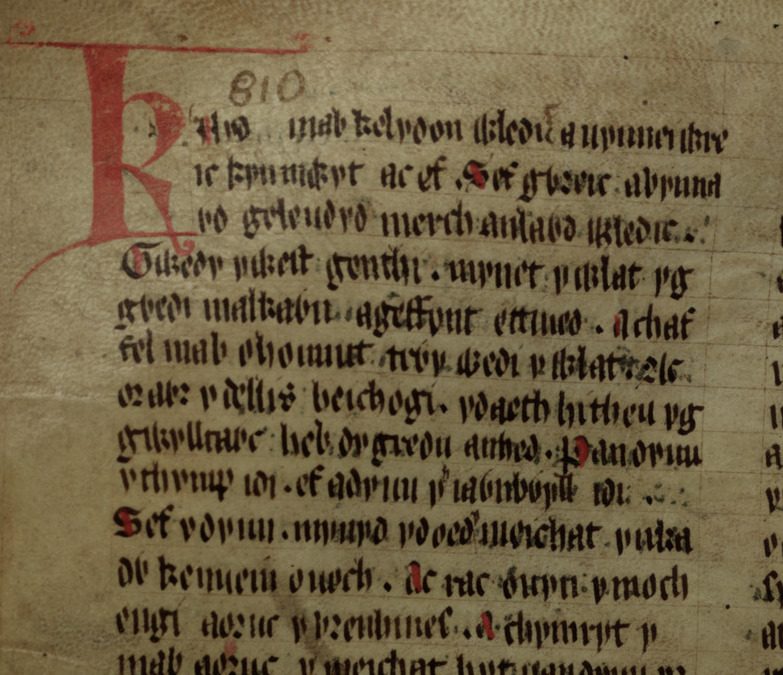
Llygadrudd Emys appears in a Welsh tale known as Culhwch and Olwen. This tale was likely composed around the year 1100, although at least part of the basic story dates back to at least the ninth century.
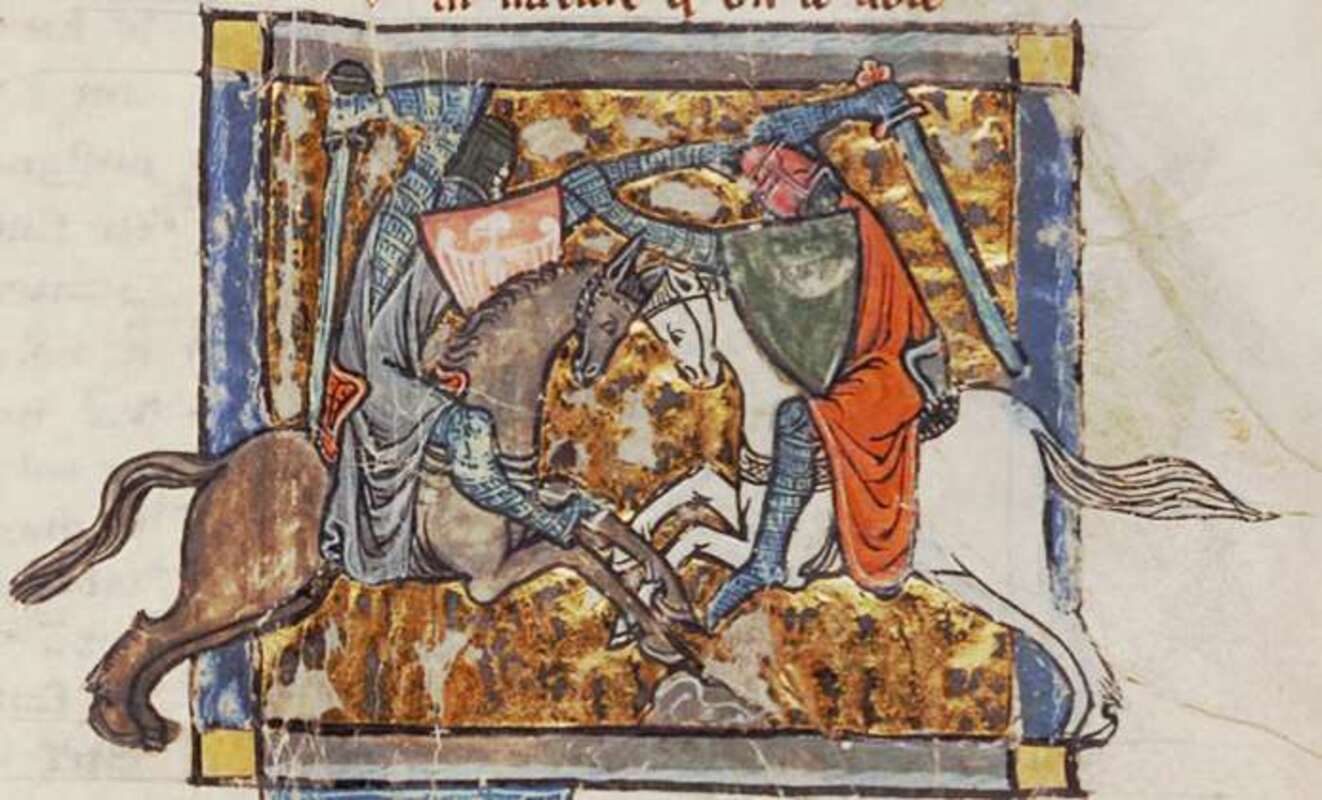
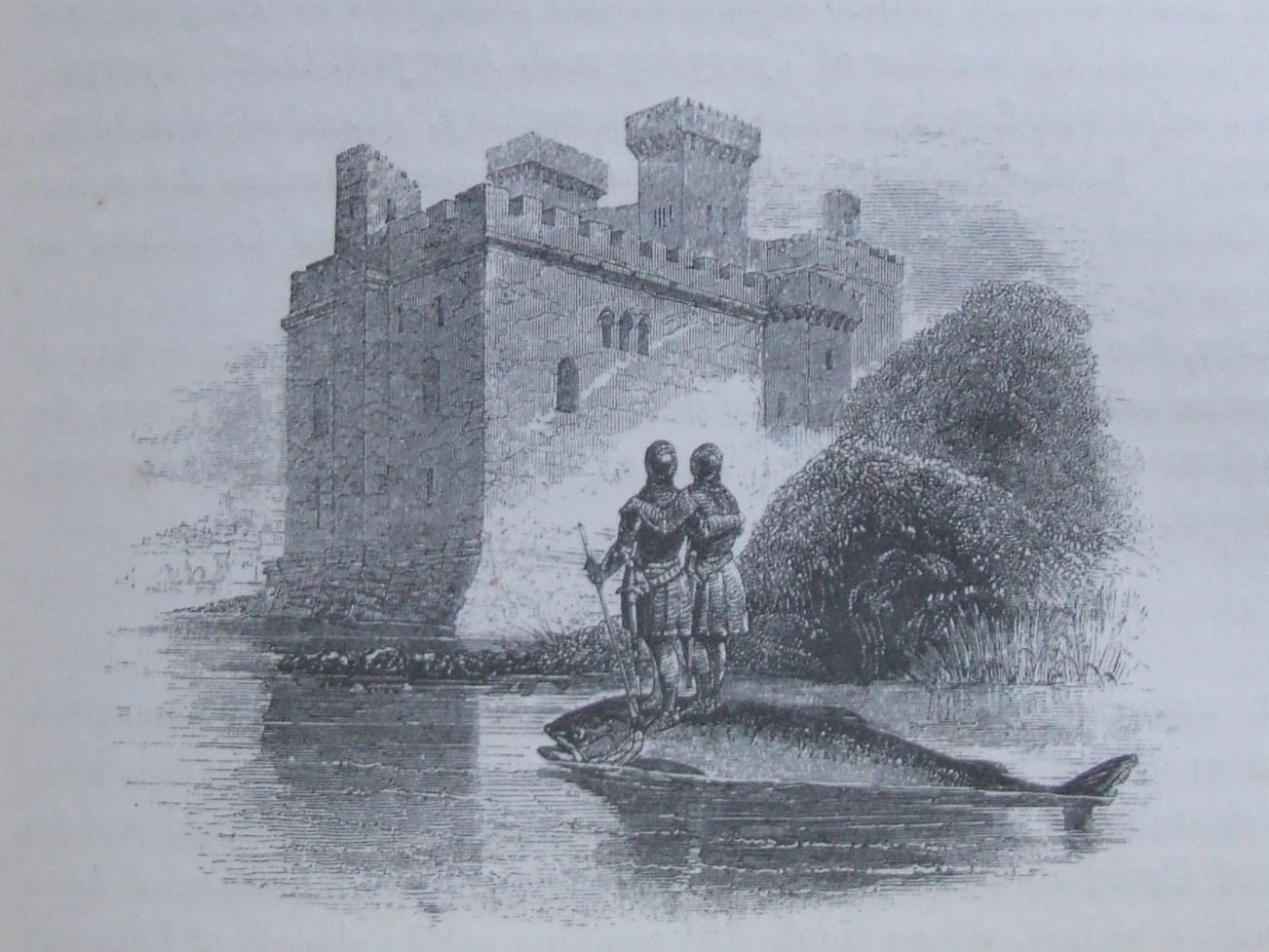
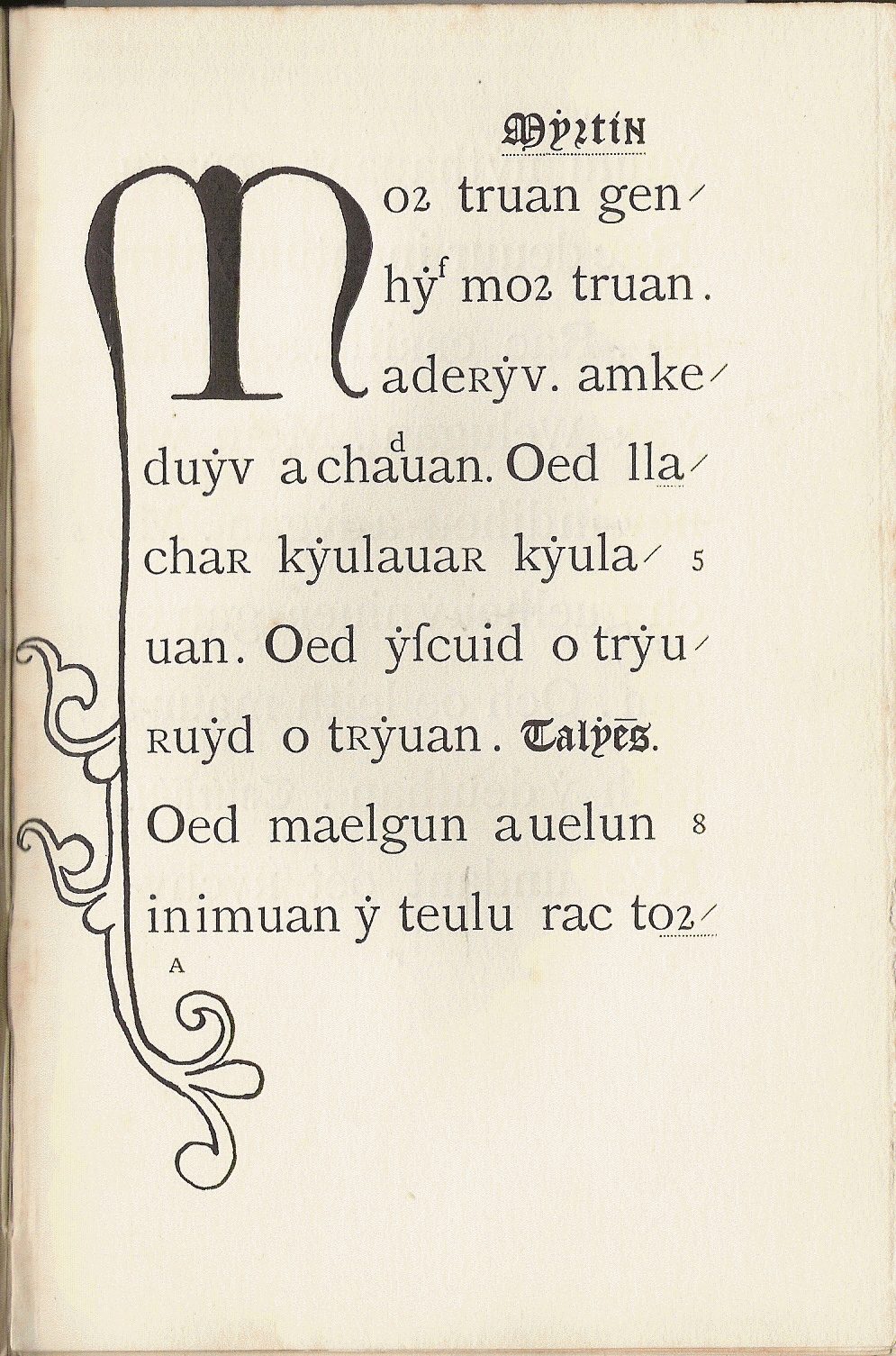
In this tale, we read of King Arthur engaging on a series of adventures. One of these, the most dramatic of the tale, is the hunt for a monstrous boar and its deadly piglets. The boar is called Twrch Trwyth. This boar hunt is referred to in the Mirabilia, attached to the back of the Historia Brittonum.
During these adventures, and especially the boar hunt, Arthur called on countless allies from all over Britain and even beyond. Llygadrudd Emys was one of those allies. He is mentioned alongside his brother, Gwrfoddw Hen.
Llygadrudd does not receive any prominence in the account. He is simply listed as one of Arthur’s allies during this event, and then later he is mentioned as one of the men killed by Llwydog Gofynniad, one of the boar’s piglets.
When Llygadrudd is first mentioned, a comment is included to the effect that he was one of King Arthur’s uncles. Specifically, he was the brother of Arthur’s mother.
As we can see, there is not a lot of information about Llygadrudd Emys in the Arthurian legends, but this does tell us that he was a supporter of Arthur’s reign and was still active in battle well into that reign.
The Meaning of the Name
The name ‘Llygadrudd Emys’ appears to translate directly as ‘red-eyed stallion’. The first part of this is superficially unambiguous. However, there is some controversy surrounding the second part, ‘Emys’.
A common mistake for medieval British scribes was mistaking the letter ‘r’ for the letter ‘s’. For this reason, there are a number of examples of names written with an ‘s’ somewhere in it where there should actually be an ‘r’, and vice versa.
As it happens, an attested name seen in an Arthurian context is ‘Emyr’. Notice that this is only different from ‘Emys’ by the ‘r’ instead of the ‘s’. This word, ‘Emyr’, is actually a title which means ‘emperor’. It is seen in Welsh records as the title for the king of Brittany, usually King Budic. He is called Emyr Llydaw (this latter word being one of the names for Brittany).
Based on this, some scholars have argued that it makes more sense to interpret Llygadrudd’s name as meaning ‘red-eyed emperor’. A royal figure having an epithet meaning ‘emperor’ arguably does make more sense than having an epithet meaning ‘stallion’.
The Origin of ‘Llygadrudd’
Regarding the first part of the name, there is some evidence that it did not originally mean ‘red-eyed’ at all. It is not necessarily very convincing evidence, but some scholars (such as Peter Bartrum) have tried to argue that it came from the place name Llygad Amr.
This is a location in Ergyng, which was a medieval Welsh kingdom encompassing much of modern-day Herefordshire and Gloucestershire. Llygad Amr is a place whose name simply means ‘Eye of Amr’, the latter being a personal name.
This idea would perhaps lend some credence to the theory that the ‘s’ on the end of ‘Emys’ should originally have been ‘r’, although it would not connect it to the title ‘Emyr’.
The obvious problem with this theory is that there is no particular similarity between ‘Llygadrudd Emys’ and ‘Llygad Amr’ aside from a very superficial resemblance. There is no real reason to connect the two.
How Was Llygadrudd Related to Arthur?
More significantly to the actual character, how was Llygadrudd supposed to have been related to King Arthur? As Culhwch and Olwen explicitly tells us, he was Arthur’s uncle by virtue of being the brother of Arthur’s mother.
However, the text does not specifically name the mother in question, nor does it name the father of Llygadrudd. This somewhat complicates the issue.
Welsh tradition found in other records gives Arthur a mother named Eigr (better known as Igerna or Igraine, depending on the source). She is made the daughter of a prominent ancestral figure named Amlawdd Wledig.
Based on these facts, Llygadrudd Emys is generally understood to be a son of Amlawdd. However, the situation is not so simple. The issue is that there is some genealogical evidence which definitely makes Amlawdd a figure of the early fifth century. His wife was a daughter of Cunedda Wledig, an ancestral figure born around 370.
Since Arthur was active firmly in the sixth century, this would suggest that Llygadrudd cannot really have been a son of Amlawdd, at least not directly.
Evidence from Gwrfoddw Hen
An interesting possibility regarding Llygadrudd’s familial connection to Arthur is actually indicated by his brother, Gwrfoddw Hen. Scholars have long noted that a historical king of this name appears as the king of Ergyng in the Book of Llandaff, a twelfth-century collection of land grants from kings to the church.
A number of scholars have suggested that the Gwrfoddw from Culhwch and Olwen can actually be identified with the historical Gwrfoddw from the Book of Llandaff. The only notable issue to this identification is the chronology of the matter.
While the traditional viewpoint made both of them exactly contemporaneous, more modern scholars have generally placed the historical King Gwrfoddw about a century later. Nonetheless, the traditional chronology still has its modern supporters, such as Timothy Venning and David Farmer, along with the late Brian Davies and Michelle Ziegler.
If these two Gwrfoddws really should be identified as each other, this would mean that Llygadrudd Emys would have been a member of the dynasty of Ergyng too. Given the chronology of Gwrfoddw’s appearance in the Book of Llandaff (his parentage is not actually given), he can almost certainly be understood as a son of King Gwrgan Fawr.
This would thus mean that Llygadrudd, too, was a son of Gwrgan Fawr. The reason this is so significant is that Gwrgan Fawr was the maternal grandfather of Athrwys ap Meurig. He is a popular candidate for the real King Arthur.
Even scholars who do not necessarily identify Athrwys as the real King Arthur, such as Christopher Gidlow, accept that he may have contributed to the legends. Therefore, perhaps the reason why Llygadrudd and Gwrfoddw were remembered as uncles of Arthur, brothers of his mother, is because they really were Athrwys’ uncles, brothers of his mother Onbrawst.
Did Llygadrudd Emys Really Exist?
While the theory that Llygadrudd Emys was a brother of the historical Gwrfoddw of Ergyng is an appealing one, it is lacking in that there is no explicit reference to Llygadrudd as a king of Ergyng in the Book of Llandaff.
Of course, this may simply be explained by the conclusion that Llygadrudd was younger than Gwrfoddw and thus never became the king of his family’s kingdom. Nonetheless, it would be helpful if we could find him somewhere in the Book of Llandaff.
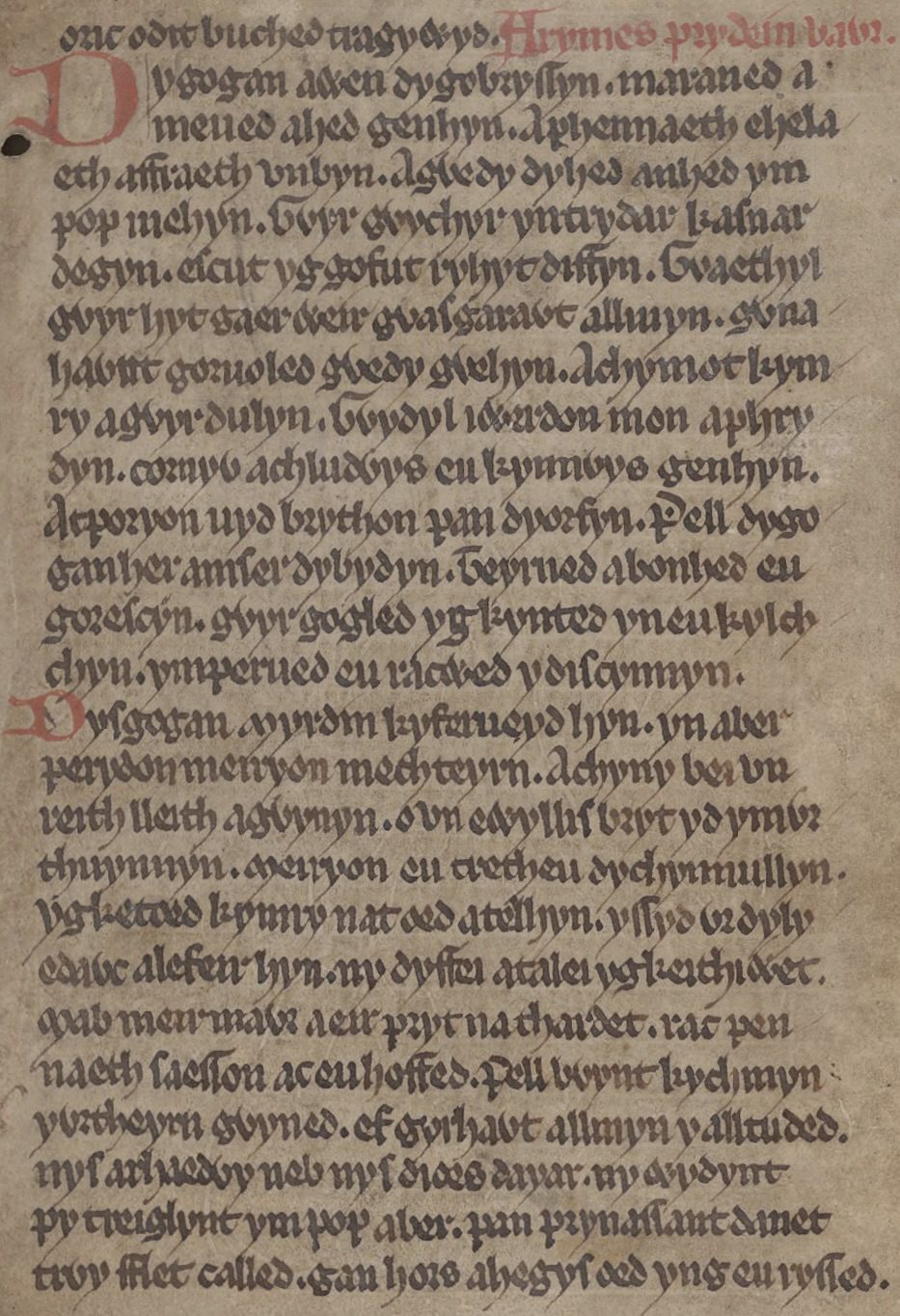
As it happens, there is a figure mentioned in the Book of Llandaff who does appear to be identifiable as Llygadrudd. He appears as a contemporary of Bishop Teilo and King Aircol. In the witness list for this particular land grant, we find a figure named ‘Liuathru’.
Interestingly, the letter ‘u’ was sometimes used as an alternative for ‘gu’. We see this, for instance, in the various spellings of Breguoin across different manuscripts. The letter sequence ‘gu’, for its part, was sometimes misspelt as just ‘g’.
Therefore, the first half of both names, Llygadrudd and Liuathru, can be understood as equivalent. The latter half, ‘drudd’ and ‘thru’, can likewise be easily understood as alternative spellings for the same suffix. The letter ‘d’ was often written as ‘th’ and vice versa, while there are many examples of the final few letters of a name being dropped (as in the figure known alternatively as ‘Tywanwedd’ and ‘Dywanw’).
Therefore, it appears that ‘Llygadrudd’ and ‘Liuathru’ are just alternative spellings for the same name.
Even independent of the issue of the dating of the kings of Ergyng, Teilo and Aircol were definitely early to mid sixth century figures, so this historical Liuathru is a chronological match for Llygadrudd.
Other Theories
While this appears like the most likely theory, it would be remiss to not mention some of the other theories about the true identity of Llygadrudd.
One theory, proposed by Arthur Wade-Evans, is that Llygadrudd Emys can be identified as Emyr Llydaw. As we saw earlier, this was a title used by the king of Brittany, usually applied specifically to King Budic.
However, the only basis for this is the vague similarity between the names. It is weakened by the fact that the order of the names is not the same (if we equate ‘Emys’ with ‘Emyr’). It is further weakened by the fact that ‘Llygadrudd’ and ‘Llydaw’ are not particularly similar at all beyond just the first three letters.
Another explanation is that Llygadrudd Emys can be identified as Amr (also known as Amhar), the son of Arthur. He appears in the Mirabilia of the Historia Brittonum.
The problem with this explanation is that Amr is recorded as the son of Arthur, whereas Llygadrudd is clearly explained to be his maternal uncle. There is no clear explanation for this supposed change in relationship.
Conclusion
In conclusion, we can see that Llygadrudd Emys is a very minor character in the Arthurian legends despite being one of Arthur’s closest family members. He was said to be his maternal uncle. He appears as one of Arthur’s allies in the Welsh tale Culhwch and Olwen. In this tale, he participates in a dangerous boar hunt and ends up dying, along with his brother Gwrfoddw.
The legendary familial connection between Arthur and Llygadrudd may be related to the fact that the figure recorded as his brother, Gwrfoddw, can likely be identified as the historical maternal uncle of Athrwys, a prominent candidate for the real King Arthur. Finally, Llygadrudd can very probably be identified as the historical Liuathru from the Book of Llandaff.
Sources
Bartrum, Peter, A Welsh Classical Dictionary, 1993
Barber, Chris, King Arthur: The Mystery Unravelled, 2016
Howells, Caleb, King Arthur: The Man Who Conquered Europe, 2019
Parker, Will, Culhwch and Olwen Translation (footnote 157), 2016