Gormant son of Ricca, Half-Brother of King Arthur

Gormant son of Ricca is a character from the Arthurian legends who is as interesting as he is obscure. Despite only appearing in a single source, the information about him makes it clear that he was an important person within King Arthur’s kingdom. Who exactly was he? Can we identify him with a historical figure or at least a better attested person from the Arthurian legends?
Who Was Gormant son of Ricca?
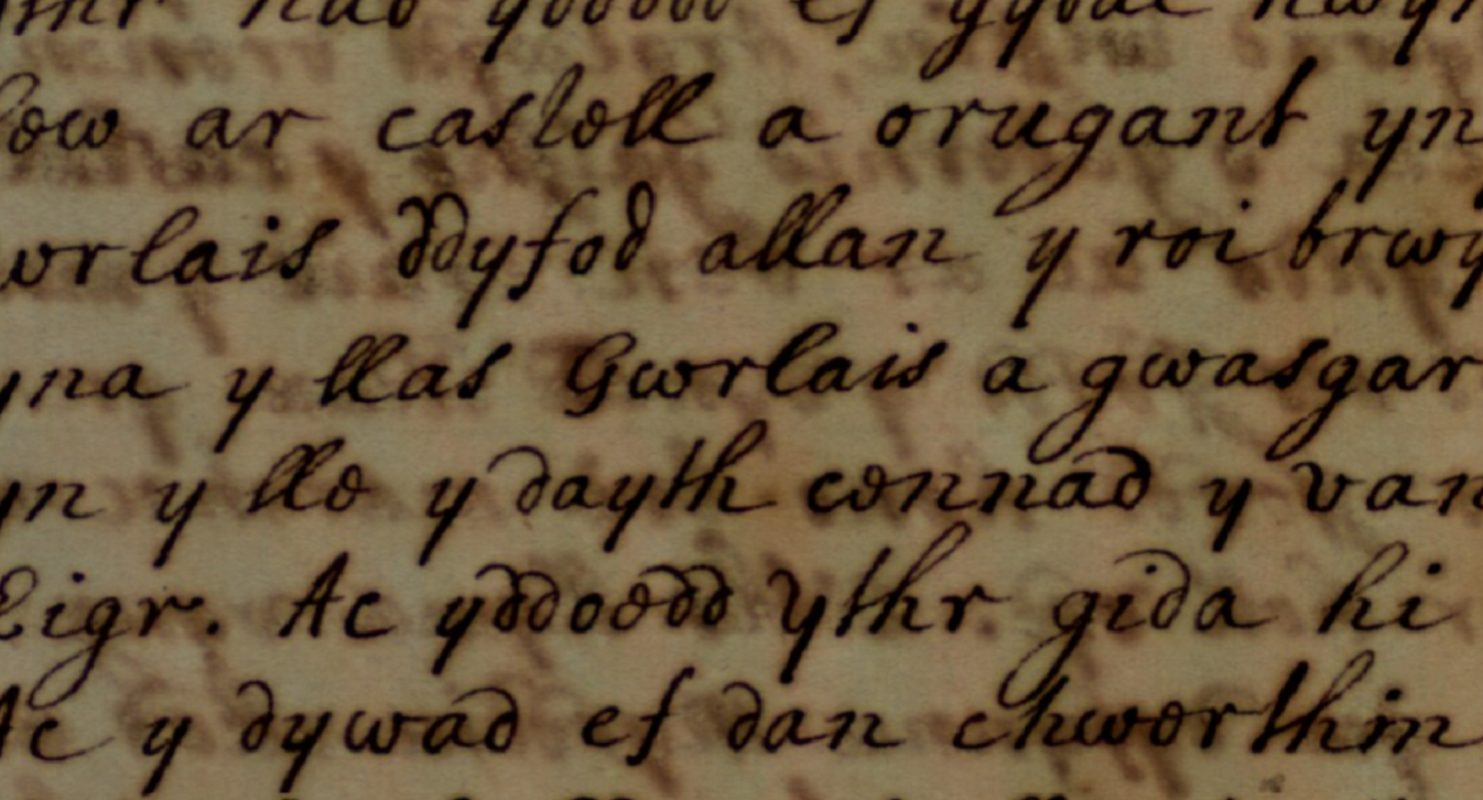
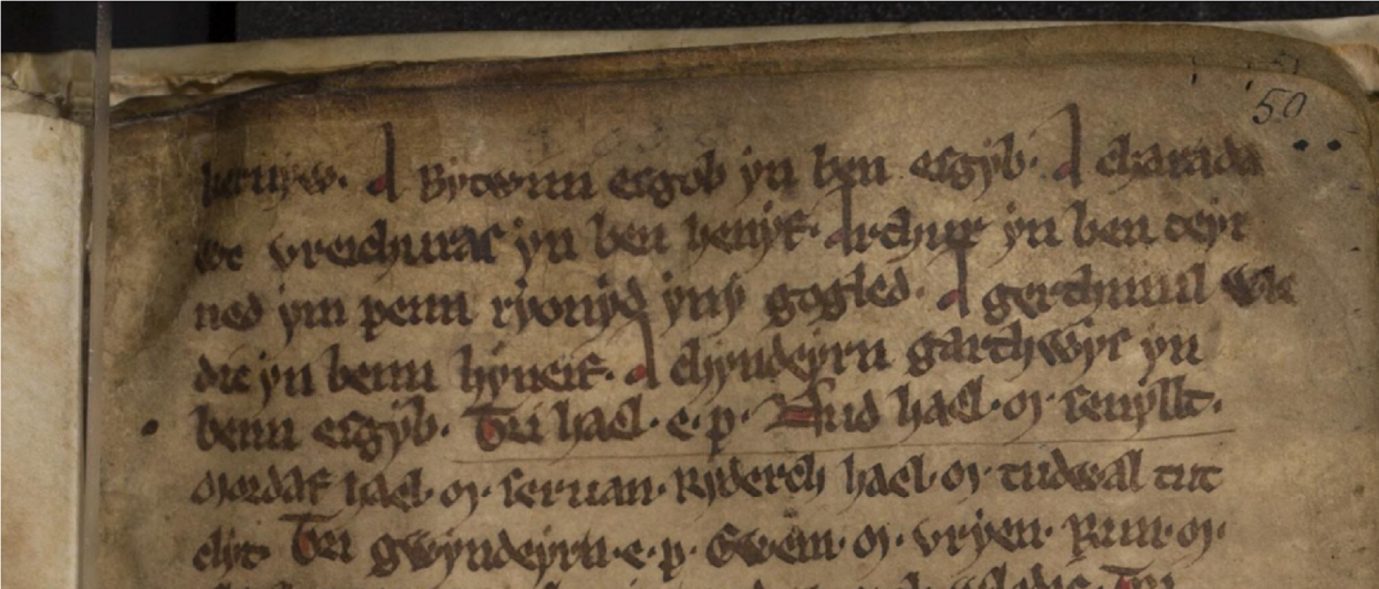
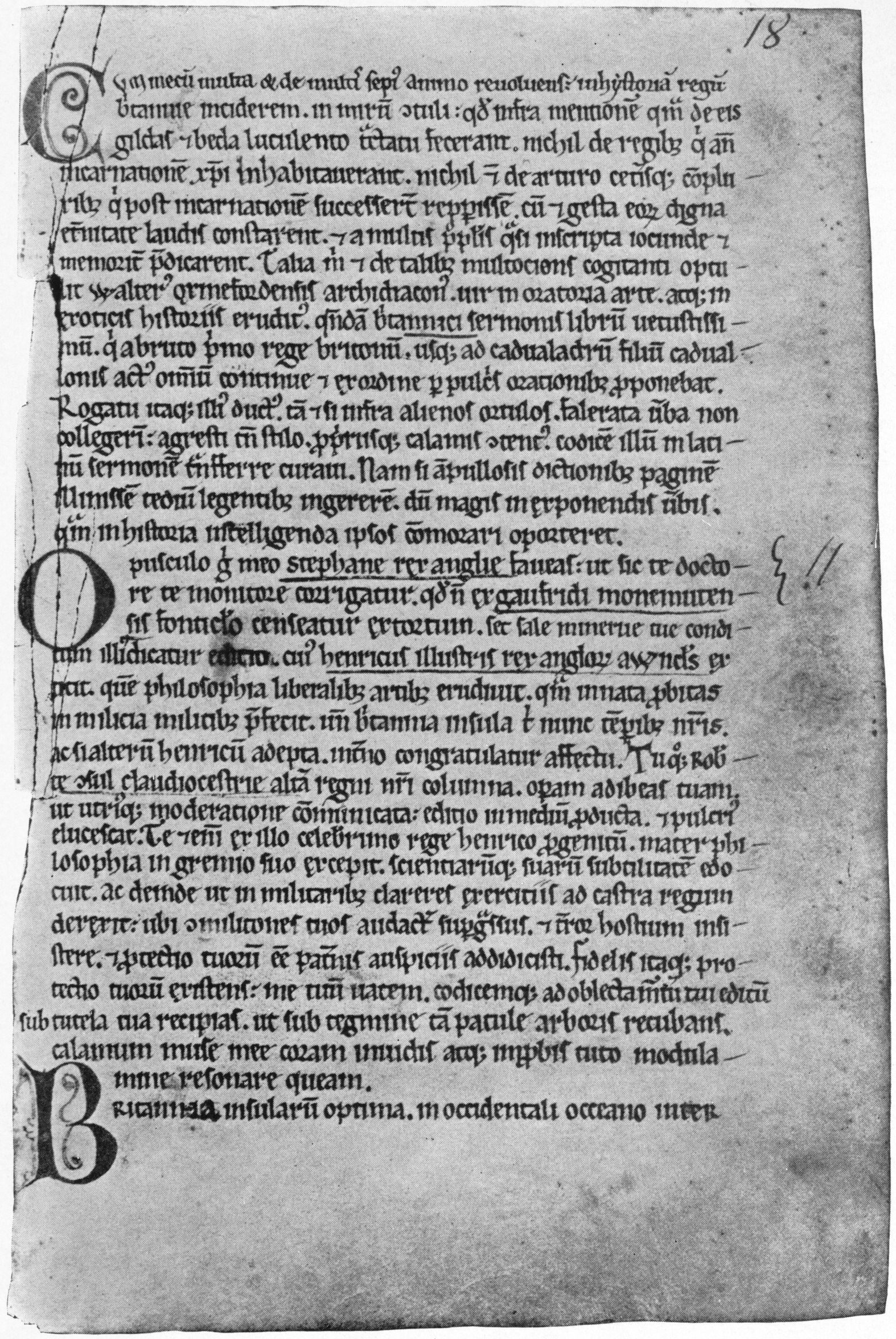
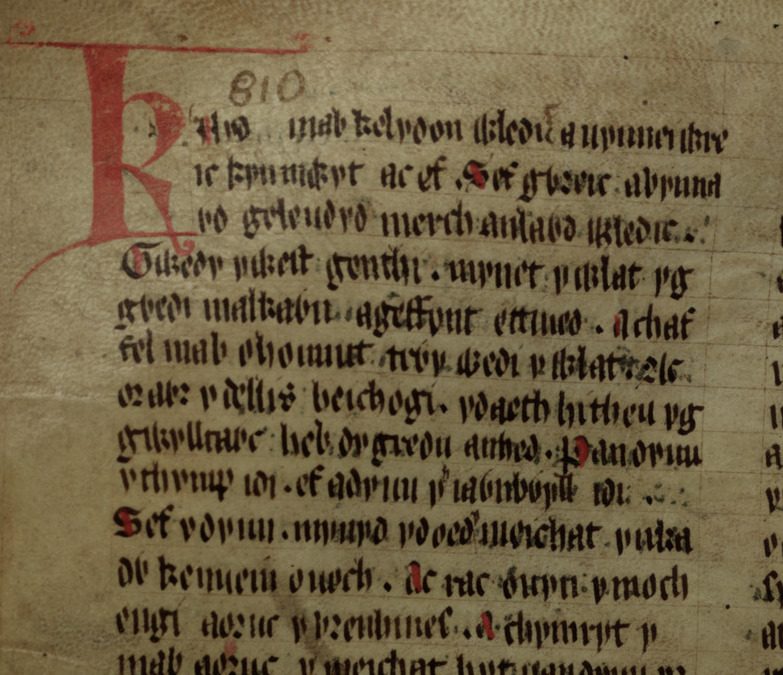
Gormant son of Ricca appears in just one medieval source, a Welsh tale known as Culhwch and Olwen. The exact date of its composition is debated, but the consensus places it in approximately 1100. Even if it post-dates Geoffrey of Monmouth’s highly influential Historia Regum Britanniae, written in c. 1137, it clearly derives from earlier, independent traditions, so its remarks about Arthur’s associates and relatives are worthy of consideration.
In this tale, there is a large section which gives a very long list of Arthur’s allies. In one place, near the beginning, Gormant son of Ricca is listed. However, he later appears again:
“Gormant the son of Ricca (Arthur’s brother by his mother’s side; the Penhynev of Cornwall was his father).”
This is all the information that we have about him. He was related to Arthur and evidently was a member of importance in his royal court. He does not appear in any subsequent texts.
The repetition of this character is evidently just a mistake.
Was Gormant or His Father the Half-Brother of King Arthur?
Something which is often taken for granted is that Gormant was the half-brother of Arthur. However, the text is not completely clear on this point. When we consider the wording in the quotation above, we can see that it is actually ambiguous as to whether the comment in parentheses is supposed to apply to Gormant or to his father, Ricca.
Despite the common assumption that the comment is in reference to Gormant, it could just as easily be in reference to Ricca. In the absence of any other appearances of Gormant or Ricca, we simply do not have enough evidence to say one way or the other.
The Penhynev of Cornwall
As we can see from the above quotation, either Gormant’s father or Ricca’s father is called the ‘Penhynev of Cornwall’. What does this really mean?
The word ‘penhynev’ appears in a variety of Welsh texts. It is especially notable for its appearance in the Welsh Triads in reference to the three most prominent courts of Arthur’s kingdom. Each court was ruled by a penhynev. This word directly translates to ‘chief elder’. Perhaps they could be likened to a duke, someone who ruled a territory under the supreme authority of the king.
Therefore, either Gormant’s father or Ricca’s father was the Chief Elder of this part of Arthur’s kingdom.
Where Was Cerniw?
The territory in question is commonly translated ‘Cornwall’, as in the translation used above. In reality though, the situation is a bit more complicated than that. The word that is actually used in this text is ‘Cerniw’.
While it is true that this is the Welsh word for Cornwall (the Cornish name for which is ‘Kernow’), it is also the name for a location in southeast Wales. This is most obviously seen in association with Glywys, a prominent founding figure of that area. He is given the epithet ‘Cerniw’ in the Welsh records and yet has no known association with Cornwall.
Even today, there is still a Coedkerniw (Cerniw Wood) in Gwent. The Book of Llandaff records a Llan Cerniu in the north of Gwent, suggesting that ‘Cerniw’ may have originally denoted Gwent as a whole. This is supported by the evidence from Glywys.
In Culhwch and Olwen itself, the same text in which Gormant appears, Arthur pursues a monstrous boar that is ravaging Wales. It is travelling across the country from west to east. Arthur then declares that he will not allow it to enter Cerniw. This statement is immediately followed by a description of Arthur driving it into the Severn.
This clearly shows that the Cerniw of the story is not Cornwall, since Arthur’s actions push the boar further towards Cornwall, not away from it. On the other hand, if we understand Cerniw to be Gwent, then Arthur’s actions are perfectly logical.
Connection to Other Chief Elders of Cerniw
From the aforementioned facts, it appears that Gormant’s father or Ricca’s father was the Chief Elder of Gwent. But even irrespective of the true identification of Cerniw, this information points towards some interesting possibilities regarding Gormant’s connection to other characters.
In the Welsh Triads, as already mentioned, there is a description of the three main courts of Arthur’s kingdom. One of them is Gelliwig, which is said to have been in Cerniw. However, neither Gormant nor Ricca is named in this triad.
In fact, the Chief Elder of Cerniw in this triad is said to be Caradoc Freichfras. He is a character who appears in many Arthurian sources, especially late ones. This raises an interesting possibility.
If Gormant was the one to whom Culhwch and Olwen’s parenthetical comment applied, this would mean that Ricca may be identified as an alternative name for Caradoc. While not impossible, there is no supporting evidence for this. It may simply be that Ricca and Caradoc were both the Chief Elder of Cerniw at different times within Arthur’s reign.
On the other hand, if the parenthetical comment in Culhwch and Olwen actually applied to Ricca, then this would mean that it was Ricca’s father who was the Chief Elder at Cerniw. Since his father is not named in the sources, this leaves open the possibility that he can be identified with Caradoc.
While this seems more plausible, there are no records of Caradoc Freichfras having a son named Ricca. Therefore, all things considered, the most likely conclusion would appear to be that Gormant’s father or Ricca’s father was the Chief Elder of Cerniw either before or after Caradoc, and that the two elders were not necessarily related.
How Was Gormant or Ricca the Half-Brother of King Arthur?
Let us now consider the fact of the connection between these characters and King Arthur himself. Whether the parenthetical statement in Culhwch and Olwen applies to Gormant or to Ricca, notice that the object of the statement is said to be Arthur’s half-brother on his mother’s side, and the father of this individual is described as the Chief Elder of Cerniw.
These two pieces of information put together logically means that Arthur’s mother was, at one time, married to the Chief Elder of Cerniw.
Gorlois
Famously, Geoffrey of Monmouth described how Arthur’s father, Uther, had got Igerna pregnant with Arthur by disguising himself as her husband, Gorlois. For his part, Gorlois is presented as the ruler of Cornwall.
Based on this information, it is quite popular to associate Gormant and Ricca with Gorlois in some way. Sometimes, Ricca is interpreted as an alternative name for Gorlois. However, the problem with this interpretation is simply that there is no supporting evidence for this.
In other instances, we see that Welsh tradition provides alternative names for Geoffrey’s characters. For example, Arthur’s sister Anna, the wife of Lot and mother of Gawain, is named ‘Gwyar’ in Welsh texts. Yet, there are no instances whatsoever of Gorlois’ name being exchanged for ‘Ricca’ in Welsh accounts of Gorlois. While not ruling out this theory entirely, it does make it less likely.
Ricca’s Father
A far more plausible interpretation is that the statement about being Arthur’s half-brother actually applied to Ricca, not to his son Gormant. This would mean that Ricca’s father, not Ricca himself, was the previous or subsequent husband of Arthur’s mother.
This completely bypasses the issue of the name, since the name of Ricca’s father is simply not mentioned. Therefore, it may be that Gormant was the grandson of Gorlois, Ricca being Gorlois’ son by Igerna.
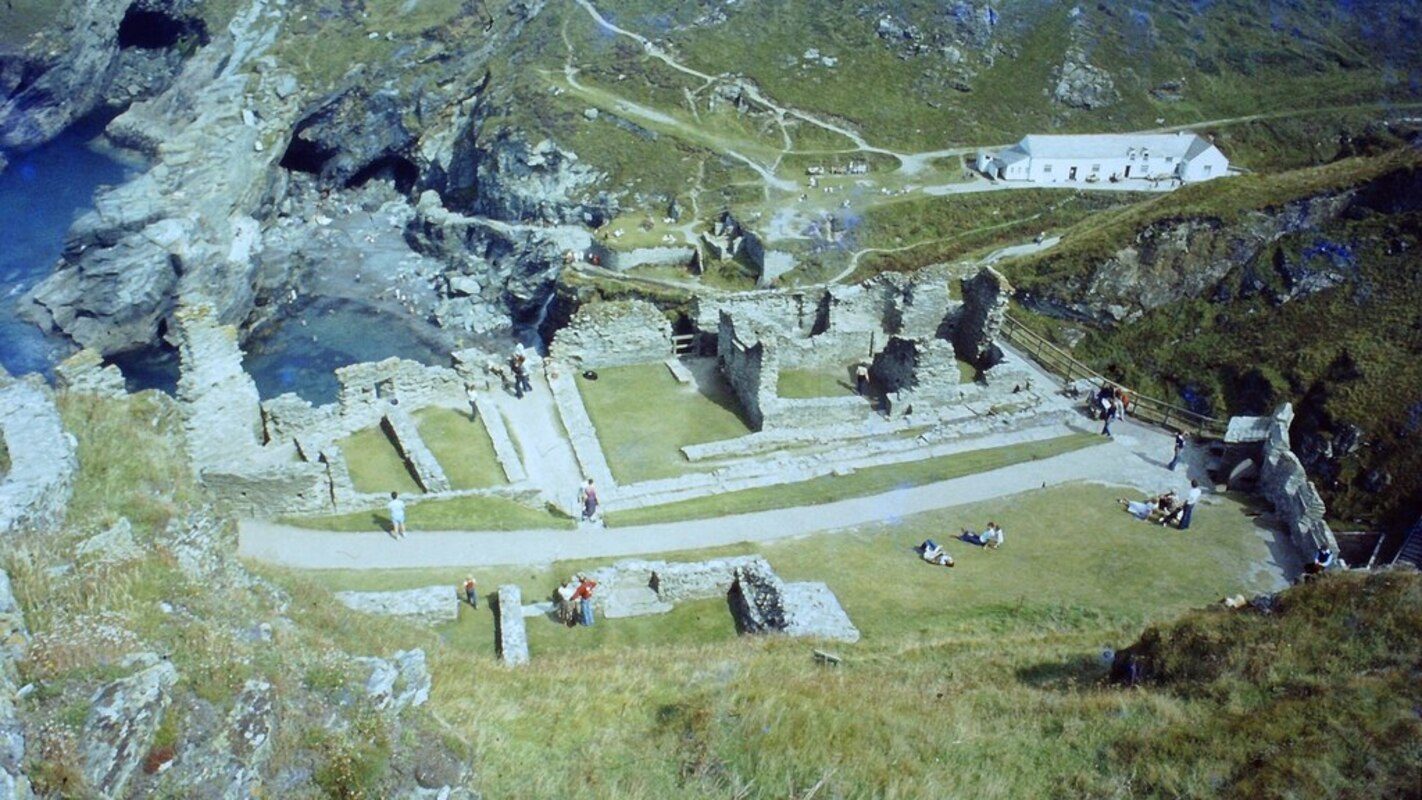
While this is a reasonable theory, it is not without its problems. As we have seen, the Cerniw which features as part of Arthur’s kingdom in Culhwch and Olwen is almost certainly the Cerniw in Gwent (or synonymous with Gwent), not Cornwall. In contrast, Gorlois is definitely presented as the ruler of Cornwall, since one of his main courts is Tintagel.
Of course, it is possible that the tale simply used ‘Cerniw’ in two different ways. Nonetheless, this issue somewhat weakens this theory.
Frioc the Brother of Athrwys
An overlooked possibility is recommended by the theory that King Arthur can be identified as the historical Athrwys son of Meurig, a powerful king in southeast Wales. While not having universal acceptance, this theory is attractive in many ways.
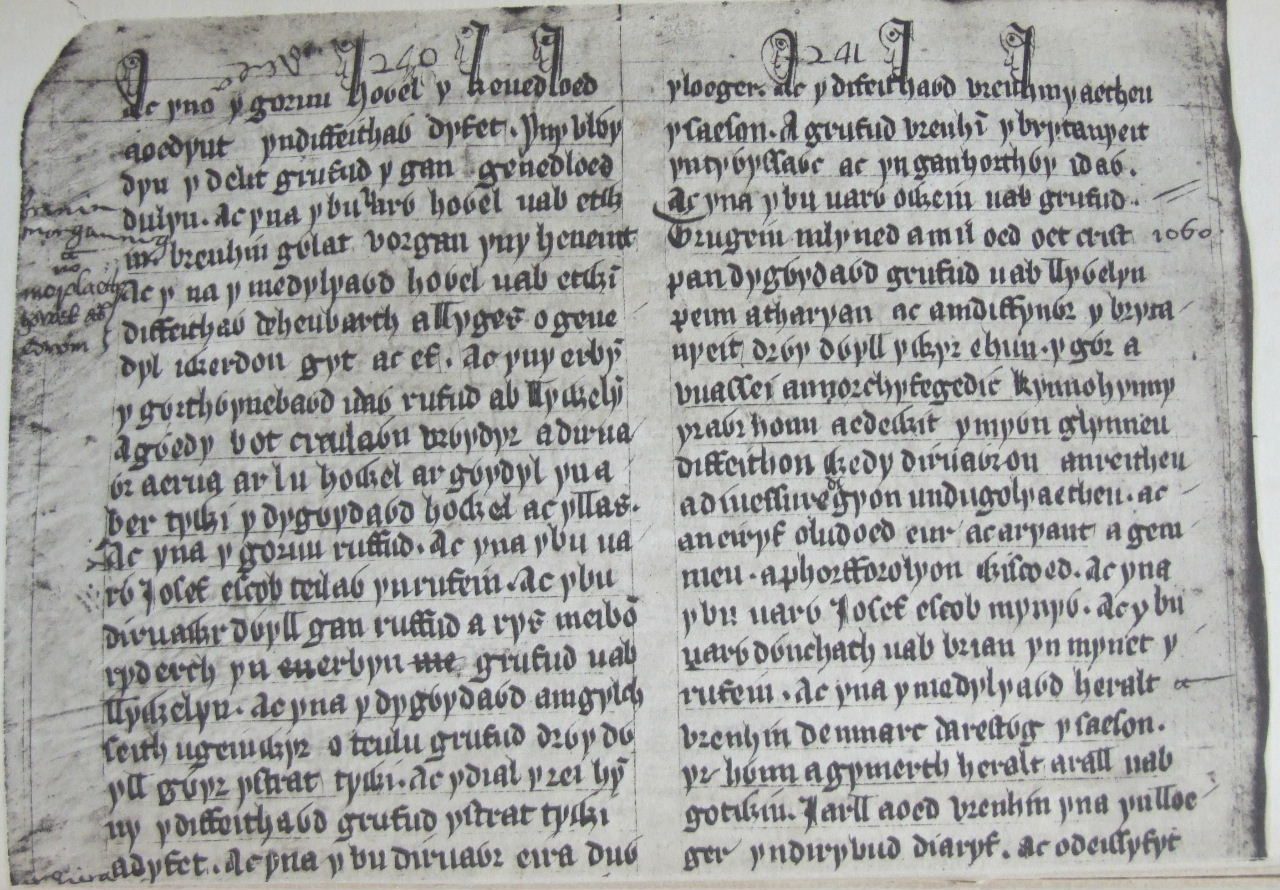
In the Book of Llandaff, written in the twelfth century, we find that Athrwys is recorded as having a brother named Frioc. Their exact relationship is not defined in any detail.
A well-attested corruption in the medieval genealogical records was the reduction of consonant clusters. There are many examples of names beginning with more than one consonant losing the first one. There are also plenty of examples of groups of vowels being abbreviated as well.
One example of this Briacat ap Pasgen. His name appears in one record as ‘Riagath’, the initial ‘B’ having been dropped. Many other examples of this type of corruption are found. Regarding the reduction of groups of vowels, one example is Briafael ap Llywarch, whose name appears as ‘Biuael’ (the ‘u’ represents the ‘f’ in the standard spelling).
There are also plenty of examples of an extra vowel (normally either ‘o’ or ‘a’) being added onto the end of a name.
With these facts in mind, it is entirely possible that Frioc, the brother of Athrwys, was the historical Ricca, the half-brother of King Arthur.
Ricca’s Father, Chief Elder of Cerniw
One reason why this theory is attractive is because Athrwys’ mother was Onbrawst, a princess of Ergyng. This kingdom, Ergyng, bordered Gwent. Therefore, the idea that Onbrawst had originally been married to the chief elder of Cerniw in Gwent is entirely plausible.
Interestingly, some researchers argue that the Caradoc recorded as the Chief Elder of Cerniw in the Welsh Triads was actually Caradoc the brother of Onbrawst, recorded in the Book of Llandaff. If so, then this would mean that Caradoc and Ricca’s father, both Chief Elders of Cerniw in Arthur’s reign, were brothers-in-law.
Gormant in the Book of Llandaff
If Frioc was the historical Ricca, then what about Ricca’s son Gormant? Can we identify him with someone from this dynasty too? Unfortunately, Frioc does not appear in any of the medieval genealogies, and the Book of Llandaff does not give any information about his children.
Nonetheless, there is a figure who appears in one of the witness lists who could, on the basis of chronology, plausibly be a son of Frioc. He appears in a witness list attached to a land grant overseen by Bishop Ufelfyw, one of the bishops contemporary with King Meurig.
The figure in question is named Gurbud. In the Book of Llandaff, we see ‘Gur’, ‘Guor’ and ‘Gor’ used variously for the same name. Furthermore, ‘b’ and ‘m’ were often interchanged, both being used to represent a ‘v’ sound. Thus, the first part of Gurbud’s name clearly matches the first part of Gormant’s name.
The letter ‘t’ was frequently exchanged with ‘d’, and vice versa. With these facts in mind, the only major difference between ‘Gurbud’ and ‘Gormant’ is the presence of the ‘n’ in the latter. This could either have been dropped by mistake from the former name, or it could be intrusive in the case of the latter name.
Unfortunately, we cannot be certain about this identification, since the Book of Llandaff does not mention the father of Gurbud. Nonetheless, it remains a distinct possibility that the legendary Gormant was this historical Gurbud, and that his father Ricca was the historical Frioc, brother of Athrwys son of Meurig.

Was Gormant the Enemy of Arthur?
Another theory that is sometimes mentioned is that Gormant can be identified as Gormund, a king from Africa mentioned by Geoffrey of Monmouth. He appears in his account of the period after Arthur’s death.
During the reign of Ceredic, one of Arthur’s successors, Geoffrey describes how Gormund travelled from Africa to Ireland and then moved on to Britain, causing considerable destruction in the process. It has also been suggested that this king can be identified with Guerdmund, an ancestor of the kings of Mercia, but this is impossible on chronological grounds.
This theory explains Gormant’s alleged parentage as a mistake arising from his place of origin. The term ‘son of Ricca’ would be ‘ap Ricca’ in Welsh, since ‘ap’ denotes ‘son of’. This bears some resemblance to ‘Africa’. Therefore, according to this theory, Gormant’s place of origin was misinterpreted as a reference to his parentage.
The obvious problem with this theory is that if Gormant was actually Gormund, a king who came from Africa, then he obviously cannot have been Arthur’s half-brother, nor could his father have been the Chief Elder at Cerniw.
Conclusion
In conclusion, Gormant son of Ricca was a relative of Arthur. Either Gormant himself was the half-brother of Arthur, or his father Ricca was. The father of Arthur’s half-brother was the Chief Elder of Cerniw. As we have seen, there are several theories about who these figures can be identified with from other sources.
The most popular theory is that he was a son of Gorlois, the ruler of Cornwall. However, this theory is somewhat weakened by the fact that the source for this character, Culhwch and Olwen, primarily uses ‘Cerniw’ in reference to southeast Wales rather than Cornwall.
Another theory is based on the identification of King Arthur with the historical Athrwys ap Meurig. This identifies Ricca as Frioc and Gormant as Gurbud, a figure mentioned in the Book of Llandaff in the same era as Frioc. A third theory, by far the weakest, is that Gormant was Gormund, the king of Africa mentioned by Geoffrey of Monmouth.
Sources
Rickard, P, Britain in Medieval French Literature, 1952
Bartrum, Peter, A Welsh Classical Dictionary, 1993
Howells, Caleb, King Arthur: The Man Who Conquered Europe, 2019
https://www.maryjones.us/ctexts/culhwch.html
https://nightbringer.se/the-legend-of-king-arthur/arthurian-characters/r-arthurian-characters/rica/