Adeluf III, Son of King Arthur

Adeluf III is an Arthurian character known from just a single source, yet in that source, he has a very important role. What can we say about him? Can he be connected to any better-known figure from other sources? Is there any evidence that he really existed? This article will examine the answers to these and other questions.
Who Was Adeluf III?
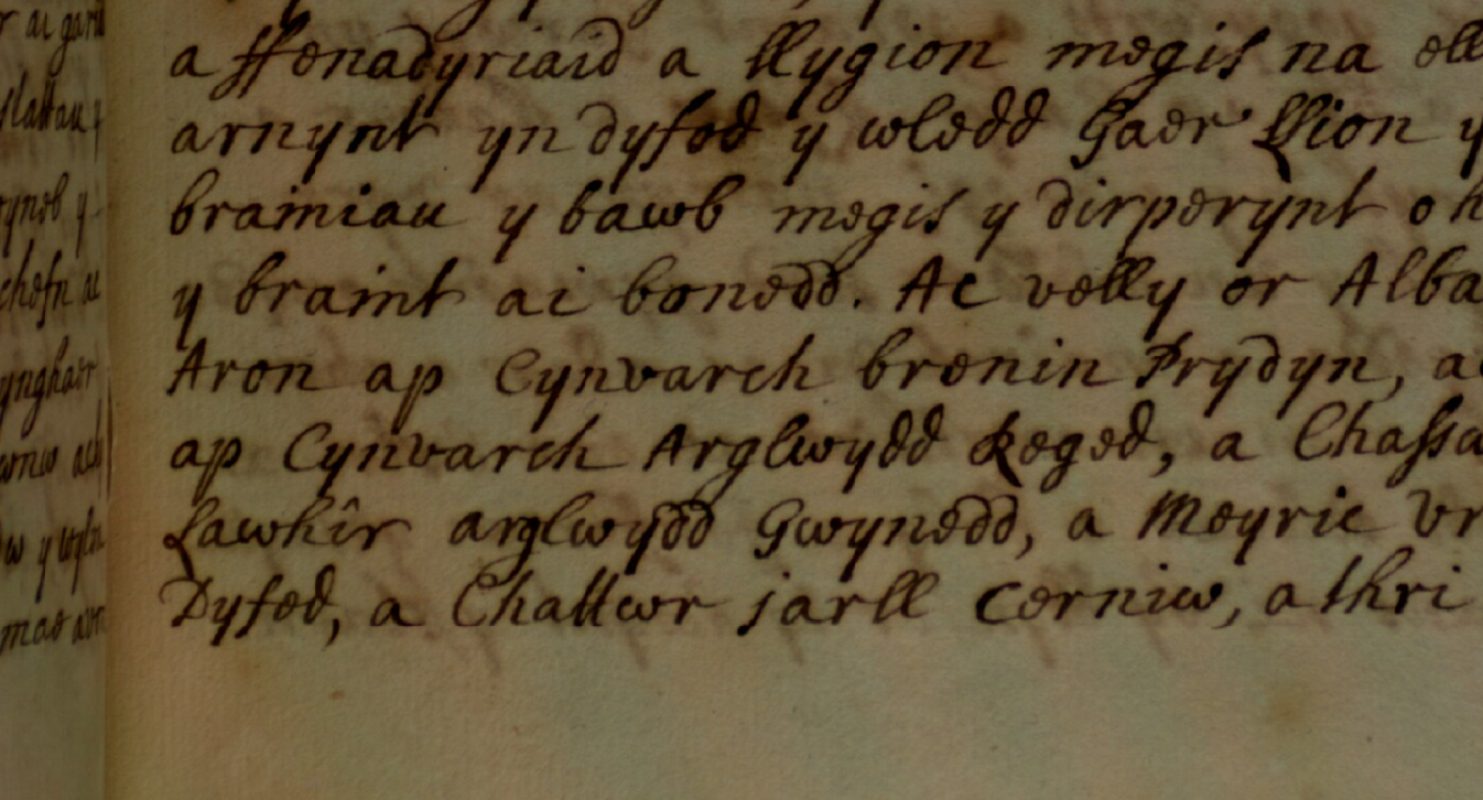
Adeluf III is a very minor character in the Arthurian legends in that he only appears in a single source. This source is Le Petit Bruit, which was written in the year 1309. The writer was a man named Ralph de Bohun, also called Rauf de Boun.
Le Petit Bruit was not the original work of this writer, however. It is actually an abbreviation of a larger chronicle which has since been lost to time. Therefore, we can conclude that the tradition about Adeluf III dates back to some time prior to 1309. Exactly how far back it goes, we cannot say, but it seems reasonable to assume that it existed prior to the end of the thirteenth century.
In this record, Le Petit Bruit, Adeluf III is presented as the son of King Arthur. He has the same name as several of his ancestors, hence making him ‘the Third’. Of Arthur’s sons, Adeluf was the eldest. As Le Petit Bruit explains:
“And it is to be noted that he had three sons of which the eldest had the name Adeluf, and he was named Adeluf the Third, and he reigned subsequently as his heir.”
Therefore, Adeluf was the eldest son and heir of Arthur.
Family
Adeluf III was the eldest of three sons. The other two were named Morgan the Black and Patrick the Red. Ralph de Bohun does not mention any colour associated with Adeluf, although given that his work is an abbreviation of a larger chronicle, perhaps he simply neglected to provide this information.
All three sons were born from the union of Arthur and an unnamed Fairy Queen. It is unclear whether this is supposed to be Guinevere or not.
Adeluf married the daughter of Charles the Bald, with whom he had four sons.
Although Arthur’s heir, Adeluf apparently did not receive rulership of the entirety of Britain. Rather, Morgan was given Wales to rule, while Patrick was given Scotland. Adeluf, logically, was given England. This is reinforced by the fact that one of his sons is referred to as an ‘English king’, as we will now see.
Legacy
Le Petit Bruit goes on to explain that Adeluf had four sons. They each reign successively. The first was named Adelbaud and the second was named Adilbrit.
The third one, named Athelstan, is particularly notable for conquering Scotland. By doing so, Adeluf’s son Athelstan becomes “the first English king who ever conquered the sovereign lordship of Scotland since the moment that King Arthur gave it as a fief to his third son Patrick.”
There are at least two interesting things about this statement. The first is that Athelstan is referred to as an English king. The expression ‘English king’ by itself could be understood to simply be referring to the fact that he ruled over England, but his very name, ‘Athelstan’, is clearly indicative of him actually being a genuine Anglo-Saxon king.
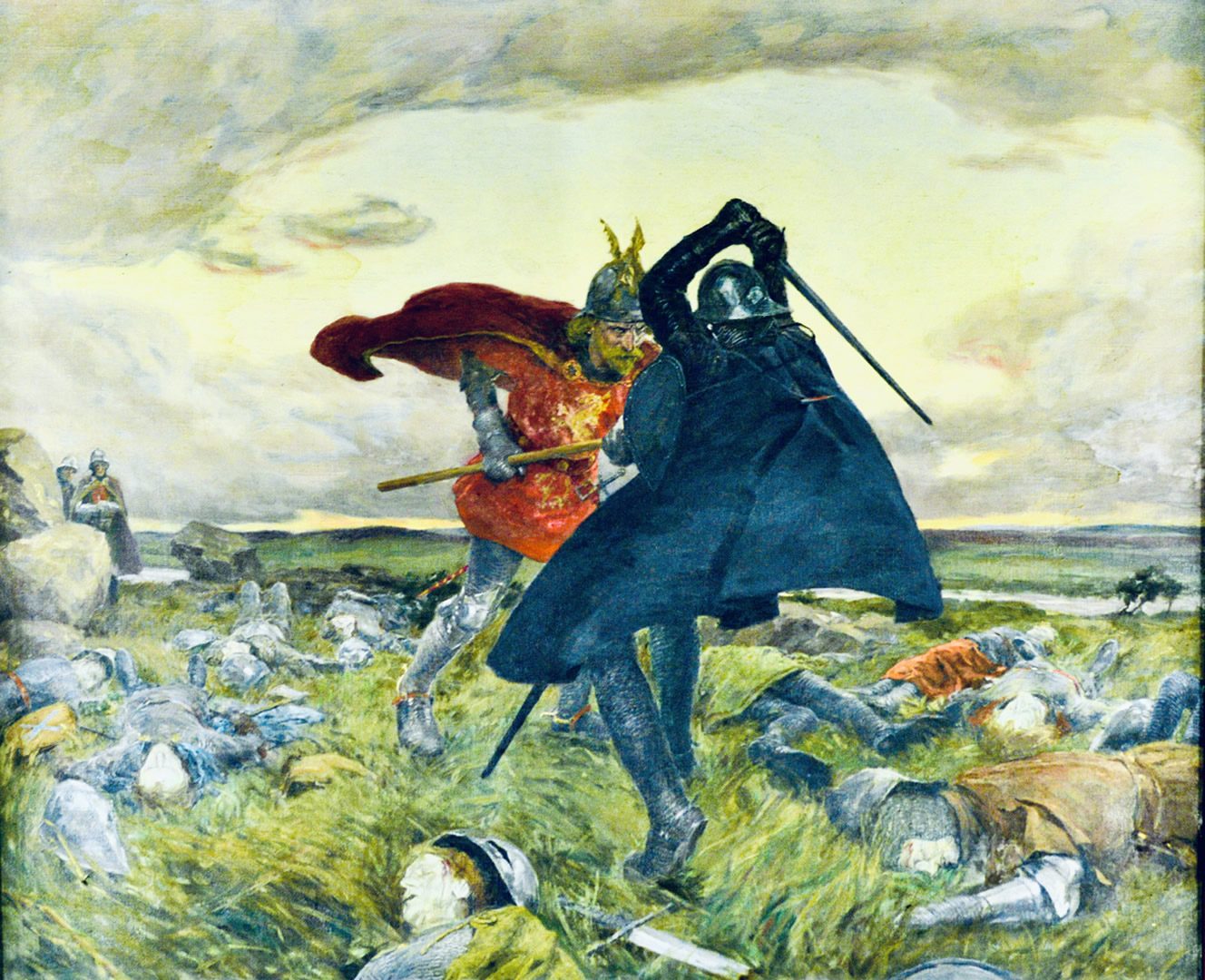
This is bizarre, since King Arthur was obviously not an Anglo-Saxon king. He famously fought against the Anglo-Saxons. This fact had not been forgotten by the early fourteenth century, and certainly not by the thirteenth century, when this tradition about Adeluf likely dates back to.
The second curious detail about this statement is that Athelstan is portrayed as being one of the sons of Adeluf, making him the grandson of King Arthur. Yet, the way that the statement about Athelstan conquering Scotland is worded makes it sound as if a very long time had passed since Arthur gave Scotland to his son Patrick.
Perhaps this is nothing more than some unusual wording combined with the fact that there were lots of other English kings from other kingdoms who had come and gone by the time of Athelstan’s conquest of Scotland.
After Athelstan, the fourth son of Adeluf ruled. His name was Alfred, and he is said to have been buried at Winchester.
Did Adeluf III Really Exist?
With any character from the Arthurian legends, it is interesting to investigate their potential historicity. In the case of Adeluf, it may seem as if he is very unlikely to have been real, since he only appears in one source and the source in question is relatively late.
However, it could easily be the case that he actually appears in many other sources as well, but with a slightly different name or in a slightly different context, which has made it difficult to identify him.
Some scholars have argued that Adeluf III is to be identified as the historical Athelwulf of the ninth century. This is supposedly confirmed by the fact that Athelwulf really did marry a daughter of a king known as Charles the Bald, just like what Le Petit Bruit says about Adeluf III.
However, the case of Adeluf is actually much more complicated than that. For one thing, recall that he is recorded as having a brother named Morgan. Of all the historical figures argued to have been the real King Arthur, only one of them had a son named Morgan. This is Athrwys ap Meurig. He was a historical king of Glamorgan, Gwent and Ergyng in the post-Roman era.
Athrwys was succeeded by a son named Morgan, whose descendants continued to rule much of South Wales for the next few centuries. This matches what Le Petit Bruit says about King Arthur’s son Morgan. Furthermore, Le Petit Bruit says that Morgan lived specifically in South Wales, which likely matches the historical Morgan ap Athrwys.
Ithel son of Athrwys
With this information in mind, it is very likely that Athrwys’s children formed the basis of this tradition about King Arthur’s children, regardless of whether or not Athrwys was the primary figure behind the legends of King Arthur (although there is a good case to be made for that too).
Did Athrwys have a son who could have been the historical origin behind this legendary Adeluf? He did indeed. He had a son named Ithel.
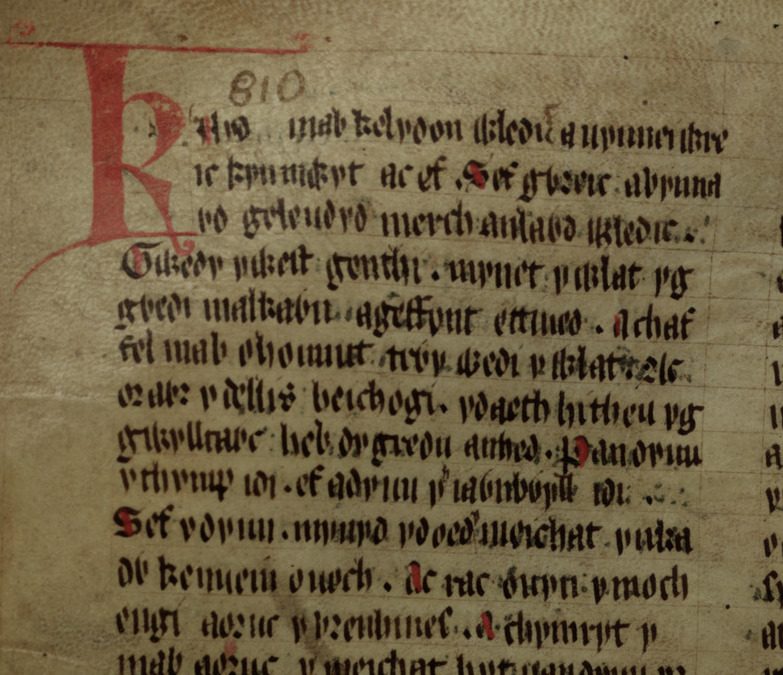
This dynasty appears extensively in a document called the Book of Llandaff, written in the early twelfth century. We learn of the existence of Athrwys’ son Ithel from this document. What the Book of Llandaff also reveals is that Ithel ap Athrwys became a king, even though Morgan was the direct successor of their father.
In this way, Ithel matches King Adeluf. The only difference is that Morgan was apparently the eldest son of Athrwys, not Ithel.
Ithel’s Name
Even a cursory glance at the names ‘Ithel’ and ‘Adeluf’ shows that they are very similar. When we examine the evidence even further, we can perceive even more similarities. Ithel’s name was also spelt ‘Iudhael’, ‘Ithael’ and occasionally ‘Idwal’. Notice the ‘d’ instead of the ‘t’ in two of the variations.
There are many other examples in medieval Welsh documents of the letters ‘d’ and ‘t’ or ‘th’ being exchanged. Therefore, an acceptable alternative spelling of ‘Adeluf’ would be ‘Atheluf’. This pushes it even closer to ‘Ithel’.
Nonetheless, Ithel ap Athrwys cannot explain the suffix ‘uf’ on the end of Adeluf’s name. Scholars have suggested that this name is essentially Ralph de Bohun’s chosen version of the attested ‘Athelwulf’, the name of a famous king of Wessex in the ninth century. It would certainly be logical to conclude that this Anglo-Saxon name influenced the spelling of Ithel’s name in his appearance in Le Petit Bruit.
Given the evidence for Athelwulf’s contribution to the character of Adeluf III (his marriage to the daughter of Charles the Bald), this is all but confirmed.
Additional evidence for the presence of Anglo-Saxon influence in this character’s name is that Le Petit Bruit uses ‘Adeluf’ as the name of two of Arthur’s recent predecessors, his uncle and his grandfather. It is for this reason that Arthur’s son is called Adeluf III. This suggests that the original author of Le Petit Bruit (that is, the record of which it is an abbreviation) used this more familiar name as an approximation of similar but less familiar names in Arthur’s lineage.
Chronological Considerations
To further appreciate how Adeluf can be connected to Athrwys’ son Ithel, we do well to examine the chronological facts surrounding both of them.
When Did Adeluf Live?
Firstly, when in Arthur’s life was Adeluf supposed to have been born? Le Petit Bruit does not provide us with this information directly. However, if all three brothers (that is, Adeluf, Morgan, and Patrick) were born from the same mother, which does seem to be what Le Petit Bruit claims, then they were most likely born in relatively close proximity to each other.
In fact, in the absence of any reason to actively think otherwise, we can conclude that they were probably born within just a few years of each other, as most siblings are.
Fortunately, Ralph’s Le Petit Bruit provides a crucial chronological clue regarding when these children were born. He says that Arthur’s son Morgan was educated by Sir Gawain.
Gawain’s Chronology
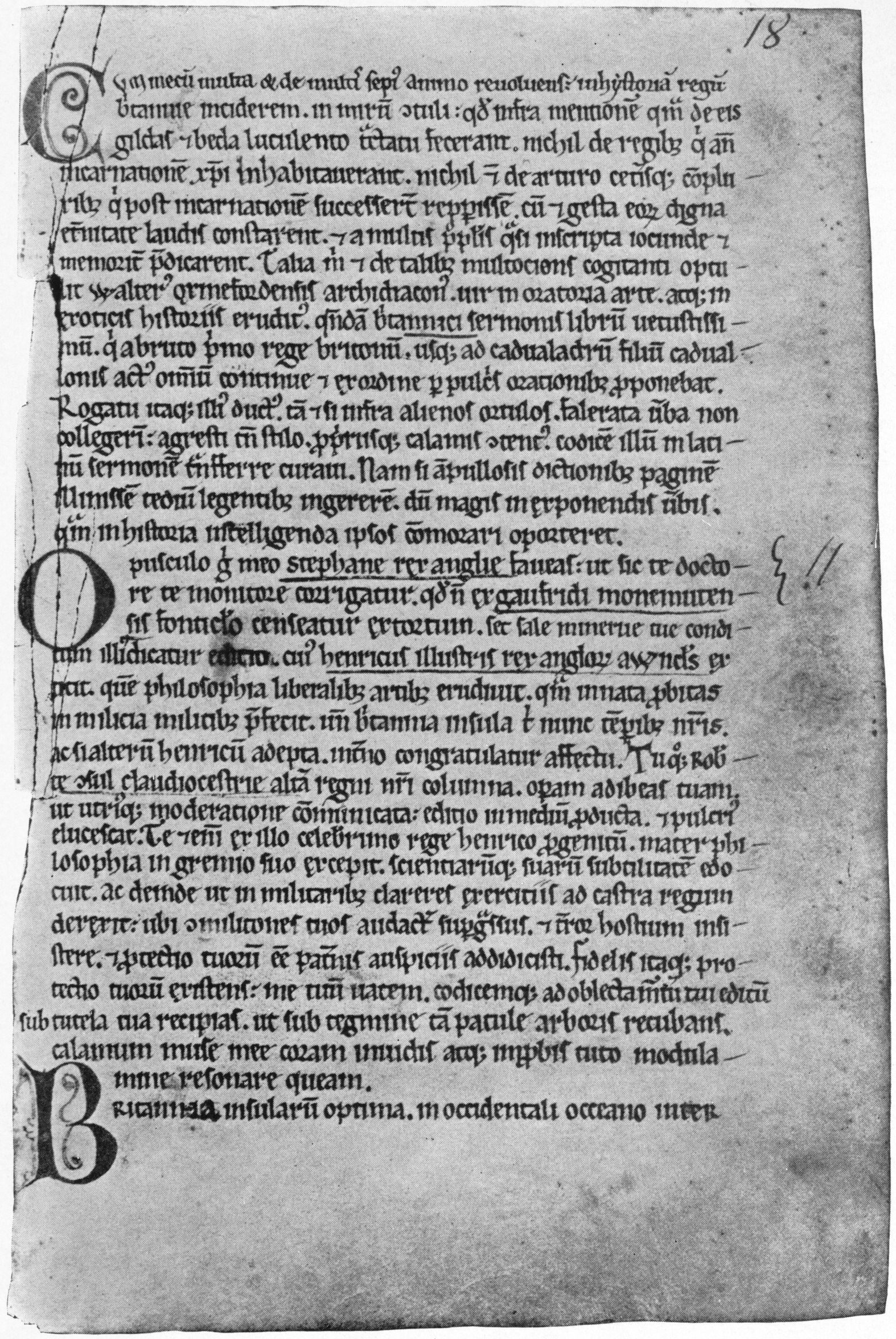
In the Historia Regum Britanniae, written by Geoffrey of Monmouth in c. 1137, there is the earliest known piece of information regarding when in Arthur’s reign Gawain was born. Geoffrey tells us that Gawain (or Walgan, as his name appears) was twelve years old during Arthur’s special coronation, which occurred some thirteen years after the Battle of Badon.
This would mean that Gawain could only have been a young adult by the very end of Arthur’s reign. Thus, for him to have been the educator of Morgan, Morgan himself must have been born almost right at the end of Arthur’s reign.
Logically then, his brother Adeluf would likewise have been born at that very late date. In terms of absolute chronology, this would place the births of Adeluf and Morgan in approximately 570. The basis for this conclusion is that Gawain was the nephew of Urien Rheged, making him the first cousin of Owain.
Both Urien and Owain are firmly dated to the mid- to late-sixth century. Urien himself was still active in battle as late as the 580s. His son Owain must have been born in the mid 540s at the earliest, and we can logically conclude the same concerning his first cousin Gawain.
Thus, counting forward to the time when Gawain was in a position to be the educator of Arthur’s son Morgan, we arrive at approximately 570. As we have seen, it is logical to apply this same result, at least approximately, to Morgan’s brother Adeluf.
Arthur’s Chronology
Although this is later than the dates assigned to Arthur in the Annales Cambriae, there are a number of instances of dates in that chronicle being too early by several decades. The birth of Saint David is one example, and another possible example is the death of Maelgwn Gwynedd, according to research by Rachel Bromwich.
In fact, this second example is especially relevant to Arthur. Rachel Bromwich pointed out that the earliest chronological evidence concerning Maelgwn makes him a late sixth century king. That would mean that Gildas, who referred to Maelgwn as a king who was still ruling, must have been writing his De Excidio in the late sixth century.
In turn, this means that the Battle of Badon, which Gildas placed forty-three years before he was writing, would have occurred near the middle of the sixth century. Incidentally, this ties in perfectly with the aforementioned facts concerning Gawain’s dates, with his birth supposedly being at about the time of Badon.
Additionally, the Life of Saint Gildas places Arthur still alive and active after Gildas had travelled to Ireland, which was in about 566. This, again, supports the idea that Arthur lived a few decades later than commonly believed.
Supporting Evidence from Le Petit Bruit
In fact, the connection to Gawain is not the only chronological clue provided by Le Petit Bruit. As a matter of fact, Ralph directly makes Adeluf III a contemporary of Pope Honorius I. He was pope from 625 to 638.
This shows that Adeluf III, according to Le Petit Bruit, was active in the early seventh century. This is entirely consistent with the estimated birth of c. 570 derived from the information concerning Gawain educating Morgan.
When Did Ithel ap Athrwys Live?
Now that we have established roughly when Adeluf would have been born according to the Arthurian chronology, how does that tie in with the chronology of the historical Ithel son of Athrwys?
There is one main piece of evidence for the chronology of Ithel ap Athrwys. This is the fact that he was king during the tenure of Oudoceus as bishop. Oudoceus was a son, apparently quite a late one, of King Budic of Brittany, who was himself born around 500. Scholar David Farmer, in The Oxford Dictionary of Saints, places Oudoceus’ birth in about 545 and his tenure as bishop between c. 580 and 615.
Ithel ap Athrwys was active during about the middle of Oudoceus’ tenure as bishop. This would place his reign in roughly 595-600. Since the Adeluf of Arthurian legend would have been born in about 570, the estimated dates for Ithel’s reign are virtually a perfect match.
Untangling Adeluf’s Legacy
To help us further appreciate how Adeluf matches Ithel, it is worth examining the dynastic information provided in Le Petit Bruit and how that corresponds to the historical events of the early medieval period.
As we saw earlier, Adeluf succeeded Arthur as king, and he was succeeded in turn by his four sons. The third was Athelstan, who conquered Scotland. After Athelstan came Alfred.
Some commentators have understood these figures to be the famous Athelstan of the tenth century and the famous Alfred of the ninth century. This is almost certainly what the author of Le Petit Bruit understood as well. We can say this because the names of the brothers of Alfred in Le Petit Bruit match the names of the brothers of Alfred the Great in real life.
Could it be that Ithel was simply conflated with Athelwulf, thus meaning that the successors of Adeluf III in Le Petit Bruit are simply the historical sons of Athelwulf (of whom Alfred the Great was one)? While this is a tempting conclusion, there is reason for believing that the truth is not as simple as this.
For one thing, the historical Athelstan and Alfred actually came in the reverse order to the way they are presented in this source. Additionally, they were not actually brothers; rather, Athelstan was the grandson of Alfred.
Furthermore, the fact that the writer of this source wrote of Adeluf III being a contemporary of Pope Honorius I would suggest that he had some kind of awareness of the fact that Adeluf lived in the seventh century. All of these considerations suggest that the primary sources for these characters were not the famous ninth- and tenth-century figures.
The Connection to England
Firstly, we need to understand why some of Arthur’s descendants were held to have been the kings of England. After all, this concept does not appear to make any sense at first sight. And, indeed, it is entirely unhistorical.
Yet, identifying Arthur’s legendary son Adeluf with the historical Ithel ap Athrwys makes sense of this. Recall that the evidence from Bishop Oudoceus shows that Ithel was apparently active as king in about 595-600.
By coincidence, in this very same time period, there was an Anglo-Saxon king with a very similar name. His name was Athelfrith. The first part of his name is essentially identical to ‘Ithel’. He ruled from 593 to 616. Both his name and regnal years match those of Ithel very closely.
For these two reasons, it is easy to see how Ithel ap Athrwys and Athelfrith could have been confused for the same person. The key issue, of course, is that Athelfrith was actually an Anglo-Saxon king who ruled over a considerable portion of England.
Athelfrith was a very powerful king, certainly being more prominent in the history of Britain than Athrwys’ son Ithel. He was a king of the powerful northern kingdom of Bernicia, but then he conquered the neighbouring kingdom of Deira. Together, this formed the mighty kingdom of Northumbria.
Given how prominent Athelfrith himself was, in addition to the prominence of his kingdom of Northumbria, it makes a lot of sense that he would be remembered better than his contemporary Welsh king Ithel. It would then have been easy for the relatively obscure Ithel to be confused for the much more prominent but exactly contemporary Athelfrith.
It is evidently for this reason that King Arthur’s son Adeluf is portrayed in Le Petit Bruit as the king of England and an ancestor of the later English kings.
Adeluf’s Four Children
As we saw earlier, Adeluf was succeeded by four sons, each of whom ruled in turn. Interestingly, the nephew of Ithel ap Athrwys was also called Ithel, and he was the successor of his father Morgan ap Athrwys. Bearing in mind the possibility that the two Ithels may have been confused, it may be significant that Ithel ap Morgan was succeeded by four sons.
Nonetheless, while this may well have contributed to some of the confusion involved in this character, the primary origin of this idea of Adeluf being succeeded by four children appears to come from Athelfrith.
Athelfrith was first succeeded by Edwin, a distant relative, but then several of his sons ruled over his kingdom in succession. After a very brief rule by Eanfrith, Athelfrith’s son Oswald became king of Northumbria from about 633 to 642. His was then succeeded by Oswiu, another son of Athelfrith, who ruled from 642 to 670.
However, a leader named Oswine became king of Deira, the northern part of Northumbria, instead of Oswiu. It would have been extremely easy for a later scribe to confuse the two kings and assume that they were the same, since their names are almost identical and they each ruled one half of a kingdom that had previously been together.
With this likelihood in mind, we come to the successor of Oswine as the likely historical origin for the Athelstan mentioned in Le Petit Bruit.
The Historical Athelstan
Historically, it does not appear that there ever was a figure named Athelstan in the seventh century. However, there were numerous kings with ‘Athel’ as the first part of their name. Any one of these could be the origin of this character, with the name simply being accidentally replaced for a similar one.
Given that King Arthur’s legendary grandson Athelstan was the third son of Adeluf, it is likely that he can be identified with the historical King Athelwald of Deira. He was the son of Oswald. Recall that Oswald had been succeeded by his brother Oswiu in one half of his kingdom, and by the unrelated (but similarly named) Oswine in the other half of his kingdom.
After Oswine was killed by his contemporary rival Oswiu, Athelwald became the next king of Deira. Although he was not another son of Athelfrith, this is only a minor difference between the legend and the historical facts. He was Athelfrith’s grandson, which relation could easily have been simplified into him being the direct son of Athelfrith (presented in the legend as Arthur’s son Adeluf due to confusion with Ithel ap Athrwys).
Therefore, in view of the historical facts, it is very likely that Athelwald of Deira can be identified as the historical origin behind the character called Athelstan the First in Le Petit Bruit. This historical king ruled from about 651 to 655.
Supporting Evidence
Another piece of supporting evidence for this theory is the fact that Athelwald was evidently well remembered by the Britons, so it would make sense for him to have become a figure of legend.
His rulership over Deira and his conflict with his uncle Oswiu are both mentioned by Geoffrey of Monmouth.
Furthermore, in what may be a more significant reference, he appears to have been mentioned in the Book of Llandaff. Here, in the narrative leading up to one of the charters from the time of Ithel ap Morgan ap Athrwys, a certain conflict near the border of Wales is described as taking place “in the time of Ithel and Telpaldus”.
The Ithel mentioned here is the grandson of Athrwys. The Telpaldus of this statement is evidently an Anglo-Saxon king, as scholars generally agree.
Given the dates of Ithel ap Morgan, it is evident that this occurred at some point between the early to mid seventh century. The name ‘Telpaldus’ is most easily explained as a corruption of ‘Athelwald’, with the initial letter being dropped and the ‘w’ being corrupted into a ‘p’ (probably by means of the letter ‘b’, since the letter ‘u’ sometimes stood in for both ‘w’ and ‘b’).
The narrative in the Book of Llandaff supports this, since it refers to an alliance being formed at that time, which is exactly what happened among various British and Anglo-Saxon kings in opposition to Oswiu. It appears that Athelwald was the most powerful Anglo-Saxon king after the pagan Penda of Mercia, who was likely ignored by the compiler of the Book of Llandaff due to his paganism.
The fact that this source referred to this era of Britain as the “time of Ithel and Telpaldus” demonstrates Athelwald’s prominence, showing that he was remembered as being one of the preeminent kings of Britain in his time. This fits well with the description of Athelstan in Le Petit Bruit.
Conquest of Scotland
What about the fact that Athelstan is described as conquering Scotland? This is likely based on an exaggeration of the fact that Athelwald took power in Deira. He appears to have taken it by force in opposition to his uncle Oswiu after the latter killed Oswine of Deira.
The kingdom of Deira was one of the northernmost Anglo-Saxon kingdoms, so this may have been exaggerated into a reference to Scotland (similar to how Urien, a historical king of southern Scotland and northern England, is described by Geoffrey of Monmouth as the king of Moreif, or Moray, in northeast Scotland).
The Historical Alfred
What about Athelstan’s successor, Alfred? It is evident that this character is at least partially taken from the famous King Alfred of the tenth century. This is clear from the fact that Ralph’s Le Petit Bruit claims that Alfred was buried at Winchester, which was the case regarding the famous King Alfred.
However, once again, let us not lose sight of the fact that he is presented as the fourth successor of Adeluf, Arthur’s son, clearly placing him in the seventh century.
With Adeluf identified as a combination of Ithel and Athelfrith, and the first three ‘sons’ of Adeluf (actually two sons and a grandson) being Oswald, Oswiu and Athelwald (called Athelstan in Le Petit Bruit), Alfred should theoretically be the following historical king of Deira. Does the evidence support this conclusion?
Historically, Athelwald of Deira was succeeded by a king named Alhfrith who ruled from 655 to c. 664. He was the son of Oswiu, making him another grandson of Athelfrith and a first cousin of his predecessor Athelwald. The name ‘Alhfrith’ is clearly an equivalent to the more familiar ‘Alfred’.
For comparison, there was a slightly later king of Northumbria called Aldfrith. His name is also seen written in Latin as ‘Alfridus’, showing how the ‘frith’ and ‘frid’ are equivalent. Therefore, ‘Alhfrith’ would surely be understood as an acceptable alternative spelling for ‘Alfred’.
Therefore, it is evident that the fourth ‘son’ of Adeluf in the Arthurian Le Petit Bruit, the English king Alfred, is the Anglo-Saxon king Alhfrith of Deira, the historical grandson of Athelfrith.
Of course, this is not to deny that these figures were later confused for their more famous counterparts several centuries later. It is evidently for this very reason that the names of the two oldest brothers of Le Petit Bruit’s Alfred have been exchanged for the names of two brothers of the ninth century Alfred the Great.
Conclusion
In summary, Adeluf III directly appears in just one Arthurian source, Le Petit Bruit of 1309 by Ralph de Bohun. He is portrayed as the son and heir of King Arthur, who inherited England after Arthur’s death. His brothers were Morgan the Black and Patrick the Red. He was succeeded by four sons who ruled consecutively. The third was Athelstan, conqueror of Scotland, and the fourth was Alfred.
Historically, it appears that Adeluf is a combination of two people. One of them is Ithel, a king of southeast Wales and son of Athrwys, a plausible candidate for the historical King Arthur. Ithel ruled in about 595-600. He appears to have been confused for the similarly-named and more prominent King Athelfrith, an Anglo-Saxon king.
Adeluf being succeeded by four sons evidently comes from the historical facts concerning Athelfrith’s succession. These four legendary sons can be identified with Athelfrith’s two sons, Oswald and Oswiu (although their names have been exchanged for those of two brothers of Alfred the Great), and his two grandsons, Athelwald and Alhfrith (the legendary Athelstan and Alfred, respectively).
Sources
Bartrum, Peter*, A Welsh Classical Dictionary*, 1993
Putter, Ad, Arthur’s Children in Le Petit Bruit and the Post-Vulgate Cycle, 2012
Barber, Chris, King Arthur: The Mystery Unravelled, 2016
Farmer, David, The Oxford Dictionary of Saints: Fifth Edition Revised, 2011
Lloyd, John E, A History of Wales from the Earliest Times to the Edwardian Conquest, Vol. 1, 1911
Howells, Caleb, King Arthur: The Man Who Conquered Europe, 2019