Was Meurig of Gwent the Real King Uther Pendragon?

Uther Pendragon, the legendary father of King Arthur, has been connected to various different historical figures in an attempt to identify him and establish his historicity. One notably theory identifies him as Meurig, a historical king of Gwent and the surrounding territory in southeast Wales. What is the basis for this theory? Does it stand up to scrutiny, or is it just the result of wishful thinking? In this article, we will examine the answers to those question and others.
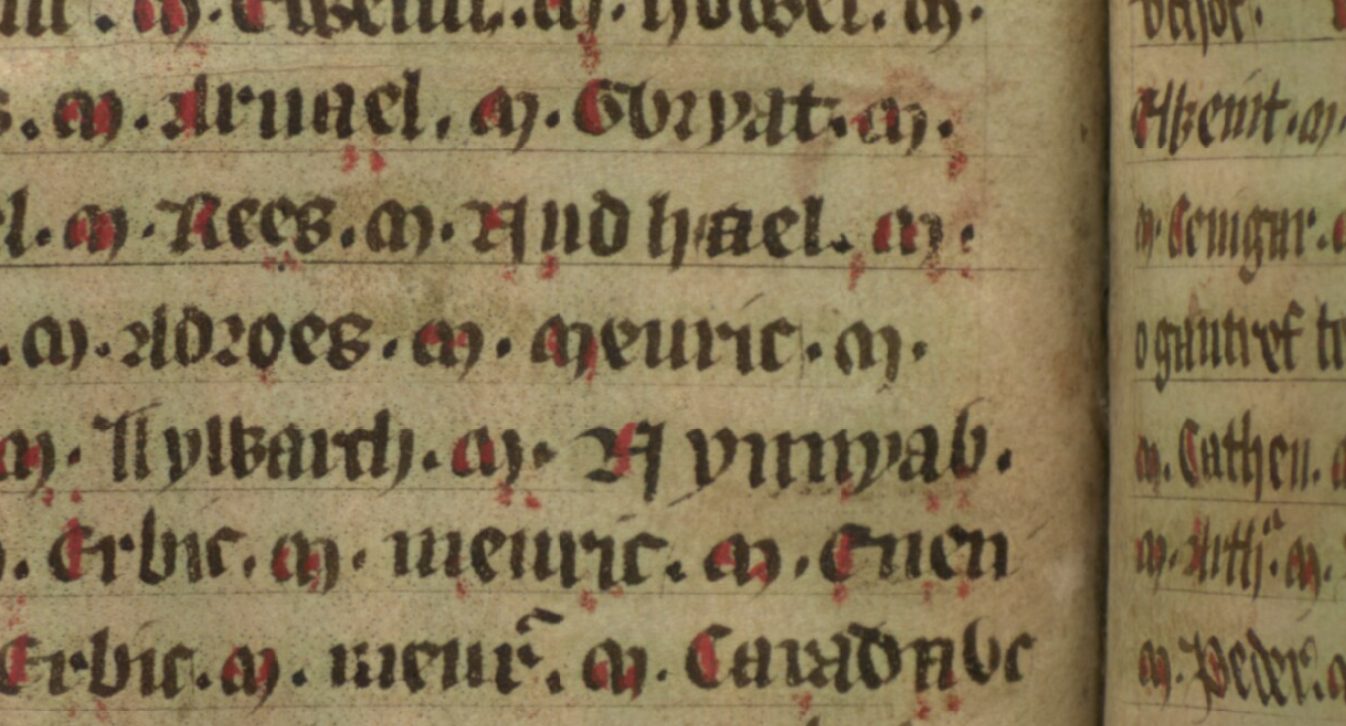
Who Was Meurig of Gwent?
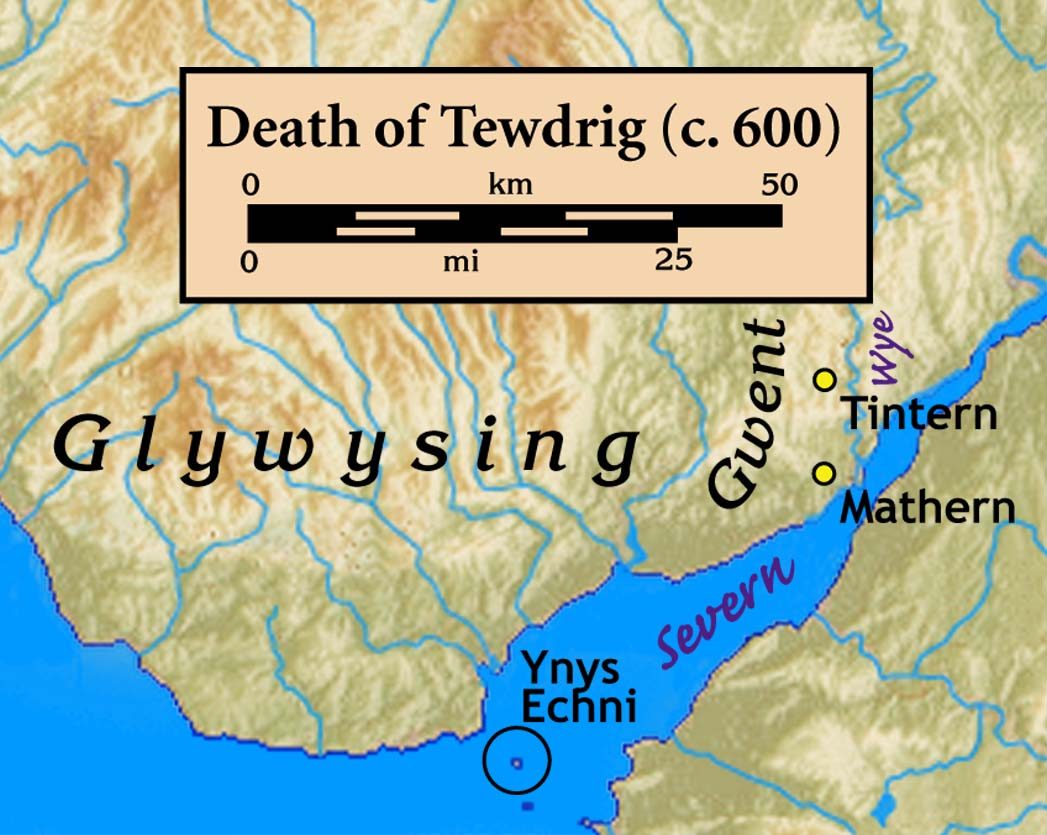
Meurig of Gwent was a historical king who ruled over the southeast corner of Wales in the early medieval era. He appears to have been a prominent king in the area, ruling not just Gwent but also Glywysing (Glamorgan) to the west and Ergyng to the east.
Meurig ruled over this large kingdom at some point during the early Post-Roman period, but exactly when he lived is debated. We will examine this issue in more detail shortly, since it is crucial to the potential identification of him with Uther Pendragon.
This king of southeast Wales was the son of a king named Tewdrig. He was an exceptionally powerful king, being involved in battles all across South Wales and even travelling to Brittany to depose a king there and install another one. Tewdrig, in turn, was the son of Teithfallt, who was allegedly a descendant of Emperor Magnus Maximus.
The main reason why Meurig has been proposed as the historical Uther Pendragon is that his eldest son, Athrwys, is a popular candidate for the historical King Arthur. However, supporters of the identification of Meurig with Athrwys claim that there is additional supporting evidence for this identification.
When Did Meurig of Gwent Really Live?
To properly assess whether or not Meurig could reasonably have been the historical figure behind the legends of King Arthur, it is vital to establish when he lived. This will help us to see whether he really lived at the same time that Uther was said to have been active in, and whether we can reasonably attribute Uther’s legendary activities to him.
Evidence From the Annales Cambriae
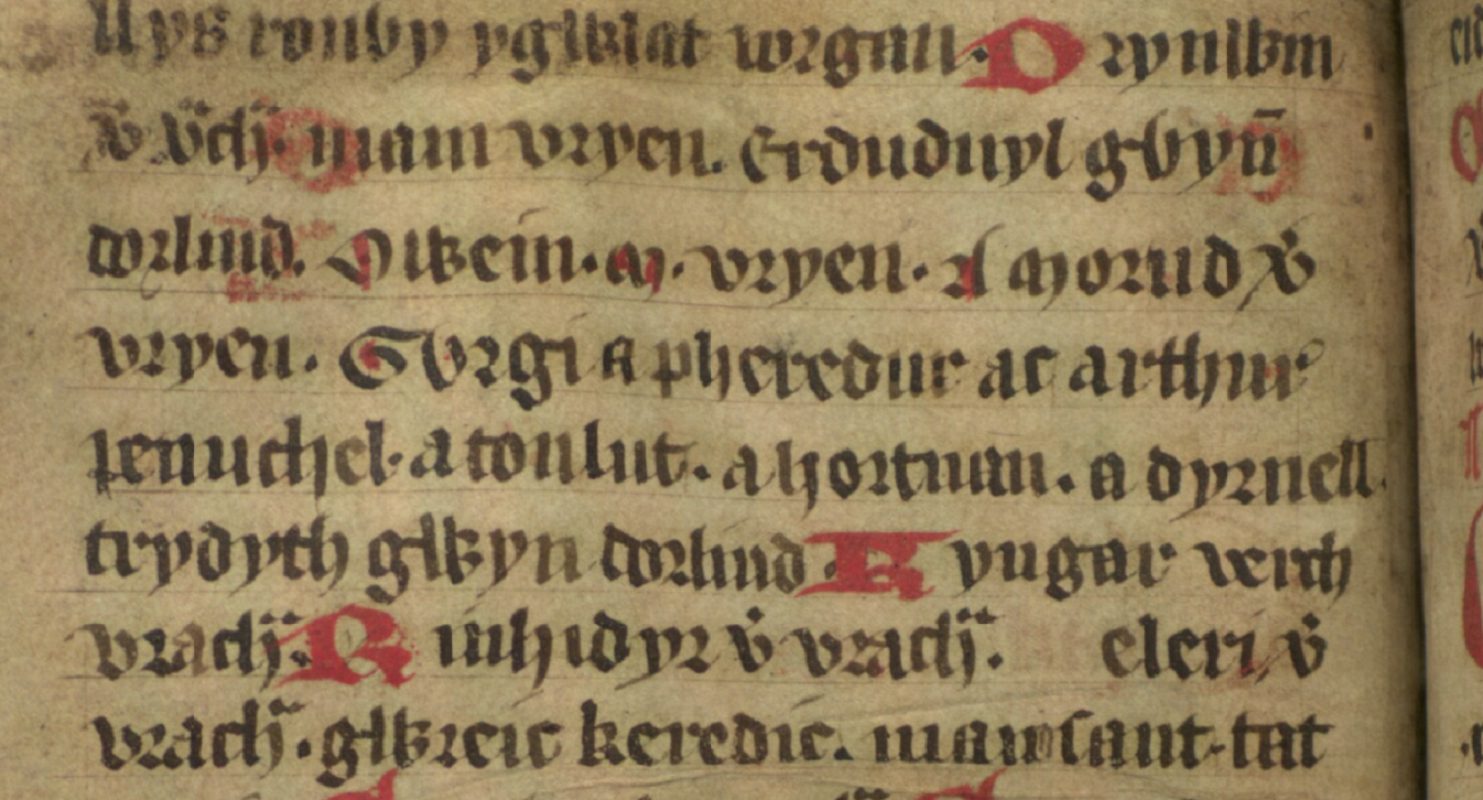
In the past, the general consensus was that Meurig lived in the sixth century. His death was placed in c. 575. However, many scholars today favour a much later date, placing his death well into the seventh century. The primary reason for this conclusion is an entry in the Annales Cambriae, a tenth century chronicle.
In this chronicle, the entry for 775 tells us that this was the year in which Ffernfael son of Ithel died. This is widely agreed to be Ffernfael ap Ithel ap Morgan ap Athrwys ap Meurig. In other words, the Ffernfael of this entry is usually understood as being the great-great-grandson of Meurig of Gwent.
If we assume that Ffernfael was born in c. 700, and we use an average of about twenty-five years per generation, this would take us to c. 600 for the birth of Meurig. As acknowledged by such a renowned authority as Patrick Sims-Williams, this is the main anchor point around which the entire late chronology for Meurig’s dynasty revolves.
Objections to This Argument
However, there is one significant problem with this chronological evidence. As Sims-Williams himself points out, the names ‘Ffernfael’ and ‘Ithel’ were both common within this dynasty. Hence, it is entirely possible that there was more than one ‘Ffernfael son of Ithel’ sequence over the centuries.
As it happens, the genealogical record found in the Harleian MS 3859 reveals that there was another Ithel several generations later. Although his children are not recorded, he could well have had a son by the name of Ffernfael.
If this were the case, then this would move Meurig’s birth back by several generations.
Evidence from the Life of St Oudoceus
Nevertheless, just because this could be the case does not mean that it actually was. Fortunately, there is some useful information about this dynasty from the various hagiographies that tell the lives of religious figures who were active in southeast Wales.
One such hagiography is the Life of St Oudoceus. This tells the story of Oudoceus, a prominent bishop in southeast Wales who was supposedly bishop of Llandaff. According to this record, Oudoceus was the son of King Budic of Brittany. This Budic can be identified as the King Bodic mentioned by Gregory of Tours in the sixth century. He appears to have been born in c. 500.
According to the account, Oudoceus was born to Budic’s second wife, and he was not even the eldest of their children. It is therefore reasonable to place Oudoceus’ birth further from Budic’s birth than would normally be expected.
If we assume that Oudoceus was born when Budic was about forty years old, his birth would have occurred in c. 540. According to the Life, Oudoceus succeeded Teilo as bishop immediately after returning to Britain after the Yellow Plague. This obviously must have occurred when Oudoceus was already an adult, although since Teilo was born in c. 500, it cannot have been too far towards the seventh century either.
A date of around 570 is reasonable for the appointment of Oudoceus as bishop. Now, why is this so important for establishing when Meurig was born?
What This Means for Meurig
The reason that this is so important for Meurig is that he appears as the king who oversaw Oudoceus’ appointment as bishop. Furthermore, two of Meurig’s sons, Athrwys and Idnerth, are presented as being there for his appointment as well.
This indicates that Meurig was already a mature king by c. 570, having not just one but two sons who were evidently already adults.
This would place his birth long before 570. It would indicate that he was born at least as early as 525. However, Meurig could potentially have been much older, being an elderly king by the time of Oudoceus’ appointment. Is there any other evidence that sheds more light on this matter?
Evidence from the Life of St Cadoc
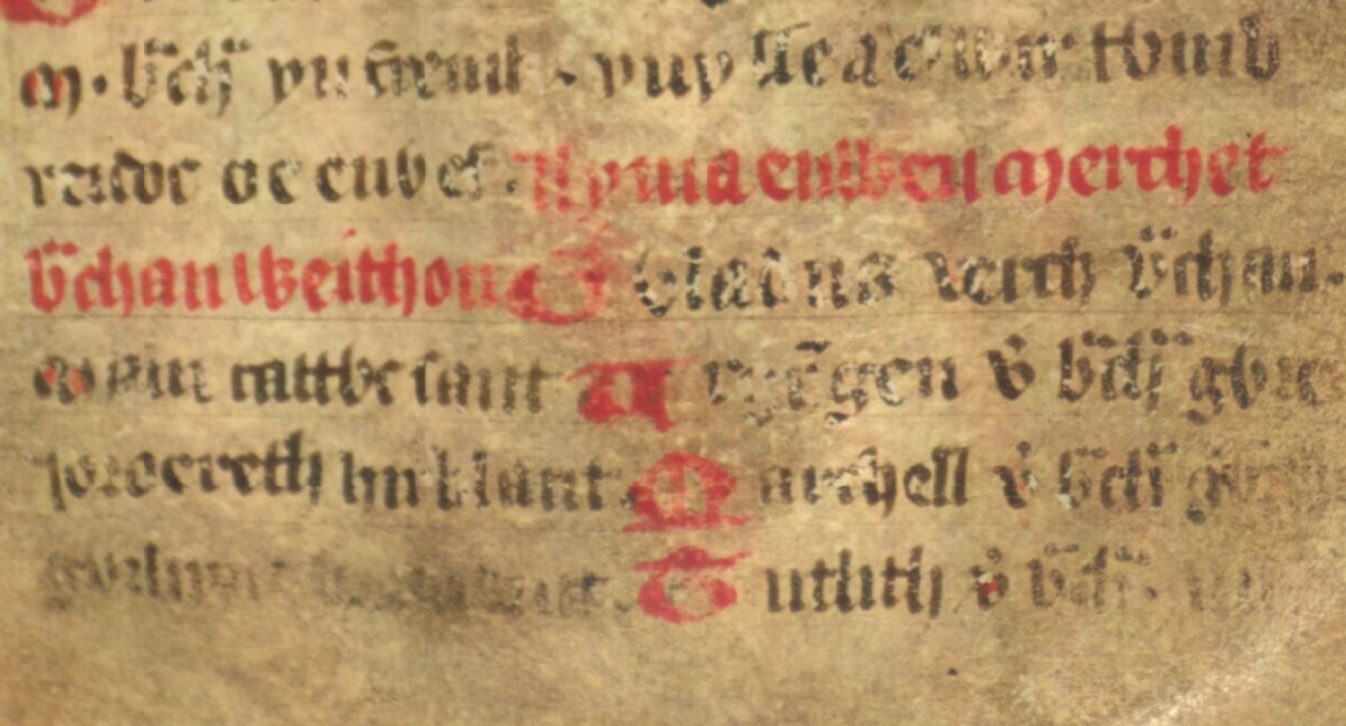
Another hagiography provides us with more information. This is the Life of St Cadoc, written in the eleventh century, somewhat earlier than the Life of St Oudoceus. According to this document, Cadoc was the son of a woman named Gwladus, the daughter of Brychan, son of Marchell, daughter of Tewdrig.
Could this Tewdrig be the same as the father of Meurig? Both Tewdrigs are placed in the same area – southeast Wales. Furthermore, the Book of Llandaff calls Meurig’s father Tewdrig the son of Teithfallt. This is the same name given to the father of Tewdrig the ancestor of Cadoc.
Further support for the conclusion that both Tewdrigs were the same person is the way in which the Life of St Cadoc describes him. We find the following description:
“Teudiric, who was made a martyr in Gwent, to wit, Merthir Teudiric.”
According to this, Cadoc’s ancestor Tewdrig was associated with being a martyr in Gwent. This is specifically said to be the origin of the place name Merthyr Tewdrig. In the Book of Llandaff, we find this exact same claim made about Tewdrig the father of Meurig.
What This Means for Meurig
This evidence means that we can confidently identify Tewdrig the father of Meurig with Tewdrig the ancestor of Cadoc. What does this mean for the chronology of Meurig?
It is widely accepted that Cadoc was born in the early sixth century. Exactly how early is debatable. Since Arthur himself is described as being involved in the circumstances surrounding his birth, he was probably born in c. 520. This is consistent with the fact that the weight of evidence puts Arthur’s own birth in c. 500, as we will see in more depth later.
If Cadoc was born in c. 520, then counting back to get to the birth of Tewdrig would place Tewdrig’s birth in approximately 440.
Of course, we also need to reconcile this with the fact that Meurig was still present for Oudoceus’ appointment as bishop in c. 570. This would suggest that Meurig was a fairly late son of Tewdrig. This is further supported by the fact that in one of the documents describing the birth of Brychan, his mother Marchell is described as the only child of Tewdrig at the time.
This suggests that Meurig was not born until about the time of Brychan’s birth, in c. 480. This would allow Meurig to have been present for Oudoceus’ appointment, albeit as an elderly king.
Evidence from the Life of St Dubricius
Further support for this chronology for Meurig is seen from the hagiography of a prominent religious figure named Dubricius. He was the bishop of Llandaff, so the records say, prior to Teilo. According to his Life, he was the grandson of a king of Ergyng named Peibio.
The reason that this is so significant is because the Book of Llandaff reveals that another one of Peibio’s grandsons was a king named Gwrgan. His daughter was Onbrawst, and the Book of Llandaff reveals that Onbrawst was the wife of Meurig.
Since Gwrgan and Dubricius were first cousins, they would logically have been born at about the same time. This is significant in view of the fact that Peter Bartrum’s A Welsh Classical Dictionary places Dubricius’ birth in c. 465. Other authorities on this period agree with this general date.
This approximate date for the birth of Dubricius’ first cousin, Gwrgan, agrees with making Gwrgan’s daughter the wife of a man born in c. 480. Hence, this genealogical evidence supports the conclusion that Meurig was born in about 480, long before the popular modern date near the seventh century.
To be clear, although placing his birth near the turn of the seventh century is the most popular chronology today, there are many other scholars who support a much earlier chronology. Examples include Brian Davies, David Farmer, Timothy Venning, Chris Barber, Michelle Ziegler, Terry Breverton, and others.
Evidence That Meurig Was the Historical Uther Pendragon
Now that we have established a good case for placing Meurig’s birth in c. 480, how does this relate to the argument that he can be identified as the historical Uther Pendragon? To see how the two of them might have been the same person, let us consider the evidence for when Arthur himself was born to see when his father might have been active.
Arthur’s Chronology
Traditionally, the dates of King Arthur have been broadly defined by the dates in the Annales Cambriae. This chronicle places Arthur’s climactic battle against the Saxons at Badon in 516, while his final battle at Camlann is placed in 537.
However, the argument that Meurig can be identified as the historical Uther Pendragon uses a revised Arthurian chronology. It argues that the dates in the Annales Cambriae should really be moved forward by thirty-three years.
This argument is based on the fact that dates in the medieval manuscripts were sometimes backdated by approximately that amount due to the scribes confusing the birth and the death of Jesus. We see this in the Historia Brittonum, for example.
Occasionally, events were dated relative to the death of Jesus rather than his birth. A careless scribe could easily mistake a date as being relative to his birth, as was most common, meaning that he would place it about thirty-three years earlier than it really happened.
On this basis, the Battle of Badon occurred in about 549, while the Battle of Camlann was in 570.
Supporting Evidence from Gildas
In the sixth century, a monk called Gildas wrote De Excidio, in which he referred to the Battle of Badon as occurring forty-three years before he was writing. Since Gildas directs some comments to five reigning kings, we can date De Excidio – and, by extension, the Battle of Badon – based on when those kings were ruling.
One of the kings is Maelgwn Gwynedd. As scholar Rachel Bromwich pointed out, the earliest chronological evidence for his reign actually places it in the late sixth century. This evidence is from the Historia Brittonum, which predates the Annales Cambriae and is thus more valuable than it.
Another king mentioned by Gildas is Vortipor. His father, Aircol, is mentioned in an early Welsh poem attributed to Taliesin. In this poem, Aircol is said to have fled at the hands of Cynan Garwyn. This Cynan was definitely a mid to late sixth century ruler. If he fought against Vortipor’s father, then Vortipor himself cannot have been an early sixth century ruler.
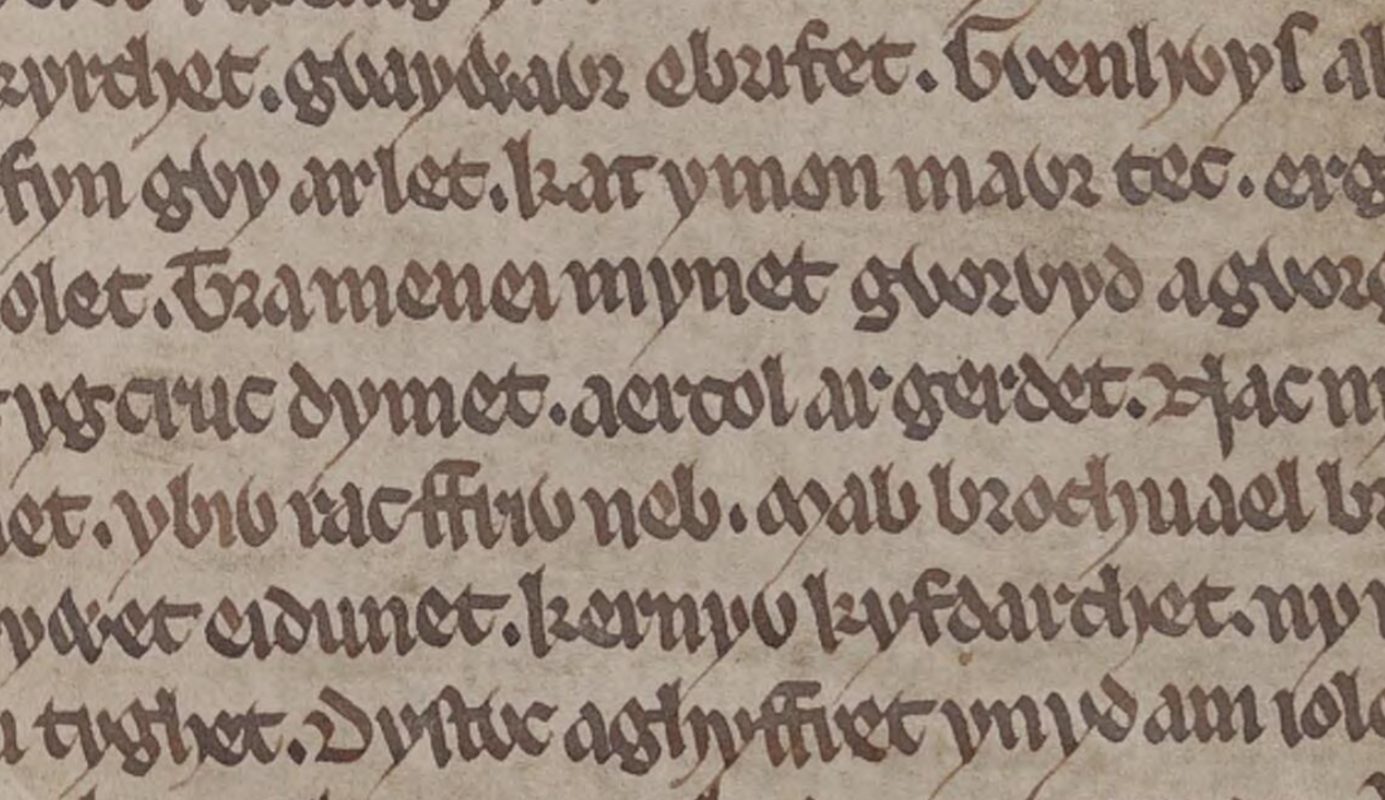
This is especially so given that Gildas specifically says that Vortipor was now growing old. Combining this with the evidence for Aircol fighting against Cynan Garwyn, it would seem inescapable that Gildas must have been writing towards the end of the sixth century.
Similar evidence could be highlighted for the other kings, although the evidence for their chronology comes from sources later than those used in the case of Vortipor and Maelgwn. In any case, given that Gildas was writing forty-three years after the Battle of Badon, this shows that a good case can be made that the Arthurian dates in the Annales Cambriae should be moved forward by thirty-three years to c. 549 and 570.
What This Means for Uther Pendragon’s Historical Identity
If Arthur’s final battle was fought in 570, then Arthur himself was probably born in approximately the year 500. This is also consistent with the evidence that Arthur already had an adult son, Gwydre, by the time the Battle of Badon was fought.
This is indicated by the evidence that the events of Culhwch and Olwen, an Arthurian tale, occurred in the year following the Battle of Badon. At this event, Arthur’s son Gwydre fought and died.
With a birth of c. 500 for King Arthur, his father could have been born in c. 480. This fits perfectly with the evidence regarding Meurig’s birth.
Meurig’s Power
Now that we have seen that Meurig arguably fits the date of Uther Pendragon, what about the fact that Uther was an exceptionally powerful king? In the legendary account of his career written by Geoffrey of Monmouth in c. 1137, he is presented as the high king of Britain before Arthur.
Even if we assume that Geoffrey’s account is entirely fictional, the mere fact that Arthur himself was powerful and led the kings of the Britons into battle against the Saxons strongly suggests that his father was very powerful and important too.
Just like with the chronology, this is another basic criterion that Meurig must fit for us to be able to take him seriously as a candidate for the historical Uther Pendragon.
We do not have many narrative sources which describe Meurig’s reign and activities. However, from the Book of Llandaff, we know that Meurig ruled over a large kingdom. It encompassed Glywysing, Gwent, and Ergyng. This stretched from the modern-day Gower Peninsula in the west to much of Herefordshire and Gloucestershire in the east.
This was at least as large as the famously powerful kingdom of Gwynedd in northwest Wales. Hence, at least on the basis of the size of his kingdom, he could well have been a powerful king, just like his contemporary kings of Gwynedd.
Evidence from Tewdrig
Regarding narrative sources, we have more information available about Meurig’s father, Tewdrig. The available information about him strongly supports the conclusion that he was a very powerful king.
For example, the hagiography that tells the life story of Gwinear, a saint active in Cornwall and Brittany, claims that Tewdrig travelled to Brittany, deposed King Maxentius, and installed another king in his place.
This same source also presents Tewdrig as having power over at least parts of Cornwall. Therefore, on the basis of this evidence, Tewdrig would appear to have been an exceptionally powerful monarch. This supports the conclusion that Meurig, the son of Tewdrig, would likewise have been powerful and important.
The Name of Uther Pendragon
So far, we have seen that Meurig arguably lived at the right time to be Uther Pendragon, and he seems to have been the heir to a powerful dynasty. What about the issue of his name? It is obvious that ‘Meurig’ shares no similarities at all with ‘Uther’. How, then, can Meurig have been the real Uther Pendragon?
The explanation is simple. It is widely recognised that ‘Pendragon’ is just a title, meaning ‘chief warrior’. However, there is evidence that ‘Uther’ is actually part of this title. It is essentially identical to a Welsh word, ‘uthr’, meaning ‘fearsome’. This makes perfect sense in conjunction with the meaning of ‘Pendragon’.
Furthermore, the Welsh poems Pa Gur and Marwnat Uthyr Pen suggest that ‘Uther Pendragon’ was a title used by Arthur himself. If this evidence is accepted, then it would mean that it is, indeed, entirely a title.
Therefore, Arthur’s father could have had a name completely unrelated to ‘Uther’. This allows Meurig to have been Uther without any problem.
Where Uther Lived
Not only did Meurig arguably live at the same time as Uther, but it can also be argued that he lived in the very location in which the sources generally place Uther. As we have already mentioned, Meurig ruled over Glywysing, Gwent, and Ergyng. Do the legends place Uther in this area?
Firstly, we can observe that it would be logical for Uther to have been based in essentially the same location as his son, Arthur. With this in mind, it is notable that many of the Arthurian sources place Arthur in southeast Wales. For example, many of the Lives of the Saints place Arthur in that area or nearby. Examples include the Life of St Illtud and the Life of St Cadoc.
The Historia Brittonum, a source even earlier than the aforementioned hagiographies, places Ambrosius in Glywysing. Ambrosius was, according to legend, the older brother of Uther. Based on Gildas’ testimony in De Excidio, this is impossible, but they could plausibly have been father and son.
Uther’s Court at Winchester

In Geoffrey’s account of Uther, he suggests that his main court is Winchester. This is in southern England, far from the border of Wales. While this is not consistent with identifying Meurig as Uther, there is a potential explanation for this.
The medieval Welsh name for Winchester was Caer Wynt. This is almost identical to Caerwent, the capital city and eponymous settlement of Gwent, Meurig’s territory. There are many examples of Geoffrey clearly making geographical errors and seemingly confusing one place name or ethnonym for another.
There is no smoking gun in Geoffrey’s account which shows that his ‘Winchester’ is a mistake for Caerwent in Gwent. Nevertheless, the fact that there is virtually no association between King Arthur and Winchester in Welsh tradition is surely significant.
It would seem very strange for Uther’s main court to be in one place, but for his son to not be associated with that location at all.
In view of the strong Arthurian connections with the southeast of Wales, it seems very likely that Geoffrey’s ‘Winchester’ should be understood as a mistake for Caerwent. In other words, the weight of evidence, when taken together, suggests that Uther Pendragon was associated particularly with Gwent.
This matches very well with the information about Meurig, since Gwent was right in the heart of his kingdom.
Meurig as the Father of King Arthur
As well as Meurig arguably matching the time and location in which Uther lived, as well as his prominence as a powerful king, there are various specific aspects of Meurig’s profile which matches the legendary information about Uther Pendragon.
To begin with, let us consider the fact that he had a son who arguably matches the legendary King Arthur. The Book of Llandaff, as well as other documents, shows that Meurig’s eldest son and heir was named Athrwys.
The name ‘Athrwys’ is not identical to ‘Arthur’, but it shares some obvious similarities. These similarities become more significant when we take into account the fact that Arthur’s name is variously written as ‘Artus’, ‘Arturus’, ‘Arthurus’, ‘Arturis’, and other variations.
Furthermore, the name ‘Athrwys’ is sometimes seen ‘Arthwys’ and ‘Arthrwys’. Based on these many variations, it is not impossible that the recorded name of Meurig’s son was actually ‘Arthur’, but that it got corrupted into this very similar name. This is reminiscent of the fact that Magnus Maximus had his name corrupted into ‘Maxen’, actually a form of the name ‘Maxentius’.
Meurig’s Daughter Anna
Let us now move on to another one of Uther’s legendary children. One particularly notable child was Anna. She appears as the sister of King Arthur in Geoffrey of Monmouth’s Historia Regum Britanniae.
This is significant, because there is some evidence that Meurig had a daughter named Anna. It is difficult to determine the earliest reference to this tradition, but it goes back to at least the eighteenth century. If this tradition is accurate, then it would mean that Meurig fits Uther inasmuch as they both had a daughter named Anna.
Evidence for the Authenticity of This Tradition
While the earliest explicit reference to this tradition is late, some much earlier evidence supports it. The Life of St Samson, which may date to as early as the seventh century, states that Anna’s father and the father of her husband Amon were both court officials of their respective kingdoms and both had the same status in society.
Anna’s husband was Amon. He appears to be identifiable as Annun, recorded in Welsh tradition as the son of a ruler known as Emyr Llydaw, king of Brittany. This very title, ‘Emyr Llydaw’, suggests that he was a powerful king, a kind of emperor.
The Life of St Oudoceus reports that at least part of the dynasty of Cornouaille in Brittany was driven out and forced to live in exile in Dyfed for quite some time. Since Amon’s father is described in the Life of St Samson as a court official of the kingdom of Dyfed, this would appear to be a reference to Emyr Llydaw during his exile in that kingdom.
Although serving as a court official, Emyr Llydaw was a powerful king in his own right, albeit temporarily without a kingdom of his own. If this was the position held by Amon’s father, then we should expect something similar for Anna’s father.
Based on chronological information about Samson and his educator Illtud, we can ascertain that Samson must have been born in c. 526. Since Anna and Amon are explicitly said to have been married for quite some time before having their first child, Samson, their marriage can probably be placed in the late 510s.
It is very likely that Tewdrig, the father of Meurig, was still alive at that time, since he is recorded as a contemporary of Teilo, whose birth was in c. 500.
This would mean that Meurig was not yet king at the time of Anna’s marriage to Amon. Nevertheless, he was obviously an important and powerful person, similar to Emyr Llydaw. Yet like Emyr Llydaw, he would have still been serving as a type of court official, since his father was still ruling.
Therefore, the early evidence fully supports the late tradition that Meurig was the father of Anna of Gwent.
Meurig’s Son Madoc
Another child of Uther Pendragon in the legends is Madoc. He is primarily known from two Welsh poems. The first is the Elegy of Madoc, known in Welsh as Marwnat Madawg. This is an elegy, or death-song, lamenting the death of this son of Uther.
The second is a conversation between Arthur and his nephew Eliwlod, known as Arthur and the Eagle. This refers to Eliwlod (presenting himself as an eagle, apparently as a spirit after his death) as the nephew of Arthur and the son of Madoc ap Uthyr.
These two references make it clear that Uther Pendragon had a son named Madoc. How does this tie in to the available information about Meurig?
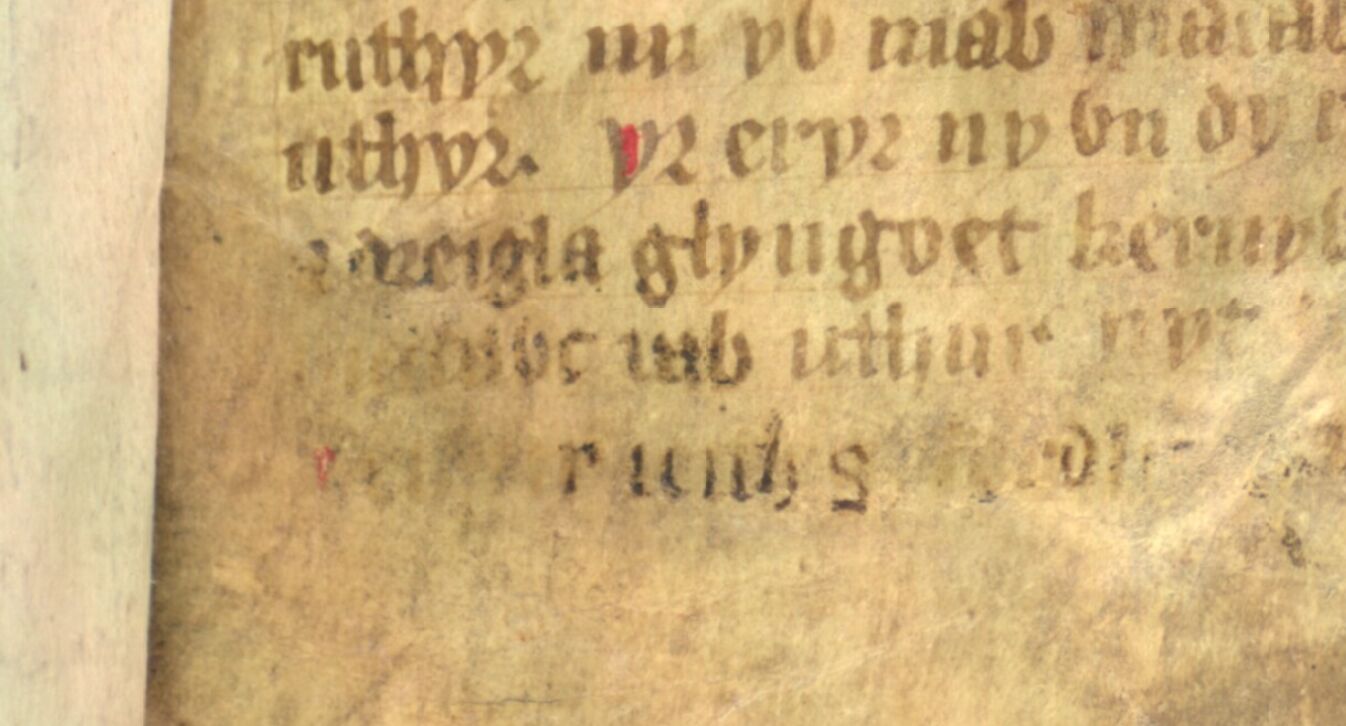
Evidence That Meurig Had a Son Named Madoc
The evidence for Meurig having a son named Madoc comes from the information about Merlin. In Welsh tradition, he is known as Myrddin. Geoffrey of Monmouth’s Life of Merlin is firmly based on Welsh tradition, and it claims that Myrddin was a king (evidently a subking) in South Wales. This is consistent with Welsh poetry, which appears to place his origin in Dyfed.
His father is consistently named Morfryn in Welsh records. Since Myrddin himself was supposedly a ruler in South Wales, this would suggest that Morfryn was also a king of that territory.
Interestingly, a seventeenth century record explicitly describes Merlin as the grandson of King Meurig of Dyfed. Logically, this would mean that Morfryn was Meurig’s son. The only Meurig known in this period was Meurig ap Tewdrig.
Although Dyfed was the kingdom neighbouring Meurig’s territory to the west, it was sometimes used to refer to South Wales in general. Tewdrig himself is called the king of Dyfed in the Brychan documents.
Therefore, this would mean that Morfryn was evidently the son of Meurig of Gwent, based on this early evidence. This is also consistent with an early reference to Myrddin being of the ‘tribe of Meirchion’. Meirchion was a king of Glywysing in the sixth century and was probably a relative of Meurig.
The reason that this is significant is that some later records, from the eighteenth century, record the tradition that Myrddin’s father’s full name was Madoc Morfryn. If this is accurate, then it would mean that Meurig did have a son named Madoc, just like Uther Pendragon.
This is further supported by the fact that there are a number of churches dedicated to Madoc in South Wales. The identification of this patron saint is unknown, but there are not many options. Notably, the Third Series of Welsh Triads, which gives Morfryn the first name ‘Madoc’, claims that he was a prominent bard in the choir of Illtud, which was in South Wales.
Meurig’s Brother-in-Law Gwrfoddw
Another family member of Meurig who matches someone from the legends of King Arthur is Gwrfoddw. In the Arthurian tale Culhwch and Olwen, Arthur is said to have had a maternal uncle named Gwrfoddw Hen. In other words, Gwrfoddw was the brother-in-law of Uther.
Did Meurig’s wife, Onbrawst, have a brother named Gwrfoddw? Once again, the Book of Llandaff provides us with some very pertinent information. Recall that Gwrgan, the father of Onbrawst, was the king of Ergyng.
The Book of Llandaff mentions a king of Ergyng at about this time named Gwrfoddw. Unfortunately, it does not provide his parentage. Nevertheless, he appears as the king of Ergyng after Gwrgan, which logically suggests that he was Gwrgan’s son. Some modern sources claim that Gwrfoddw was a usurper who drove out Gwrgan, but there is simply no basis for this speculation.
If we follow the more logical route of simply making Gwrfoddw a son of Gwrgan, then this would mean that he was the brother-in-law of Meurig. This fits the fact that Uther was said to have had a brother-in-law with this name.
Objections to This Theory
While it is clear that there are some strong similarities between Uther Pendragon and Meurig of Gwent, there are also some important differences.
Chronological Issues
The single biggest issue is the fact that the chronology of Uther’s life and career as presented by Geoffrey of Monmouth is definitely incompatible with identifying him as Meurig.
As established near the beginning of this article, a good case can be made that Meurig was born in c. 480. This is incompatible with the fact that Geoffrey presents Uther as fighting the Saxons under the leadership of Ambrosius for some time before he became king.
Ambrosius was a firmly fifth century king, as shown by the Historia Brittonum and Bede’s chronology. He appears to have died in c. 500, since there are at least two medieval references to a prominent comet in the sky at that time, which matches Geoffrey’s reference to the appearance of a comet upon Ambrosius’ death.
Uther is said to have succeeded Ambrosius when that happened. However, years before that, Uther is described as leading an expedition to Ireland to obtain the Giants’ Dance. Even earlier than that, he is presented as accompanying Ambrosius when he returned to Britain after being away in Brittany for decades.
Meurig was likely not even born when this occurred. He therefore cannot explain the early part of Uther’s career in Geoffrey’s account.
Uther’s Death
A similar objection is that Uther’s death happened long before Meurig’s death. Geoffrey places Uther’s death in the reign of Octa of Kent, who appears to have ruled from 512 to 534. On the other hand, Meurig outlived the Yellow Plague and appointed Oudoceus as bishop.
As we saw previously, that likely happened in c. 570. Meurig would have been very old by that time. This demonstrates that he cannot have been the king who died in the early sixth century and was succeeded by Arthur.
A Potential Explanation
An explanation for these chronological issues related to Geoffrey’s account is that Geoffrey actually confused two different figures who both used the title ‘Uther Pendragon’. As discussed earlier, this seems to have been a title which was used by Arthur himself. Yet since his father likewise used it, it was evidently passed from father to son.
This would allow for the possibility that it was also used by Arthur’s grandfather as well. If so, then perhaps Geoffrey of Monmouth mistakenly conflated stories of Arthur’s father with stories of his grandfather.
In this context of this theory, it would mean that the stories of Uther Pendragon come from both Meurig and Tewdrig. In other words, Meurig was indeed Uther Pendragon, but so was Tewdrig. It would therefore be Tewdrig who explains Geoffrey’s account of Uther’s career, aside from his role as Arthur’s father.
Conclusion
In conclusion, the theory that Meurig of Gwent was the historical Uther Pendragon is based on a number of significant similarities between the two figures. Given Meurig’s high status and the location of his kingdom, he appears to be a good match for Uther. His son, Athrwys, is arguably an excellent match for Arthur. He also seems to have had a daughter named Anna, a son named Madoc, and a brother-in-law named Gwrfoddw, just like Uther.
The key issue is the fact that Meurig lived about a generation or so too late to fit Geoffrey’s account of Uther’s life. However, this can be explained by interpreting ‘Uther Pendragon’ as a title used by Arthur’s father and grandfather, meaning that Meurig need not explain the legendary figure all by himself.
Sources
Bartrum, Peter, A Welsh Classical Dictionary, 1993
Bromwich, Rachel, Trioedd Ynys Prydein: The Triads of the Island of Britain, 2014
Jones, Nerys Anna, Arthur in Early Welsh Poetry, 2019
Morris, John, Arthurian Period Sources, Vol 3: Persons, 1995
Breverton, Terry, Wales: A Historical Companion, 2009
Howells, Caleb, King Arthur: The Man Who Conquered Europe, 2019
https://mythbank.com/uther-pendragon/#the-story-of-uther-pendragon