Was Arthwys son of Mar the Real King Arthur?

One theory about King Arthur is that he can be identified with Arthwys son of Mar, a likely historical figure of the Arthurian period. Although not a very popular theory, this has more merits than most. Arthwys can be placed in the traditional timeframe given to King Arthur’s life, and he was associated with a number of people who appear in the legends as associates of King Arthur. In this article, we will examine the suppose evidence for this theory in detail.
Who Was Arthwys son of Mar?
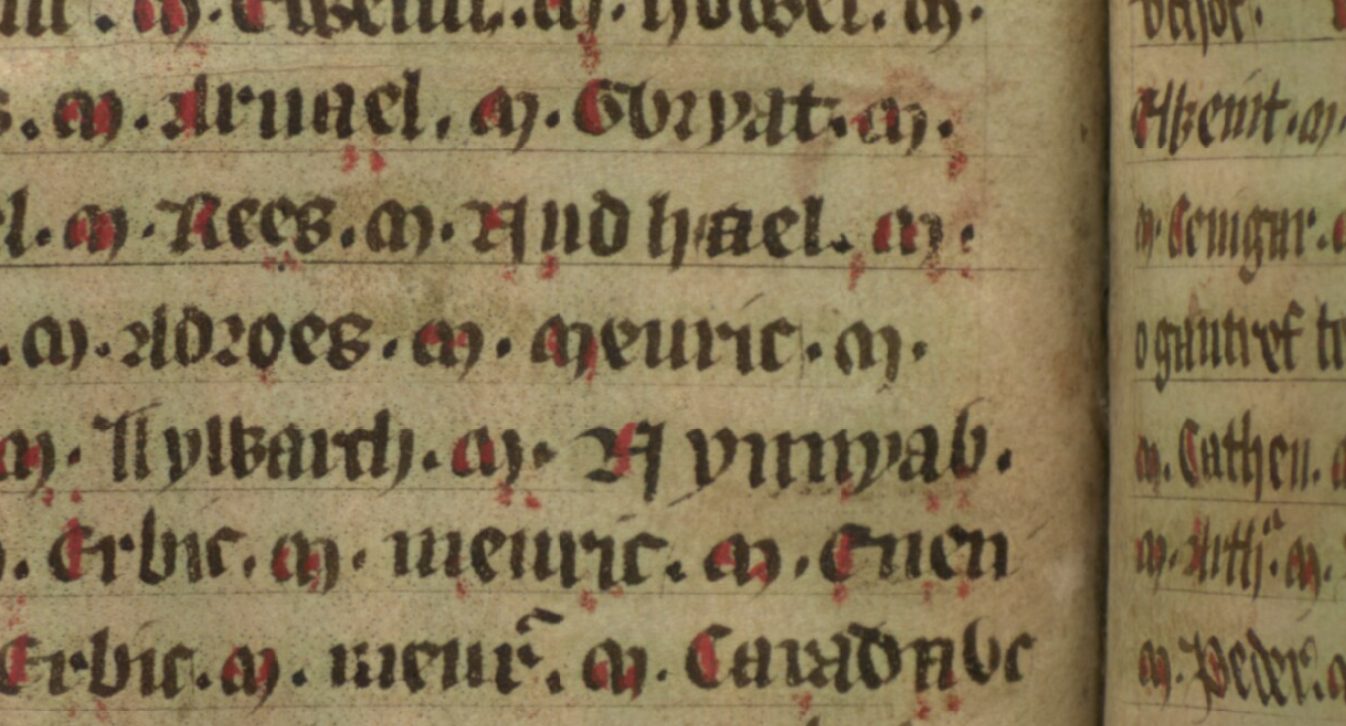
Arthwys son of Mar is often referred to in modern sources as ‘Arthwys ap Mar’, since this is how he appears in medieval Welsh genealogies, ‘ap’ being the Welsh designation for ‘son of’ in those records. The earliest record in which he appears is a document known as the Descent of the Men of the North.
Did He Really Exist?
This document dates to the thirteenth century, although the genealogy contained therein is believed to have been composed somewhat earlier, such as the twelfth century. Since it is far from a contemporary source, we cannot say for sure whether Arthwys was even real.
Adding to the doubt about his historicity is the fact that some genealogical records omit him. For example, in the Descent of the Men of the North, Arthwys is given a son named Eliffer. However, in an earlier manuscript, the Harleian MS 3859, Arthwys does not appear in Eliffer’s ancestry.
Nonetheless, Arthwys’ historicity is generally accepted. After all, a comparison of the various genealogical records of this dynasty shows that many of them are corrupt, with plenty of individuals being omitted across the different versions.
Arthwys’ Dynasty
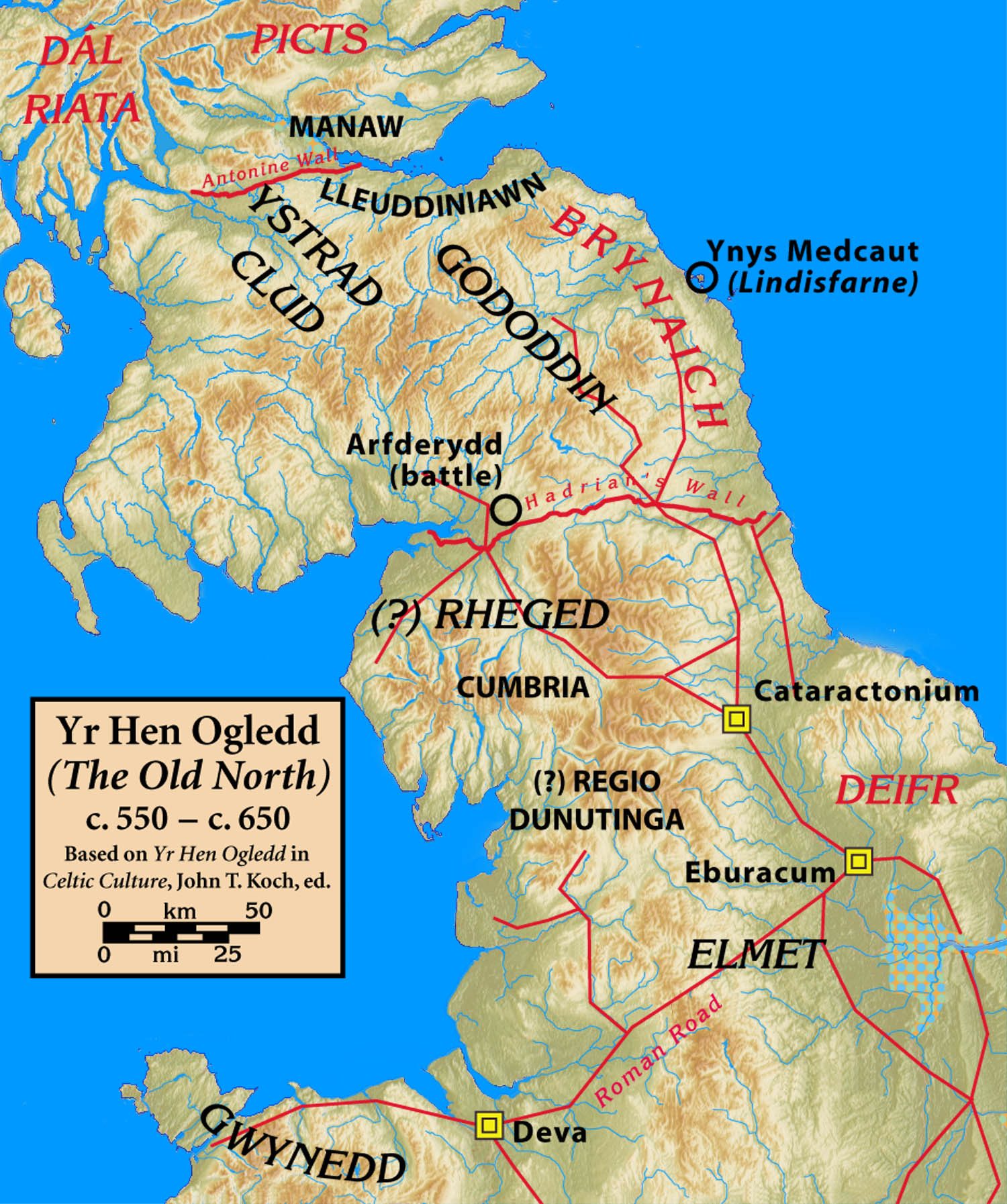
So, what do we know about Arthwys? The very title of the first document in which he appears gives us an indication as to his kingdom. He was from an area called the Old North in medieval Welsh texts. This broadly corresponds to northern England and southern Scotland.
Arthwys was an ancestor of a famous founding figure from that region named Coel Hen. He appears as the founder of numerous dynasties of medieval Wales and the Old North. The exact line of descent from Coel to Arthwys is not entirely clear from the records.
From a comparison of the various pieces of genealogical information in the records, we can see that the figures Gwrwst, Mar, Maeswig, and Ceneu are all presented as ancestors of Arthwys before Coel. Generally, Arthwys is viewed as a son of Mar, who is in turn viewed as identical to Maeswig. Gwrwst, meanwhile, is dismissed as an uncle, and Ceneu is made an earlier ancestor and direct son of Coel.
Apart from that final point, the rest of these conclusions are debateable. There is actually clear evidence that the genealogical records for this dynasty were highly abbreviated at times, and it may well be that Gwrwst was actually the father of Arthwys, as the records present him, and not an uncle. Mar and Maeswig, meanwhile, may well represent distinct generations.
Nonetheless, we will stick with convention in referring to Arthwys as ‘ap Mar’, that is, as the son of Mar. It accommodates convention and uses the acceptable extended meaning of ‘son’, in the sense of ‘descendant’.
Other Family Members
As far as we can tell, Arthwys’ brothers supposedly included Lleenog and Einion. His sons were Cynfelyn, Pabo Post Prydain (this is disputed for chronological reasons, but it is likely correct), Eliffer and Ceidio.
When Did Arthwys son of Mar Live?
Critical to the question of whether Arthwys was really King Arthur or not is the question of when he lived. This is not an easy question to answer, since it is heavily dependent on his genealogy. According to the standard genealogy assigned to him, he would be the great-grandson of Coel.
There is wide agreement that Coel was born in the second half of the fourth century, around 360 in particular according to Peter Bartrum’s A Welsh Classical Dictionary. However, it appears that Ceneu was a relatively late son of Coel, his birth normally being placed in c. 400 for chronological reasons.
Counting forward two generations from Ceneu to get to Arthwys would bring us to about 440 to 460 when using an average of 20 to 30 years per generation.
However, it is very obvious that this genealogy is deficient. Lleenog was supposedly Arthwys’ brother, yet Lleenog’s son Gwallog is recorded as fighting against the Anglian king Hussa right at the end of the sixth century. It is clear that Lleenog must have been born within the sixth century, and the same must apply to Arthwys too if they really were brothers.
The Most Likely Genealogy and Chronology
In view of the chronological issues involved, as well as the evidence from the various genealogical records, the most likely line of descent for Arthwys goes something like this:
Coel (b. 360)
Ceneu (b. 400)
Mar (b. 425)
Maeswic (b. 450)
Gwrwst (b. 475)
Arthwys (b. 500)
Of course, this list is speculative, but it takes into account the weight of evidence concerning each of these individuals, their contemporaries, and their descendants from the surviving Welsh records.
Where Was Arthwys’ Kingdom?
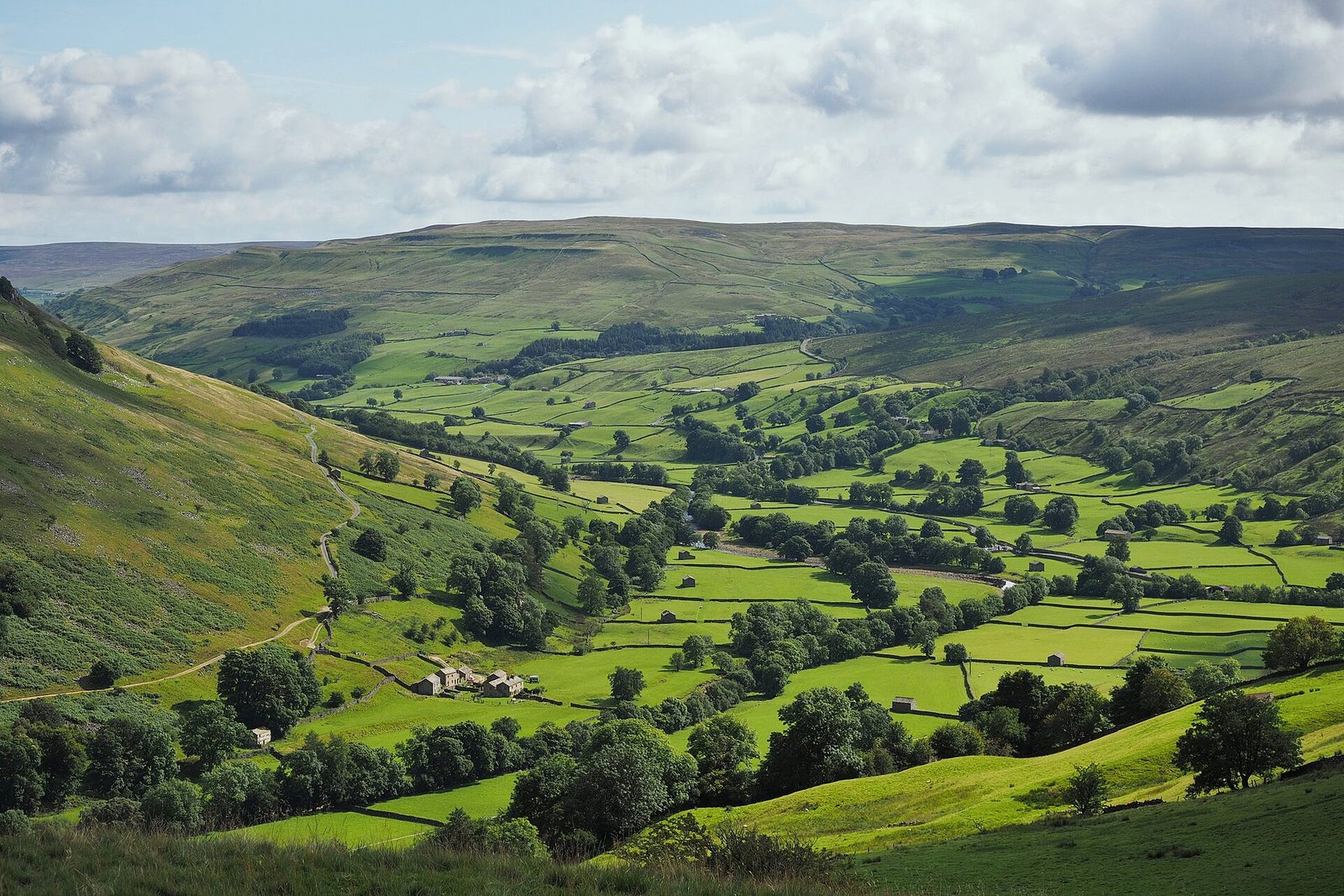
Arthwys’ dynasty was a northern one. As we saw, he appears in the document called the Descent of the Men of the North. However, the exact location of his kingdom is not completely clear. Many modern sources make him a king of the kingdom of Elmet.
Elmet, according to a number of sources, encompassed much of Yorkshire. This is supported by the fact that Peredur’s father, in one source, is called ‘Efrog’, the Welsh name for York, rather than his actual name, Eliffer (the son of Arthwys).
Evidence That Arthwys son of Mar was the Real King Arthur
With these fundamental facts out of the way, what can we say regarding the supposed evidence that Arthwys ap Mar was the real King Arthur? This theory is fundamentally based on this figure’s name, chronology, family members, and area of activity.
Arthwys’ Name
Let us begin by considering the name of Arthwys. This bears an obvious similarity to the name ‘Arthur’, but it is not identical. For this reason, many researchers have rejected this candidate out of hand.
However, according to proponents of this theory, there is good reason to associate the name ‘Arthwys’ with ‘Arthur’. There are a number of possibilities for how the two names can be connected.
Nickname
One idea is that ‘Arthwys’ was a kind of nickname, being derived from his real birth name. We see something similar in the case of a religious figure named Cadoc.
According to his hagiography, written in the eleventh century, he travelled to Brittany. While in that country, the people there gave him the name ‘Cadfoddw’. This nickname was clearly derived from his actual name, ‘Cadoc’. It used the first part of his name and provided it with a different ending.
In like manner, it is possible that Arthur came to be known by a nickname that took the first part of his name and gave it a different ending. As it happens, ‘arth’ is the Welsh word for ‘bear’. The element ‘wys’, for its part, is the Welsh word for ‘summons’.
Therefore, this theory proposes that ‘Arthwys’ means ‘the bear summons’, and that it is a nickname derived from ‘Arthur’, similar to how ‘Cadfoddw’ was a nickname derived from ‘Cadoc’.
Corruption
Another explanation is simply that ‘Arthwys’ is a corruption of ‘Arthur’. There are several different ways in which this proposed corruption could have occurred.
Irish Influence
One possibility is that this corruption occurred through Irish influence. For example, one form of the Irish version of the name ‘Arthur’ is ‘Artuir’. We see this, for example, in records about Artuir mac Aedan.
In some Welsh records, the letter group ‘wy’ was used where we see ‘ui’ in Latin records. For instance, the name of Athrwys ap Meurig appears as ‘Athruis’ in the Latin Book of Llandaff. Therefore, ‘Arthwys’ could be an acceptable alternative spelling of ‘Artuis’.
Therefore, the only real corruption necessary to get from ‘Artuir’ to ‘Artuis’ would be the corruption of the ‘r’ to an ‘s’. This is an attested corruption in medieval records. In fact, it was relatively common, since these two letters looked quite similar to each other.
Breton Influence
On the other hand, Breton influence might be responsible for the form ‘Arthwys’. On the Modena Archivolt, we see Arthur’s name spelt as ‘Artus’, and this is also found in a number of other records. This is generally understood to be a Breton form of the name of the legendary king.
It may be that ‘Arthuis’ is just a very slight corruption of ‘Artus’, with an intrusive ‘i’. This one, small corruption would be all that is necessary to explain Arthwys’ name, if we understand it to have come from the Breton form of Arthur’s name.
Latin Influence
Another possibility is that ‘Arthwys’ is a corruption of one of the Latin forms of Arthur’s name. His name is seen with lots of different spellings across the records, many of them having ‘us’ on the end. However, one attested form was ‘Arturis’.
The second ‘r’ being dropped would produce ‘Artuis’, almost exactly the Latin form of ‘Arthwys’. There are a number of examples in the medieval Welsh records of consonants being dropped from names where they really should be there.
Therefore, this could be a slight corruption of one of the attested forms of Arthur’s name.
Replaced with an Existing Name
A different possibility is that ‘Arthwys’ really was a legitimate name in its own right. However, due to this name clearly being very similar to some of the attested forms of Arthur’s name, such as ‘Artus’ and ‘Arturis’, a copyist or scribe may have simply substituted it in error.
This exact same phenomenon occurred in the case of Magnus Maximus. He first appears in medieval Welsh tradition correctly as ‘Maxim’, but in virtually all subsequent appearances, his name has the form ‘Maxen’. This is actually the Welsh version of the Latin name ‘Maxentius’, not ‘Maximus’.
Whatever the answer, it is perfectly plausible that Arthwys ap Mar was originally known as ‘Arthur’.
Chronological Match
One of the biggest appeals in this theory is the fact that Arthwys ap Mar does match the accepted chronology for King Arthur. In fact, he does this in two different senses.
The Standard Chronology
Firstly, it should be noted that the main proponent of this theory is a researcher named Simon Keegan. His argument utilizes the standard chronology assigned to both Arthwys and Arthur.
As we saw earlier, Arthwys is usually made a grandson of Ceneu. Standard reference works tend to make each generation absurdly long to account for certain chronological issues (rather than adding in extra generations, as seems much more likely), but due to the deficit in generations, this still only brings Arthwys up to about 470.
Keegan proposes that Arthwys died in about 540, which would make him seventy years old at the time of death, a very reasonable age.
These dates exactly match those assigned to Arthur according to the standard Arthurian chronology. The Battle of Badon, Arthur’s decisive victory against the Anglo-Saxons, is usually placed between 500 and 516. This would accommodate Arthwys being an experience war leader when it occurred.
The Battle of Camlann, Arthur’s final battle at which he died, is placed in 537 by the Annales Cambriae. Again, this is very consistent with the dates given to Arthwys.
The Revised Chronology
However, as we have seen, there is good reason to place Arthwys later than that. He is far more likely to have been born in about 500. His death would more probably have occurred in 570 rather than 540, in the absence of any evidence that he died young.
Nevertheless, this does not contradict his identification with King Arthur. The reason is that there is good evidence that the standard Arthurian chronology is also out by a few decades. This is supported by recent scholarship.
The renowned scholar Rachel Bromwich pointed out, in her publication Trioedd Ynys Prydein, that there is evidence that a king named Maelgwn Gwynedd ruled in the second half of the sixth century, several decades later than commonly believed.
This would have a knock-on effect for much of the rest of Arthurian chronology, since the Battle of Badon occurred 43 years before Gildas wrote De Excidio, and Maelgwn was reigning when Gildas wrote.
Therefore, the evidence highlighted by Bromwich for Maelgwn’s reign being in the later sixth century would have the knock-on effect of bringing Badon forward, close to the middle of the sixth century.
This being the case, the more likely chronology for Arthwys ap Mar would still fit Arthurian chronology perfectly.
Family Members
This theory also makes extensive use of the family members in Arthwys’ dynasty, arguing that they match many of the characters who appear as allies of Arthur in the legends.
Lancelot and Galahad
Let us start with Lancelot, one of the most famous figures from the Arthurian legends, along with his son Galahad. According to this theory, they can be identified with the historical figures Lleenog and his son Gwallog, respectively.
As we saw earlier, Lleenog was apparently the brother of Arthwys (and the chronological considerations support this). This would certainly make them close associates, to say the least. Since Lancelot was one of Arthur’s closest and most important knights, this arguably matches.
However, the primary reason for connecting Lancelot with Lleenog is due to the superficial similarity between their names, as well as the superficial similarity between their names of their respective sons, Galahad and Gwallog.
Mordred
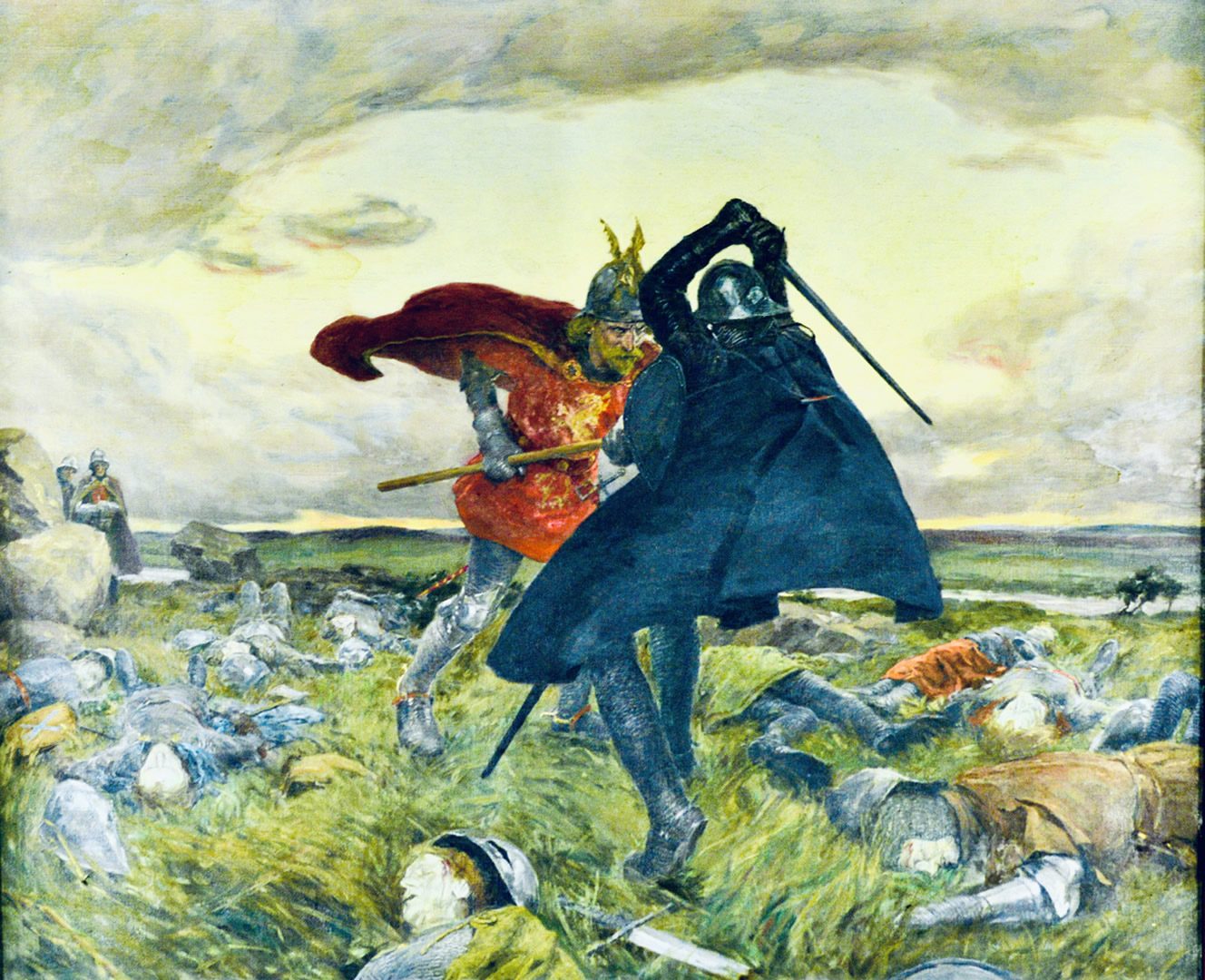
Another key figure in the legends of Arthur is Mordred. According to the Arthurian legends, he was Arthur’s nephew and one of his best allies. He was the figure who later turned against Arthur and betrayed him, leading to the Battle of Camlann and ultimately the downfall of Arthur’s kingdom.
Mordred is explicitly presented in the legends as being from a northern dynasty, so that is broadly consistent with the fact that Arthwys’ family was based in the north of what is now England.
Originally, Mordred’s name was actually spelt ‘Medraut’ in the earliest records. This then evolved into ‘Modred’ and then later ‘Mordred’ as the Arthurian legends evolved.
According to a late document, one of Mar’s sons was named Morydd. Simon Keegan proposes that this is a form of the name ‘Mordred’. Therefore, he argues that Arthwys’ brother Morydd was the historical figure behind the legendary Mordred, nephew of Arthur.
Uther Pendragon
In the legends, the father of King Arthur is a man named Uther (also written as ‘Uthyr’ in the Welsh records). He had the title ‘Pendragon’, meaning ‘Chief Warrior’. Interestingly, the son of Arthwys named ‘Eliffer’ first appears in the records with the spelling ‘Eleuther’.
From this spelling, it seems highly probable that this name comes from the Latin ‘Eleutherius’. However, some scholars argue that ‘Eliffer’ is the more correct form. In any case, the earliest record of his existence, the Harleian MS 3859, shows that he was also known as Eleuther.
This is very similar to the name of Arthur’s legendary father, Uther. The only difference is the very beginning, ‘Ele’. The loss of the first (or last) part of a name is an attested corruption that we see in the medieval records. Thus, it would not be unreasonable to propose that ‘Eleuther’ could have been corrupted into ‘Uther’.
Nevertheless, this is the name of Arthur’s father in the legends, not his son. How could this potentially match Eleuther son of Arthwys?
Another attested corruption is the swapping of father and son pairs. For instance, we see this in the case of Aedan and Gabrain, kings of Dal Riada, who appear in Welsh records with Gabrain as the son of Aedan.
Therefore, it is quite possible that ‘Eleuther ap Arthwys’ could have become corrupted into ‘Arthwys ap Uther’, just like we see in the legends.
Other Northern Figures
More generally, there are various figures from the Arthurian legends who can be identified with members of Arthwys’ family or their associates.
For example, the Peredur mentioned before, the grandson of Arthwys, is generally and reliably identified as Percival, the character from the legends who sought for the Holy Grail.
There is also Einion. He appears in a Welsh tale in which he is the lover of a woman named Olwen. For this reason, some have speculated that this is another name for Culhwch, the lover of Olwen in the Arthurian tale Culhwch and Olwen. Keegan identifies him as Einion the son of Mar, the apparent brother of Arthwys.
Geographical Arguments
Another part of this theory is the fact that many of the locations associated with King Arthur can be connected, some more definitively than others, with the kingdom of Arthwys ap Mar.
For instance, Geoffrey of Monmouth’s Historia Regum Britanniae, written in c. 1137, explains that King Arthur spent some time in York. He celebrated Christmas there and restored the city. Since York seems to have been a prominent city in Arthwys’ kingdom, this arguably supports the identification of Arthwys with Arthur.
Furthermore, the Historia Brittonum, written in c. 830, lists twelve battles at nine different locations across Britain. Keegan has argued that all of these can be identified with locations within or very close to Arthwys’ kingdom.
It must be admitted, the majority of these locations are completely speculative. However, the one site for which there is a general consensus is the Wood of Celidon. This is almost universally accepted as the Caledonian Forest, which covered much of southern Scotland and northern England.

Objections to This Theory
In general, this is unquestionably a very good theory regarding the historical King Arthur. In the absence of a better alternative, Arthwys ap Mar would logically be the best candidate for the real figure behind the legends. Yet, it is not without its problems.
Flaws in The Evidence
One general issue with this theory is that a lot of the evidence is very speculative and weak. For example, the proposed connections between Arthur’s family members and associates and those of Arthwys are not exact matches.
For instance, this theory connects Mordred with Morydd. As well as the name not matching exactly, Morydd was apparently a brother of Arthwys, whereas Mordred is only ever presented as the nephew – or sometimes son – of Arthur.
Similarly, Lleenog was apparently the brother of Arthwys, yet Lancelot is never presented as Arthur’s brother. In fact, Lancelot is explicitly presented as coming to Arthur’s court from a different kingdom. He is never presented as Arthur’s brother, relative, or even a member of Arthur’s kingdom. For that matter, the evidence connecting Lleenog and Gwallog to Lancelot and Galahad respectively is extremely weak.
Failure to Account for the Southern Evidence
An even bigger problem with this theory is the fact that it fails to account for the strong evidence associating Arthur with the south of the country.
Various early sources have Arthur not merely being active but actively ruling in the south of Britain. One example is the Life of St Illtud. This document describes the life of Illtud, explaining that he travelled from Brittany to Britain and entered Arthur’s court. He then moved on to the court of King Poulentus, who is explicitly described as a king in Glamorgan, southeast Wales. This strongly suggests that Arthur’s royal court was in that region.
Another example is Culhwch and Olwen. This places Arthur’s court at Gelliwig in Cerniw. There is some debate about whether this is a reference to a location in Cornwall or in southeast Wales, but in either case, this is a very long way from Arthwys’ territory.
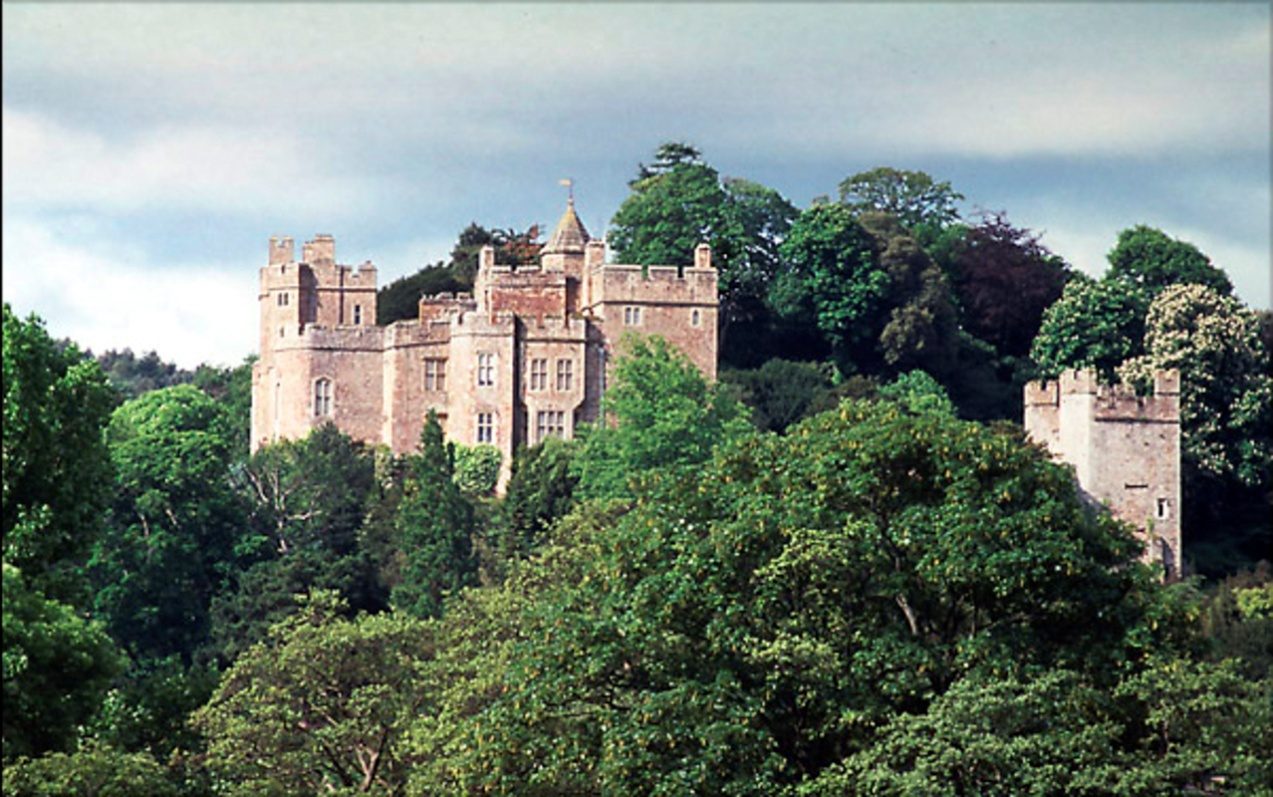
In the Life of St Carannog, Arthur is explicitly described as ruling with King Cadwy in the West Country, in a region usually identified as Dunster in Somerset.
In contrast, there are very few records which actually present Arthur as having a royal court in the north. While he certainly had many allies from that northern region, the medieval records attest to strong dynastic links between the families of the north and the south. Therefore, the northern allies seen in the Arthurian legends would not be out of place for a southern king.
Therefore, the Arthurian scenario which fits the evidence best is that King Arthur ruled in the south of Britain, while having many allies in the north. This accommodates the records which place his royal courts in the south, whereas the Arthwys theory does not accommodate this evidence.
Conclusion
In conclusion, the theory that Arthwys ap Mar is a very reasonable theory. We have seen that, for genealogical and chronological reasons, Arthwys seems to have been born in c. 500 (actually being the son of Gwrwst, son of Maeswic, son of Mar). This would make him an exact contemporary of Arthur. He also lived in an area which has many Arthurian connections. His name, although not perfectly ‘Arthur’, can be plausibly interpreted as a corruption of that name.
Nevertheless, this theory is not perfect. In particular, it fails to account for the strong associations between Arthur and the south of Britain. Even so, in the absence of a superior identification, Arthwys would surely be the best option for the real King Arthur.
Sources
Keegan, Simon, Pennine Dragon, 2016
Bartrum, Peter, A Welsh Classical Dictionary, 1993
https://www.earlybritishkingdoms.com/bios/arthrpn.html
https://mythbank.com/king-arthur/
https://clasmerdin.blogspot.com/2016/05/the-real-king-arthur-thrice-discovered.html