Was Artuir mac Aedan the Real King Arthur?

One popular theory about King Arthur connects him to a historical figure known as Artuir mac Aedan. He was the son of a king of southern Scotland in the sixth century. Due to his name, the time period in which he lived, as well as other information about his life and associates, some researchers have argued that he was the real King Arthur.
Who Was Artuir mac Aedan?
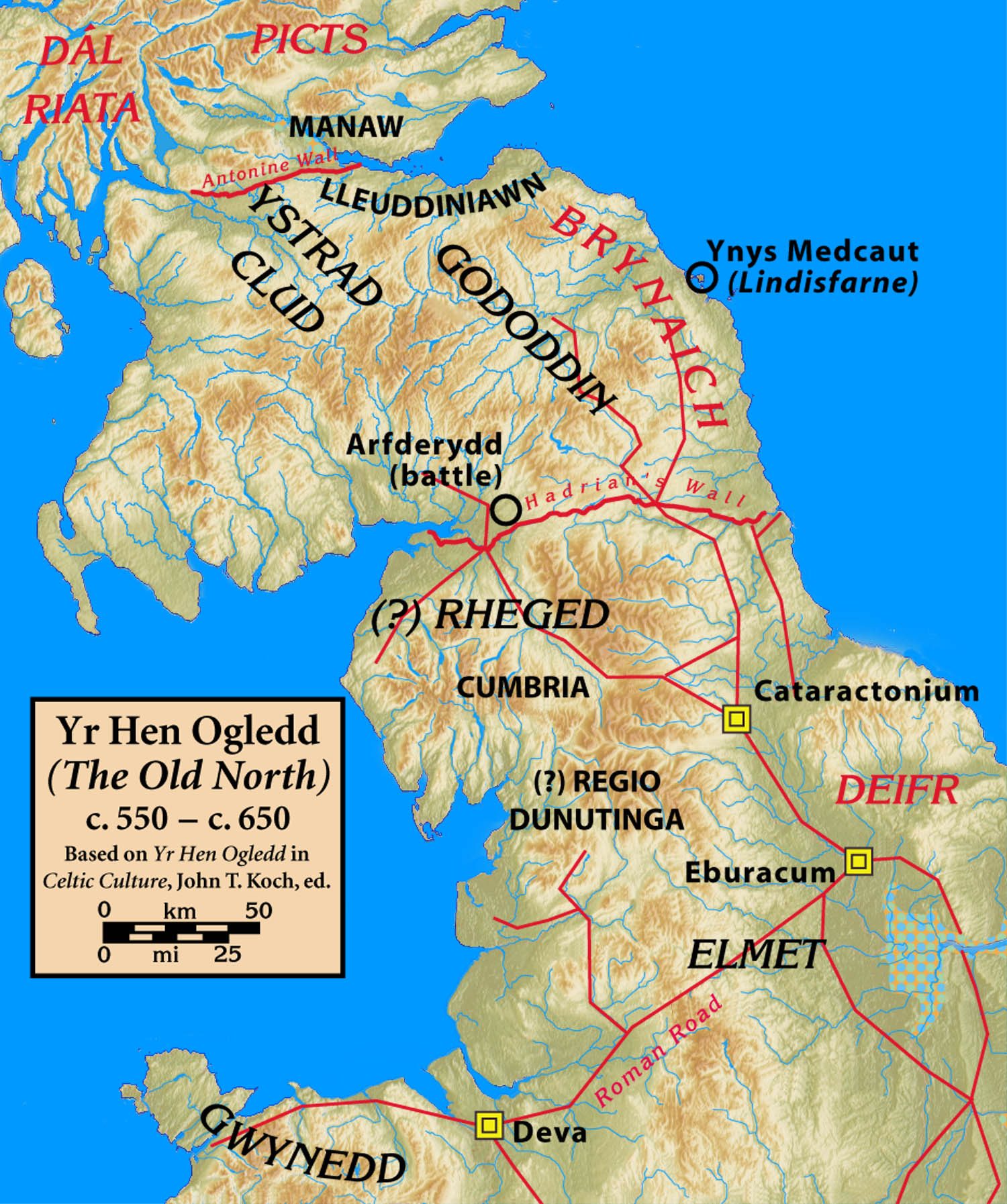
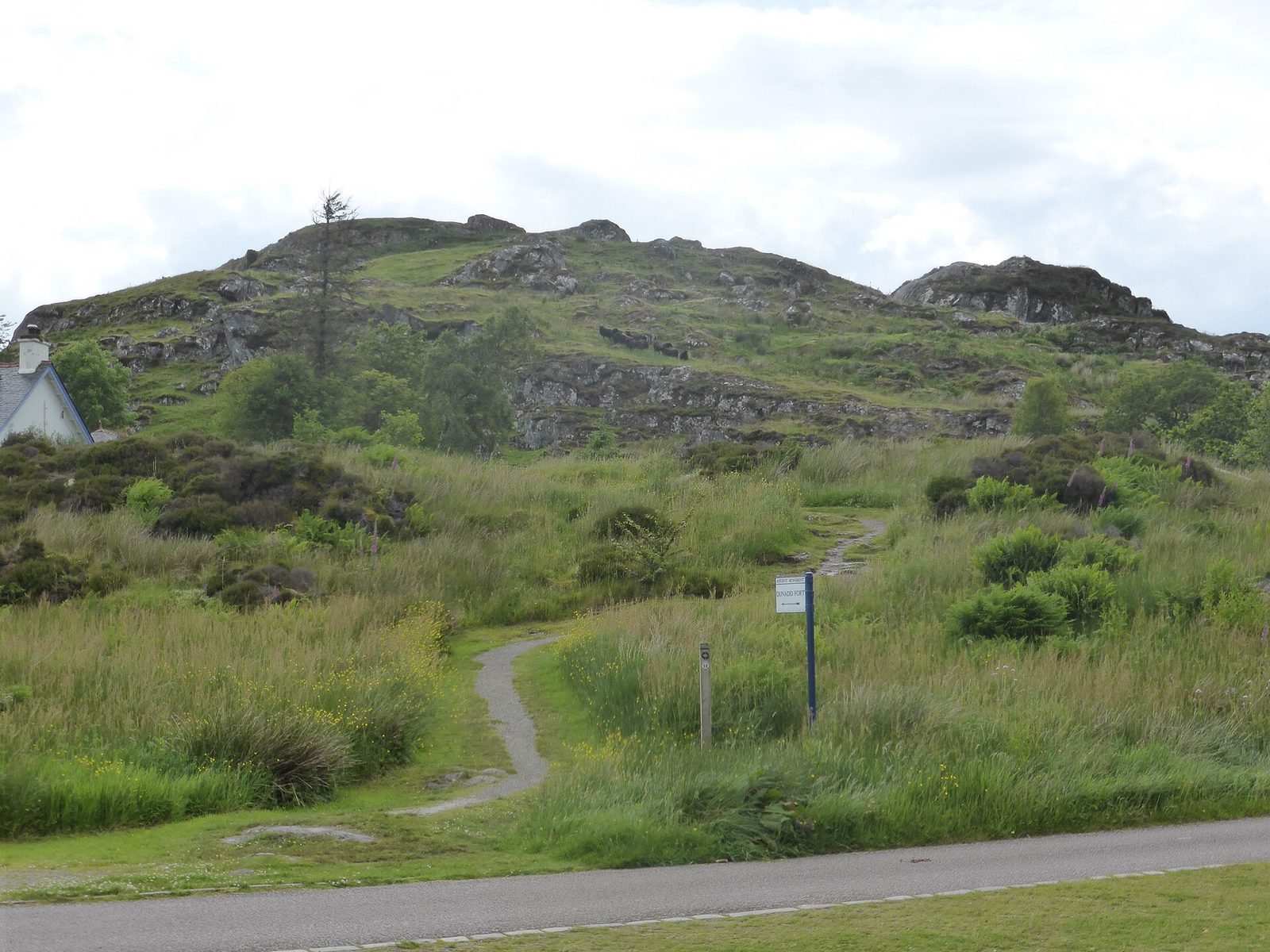
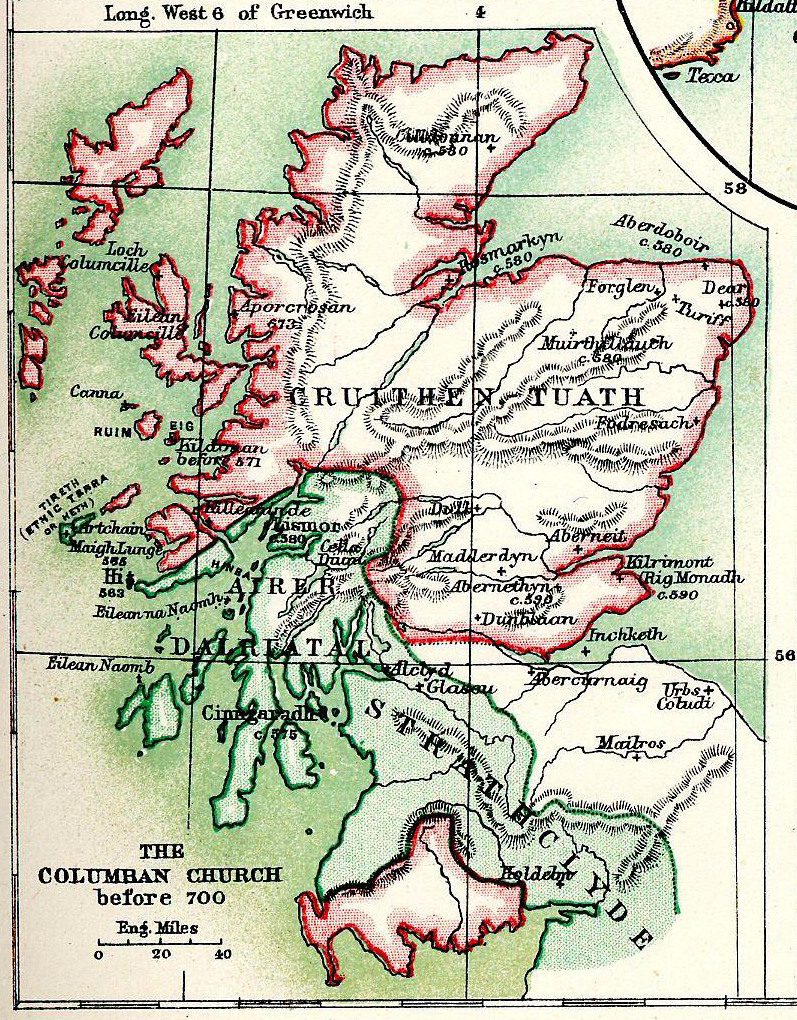
Artuir mac Aedan was a prince from the kingdom of Dal Riada. This was a kingdom which encompassed much of southwest Scotland. It was an Irish kingdom which was founded by settlers from Ireland in the late fifth century, according to legend.
Artuir was the son of a king named Aedan mac Gabran (the word ‘mac’ is Irish for ‘son of’). He is recorded as dying in battle, so he was evidently a war leader who commanded some of his father’s armies.
He is recorded as having several brothers. They were Eochaid Find, Bran, Domangart, and his youngest brother Eochaid Buide. It is unknown whether Artuir was the oldest among his brothers; it is just known that Eochaid Buide was definitely the youngest.
Artuir appears in a record known as the Life of Saint Columba, written in c. 700. For this reason, historians do not seriously question his historicity. He appears in this record in the context of a prophecy given by Columba to King Aedan, telling him that his youngest son Eochaid Buide will succeed him as king due to the upcoming deaths of his older sons.
It appears that Artuir was of partial British descent. His very name is an Irish form of the Brythonic name ‘Arthur’. A number of medieval Welsh records record the fact that the mother of Aedan (thus, Artuir’s grandmother) was Lluan the daughter of Brychan, a king of Brycheiniog in Wales. Perhaps it was due to this Brythonic descent that he received his name.
When Did Artuir mac Aedan Live?
This dynasty is fairly well dated in the available medieval records, so we can date Artuir more precisely than many other figures from this period.
According to the Annals of Ulster, which is a medieval Irish chronicle, Artuir’s father Aedan became king in 574. The Annals of Tigernach is consistent with this, in that it dates his death to 604. It specifically says that he died in the ‘seventy-fourth year of his age’. That would place his birth in about 530 or 531.
This would mean that Aedan was about forty-three or forty-four years old when he became king, according to the year given in the Annals of Ulster. This is reasonable, indicating that this interconnecting information is trustworthy.
This being the case, if we assume that Aedan was at least twenty years old when he fathered Artuir, this would place the latter’s birth in about 550. Of course, since we do not know if Artuir was the eldest or not, he may well have been born quite a bit later.
The death of Artuir is recorded in the Irish annals as having occurred in about 595.
Evidence That Artuir mac Aedan was the Real King Arthur
Proponents of this theory use evidence from the records about Artuir’s recorded activities, as well as evidence from his family and associates.
The Presence of This Dynasty in Welsh Legend
The first thing to note is that there is definitely evidence that this dynasty was known to the medieval Welsh and that they had legends about some of its members. This is important, since the earliest traces of the legend of King Arthur come from medieval Wales.
King Arthur was a strong part of early Welsh tradition, so any potential candidate for the real King Arthur must accommodate that fact.
As we have already noted, Aedan mac Gabrain appears in a number of medieval Welsh documents as being the son of Lluan the daughter of Brychan, a famous Welsh king from the Arthurian period. Furthermore, Aedan is mentioned in the Welsh Triads, a collection of triads related to medieval legends from Welsh. He also appears in a few other medieval documents from that region.
Therefore, there is no doubt that this dynasty was known to the Welsh and was incorporated into their legends.
Artuir’s Name
Another key part of this theory is that Artuir mac Aedan had precisely the right name to be King Arthur. His name, ‘Artuir’, is indeed the exact same name as that of the legendary king. While it is true that King Arthur is not generally recorded with an ‘i’ in his name, this is simply because ‘Artuir’ is an Irish form, so we only see it in Irish records.
This is an important point, because King Arthur is only recorded with that name, which suggests that it really was his actual name and not merely a title, as some other theories suggest. Thus, Artuir mac Aedan accommodates this fact.
The Sword in the Stone
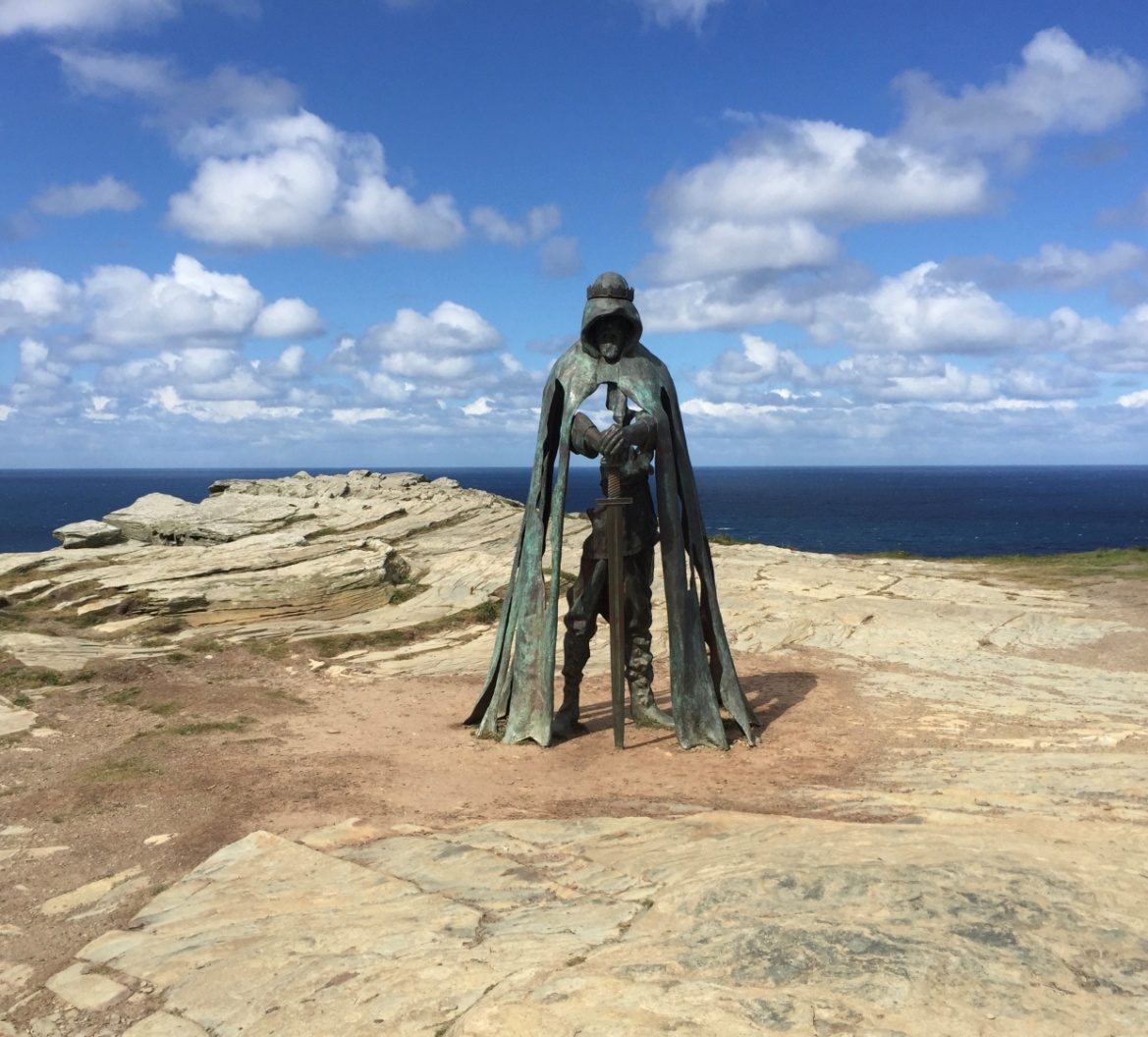
This theory argues that Artuir’s connection to the Arthurian legends can clearly be seen in the legend of the sword in the stone. This is the legend in which only the rightful king of Britain can withdraw a magical sword from a stone. Arthur does this, revealing that he is the rightful king.
Proponents of this theory have linked this legend to the historical Stone of Scone. This was a special stone used in the accession ceremony of the kings of Dal Riada. According to some accounts, the new king would step or kneel onto the stone while holding a sword. If the new king was legitimate, the stone would – according to the legendary accounts – emit a shriek.
While this is clearly very different from the legend of the sword in the stone, it does bear some interesting similarities to it. In both cases, the procedure involves a sword and stone and the revealing of whether someone was the rightful king or not.
Since this was an accession ceremony that was unique to the kings of Dal Riada, this has been used as strong evidence that Artuir mac Aedan of Dal Riada must be the historical King Arthur.
Associates and Family Members
Additionally, this theory argues that some of Arthur’s most famous associates from the legends can be identified as historical associates of Artuir mac Aedan. Here, we will examine the main individuals used in this argument.
Merlin
Firstly, let us consider Merlin, the famous advisor or wizard of Arthur’s court.
There is very clear evidence that the character of Merlin comes directly from a figure known as Myrddin in Welsh tradition. It was Geoffrey of Monmouth who first altered the name to ‘Merlinus’ when writing in Latin and explicitly connected him with Arthur.
Prior to Geoffrey, as well as in Welsh documents independent of Geoffrey’s works, we see a figure named Myrddin occupying the same place as Geoffrey’s Merlinus, performing the same actions and engaging in the same activities.
Whether Myrddin was actually historical or not is still debated, though he may well have been. The Welsh documents which mention him, as well as Geoffey’s Latin record, associate him with a number of northern kings and places.
Allegedly, Myrddin served in the court of King Gwenddoleu, a king who ruled somewhere around southwest Scotland and northwest England. He was also believed to have gone mad and fled into the forest of Celydon, the Caledonian Forest of Roman records. This covered the same general area, southern Scotland and northern England.
Based on this geographical information, it is clear that Myrddin was associated with the same general area in which Artuir mac Aedan lived. Furthermore, Myrddin was also a contemporary of Artuir.
King Gwenddoleu, mentioned earlier, died in about 573 at the Battle of Arderydd. Since Myrddin was in his service and was present for his death, this shows that he lived at the same time as Artuir. Therefore, the idea that he was drawn into the Arthurian legends as a companion of Arthur arguably makes a lot of sense when we identify Arthur with Myrddin’s nearby, contemporary king Artuir mac Aedan.
Urien Rheged
One of the most famous knights of King Arthur in the Arthurian legends was Sir Urien of Gorre. Historically, he can be identified with Urien Rheged, whose epithet comes from the kingdom he ruled. The kingdom of Rheged appears to have stretched from the southwest of Scotland down to near the north-eastern border of Wales.
This being so, his kingdom was very close to Dal Riada, which was in the southwest of Scotland. It may well have actually shared a border with Rheged. This being the case, it is logical that he could have been one of Artuir’s allied kings, just as he was one of Arthur’s allies in the legends.
Furthermore, the chronology accommodates this connection too. Although the date of Urien’s birth is unknown, he and his adult son were fighting against the Angles of Bernicia in the 570s through to the 590s. This makes him a perfect contemporary of Artuir mac Aedan.
Owain
In close association with Urien is Owain, his son. He appears in the Arthurian legends as one of Arthur’s knights.
Just like his father, the historical Owain of Rheged was a contemporary of Artuir mac Aedan and lived not far from Dal Riada, thus making it plausible that he was one of his allies.
Lot of Lothian
Another northern king who appears as one of King Arthur’s associates in the legends is King Lot. Like Urien and Owain, he was one of Arthur’s knights. He was also Arthur’s brother-in-law and the father of Arthur’s infamous nephew, Mordred.
Lot was the brother of Urien, and thus lived at about the same time. Like Urien, then, Lot was definitely a contemporary of Artuir. His kingdom was Lothian, in the southeast of Scotland. This was directly east of Dal Riada.
Therefore, the historical King Lot lived in the right place and in the right time to have been a companion of Artuir mac Aedan.
Percival
Another of King Arthur’s most significant knights was Percival, the knight who famously searched for the Holy Grail. He appears in Welsh versions of the Arthurian tales as Peredur. There is good evidence that he can be identified as Peredur the son of Eliffer.
Just like the other kings considered so far, Peredur was from a northern kingdom. Where exactly he ruled is unknown, but it is possible that his domain extended as far south as York. However, he is generally placed closer to the Scottish border than that.
Thus, Peredur was a historical prince who lived relatively close to Dal Riada. Furthermore, the Annales Cambriae records the fact that he died in 580. This would make him a contemporary of Artuir mac Aedan.
Morgan le Fey
One notable sibling of Arthur’s in the legends was Morgan le Fey. She was a morally ambiguous or downright evil enchantress who opposed Arthur in a variety of ways. If Artuir mac Aedan had a sister named Morgan, this would offer strong evidence that he really was King Arthur.
As it happens, there is a medieval document which records the existence of a certain ‘Muirgein daughter of Aedan’. According to Irish tradition, her birth place was a location named Belach Gabrain. Recall that Artuir’s grandfather was named Gabrain.
In fact, the region of Gowrei in Scotland is believed to have been named after Aedan’s father Gabrain. This being the case, an argument has been made that Muirgein’s father Aedan was the same as Aedan mac Gabrain, the king of Dal Riada in Scotland.
This would mean that Artuir did indeed have a sister named, effectively, Morgan, just like King Arthur in the legends.
The Battle of Camlann
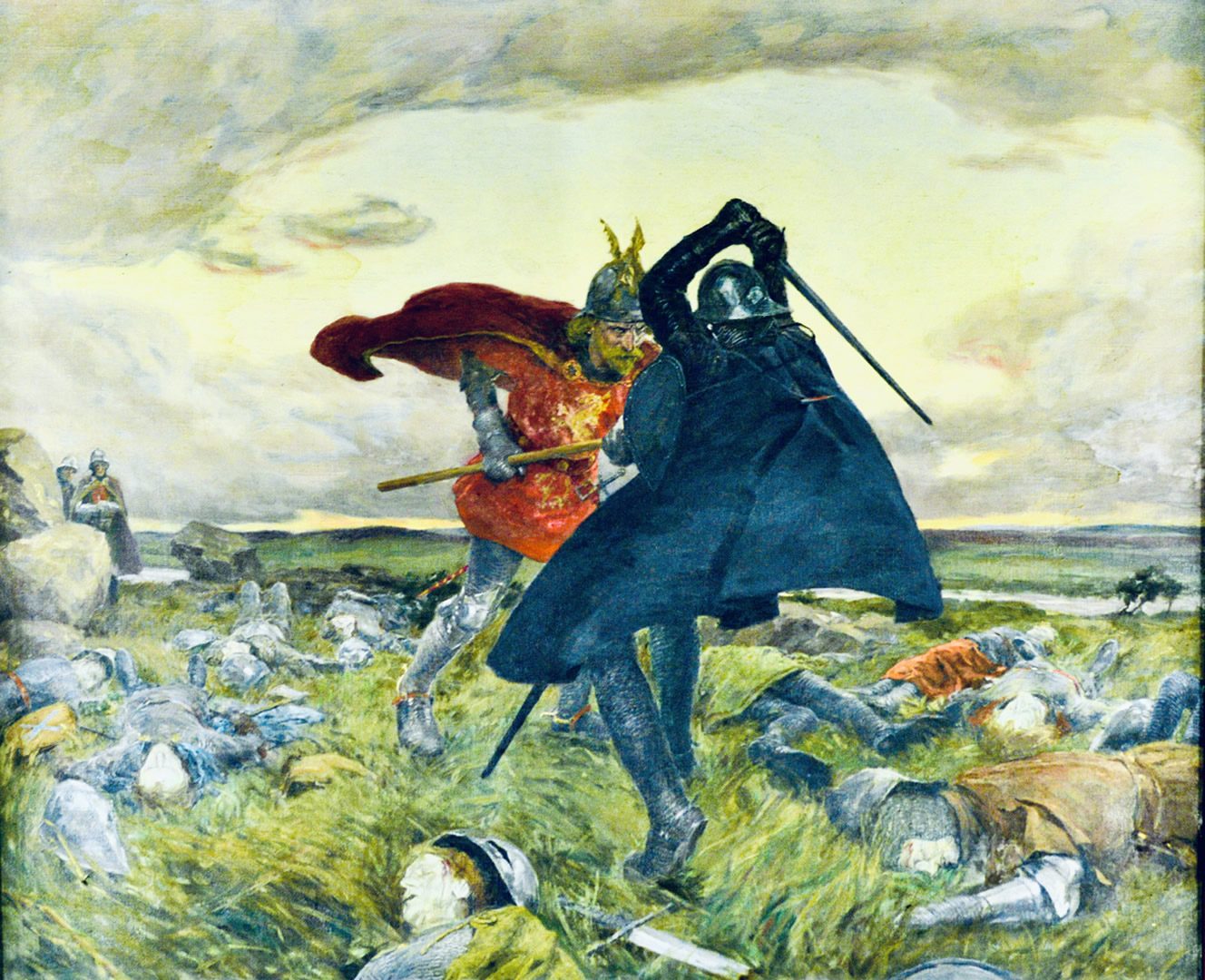
One of the earliest traditions concerning King Arthur connects him to a battle known as the Battle of Camlann. It is mentioned in the Annales Cambriae, a tenth-century Latin chronicle. This is one of the very earliest battles with which Arthur is associated, and many scholars believe that it may well have been a historical event.
At this battle, according to the entry in the Annales Cambriae, Arthur ‘fell’. This is almost always interpreted to mean that he died. This brief entry does not say who he was fighting. However, later traditions about this battle make it clear that it was not primarily a battle against the Anglo-Saxons.
Rather, it was a civil war among Britons. The enemy were Arthur’s fellow Brythonic kings. The Picts are specifically described as being involved in this event, according to Geoffrey of Monmouth’s Historia Regum Britanniae, written in c. 1137.
Artuir’s Final Battle
How does this relate to the available records concerning Artuir mac Aedan? Historically, he is recorded in the Irish annals as dying in a battle which is dated to the 590s. It appears to have occurred in about 595, although the exact date is not consistent in the available records.
The battle in question was fought against the Miathi. This was a tribe which lived in southern Scotland. Arguably, this matches the opponents of Arthur at the Battle of Camlann.
Just like King Arthur of legend, Artuir mac Aedan died in battle fighting against his fellow countrymen of the north of Britain. For this reason, proponents of this theory argue that the Battle of Camlann can be identified as this historical battle between Dal Riada and the Miathi.
Objections to This Theory
Although superficially attractive, this theory is not without its serious problems. Let us now consider the aforementioned pieces of evidence used in support of the identification of King Arthur as Artuir mac Aedan and see why they do not really stand up to scrutiny.
The Stone Without a Sword
As we saw earlier, this theory argues that Artuir mac Aedan was clearly King Arthur because his accession ceremony involved a sword and a stone. In reality, this is not the case.
Contrary to what is sometimes claimed, there is no evidence that any sword was ever involved in the accession ceremony of the kings of Dal Riada. In fact, all it involved was the new king stepping or kneeling on the Stone of Scone.
There is no evidence that the king had to hold a sword while doing this, or that a sword in any way had anything to do with this ceremony. Therefore, this seriously weakens the supposed link between this historical ceremony and the legend of the sword in the stone.
Another key problem with this argument is the simple fact that Artuir was never a king. In fact, that is a key part of the few records that we have about him. He died before the death of his father, meaning that Aedan ended up being succeeded by his youngest son, Eochaid Buide. Since Artuir was never king, he could never had gone through this accession ceremony.
Therefore, this piece of evidence that supposedly connects Artuir to King Arthur is not viable.
Merlin of the South
The argument regarding Merlin also falls down when the evidence is examined more closely. While it is true that Merlin was firmly associated with the region near Dal Riada, this is not the whole story.
Geoffrey of Monmouth’s account of Merlin’s life, found in Vita Merlini, explicitly describes how Merlin entered into association with those northern kings and prince after his service to Arthur, not before. It is not the case that he was active in the north, fled into the Caledonian Forest as a mad man, and then became Arthur’s wizard.
No, on the contrary, Geoffrey’s account presents Merlin’s service to Arthur as being the first stage of his career, before those events in the north. In fact, when Merlin is introduced, he is specifically called a king of South Wales.
According to Peter Bartrum’s A Welsh Classical Dictionary, Welsh tradition is consistent with this, associating the sixth-century Myrddin with Dyfed, one of the main regions of South Wales. Thus, the evidence as we actually have it indicates that Myrddin’s connection with Arthur would place Arthur in South Wales, not southern Scotland.
Muirgein, the Daughter of a Different Aedan
What about the evidence giving Artuir mac Aedan a sister named Muirgein, like Arthur’s sister Morgan? As we saw before, this comes from a medieval document (the ninth-century Martyrology of Óengus) which records Muirgein as a daughter of Aedan.
However, the problem is that this record does not state who this Aedan was. It is true that Murigein’s birthplace is given as Belach Gabrain, seemingly a reference to the name of Artuir’s grandfather, but there is other evidence which refutes this apparent connection.
The document known as the Tripart Life of St Patrick refers to a place called Bealach-Gabhran, obviously the same as Belach Gabrain, and it explicitly places it in Ireland. A number of authors have identified it with the modern Gowran Pass.
Interestingly, that same document also refers to a certain Aedan mac Colman, active in Ireland. In view of this evidence, it seems far more likely that Muirgein was the daughter of this Aedan, not Aedan the father of Artuir.
Other Associates
What about the other associates of Arthur who were active near Dal Riada? Even though Myrddin was evidently originally a southern figure, it is beyond question that many of the characters in the legends definitely were from the north of Britain, such as Urien, Owain, Peredur, and Lot.
It is true that these figures were active near Dal Riada and may well have been contemporaries with Artuir mac Aedan. However, this does not necessarily support Artuir being King Arthur.
After all, there is clear evidence that many of those northern princes were from dynasties which intermarried with southern dynasties. Take, for example, Urien and Lot. They were both sons of Cynfarch. According to a number of medieval genealogical records, Cynfarch married a daughter of Brychan, a king from southeast Wales.
Given the strong connections between the dynasties of South Wales (the traditional location of King Arthur) and the northern dynasties, attested across numerous records, the argument that these northern allies must have been associated with Artuir of Dal Riada is a very weak argument.
The Mystery of Camlann
What about the argument that the Battle of Camlann can be identified with the battle against the Miathi which resulted in Artuir’s death?
The problem with this argument is simply that civil wars were very common in Scotland in this era. In fact, almost every single battle recorded in the Irish annals for the sixth century were wars against other Celtic peoples, either groups of Britons, Picts, or Scots, any one of which could be argued as a match for the Battle of Camlann. There is nothing about the Miathi in particular which matches the enemy at the legendary battle of Camlann.
Furthermore, there is no evidence that this battle took place at a location which was known as Camlann. The same logic that associates this battle with Arthur’s battle of Camlann could be applied with equal validity to almost any other sixth-century battle in the Irish annals.
A Lack of Fame
Any potential candidate for King Arthur must be a renowned figure, in view of Arthur’s reputation in the legends. This reputation is seen as far back as the late-sixth, early-seventh century poem Y Gododdin. Does this fit Artuir mac Aedan?
The simple fact is that it does not. One notable demonstration of this is how Artuir appears in the Irish annals. In the Annals of Ulster, in the entry concerning the battle against the Miathi, Artuir appears along with some of his brothers as dying at this battle.
However, it is significant to note that Artuir is not listed first. In fact, he is actually listed last. If Artuir was a renowned warrior, why would he be listed last, as if he had the least prestige? Perhaps one could argue that this was simply because he was the youngest.
If he was the youngest, then this brings with it its own issues regarding this Arthurian theory, since it would be illogical for the youngest son to be the main commander leading his father’s armies. However, there is an even bigger issue. In the entry for the battle against the Miathi found in the Annals of Tigernach, not all of Aedan’s sons are mentioned. Notably, Artuir is excluded.
Now, why would Artuir be excluded from this entry if he was the famed King Arthur? Surely, by all logic, this indicates that he was a minor prince whose involvement in this battle was not important or notable enough to include. This surely indicates that Artuir mac Aedan cannot have been the King Arthur of legend.
Chronological Issues
Perhaps the biggest objection of all to this theory is the fact that it does not fit the weight of chronological information about King Arthur as found in the legends. For example, Arthur’s greatest victory was said to have been at Badon, in which he won a decisive victory against the Anglo-Saxons.
This battle is mentioned by Gildas, who places it forty-three years before the time in which he was writing. Although we cannot be sure when exactly Gildas wrote, there is universal agreement that it was not later than the sixth century.
Even if we assume that GIldas was writing nearly right at the end of the sixth century, for which there is some evidence, this would still only place the Battle of Badon near the time of Artuir’s birth. For this reason, it is impossible for Artuir to have achieved the greatest victory assigned to Arthur in the legends.
Furthermore, this would contradict the information found in the Lives of the Saints, the biographies of various religious figures active in the Arthurian period. In these records, Arthur is clearly placed in the early- and mid-sixth century, but never as late as Artuir.
For example, the Life of St Illtud explains that Illtud spent some time at Arthur’s court. This is placed right at the start of the document, very early in Illtud’s career. He then goes on to set up a school and instruct numerous people in the mid-sixth century. He is shown as interacting with Samson before the latter went to Brittany, where he helped overthrow Count Conomor in 560. All of this is set after Illtud spent time in Arthur’s service.
Therefore, the chronological information about Arthur from almost all the records would have to be rejected for this theory to be maintained. Rather than this theory about Artuir being built upon the evidence from the Arthurian records, it attempts to force the evidence to fit the theory by rejecting as inaccurate anything that does not fit.
Conclusion
In conclusion, the idea that Artuir mac Aedan was the historical King Arthur is favoured by some principally because he was a historical prince, active as a warrior in sixth century Britain, with a name that matches the name of Arthur. Supporting evidence for this theory primarily comes in the form of associates connected to Arthur who can supposedly be historically connected to Artuir.
In reality, most of the evidence used in support of this theory is either weak or false, such as the supposed connection between Myrddin and the north while he was in Arthur’s service. Furthermore, there is clear evidence that Artuir was not a renowned warrior. Most significantly, the chronological information about King Arthur in the legends is completely incompatible with Artuir mac Aedan.
Sources
Ardrey, Adam, Finding Arthur: The True Origins of the Once and Future King, 2014
Bartrum, Peter, A Welsh Classical Dictionary, 1993
Howells, Caleb, King Arthur: The Man Who Conquered Europe, 2019
https://mythbank.com/was-the-sword-in-the-stone-real/
https://clanarthur.org/history/arthur-the-chieftain/artur-and-aedan/