Was Aedan mac Gabran the Real Uther Pendragon?

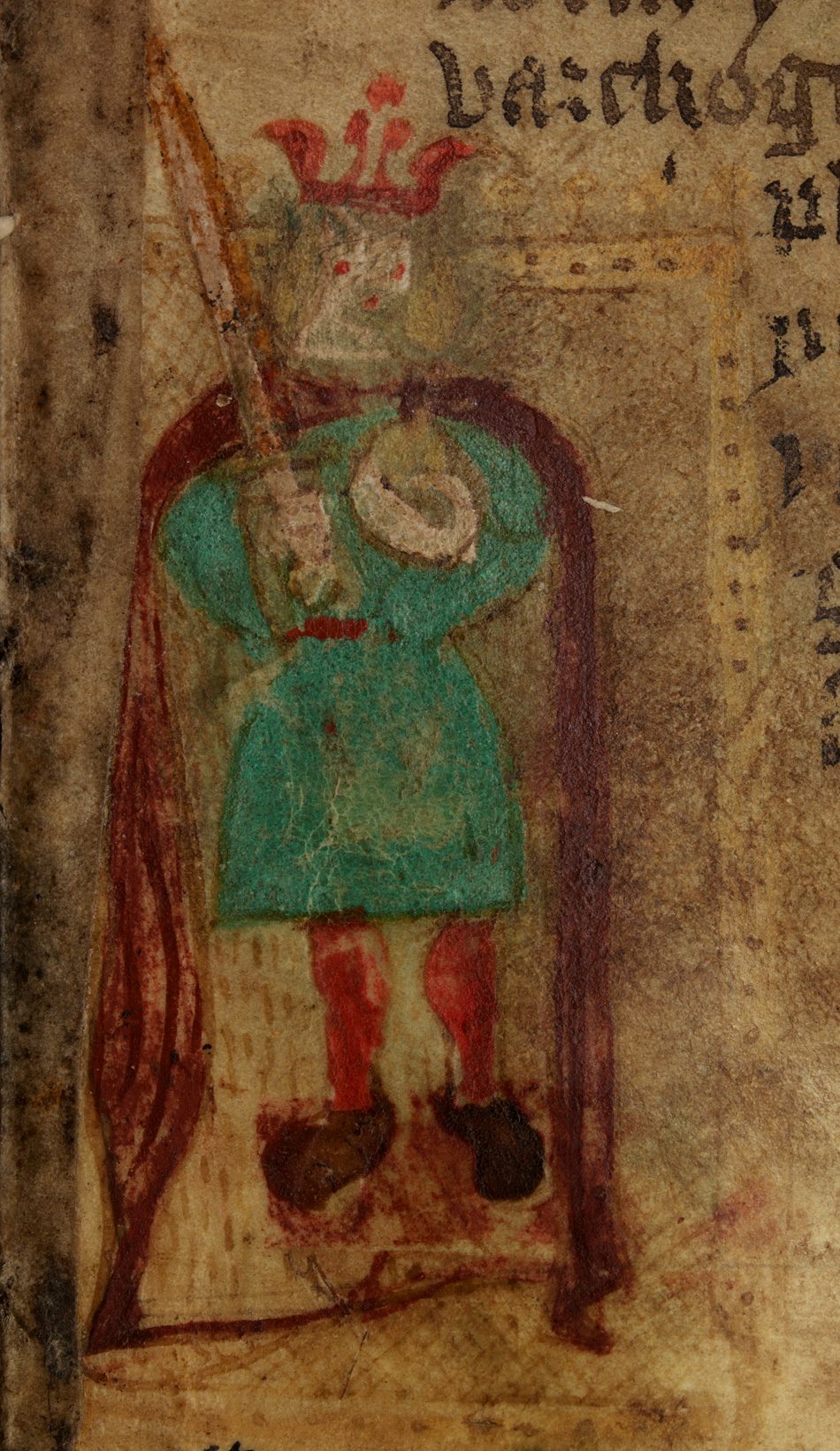
There are many theories regarding the true identity of Uther Pendragon, the legendary father of King Arthur. Naturally, these theories are often extensions of theories about the historical King Arthur himself. One theory identifies King Arthur with Artuir mac Aedan, an Irish prince of Dal Riada. Hence, this would mean that Artuir’s father, Aedan mac Gabran, should be identified with Uther Pendragon. Is there any evidence for this connection?
Who Was Aedan mac Gabran?
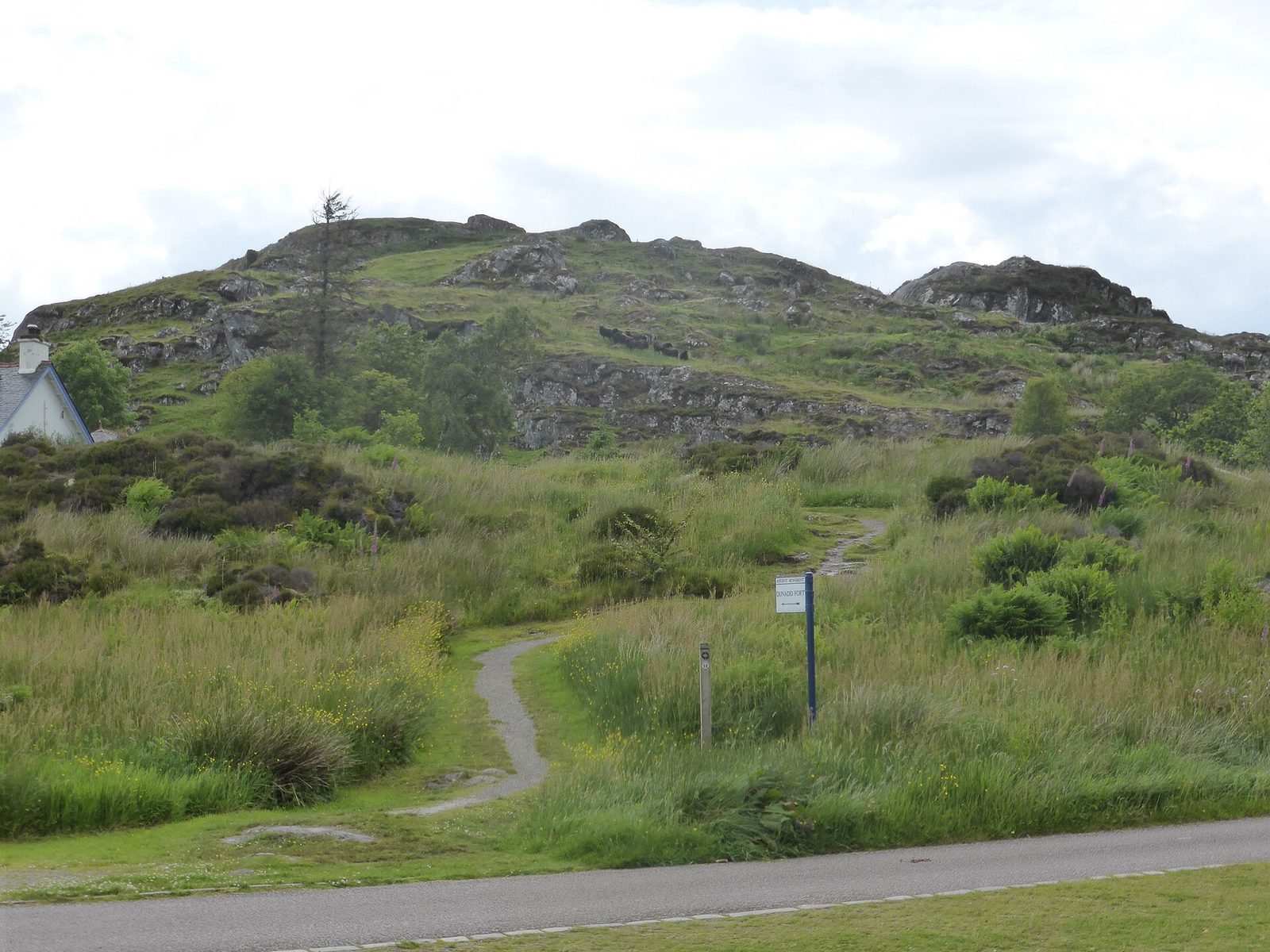
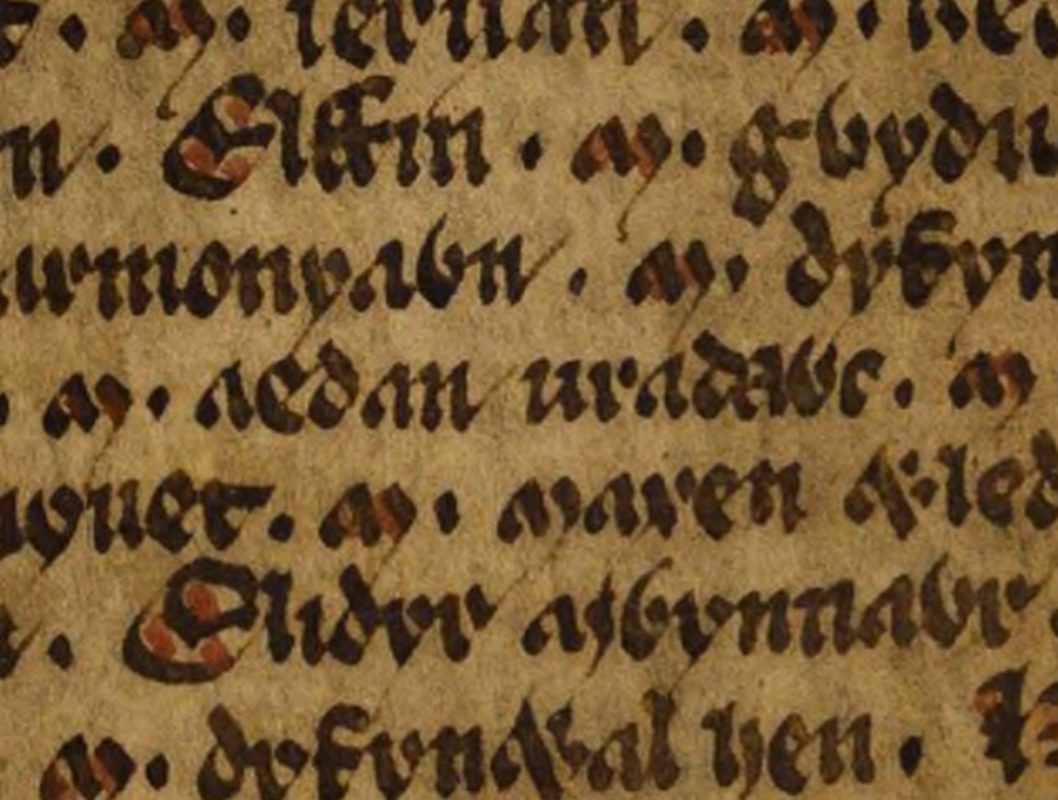
Aedan mac Gabran was a king of Dal Riada, an Irish kingdom encompassing much of western Scotland which had been founded in the late fifth century. He was a powerful king, and he appears in Welsh documents as well as Irish ones.
Dal Riada was one of the most powerful kingdoms of sixth century Britain. Appropriately, then, Aedan is recorded as engaging in many battles against his neighbours. For example, he fought against other Irish tribes. He fought on the Isle of Man, in Scotland, and even as far north as the Orkney Islands.
Aedan is also known to have fought against the Saxons. In fact, he is said to have led an enormous army against King Athelfrith. It was at this battle that Aedan was defeated and killed.
Evidence That Aedan mac Gabran Was the Real Uther Pendragon
What is the basis for the idea that Aedan mac Gabran was the historical figure behind the legends of Uther Pendragon? The fundamental basis is the fact that he had a son named Arthur, or Artuir. This Artuir of Dal Riada is one of the few historical figures known to have been named Arthur and to have lived in the sixth century.
Due to this basic similarity to the King Arthur of legend, some researchers have argued that Artuir mac Aedan was the historical figure behind the legends. Working from this conclusion, the next obvious conclusion is that Artuir’s father, Aedan, was the same as King Arthur’s father, Uther Pendragon.
However, aside from this basic logic, are there any more specific pieces of evidence that connect Aedan to Uther?
The Name
Firstly, it is worth addressing one obvious objection to this identification. How could Aedan possibly be Uther when their names are so dissimilar?
There are at least three different ways of resolving this apparent issue.
Uther as a Title
The first is to dismiss ‘Uther’ as a mere title. After all, ‘Pendragon’ is explicitly a title. It means ‘Chief Warrior’. Therefore, it is not unreasonable to suppose that ‘Uther’ is also part of the title.
This possibility is supported by the fact that the supposed name ‘Uthyr’, or ‘Uthr’, is identical to the Welsh word ‘uthr’. This word meant ‘fearsome’. This works very well as part of a title which would mean, in its entirety, ‘Fearsome Chief Warrior’.
As well as making logical sense, there are three piece of evidence that actively support the conclusion that this is the case.
Pa Gur
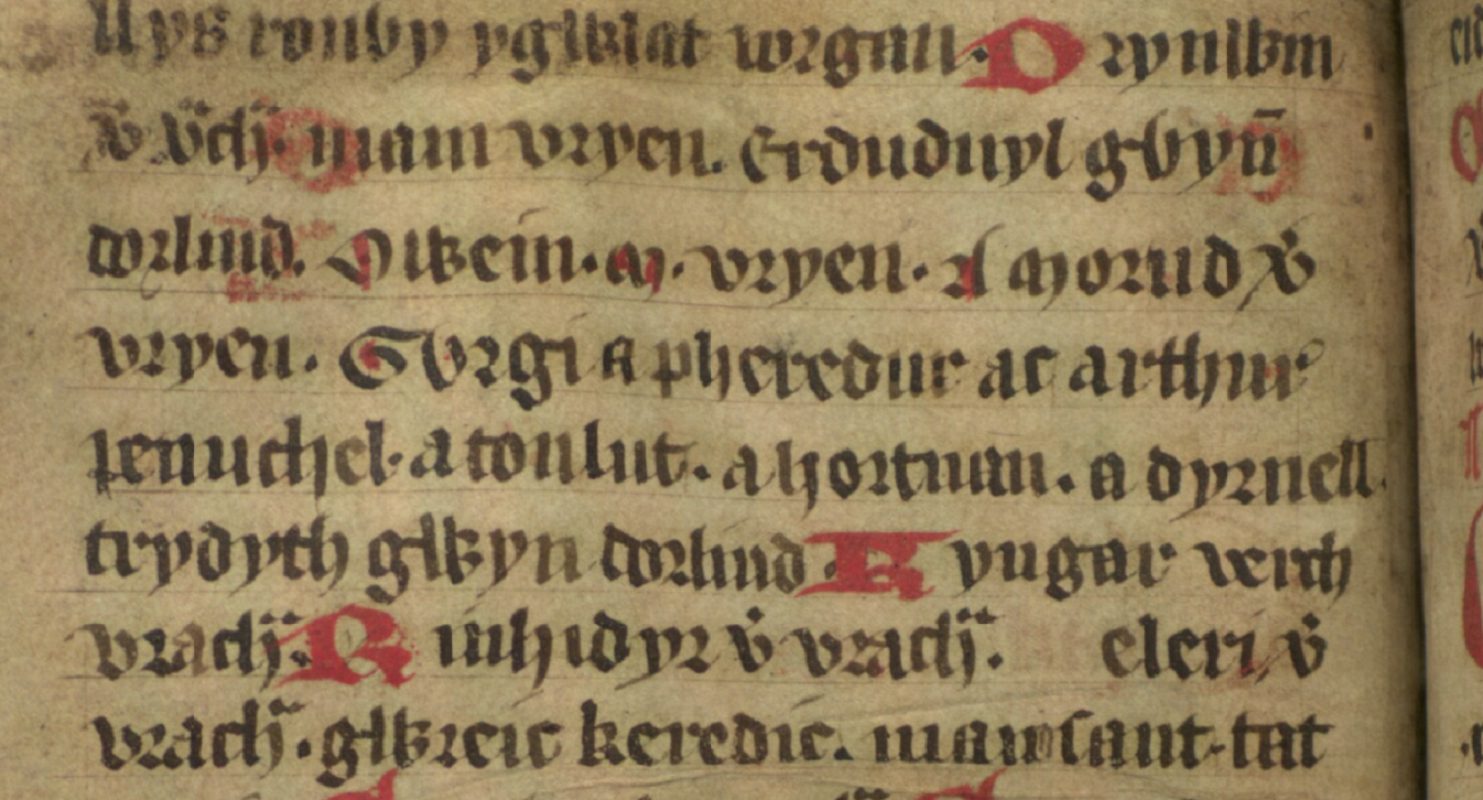
One piece of evidence comes from Pa Gur, an early Welsh Arthurian poem. In this poem, one of Arthur’s servants is described as being the servant of Uthyr Pendragon. This strongly suggests that ‘Uthyr Pendragon’ is a title for Arthur.
Of course, if we accept that this is the case, then it is obvious that it was a title that was also used by Arthur’s father.
Marwnat Uthyr Pen
The other two pieces of evidence come from a Welsh poem entitled Marwnat Uthyr Pen. This is widely recognised as a reference to Uther Pendragon. Yet, notably, the title does not include the full ‘Uthyr Pendragon’, but just ‘Uthyr Pen’.
If we accept ‘Uthyr Pendragon’ as a title meaning ‘Fearsome Chief Warrior’, then shortening it to ‘Uthyr Pen’ would result in the meaning of ‘Fearsome Chief’, with the ‘dragon’, or ‘warrior’, implied. This makes sense, whereas shortening ‘Pendragon’ into ‘Pen’ does not make much sense if ‘Uthyr’ is a personal name.
Furthermore, in the text of the poem itself, it strongly implies that the subject of the poem is actually King Arthur. This is shown by the parallelism in lines thirteen and fourteen.
Hence, this supports the conclusion that ‘Uthyr’ was also part of the title, the title being one that was used by Arthur (evidently in addition to his father).
What This Means for Aedan
If the Welsh ‘Uthyr Pendragon’ was simply a title, then there is no objection to identifying him as someone who has a dissimilar name, such as Aedan mac Gabran.
Uther as a Corruption
Another possibility might be argued by those who reject the evidence that ‘Uthyr’ was part of the king’s title. This point of view presents the argument that ‘Uthyr’ is simply a corruption of the name ‘Aedan’. Is this viewpoint reasonable?
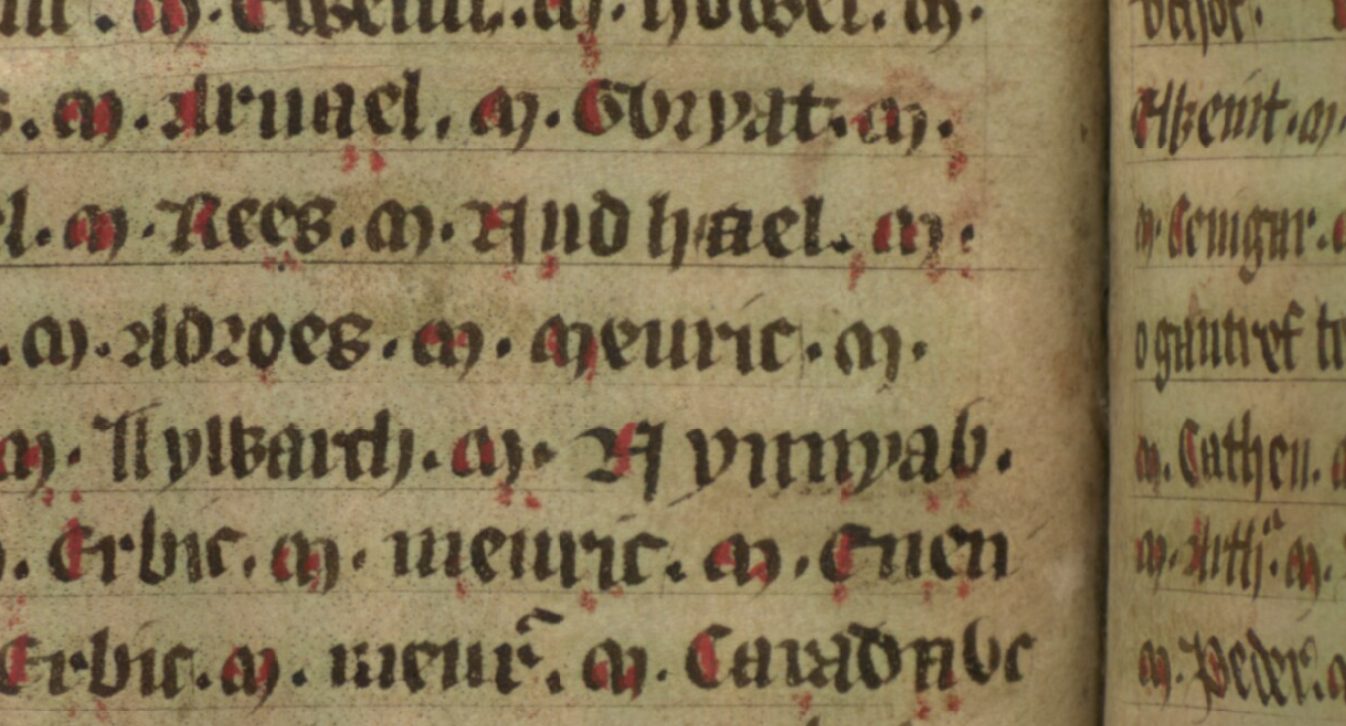
While the two names might appear completely dissimilar at first, there are two important facts to consider. Firstly, it was not uncommon for the letter ‘d’ to be exchanged for ‘th’. For example, a king recorded in one document as ‘Eleuther’ appears in another document as ‘Elidir’.
Furthermore, another attested corruption is the distortion of an ‘n’ into an ‘r’. This is seen, for instance, in the case of a woman named Arddun. Coincidentally, she was the daughter of the aforementioned Eleuther. In at least one document, her name was corrupted into ‘Arthur’. Incidentally, this also demonstrates the change from ‘d’ into ‘th’.
What This Means for Aedan
When we put those two corruptions together, we get ‘Aethar’. This is relatively similar to ‘Uther’.
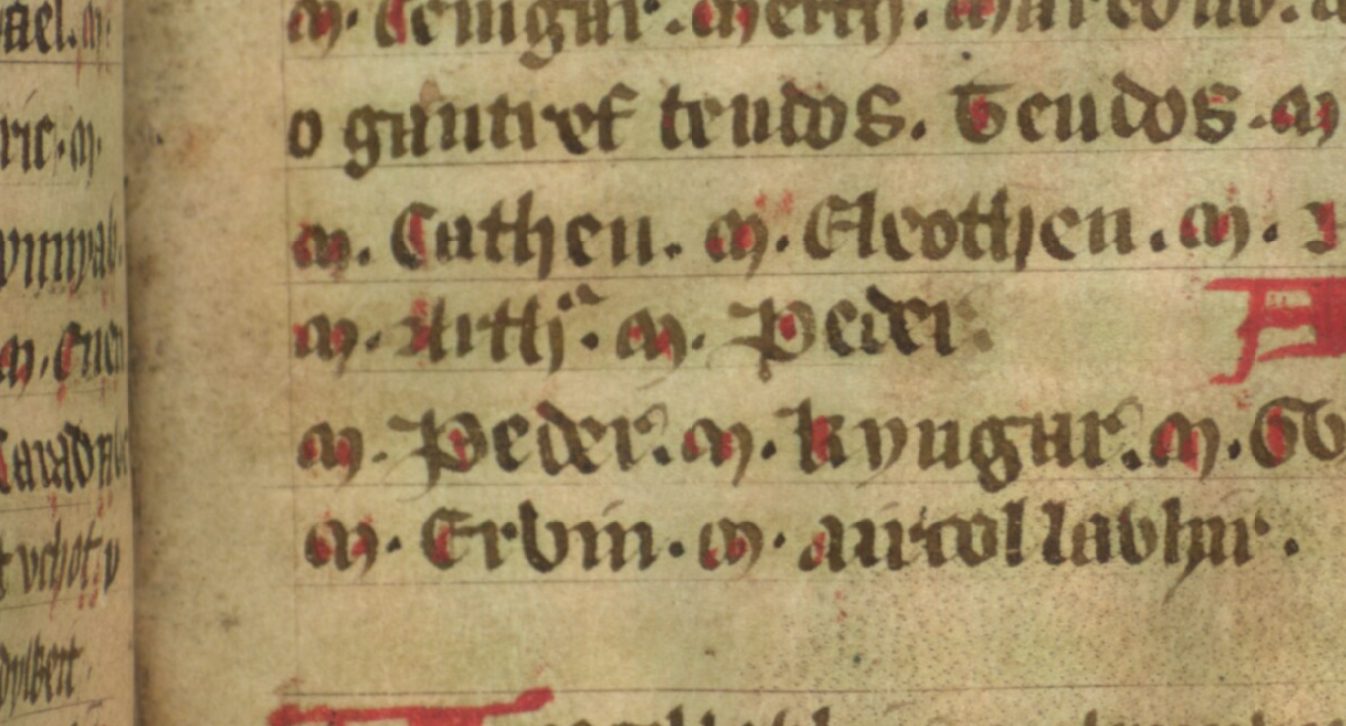
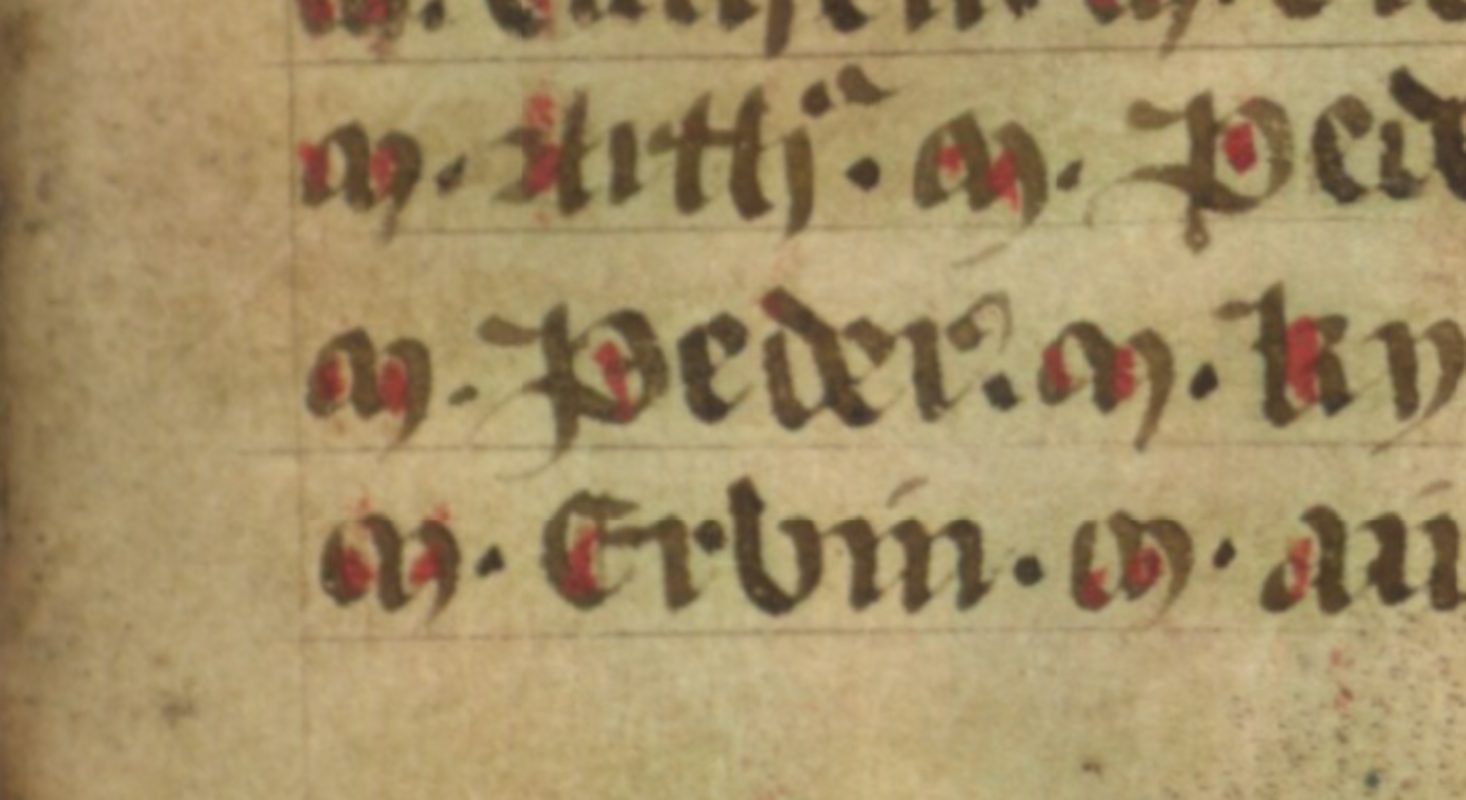
It is also worth considering how vowels often change in the medieval Welsh documents. For example, in the case of Pedr of Dyfed (another figure argued to have been the historical Uther Pendragon), his name appears as ‘Peder’, ‘Petuir’, and ‘Retheoir’.
The ending appears variously as ‘er’, ‘uir’, and ‘eoir’. While none of these are exactly equivalent to the ending of our hypothetical ‘Aethar’, they demonstrate the unstable nature of vowels in medieval records.
Uther Pendragon as a Translation
A third explanation that could be put forward is that ‘Uther Pendragon’ is a type of expanded translation of ‘Aedan’. This is based on the fact that ‘Aedan’ comes from the Irish word ‘aed’, meaning ‘fire’.
If this was interpreted as meaning a fire in the sky, it may be that his name was associated with a comet. This would tie in to the fact that Geoffrey directly associates Uther with a comet. This comet was said to have taken the form of a dragon.
In fact, it appears that there are many instances of comets being described as being like dragons in the sky. With this in mind, perhaps the term ‘Uthyr Pendragon’ is just a description of a comet, with the literal meaning of ‘Terrible Dragon Head’.
What This Means for Aedan
Put simply, this means that Aedan came to be known as the Terrible Dragon Head as an expansion of his name’s etymology, ‘fire’. The Welsh translation of this was ‘Uthyr Pendragon’.
Powerful Dynasty
Uther Pendragon was the High King of Britain before King Arthur. As such, he obviously must have been a powerful monarch. In line with this, the legends describe him as engaging in many battles all over Britain and even in Ireland.
Any candidate for the historical Uther Pendragon must, likewise, have been a powerful king. Is there any evidence that Aedan fits this criterion?
As mentioned earlier, Dal Riada was one of the most powerful kingdoms in Britain in the sixth century. It was a large kingdom and fought against some of the other most prominent kingdoms of that period.
Aedan in particular is described as fighting battles against neighbouring tribes and kingdoms, even quite some distance away from his own kingdom. The fact that he was able to extend his power far away from his own territory shows that he was powerful.
Known to the Welsh
A similar point is the fact that Aedan was reasonably well known to the Welsh. He appears in several medieval Welsh genealogical records, as well as the Welsh Triads and even the Annales Cambriae. The fact that a king from a kingdom so far to the north was well known to the Welsh shows that he was powerful and influential.
This also means that it is reasonable to conclude that he could have become part of medieval Welsh legends. This would allow him to be identifiable as Uther Pendragon.
Daughter Called Muirgein
Another piece of evidence is the fact that Aedan is allegedly recorded as having a daughter named Muirgein. This can be seen as an alternative form of the female name ‘Morgan’. Since this was the name of King Arthur’s half-sister in the Arthurian legends, this has been used to support the identification of Aedan with Arthur’s father, Uther Pendragon.
Expedition to Ireland
Aside from these basic facts, we can also connect certain specific events in his career with specific events from the legendary career of Uther Pendragon as found in Geoffrey of Monmouth’s Historia Regum Britanniae, written in c. 1137.
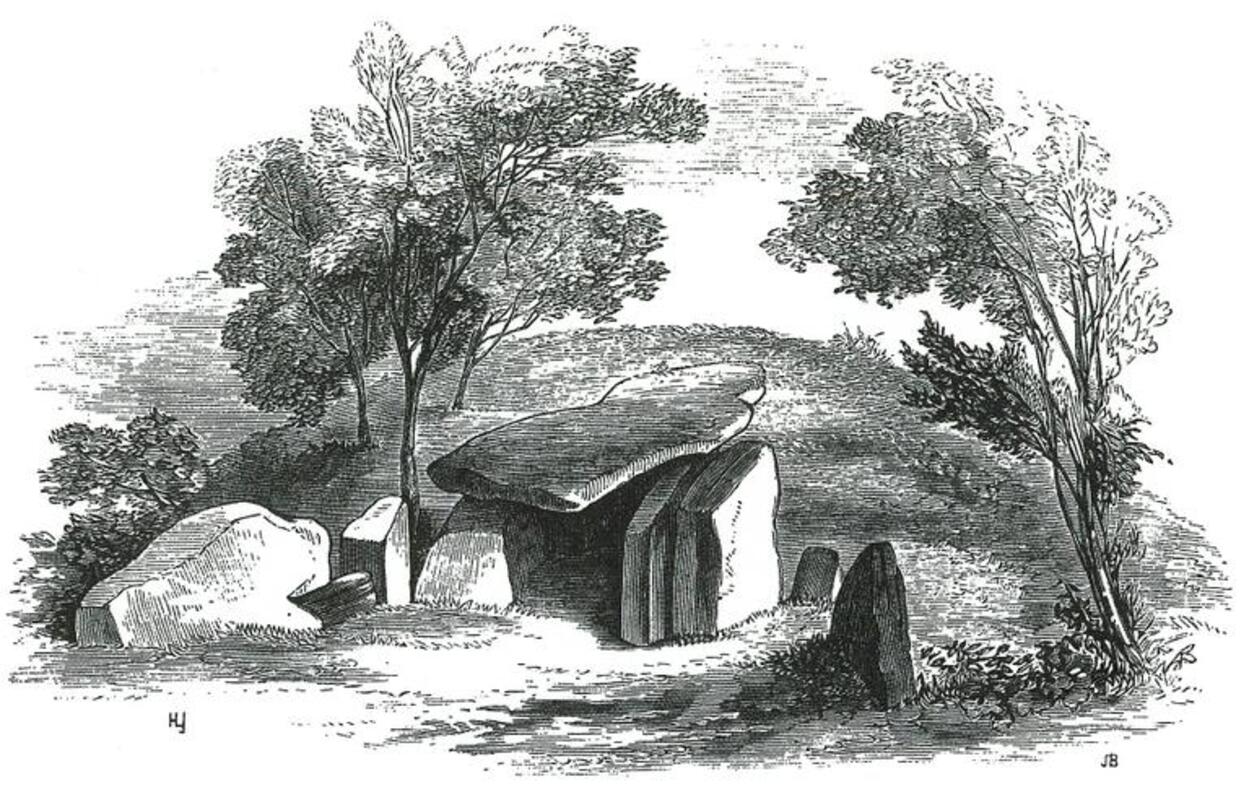
One of the earliest events in the career of Uther was his expedition to Ireland. He is said to have been sent there by his brother, Ambrosius, to obtain the Giants’ Dance. This was a large circular monument composed of upright stones. It is later implied to be Stonehenge. While there, Uther fought a war against an Irish king named Gillomanius and defeated him.
Aedan, for his part, is known to have fought against his fellow Irish. For example, he drove out the rulers of the Isle of Man, which was the territory of a kingdom based in Ireland itself. This occurred in c. 583.
While this is not exactly the same as Geoffrey’s description of Uther engaging in a war in Ireland, it is similar, in that it was the territory of that Irish kingdom.
Comet at Accession
A particularly notable feature of Geoffrey’s account of Uther is the fact that a comet was said to have appeared in the sky at about the time that Uther was appointed king upon the death of his brother Ambrosius.
The comet is described as projecting the form of a dragon, and this is said to be why Uther receives the epithet ‘Pendragon’.
Based on the Irish annals, we know that Aedan became king in 574. For that reason, it is very interesting to observe that a comet is recorded as appearing in the sky in the year 574. This appears to provide a strong correlation between Geoffrey’s description of Uther Pendragon and the historical events involving Aedan’s reign.
Campaign in the North
Another feature of Uther’s career in Geoffrey of Monmouth’s account is the fact that he is said to have campaigned in the north of Britain. The Saxon leaders Octa and Eosa are described by Geoffrey as ravaging the ‘northern provinces’ of Britain, from York to Albania (Scotland).
Uther is described as leading an army to the north. He attacked the Saxons, who were besieging York, and eventually defeated them after some difficulties. Next, he travelled further north and subdued the Picts in that region.
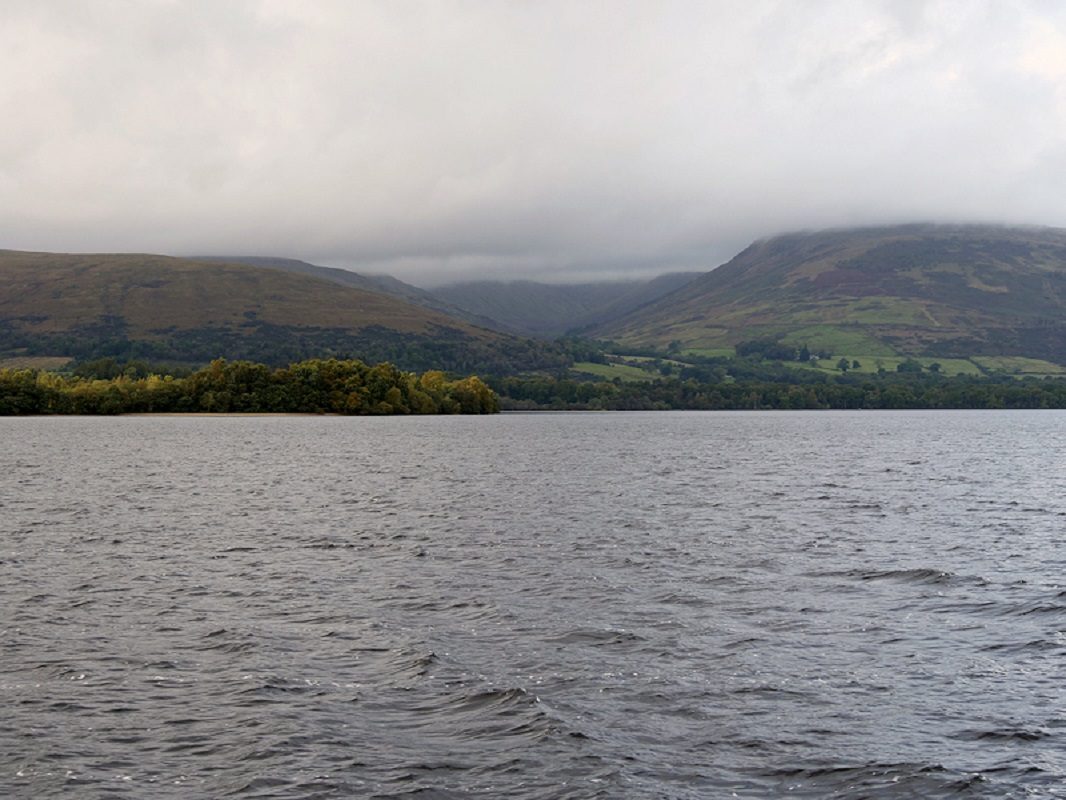
Aedan, for his part, is also known to have engaged in battles in the north of Britain. For example, there is a record that Aedan raided the Orkney Islands in c. 580. Furthermore, he engaged in battle in the land of the Picts somewhere in central Scotland in the 590s. His Battle of Leithreid may have occurred somewhere in the vicinity of Loch Lomond.
On this basis, it appears that Aedan’s activities are broadly similar to Uther’s.
Killed in Battle Against the Saxons
The next major part of Uther’s career which Aedan can be shown to match is the fact that he was killed in battle against the Anglo-Saxons.
Geoffrey explains that Uther had to retire as king due to his poor health. He left the kingdom in the hands of his son in law, Lot, who continued fighting the Saxons. However, since Lot was not as effective a warrior as Uther, he struggled in these battles. Therefore, Uther was compelled to return once more.
In the ensuing battle, which was a siege of St Albans, Uther led the Britons to victory. However, his condition deteriorated after the battle, and then several days later, he died after drinking from a spring.
Arguably, this is similar to what happened with Aedan. He died in battle against the Saxons at an event known as the Battle of Degsastan in approximately 603.
Objections to This Theory
Although this theory certainly has some merit to it, there are many significant issues with this identification. The main connections that do stand up to scrutiny are the following: Aedan did indeed have a son named Arthur, his dynasty truly was one of the most powerful of the sixth century, and he really was known to the medieval Welsh.
However, aside from him having a son named Arthur, these are very generic connections (especially the last one). Furthermore, in essentially every other way, the connections are either not as strong as they first appear or there are facts which actively argue against identifying Aedan with Uther.
No Daughter Named Muirgein
Firstly, let us consider the claim that Aedan had a daughter named Muirgein, thus matching King Arthur’s legendary half-sister named Morgan.
For one thing, even if this were true, it would not be a perfect match. The reason is that Morgan was supposed to have been Arthur’s half-sister on his mother’s side, not his father’s. Hence, Morgan was not supposed to have been Uther’s daughter.
Of course, one could claim that she was still viewed as Uther’s adopted daughter. Nevertheless, this connection is not as strong as it first appears.
Not a Daughter of Aedan mac Gabran
However, an even bigger issue emerges when we examine the evidence concerning Muirgein herself. The only record in which she appears is the Martyrology of Óengus, a document written in the ninth century. It is this document that contains the claim that Aedan had a daughter named Muirgein.
The big problem with this, though, is the fact that everything indicates that the document is not referring to Aedan mac Gabran. It specifically gives the birthplace of Muirgein as Belach Gabrain. Undoubtedly, this should be understood as the same place as Bealach-Gabhran, a location mentioned in the Tripart Life of St Patrick.
In this latter document, Bealach-Gabhran is explicitly placed in Ireland. It is not a location in Scotland. Furthermore, the same Tripart Life of St Patrick mentions a certain Aedan mac Colman, whom the document places in Ireland. On this basis, it would seem most likely that Aedan the father of Muirgein should be identified with this Aedan mac Colman, not Aedan mac Gabran.
No Expedition to Ireland
What about Uther’s legendary expedition to Ireland? As we saw, that could arguably be connected to Aedan’s historical attack against the Isle of Man, which was controlled by a king of Ireland.
There are two problems with this. The first is the obvious fact that the Isle of Man is not the same as Ireland itself, even if it was part of the territory of an Irish kingdom. Furthermore, there is debate about whether it was actually the Isle of Man that Aedan attacked.
The Irish annals use the place name ‘Manonn’. This could mean the Isle of Man, but it could also refer to a region in Scotland. Therefore, although a good case can and has been made that Aedan fought on the Isle of Man, it is by no means certain.
Furthermore, as we have seen, it would not be especially significant even if we could be certain that the Isle of Man was the intended location.
Unlikely Comet Connection
What about the striking coincidence that a comet appeared in the sky in the very same year as Aedan’s accession, just like in the case of Uther Pendragon? While it is true that a comet did appear in 574, the record which mentions it is a Chinese record.
This obviously weakens the connection between Uther’s comet and ‘Aedan’s’ comet. In reality, since it was visible all the way over in China, there is no reason to believe that it would have necessarily been visible all the way over in the British Isles.
In the absence of any record from Europe mentioning the appearance of such a comet in this year, it would seem that it either was not visible in that part of the world, or was not notable enough in Europe to leave an impact.
Different Campaigns in the North
What about the fact that both Uther and Aedan are recorded as campaigning in the north of Britain? One big issue with this supposed connection is the fact that they campaigned in different areas.
Uther, at first, is said to have attacked the Anglo-Saxons at York. Aedan, on the other hand, is not recorded as doing that.

Later, Uther is described as going up to Alclud, which is modern-day Dumbarton Rock near Glasgow. He is then said to have ‘settled the affairs of that province’ and ‘made a progress round all the countries of the Scots’.
Broadly speaking, Dumbarton Rock is not particularly far from Loch Lomond, where Aedan’s Battle of Leithreid may have taken place. However, the key issue is how Uther is described in relation to the countries of the Scots. In this context, given that Uther is placed in Scotland, the countries in question must be the territories of Dal Riada. Geoffrey wrote:
“He also made a progress round all the countries of the Scots, and tamed the fierceness of that rebellious people.”
This conveys the impression that the ‘countries of the Scots’ were subject to Uther by military force, not by hereditary right. This is inconsistent with the fact that Aedan was the king of Dal Riada. Uther is not presented as being a king of the countries of the Scots, but rather, he is presented as subduing them.
Not only is this not consistent with Aedan mac Gabran – it actively argues against Uther being identified as any king of Dal Riada.
Entirely Different Circumstances Surrounding Death
As we noted earlier, Geoffrey describes the fact that Uther is said to have given up the throne in favour of his son-in-law, Lot, after getting near to the end of his life. On the other hand, there is no indication of this in the records about Aedan.
Furthermore, the battle itself is not consistent with what Geoffrey wrote. While the exact location of Degsastan is unknown, Bede appears to place it in the territory of Northumbria. In contrast, Uther’s final battle against the Anglo-Saxons was said to have occurred at St Albans, far to the south of Northumbrian territory.
Additionally, the Battle of Degsastan was fought against Athelfrith of Northumbria, whereas Geoffrey presents Uther as fighting against Octa of Kent. Of course, one could try to argue that these two kings were both involved in the battle, thus harmonising this apparent conflict.
However, this issue cannot be resolved in this way. In reality, the British and Anglo-Saxons records confirm that Octa and Athelfrith ruled in completely different eras. This leads us to another problem, which we will now examine in detail.
The Chronological Issue
The chronology definitely rules out the idea that Uther was Aedan mac Gabran. There are a variety of chronological markers in Geoffrey’s account of the life of Uther that prevent this identification from being tenable.
Evidence from Ambrosius
For one thing, Geoffrey presents Uther as being the direct successor of Ambrosius. This latter figure was Ambrosius Aurelianus, a historical war leader in the fifth century. Bede, the earliest source to give a date for his campaigns against the Saxons, places them in the reign of Emperor Zeno. That would place them between the 470s and the 490s.
Since Uther was Ambrosius’ successor, he cannot have reigned in the late sixth century. Rather, his rule must be dated to the early sixth century. While it is an interesting coincidence that a comet was recorded as appearing in 574, the same year as Aedan’s accession, another comet was recorded as appearing in c. 499. This fits the chronology of Uther’s life much better.
Evidence from Octa
Additionally, as we have already noted, Geoffrey presents Uther as fighting against Octa of Kent. He was the son or, more likely, the grandson of Hengist. His reign as the king of Kent appears to have begun in approximately 512.
Geoffrey’s account explicitly presents Uther as fighting against this Saxon ruler before he arrived in the southeast, while he was still in the north. The Historia Brittonum directly states that Octa became the king of Kent after coming down from the northern part of Britain.
Hence, Uther’s campaigns in the north should be dated prior to c. 512. The fighting against Octa at the end of Uther’s life obviously cannot have occurred any later than the death of Octa, which was apparently in 534.
When Aedan Lived
The problem with this chronological information from Geoffrey of Monmouth’s account is that the evidence is very clear that Aedan of Dal Riada ruled in the late sixth century. As we saw earlier, his appointment as king occurred in 574. This is clearly stated in the Irish annals. His death, furthermore, was in the early seventh century.
Aedan was clearly not even born before Uther died. Aedan’s northern campaigns took place in the 580s and 590s. Octa was long dead by then. It is also obviously impossible for Aedan to have been the successor of Ambrosius.
Based on this evidence, the chronology definitely rules out identifying Aedan mac Gabran with Uther Pendragon.
Conclusion
In conclusion, Aedan mac Gabran was a powerful king of Dal Riada, a prominent Irish kingdom in western Scotland in the sixth century. The identification of him as Uther Pendragon is fundamentally based on the fact that he was the father of a prince named Artuir, whom some have endeavoured to identify as King Arthur. However, there are also various connections directly between Uther and Aedan that supposedly support this identification.
As we have seen, the identifications are mostly generic, such as Aedan being a powerful king, and sometimes downright inaccurate, such as the claim that Aedan had a daughter named Muirgein who might match Arthur’s half-sister Morgan. Furthermore, the chronological issues involved in this identification make it thoroughly untenable.
Sources
Bartrum, Peter, A Welsh Classical Dictionary, 1993
Bromwich, Rachel, Trioedd Ynys Prydein: The Triads of the Island of Britain, 2014
O Croinin, Daibhi, A New History of Ireland: Prehistorical and Early Ireland, 2005
Coleman, Keith, Aedan of the Gaels: King of the Scots, 2022
Duffy, Sean, Medieval Ireland: An Encyclopedia, 2004
Howells, Caleb, King Arthur: The Man Who Conquered Europe, 2019
https://neverfeltbetter.wordpress.com/2012/01/16/irelands-wars-the-high-point-of-dal-riata/
https://mistshadows.blogspot.com/2018/11/the-transformation-of-uther-pendragon.html
https://mistshadows.blogspot.com/2016/12/old-notes-on-arthur-son-of-bicoir-as.html