Was Eliffer Gosgorddfawr the Real Uther Pendragon?

One of the theories about the historical identity of Uther Pendragon, the legendary father of King Arthur, is that he was actually the historical Arthur’s son. This interesting inversion of the normal relationship is based on the identification of Uther with Eliffer Gosgorddfawr. What do we know about Eliffer, and how does he potentially explain the figure of Uther Pendragon from the Arthurian legends?
Who Was Eliffer?
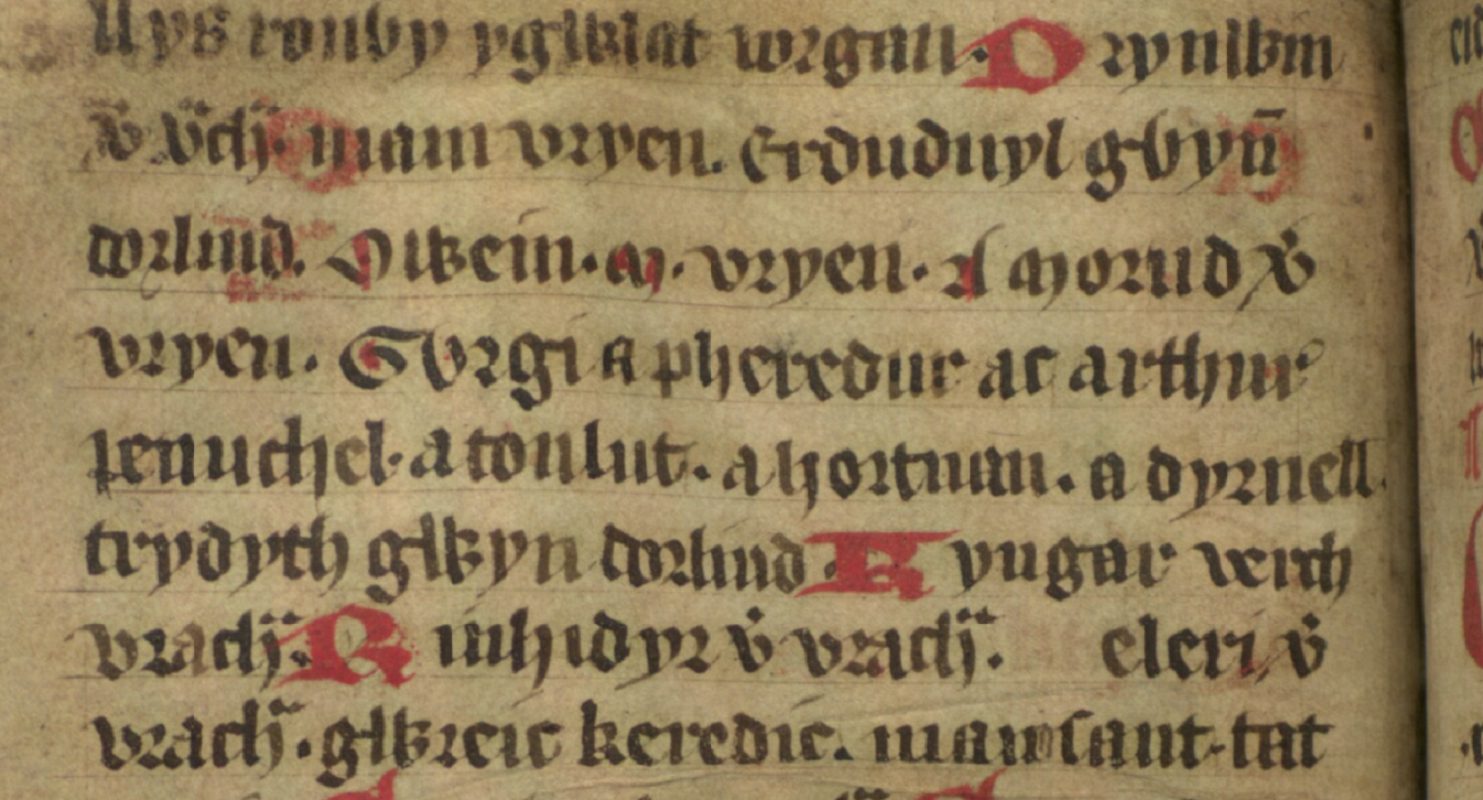
There are no contemporary records that mention Eliffer, but he is often held to be historical. He appears in relatively early records, in contexts which are not overly mythological or legendary.
He is best known as the father of Gwrgi and Peredur. These were two princes from somewhere in the north of modern-day England. Not much is known about them, but they are remembered for dying in battle, as recorded in the Annales Cambriae.
Given that Peredur and Gwrgi are specifically mentioned in the Annales Cambriae, it stands to reason that they were fairly prominent princes. Consequently, it stands to reason that their father, Elidir, was likely quite prominent.
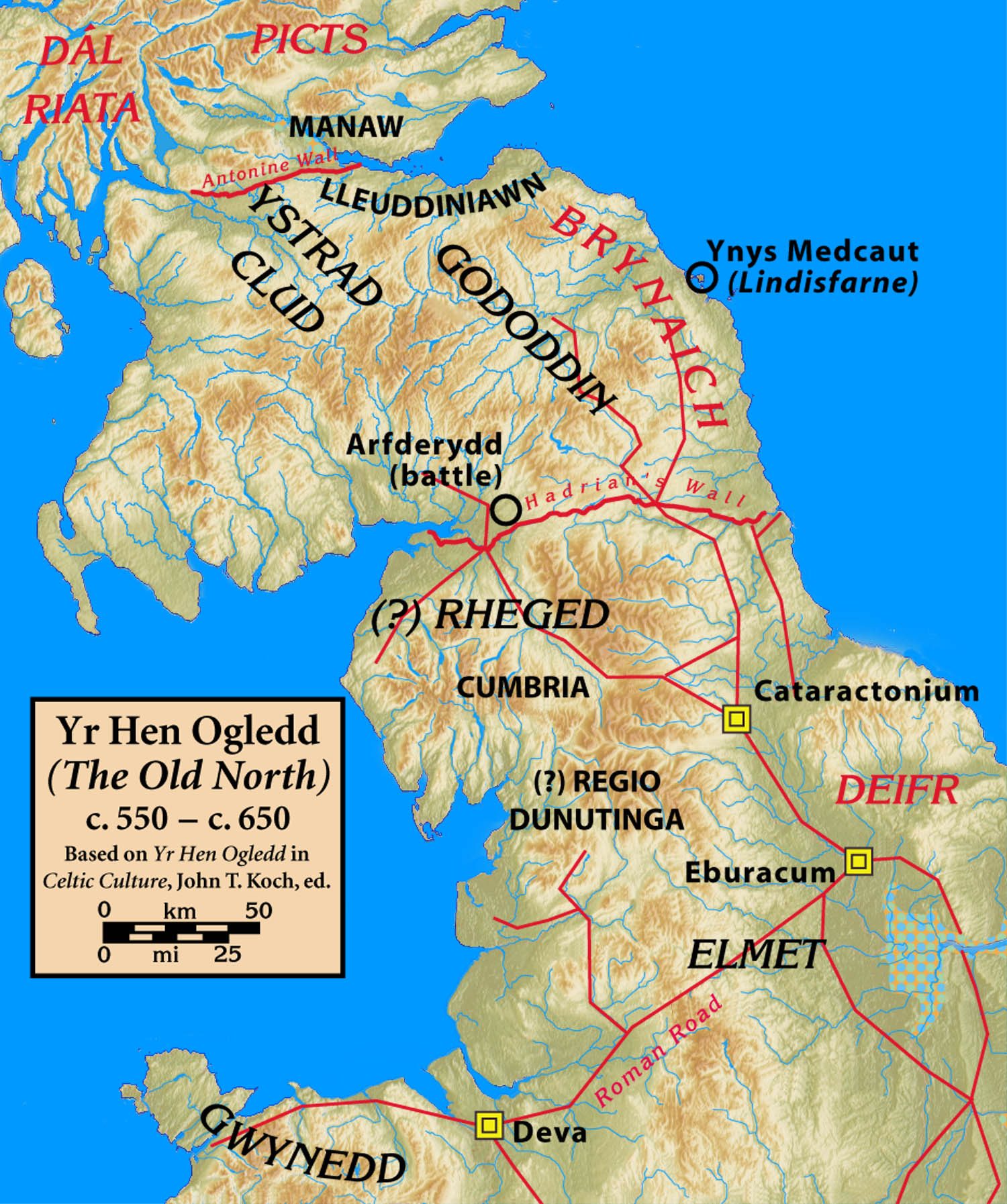
While very few records about Eliffer are actually known, with almost no records explicitly describing his career, the available information allows us to discern that he was likely a prominent king of the kingdom of Elmet, or perhaps a sub kingdom within Elmet. This would place him somewhere in Yorkshire.
Evidence That Eliffer Was the Real Uther Pendragon
The evidence that Eliffer might have been the real Uther Pendragon is rather limited by the fact that we have very little information about him. As already mentioned, there are almost no records explicitly describing his career, meaning that it is difficult to compare his activities to those of Uther’s.
Nevertheless, there are a variety of pieces of information that we can use to make some connections between Eliffer and Uther.
Connection to Arthur
Firstly, let us consider the most obvious issue. Uther Pendragon was supposed to have been the father of King Arthur. Therefore, if Eliffer really was the historical figure behind the legends of Uther, we would expect him to have some connection to Arthur.
As it happens, there are two potential explanations for Uther’s legendary connection to Arthur. One is decidedly more historical than the other.
Son of Arthwys
It would appear that Eliffer was the son of Arthwys of Elmet. This Arthwys is commonly referred to as Arthwys ap Mar, though the genealogical and chronological evidence actually suggests that he was Mar’s great-grandson. Arthwys appears to have actually been the son of Gwrwst Letlum ap Maeswig ap Mar.
Arthwys was likely born in c. 500, meaning that Eliffer’s birth may have been in c. 520 or a little later.
The earliest version of Eliffer’s genealogy makes him the son of ‘Letlum’, meaning Gwrwst Letlum. This would make him the brother of Arthwys rather than his son. However, there are many examples of the medieval genealogies skipping generations. This appears to have been especially common among the descendants of Ceneu (Mar’s father).
A genealogical record known as the Descent of the Men of the North supplies Arthwys between Eliffer and Mar. Given the evidence of regular generation skipping in these genealogies, as well as the fact that Eliffer’s sons died as late as 580, it is preferable to view Arthwys’ presence in this record as historically valid rather than as a mistaken insertion.
Why is it so significant to note that Eliffer was the son of Arthwys? The reason is that many researchers identify Arthwys as the historical figure behind the legends of King Arthur.
The first obvious connection is that their names are quite similar. The spelling ‘Arthwys’ is not too dissimilar from some of the attested spellings of King Arthur’s name, such as ‘Arthurus’, ‘Arturis’, and ‘Artus’. Another possibility is that it is a corruption of ‘Artuir’, the Irish form of ‘Arthur’, with the ‘r’ having been corrupted into an ‘s’ due to their similarity in medieval manuscripts.
Arthwys’ name could potentially be understood as a mistaken corruption of King Arthur’s name, or it could have been a genuine name which Arthur’s name was corrupted into (compare Magnus Maximus’ name being corrupted from ‘Maxim’ into the different but genuine name ‘Maxen’).
Why Arthwys Might Have Been King Arthur
If we grant the possibility that the name of Arthwys ap Mar could have originally been ‘Arthur’, this lends itself very clearly to the possibility that he was the King Arthur of legend. Aside from the name, there are many other facts about him that potentially connect him to King Arthur.
For example, as we have seen, he appears to have been the king of a part of Yorkshire. This location was associated with King Arthur in some records. Geoffrey of Monmouth, writing in c. 1137, claimed that Arthur held court at the city of York on one occasion.
Throughout Welsh tradition, as well as in Latin records such as Geoffrey of Monmouth’s Historia Regum Britanniae, Arthur is associated with numerous northern figures. Examples include Urien Rheged, Peredur (Percival), and Taliesin.
Furthermore, Arthwys appears to have been born in c. 500 (see the article ‘Was Arthwys ap Mar the Real King Arthur?’). This matches very well with the expected dates of King Arthur, in view of his many recorded contemporaries, most of whom are from the mid sixth century.
For these and other reasons, a reasonable case can be made that Arthwys may well have been the historical King Arthur.
What This Means for Eliffer
However, what does this mean for Eliffer and his supposed identity as Uther Pendragon? This would mean that Eliffer was actually the son of King Arthur. How does this harmonise with the fact that Uther was said to have been King Arthur’s father?
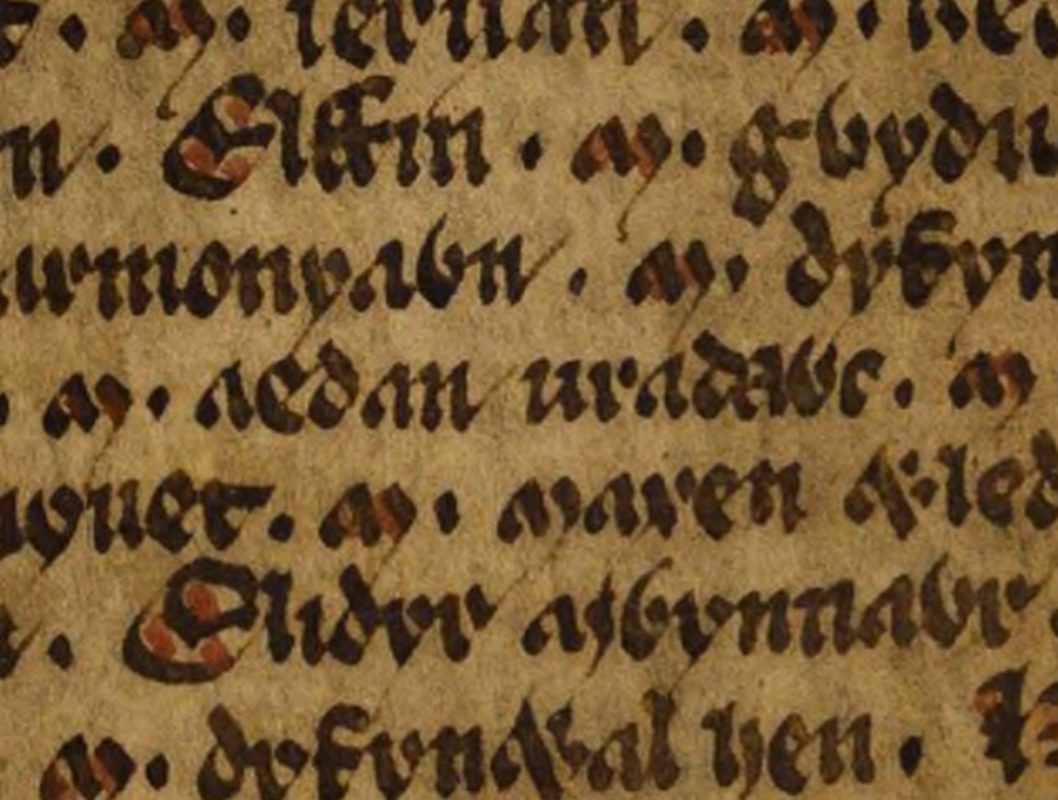
The explanation is that father and son pairs were sometimes swapped by mistake. For example, a king of the Irish kingdom of Dal Riada was Aedan, the son of Gabran. However, these two figures appear in Descent of the Men of the North as ‘Gauran ap Aedan’. In this record, Gabran is mistakenly presented as the son of Aedan rather than as his father.
For this reason, some researchers speculate that Eliffer may have sometimes been mistakenly presented as the father of King Arthur rather than as his son. This would allow for Eliffer to have become Uther Pendragon, the legendary father of Arthur.
Arthur Penuchel
There is another possibility regarding the connection between Eliffer and King Arthur. This explanation does not involve Arthwys ap Mar. Rather, this explanation is based on a record which really does give Eliffer a son named Arthur.
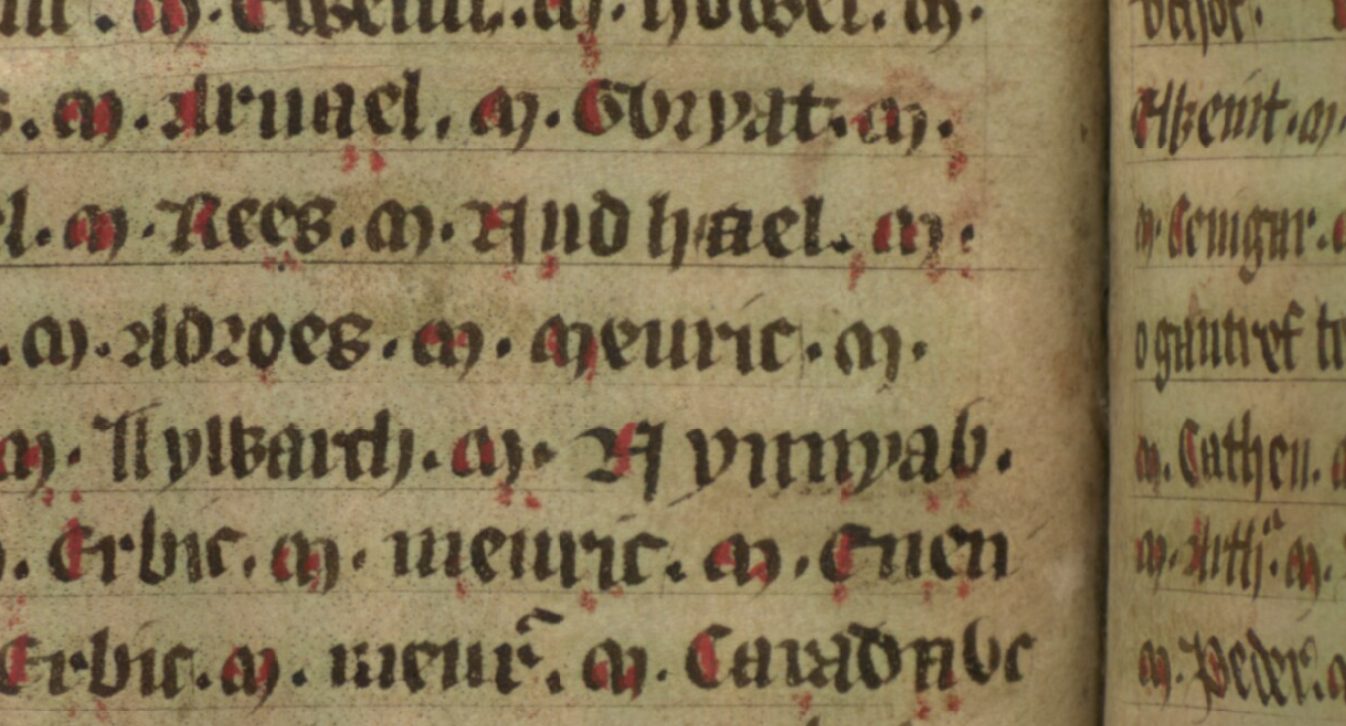
The record in question is the Jesus College MS 20. This contains one of the earliest genealogical records for the medieval kings of Britain. Here, Gwrgi and Peredur are listed with a brother named Arthur Penuchel.
This figure is very obscure, but it nevertheless demonstrates that in at least one record, Eliffer was given a son named Arthur. This lends even greater support to the idea that ‘Arthur ap Eleuther’ might have been seen in some records, which could then have led to ‘Arthur ap Uther’.
Using this explanation for how Eliffer became known as the father of King Arthur does not necessarily mean that Arthur Penuchel was actually the King Arthur of legend. In fact, one could even go so far as to suggest that Eliffer never had anything to do with the historical Arthur at all. Nevertheless, it could be that his son Arthur Penuchel was mistaken for the King Arthur of legend.
In line with this, it has been suggested that the epithet ‘Penuchel’ means ‘Overlord’. Naturally, it is easy to see how an Arthur with such an epithet could have been mistaken for the King Arthur of legend, high king of Britain.
Eliffer’s Name
For those who believe that Arthwys ap Mar may have been the historical King Arthur, what is the appeal in identifying Uther with his son Eliffer rather than his historical father?
The reason is that one early record spells Eliffer’s name as ‘Eleuther’. In fact, this is the earliest attested spelling of his name, seen in the Harleian MS 3859. Some other records spell his name ‘Elidir’, or similar variations.
The connection between ‘Uther’ and ‘Eleuther’ is obvious. Significantly, it was fairly common for the beginning or end of a person’s name to be dropped occasionally. This would easily allow for ‘Eleuther’ to have become ‘Uther’.
Hence, some records may well have spoken of ‘Uther ap Arthwys’, or even ‘Uther ap Arthur’, if we grant that Arthwys’ name may have originally been ‘Arthur’. As already mentioned, the phenomenon of swapping father and son pairs could then have changed that into the familiar ‘Arthur ap Uther’ from the legends.
Eliffer’s Status
For Eliffer to have been the historical figure behind the legends of Uther Pendragon, he must have been a powerful king. The legends of Uther clearly describe him as powerful, and they portray him as engaging in battle all over Britain, from Cornwall in the south to the land of the Picts in the north.
Is there any evidence that Eliffer was an important and powerful person? As we have already mentioned, the fact that his two sons, Gwrgi and Peredur, are recorded as dying in the Annales Cambriae indicates that he was indeed a powerful king.
Furthermore, one of Arthwys’ brothers was Lleenog, and he was the grandfather of Ceretic, a king referred to by Bede as ‘king of the Britons’. Ceretic also appears in Geoffrey of Monmouth’s Historia Regum Britanniae as a high king of Britain after Maelgwn Gwynedd.
This suggests that Arthwys’ family was very powerful. This supports the identification of Eliffer with the powerful Uther Pendragon.
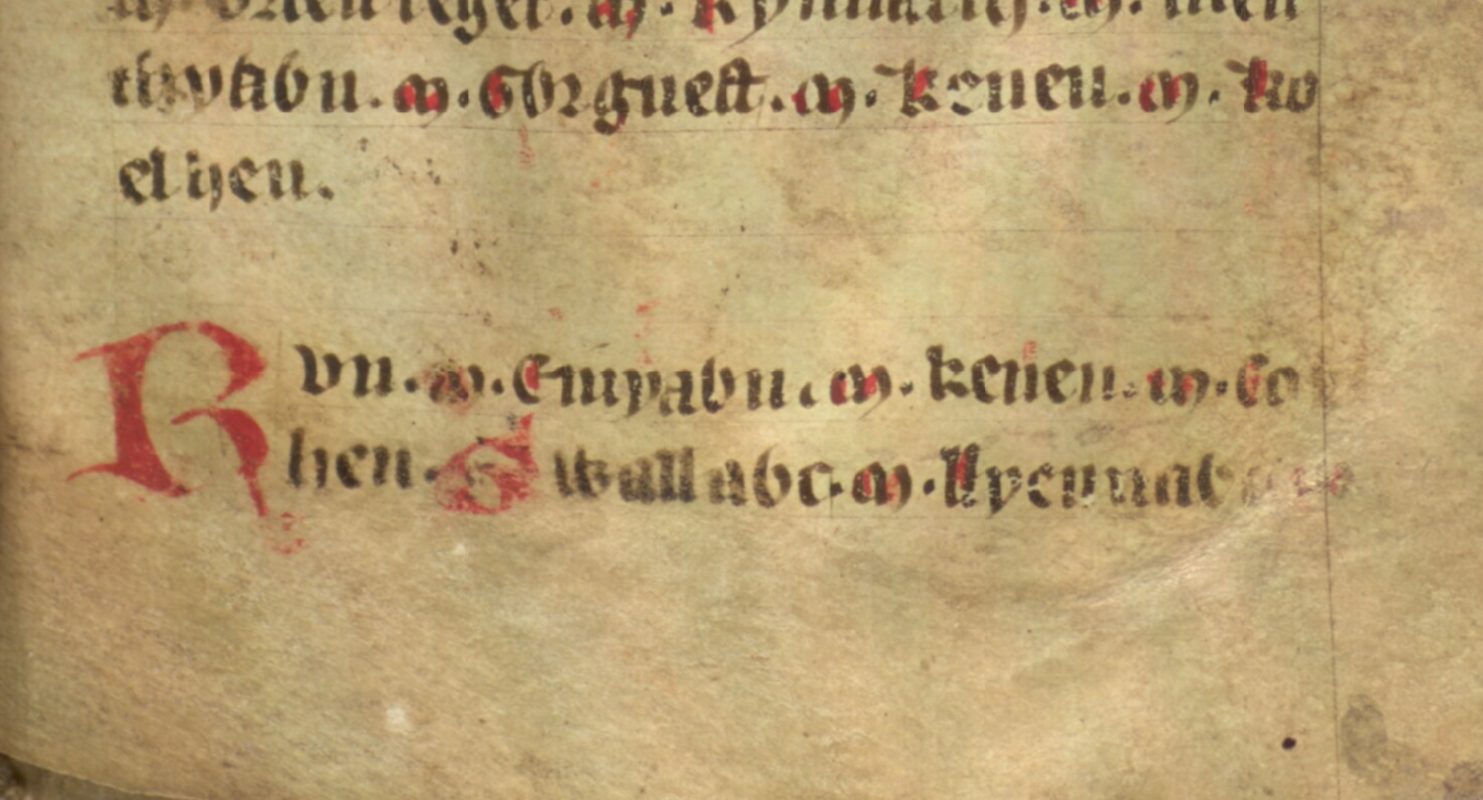
Another fact which supports the conclusion that Eliffer was powerful is his epithet. This epithet is ‘Gosgorddfawr’. This means ‘Great Warband’. In other words, this king was known as Eliffer of the Great Warband.
This implies that he had a massive army at his disposal, which harmonises well with the idea that he was a powerful war leader.
Geographical Evidence
As we saw earlier, one of the pieces of evidence connecting Arthwys with Arthur is that they are both associated with Yorkshire. Let us now consider Uther more specifically, and how this dovetails with the evidence concerning Eliffer.
In Geoffrey’s account of Uther’s reign, Uther makes a point of restoring York after the Anglo-Saxon attacks on that city and the surrounding region. This suggests that York was important to him, and it also shows plainly that (according to the legend) Uther was active in that area.
How does this tie in to the evidence surrounding Eliffer? The Historia Brittonum directly tells us that the Ceretic expelled by King Edwin was the king of Elmet. Scholars generally agree that this Ceretic was the son of Gwallog ap Lleenog, brother of Arthwys.
Since the son of Eliffer’s first cousin, Gwallog, is attested as the king of Elmet, it stands to reason that Eliffer’s kingdom was associated with that same general area.
Hence, Eliffer was evidently based in the same general area in which Uther was active according to the Arthurian legends.
Eliffer’s Epithet
We have already seen that Eliffer’s epithet indicates that he was a powerful king. However, there is more to his epithet than just this.
Uther, famously, had the epithet ‘Pendragon’. It has been suggested that Eliffer’s epithet actually evolved directly into ‘Pendragon’.
While they are not particularly similar when written down in Welsh, their meanings are fairly similar. ‘Gosgorddfawr’ means ‘Great Warband’, while ‘Pendragon’ means ‘Chief Warrior’ or ‘Chief of Warriors’. Although their meanings are not identical, they are broadly similar.
Both of them suggest that the possessor of the epithet was the leader of a large body of warriors. Hence, it has been suggested that ‘Gosgorddfawr’ was modified into ‘Pendragon’ over time. The fact that ‘Pendragon’ was a title which was also applied to some other figures in Welsh poetry makes this suggestion more likely, as it is easier for an unfamiliar word to be exchanged for a more familiar one.
Objections to This Theory
From the aforementioned evidence, it does not seem that the identification of Eliffer with Uther Pendragon is particularly implausible. In fact, some might view this as a very convincing case. Certainly, the fact that one attested form of his name is so similar to ‘Uther’, combined with his attested association with both ‘Arthwys’ and ‘Arthur Penuchel’, makes this seem like a very appealing identification. Nonetheless, there are some important objections to this identification.
How Similar Was Eliffer’s Name to Uther’s?
One objection that could be levelled against this theory is the fact that the evidence suggests that ‘Eleuther’ is a corruption of this figure’s name. Most scholars believe that ‘Eliffer’ more closely reflects the original spelling.
The basis for this is that the overwhelming majority of references to this figure in Welsh texts record his name as a form terminating in ‘ffer’ rather than ‘ther’. For example, the various spellings used in the Welsh Triads include ‘Eliffer’, ‘Oliffer’, and ‘Elifer’. Other Welsh texts spell it ‘Goliffer’.
If this is correct, then this would obviously mean that the connection between his name and ‘Uther’ is weaker than it first appears. It would require the name to have been corrupted into ‘Eleuther’ and then had the first syllable dropped.
The form ‘Eleuther’ is already attested as early as the Harleian genealogies. This is nearly as early as the earliest reference to Uther, but not quite. The earliest reference to Uther Pendragon is seen in the Welsh poem Pa Gur, which dates to about 900. On the other hand, the Harleian genealogies appear to have been compiled in the reign of Owain ap Hywel Dda, which was in the latter half of the tenth century.
Of course, we cannot exclude the possibility that ‘Eleuther’ was a form used even earlier than when the Harleian genealogies were compiled. Nevertheless, in the absence of evidence for this, and in the presence of evidence that ‘Eliffer’ is the more accurate form, this is unlikely.
Furthermore, in Welsh texts, Uther’s name virtually never ends with ‘er’. Rather, it almost always ends with ‘yr’, ‘ur’, or ‘ir’, but not ‘er’. While not an insurmountable problem, given the frequently instability of vowels in spellings of names in Welsh texts, the utter absence of such a termination in Uther’s name in Welsh texts is significant.
Was His Father Arthwys Really King Arthur?
Another difficulty with this theory is that it is firmly connected to the identification of Arthwys ap Mar with the legendary King Arthur. While this is a very reasonable theory in its own right, there are convincing alternatives for the identity of the historical Arthur.
For example, if we can entertain the idea that Arthwys ap Mar’s name ultimately came from ‘Arthur’, then by all rights, the similarly-named Athrwys ap Meurig would be a more convincing origin for King Arthur. He lived in southeast Wales, which is where early records such as the Mirabilia, the Life of St Cadoc and Culhwch and Olwen place Arthur.
Furthermore, Athrwys ap Meurig had various family members who match Arthur’s legendary family, such as his sister Anna, his brother Madoc, his relative Ieuan, and his probable uncle Gwrfoddw. This evidence points much more firmly to Athrwys ap Meurig rather than Arthwys ap Mar as the historical figure behind the legends.
Even excluding this alternative identification, there is the awkward fact that Arthwys ap Mar is missing from most versions of the genealogy of this family line. While this does not mean that he did not exist, it does mean that he was very unlikely to have been a prominent and famous figure, as King Arthur was.
Geographical Objections
What about the arguments that Eliffer matches the geographical placement of Uther by Geoffrey of Monmouth? In reality, this is an example of cherry-picking the evidence. While it is true that Geoffrey does associate Uther with York on one occasion, he does not indicate that this was his main court.
What Geoffrey actually says is that Uther attacked the Saxons while they were besieging York. Immediately after doing so, he is described as travelling further north, to Alclud in Scotland, and then eventually he holds court in London. Geoffrey never presents Uther as holding court in York.
In several places, Geoffrey actually suggests that Winchester was Uther’s main city. There is a good case to be made that this is a mistake for Caerwent, since their names in medieval Welsh records were almost identical. Winchester was Caer Wynt, while Caerwent was Caer Went.

However, regardless of whether Geoffrey was actually trying to refer to Winchester or Caerwent, both of these locations are in the south of Britain. They are very far away from York, and hence very far away from Eliffer’s territory.
This is consistent with all other indications about the home territory of Arthur’s family. For example, Geoffrey places Ambrosius in southwest Wales as a youth, while the Historia Brittonum relates the same story but places him in southeast Wales. In either case, the general location is South Wales, far from Yorkshire.
The Issue of Uther’s Epithet
What about the idea that Eliffer’s epithet, ‘Gosgorddfawr’, might have evolved into ‘Pendragon’? For one thing, the semantic shift from ‘of the Great Warband’ to ‘Chief of Warriors’ is awkward, although arguably not impossible.
More significantly, the earliest appearance of the epithet ‘Pendragon’ is seen in Pa Gur, dating to perhaps c. 900. Hence, this seems to actually predate the earliest attested appearance of Eliffer’s epithet.
Additionally, Eliffer is mentioned numerous times in Welsh texts, and there is no demonstrable case of his epithet evolving or changing over the centuries. In like manner, there is no demonstrable evidence that Uther’s epithet evolved or changed.
There is no evidence at all of any evolution from ‘Gosgorddfawr’ to ‘Pendragon’. Rather, both epithets appear suddenly in the records and remain as they are with no substantial variations.
Problems with Arthur Penuchel
What about the fact that Eliffer was recorded as the father of Arthur Penuchel, or ‘Arthur the Overlord’? Does this not strongly support the idea that Eliffer could have been remembered as the father of King Arthur, in a case of mistaken identity if nothing else?
Arthur’s Epithet
There are two substantial problems with this. The first is that translating ‘Penuchel’ as ‘Overlord’ is implausible. The epithet is a simple one, composed of two straightforward elements. ‘Pen’ means ‘head’ (as in ‘Pendragon’), and ‘uchel’ means ‘high’. Hence, this epithet means ‘High-head’.
This is usually understood by scholars in the sense of ‘arrogant’. The idea that the expression ‘high-head’ should denote the meaning of ‘overlord’ is obviously unlikely.
Arthur as Arddun
An even more substantial problem is the fact that there is strong evidence that the reference to ‘Arthur Penuchel’ is actually a corruption, and the original figure mentioned in association with Gwrgi and Peredur was actually a sister, not a brother.
This sister appears to have been called Arddun Penasgell, or Pen Askell.
In the manuscript known as the Peniarth MS 47, one of the Welsh Triads gives Gwrgi and Peredur a sister named Arddun. In a variation seen in Peniarth MS 50, this sister is named Ceindrich Pen Askell. Putting the two forms together would produce ‘Arddun Pen Askell’.
Essentially the same form, Arddun Penasgell, is seen in another record, Bonedd y Saint, concerning the mother of a religious figure named Tysilio who lived in the late sixth century. This record differs only in making her the daughter of Eliffer’s brother Pabo Post Prydain rather than of Eliffer himself.
In any case, these multiple records support the conclusion that a woman named Arddun Penasgell existed in this era and was either the daughter or niece of Eliffer. In contrast, only one record, the Jesus College MS 20, attests to the existence of Arthur Penuchel as a son of Eliffer.
On the basis of this evidence, this argues strongly against using Arthur Penuchel to try to prove that Eliffer could have been remembered as the father of King Arthur. Bearing in mind the evidence that ‘Arthur Penuchel’ is a corruption, there is no evidence that such a figure would have necessarily appeared anywhere outside of the Jesus College MS 20 itself.
Chronological Issues
The biggest issue of them all is the fact that the chronological evidence from Geoffrey’s account of Uther’s life – our only such account – is completely incompatible with identifying him as Eliffer.
Eliffer was probably born between 520 and 525, or c. 523. This would mean that by the time he was old enough to fight in battle, it would probably have been 540 at the earliest.
However, Geoffrey’s account has Uther engaged in battle primarily against Octa. He is said to have seized him from the region of York after defeating him in battle and brought him down to the south. Later, Octa escaped captivity and renewed hostilities against the Britons. Subsequently, Uther died in battle against Octa.
According to a comparison of several Anglo-Saxon records, it is evident that Octa was the king of Kent from c. 512-534. We can see this from the fact that the Anglo-Saxon Chronicle makes Oisc king of Kent from 488 to 512. Bede, the earliest source for his genealogy, tells us that Octa was the son and presumably successor of Oisc.
A comparison of several other sources show that Octa ruled for about twenty-two years. Hence, he must have died in the 530s. In other words, Octa would have already been dead by the time that Eliffer was a teenager, let alone a mighty war leader. It is simply impossible for Eliffer to have fought against Octa, captured him, and then fought against him after he became a ruler in Kent.
Unrecognised Information about Eliffer
Despite the fact that nothing is supposedly known about Eliffer, there is a corpus of evidence that does provide some direct narrative information about him. This is the evidence surrounding the father of Peredur ap Efrog.
This evidence has generally been ignored in considerations of Eliffer on the grounds that Peredur ap Efrog is considered by many scholars to be a different person from Peredur ap Eliffer.
The former is known primarily from Arthurian texts and references. The latter is known primarily from legendary, but decidedly non-Arthurian, sources. As we have already seen, the kingdom of Eliffer can be closely associated with Yorkshire, while the supposed name of the father of the Arthurian figure is identical to the Welsh name of York.
Furthermore, Peredur ap Eliffer was definitely a younger contemporary of Arthur, while the Arthurian figure is always presented as a youth during Arthur’s reign.
Really, everything indicates that Peredur from the Arthurian legends should definitely be identified with Peredur ap Eliffer. Hence, this would mean that Peredur’s father ‘Efrog’ should be identified with Eliffer. Really, his father’s name is given as ‘Iarll Eforg’, meaning ‘Earl Efrog’, but it can also be interpreted as ‘Earl of York’. This is a logical description of Eliffer.
Does Efrog Match Uther Pendragon?
With this information in mind, we can use the legendary information about Efrog the father of Peredur to determine whether the narrative information about him matches the legend of Uther Pendragon.
The opening lines of the Mabinogian tale Peredur son of Efrawg are as follows:
“Earl Evrawc owned the Earldom of the North. And he had seven sons. And Evrawc maintained himself not so much by his own possessions as by attending tournaments, and wars, and combats. And, as it often befalls those who join in encounters and wars, he was slain, and six of his sons likewise. Now the name of the seventh son was Peredur, and he was the youngest of them. And he was not of an age to go to wars and encounters, otherwise he might have been slain as his father and brothers.”
According to this, Efrawg had seven sons, one of whom was Peredur. All of them died while Peredur was still young. Is this compatible with the identification of Efrawg, or Eliffer, as Uther Pendragon?
Put simply, no. Uther Pendragon, according to Geoffrey’s account, was slain when Arthur was young. Arthur, obviously, continued living for many decades after that. During that time, all Uther’s other sons, if he had any, would have become adults. Therefore, this would mean that Peredur cannot have been young by the time his father and all his brothers (which would include Arthur, if Eliffer was Uther) had died.
Rather, by the time Arthur died, Peredur would have been past middle age, being only fifteen years younger than Arthur at the most if they were both sons of Uther Pendragon.
Therefore, it is evident that this description of Efrawg (really Eliffer) does not match the legend about Arthur’s father Uther Pendragon.
Arthur and Peredur Were Not Brothers
That quotation from Peredur son of Efrawg highlights another issue with the idea that Eliffer was Uther. That passage clearly says that Efrawg, or Eliffer, died along with all but one of his sons, leaving only Peredur.
Shortly after this, the tale goes on to tell us that Peredur travelled to King Arthur’s royal court. Hence, King Arthur is definitely not made a son of Efrawg. Peredur is the only son of Efrawg left alive at this point, yet Arthur is alive and well. This shows that he was not one of Efrawg’s sons.
Consequently, we can conclude that Efrawg, or Eliffer, cannot be identified as Uther Pendragon, the father of King Arthur.
Conclusion
In conclusion, what can we say regarding the theory that Eliffer Gosgorddfawr was the historical figure behind the legends of Uther Pendragon? Firstly, we can note that this theory is fundamentally based on two basic facts. The first is that Eliffer’s name is seen in at least one record as ‘Eleuther’, which could easily have become ‘Uther’. The second is that he was the son of Athrwys ap Mar, and this patronymic could potentially have been inverted.
However, for a variety of reasons, this theory struggles to stand up to scrutiny. For one thing, Eliffer was firmly associated with York, whereas Uther is primarily associated with the south of Britain, either Caerwent or Winchester. Furthermore, the idea that Eleuther’s epithet, ‘Gosgorddfawr’, could have been changed into ‘Pendragon’ seems very unlikely. One of the most significant issues is the fact that Eliffer’s lifetime does not match the chronological information seen in Geoffrey of Monmouth’s description of Uther’s career.
Additionally, when we take into consideration the evidence that Eliffer was Efrawg, the father of Peredur of the Arthurian legend, it is significant that the information about Efrawg is incompatible with the information about Uther. In the view of all this evidence, it is very unlikely that Eliffer could have had anything to do with the legend of Uther Pendragon.
Sources
Bartrum, Peter, A Welsh Classical Dictionary, 1993
Bromwich, Rachel, Trioedd Ynys Prydein: The Triads of the Island of Britain, 2014
Ashely, Mike, A Brief History of King Arthur, 2013
Howells, Caleb, King Arthur: The Man Who Conquered Europe, 2019
https://mistshadows.blogspot.com/2019/10/earlier-pieces-on-arthur-penuchel-son.html https://mistshadows.blogspot.com/2018/10/arthur-penuchel-son-of-eliffer-of-york.html
_(14596966327).jpg)