Was Pedr of Dyfed the Real Uther Pendragon?

One of the theories about the historical figure behind the legends of Uther Pendragon, the father of King Arthur, is that he can be identified with an obscure figure known as Pedr of Dyfed. He appears in the king lists of the kingdom of Dyfed in the early medieval period. What is the basis for the idea that he might have been the historical Uther Pendragon? Does the evidence stand up to scrutiny?
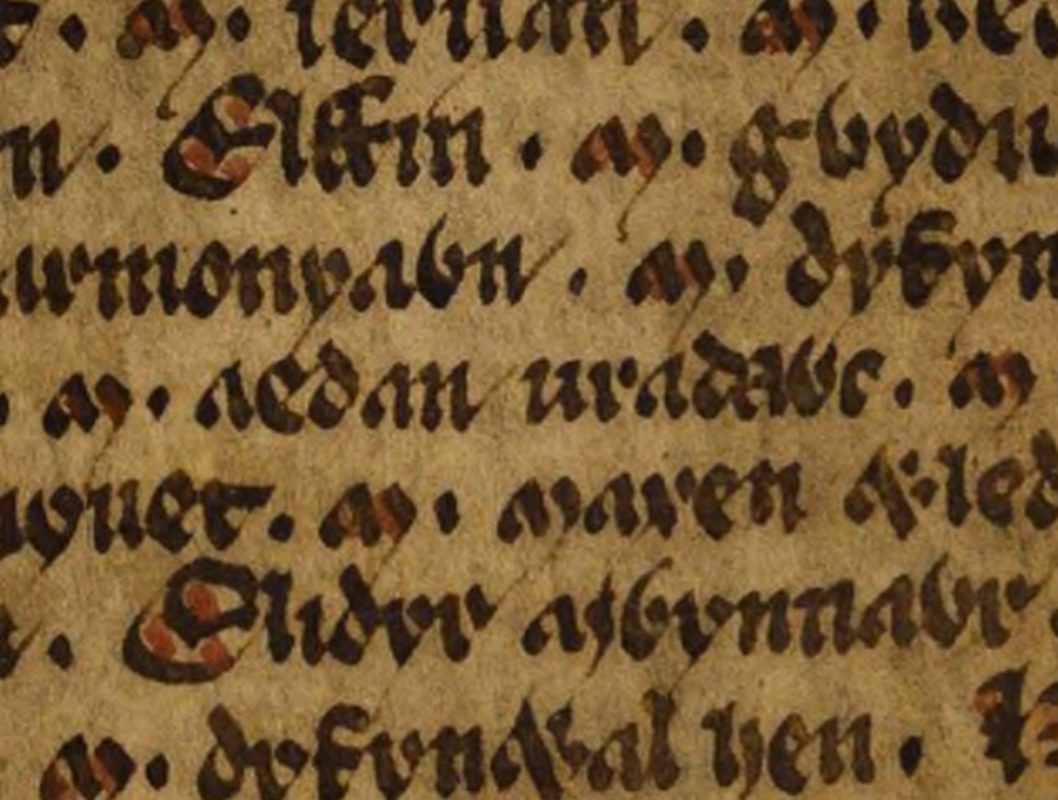
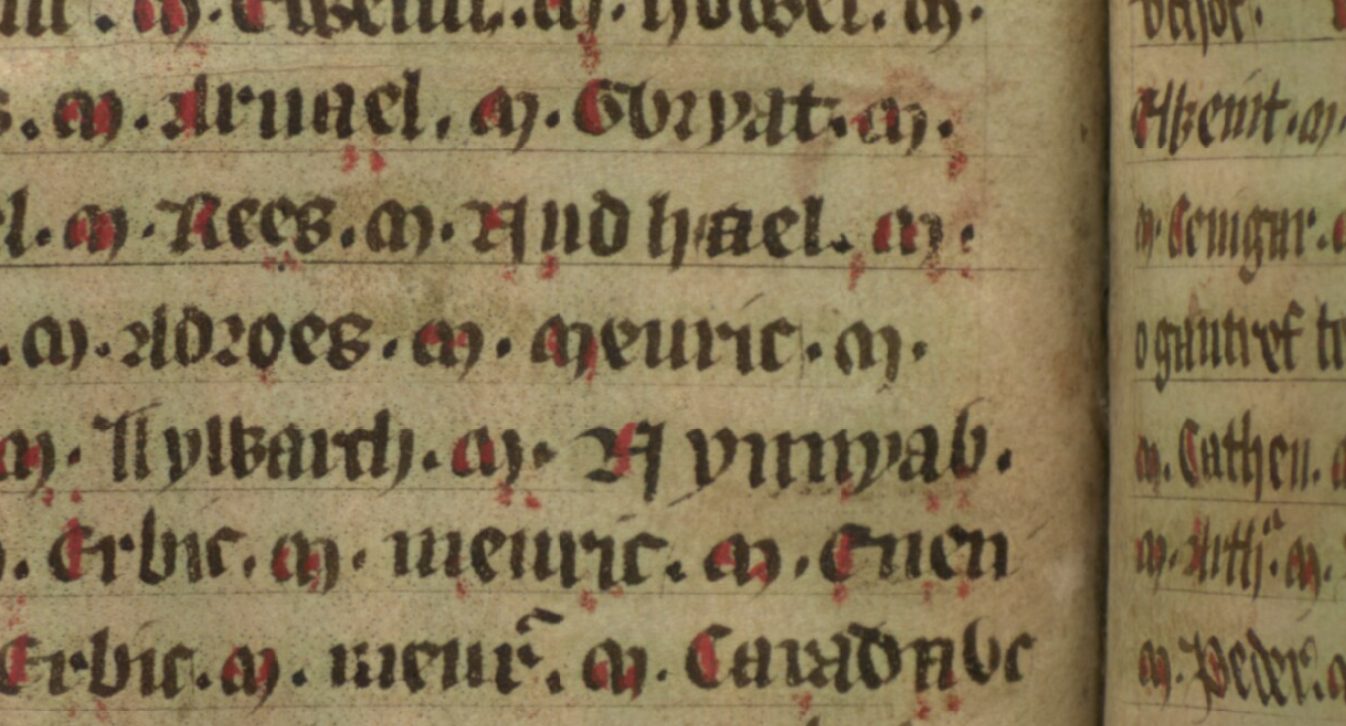
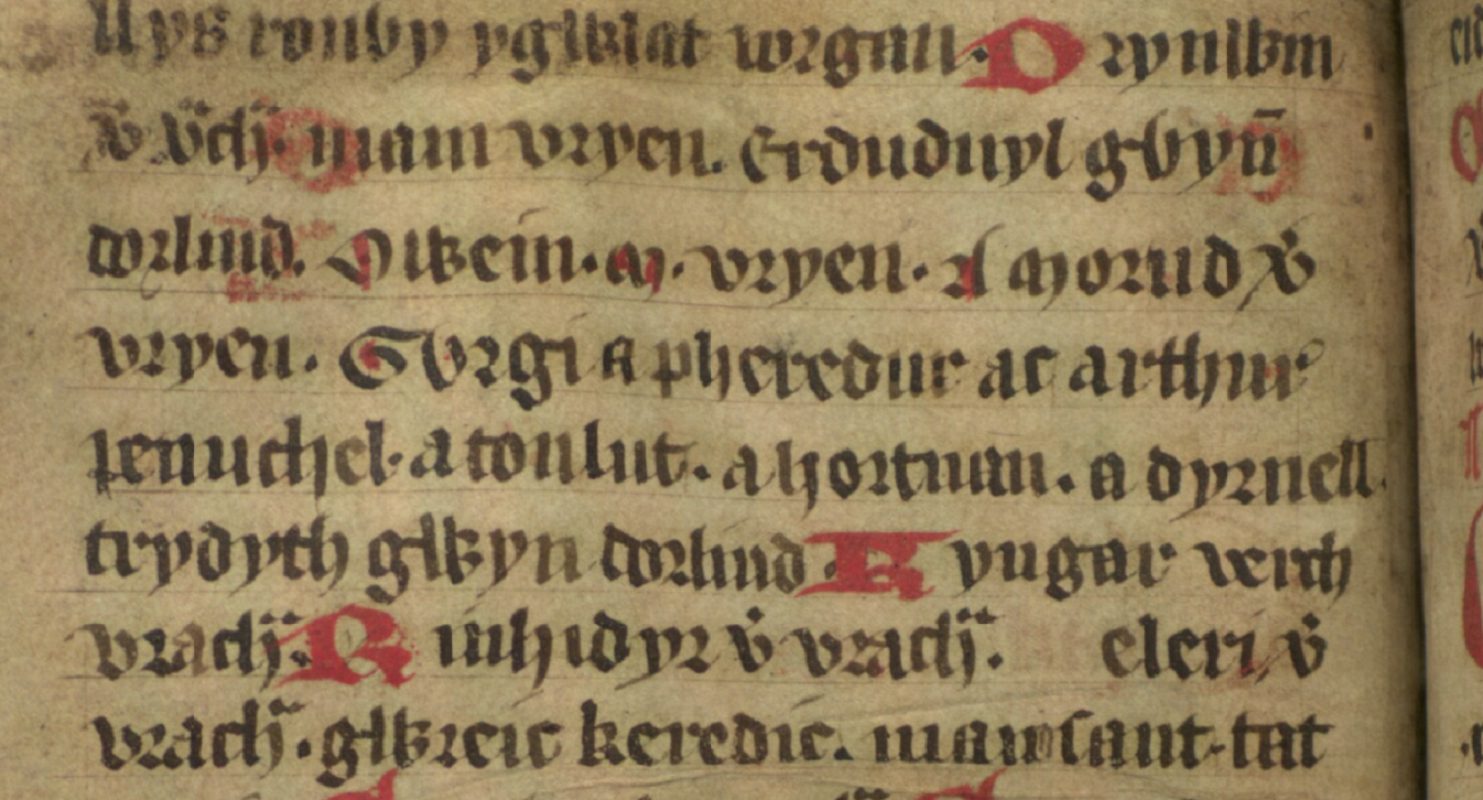
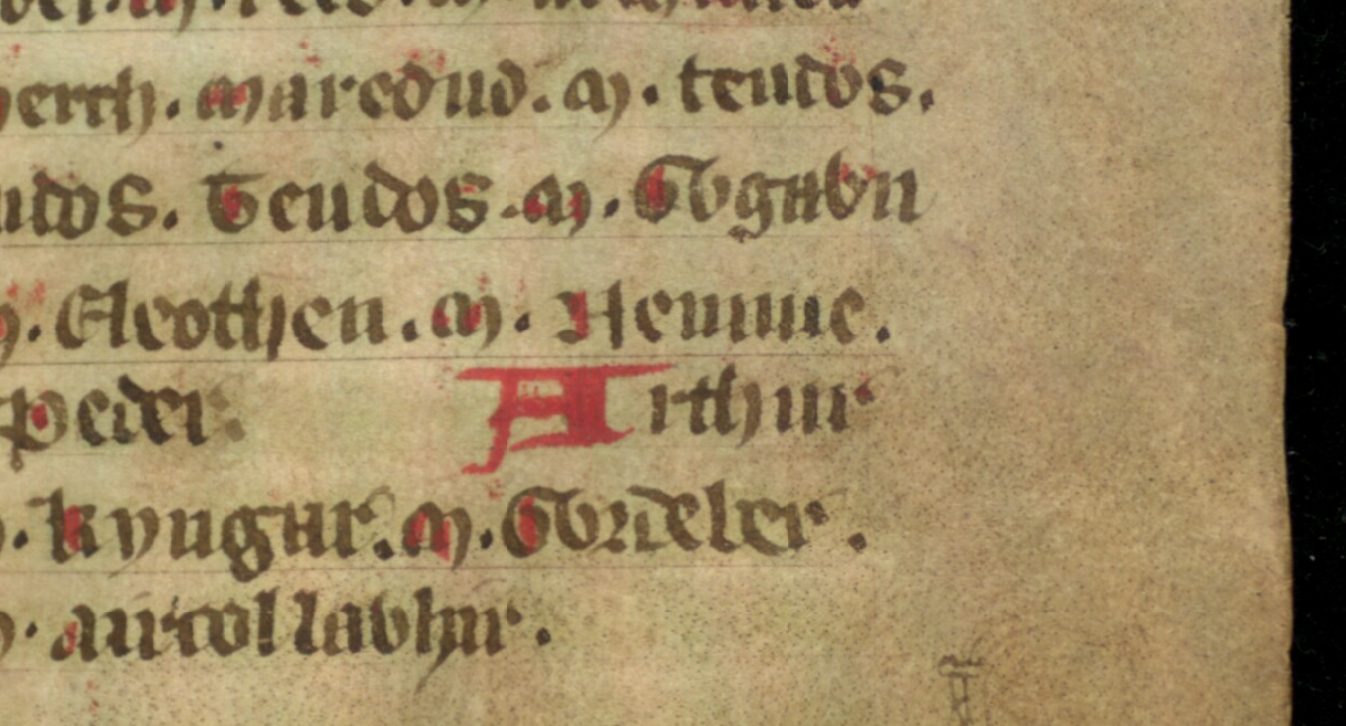
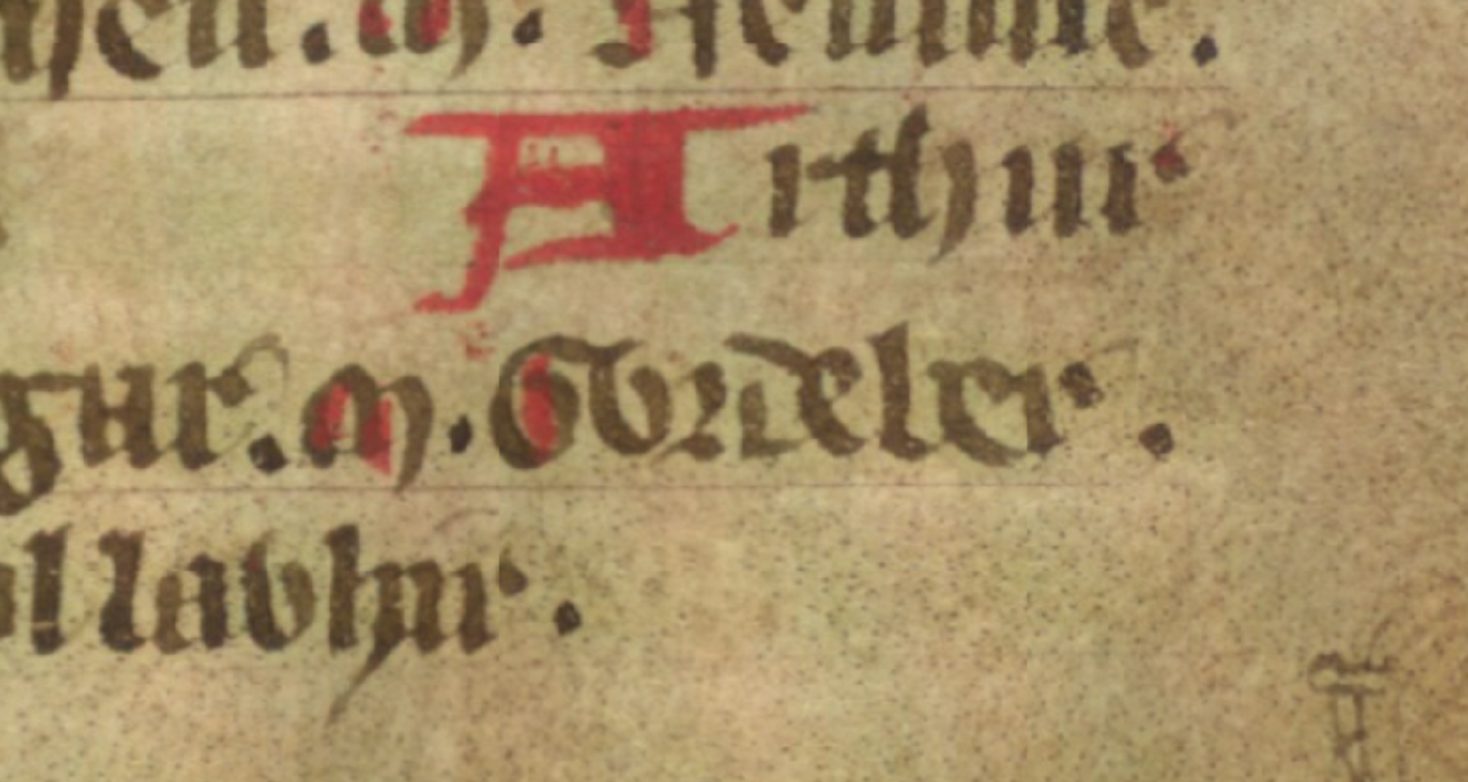
![Jesus College MS 20, folio 36r, showing Pedr of Dyfed on the fourth and fifth lines, with his son Arth[ur] and father Kyngar](/assets/posts/jesus-college-ms-20-genealogies-folio-36r-peder-dyfed.jpg)
Who Was Pedr of Dyfed?
Pedr of Dyfed was apparently a king of Dyfed in the early medieval period. Nothing is known about him outside of his placement in the medieval genealogical lists concerning that kingdom, but it is assumed that he was a king.
Dyfed was the kingdom of southwest Wales, corresponding roughly to modern-day Pembrokeshire and Carmarthenshire. It had been ruled by the Irish from the late fourth century until c. 500, when the Irish dynasty was expelled by a Romano-British dynasty. Pedr appears in the line of kings of Dyfed several generations after this expulsion of the Irish.
One of the reasons why Pedr is so interesting is because he had a son named Arthur. This is one of the only recorded figures with that name in the early medieval period, which has led to the suggestion that he may have been the real King Arthur of legend.
Evidence That Pedr Was the Real Uther Pendragon
In the legends of King Arthur, his father is named Uther Pendragon. He is the High King of Britain before Arthur, and like Arthur, he fought powerfully against the Saxons and other enemies of the Britons.
Since Pedr’s recorded son Arthur is one of the few historical figures recorded as ‘Arthur’ in the general Arthurian period, some researchers have attempted to identify this Arthur of Dyfed as the King Arthur of legend.
Based on this argument, Pedr would logically have been the historical figure behind the legends of Uther Pendragon, Arthur’s father. However, aside from the mere fact that he had a son named Arthur, what other reasons are there to believe that Pedr might have been the historical Uther Pendragon?
Location
One reason why Pedr is an attractive candidate is the fact that he was based in Dyfed. As mentioned before, this was the kingdom of southwest Wales. As such, it was close to many of the key locations with which King Arthur is associated.
For example, the Welsh Triads state that one of Arthur’s three main courts was at Menevia in Dyfed. This shows that Arthur allegedly had a firm connection to that area, which would fit with his father being a king of that kingdom.
Furthermore, the Welsh tale Culhwch and Olwen shows Arthur being active in battle across South Wales. In one part of the tale, he pursues a wild boar, which had come from Ireland, from the southwest across almost all of South Wales.
Various Latin texts, such as the Lives of the Saints, place Arthur in South Wales as well, or in the West Country. Geoffrey of Monmouth placed one of Arthur’s main courts at Caerleon in southeast Wales, not too far from Dyfed.
In addition, many of Arthur’s allies are figures from that same general area, South Wales and the West Country. These locations would have been easily accessible to a king based in southwest Wales.
Given the strong connection that Arthur had with these regions close to Dyfed, it is consistent to suppose that his father would have been based in that general area as well.
Regarding Uther himself, Geoffrey of Monmouth’s account in the Historia Regum Britanniae presents Uther as fighting in Dyfed at one point.
Name
Another argument put forward by those who believe Pedr to have been the historical Uther Pendragon is that his name, supposedly, can be seen as a plausible origin behind ‘Uther’.
While the two names are not particularly similar at first sight, a deeper analysis shows that they are more similar than they first appear.
Let us consider the various forms which both names take in the medieval records.
Regarding Pedr, his name variously appears as ‘Petr’, ‘Peder’, ‘Petuir’, and even ‘Retheoir’. Concerning Uther, his name appears variously as ‘Uthyr’, ‘Uthur’, and ‘Uthr’.
Aside from the presence of the initial ‘P’ in the name of this king of Dyfed, these two names are quite similar. If we remove the ‘P’, we are left with ‘Etr’, ‘Eder’, ‘Etuir’ and ‘Etheoir’. These forms are not identical to any of the attested forms of the name of King Arthur’s father, but they are not particularly far away from them either.
Common Scribal Corruptions
Firstly, let it be noted that there are many examples of initial consonants disappearing in many names in the medieval Welsh manuscripts.
What about the change of a ‘d’ or ‘t’ into a ‘th’? As we can see from the variants of ‘Pedr’ itself, this is a corruption which did sometimes happen. This is why Pedr’s name appears not only as ‘Petuir’ but also as ‘Retheoir’.
Another notable example is Eleuther, a figure whose name is also recorded as ‘Elidir’.
Furthermore, this very same example demonstrates the unstable nature of vowels in the medieval manuscripts. In the case of ‘Eleuther’ and its variant ‘Elidir’, the vowels ‘eu’ have become ‘i’, while the final ‘er’ has become ‘ir’.
Similarly, we can look again at the example of Pedr himself to see a demonstration of this type of corruption. In the Jesus College MS 20, his name is written as ‘Peder’. In the variation ‘Petuir’, the final ‘er’ has become ‘uir’.
Therefore, the idea of Pedr’s name becoming corrupted into ‘Uthyr’ is within the realms of possibility.
Chronology
Another basis for the idea that Pedr of Dyfed might have been the historical Uther is that, according to one point of view, he lived at the same time as the traditional date of Uther Pendragon.
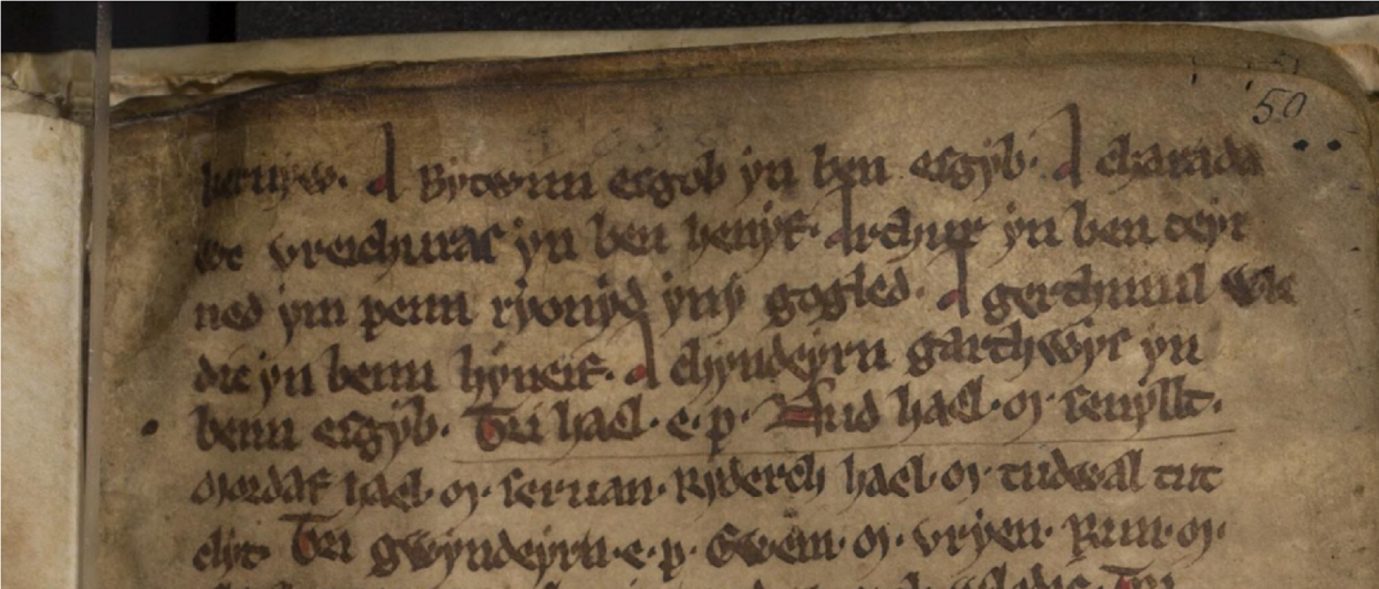
There is one fundamental basis for this idea. This is an entry in the Book of Llandaff, a twelfth century document which records numerous grants of land from kings to the church. One of the charters is set in Dyfed and describes how Bishop Dubricius oversaw a grant of land from Nowy, son of Arthur, to the church.
Nowy was the grandson of Pedr of Dyfed, and he appears in the genealogies of the kings of that kingdom. Dubricius is a well attested bishop whose birth is usually placed in about 465. He was active throughout much of the sixth century.
Based on the record of Nowy granting some land to the church in the time of Dubricius, his grandfather Pedr must have been active in the latter half of the fifth century.
The Chronology of Uther Pendragon
How does this tie in with the chronology of Uther Pendragon? The earliest account of his career comes from Geoffrey of Monmouth, writing in c. 1137. According to this account, Uther succeeded Ambrosius as king.
Ambrosius, as indicated by Bede and the Historia Brittonum, was probably born around 420 and fought against the Saxons in the reign of Emperor Zeno, probably meaning in the 470s and 480s. Since Uther succeeded him, that would place his career in the latter part of the fifth century.
Geoffrey of Monmouth claims that an impressive comet appeared in the sky at the end of Ambrosius’ life, when Uther succeeded him. This appears to correspond to the fact that at least two medieval records (one of which is from the sixth century) records the appearance of a comet right at the end of the fifth century.
This would mean that Uther succeeded Ambrosius in approximately the year 500. Hence, with Nowy being alive before the end of Dubricius’ career, the date of his grandfather Pedr would fit what we would expect from the dating of Uther according to Geoffrey’s account.
Prominent Dynasty
Another notable argument that could be used to support the identification of Pedr as Uther Pendragon is the fact that Pedr’s dynasty was a prominent one. According to the genealogies found in the Harleian MS 3859, Pedr was a descendant of Magnus Maximus, an emperor of the West who allegedly founded several dynasties.
The idea that Uther was descended from a Roman emperor has some merit. His son Arthur, in the legends, is referred to in the Welsh texts as an ‘amherawdyr’. This word comes from the Latin ‘imperator’, meaning ‘emperor’.
Furthermore, Uther was allegedly the brother of Ambrosius. According to Gildas, Ambrosius’s parents ‘wore the purple’. This evidently means that they had a high status, possibly even being a reference to the imperial colours. The Historia Brittonum describes Ambrosius’ father as a Roman consul.
Therefore, Pedr being a descendant of Magnus Maximus is consistent with the conclusion that he was the historical figure behind the legends of Uther Pendragon.
Objections to This Theory
There are not a great number of objections to this theory, but only because very little is known about Pedr. Nevertheless, the issues that do exist are significant and extremely problematic for this theory.
The Geographical Issue
Earlier, we mentioned that Pedr’s kingdom corresponds well with where Arthur and Uther are placed in the legends. While it is true that there is an approximate match, it is not a particularly specific one.
Although Welsh tradition does firmly place Arthur (and hence Uther) in South Wales, it specifically places him predominantly in the southeast of the country, not the southwest.
Evidence from Welsh Tradition
Consider, for example, what Culhwch and Olwen reveals.
As noted earlier, this Welsh tale describes Arthur as engaging on a boar hunt from one side of South Wales to the other. Coming from Ireland, Dyfed is the first part of Wales affected by this boar. After it finally gets above Glamorgan, Arthur declares that he will not allow it to reach Cerniw.
Arthur then gets his men to stop the boar in its tracks and force it into the Severn, evidently pushing it directly south.
This means that Cerniw, the location where Arthur did not want it to reach, was somewhere further east than Glamorgan. This supports the conclusion that it was Cerniw in southeast Wales, in (or synonymous with) the region of Gwent.
Welsh tradition strongly associates Arthur with the court of Gelliwig in Cerniw. It strongly suggests that this was his main court. Cerniw cannot have been a location in Dyfed, since the boar had already passed through Dyfed when Arthur declared that he would not allow it to enter Cerniw.
Evidence from Geoffrey of Monmouth
It was also pointed out that Geoffrey presents Uther as fighting a battle in Dyfed. The problem with this is that Geoffrey’s account explicitly refutes the notion that Uther himself was based in that area. What he writes is that the Irish together with the Saxons had arrived at Menevia and began attacking that territory.
Geoffrey then presents Uther as marching towards them from far away, suggesting that he was not based in Dyfed itself, of which Menevia was one of the principal cities.
In fact, Geoffrey places Uther at ‘Winchester’, which is likely a mistake for Caerwent, since their names in Welsh are almost identical. Notably, this is consistent with the location of Arthur’s base of operations as indicated by Culhwch and Olwen.
What This Means for Pedr
The evidence from both Welsh tradition and Geoffrey of Monmouth is not consistent with the conclusion that Pedr was Uther Pendragon. As we have seen from Welsh tradition, Arthur seems to have been based in southeast Wales, and Geoffrey of Monmouth’s narrative is consistent with this.
In contrast, Pedr was based in Dyfed, not Gwent or anywhere in southeast Wales.
The Chronological Issue
An even more significant issue is the fact that chronology utterly rules out the possibility that Pedr was the historical Uther Pendragon. According to the medieval genealogies, Pedr was the grandson of Vortipor. Vortipor, in turn, was one of the five kings mentioned by Gildas in his De Excidio.
In that work, Gildas refers to the Battle of Badon as an event that occurred forty-three years before he was writing. The Historia Brittonum and later sources attribute the victory at Badon to King Arthur. Hence, Arthur won his great victory at Badon forty-three years before Gildas wrote, at which time Vortipor was still living.
Since Vortipor was the grandfather of Pedr, it is obvious that Pedr would not even have been born by the time the Battle of Badon took place. This single-handedly and completely rules out the possibility that Pedr was the father of King Arthur, the legendary victor at Badon.
Explaining the Evidence from the Book of Llandaff
However, how does this relate to the aforementioned evidence from the Book of Llandaff to the effect that Nowy was a contemporary of Bishop Dubricius?
The simple explanation is that the charter that contains the supposed grant of land from Nowy son of Arthur to Dubricius is a forgery. This is the conclusion of most authorities on the matter. For example, scholar Peter Bartrum referred to it as an ‘obvious forgery’.
Scholar Patrick Sims-Williams considered the matter in more recent years and came to the same obvious conclusion. However, in an attempt to explain the cause of this chronological peculiarity, he pointed out that the Annales Cambriae places the death of Dubricius in 612.
This date is dismissed as unhistorical by the vast majority of scholars on the grounds of better evidence from many other sources about Dubricius, such as the earlier Life of St Samson. Nevertheless, it is plausible that a medieval scribe could have been misled by this mistaken date in the Annales Cambriae.
The Lack of Fame
Another problem is the fact that there is no evidence at all that Pedr was a famous or significant figure. Aside from his appearance in the Dyfed king lists, there does not appear to be any definite reference to him anywhere else.
The only possible exception is an entry in the Book of Llandaff. One particular charter, dated to the time of King Morgan, mentions a witness named Petyr. Morgan likely lived from approximately 570 to perhaps as late as 665. Hence, the chronology definitely allows for the conclusion that Pedr was the Petyr of this entry.
However, this is only a possibility. Another possibility is that Petyr should be identified with a Pedur who appears in the genealogical record of the dynasty of Dumnonia in the Jesus College MS 20.
In any case, the main point is clear: Pedr is essentially absent from the records outside of his place in these king lists, with nothing to indicate that he was famous or well known.
Evidence from John Leland
Another crucial problem comes from the writings of John Leland. He was an antiquarian who lived in the sixteenth century. He travelled through Wales, studying its history. He went to St Davids in Dyfed and documented the existence of a fascinating record from the charters of that place.
The record in question included a witness list, part of which reads:
“Arthur son of Pedr, but more recent than the old Arthur.”
The witness list from which this statement was taken was evidently a seventh century charter originally. The document which John Leland copied from, however, was more likely a ninth century copy or reaffirmation of the original grant. This is suggested by evidence from Leland’s contemporary William Salesbury.
In any case, the point is that this relatively early record about Arthur son of Pedr expressly distinguishes between him and ‘the old Arthur’. This shows that there was an ‘old Arthur’ from before the time of Arthur son of Pedr who was worth distinguishing from the latter.
It is obvious that the ‘old Arthur’ mentioned here is the King Arthur of legend. This being so, Arthur son of Pedr cannot have been the historical King Arthur, meaning that Pedr cannot have been the legendary Uther Pendragon.
Conclusion
In conclusion, the idea that Pedr of Dyfed may have been the historical figure behind the legends of Uther Pendragon is fundamentally based on the suggestion that his son, Arthur, was the King Arthur of legend. However, it is supplemented by the fact that Pedr’s name could potentially have been corrupted into ‘Uthyr’ or something similar. Furthermore, Pedr was allegedly descended from a Roman emperor, fitting the legendary description of Uther. We have also seen that he arguably lived in the right place and at the right time to be Uther.
In reality, almost none of these alleged pieces of evidence stand up to scrutiny. Pedr’s kingdom, Dyfed, is not where the Arthurian legends most firmly place King Arthur. Furthermore, the evidence firmly shows that he lived generations later than Uther Pendragon. And regardless of the fact that Pedr was allegedly of imperial descent, there is nothing to indicate that he was an important or powerful king.
Sources
Bartrum, Peter, A Welsh Classical Dictionary, 1993
Bromwich, Rachel, Trioedd Ynys Prydein: The Triads of the Island of Britain, 2014
Morris, John, Arthurian Period Sources, Vol 3: Persons, 1995
Breverton, Terry, Wales: A Historical Companion, 2009
Sims-Williams, Patrick, The Book of Llandaf as a Historical Source, 2019
Bromwich, Rachel; Jarman, A O H; Roberts, Brynley F, The Arthur of the Welsh: The Arthurian Legend in Medieval Welesh Literature, 2013
Howells, Caleb, King Arthur: The Man Who Conquered Europe, 2019
https://mythbank.com/uther-pendragon/#the-story-of-uther-pendragon
https://mistshadows.blogspot.com/2018/11/i-have-once-and-for-all-solved-mystery.html