Was Arthur son of Pedr the Real King Arthur?

Theories about King Arthur often like to associate him with historical figures who really did possess the name ‘Arthur’. One such figure was Arthur son of Pedr. He was a historical figure who lived and probably ruled in Dyfed, southwest Wales. Little is known about him, but for a variety of reasons, some researchers have argued that he should be identified as the historical basis for the legendary King Arthur. What is the evidence for this theory, and is it really plausible?

Who Was Arthur son of Pedr?
Very little is known of this obscure figure, but he is accepted as historical by most scholars. He essentially just appears as a name in the genealogical records of Dyfed, the medieval kingdom encompassing southwest Wales.
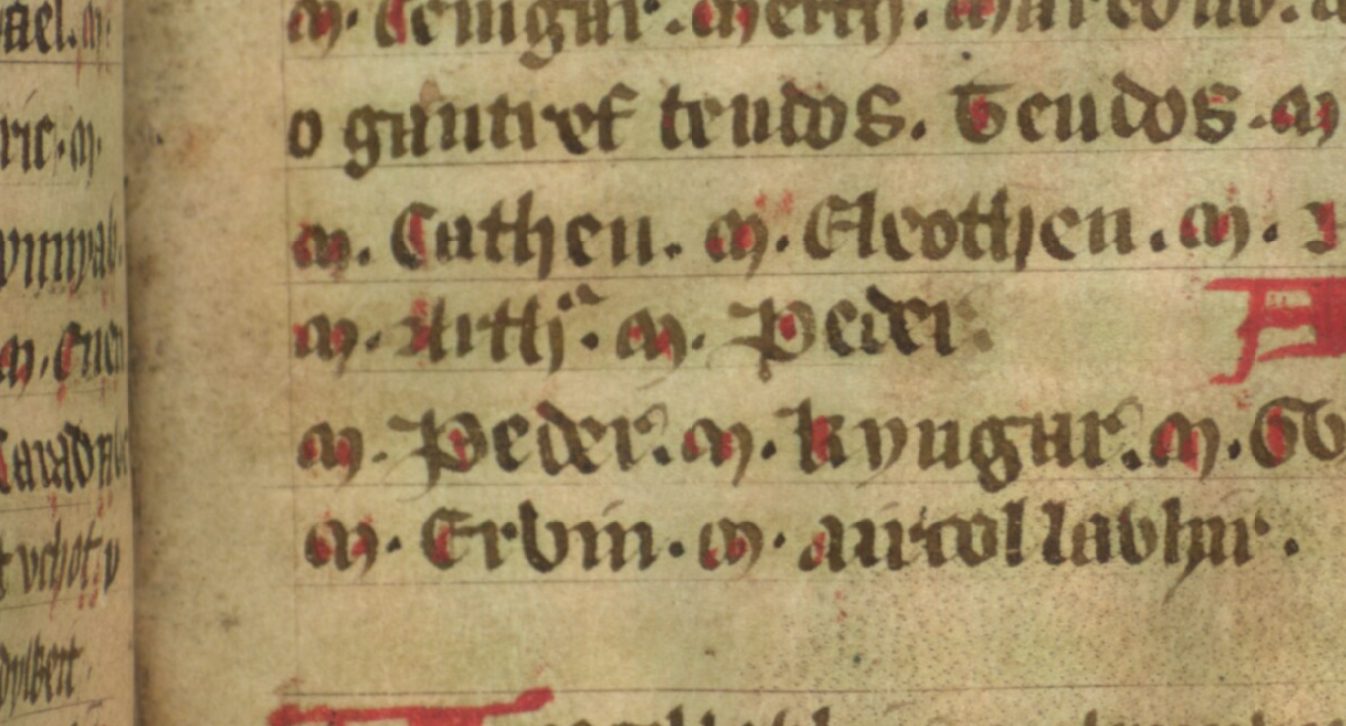
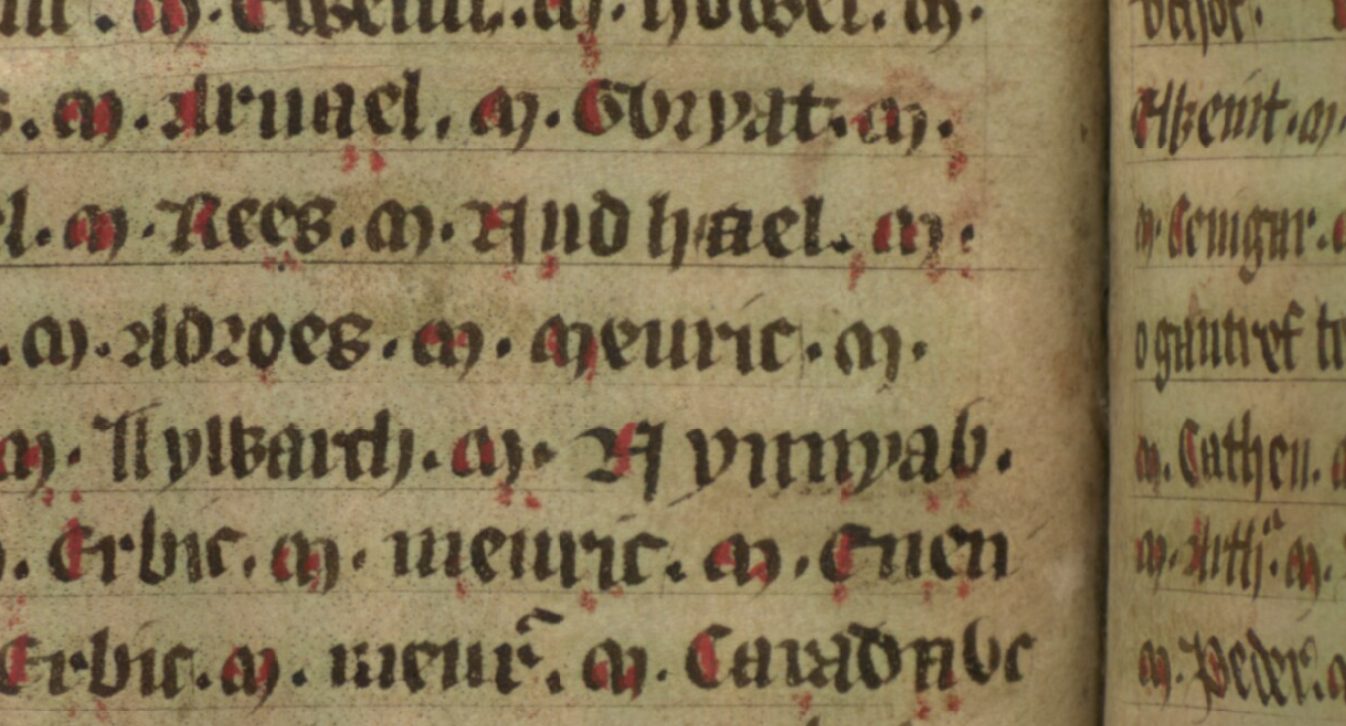
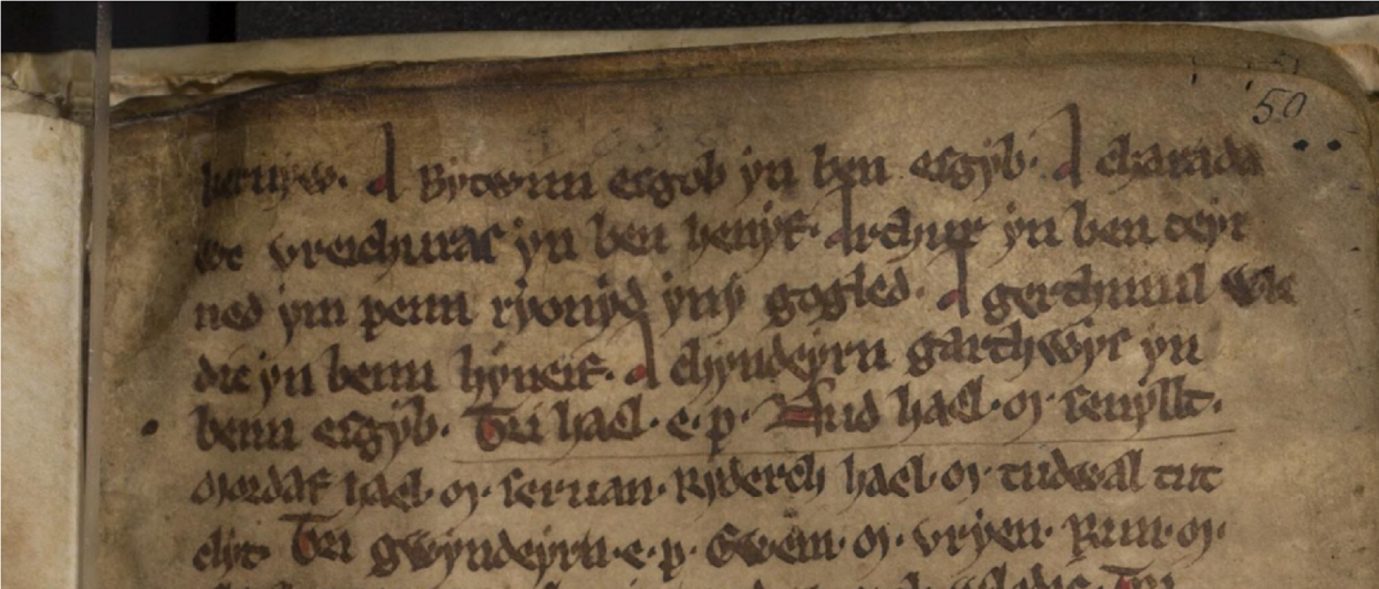
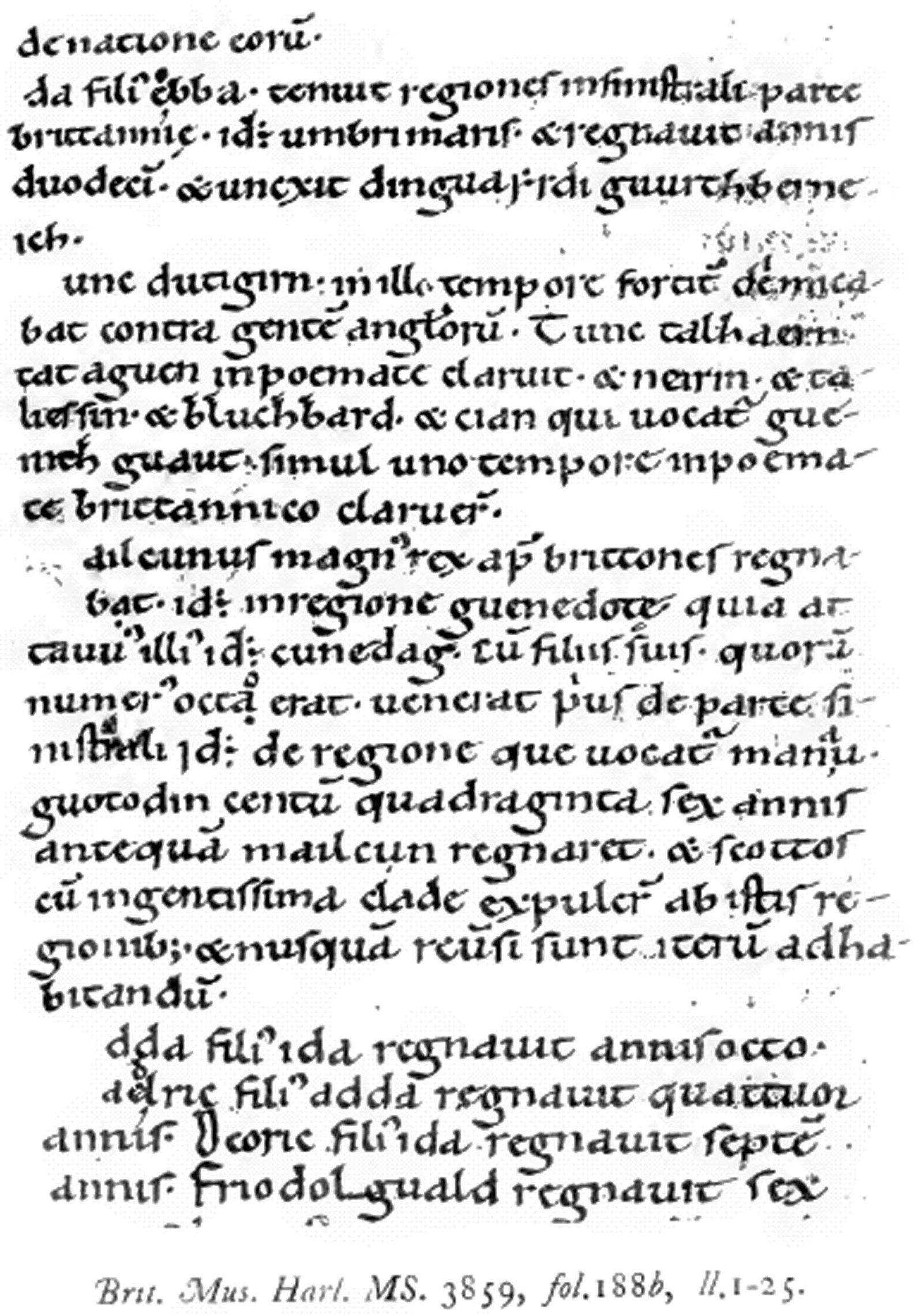
He appears in the earliest surviving genealogical record from medieval Wales, which is in the Harleian MS 3859, dating to the tenth century. In this record, his father is named ‘Petr’, and his son is ‘Nougoy’. These figures are more commonly known as Pedr and Nowy, respectively.
When Did Arthur son of Pedr Live?
The genealogies themselves do not provide dates, but some of the individuals mentioned therein can be securely dated through other means. For example, Pedr’s grandfather is a figure named Vortipor. He, in turn, appears seven generations after ‘Maxim Wledig’, the historical Magnus Maximus of the fourth century.
The fact that this Vortipor appears in the list of kings of Dyfed seven generations after the fourth-century Maximus makes it a virtual certainty that the Vortipor from this list should be identified as Vortiporius, the king of Dyfed mentioned by Gildas as a living king in his sixth-century De Excidio.
Vortiporius is described by Gildas as already growing grey and nearing the end of his life. Hence, it is entirely possible that his grandson Pedr was already an adult when Gildas wrote. Pedr’s son Arthur may well have been alive too, although he cannot have been older than a young adult.
Dating the De Excidio
Unfortunately, the writing of Gildas’ De Excidio itself is difficult to date, since the only way of doing so is through later medieval information about Gildas himself and about the five living kings to whom he directs some comments (Vortiporius being one of them).
One of these kings was Maelgwn Gwynedd. Scholar Rachel Bromwich suggested that, contrary to his death date in the Annales Cambriae, he may have actually reigned in the latter part of the sixth century. This conclusion was based on information found in the Historia Brittonum, which predates the Annales Cambriae. This would place De Excidio in that same era, the late sixth century.
Agreeing with this is the fact that Vortipor’s father, Aircol, appears in Welsh poetry as a contemporary of Cynan Garwyn, a king who definitely lived from the mid to late sixth century. Therefore, it appears that Vortipor reigned in the second half of the sixth century. Since he was an old king when Gildas was writing (which was while Maelgwn Gwynedd was still alive), he was probably born somewhere between 510 and 530.
If we use an average of 20 to 30 years per generation, this would indicate that Arthur, the great-grandson of Vortipor, would have been born somewhere between 570 and 620.
Evidence That Arthur son of Pedr Was the Real King Arthur
Given that very little is known about Arthur son of Pedr, what basis is there for the theory that he may have been the historical King Arthur?
Name
One obvious basis for associating this historical Arthur with the legendary King Arthur is the fact that they both had the same name.
This is an advantage that this theory has over several others, such as those that argue that King Arthur can be identified as historical figures who are not actually recorded as ‘Arthur’, or with names which appear superficially similar to ‘Arthur’.
Unlike those theories, this historical figure from Dyfed has precisely the right name to be the origin of the Arthurian legend.
Location
Another attractive aspect of this theory is the location in which Arthur son of Pedr lived. Dyfed, as already mentioned, was the kingdom of southwest Wales. In the legends of King Arthur, many of his associates are from South Wales. Examples include Illtud, Cadoc, and Bedwyr.
Furthermore, many of the early accounts about Arthur place him in this general area. In the Life of Saint Cadoc, for instance, Arthur is placed in southeast Wales both as a youth and as a king. The Life of Saint Illtud also suggests that Arthur’s royal court was in this general region, since Illtud is described as moving on to the court of Poulentus, king of Glamorgan, directly after leaving Arthur.
Another example is Geoffrey of Monmouth’s Historia Regum Britanniae, written in c. 1137. This places Arthur’s main court at Caerleon in southeast Wales.
In fact, the earliest record of King Arthur’s career also provides some support for this idea. This is the Historia Brittonum, written in c. 830. Although the main text appears to make Arthur active in warfare in the Midlands and somewhat further north, attached to the end of this document is the Mirabilia, or the Wonders of Britain. Here, we find Arthur placed in mid-Wales and in Ergyng, just to the east of southeast Wales.
Also worth noting is the Life of Saint Padarn. In this record, probably written c. 1120, Arthur is described as interacting with Padarn in Ceredigion. This was a kingdom in West Wales, just above Dyfed.
Support from Welsh Tradition
As well as these Latin records, there is also plenty of support from Welsh tradition. For example, the aforementioned placement of Arthur in mid-Wales from the Mirabilia is expanded on in a Welsh text known as Culhwch and Olwen. This recounts the tale of Arthur engaging on a boar hunt. This hunt goes all across most of South Wales.
Furthermore, this same tale, as well as plenty of other Welsh references, makes one of Arthur’s courts a place named Gelliwig in a region named Cerniw. This has traditionally been interpreted as a place in Cornwall, but there was also a region named Cernyw in southeast Wales, as well as a site recorded as Gelliwig within it.
In any case, whether the pertinent Gelliwig was in Cornwall or southeast Wales, both locations are immediately adjacent to the territory of Arthur son of Pedr. Thus, either location is reasonable for the site of one of the courts of Arthur son of Pedr, assuming he really was a high king with power over others.
Powerful Dynasty
Speaking of Arthur son of Pedr being a high king, this brings us to another requirement for the historical basis for the legendary King Arthur. The legendary sources are very clear that Arthur was powerful and had the ability to direct other kings.
In the Historia Brittonum, for instance, Arthur is described as leading the kings of Britain into battle. This same concept is repeated in Welsh tradition and through most of the subsequent Arthurian sources. As the leader of an alliance of kings, Arthur must have had great power.
Although we do not know anything in particular about Arthur son of Pedr himself, we do know that the Harleian MS 3859 claims that this dynasty was descended from Magnus Maximus, the former emperor of Britain and much of the Western Roman Empire.
Many online sources state that this dynasty was descended from Irish settlers. This erroneous idea is based on Irish versions of the genealogical record of the kings of Dyfed. They show that the Irish did settle in Dyfed towards the end of the fourth century. Incidentally, this is also confirmed by archaeology.
However, even in these Irish versions, there comes a point where the names suddenly switch to Roman and Romano-British names, with Irish names completely disappearing. This change starts with the figure called Triphun (from the Latin ‘tribunus’), dated to around 500. By any reasonable interpretation of the evidence, the Irish dynasty was clearly expelled and replaced with a Romano-British one about that year.
Descent from Magnus Maximus
The British versions of the list of these kings do not include the Irish names at all. Rather, they simply go back through more Romano-British names until they get to Magnus Maximus. Yet, it is a historical fact that the Irish did rule Dyfed for much of the fifth century.
Therefore, it is evidently the case that the British versions are supposed to represent a genuine line of descent, irrespective of who was actually ruling the country, while the Irish versions are evidently more like king lists, not true genealogies.
This being the case, Arthur son of Pedr was allegedly a descendant of Magnus Maximus. Whether this is true or not, it indicates that this dynasty likely had a high status. A descent from a former Roman emperor would make sense of Arthur claiming power – and receiving it – among his contemporary rulers.
Furthermore, this also ties in very well with the fact that Arthur is actually called ‘emperor’ in some Welsh sources, such as the early poem Geraint son of Erbin.
Father
Another interesting point is the name of Arthur’s father. In the Arthurian legends, Arthur’s father is a king called Uther (also spelt ‘Uthyr’ and ‘Uthr’). It is not at all unreasonable to see how this could have evolved from ‘Pedr’, the name of the father of Arthur of Dyfed.
Firstly, it should be noted that there are various examples of an initial consonant (sometimes even more than that) disappearing from a name. This is seen in the various spellings of Gogfran, Gadeon son of Eudaf, Briacat son of Pasgen, and many others.
Since this is a thoroughly attested corruption, it would not be unreasonable to suppose that Pedr could have sometimes been recorded as ‘Edr’.
A second observation is the fact that ‘d’ was sometimes exchanged for ‘th’. For example, the figure more commonly known as Eliffer also has his name recorded as ‘Eleuther’ and ‘Elidir’. This shows the exchange of ‘d’ and ‘th’.
This being the case, ‘Edr’ could have become ‘Ethr’. Finally, the same example of ‘Eleuther’ and ‘Elidir’ shows the unstable nature of many vowels in the medieval records, lending credence to the idea that ‘Ethr’ could have become ‘Uthr’.
Therefore, the fact that Arthur of Dyfed had a father whose name could plausibly have evolved into the name of the father of King Arthur of legend supports the idea that the two Arthurs were, in fact, the same figure.
The Sword in the Stone
At least one researcher has argued that Pedr can also be linked to the Arthurian legend of the sword in the stone. This is the legend that there was a sword stuck in a stone that only the rightful heir of Britain could draw out. Arthur was the only one able to do this, revealing that he was the rightful king.
As it happens, the name ‘Pedr’ is the Welsh form of ‘Peter’, which name means ‘rock’ or ‘stone’. Furthermore, swords are often used in Christianity as a symbol of authority. Therefore, this theory argues that Arthur of Dyfed figuratively ‘drew the sword from the stone’ in that the power to rule was transferred from his father, Pedr, to him.
Evidence from Dubricius
One more piece of evidence in favour of this theory is the fact that there is a record which associates him with a bishop named Dubricius. This Dubricius also appears in the Arthurian legends rather prominently, showing him to have been the chief bishop of Arthur’s kingdom for the early part of his reign.
In the Book of Llandaff, a twelfth century document which contains numerous records of land grants from kings to the church, we find a record about Nowy the son of Arthur. He appears there as ‘Noe’.
Here, we find Noe the son of Arthur giving a grant of land in Dyfed to Dubricius. The fact that the land in question is in Dyfed (whereas virtually all the other land grants in the Book of Llandaff are in the southeast of Wales or even further east), combined with the sequence ‘Noe son of Arthur’, makes it virtually certain that this Noe in question is indeed supposed to be the same as Noe son of Arthur from the Dyfed genealogies.
Therefore, the fact that Arthur of Dyfed’s son Nowy is recorded as granting some land in the presence of Dubricius supports the idea that he was identical to King Arthur of legend, whose close associate was Dubricius.
Objections to This Theory
As we can see, this theory has some attractive aspects to it, but it has one key flaw (along with a variety of smaller issues).
The Chronological Impossibility
Put simply, this theory is chronologically impossible. As we saw earlier, Arthur son of Pedr must have been born between about 570 and 620. This is clear from the fact that his great-grandfather, Vortipor, was mentioned as a living king by Gildas in his sixth-century De Excidio, among other facts.
Yet, how does this compare with the information about King Arthur in the legends? Unfortunately for this theory, the overwhelming weight of evidence places Arthur’s career firmly in the mid-sixth century.
Evidence from Gildas
For example, we saw earlier how De Excidio was likely written in the latter part of the sixth century (based on Bromwich’s argument regarding the date of Maelgwn’s reign, along with the evidence from Welsh poetry for Vortipor’s father Aircol having been active in the mid sixth century).
In that document, Gildas explained that the Battle of Badon occurred forty-three years before the year in which he was writing. This would place it in about the middle of the sixth century, likely in the first half of that century.
Although Gildas himself did not name the victor at the battle, all subsequent accounts who do name the victor agree that it was Arthur. The Historia Brittonum and the Annales Cambriae are two early examples. The latter of these, incidentally, provides an even earlier date for Badon.
Thus, going from this early evidence, Arthur son of Pedr would not even have been born when that important Arthurian battle occurred. In fact, his father Pedr was probably not even born then either. Since this was supposed to have been Arthur’s most significant victory, this fact alone disproves the idea that Arthur of Dyfed could have been the historical King Arthur.
Generations After Badon
Interestingly, the evidence from Gildas actually precludes the possibility that Arthur son of Pedr fought at Badon regardless of the absolute date of that battle. The issue lies in the very fact that Gildas refers to Vortiporius as a living king.
Consider the fact that Vortiporius was the great-grandfather of Arthur of Dyfed. When we combine this with the fact that Gildas places the Battle of Badon forty-three years prior to the time of writing, this presents an obvious problem.
Even if we suppose that Vortipor was very old indeed at the time Gildas was writing, such as ninety years old, it is simply impossible for him to have had a great-grandson who was active in battle over forty years earlier. For his great-grandson to have been active in battle while Vortipor was still ruling is just about possible, but for such a great-grandson to have been fighting battles decades before the end of his rule is clearly impossible.
Evidence from Arthur’s Contemporaries
The evidence from Gildas and the Annales Cambriae is not all. Independent of the issue of the Battle of Badon, plenty of other Arthurian information clearly places Arthur in the early or mid-sixth century.
Cadoc
For example, the Life of Saint Cadoc shows Arthur being involved in the circumstances that led up to the birth of the titular religious figure, Cadoc. It is universally agreed that he was an early sixth century figure. He may have been born around 520. Obviously, Arthur son of Pedr lived much too late for this.
Illtud
Another example comes from the Life of Saint Illtud. As we saw earlier, Illtud is portrayed as spending some time at Arthur’s court. This occurs right at the start of Illtud’s career in this document.
Illtud went on to found an important school and educated numerous other important figures, one of whom was Samson. He seems to have been a particularly close associate of Illtud. After spending some time together, Samson left for Brittany, where he helped to overthrow Count Conomor. From the contemporary Gregory of Tours, we know that this overthrow occurred in 560.
Therefore, Arthur must have already been ruling as king decades before 560 according to the Life of Saint Illtud.
Merlin
Another example is Myrddin, the semi-legendary figure who evolved into Merlin in the Arthurian legends. Some might argue that he actually supports the Arthur of Dyfed theory, since his life continued until the late sixth century, meaning that he could potentially have been a contemporary of a young Arthur of Dyfed.
However, the earliest source which describes Merlin’s connection to Arthur is the Life of Merlin, written by Geoffrey of Monmouth. According to this, Merlin actually served at Arthur’s court near the start of his career. The specific event described is Arthur being carried away by Merlin and an associate named Taliesin to be healed of his wounds after his abdication.
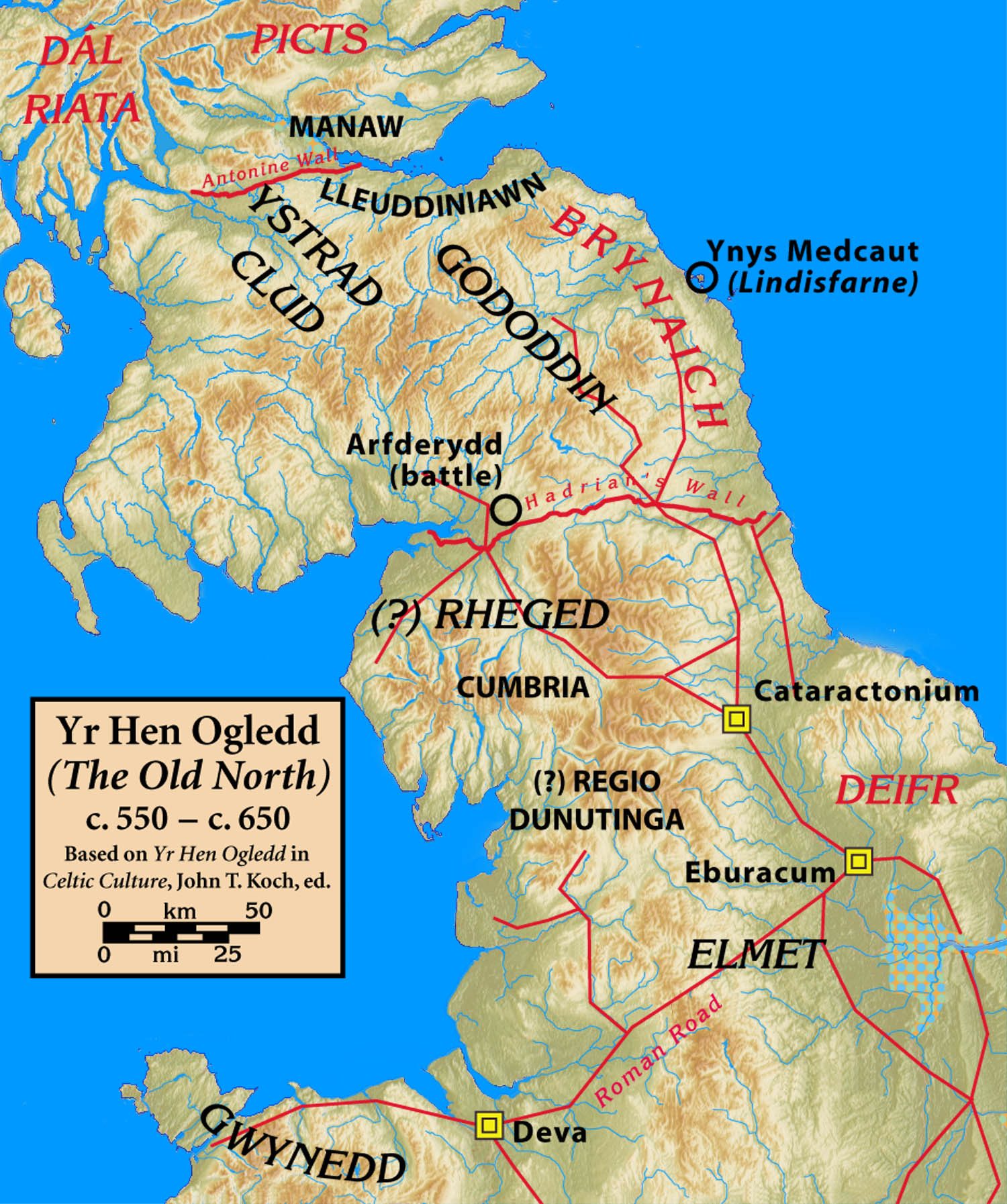
It is after this event, right at the end of Arthur’s rule, that Merlin travels north and participates in the Battle of Arderydd, a historical battle which occurred in c. 574. Therefore, Merlin would have left Arthur’s service at about the time of the birth of Arthur of Dyfed, if not long before.
Conflicting Evidence from the Book of Llandaff
However, supporters of this theory could point to the evidence from the Book of Llandaff. As we saw earlier, this makes Nowy son of Arthur a contemporary of Dubricius. Yet Dubricius was active in the first half of the sixth century. That would clearly place Arthur of Dyfed in the first half of that century too, or even the end of the fifth century.
It goes without saying that this completely contradicts the information in the genealogical records, which make Arthur a great-grandson of the Vortipor mentioned by Gildas.
Scholar Peter Bartrum referred to that particular land grant in the Book of Llandaff as an ‘obvious forgery’. More recently, scholar Patrick Sims-Williams described it this way:
“The grant by Nowy, king of Dyfed… is a clear forgery in support of one of Llandaf’s most preposterous claims.”
He later suggests that Nowy was chosen by the compiler of this forged land grant because one record, the Annales Cambriae, places the death of Dubricius in 612 (a date which is rejected by virtually all scholars as being many decades too late, although which could plausibly have been accepted by some medieval scribes).
A Secondary Part of the Arthurian Legends?
Nevertheless, the fact that Arthur son of Pedr could not possibly have reigned in the sixth century, fought at Badon, and been a contemporary of Arthur’s associates in the legends does not necessarily mean that he could not have at least partially been the real King Arthur.
After all, the legends of King Arthur all date from centuries after the events they purport to describe. Thus, it is entirely possible that the activities of later figures were incorporated into the tales. We see this, for example, in Geoffrey’s Historia Regum Britanniae, where an episode involving a certain Gormund appears to have been at least partially based on events that occurred in the ninth century, despite the story being set in the sixth century.
This being the case, could stories about Arthur son of Pedr have found their way into the Arthurian legends, making him partially the real King Arthur?
While there is nothing preventing this from being the case in theory, there is also no real active evidence for it. If this were the case, we would expect to see the legendary King Arthur associated with people and events from the seventh century. Yet, there is a striking absence of this in the legends.
Therefore, the evidence simply indicates that Arthur son of Pedr really did have nothing to do with the legends of King Arthur.
Conclusion
In conclusion, the theory that Arthur son of Pedr was the real King Arthur is attractive in the basic sense that this historical figure does fit the legendary character in some ways. For example, he really was called Arthur, and he reigned in southwest Wales in approximately the Arthurian era.
However, when we examine him more closely, we see that he cannot have been the real King Arthur. The crucial problem with this theory is the fact that he lived too late. The evidence clearly shows that he was born in the late sixth century or possibly even the early seventh century. This makes him many decades too late to be the historical Arthur, the victor of Badon. In fact, regardless of what the absolute date of Badon really was, the information provided by Gildas shows that Arthur son of Pedr cannot have been present at that battle, since his great-grandfather Vortipor was still ruling over four decades after that battle occurred.
Sources
Bartrum, Peter, A Welsh Classical Dictionary, 1993
https://arthurianweb.wordpress.com/2019/11/20/the-sword-in-the-stone/
https://www.earlybritishkingdoms.com/bios/arthwdf.html
https://www.historyfiles.co.uk/FeaturesBritain/BritishArthurTheKing.htm