Where Was King Arthur’s Royal Court of Celliwig?

In the Arthurian legends of Welsh tradition, King Arthur’s main royal court is a location called Celliwig, in a region called Cernyw. Can we identify this location? Was it somewhere in Cornwall, as traditionally believed? Or, rather, was it a location in Wales? This article examines the evidence.
What Was Gelliwg?
In Welsh tradition, Celliwig is the name of King Arthur’s royal court. Like many medieval kings, King Arthur evidently used a peripatetic system – that is, he travelled from one court to another, without a permanent base. Nevertheless, the strong implication from Welsh tradition is that Celliwig was one of Arthur’s most important royal residences, if not the most important.
It was said to have been in a location called Cernyw, also spelt Kerniw. This has traditionally been translated as ‘Cornwall’, since it is the Welsh word for Cornwall. However, it was also used for some other locations, which is why some researchers argue that it can be placed in Wales.
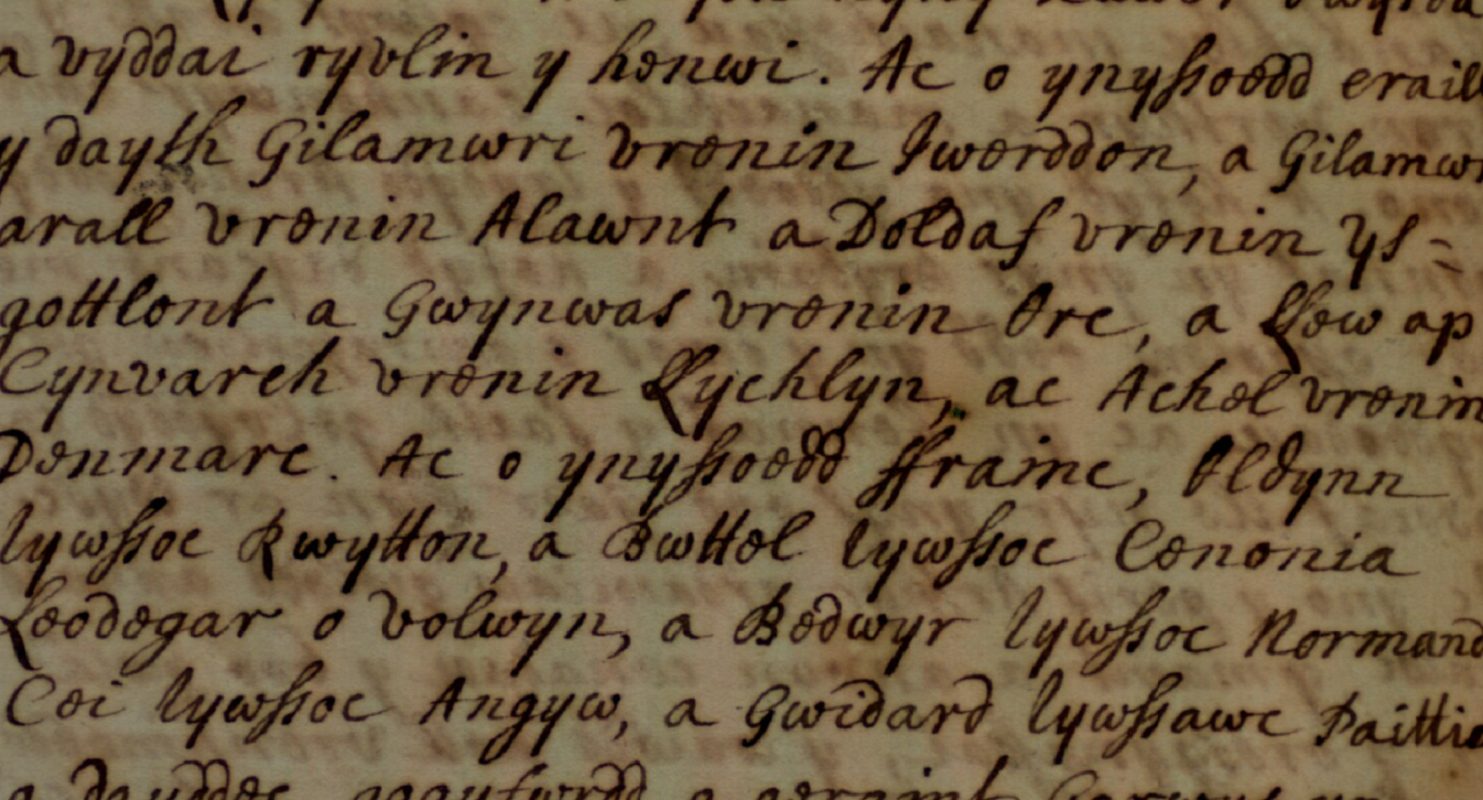
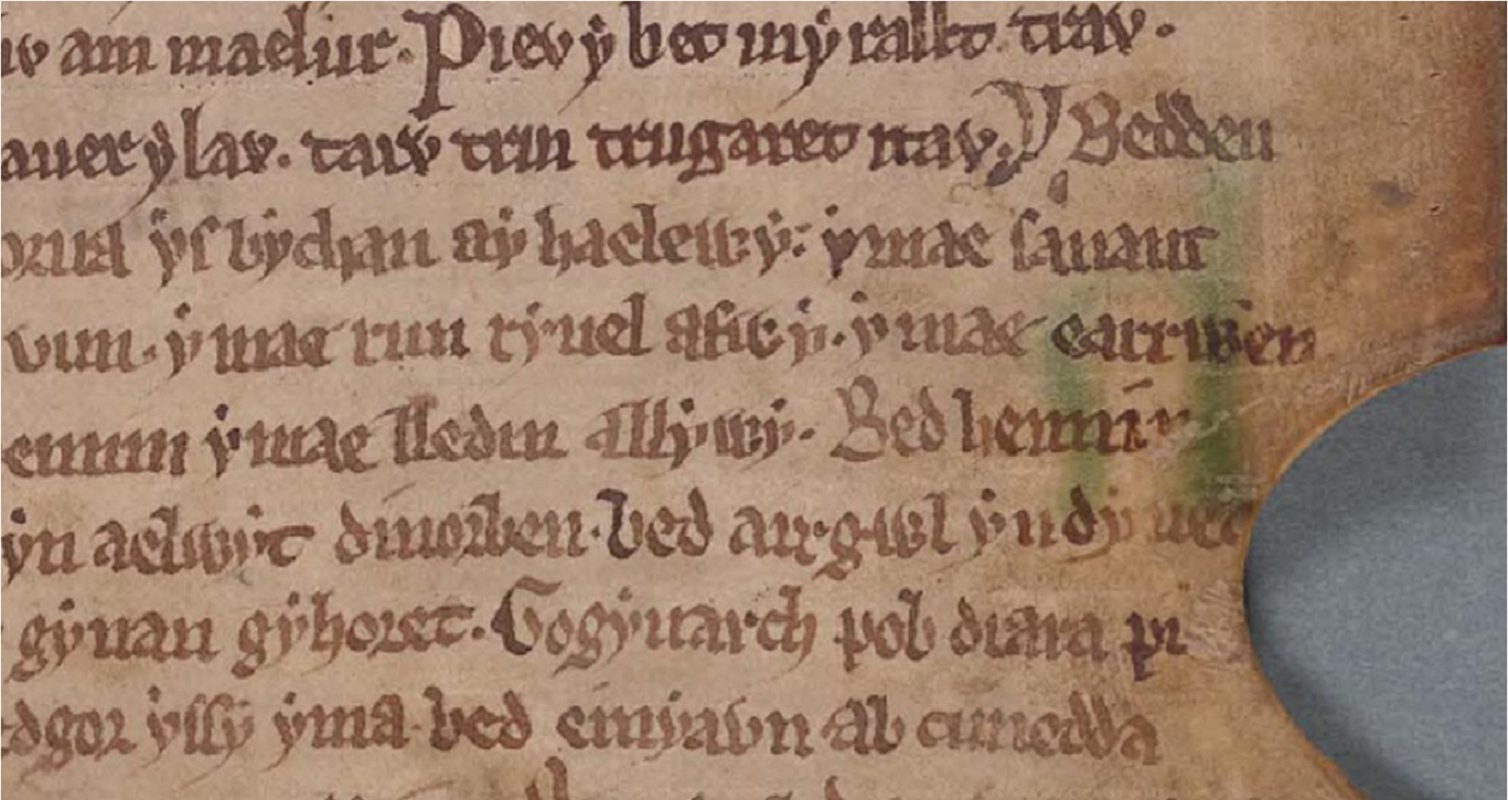
It appears that Celliwig is not mentioned in any non-Welsh Arthurian sources, unless it is mentioned by another name. Within Welsh tradition, it is mentioned in the Welsh Triads and also prose Arthurian tales.
From these sources, we can discern that it was one of Arthur’s royal residences. It had a large hall where Arthur would meet with his royal court and also with his many allies. The position of doorkeeper was a prominent role, this servant being responsible for who could enter. Furthermore, Arthur appointed a chief elder, evidently some kind of local governor who held power over Celliwig and likely over all of Cernyw.
Name
The name of Celliwig takes many different forms in the available records. The spelling ‘Celliwig’ is the commonest used today, but the form ‘Gelliwic’ is also seen. Very occasionally, ‘Gelliwig’ is used.
In the original Welsh texts, the spelling ‘Kelliwic’ or ‘Kelli Wic’ was common. However, another attested spelling from the medieval Welsh sources is ‘Kelliwyc’.
Etymology
The origin of the place name ‘Celliwig’ is widely understood to be ‘forest grove’, although other possibilities have been proposed. Nevertheless, there is essentially universal agreement that the first part, ‘Celli’, means ‘grove’.
It is the second part, ‘wig’, that causes controversy. One suggestion is that it is related to the Latin ‘vicus’ and the Anglo-Saxon ‘wich’, both of which refer to a settlement. In other words, this would mean that ‘Celliwig’ means ‘grove-town’.
However, it appears that the most respected scholarly opinion connects ‘wig’ to the Welsh word ‘gwig’, meaning ‘forest’ or ‘wood’. This is where the proposed meaning of ‘forest grove’ comes from.
Celliwig in the Welsh Triads
The Welsh Triads is the term for a medieval collection of many dozens of traditions grouped into threes. They are primarily concerned with King Arthur’s era, referring to events, people, places, and even objects.
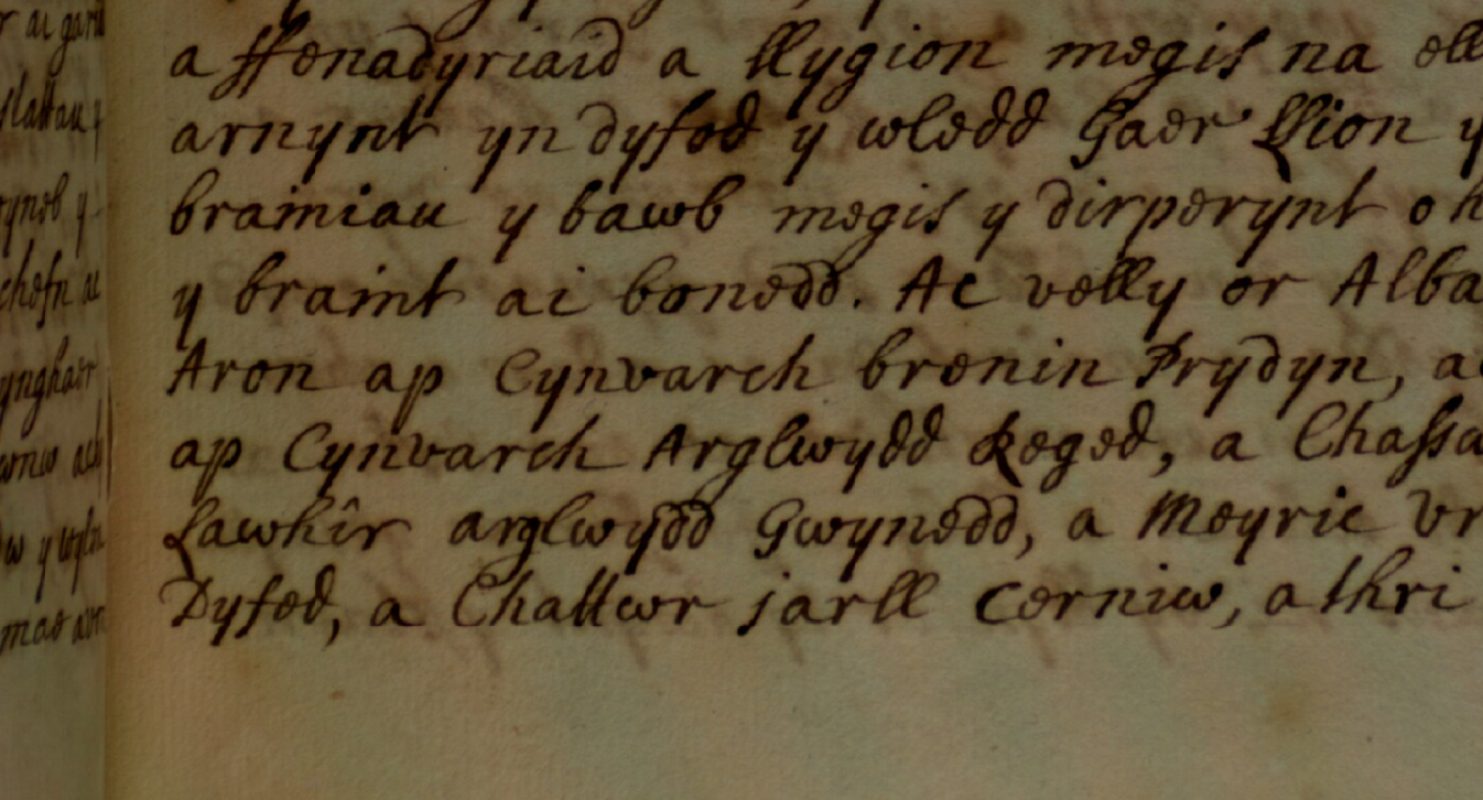
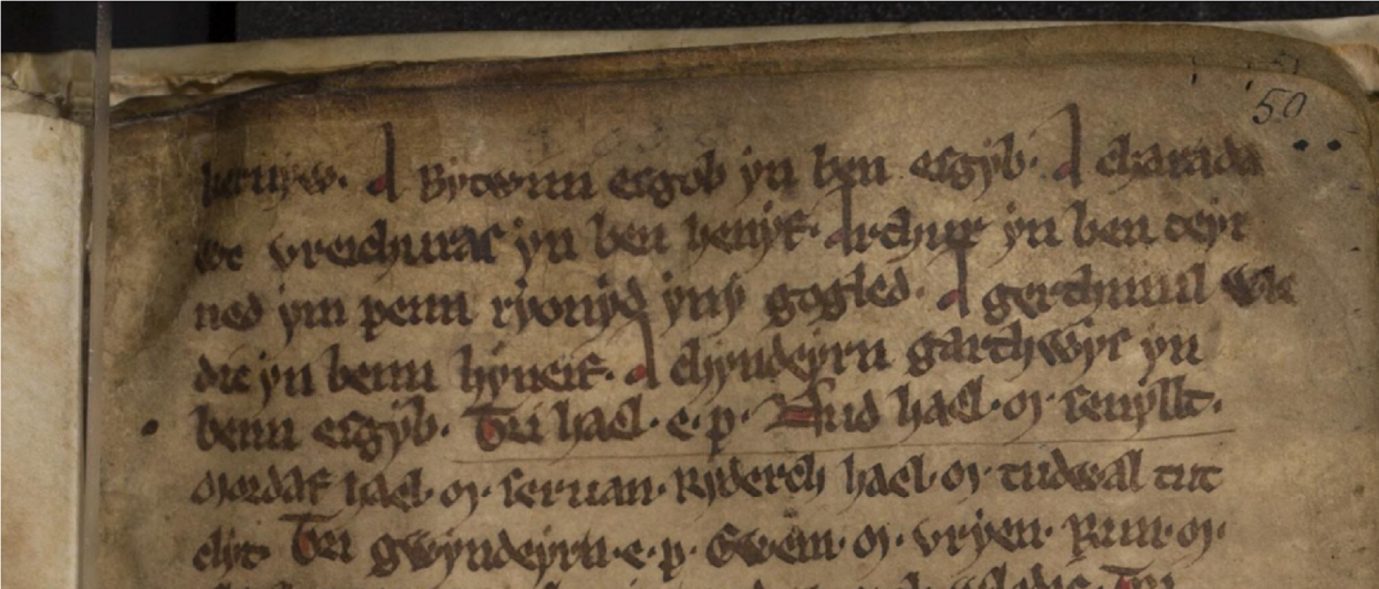
The very first triad refers to Celliwig. The triad is entitled: Three Tribal Thrones of the Island of Britain. The second entry in this triad, as translated by Rachel Bromwich, reads:
“Arthur as Chief of Princes in Celliwig in Cornwall, and Bishop Bytwini as Chief of Bishops, and Caradawg Strong-Arm as Chief of Elders.”
The first entry in this triad speaks of the tribal throne, or royal court, at St David’s in Dyfed, while the third refers to the tribal throne of Pen Rhionydd in the North.
Understanding Celliwig’s Relationship to the Other Courts
As we can see, the court of Celliwig was one of the three most significant of Arthur’s courts, of which he likely had many. Given the great geographical distance between St David’s in Dyfed (southwest Wales) and Pen Rhionydd in the North (northern England, southern Scotland), it might be reasonable to suppose that Celliwig was probably some distance from both of these locations.
It would be strange for two of the locations to be right next to each other while the third was very far away. Therefore, perhaps these are the three most prominent royal courts in the three locations in which Arthur held the most influence.
One may have been in his own territory, the territory directly ruled by him. The other two, meanwhile, may have been the most significant royal courts in the two areas most strongly under his indirect control.
Of course, this is only speculative. Nevertheless, this would be consistent with the fact that the North, where Pen Rhionydd was, was also the region ruled partially by Lot, Arthur’s own brother-in-law. It was also ruled by Lot’s brothers, Arawn and Urien.
According to the Historia Regum Britanniae, these brothers were installed directly by King Arthur himself, so this would make sense of him having considerable indirect control over the area.
The region of Dyfed in southwest Wales is near, but not in, where Arthur is normally associated in the Arthurian legends. This, again, is consistent with the idea that Triad 1 is referring to two royal courts in territories over which Arthur exerted strong influence, with only one of them being within the territory over which Arthur directly ruled.
The Administration of Celliwig
According to Triad 1, two prominent individuals associated with Celliwig were Bishop Bytwini and Caradawg Strong-Arm. These figures are better known as Bishop Bedwini and Caradog Freichfras. Both of them appear in other Arthurian sources.
In other translations of the Welsh Triads, Bedwini is called the ‘Chief Bishop’ rather than ‘Chief of Bishops’, while Caradog is called the ‘Chief Elder’ rather than ‘Chief of Elders’. However, regardless of which rendering is followed, the basic idea is clearly the same.
Bishop Bedwini
Bedwini is by far the more enigmatic of the two. He only appears in a few other sources, and his origins are obscure. Given that he was allegedly the most prominent bishop at one of Arthur’s most important courts, it is very surprising that he does not seem to appear in other medieval documents. In contrast, the Chief Bishops of the other two courts in Triad 1 appear in historical documents.
Interestingly, in Gwent, southeast Wales (where many traditions place King Arthur), there is a location called Bedwin Sands. It has been suggested that this was named after the bishop.
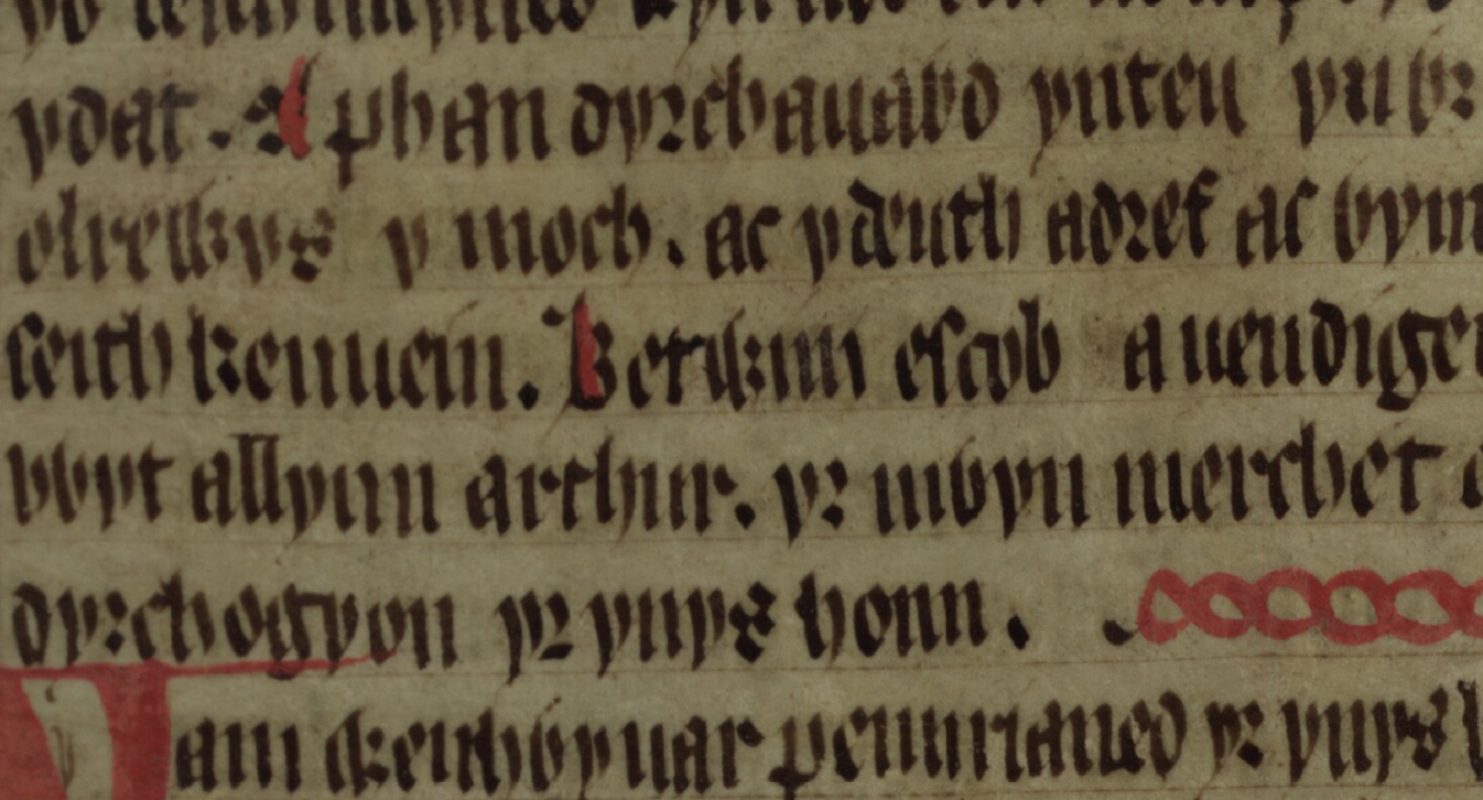
Outside of this reference to him in the Welsh Triads, Bedwini also appears in the Welsh prose tale Culhwch and Olwen, written in c. 1100. There, he appears as Arthur’s bishop at Celliwig.
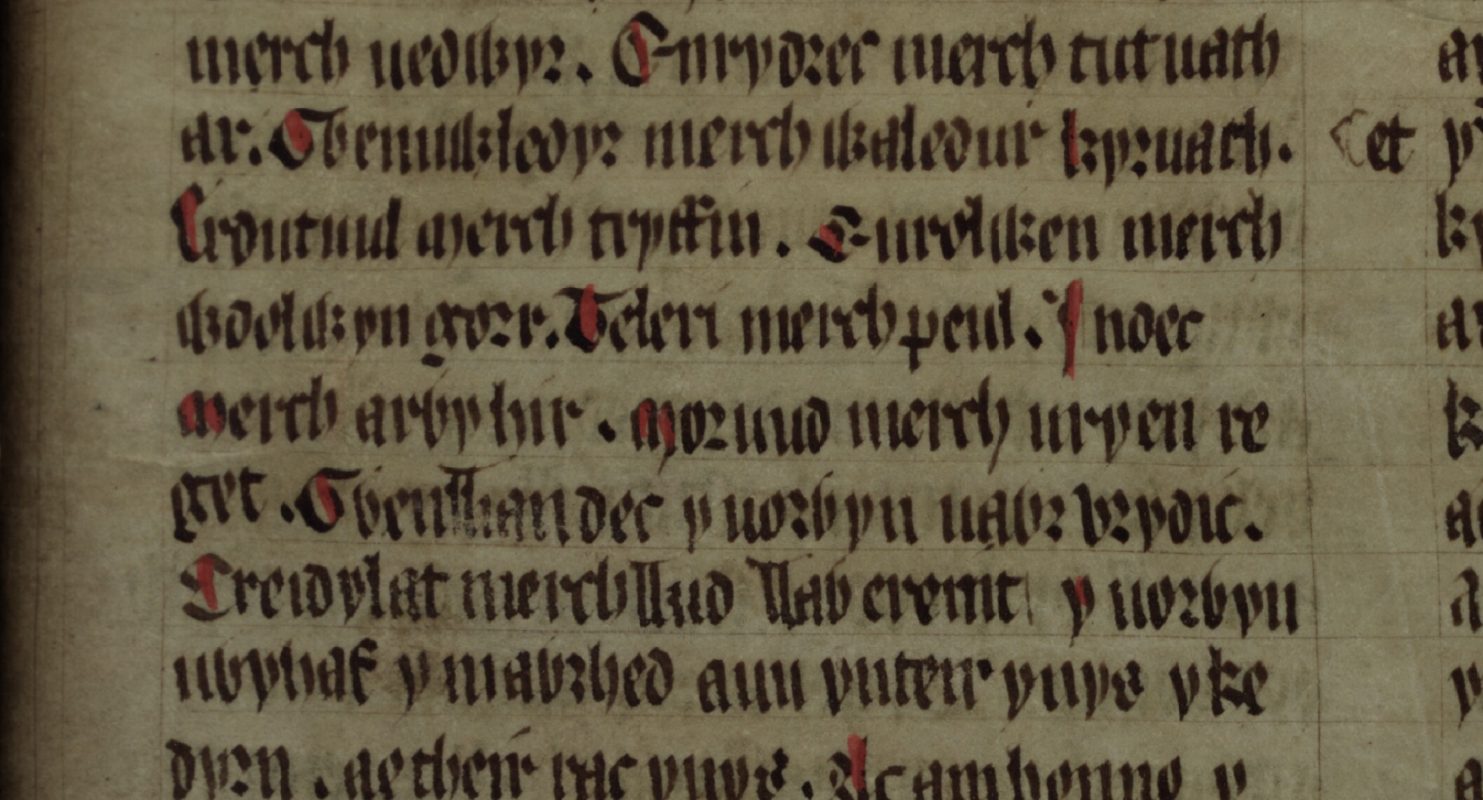
He is also mentioned in Englynion y Clyweid, found in the Red Book of Talgarth, or the Llanstephan MS 27. Occasionally, he appears in Middle English Arthurian romance tales, where his name is written as ‘Bawdewyn’ and similar variations.
Chief Elder Caradog Freichfras
The Chief Elder of Celliwig is much better attested in the sources. He was Caradog Freichfras, whose name translates as ‘Strong-Arm’. The earliest text that mentions him is the Life of St Padarn, which was probably written in c. 1120.
According to this text, Caradog extended his rule across the boundaries of Britain and took Letavia, which was the word normally used for Brittany. However, there is evidence that Letavia (or ‘Llydaw’ in Welsh) was also used to refer to a region in Brycheiniog, above Glamorgan.
This is consistent with the fact that Welsh tradition tends to associate Caradog with Radnorshire and Herefordshire, which are both not far from Brycheiniog.
Caradog also appears in The Dream of Rhonabwy, a Welsh prose Arthurian romance, as one of King Arthur’s closest counsellors. He was remembered as the son of Llyr Marini. It is possible, although far from certain, that he might be identifiable as the Caradog who appears in the Four Branches of the Mabinogion as the son of Bran ap Llyr.
Ravaged by Mordred
This is not the only appearance of Celliwig in the Welsh Triads. Another triad describes it as suffering an attack from Medrawd, King Arthur’s treacherous nephew better known as Mordred. The triad is Triad 54, entitled: Three Violent Ravagings of the Island of Britain. The first entry, translated by Rachel Bromwich, reads:
“One of them was when Medrawd came to Arthur’s court at Celliwig in Cornwall; he left neither food nor drink in the court that he did not consume. And he also dragged Gwenhwyfar from her royal chair, and then he struck a blow upon her.”
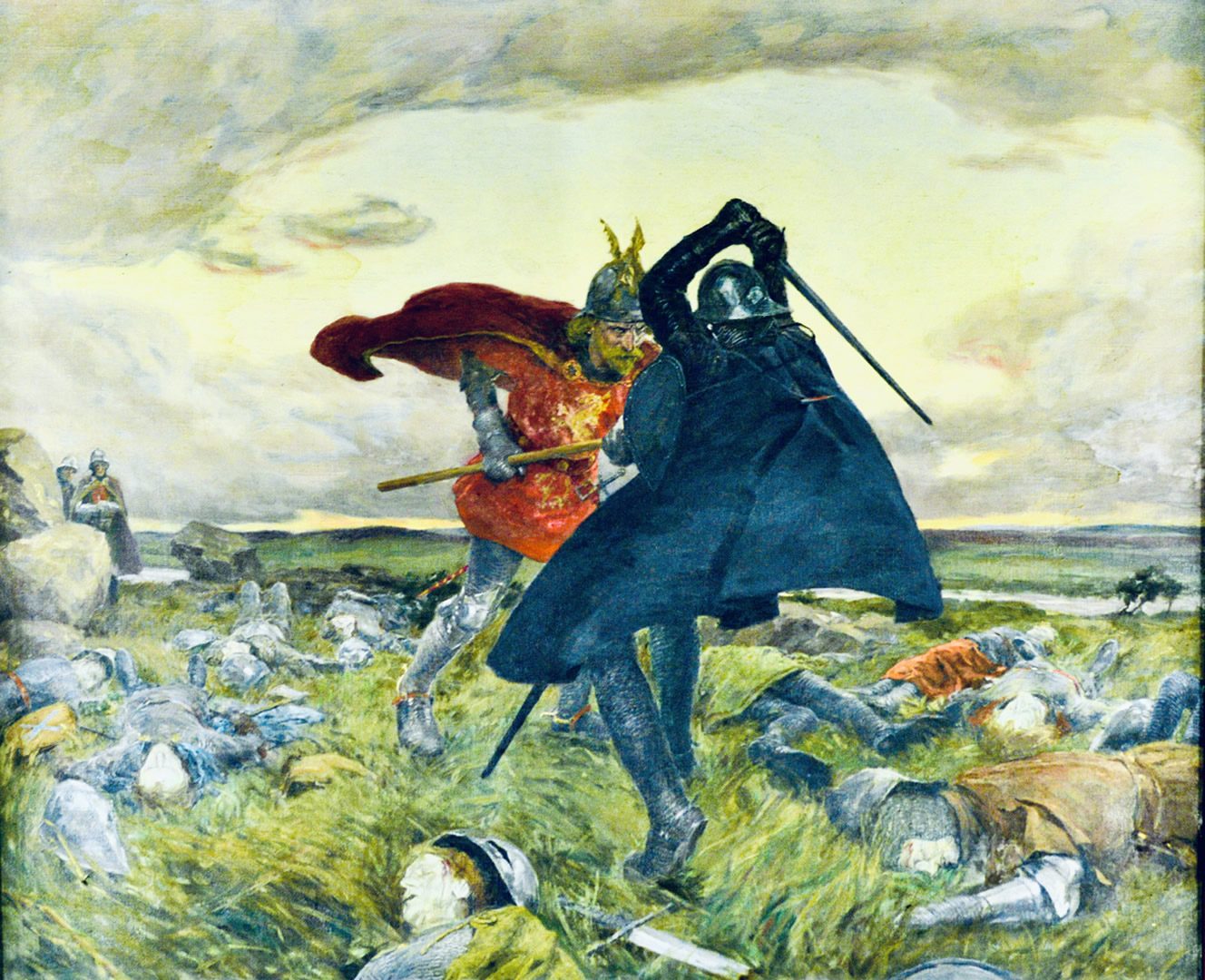
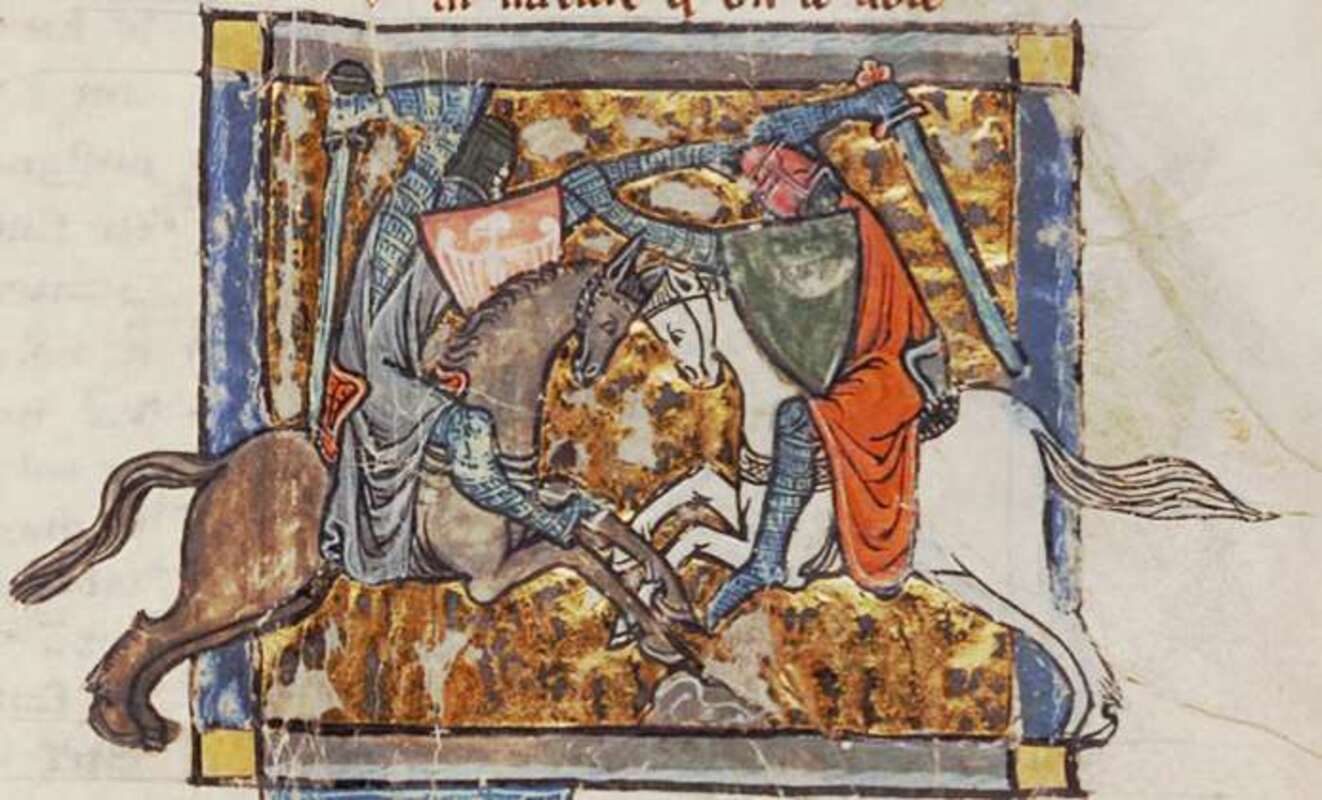
Although the triad does not explicitly explain this, it is evident that this takes place in the context of Mordred’s rebellion against King Arthur, which rebellion eventually led to the Battle of Camlann. According to other sources, such as Geoffrey of Monmouth’s Historia Regum Britanniae, Mordred initiated this usurpation of Arthur’s throne while Arthur was away in Gaul.
Just like the other triad in which Celliwig appears, this triad strongly suggests that Celliwig was Arthur’s main royal residence, hence why Gwenhwyfar (Guinevere) was there.
Celliwig in Culhwch and Olwen
Celliwig appears prominently in the Welsh prose tale Culhwch and Olwen. This was written in c. 1100 and tells the story of Culhwch attempting to win the hand of Olwen in marriage by completing a serious of seemingly impossible tasks. Culhwch’s cousin, King Arthur, helps him with these tasks.
Near the start of the tale, when Culhwch realises that he will need his cousin’s help, he travels to Celliwig to request his assistance. There, he tries to convince the doorkeeper, Glewlwyd, to let him in.
During this interaction, the doorkeeper provides a description of what life is like at Celliwig. His description is:
“The knife is in the meat, and the drink is in the horn, and there is revelry in Arthur’s hall, and none may enter therein but the son of a king of a privileged country, or a craftsman bringing his craft. But there will be refreshment for thy dogs, and for thy horses… and food for fifty men shall be brought unto thee in the guest chamber, where the stranger and the sons of other countries eat, who come not unto the precincts of the Palace of Arthur… A lady shall smooth thy couch, and shall lull thee with songs.”
Based on this description, we learn that Arthur’s had a palace at Celliwig. This was a restricted location, open only to those privileged to have Arthur’s favour. There was drinking and feasting there.
However, such luxuries were not limited to the palace. Celliwig was a place where even the guests outside were well attended.
Celliwig’s Importance
The tale strongly suggests that Celliwig was effectively at the political centre of Arthur’s kingdom. This is indicated by the fact that as Arthur and his men are pursuing a monstrous boar (called the Twrch Trwyth) across South Wales, Arthur declares that he will not allow the boar to entre Cernyw.
This clearly shows that Cernyw was very important to Arthur. Since Cernyw was the region in which Celliwig was located, this shows that Celliwig was evidently within the most important part of Arthur’s territory.
As we saw earlier, Triad 1 mentions Celliwig as Arthur’s royal court in Cernyw. This indicates that there was no other court within Cernyw that was more important than Celliwig – otherwise, surely the Welsh Triads would have mentioned that one instead of Celliwig.
Therefore, it would appear that Celliwig was the most important of all of King Arthur’s royal courts.
Celliwig in Geoffrey of Monmouth’s Historia Regum Britanniae
It is commonly held that the Historia Regum Britanniae, written by Geoffrey of Monmouth in 1137, does not mention Arthur’s royal court of Celliwig. Certainly, it does not explicitly appear by that name.
However, this does not necessarily mean that Geoffrey did not mention this place. After all, he regularly translates Welsh place names, sometimes in ways which cause serious confusion.
For example, there is reason to believe that at least some of his references to Winchester, in England, are actually mistranslated from ‘Caerwent’ in southeast Wales.
In accord with this line of thinking, is there any site in Geoffrey’s account of Arthur’s life that could be connected with the Celliwig of Welsh tradition? As it happens, there is such a place.
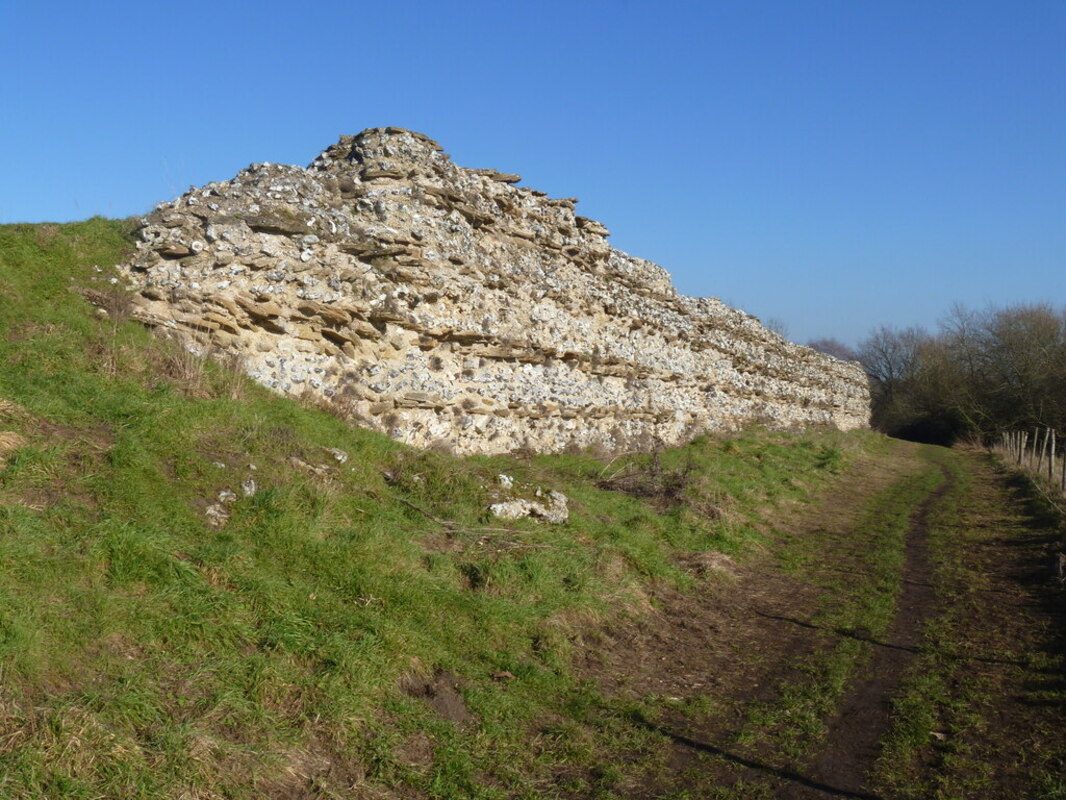
Right at the start of Geoffrey of Monmouth’s account of Arthur’s life, at the start of Book 9, we find the following significant statement:
“Uther Pendragon being dead, the nobility from several provinces assembled together at Silchester, and proposed to Dubricius, archbishop of Legions, that he should consecrate Arthur, Uther’s son, to be their king… Dubricius, therefore, grieving for the calamities of his country, in conjunction with the other bishops, set the crown upon Arthur’s head.”
According to this, Arthur was crowned at Silchester. This is a fascinating claim which surely indicates that Silchester was a very important part of Arthur’s kingdom. After all, a king would normally be crowned at his capital city, or his most important royal court.
Evidence That Geoffrey’s Silchester Was Actually Celliwig
With this in mind, let us consider the Roman name of Silchester. It was known as Calleva, or Calleva Atrebatum. This is a place name meaning ‘the wooded town’.
Respected scholar John Koch referred to Silchester’s Roman name as ‘philologically workable’ as a match for the Celliwig of Arthurian tradition, though he noted that its geographical placement does not match the fact that Celliwig was said to have been in Cernyw.
Nevertheless, the important point for this consideration is the fact that the name is a plausible match. However, would this also have applied in Geoffrey of Monmouth’s time?
Attested forms in the thirteenth century include ‘Ciltestere’ and ‘Cilcestre’. Geoffrey would have undoubtedly known that ‘cestre’ was simply a term referring to a type of settlement. As such, he could easily have interpreted ‘Kelli Wic’ as the place name ‘Kelli’ along with the Latin ‘vicus’ or English ‘wich’, meaning a settlement.
Therefore, it is not by any means a stretch to imagine that Geoffrey could have understood this to have been the ‘Cilcestre’ of his own time. With this being the case, given that he describes Silchester as the location at which Arthur was made king, it seems very likely that this is a reference to the Celliwig of Welsh tradition.
Where Was Celliwig?
Undoubtedly the biggest question surrounding Celliwig is: Where was it? The exact location of this royal court continues to be debated by scholars today. In fact, there are even those who debate not only its exact location, but even its general placement in Britain.
Common Identifications
The most common identifications of Celliwig are based on the usual translation of ‘Cernyw’ as ‘Cornwall’. This is the Welsh word for that region, so this identification is ostensibly logical. With this in mind, which locations have scholars suggested as the real Celliwig?
Callington
Perhaps the most famous location to be identified as Celliwig is Callington. This is a town in eastern Cornwall. It started to be identified as Celliwig in 1816 due to the superficial similarity between the name of this place and that of Arthur’s court.
In older records, this name of this town was written as ‘Kellyton’. This is more similar to ‘Celliwig’ than the modern ‘Callington’, making it easier to see how the two names might be connected. Something else that makes this possibility attractive is that there is an Iron Age hillfort nearby, called Cadson Bury.
Objections to This Identification
One issue with this identification is that the connection between the name ‘Kellyton’ and ‘Celliwig’ is not very strong. The element ‘Celli’, meaning ‘grove’, is very common. There are plenty of locations in Brythonic territories which preserve this same element. Therefore, there is really nothing particularly notable about this location simply based on the name.
Regarding the nearby Iron Age hillfort, Cadson Bury, this would only be significant if there was evidence of it being reoccupied in the sixth century, King Arthur’s time. This does not appear to be the case.
Castle Canyke
Another location in Cornwall that has proven quite popular is Castle Canyke. This is a hillfort not far from Bodmin, Cornwall. The proposed connection to Celliwig is primarily on the basis of it being close to locations with the place name ‘Callywith’. For example, a short distance northeast of Castle Canyke is Callywith Wood. Just to the northwest of that wood is the place name Callywith on its own.
Apart from the final ‘th’, this is essentially the same as ‘Celliwig’. Since it is in Cornwall, this makes it an attractive location for the real Celliwig in Cernyw.
Unlike in the case of Callington, at least one archaeologist has argued that there was evidence for a fifth or sixth century settlement within this Iron Age hillfort. If correct, then this opens up the distinct possibility that it was used by King Arthur.
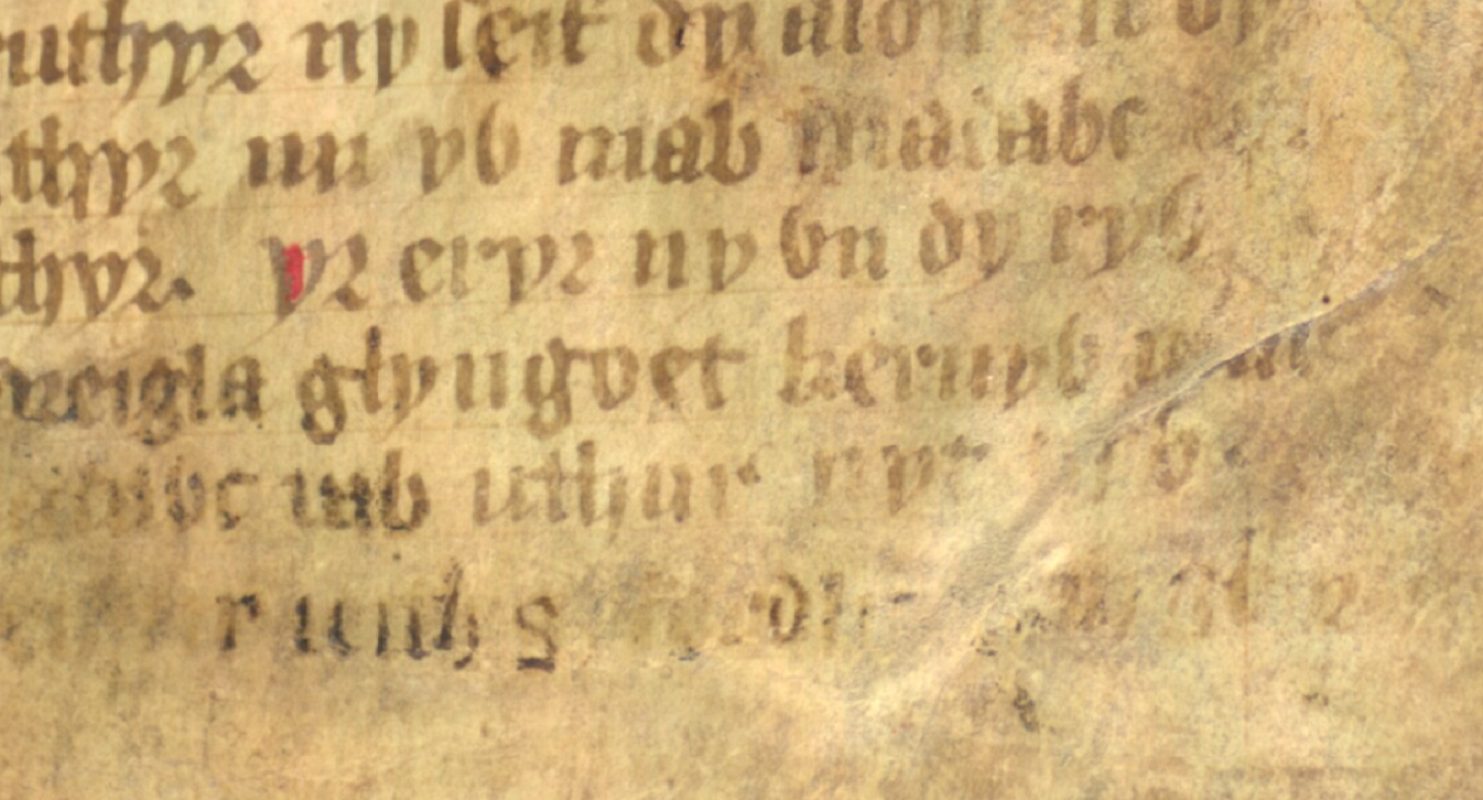
In further support of this identification, Arthurian researcher August Hunt pointed out that another nearby place name is Little Cutmadoc Farm. In view of this, he pointed to the Welsh poem Arthur and the Eagle, in which Arthur’s nephew Eliwlod is associated with a place called ‘Glyn Goet Kernyw’, or the ‘Valley of Cernyw Wood’.
On this basis, he argued that Madoc’s name being preserved near Castle Canyke provided notable supporting evidence for this being the location of Celliwig.
Objections to This identification
This proposal is a fairly reasonable, logical, and coherent identification. There is no major flaw in the argument. The only issue is that there is no demonstrable evidence that ‘Callywith’ was earlier ‘Celliwig’, although the two place names are admittedly close.
However, it is important not to overstate the case for this identification. August Hunt’s argument using the poem Arthur and the Eagle is riddled with flaws. For one thing, the poem does not associate Eliwlod with Celliwig, much less his father Madoc.
It goes without saying that Cernyw was a region which had more than notable site within it. As we have seen, the traditional interpretation understands it to be Cornwall, which has countless distinct and notable sites spread throughout it.
Therefore, the fact that Eliwlod was associated with the Valley of Cernyw Wood does not necessarily mean that he had any particular association with Celliwig in Cernyw. Furthermore, Eliwlod’s whereabouts cannot be assumed to be the same as his father Madoc’s.
With these facts in mind, there is really very little significance in the place name ‘Little Cutmadoc Farm’ near Castle Canyke.
Kelly Rounds
Another popular location is Kelly Rounds. This was tentatively supported by scholar Rachel Bromwich. This is an Iron Age hillfort in the parish of Egloshayle, Cornwall.
Some sources highlight the fact that some Dark Age Roman pottery has been found at this site, suggesting that it was reoccupied in Arthur’s era. This, of course, would allow it to have been one of Arthur’s courts.
Objections to This Identification
Despite its popularity, there is really very little to support this identification. Just like with Callington, the big problem with this argument is that it is based almost entirely on the first part of the name ‘Celliwig’, despite the fact that this was a very common place name element.
What about the evidence of reoccupation? While it is true that some Dark Age pottery has been found, it is not extensive. In fact, it appears that only two fragments of pottery have been found. If this was Arthur’s court of Celliwig, where much feasting was said to have taken place, then surely we would expect to see much more evidence of occupation in Arthur’s time.
In other words, the evidence used to support this identification is very weak, and the evidence that we would expect to see is not there.
Outside of Cornwall
So far, the locations that we have examined have all been in Cornwall, in line with the standard identification of Cernyw as Cornwall. However, not all scholars accept this standard interpretation. In fact, there is very good reason to believe that the place name ‘Cernyw’ could have been used for a number of other regions.
To be sure, this was indeed the Welsh name for Cornwall. However, the reason why this name existed is important to understand. Scholars generally agree that it evidently derived from the name of the tribe that lived in that area, a tribe called the Cornovii.
Another Possible Cernyw
The crucial fact that we need to recognise is that this was not the only tribe in Britain by that name. According to Ptolemy, there were two other tribes in Britain which had that name. One was in the far north, their exact location being unknown. Based on Culhwch and Olwen, it is obvious that Celliwig was somewhere towards the south of Britain.
More importantly, Ptolemy reveals that there was a tribe in the Midlands called the Cornovii. They occupied the area by the border of Wales and England, above Gloucestershire and probably most of Herefordshire. In the Roman era, their capital was Wroxeter in Shropshire.
Based on this fact, it is entirely possible that the place name ‘Cernyw’ – a direct derivative of ‘Cornovii’ – was also applied to locations which formed part of the territory of this tribe in the Midlands.
In addition to this, there is evidence that this tribal name was also sometimes applied to the Dobunni, the tribe which bordered them to the south. This has led to suggestions that the Dobunni was actually a branch of the Cornovii of the Midlands.
For example, the town of Wanborough in Wiltshire, which was in the territory of the Dobunni, was called Durocornovium, which clearly preserves this tribal name. To be clear, this was not on the border between the Dobunni and the Cornovii to the north. This was in the southern part of the territory of the Dobunni.
Another site in the southern part of the Dobunni’s territory was Cirenchester, known in Roman times as Corinium Dobunnorum. It has been suggested that ‘Corinium’ derives from ‘Cornovii’, it being a mistake for ‘Cornium’.
Based on these facts, the regional name ‘Cernyw’ might have been preserved anywhere within the former territory of the Cornovii tribe or, indeed, the Dobunni tribe. Then, of course, there is the issue that these tribes might have migrated in the post-Roman period, expanding this geographic range even further.
Evidence of Cernyw in Southeast Wales
However, there is some direct evidence that specifically points to southeast Wales as one of the only places (if not the only place) where this regional name was preserved. For one thing, this is indicated by modern place names.
Near Newport in Gwent is the place name Coedkernew. This translates to ‘Cernyw Wood’. The similarity between this place name and the reference to Glyn Goet Kernyw (the Valley of Cernyw Wood) is notable.
Evidence from the Welsh Triads
However, perhaps most significantly is the statement in Triad 26 of the Welsh Triads. Here, we find an explicit statement that Penryn Awstin was in Cernyw. It was said to have been opposite Aber Tarogi, or Troggy Brook, which is in Gwent. Penryn Awstin is generally thought to be Aust Cliff today, in Bristol.
This would mean that ‘Cernyw’ was a term that could apply to the land just opposite southeast Wales, barely a mile away. While this is not within the Welsh side of the Severn, it would not have been unusual in that era for a region to have straddled both sides of the river, just as the Dobunni tribe themselves did.
Evidence from Individuals
This conclusion is further supported by the fact that several individuals associated with southeast Wales were explicitly connected to the place name ‘Cernyw’. For instance, the Descent of the Men of the North refers to a certain Tudfwlch as the prince of Cernyw. He was very probably Teithfallt, king of southeast Wales.
Another example is King Glywys. He was the king of Glywysing, essentially equivalent to today’s Glamorgan, which is just to the west of Gwent. He is called ‘Glywys Cerniw’ and other variations in some medieval records.
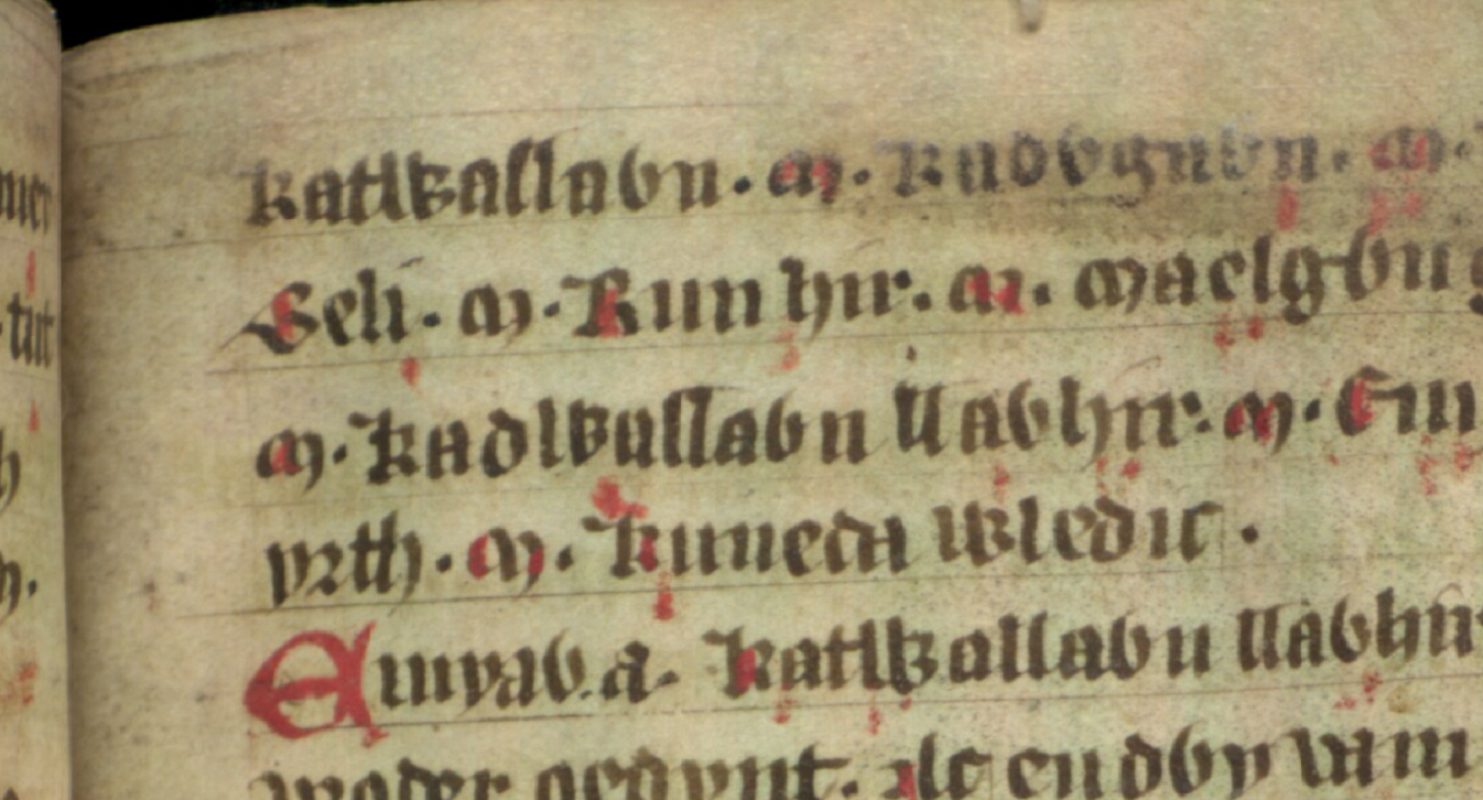
Yet another example comes from the records about Brychan, a king who ruled over Brycheiniog just north of Glamorgan and Gwent. In the Harleian MS 2414, folio 68v, his wife Aurbost is called the daughter of the prince of Kerniw. Given Brychan’s location, this supports the conclusion that Kerniw, or Cernyw, was somewhere near southeast Wales.
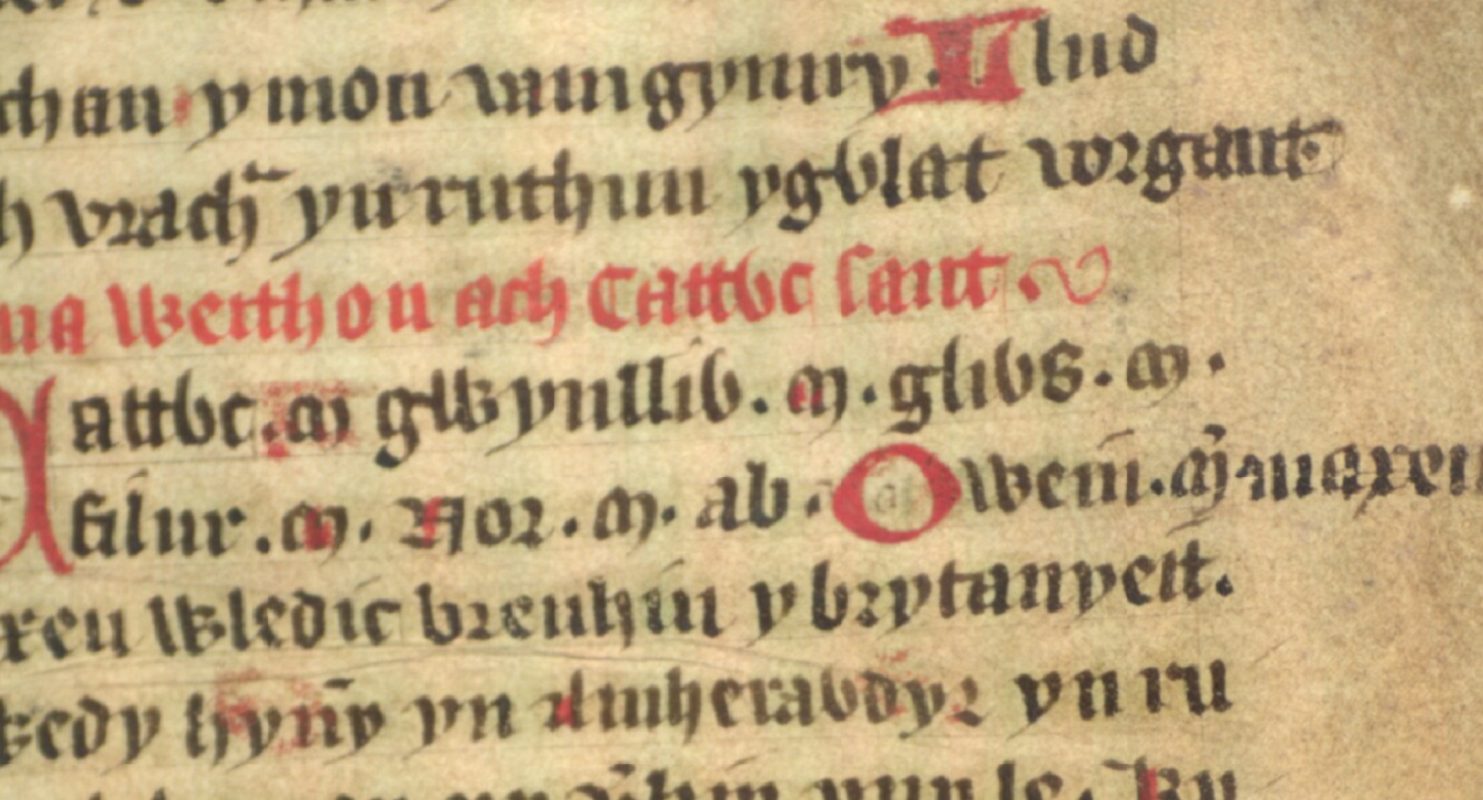
This would also be far more consistent with Caradog Freichfras’ position as chief elder of Celliwig than a location in Cornwall. As mentioned earlier, Welsh tradition associates Caradog with Radnorshire and Herefordshire. This is thoroughly consistent with the location of the Cornovii and the Dobunni in general.
Bedwini’s association with Celliwig in Cernyw is supports this. On the south coast of Gwent, there is an area called Bedwin Sands.
As mentioned earlier, he is a very enigmatic figure, not appearing in any historical documents. However, a good case can be made that he should be identified with a figure who appears in the twelfth-century Book of Llandaff named Bethin. His name is a linguistic match, unlike any other attested figure of the era. Notably, he is said to have been the princeps of Lanndougarth, identified as Doward in southern Herefordshire.
Evidence from Poetry
Another line of reasoning that has been used in favour of a Welsh Cernyw is based on the poem Trawsganu Kynan Garwyn mab Broch. This possibly dates back to the sixth century, potentially being composed by Taliesin. In this poem, mention is made of Cynan Garwyn threatening Cernyw.
Naturally, this has traditionally been interpreted as a reference to a conflict between Cynan and the region of Cornwall. Indeed, this could well be the case, since Geoffrey of Monmouth in the Historia Regum Britanniae refers to Aurelius Conan (almost certainly Cynan Garwyn) as the killer of Constantine of Dumnonia.
However, since Cynan Garwyn was the king of Powys, which took up much of the eastern border of Wales, a Cernyw in southeast Wales makes more sense from a geographical perspective. It would have been right on Cynan’s doorstep, so to speak. Unfortunately, since the poem does not provide any more details, it is impossible to determine which Cernyw is meant.
Evidence from Culhwch and Olwen
Welsh prose Arthurian tales also provide support for a location in southeast Wales for the Cernyw in which Celliwig was located. One particularly notable example is Culhwch and Olwen. This describes a boar hunt across the southern half of Wales, going from west to east.
After chasing the boar, Twrch Trwyth, from Dyfed to the region just above Glamorgan, travelling eastwards, Arthur declares the following:
“Twrch Trwyth has slain many of my men, but, by the valour of warriors, while I live he shall not go into Cernyw. And I will not follow him any longer, but I will oppose him life to life.”
At this, Arthur gets his men to push Twrch Trwyth down into the Severn. Since the boar is shown to be able to traverse water without issue, it is evident that this was not for the purpose of drowning the boar. Rather, it was clearly for the purpose of changing its direction.
If Arthur did not want the boar to go to Cornwall, then this action is the exact opposite of what we would expect, since it resulted in pushing the boar closer to Cornwall. Previously, Twrch Trwyth was not going in that direction.
On the other hand, Arthur’s actions make perfect sense if we interpret Arthur’s Cernyw as a region of southeast Wales, since that was exactly the direction in which the boar was headed.
Some might object to this argument on the basis that the Twrch Trwyth is said to have finally managed to get to Cornwall some time after crossing over to the other side of the Severn. However, this is not what the text actually says.
What it really says is that Arthur’s men pushed the boar into the Severn. The boar is then said to have ‘regained the ground with its feet’, before then rushing towards Cernyw. There is nothing in the expression ‘regained the ground with its feet’ which suggests that it crossed the Severn. It is just as logically interpreted as meaning that it managed to get back to the shore that it had been pushed from, meaning that it was still on the Welsh side of the Severn.
Based on the account in Culhwch and Olwen, it is clear that the Cernyw which Arthur was concerned about was not Cornwall. Rather, it must have been the Cernyw in southeast Wales.
Celliwig in Southeast Wales
With the above arguments in mind, it is evident that we should look for a Celliwig in that area. As it happens, there is a place that was known by that name a few miles from Abergavenny, Gwent. According to historian Scott Lloyd, four tenth-century manorial records refer to a certain ‘Gelli-Wig’ in that area, closely associated with Llanvetherine.
In view of the fact that this was within what was evidently a region called Cernyw in the medieval era, this is almost certainly the Celliwig of Arthurian tradition.
Where exactly Arthur’s court was is yet to be established. Nearby is White Castle, which was built by the Normans. Could it have been built over a previous site, perhaps the royal court of Celliwig? Perhaps future excavations will confirm or rule out this possibility. In any case, Arthur’s Celliwig was evidently in or near Llanvetherine.
Conclusion
In conclusion, King Arthur’s court of Celliwig was said to have been in a region called Cernyw, usually identified as Cornwall. It was one of his most important royal courts. Caradog Freichfras was its chief elder, while Bishop Bedwini was its chief bishop.
Celliwig has been identified with several different locations, mostly in Cornwall. Popular suggestions include Kelly Rounds and Callington. However, a plethora of evidence suggests that there was a region in southeast Wales, perhaps straddling Gwent and Ergyng (which covered much of Gloucester and Herefordshire) named Cernyw. The Arthurian material suggests that this was the Cernyw in Arthur’s territory. This being so, Celliwig was almost certainly Llanvetherine, recorded in medieval documents as Gelli-Wig.
Sources
Bartrum, Peter, A Welsh Classical Dictionary, 1993
Bromwich, Rachel, Trioedd Ynys Prydein: The Triads of the Island of Britain, 2014
Howells, Caleb, King Arthur: The Man Who Conquered Europe, 2019
Charles-Edwards, T M, Wales and the Britons: 350-1064, 2012
Lloyd, Scott, The Arthurian Place Names of Wales, 2017
Reno, Frank, The Historic King Arthur: Authenticating the Celtic Hero of Post-Roman Britain, 1996
Fulford, Michael, Silchester Revealed: The Iron Age and Roman Town of Calleva, 2021
Strange, Oliver, The Lost Land of the Cornovii, 2025
https://web.archive.org/web/20220117114409/http://www.arthuriana.org/gazetteer.htm
https://mistshadows.blogspot.com/2018/02/the-location-of-kelliwic.html