Garwen daughter of Henin Hen, Concubine of King Arthur

Garwen is an extremely minor character in the Arthurian legends, but she was remembered for being one of King Arthur’s lovers, so it is evident that there was a much larger tradition around her that has simply been lost. Based on the surviving evidence, what do we know about this character, Garwen daughter of Henin Hen?
Who Was Garwen?
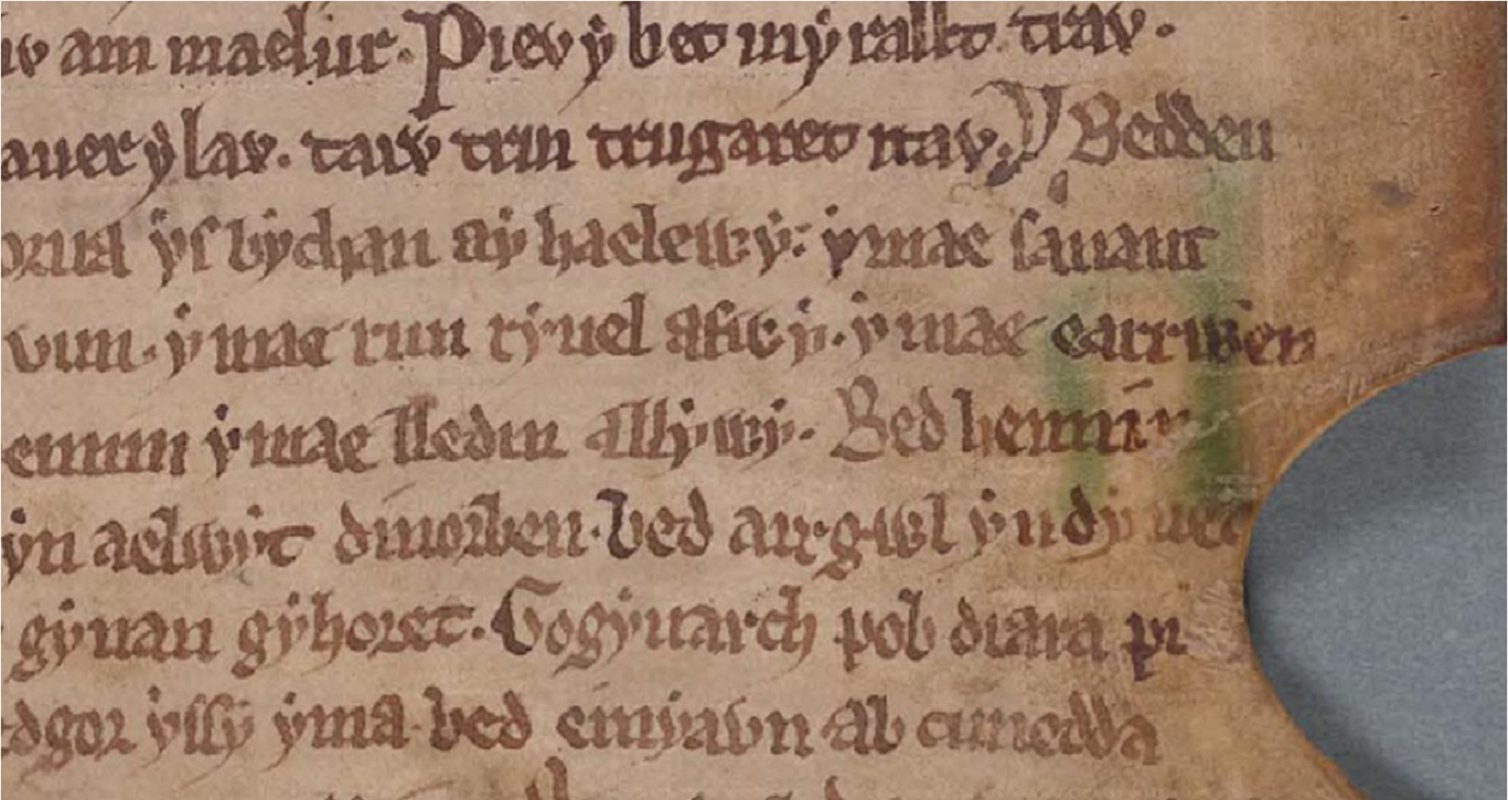
Garwen daughter of Henin Hen is a figure from Welsh tradition who is connected to Arthur in one of only two sources which mention her. This is the Welsh Triads, a collection of various pieces of Welsh tradition grouped into threes.
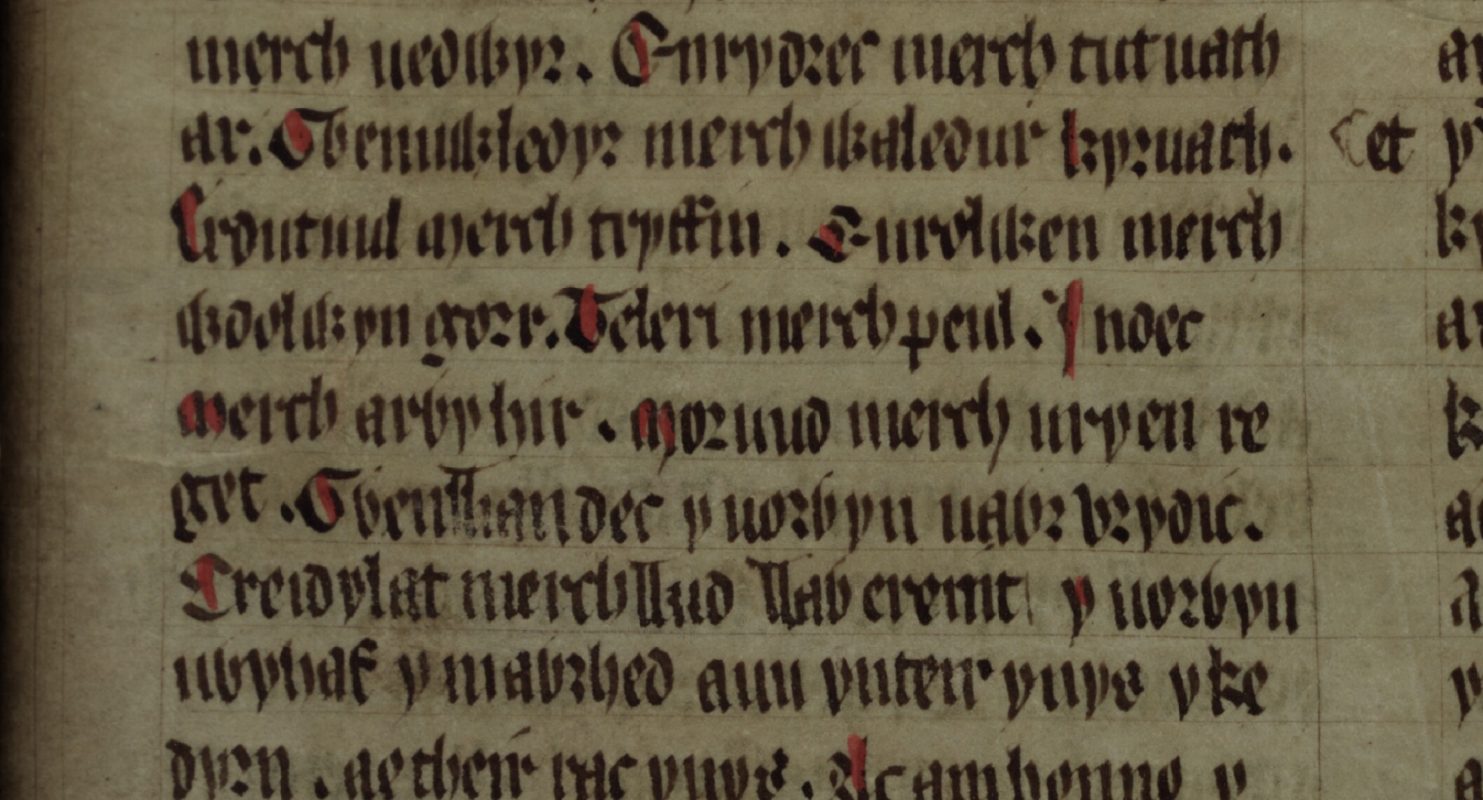
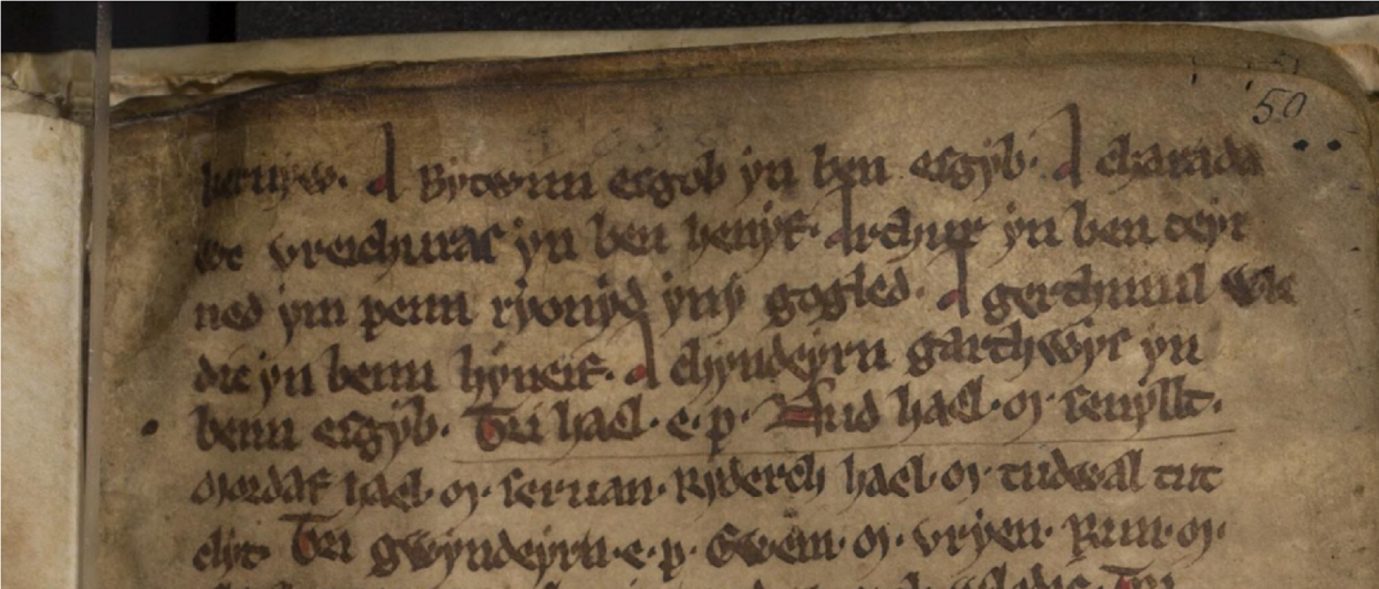
Garwen appears in Triad 57, which records Arthur’s Three Concubines. The first of these is Indeg daughter of Garwy Hir, while the third is Gwyl daughter of Gendawd. Meanwhile, Garwen daughter of Henin Hir appears second.
Therefore, Garwen was allegedly one of King Arthur’s concubines. Going by the order presented in the triad, it would appear that Garwen was Arthur’s second concubine. Granted, the entries within each triad are not always presented in chronological order. However, they often are. Therefore, in the absence of any reason to believe otherwise, it would seem likely that Garwen really did come after Indeg but before Gwyl.
Garwen’s Status
The triad which mentions Garwen comes immediately after a triad which describes Arthur’s Three Great Queens. These queens are the three Gwenhwyfars of Welsh tradition. Thus, there is a clear contrast between Arthur’s queens and his concubines.
Garwen, therefore, did not have the same status as a true queen. Her position as a concubine meant that she was a kind of lesser queen. Nevertheless, this means that she had an official connection to Arthur.
In contrast, some translations use the word ‘mistresses’ instead of ‘concubines’. This suggests that there was no official union between Arthur and Garwen, and that they were simply lovers. However, Rachel Bromwich’s authoritative edition of the Welsh Triads uses the word ‘concubines’.
Garwen’s Name
The Welsh Triads is a collection that is found in more than a single manuscript. There are different versions of it found within a variety of manuscripts. For this reason, there is more than one spelling of her name attested.
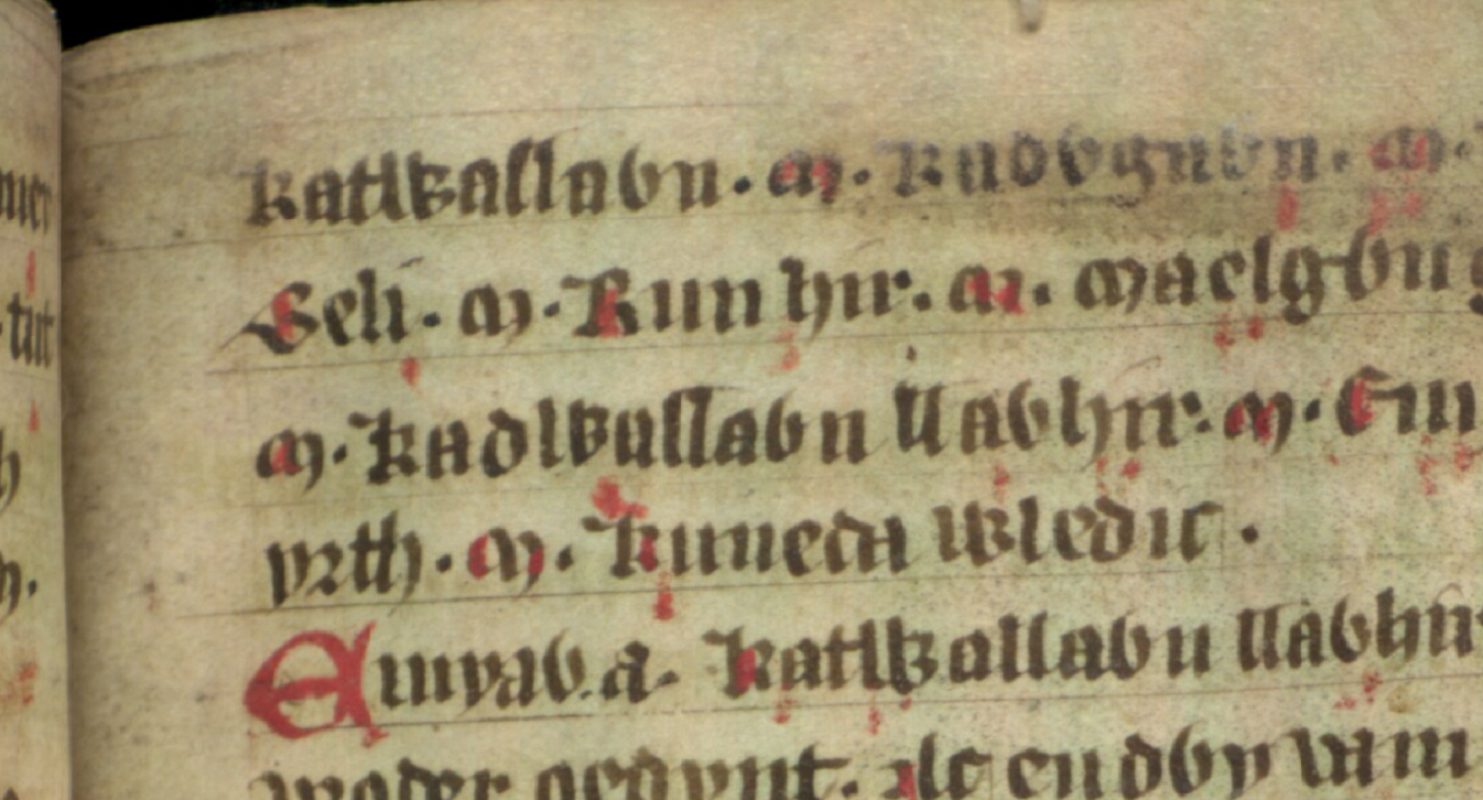
As well as ‘Garwen’, which is the spelling of her name in the White Book of Rhydderch, her name also appears as ‘Garwenn’ and ‘Arwen’. It was not uncommon for the initial ‘G’ in a name to be dropped.
The other source in which she appears, which we will examine more fully next, spells her name ‘Earrwen’. This is assumed to be a corruption of ‘Garrwen’, given the fact that this figure is explicitly called the daughter of ‘Hennin’ and is thus evidently the same as Arthur’s concubine from the Welsh Triads.
Generally, ‘Garwen’ is the form used in modern sources.
Garwen in the Stanzas of the Graves
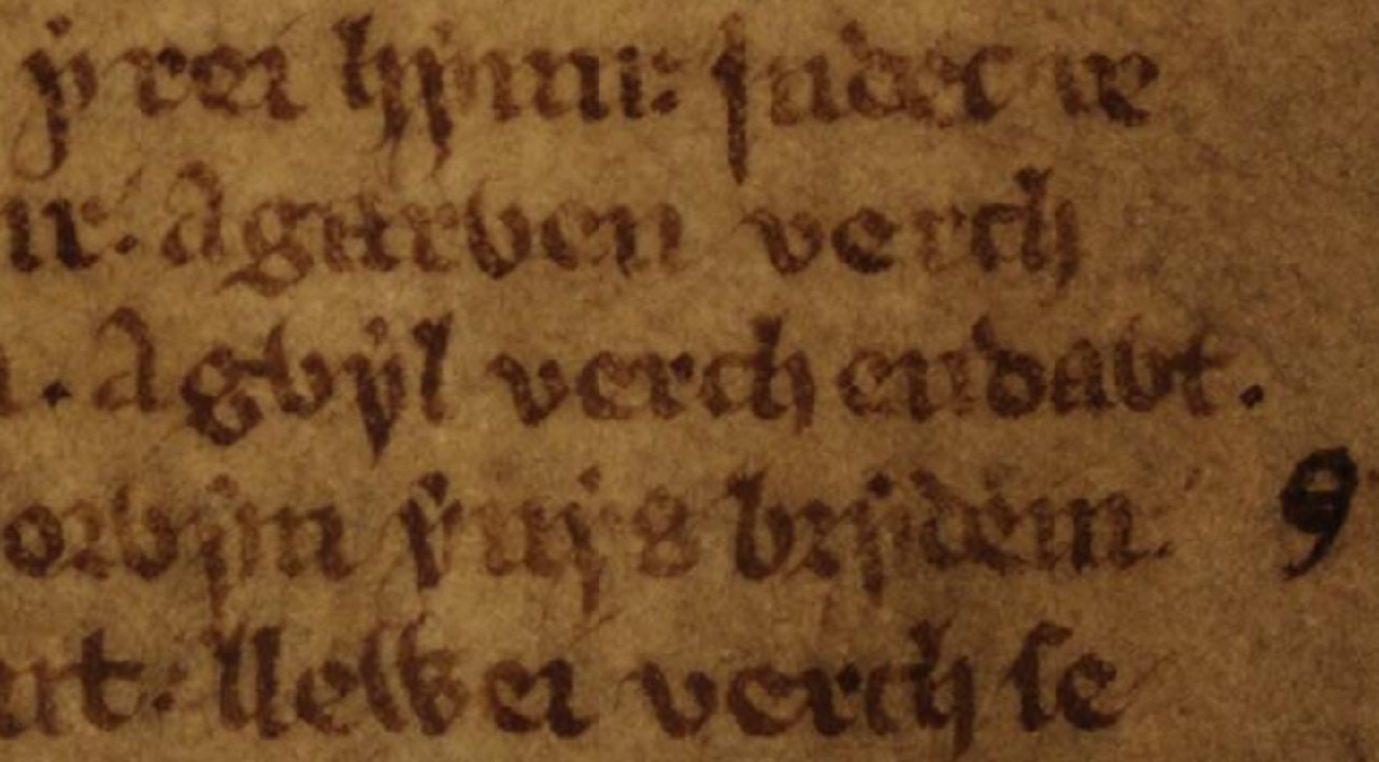
The only other source in which Garwen definitely appears in is a poem entitled Englynion y Beddau, usually known in English as the Stanzas of the Graves. This is a large collection of stanzas which record the graves of numerous individuals from Welsh tradition.
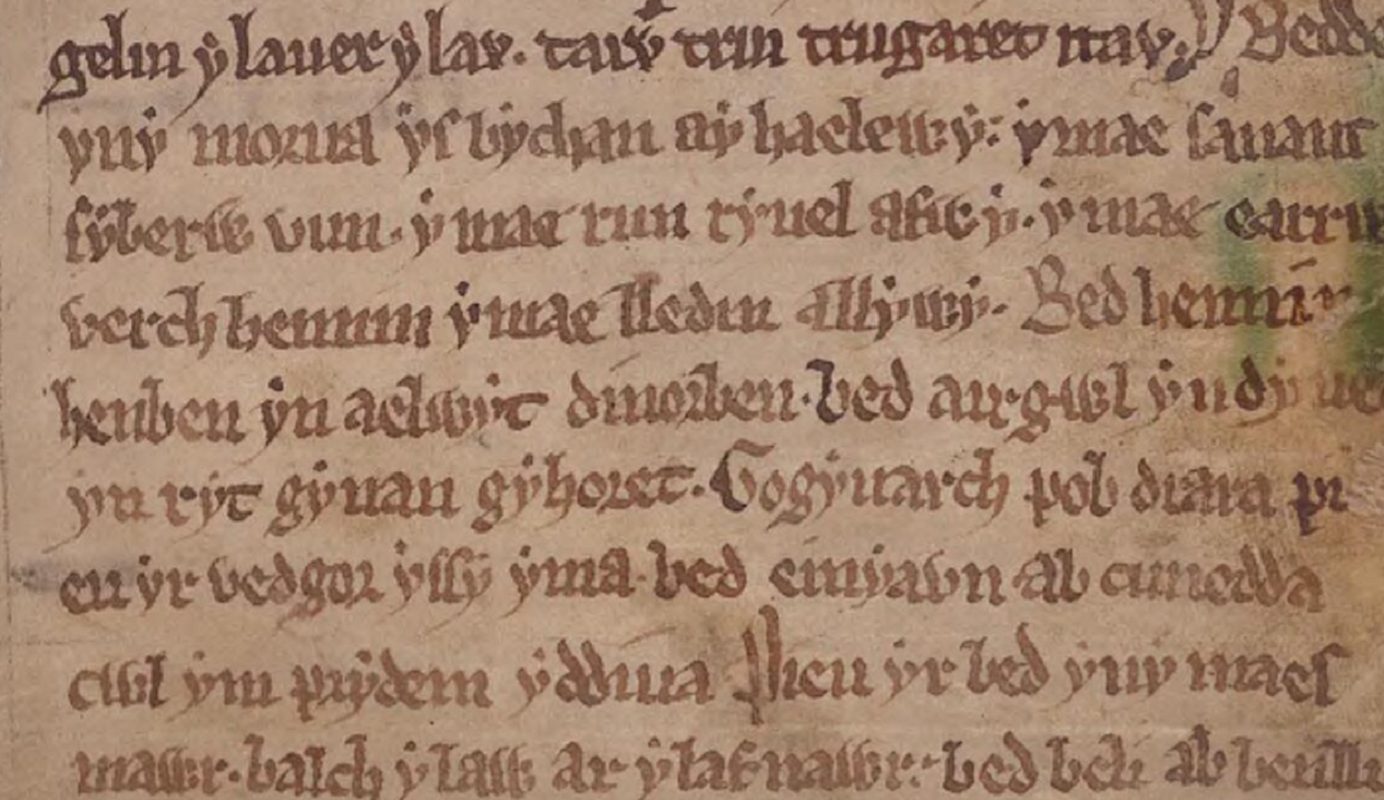
In this poem, the relevant stanza reads:
“The graves of the Morfa,
few are they who mourn them(?);
there lies Sanant the proud maiden;
there lies Rhun, fervent in battle;
there lies Earrwen daughter of Hennin;
there lie Lledin and Llywy.”
According to this, the grave of ‘Earrwen’ (correctly ‘Garwen’) was in the Morfa. Discussing this stanza, scholar Peter Bartrum argued that this is almost certainly a reference to Morfa Rhianedd near Llanduddo in Gwynedd.
What is the basis for this conclusion? The basis is the fact that at least two of the other figures in this stanza can likely be connected with that region. Sanant can be identified with Sannan the wife of Maelgwn Gwynedd, while Rhun can be identified with Maelgwn’s son. While neither names were unique to these figures, seeing both of them together does suggest that these are the people intended.
Maelgwn himself was the king of Gwynedd and was closely associated with Morfa Rhianedd, a location within his kingdom.
Lledin and Llywy, the two others mentioned in the stanza, appear to be unknown, so they cannot help us to establish this conclusion with more certainty. Still, with the evidence that we have, it is reasonable to conclude that Garwen was, according to this source, buried at Morfa Rhianedd in Gwynedd.
Garwen’s Family
Very little is known about Garwen’s family. The triad in which she appears reveals merely the fact that her father was known as Henin Hen, or Henin the Old. However, despite apparently very little to work with, there are a variety of references in Welsh tradition that can help us to piece together a reasonably complete profile.
Garwen’s Father
The name of Garwen’s father according to the spelling in the White Book of Rhydderch was Henin Hen. Other manuscripts provide us with the following variations:
Henni
Henyn
Henyn Hen
Heinin
Hini Hir
Henni Hir
Heni Hir
As we can see, there are many variations of his name, but they are all broadly consistent. The only meaningful difference is the use of ‘Hir’ rather than ‘Hen’, since this actually means something different. While ‘hen’ means ‘old’, the word ‘hir’ means ‘tall’.
Given that there are an equal number of textual witnesses for both versions, yet ‘Hen’ is supported by the earliest of them, it is evident that ‘Hen’ is the best supported epithet for this figure.
Who Was Henin Hen?
The identity of this father of Garwen is indicated by the fact that just two lines after the reference to Garwen’s grave in the Stanzas of the Grave, we find the following line:
“The grave of Hennin Henben is in the heart of Dinorben.”
It is very likely that this Hennin Henben is supposed to be understood as the same as Hennin the father of Garwen, whom the poem had just mentioned two lines previously. This is supported by the fact that the epithet ‘Henben’ be easily be understood as a fuller form of ‘Hen’, the epithet given to Garwen’s father in the Welsh Triads.
The location of this Hennin’s grave, Dinorben, is in Abergele, near the coast of North Wales. Interestingly, this is only ten miles to the east of Morfa Rhianedd, the likely grave of Garwen. This supports the conclusion that this line is indeed referring to Garwen’s father.
With these facts in mind, it is evident that Henin Hen was associated with North Wales. This helps us to identify who he was.
Saint Hywyn of Bardsey Island
The name ‘Henin’ was not a common one in this era. In fact, it appears that there are only two people in this era who could possibly be the father of Garwen.
One possibility is the figure commonly known as Saint Hywyn. In the earliest record that mentions him, his name is written as ‘Henwyn’. While not exactly the same as any of the specific variations of Henin’s name that are attested in the manuscripts, it is clearly very close.
Hywyn is recorded as the son of Gwyndaf Hen from Llydaw, or Brittany. He is said to have lived on Bardsey Island, which is off the western coast of Gwynedd. Hence, it is in the right general region of Britain to allow him to be identified as Garwen’s father.
However, since Hywyn was a saint who lived a religious life on an island, it seems unlikely that he would have had a daughter, especially not one who would have go on to become a king’s concubine. Still, this is not impossible.
Heinin Fardd, a Bard of Maelgwn’s Court
A more likely identification appears to be Heinin Fardd. He is known for being the chief of Maelgwn Gwynedd’s bards. He appears in a tale about a young Taliesin who went to Maelgwn’s court and confronted the bards, particularly Heinin.
Taliesin cast a spell on Maelgwn’s bards, making them unable to produce any coherent noises as they tried to sing the king’s praises. Maelgwn rebuked his bards, resulting in Heinin needing to explain that the cause of their predicament was not drunkenness or anything of the sort, but Taliesin, whom he described as a spirit in the guise of a child.
While a humiliating story for Heinin, it demonstrates that he had a position of prominence in the court of Maelgwn. Since Gwynedd was one of the most powerful kingdoms of Britain at the time, this would make Heinin a relatively important figure.
Unlike Hywyn’s saintly life away from society, there is nothing about Heinin’s position that would prevent him from being the father of one of King Arthur’s concubines. It was not a life away from society but one of prominence in a royal court, nor was there any expectation of celibacy.
Furthermore, there are references to bards being warriors as well. This would tie in to certain references to a warrior simply called Henben, which may well be references to Henin the father of Garwen.
Therefore, it would appear that Garwen was a noblewoman from Gwynedd, the daughter of Maelgwn Gwynedd’s chief bard. If we can indeed identify her father Henin Hen with the Henben who appears elsewhere in Welsh tradition, then it would appear that her paternal family line originated in the North, since Henben is recorded as being the son of a man named Gleisiar Gogledd (of the North).
Where Did Garwen Live?
Now that we have analysed the evidence concerning who Garwen’s father was, this allows us to understand more about her and construct a fuller profile of her. For instance, where did she live?
The evidence from the Stanzas of the Graves supports the conclusion that she was strongly associated with North Wales. This makes sense, with her father evidently being the chief bard of the royal court of Maelgwn Gwynedd.
The fact that her father had this status likely means that Garwen lived near one or more of the royal courts of Maelgwn, inasmuch as Henin himself must have regularly been in close proximity to Maelgwn.
In those days, royal courts were generally peripatetic. That is, a king would not have just one single court at which he would base himself. Rather, he would have various courts around his kingdom which he would visit.
Since being Maelgwn’s chief bard meant that Henin had to be present to sing praises to the king, we can assume that Henin travelled with the king constantly. Presumably, his wife and children would have accompanied him, making up the peripheral members of the royal entourage.
Therefore, it is entirely possible that Garwen and her family did not live at any one location in Gwynedd. Rather, it may be accurate to associate them with all the identifiable royal courts of Gwynedd in use in Maelgwn’s reign.
After Becoming Arthur’s Concubine
Of course, this naturally would have changed after Garwen became Arthur’s concubine. While there do not appear to be any sources from or about the Arthurian period which explain in detail how concubinage worked, we can reasonably assume that Garwen would have left her family and begun living in King Arthur’s territory.
While not having the privileged position of Arthur’s queen Gwenhwyfar, Garwen would still no doubt have had a place in Arthur’s royal court. Just as in the case of Maelgwn’s court, Arthur’s was undoubtedly peripatetic.
Therefore, it is unlikely that we can point to any one specific location within Arthur’s territory that Garwen permanently resided in. Rather, she would have resided in all of the royal courts in that area.
Garwen’s New Royal Territory
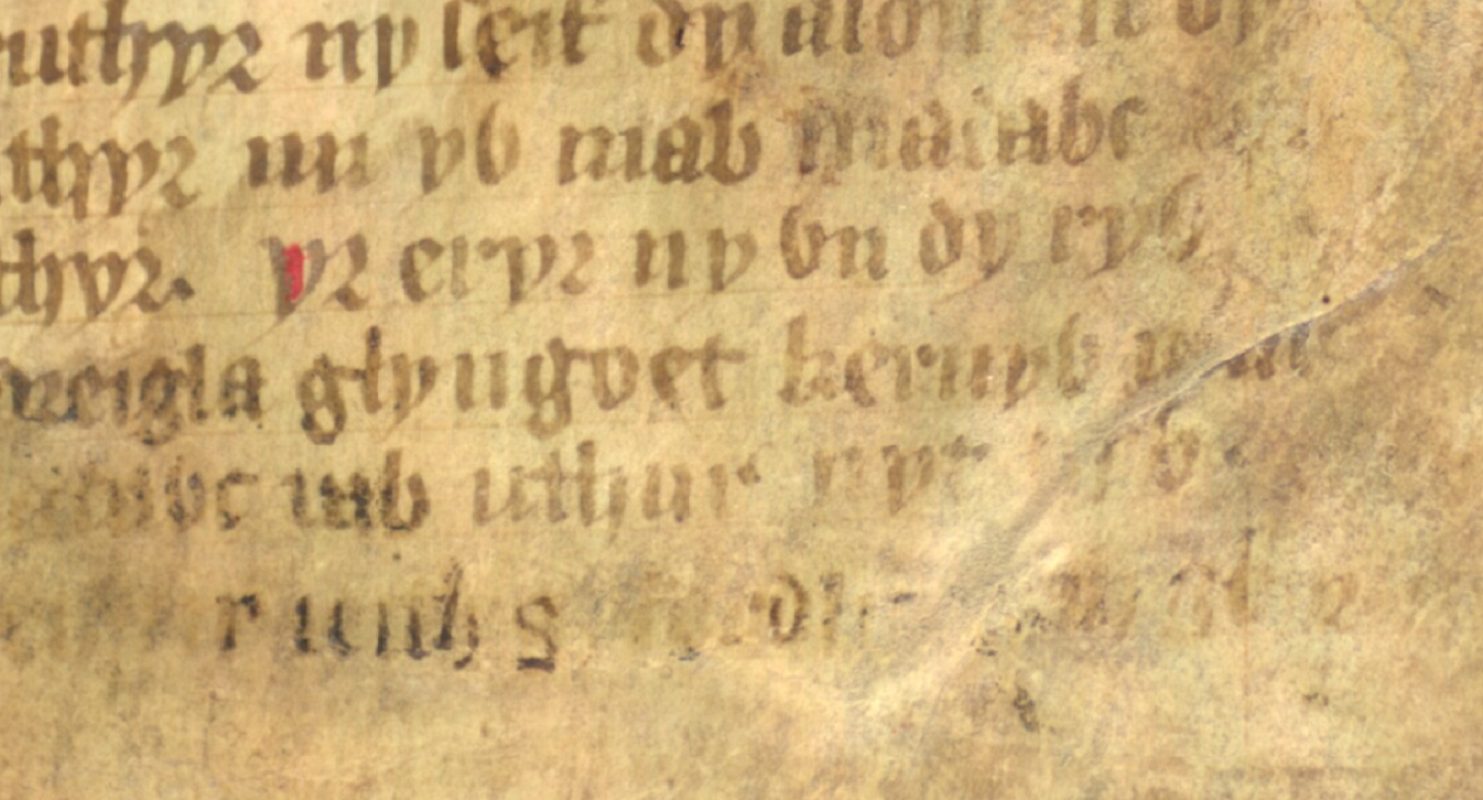
This raises the question, Where exactly was Arthur’s royal territory? What might be some examples of royal courts at which Garwen temporarily resided?
Welsh tradition firmly associates King Arthur with a region called Cerniw. This was the Welsh name for Cornwall, but it was also the name of a region in Gwent, or was perhaps an alternative name for Gwent itself.
Within Cerniw, Arthur’s most popular royal court appears to have been Gelliwig. In Gwent, medieval records show that Llanvetherine was formerly known by this very name. Hence, it would appear that this was likely one of the royal courts at which Garwen would have temporarily resided.
The fact that Gelliwig was in the Cerniw in southeast Wales rather than in Cornwall is made evident by the Welsh poem Arthur and the Eagle, which refers to the Vale of Coed Cerniw. This matches modern-day Coedkernew in Gwent.
Various Latin hagiographies of religious figures from this era likewise place Arthur in southeast Wales. Based on this, it is notable that archaeology has revealed that Dinas Powys in Glamorgan was one of the richest sites in the Arthurian period. It appears to have been a tribute centre and the residence of a royal household.
Therefore, we can almost certainly include Dinas Powys as one of the locations where Garwen (and the rest of Arthur’s royal court) would have resided while being Arthur’s concubine.
When Did Garwen Live?
Let us now consider the issue of when Garwen lived. Since she was Arthur’s concubine, she obviously must have been one of his contemporaries. This would place her in the sixth century. However, can we be more specific than that?
Something that can help us with this is the identification of her father, Henin Hen, with Heinin Fardd. As we saw earlier, he was the chief of Maelgwn’s bards. This is helpful, because the reign of Maelgwn Gwynedd can be established with some confidence.
When Maelgwn Reigned
Although the Annales Cambriae famously places Maelgwn’s death by plague in 547, this appears to be an anomaly. As Rachel Bromwich noted, plagues were common in this area, and it may be that a later plague was mistaken for the Plague of Justinian, which did occur in the 540s.
Bromwich pointed out that the Historia Brittonum, which predates the Annales Cambriae by a century, makes Maelgwn a late-sixth century king, placing the start of his reign 146 years after Cunedda arrived in North Wales.
With Cunedda’s arrival being no earlier than 425, that would place the start of Maelgwn’s reign in 571 at the earliest. Supporting this is Geoffrey of Monmouth’s Historia Regum Britanniae. According to this account of sixth century Britain, Maelgwn outlived David and Deiniol, two prominent religious figures in medieval Britain. Both of them died in the 580s.
Furthermore, a medieval Welsh tract describing events after the end of Maelgwn’s reign points towards the same conclusion. It explains that a ruler from the North named Elidir went down to Gwynedd to attack Maelgwn’s son Rhun, since he was an illegitimate son and hence an illegitimate ruler in Elidir’s eyes.
Rhun managed to fend off Elidir’s attack, killing him in the process. To avenge him, several kings from the North engaged on a campaign against Gwynedd. These kings can all be placed in the late-sixth century or even the early seventh century. One notable example is Rhydderch Hael, who died in c. 614.
Since the Welsh tract in question implies that these events all took place very soon after the death of Maelgwn (certainly not decades later), this would suggest that Maelgwn’s death occurred right near the end of the sixth century.
What This Means for Garwen
Based on these facts, it is evident that Heinin Fardd, the apparent father of Garwen, was active in the latter half of the sixth century. Unfortunately, however, we do not know exactly when the story that mentions Heinin Fardd is set, nor do we know how old he was supposed to have been at the time.
The detail about Taliesin being merely a child when he confronted the bards of Maelgwn is certainly unhistorical. Therefore, this does not help us to establish when this event actually took place. Likely, Taliesin was already a grown man when he had this interaction with Heinin.
Nevertheless, the fact that Taliesin’s lord at the time was Elphin suggests that this occurred before he started serving Cynan Garwyn of Powys, which was before he served Urien Rheged. Therefore, it is likely that Taliesin’s visit to Maelgwn’s court occurred very near the start of Maelgwn’s reign. As we saw earlier, that would have been in 571 at the earliest.
If Heinin was the chief of Maelgwn’s bards in c. 571, then he could realistically have been born anywhere between c. 501 and 541. Using that earliest reasonable date, this would mean that his daughter, Garwen, could have plausibly been born anywhere between c. 523 and 543.
With this range in mind, she may have married Arthur anywhere from c. 540 to potentially as late as 573. The mid-point within this range would be c. 556.
The Lateness of This Marriage
Needless to say, this is much later than the traditional Arthurian chronology would allow. Arthur’s final Battle of Camlann is usually placed in 537, based on the date given in the Annales Cambriae. However, there is considerable evidence that this date was backdated by thirty-three years based on a medieval scribe confusing the death of Jesus for the birth of Jesus (both reference points were sometimes used for dates).
One corpus of evidence for this is the evidence for Maelgwn having been a late-sixth century king, as we have already seen. This is because Gildas, writing in the sixth century, shows that Maelgwn was well into his reign some twenty-two years after the Battle of Camlann.

See the article When Did King Arthur Really Live? for a deeper examination of this topic.
Based on this revised chronology, Arthur’s Battle of Badon occurred in c. 549, with the Battle of Camlann occurring in c. 570. Since there is evidence that Maelgwn’s father died at Camlann, this ties in excellently with the placement of the start of Maelgwn’s reign in c. 571.
Therefore, while the range of c. 540 to 573 for when Garwen became Arthur’s concubine is completely inconsistent with the traditional dates assigned to King Arthur, it is perfectly harmonious with this revised chronology.
Was Garwen Really Arthur’s Second Concubine?
The triad which mentions Garwen places her as the second of Arthur’s concubines. Does this mean that she actually became his concubine after Indeg but before Gwyl?
In short, we do not know. However, it is notable that the entries within each triad are usually placed in chronological order, although not always. Therefore, the automatic assumption should be that these concubines of Arthur’s really are listed in the order in which they became his concubines.
However, can we be more specific?
As we saw earlier, the likely range in which Garwen became Arthur’s concubine stretches from c. 540 to 573. For reference, the evidence regarding Indeg indicates that she became Arthur’s concubine no earlier than c. 560.
While it is not impossible, it seems unlikely that Arthur would have been preoccupied with finding a concubine during his Saxon wars. Therefore, it is likely that Garwen was not chosen as a concubine prior to 549.
Given that the earliest reasonable year for Arthur’s marriage with Garwen significantly predates the earliest reasonable year for his marriage with Indeg, this argues against the triad being in chronological order.
Other Evidence
Furthermore, it is notable that Bonedd yr Arwyr gives Arthur another concubine (or possibly a mistress) who is not mentioned in the Welsh Triads. Her name is Eleirch, and she is made the mother of Arthur’s son Cydfan.
The evidence surrounding her and her family indicates that she was actually Arthur’s first cousin. This makes it almost certain that Arthur had relations with her much earlier than Indeg or Garwen.
With this in mind, it seems apparent that the triad about Arthur’s concubines is not a straightforward record of Arthur’s concubines in chronological order. Rather, it seems to be limited to the most prominent ones, and their order may well be affected by that.
Notably, Indeg is the only one of the three concubines in the triad to be mentioned in Culhwch and Olwen as a prominent woman in Arthur’s kingdom. Therefore, perhaps Indeg is listed before Garwen simply because she was more prominent than her, when in reality, Garwen became Arthur’s concubine at an earlier period.
Garwen’s Death and Burial
As we saw earlier, the Stanzas of the Graves reveals that Garwen was buried on the Morfa, which is almost certainly Morfa Rhianedd in Gwynedd. This seemingly interesting-but-ultimately-unimportant piece of information actually indicates something else about Garwen.
Since Garwen had left her family and become one of Arthur’s concubines, evidently moving to Arthur’s kingdom in southeast Wales, why did she end up being buried in Gwynedd?
Not only was she buried in Gwynedd, but consider the specific site where she was buried. As the stanza which mentions her reveals, Maelgwn’s wife Sannan and his son Rhun were also buried in that area.
The fact that Garwen, one of Arthur’s concubines, was buried in the same area as the wife and the son of the king of Gwynedd is immensely intriguing. What could have led to this circumstance? Why was Garwen not buried in Arthur’s territory?
One might easily dismiss this as being due to Garwen being sent back to her home territory for burial, since she was only Arthur’s concubine and not his true wife, after all. However, it is notable that she was not buried right next to her father, Henin. As we saw earlier, Henin appears to have been buried some 10 miles to the east of Morfa Rhianedd.
Henin was the chief of Maelgwn’s bards, yet not even he was buried in the same immediate vicinity as Maelgwn’s wife and son.
While trying not to read too much into this, this does appear significant. It would suggest that Garwen had been a highly-regarded member of the court of Gwynedd before becoming Arthur’s concubine. Consequently, while it was likely due to her family connections with the area that her body was sent back to Gwynedd for burial, the specific spot of her burial was likely chosen by the men of Gwynedd as a way of honouring her.
Her being a celebrated member of the court of Gwynedd would also help to explain why Arthur chose her as his concubine in the first place, since his kingdom was quite far from Gwynedd.
Conclusion
In conclusion, Garwen was one of the concubines of King Arthur. She was the daughter of a man named Henin Hen, also known as Henin Henben and apparently identical to Heinin Fardd, the chief bard of Maelgwn Gwynedd. As such, she was a relatively prominent noblewoman, but below the rank of a princess. Nevertheless, it was likely due to her father’s relative prominence that Arthur decided to take her as a concubine.
As well as appearing in the Welsh Triads, Garwen also appears in the Stanzas of the Graves. There, we learn that her grave was in the Morfa, which is likely Morfa Rhianedd. She was thus buried close to Maelgwn’s wife, Sannan, and his son, Rhun. This indicates that she had been a well-regarded member of the royal court of Gwynedd before being taken as Arthur’s concubine.
Sources
Bartrum, Peter, A Welsh Classical Dictionary, 1993
Bromwich, Rachel, Trioedd Ynys Prydein: The Triads of the Island of Britain, 2014
Haycock, Marged, Legendary Poems from the Book of Taliesin, 2007
Howells, Caleb, King Arthur: The Man Who Conquered Europe, 2019
Bromwich, Rachel & Simon Evans, D, Culhwch ac Olwen, 2012
Parker, Will, Culhwch and Olwen Translation (footnote 117), 2016
https://nightbringer.se/the-legend-of-king-arthur/arthurian-characters/c-arthurian-persons/cydfan/
https://www.maryjones.us/ctexts/t14.html
https://www.maryjones.us/ctexts/bbc19.html
https://en.wikisource.org/wiki/The_Mabinogion/Taliesin
https://mistshadows.blogspot.com/2019/11/and-winner-of-uther-pendragon-contest-is.html