Caliburn vs Excalibur – What’s the Difference?

In the Arthurian legends, the famous sword of King Arthur is Excalibur. In fact, this is undoubtedly one of the most famous swords of all time. However, Arthur’s sword is occasionally given a different name. Sometimes, it is referred to as ‘Caliburn’. What is the difference between Caliburn and Excalibur? Are they actually the same sword, or are they different?
Caliburn in the Arthurian Legends
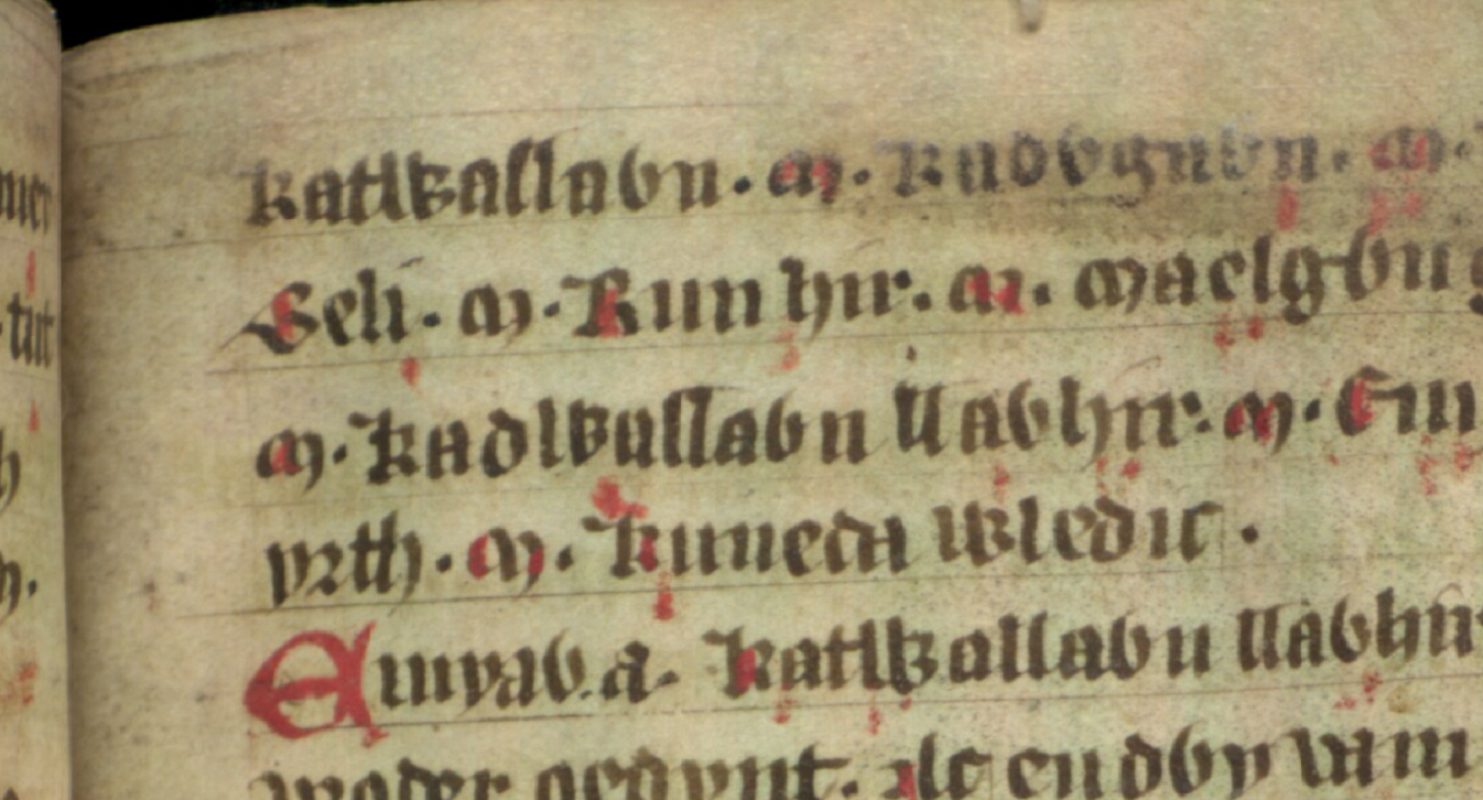
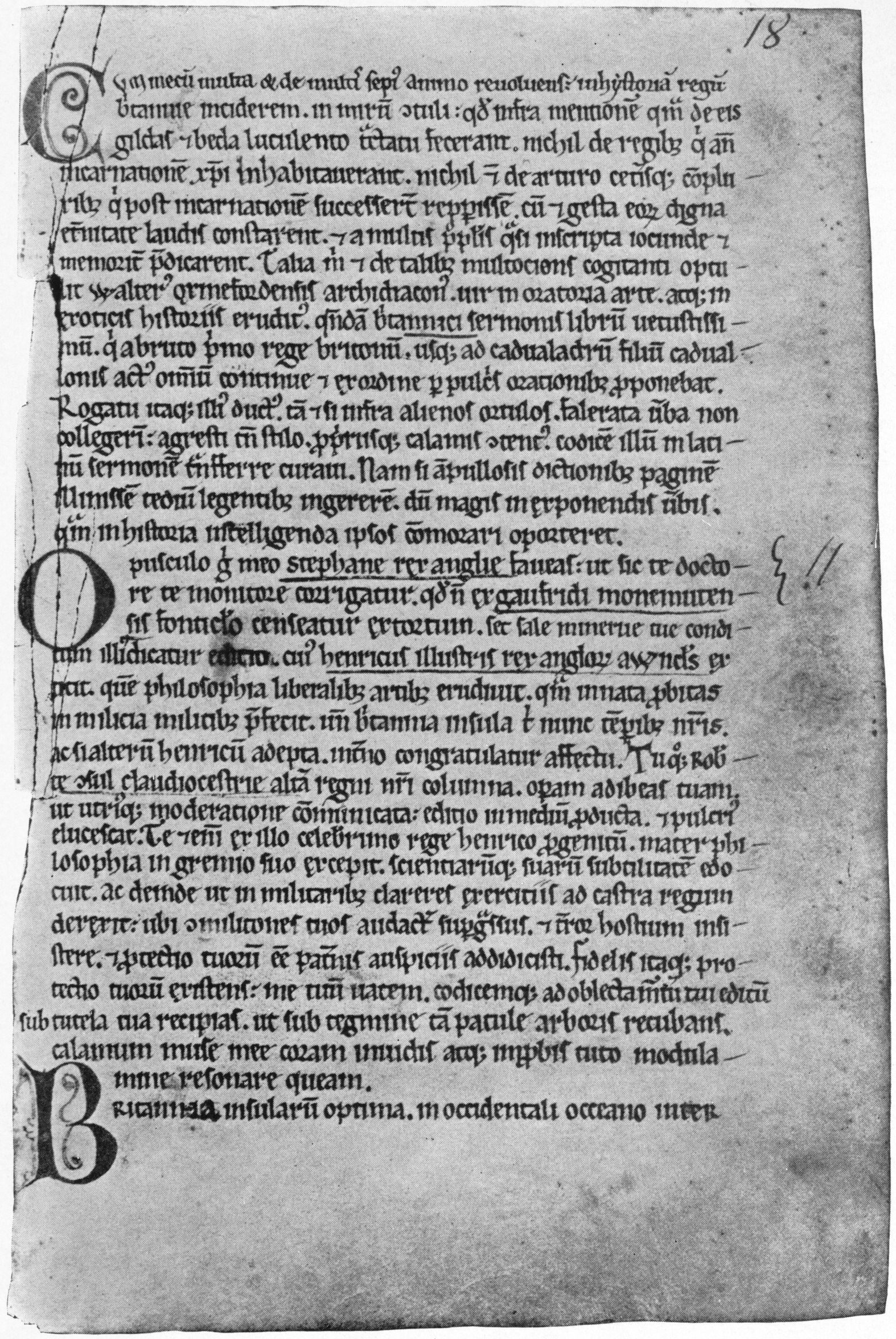
To start with, let us examine the sword known as Caliburn as it appears in the sources. The first source which mentions this sword by this exact name is the Historia Regum Britanniae (HRB), written by Geoffrey of Monmouth in c. 1137. He refers to Caliburn in four separate parts of his account of Arthur’s life.
Firstly, it appears in the account about the Battle of Badon, in which Arthur uses it to slay 470 Saxon enemies. Next, Arthur uses it in his fight against the Roman leader Frollo, in which it cuts through the metal helmet of his enemy. Then, it is used by Arthur in his fight against the giant of Mont Saint-Michel. Finally, it appears in the account of Arthur’s war against the Romans at Siesia.
So, from this information, we can see that the earliest source which mentions Caliburn describes it as Arthur’s sword for the majority of his career. It is the sword he has right up until the Battle of Siesia, which was one of his final battles according to the HRB.
Excalibur in the Arthurian Legends
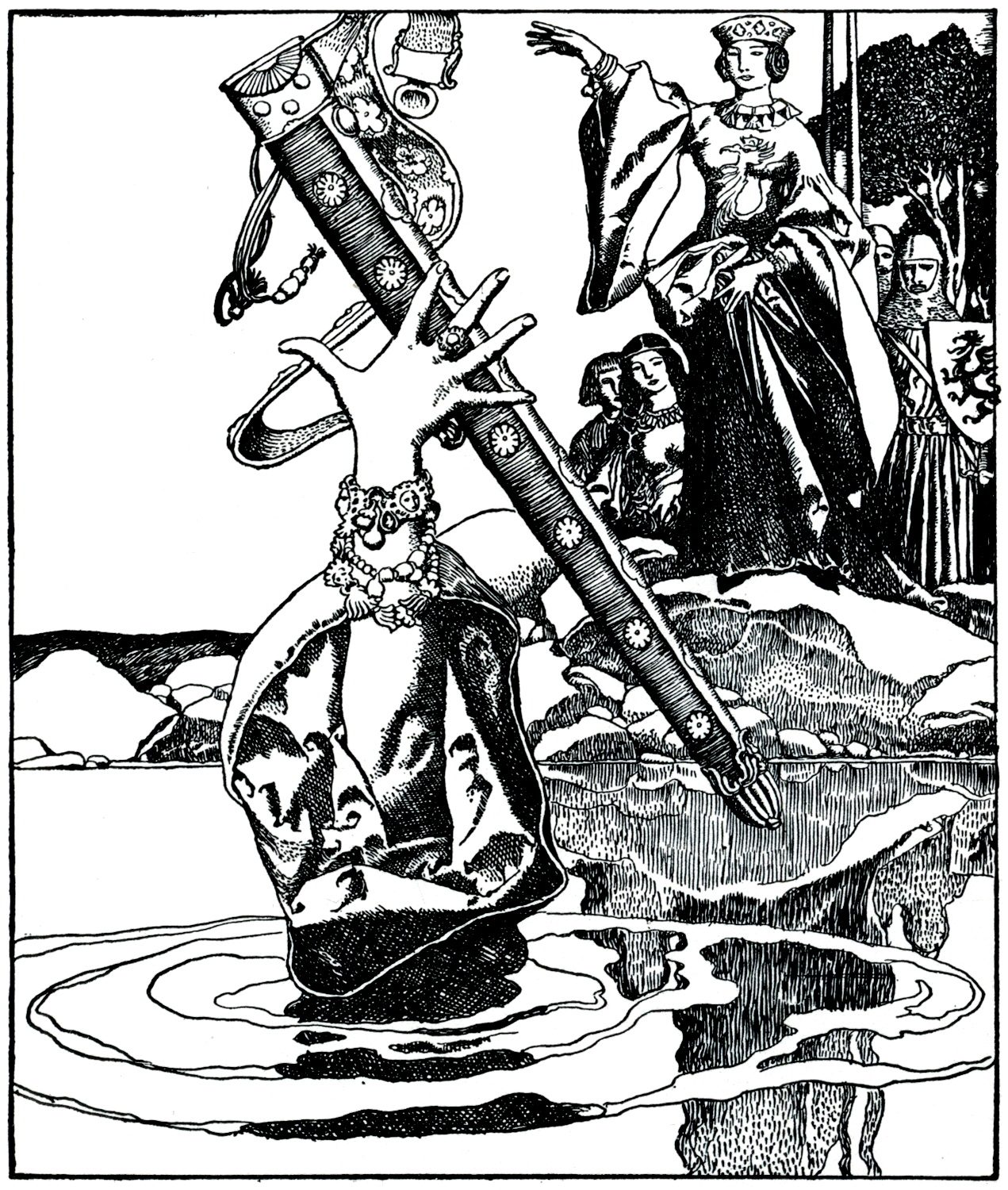
In contrast, Excalibur does not appear until later sources. It is first mentioned in the latter half of the 12th century, several decades after Geoffrey of Monmouth wrote the HRB. One of the very earliest sources to mention it was Perceval, written by Chretien de Troyes in approximately 1185. He uses the spelling ‘Excalibor’.
It is not possible to recount all the various stories in which Arthur uses Excalibur, since there are so many of them. Put simply, it is his sword throughout most of his career in virtually all the Arthurian legends from Perceval onwards. From the moment he gets it – which is always early in his career – it stays with him right up until moments before his death.
Are Caliburn and Excalibur the Same?
This comparison reveals something important: The name of Arthur’s sword throughout most of his career is first called ‘Caliburn’, and then in later sources it is called ‘Excalibur’. What this reveals is that Caliburn and Excalibur are actually the same sword. Or, we could say that as the Arthurian legends developed, Caliburn turned into Excalibur. Before the name of Arthur’s famous sword became ‘Excalibur’, it was known as ‘Caliburn’.
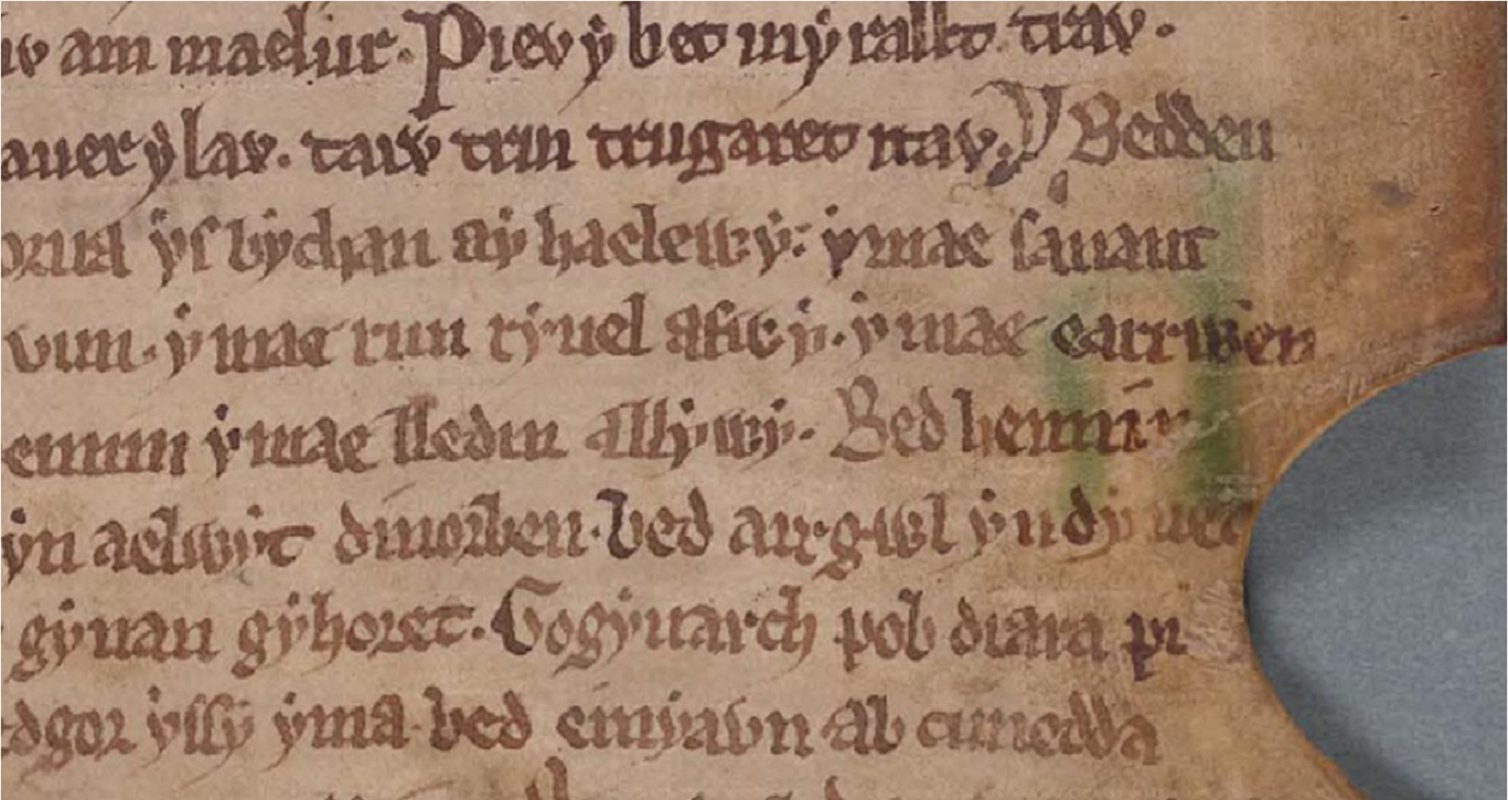
We can see this even more clearly by looking at the other names for the sword Excalibur. For example, in Roman de Brut, written by Wace in c. 1150, we find a variety of spellings for the name of this sword. For example, we find the spellings ‘Calabrun’ and ‘Caliborne’. Significantly, another spelling that we see in certain manuscripts of Roman de Brut is ‘Escaliborc’.
This demonstrates the transition between the names ‘Caliburn’ and ‘Excalibur’. Within Wace’s inconsistent spelling of the name of this sword, he sometimes decided to put ‘Es’ at the beginning, for whatever reason.
Because of this, the name evolved even further with subsequent tales, eventually becoming ‘Excalibur’.
Differences Between Caliburn and Excalibur
However, does this mean that there are no differences between Caliburn and Excalibur? Not quite. As the name of this sword evolved over the years, so did the Arthurian legends themselves. For this reason, the sources which call it ‘Caliburn’ often describe it quite differently to the sources which call it ‘Excalibur’.
For example, in the Historia Regum Britanniae, Arthur’s sword Caliburn does not possess any overtly magical powers. There are only two unusual things about it. First of all, Geoffrey of Monmouth explains that Caliburn was forged on the Isle of Avalon. Later on, Avalon is described as the place where Arthur was taken to be healed of his wounds after he was mortally wounded at the Battle of Camlann, giving it a somewhat Otherworldly nature.
Secondly, in the account of the Battle of Siesia, Arthur is said to have slain each one of his enemies with a single blow from his sword. While this is obviously very unrealistic, it seems like more of an exaggeration than a description of magical powers. After all, Arthur also strikes the giant of Mont Saint-Michel with Caliburn, yet that does not prove to be a fatal blow.
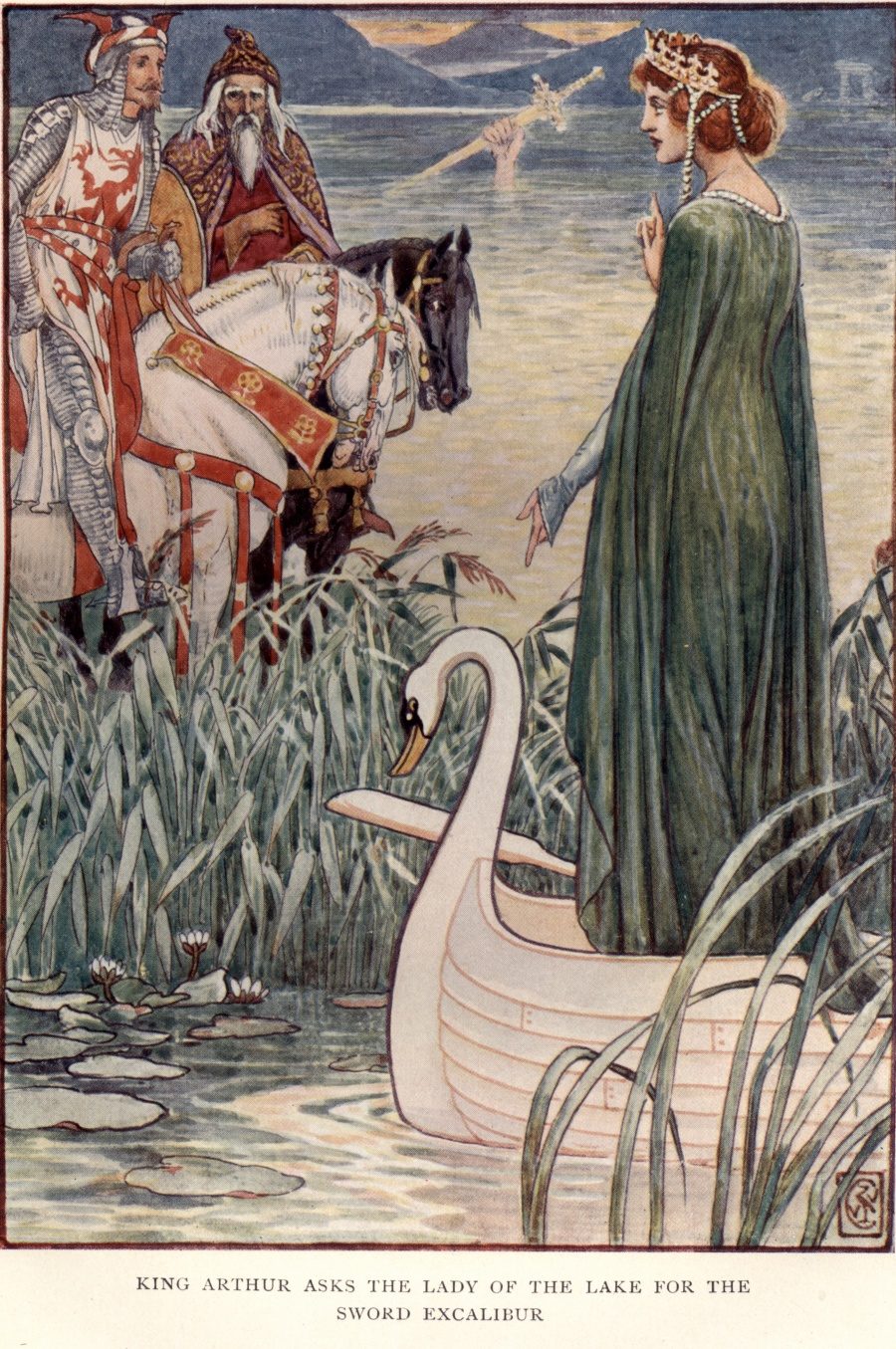
On the other hand, many of the Arthurian tales which mention Excalibur explicitly describe it as a magical sword. For example, in the Post-Vulgate Cycle, written in the early 13th century, Excalibur is given to Arthur by the magical Lady of the Lake.
Regarding the properties of the sword itself, the late-12th century Perceval states that Excalibur could cut through iron as easily as wood. Later, in Sir Thomas Malory’s 15th century Le Morte d’Arthur, Excalibur produces a blinding light when Arthur wields it.
Therefore, although Caliburn and Excalibur are fundamentally the same sword, they are usually described in different ways simply due to the way the Arthurian legends evolved between the tales that use the spelling ‘Caliburn’ and the tales that use the spelling ‘Excalibur’.
Was Caliburn the Sword in the Stone?
Another famous sword involved in the Arthurian legends is the sword in the stone. This was the sword that only Arthur was able to remove from its place, proving that he was the rightful king of Britain.
According to some modern sources, Caliburn was the sword in the stone, while Excalibur was the sword later given to Arthur by the Lady of the Lake. However, this is not true. In fact, the earliest source which mentions the sword in the stone (this being Merlin, written by Robert de Boron in c. 1200) does not give it a name at all.
Later, the Prose Merlin, written in the early 13th century, explicitly identifies the sword in the stone as Excalibur. The sword that Arthur takes from the stone is the sword that he goes on to use as his weapon throughout his career, which, as the other sources are very clear about, was Excalibur.
Of course, since Excalibur and Caliburn are the same, this means that the sword in the stone was essentially Caliburn as well.
The point, however, is that there is no distinction between Caliburn and Excalibur. It is not the case that Caliburn was pulled from the stone while Excalibur was given to Arthur by the Lady of the Lake. Rather, the name ‘Caliburn’ had generally fallen out of use by the time the sword in the stone was introduced to the legends, and the sword in the stone is identical to Excalibur in the earliest source that specifies.
However, in even later sources (such as the Post-Vulgate Cycle), the sword in the stone is not Excalibur. Rather, this sword taken from the stone breaks during a battle, and then Arthur receives Excalibur from the Lady of the Lake as a replacement.
Therefore, in these later sources, Excalibur is the name of Arthur’s second sword. But even here, Caliburn is not the name of the first sword. The first sword, taken from the stone, is simply left unnamed.
Conclusion
In conclusion, we can see that Caliburn and Excalibur are fundamentally the same sword. The earliest sources in the Arthurian legends use the name ‘Caliburn’ or similar variations. When we get to Wace’s mid-12th century Roman de Brut, we see the variation ‘Escaliborc’ emerge. From here, the name evolved into the famous ‘Excalibur’.
Therefore, Caliburn turned into Excalibur over the course of several decades as the Arthurian legends developed. However, we have also seen that Caliburn and Excalibur do generally have some differences, by virtue of the fact that those two spellings are predominantly used in two different stages of the development of the Arthurian legend. While Caliburn is described in mostly realistic terms (albeit exaggerated), Excalibur is often described in much more magical terms.
Finally, we have seen that there is no basis for the claim sometimes seen in modern sources, that Caliburn was the name for the sword in the stone while Excalibur was Arthur’s second sword. In reality, the sword in the stone was originally Excalibur itself, with the distinction between the two only coming later – but even then, the sword in the stone is left unnamed, and is never called Caliburn.
FREQUENTLY ASKED QUESTIONS
What Happened to Caliburn and Excalibur?
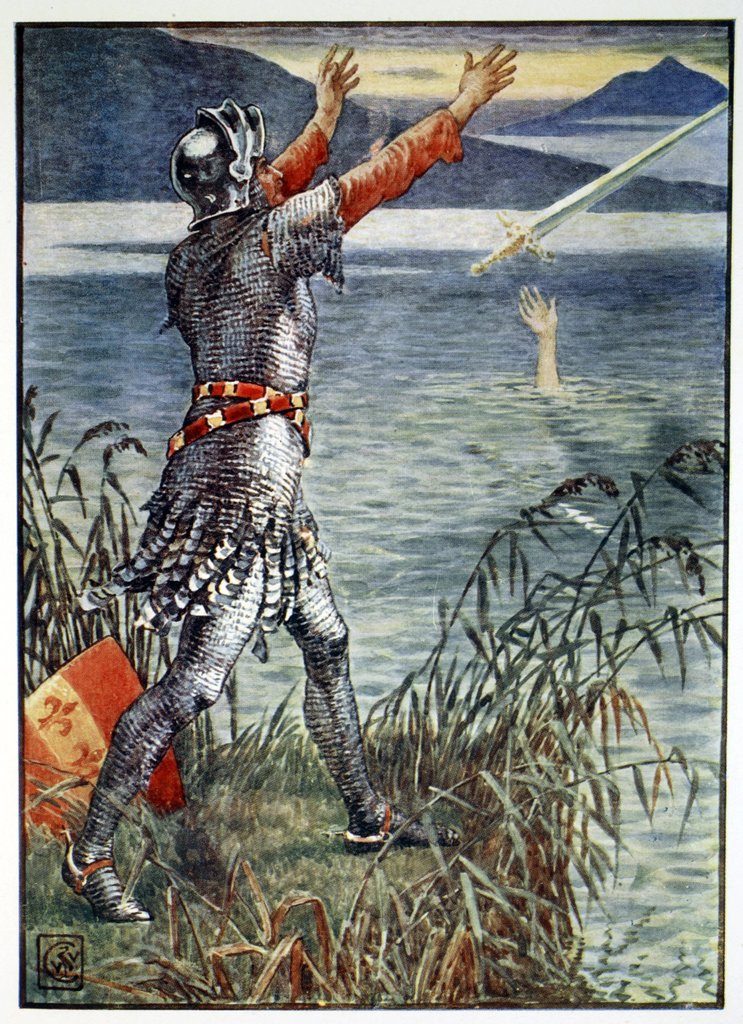
The earliest sources, which call it ‘Caliburn’, do not reveal the fate of Arthur’s sword. However, in the early-13th century Vulgate Cycle, where the sword is called ‘Excalibur’, there is a story about what happened to it. It explains that Arthur got one of his knights to throw the sword into a lake while he was dying from his wounds. A woman’s hand emerged from the water, grabbed the sword, and disappeared back into the lake.
What Type of Sword Was Caliburn?
In reality, a sixth century warrior from Britain would have used a type of sword very similar to the Roman spatha, which was quite short and did not have a cross guard. The Romans had only recently left by the time in which Arthur was said to have lived, and archaeology reveals that Roman culture continued for quite some time thereafter, including the use of the spatha. However, in the medieval tales, Caliburn (or Excalibur) is usually depicted as a longsword. This was the traditional sword of European knights, with a long blade and a cross guard.
Was Caliburn or Excalibur Stuck in a Stone or an Anvil?
In the earliest tale that mentioned the sword in the stone, it is unnamed. In a later source, it is explicitly identified as Excalibur (this simply being the later name for Caliburn). Only later is a distinction made between the sword in the stone and Excalibur. The sword in the stone is described in the original tale (Merlin, by Robert de Boron) as being stuck through an anvil. The anvil is on top of the stone, and the blade of the sword goes right through the anvil and into the stone itself.
What Sword Was More Powerful Than Caliburn or Excalibur?
Excalibur (the later name for the sword Caliburn) is usually depicted as the most powerful sword in the Arthurian legends. However, in the Vulgate Cycle, a sword called Marmiadoise is much more powerful. It is the sword of Hercules. It is such a powerful sword that Arthur starts using it instead of Excalibur, which he gives to Sir Gawain.
Sources
https://www.britannica.com/topic/Excalibur-Arthurian-legend
https://swordencyclopedia.com/excalibur-sword/
D’Amato, Raffaele, Post-Roman Kingdoms: ‘Dark Ages’ Gaul & Britain, AD 450-800, January 2023
https://mythbank.com/caliburn-sword/
https://vault.hanover.edu/~battles/arthur/excalibur