Gwyl daughter of Gendawd, Concubine of King Arthur

Gwyl daughter of Gendawd is a minor figure from the Arthurian legends with the singular role in surviving tradition of being King Arthur’s concubine. Her father is also very obscure, although he may well be identifiable in other records. In this article, we will examine what we can piece together concerning Gwyl from the available sources.
Who Was Gwyl daughter of Gendawd?
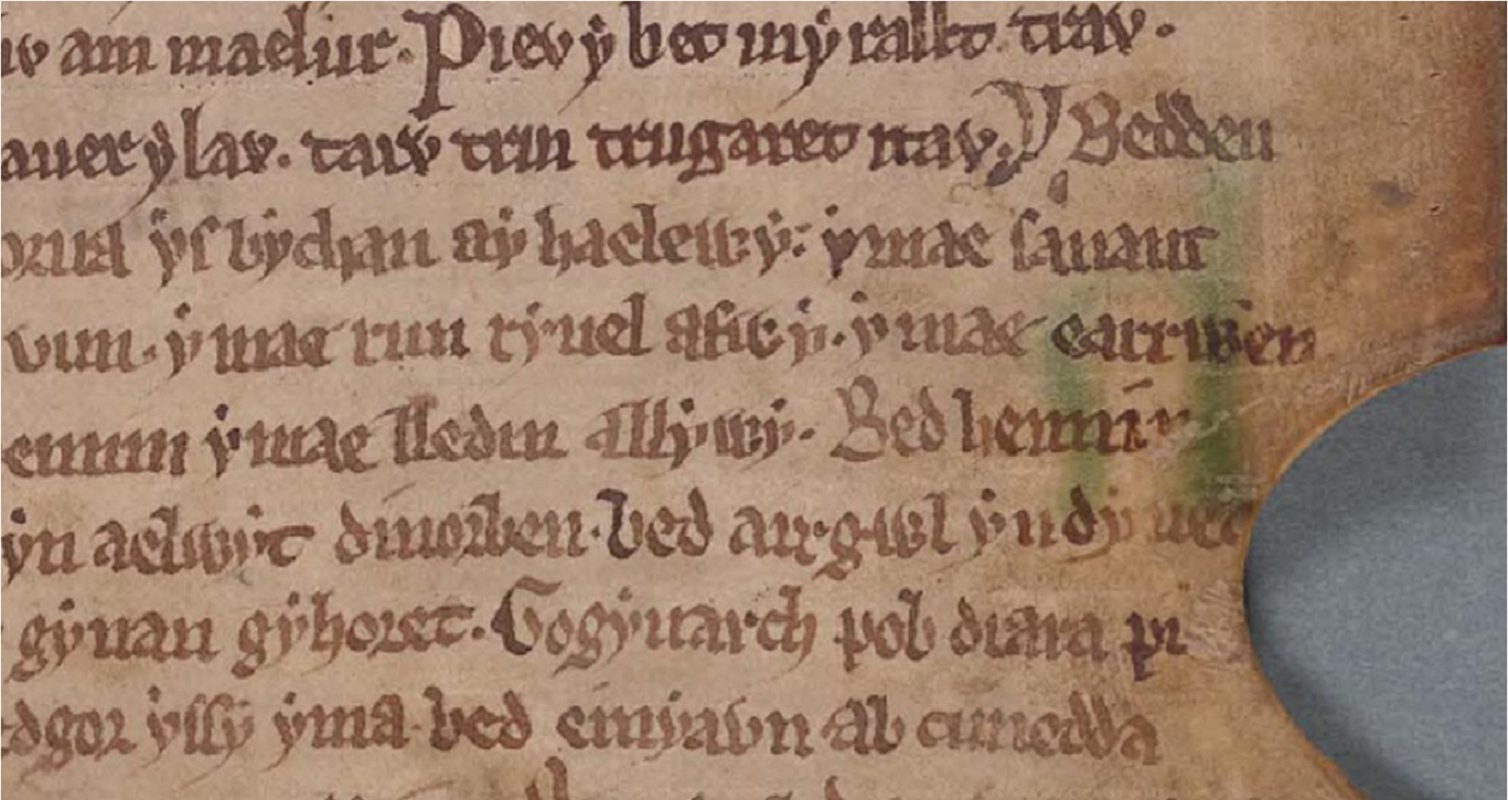
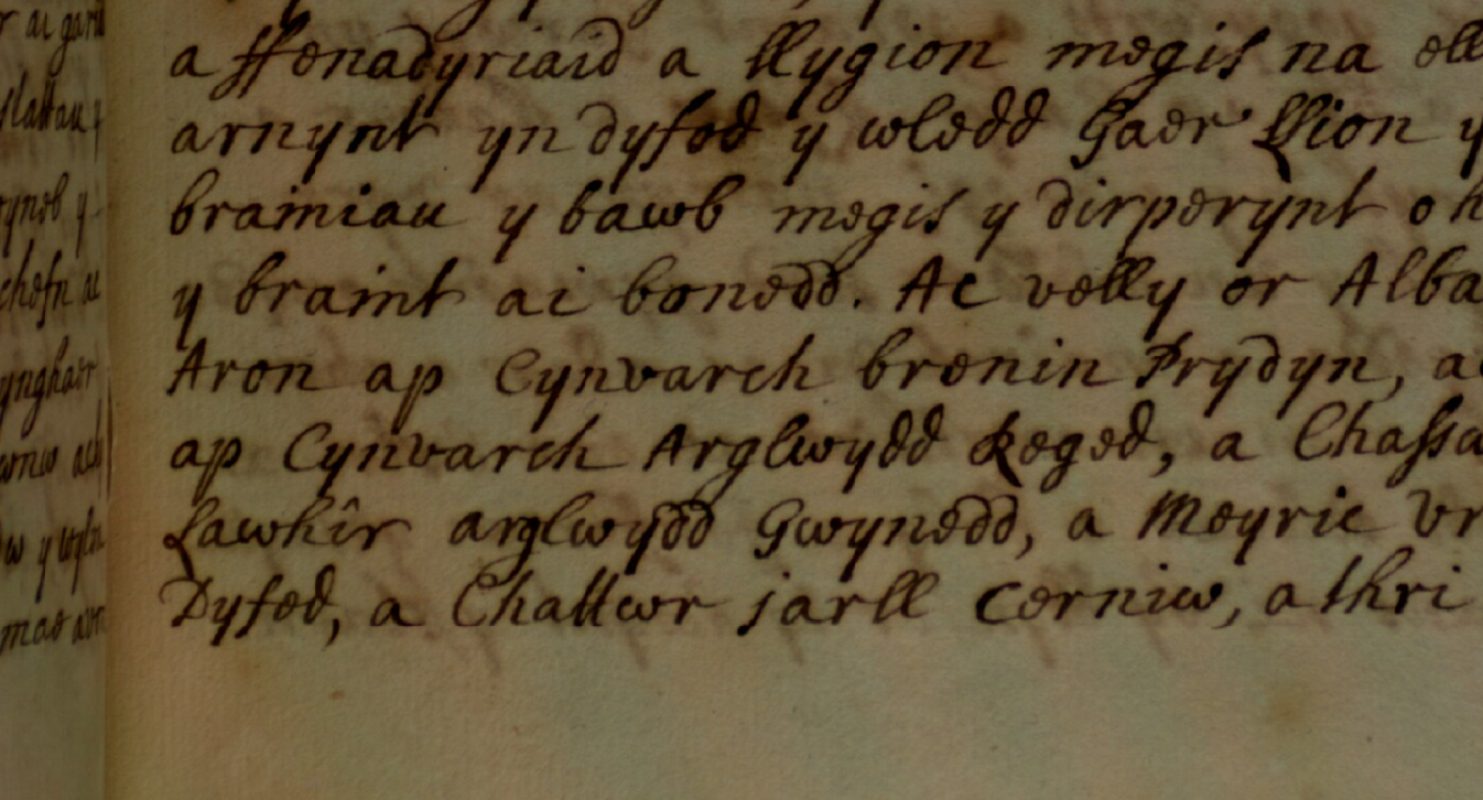
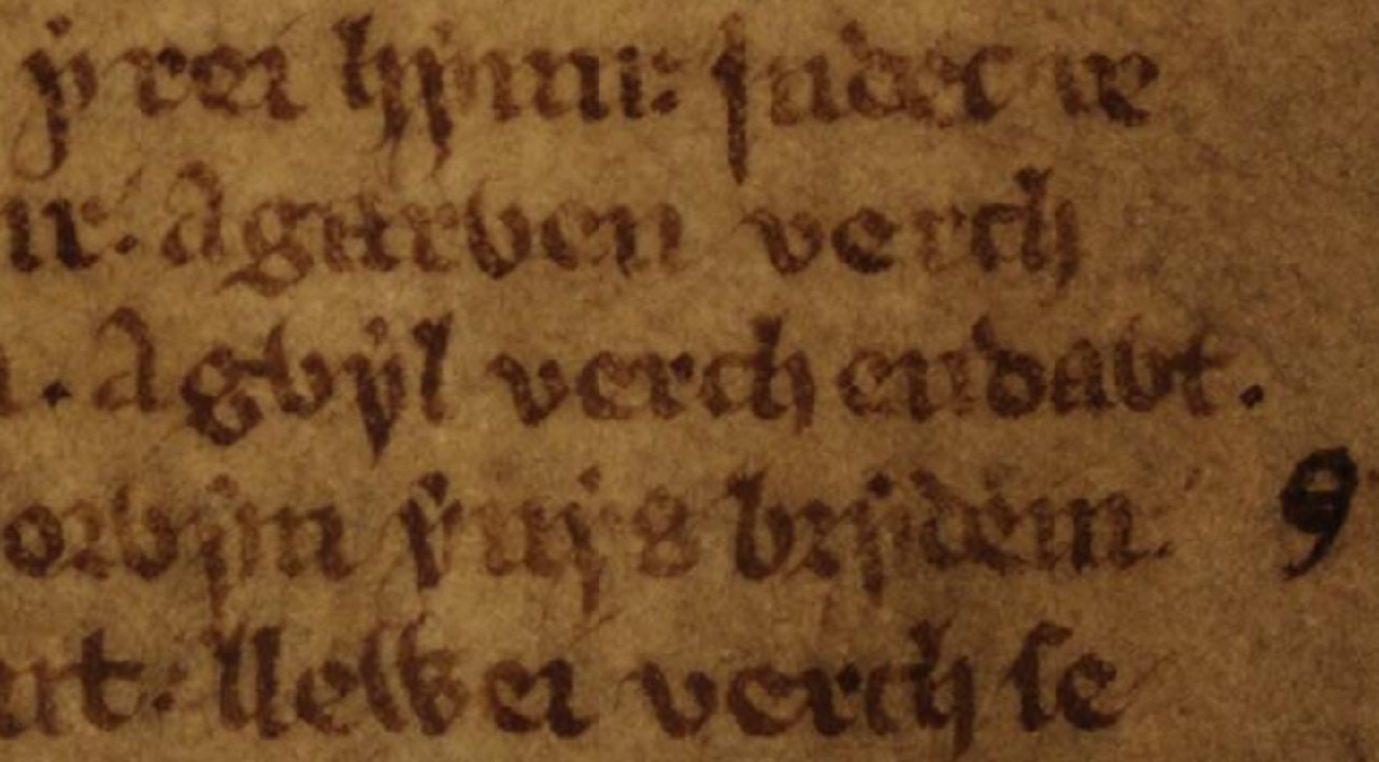
Gwyl daughter of Gendawd is a figure who seems to appear in just a single Arthurian source. The source in question is the Welsh Triads, a medieval collection of various Welsh traditions grouped into threes. Gwyl appears as one of Arthur’s Three Concubines. This is known as Triad 57, and it comes immediately after the triad which lists Arthur’s Three Great Queens.
She is listed last in this list, after Indeg daughter of Garwy Hir and Garwen daughter of Henin Hen. The entries in each triad are often listed chronologically, so this may simply mean that she was the last concubine who married Arthur. However, this assumption is not necessarily secure.
Of all the concubines of Arthur, Gwyl appears to be the most obscure. While Indeg is mentioned in Culhwch and Olwen and Garwen is mentioned in the Stanzas of the Graves, there does not appear to be any reference to Gwyl outside of this triad.
This utter lack of information about her makes her all the more fascinating. The very fact that she is mentioned in the Welsh Triads shows that stories about her must have existed. Evidently she was not famous or popular enough to leave any additional traces in Welsh tradition, but that does not mean that we cannot discern anything about her at all.
Name
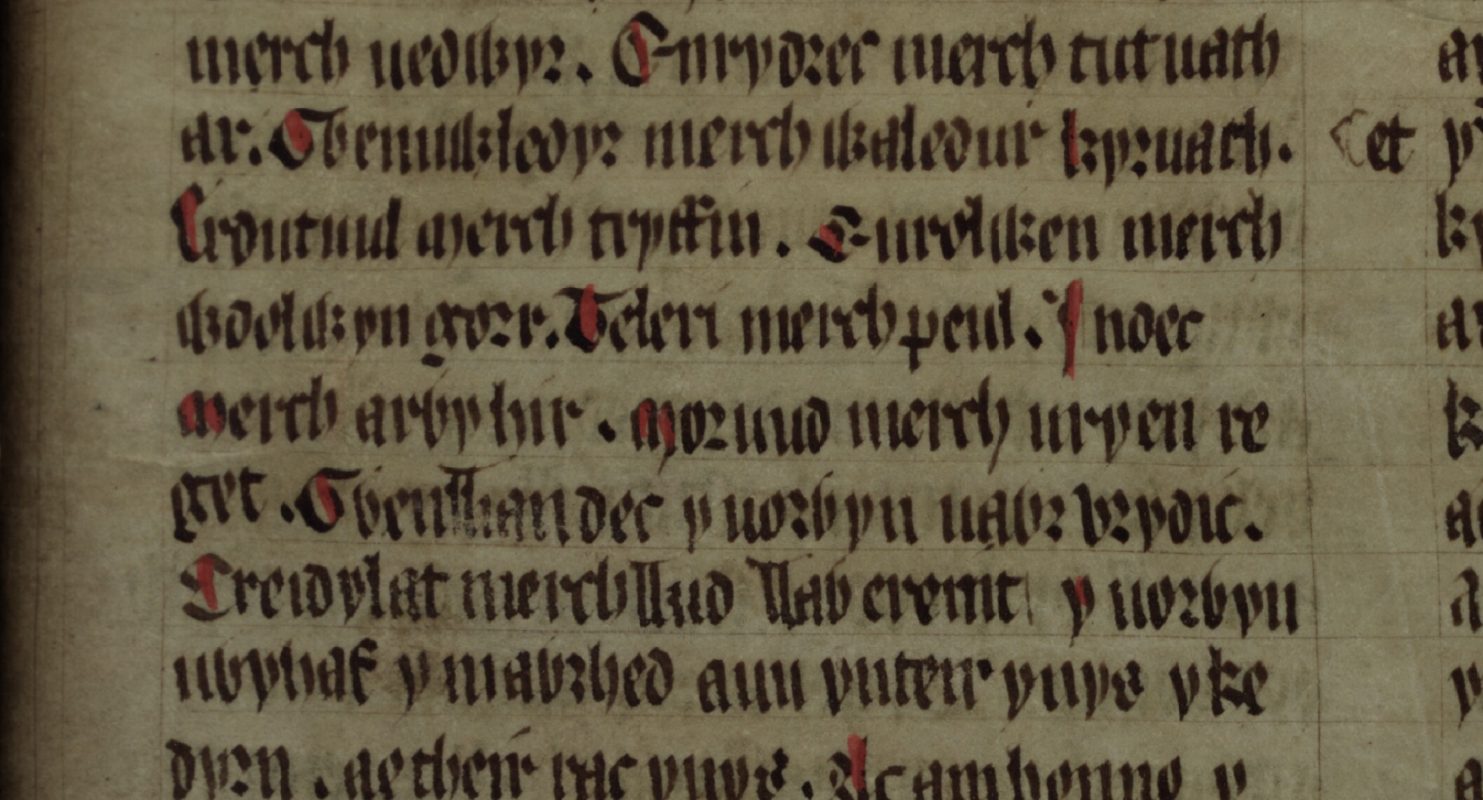
The name of this figure is written as ‘Gwyl’ in the White Book of Rhydderch, which is one of the main sources for the Welsh Triads. However, this is not the only spelling found in the Welsh records. There are a variety of other manuscripts which contain this triad, and some of them contain different spellings.
These different spellings include the following forms:
Gwawl
Gweawl
Gwenuwl
Are any of these spellings more likely to be the original spelling of her name, or is ‘Gwyl’ correct? The short answer is that we do not know, but it is notable that it does not appear that ‘Gwyl’ appears anywhere else as a name. It is actually the Welsh word for ‘modest’.
Of course, it is entirely possible that someone named their daughter ‘Modest’, similar to how certain adjectives are used as names even today. However, the fact that this does not appear to be attested anywhere else as a name makes this unlikely.
An alternative possibility is that it is a corruption of a slightly different name, and that this corruption was encouraged by the fact that ‘Gwyl’, while not actually a name, would look correct to a Welsh scribe, it being a genuine Welsh word.
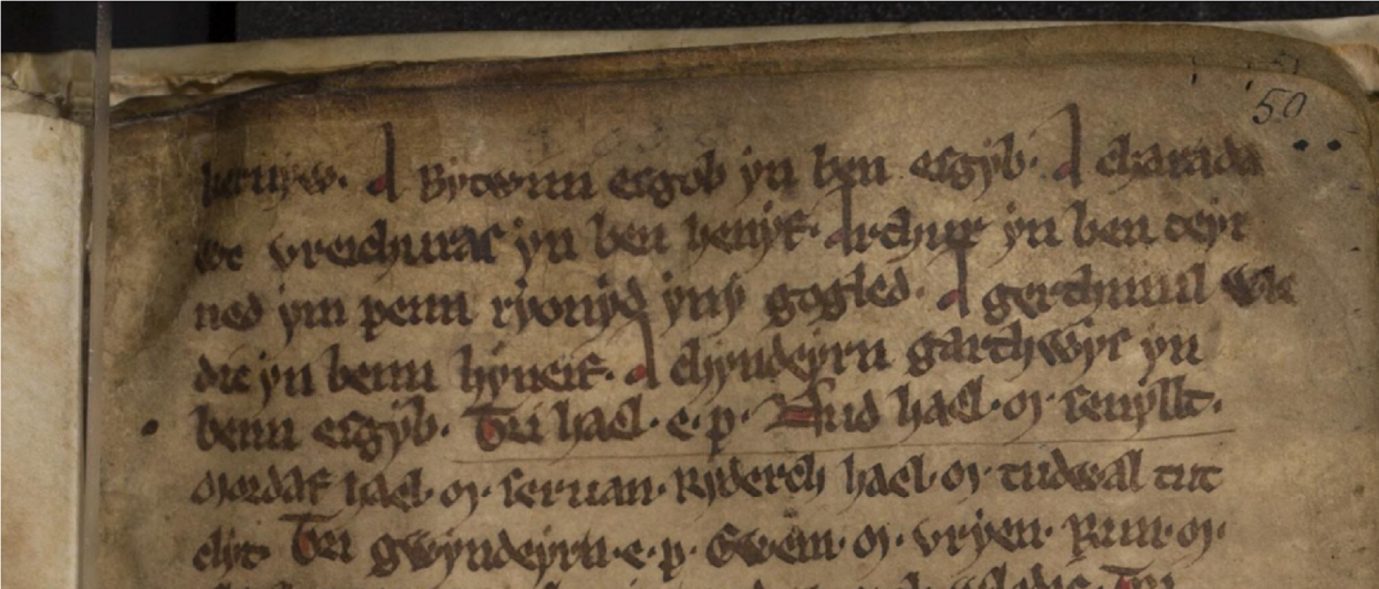
Rachel Bromwich, in her authoritative Trioedd Ynys Prydein, merely makes a remark about comparing ‘Gwyl’ with the ‘Guilbiu’ that appears as the name of a villa in the Book of Llandaff. While these two names could be linked, the former being a shortening of the latter, this is not an overtly convincing connection. After all, there is no guarantee that the villa in question was named after a woman.
A More Likely Possibility
On the other hand, two manuscripts spell her name ‘Gwawl’, with a third using the similar ‘Gweawl’. The name ‘Gwawl’ is well attested elsewhere as a name, both for men and women. If ‘Gwyl’ is to be understood as a corruption, which seems likely, then it is surely more likely to understand it as a corruption of ‘Gwawl’ than as a shortening of the Book of Llandaff’s ‘Guilbiu’.
It is also important to note that this name, Gwawl, is used in the Life of St Cadoc for a woman called elsewhere (such as in the Jesus College MS 20) by the name ‘Gwawr’. Given the ease with which the letters ‘r’ and ‘l’ were exchanged, this is hardly surprising. It would therefore appear that ‘Gwawr’ and ‘Gwawl’ might just be different spellings of the same name, perhaps determined by dialect.
That ‘Gwawr’ is more likely the original form of the name is indicated by the fact that ‘Gwawl’ is actually the Welsh word meaning ‘wall’. This seems unlikely as a name, suggesting that in every case where it appears as a name, it is actually a dialect variation or corruption of the original name ‘Gwawr’.
This being so, we can reasonably conclude that this concubine of Arthur’s was actually named Gwawr. The spelling ‘Gwyl’, unattested elsewhere as a name, is likely a corruption of this through the common variation ‘Gwawl’.
The fact that there are several attested men and women named Gwawl and Gwawr from the Arthurian period demonstrates clearly that it was a relatively popular name in that era. This adds yet more strength to the conclusion that this was the original name of Arthur’s concubine.
An Alternative Possibility
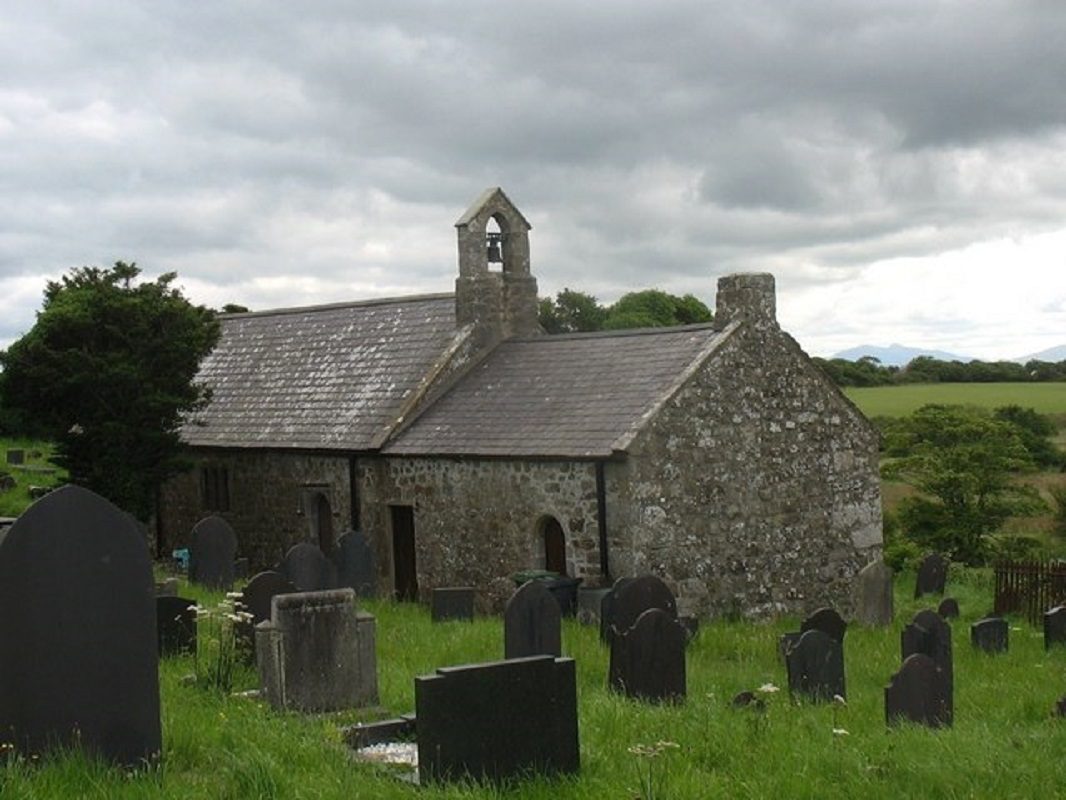
Another possibility, which seems less likely, is that this is the same name as that used by the attested wife of Mordred. She is the patron saint of Llangwyllog in Anglesey, North Wales. She appears as a daughter of Caw in Achau’r Saint, as well as Bonedd yr Arwyr.
Based on these references, Cwyllog was a sixth century figure. She would thus have been a contemporary of King Arthur’s concubine Gwyl. This shows that the name ‘Cwyllog’ was in use at that time.
Due to this fact, it could be argued that Arthur’s concubine’s attested name is actually a shortening of ‘Cwyllog’. The shortening of names is something that we see numerous times throughout the medieval records. Names had their first or last syllable clipped off with quite some frequency. Therefore, there is nothing implausible about suggesting that ‘Gwyl’ could be another spelling of ‘Cwyllog’.
Of course, this is not to say that Gwyl was the same person as Cwyllog the daughter of Caw. There is nothing to connect the name of Gwyl’s father, ‘Gendawd’, with Caw. Nevertheless, these two women from the same era might have had the same name.
However, although this possibility is distinctly possible, the textual evidence regarding the various spellings of Gwyl’s name suggests that the previous suggestion, connecting Gwyl’s name to ‘Gwawl’ and ‘Gwawr’, is more likely.
What Was Gwyl’s Official Position?
Another conundrum about Gwyl that needs addressing is her relationship to King Arthur. In many online sources, she is referred to as a ‘mistress’. This gives the impression that she and Arthur had no official relationship and that they merely had a love affair.
In contrast, Rachel Bromwich’s translation of the Welsh Triads uses the word ‘concubine’. This is very different to a mistress. This denotes a woman with an official position within the royal court, a recognised secondary wife. While not having the same status as a full wife, a concubine would have had a relatively privileged position within Arthur’s kingdom.
Given the authoritative weight to Bromwich’s translation of the triads, this article gives full preference to the reading of ‘concubine’ rather than ‘mistress’. Hence, Gwyl is considered to have had an official, recognised position within the royal court, albeit lesser than a true wife.
Family
The triad in which she appears does not reveal very much about Gwyl’s family. The only piece of information that we receive about her family is the fact that she was the daughter of a man named Gendawd.
While only a singular piece of information, this gives us something valuable to work with. What can we discern about Gwyl based on the name of her father?
Other Spellings
The first observation to make is that the various manuscripts that contain Triad 57 present several different spellings of this name. These variations include the following:
Endawd
Eydad
Entawt
Eydawt
As we can see from this, the majority of attested spellings actually do not contain an initial ‘G’. However, this is understood as being a standard occurrence in patronymics, where the name comes after ‘mab’ (‘son of’) or ‘ferch’ (‘daughter of’). Therefore, translations of the Welsh Triads and other reference works, such as Peter Bartrum’s A Welsh Classical Dictionary, spell his name with the initial ‘G’.
Of course, this leaves open the possibility that Gwyl’s father Gendawd might be identifiable as a figure known in other records as something like ‘Endawd’ or ‘Eydad’. This is tantalisingly similar to Eldad, a figure who appears in Geoffrey of Monmouth’s Historia Regum Britanniae in the context of the execution of Hengest, the Saxon leader.
However, this connection does not seem very likely. While ‘Eydad’ and ‘Eldad’ are almost identical, this identification does not take into account the weight of evidence concerning the spelling of Gendawd’s name.
There are only three textual witnesses in support of the spelling of this name without the ‘n’ near the beginning. In contrast, there are seven textual witnesses supporting the presence of the ‘n’, including the earliest available manuscript.
Similarly, there are seven textual witnesses supporting ‘aw’ in the second syllable, while only two support ‘a’. Therefore, the evidence definitely favours the spelling ‘Endawd’, which is far from Eldad.
Therefore, the conventional spelling of ‘Gendawd’ for this character’s name is very likely, with everything but the first letter solidly established.
Identifying Gendawd, Father of Gwyl
If we accept ‘Gendawd’ as indeed being the most likely spelling, what can we conclude regarding his identity? This is a very uncommon name. In fact, the reason that it is an uncommon name may well be that it is actually an epithet, not a personal name at all.
This name is understood to mean ‘Big Jaws’ or ‘Big Chin’. This is similar to the kind of epithets that we find attached to other figures from the Arthurian period. A comparable example would be Cadwallon Llawhir, whose epithet means ‘Long-handed’, although this is possibly a metaphorical reference to his generosity.
An even more appropriate comparison would be Owain Danwyn, whose epithet means ‘White Tooth’.
Therefore, it is entirely possible that Gwyl’s father Gendawd actually had a different personal name, and ‘Gendawd’ was merely his epithet. The concept of an individual being referred to by just their epithet is not unknown in the medieval Welsh records.
For example, the early poem Y Gododdin, by the bard Aneirin, refers to the sons of Godebawc. This is viewed as a reference to the sons of the famous Coel Hen, who was also recorded with the epithet ‘Godebog’. Another example would be the villainous figure Gwrgi Garwlwyd, who appears in the poem Pa Gur with only his epithet.
With this in mind, there would be nothing outlandish about suggesting that the reference to ‘Gwyl daughter of Gendawd’ does not actually include this figure’s personal name.
Gendawd in Culhwch and Olwen
It would appear that the only other figure in medieval Welsh literature – certainly if we are limiting ourselves to the Arthurian period – recorded as having an epithet like ‘Gendawd’ is a figure who appears in Culhwch and Olwen.
This Welsh prose tale dates to c. 1100 and it tells the story of Arthur helping Culhwch to engage on a number of dramatic and seemingly-impossible adventures. At one point, a very large list of allies of Arthur is provided. One of the figures in this list is the following:
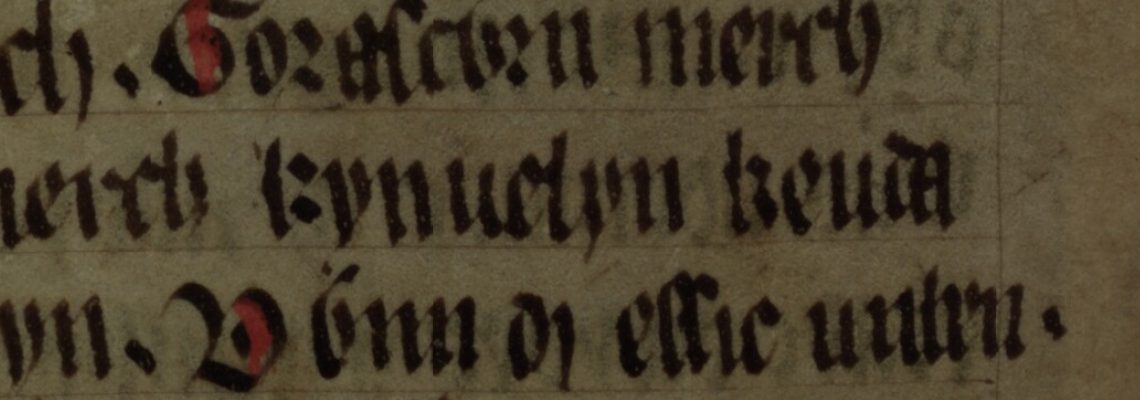
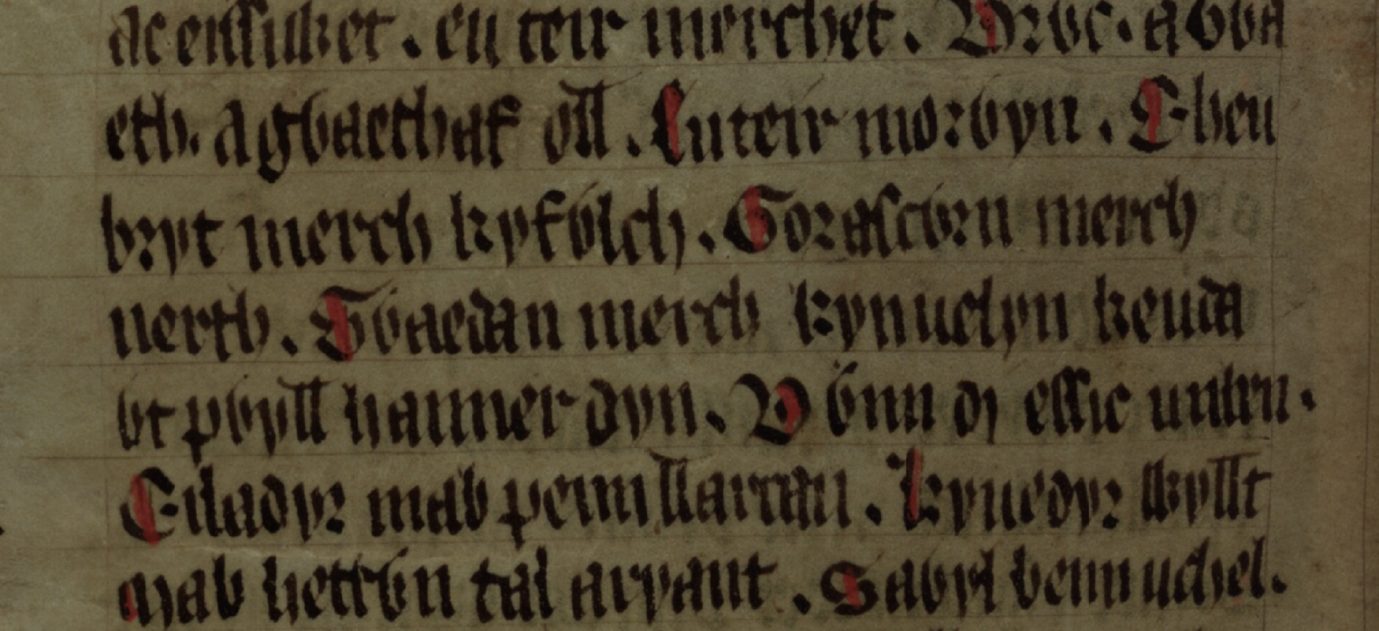
“Ewaedan the daughter of Kynvelyn Keudawd.”
Another translation renders this:
“Gwaeddan son of Cynfelyn Ceudog.”
The actual text in the original Welsh is:
“Gwaedan merch Kynuelyn Keutawt.”
As we can see from this, Gwaeddan appears as the alleged daughter of this figure named Kynuelyn Keutawt. In modern Welsh spelling, this could be rendered as Cynfelyn Ceudod, though Ceudawd might also be acceptable.
The Connection Between Gendawd and Cynfelyn Ceudawd
For now, let us put to the side the issue of whether or not Gwaeddan was the son or the daughter of this Cynfelyn. The key point right now is that this figure’s epithet, ‘Keutawt’, is very similar to the name of Gwyl’s father, ‘Gendawd’.
A very common occurrence in the medieval Welsh manuscripts was the swapping of ‘n’s for ‘u’s and vice versa. With this in mind, the suggestion that ‘Keutawt’ was originally ‘Kentawt’ is entirely plausible. It is evidently for this reason that Rachel Bromwich herself suggested that there was a connection between the epithet of this figure and the name of Gwyl’s father.
Additionally, exchanging an initial ‘G’ for a ‘C’ or ‘K’ was also very common. One example is that of Coel Hen, whose name appears as ‘Gyl Hen’ in the Harleian MS 3859.
Therefore, it is very likely that ‘Gendawd’ and ‘Keutawt’ can be understood as the same name, or epithet. Given the extreme rarity of this name or epithet in the medieval records, and given that both these people lived at the same time and are both associated with Arthur, it seems very likely that we can identify Gwyl’s father Gendawd with this Cynfelyn Ceudawd.
Given the fact that there are multiple manuscripts attesting to the ‘n’ in the name of Gendawd, whereas Cynfelyn Ceudawd only appears in a single manuscript, we must give preference to the spelling with the ‘n’. Hence, we will call him Cynfelyn Cendawd, in view of his likely identification as Gwyl’s father Gendawd.
Who Was Cynfelyn Cendawd?
The identification of Gwyl’s father with this figure from Culhwch and Olwen is extremely useful. This enables us to discern more about her family and understand where she came from and how her family might have been connected to King Arthur’s and to other dynasties in the Arthurian period.
Can we identify Cynfelyn Cendawd with a figure known from other Welsh records, such as the genealogies? Cynfelyn was a fairly popular name in this period, so this is difficult. One tempting possibility is that he can be identified with the Cynfelyn of the North who appears as the father of Cynwyd Cynwydion.
Since Cynwyd’s name came to be used as a tribal name, perhaps his father Cynfelyn came to be known as Cynfelyn Cynwyd in honour of the tribe that he fathered. However, a man taking the name of his son as an epithet in this way seems to be unprecedented. The connection between ‘Cendawd’ and ‘Cynwyd’ is also not exceptionally strong. Furthermore, there is reason to link Cynfelyn Cendawd to South Wales, which argues against the identification.
While identifying this Cynfelyn from the genealogies may not be possible, he can likely be identified as the Kimbelim mentioned by Geoffrey of Monmouth as attending King Arthur’s special coronation in Glamorgan. His father, if it can be trusted (since some manuscripts provide this patronymic to another person), was a certain Trunat, otherwise unknown.
In the Book of Llandaff, there is a land grant that was given by King Meurig to Bishop Oudoceus. This would therefore likely have occurred in c. 570. The next witness of the laity after Meurig is a certain Conuelin. This is another form of the name Cynfelyn.
Although we cannot confirm it, it is entirely likely that this Conuelin can be identified as Cynfelyn Cendawd – in other words, Gendawd the father of Gwyl.
Gwyl’s Brother
As seen earlier, Culhwch and Olwen mentions Cynfelyn Cendawd as the father of a certain Gwaeddan. This would therefore be a sibling of Gwyl. However, was Gwaeddan a brother or a sister? In the actual Welsh text, this figure is presented as the daughter of Cynfelyn. Yet, some translations change this to say ‘son’. Why is that?
Scholars Bromwich and Evans, in their edition of Culhwch and Olwen, offered a series of arguments in favour of the conclusion that Gwaeddan and the two figures preceding him were men, not women, and that ‘ferch’ is a mistake in all three instances.
Given that ‘Gwaeddan’ appears elsewhere as the name of a king, this conclusion does appear to be correct. Hence, it is almost certain that Gwaeddan was actually the brother, not sister, of Arthur’s concubine Gwyl.
The record which mentions Gwaeddan as a king appears to be the only other record in which this figure appears. Therefore, it is reasonable to assume that this is the same Gwaeddan who appears in Culhwch and Olwen. This conclusion is supported by the fact that both Gwaeddans are placed in about the same area and lived at about the same time.
Gwaeddan in the Life of St Teilo
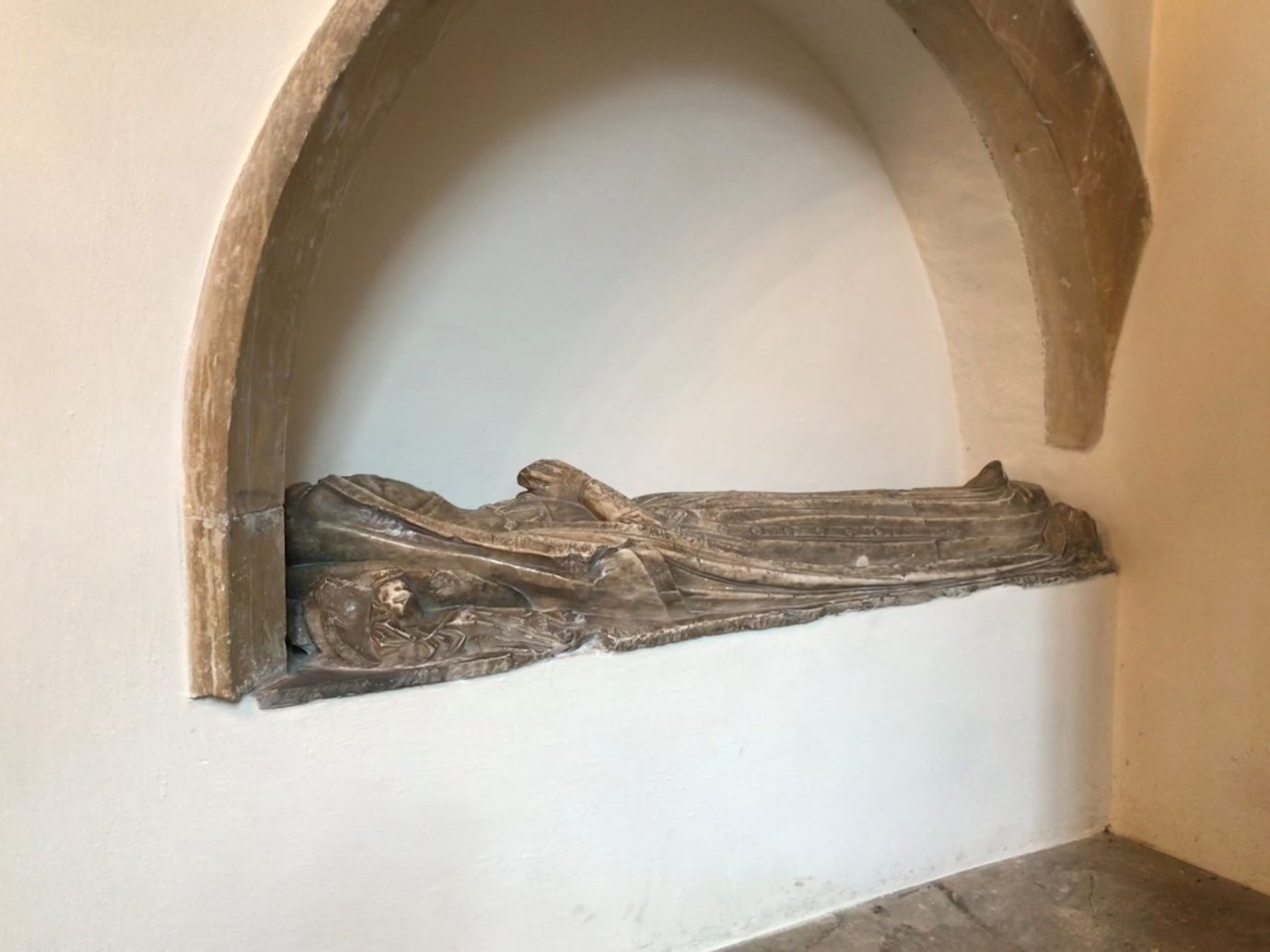
The record in question is the Life of St Teilo. Teilo lived from approximately 510 to 590. Towards the end of the Life, there is a description of how a certain petty king named Gwaeddan violated one of Teilo’s shrines. As a result, he died suddenly.
Although this brief account appears near the end of Teilo’s Life, this particular event is mentioned in the context of miracles which Teilo performed throughout his career. Therefore, there is no way of knowing when exactly this was supposed to have taken place.
Nevertheless, it cannot realistically have occurred right at the start of his career, since Teilo had already established a church by the time this happened. In any case, this places Gwaeddan roughly in the middle of the sixth century, which fits his identity as the Gwaeddan of Culhwch and Olwen.
Therefore, it is almost certain that these two figures with this same name living at the same time, active in the same region, can be identified as the same person. This would mean that Gwyl’s brother was a petty king of Glamorgan. This is very helpful for understanding who Gwyl really was.
Where Did Gwyl Live?
So far, we have identified Gwyl’s father Gendawd as Cynfelyn Ceudawd (or Cendawd) from Culhwch and Olwen. Following this identification, Gwyl’s brother, Gwaeddan, can be identified as the identically-named petty king of South Wales in the Life of St Teilo.
Now that we understand who Gwyl’s father and brother were, we have a reasonable idea of where Gwyl herself likely lived. As we can see, her brother is recorded as a petty king of South Wales in the Life of St Teilo, while her father is likely identifiable as the Conuelin of the Book of Llandaff, associated with King Meurig of Glamorgan.
This means that Gwyl can be understood as a minor princess of South Wales. Where exactly her family ruled is not completely clear. The land given in the grant by Meurig to Oudoceus, in which Conuelin appears, is not definitively identifiable. However, it has been tentatively identified as Howick in Chepstow, Gwent. This would suggest that Gwyl’s father was active in that area.
The Territory of Gwyl’s Brother
On the other hand, her brother Gwaeddan is associated with Teilo’s church of Llandeilo Fechan.
The exact location of this site is unknown. Nevertheless, the Book of Llandaff mentions it and states directly that it is in Dyffryn Teifi. This associates it with the region of the River Teifi, which forms much of the north-south boundary between Ceredigion and Carmarthenshire in southwest Wales.
Similarly, it is thought likely that Llangwathan near Narberth in southwest Wales was named after Gwaeddan. This would indicate that he was a petty king active in southwest Wales, the medieval kingdom of Dyfed.
Although separated from Gwent by Glywysing (modern-day Glamorgan), this is still in the same general region of the country. It would not be a stretch for Gwaeddan to have left his father’s home and set himself up as king further west.
In any case, Gwyl can more likely be associated with her father’s territory than her brother’s. Therefore, it is safer to connect her to Gwent than to Dyfed.
Placing her here goes a long way to understanding why she was chosen by King Arthur as one of his concubines.
How This Harmonises with Arthur’s Territory
Welsh and Latin records firmly associate Arthur with southeast Wales. For instance, Welsh poetry associates Arthur with the Valley of Coed Cerniw, which can likely be associated with modern-day Coedkernew in Gwent.
Within the region of Cerniw, Welsh records place Arthur’s court at a site called Gelliwig. In Gwent, medieval records show that Llanvetherine was formerly known by that name. Hence, these Welsh references appear to place Arthur in Gwent.
In line with this, the Life of St Cadoc and the Life of St Illtud both place Arthur in southeast Wales, in the regions of Gwent and Glamorgan.
This would mean that Gwyl’s family were evidently a petty dynasty within Arthur’s own territory. It would thus have been easy for King Arthur to know of Gwyl and chose her as a concubine.
When Did Gwyl Live?
Given the several pieces of information that we have now been able to discern about Gwyl the concubine of King Arthur, what can we say regarding her chronology?
The first observation to be made is the fact that she obviously must have been a contemporary of Arthur, being his concubine. The traditional dates for Arthur place his climactic battle against the Saxons in 516, and the final battle of his career in 537. These dates come from the Annales Cambriae.
Using this traditional chronology, we can see that Gwyl must have been an early-sixth century figure. She may even have been born towards the end of the fifth century.
However, for a variety of reasons, many researchers argue that these Arthurian dates are too early by several decades. For instance, the Historia Brittonum (which predates the Annales Cambriae by a century) strongly implies that the Battle of Badon was fought no earlier than the start of the reign of King Ida of Bernicia, which was in 547.
Based on this revised chronology, which places the Battle of Badon thirty-three years later than the date given in the Annales Cambriae, we can conclude that Gwyl was a mid-sixth century figure.
We can reasonably assume that she was probably somewhat younger than Arthur, as was common historically. Given that she is presented as Arthur’s third concubine (although we will examine in more detail later whether this order is chronologically correct or not), she may well have been born quite far into his reign.
Evidence from Her Family
Given the evidence that we have collected concerning Gwyl’s father and husband, what does that reveal about Gwyl’s chronology?
Evidence from Gwaeddan
Teilo, as mentioned earlier, probably lived between c. 510 and 590. Gwyl’s brother, Gwaeddan, appears in his Life near the end, but in a passage which refers to miracles performed by the saint throughout his career. Therefore, this is of limited value in establishing when Gwaeddan was active.
Nevertheless, the fact that Gwaeddan’s actions involved violating one of Teilo’s churches is helpful. This must, logically, have occurred some time after Teilo had started his career, for him to have been able to have already built a church by that point.
With Teilo’s birth being in c. 510, we can assume that c. 530 would be the very earliest possible date for this event. To give the chronology more room for comfort, though, a date of c. 535 is a more reasonable lower limit. Of course, the upper limit could be as late as 590, when Teilo died.
What This Means for Gwyl
Assuming that Gwaeddan was at least twenty-years old when this happened, this would place his birth between c. 515 and c. 570. This range, therefore, can also be understood to be the approximate range for Gwyl’s birth.
Of course, since Gwyl’s was Arthur’s concubine, placing her birth as late as 570 would be impossible. Therefore, we can reduce this range to c. 515-555.
Evidence from Cynfelyn Cendawd
Recall that Cynfelyn Cendawd (or ‘Ceudawd’) can likely be identified with the Conuelin who appears in the Book of Llandaff in a sixth-century charter. This is very useful, because the charter itself can be dated fairly precisely.
The bishop who oversaw this land grant is Oudoceus. He was the son of Budic III of Brittany, born in c. 500. Since Oudoceus was a late son of this Budic by his second wife, his birth can likely be placed c. 540. He succeeded Teilo as the preeminent bishop of southeast Wales at about the time of the death of Budic at the very latest, which was in 570.
Given Oudoceus’ birth, it cannot have realistically been any earlier than this, but since Budic died in c. 570 and he was still alive at about the time of Oudoceus succeeding Teilo, it cannot have been any later either.
Therefore, this land grant involving Conuelin must have occurred in 570, when Oudoceus became bishop, or later.
The king who gave this grant of land is recorded as King Meurig ap Tewdrig. Since Tewdrig was the great-great-grandfather of Saint Cadoc, born in the early sixth century, Tewdrig’s birth should be placed in c. 440 (see the article Was Arthwys of Gwent the Real King Arthur? for more details about the chronology of this dynasty).
Meurig, for his part, was a relatively late son of Tewdrig, being born about the same time as Tewdrig’s grandson Brychan in c. 480.
As we have already seen, the charter in which Conuelin appears as a witness cannot be dated any earlier than 570, since Oudoceus oversaw it as bishop. Yet with Meurig being born in c. 480, he must have been very old at the time. He would have been ninety years old when Oudoceus was appointed bishop, meaning that any charters involving Oudoceus and Meurig must have occurred within the first few years of the 570s, right at the start of Oudoceus’ tenure.
Traditionally, Meurig’s death was placed in c. 575. This is a sensible upper limit. Therefore, we can confidently place Conuelin’s presence as witness between 570 and 575.
What This Means for Gwyl
With this fairly precise chronological placement in mind, what does this reveal about the chronology of Gwyl?
If her father Cynfelyn was still alive in 570-575, then we can assume that he would probably have been born no earlier than c. 500 (Meurig’s age being exceptional). Therefore, his daughter Gwyl would have likely been born no earlier than c. 520.
While helpful, this only slightly reduces the range deduced earlier from the information about Gwaeddan. It would therefore appear that Gwyl was likely born between c. 520 and 555.
Was Gwyl Really King Arthur’s Third Concubine?
One final issue to address is the question of whether or not Gwyl was really King Arthur’s third concubine, as implied by the triad which mentions them.
In reality, the three women mentioned in Triad 57 are not the only women recorded as being Arthur’s lovers in Welsh tradition, even aside from Arthur’s three queens named Gwenhwyfar. For example, a woman named Eleirch appears in one record as Arthur’s lover.
Whether Eleirch was Arthur’s official concubine or just a fleeting lover is unknown. However, this does raise the distinct possibility that she was another concubine, perhaps not important enough to make the list in Triad 57.
Nevertheless, there is evidence that she was Arthur’s first cousin. Therefore, given that she was probably not that dissimilar in age to him, it seems likely that her union with Arthur would have occurred fairly early on in his career.
If we conclude that she was a concubine, which does seem likely, then she was probably Arthur’s first. This would mean, even if Triad 57 is in chronological order, Gwyl would have been Arthur’s fourth concubine, not his third.
Chronological Placement Relative to the Other Concubines
However, even aside from the issue of Eleirch and potentially others, there is the question of whether or not the three concubines in the triad are really placed in chronological order. What can help us with this is looking at the ranges for their respective births.
The birth of Indeg, the first one listed, was likely in c. 540, with her becoming Arthur’s concubine in c. 560 or later. Garwen, the second one listed, could have become Arthur’s concubine as early as c. 549. See their respective articles for details.
Gwyl could likewise have become Arthur’s concubine as early as c. 549. Given that she could have been born in c. 520, as we have seen, one might suggest that she could have become Arthur’s concubine as early as 540 or even a few years earlier, but it seems unlikely that Arthur took a concubine during the middle of his Saxon wars.
On that basis, it seems sensible to place her marriage to Arthur after the Battle of Badon. This is the same reasoning that applies to Garwen, who could have been born as early as c. 523.
Therefore, it is very likely that Indeg was actually the last of Arthur’s three concubines, not the first. In fact, it is entirely possible that the order presented in Triad 57 is reverse chronological order.
Conclusion
In conclusion, Gwyl was the daughter of Gendawd and the concubine of King Arthur. Her father, Gendawd, can likely be identified with the Cynfelyn Ceudawd who appears in Culhwch and Olwen and the Conuelin who appears as a contemporary of King Meurig in the Book of Llandaff. She thus appears to have been a princess from a minor dynasty in southeast Wales. This makes sense of her concubinage to Arthur, who was based in that area.
Gwyl was likely born at some point between 520 and 555. Although she is presented as Arthur’s third concubine, it is entirely possible that she was actually the first of the three mentioned in the triad.
Sources
Bartrum, Peter, A Welsh Classical Dictionary, 1993
Bromwich, Rachel, Trioedd Ynys Prydein: The Triads of the Island of Britain, 2014
Howells, Caleb, King Arthur: The Man Who Conquered Europe, 2019
Bromwich, Rachel & Simon Evans, D, Culhwch ac Olwen, 2012
https://coflein.gov.uk/en/site/422397/
Guy, Ben, Vita Sancti Teliaui (Liber Landavensis), 2023
Owen, George, The Description of Penbrokeshire (Volume II), 1897