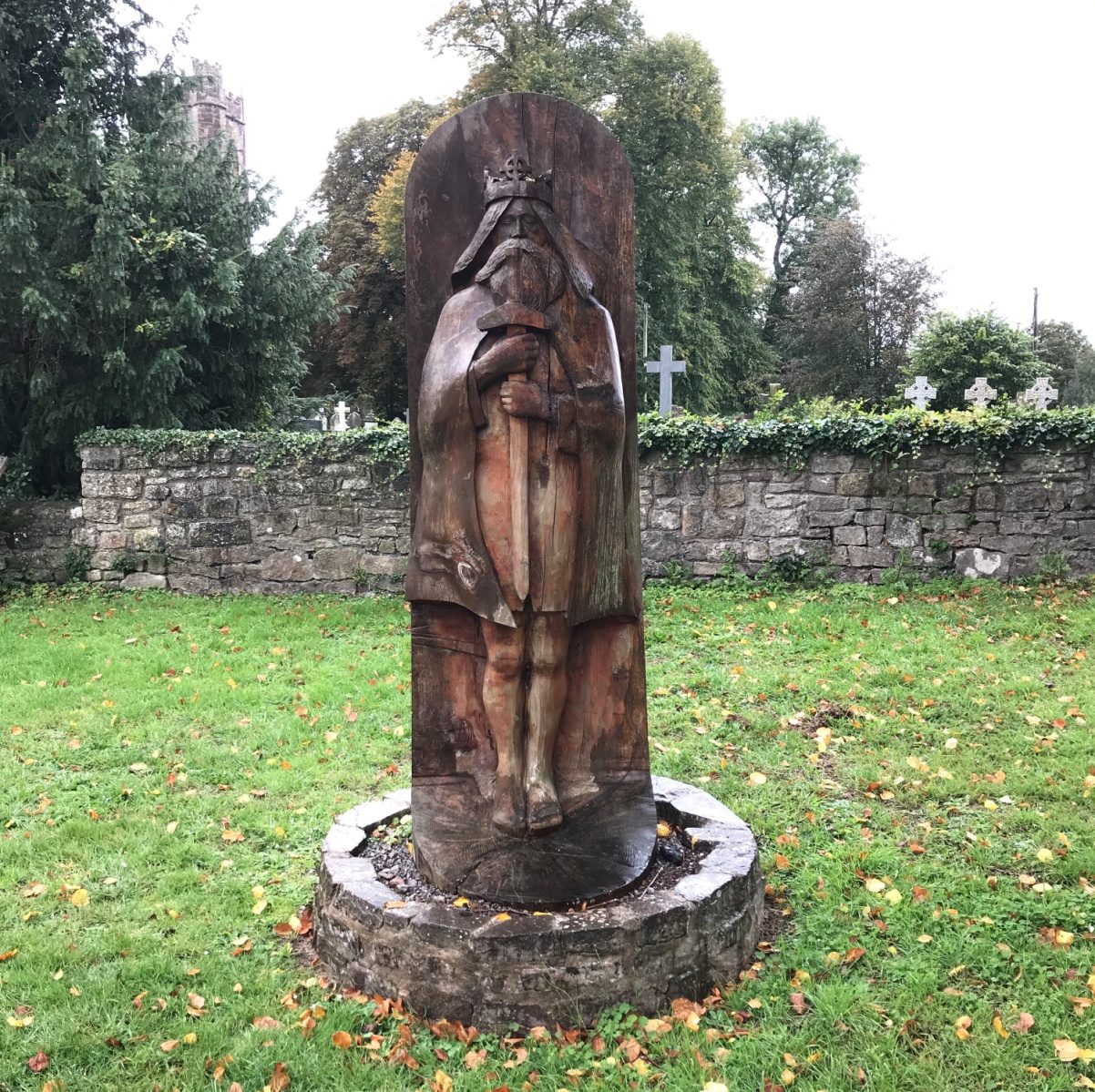
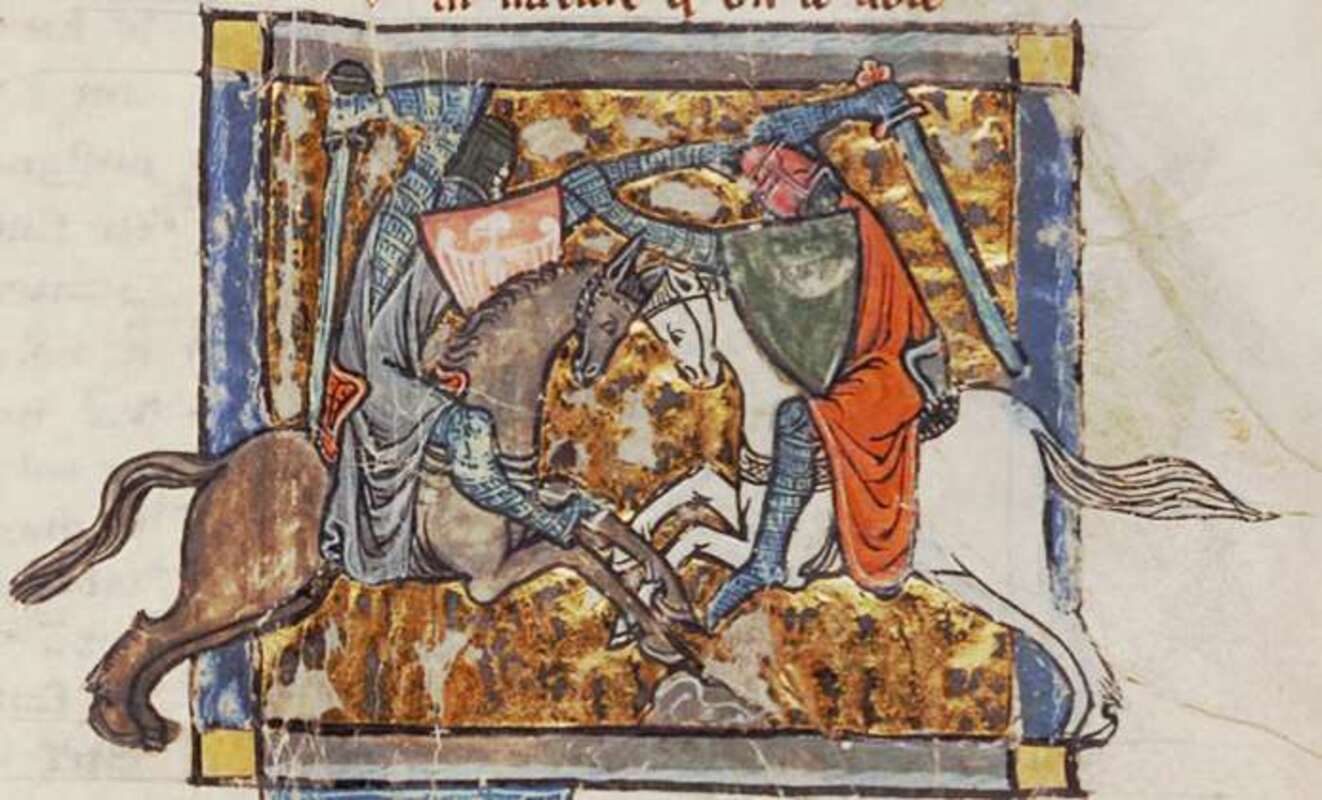
Stater, King of Dyfed

Stater is a minor character in the Arthurian legends who appears as the king of Dyfed during King Arthur’s special coronation. Based on a comparison with several sources, it appears that he can be identified as a historical figure, King Meurig of Glywysing and Gwent. What is the basis for this conclusion? What do the Arthurian legends really claim about Stater and his role in King Arthur’s kingdom? This article will examine the answers to these questions and others.
Who Was Stater, King of Dyfed?
Stater is a character from the Arthurian legends who appears in Geoffrey of Monmouth’s Historia Regum Britanniae, written in c. 1137. This is the first full account of Arthur’s career. In this narrative, Stater attends Arthur’s special coronation, which he arranges about twelve years after establishing peace in Britain after the Battle of Badon.
The account of Arthur’s special coronation makes it clear that Stater was one of the most prominent and important kings of that time. He is one of the first of Arthur’s allies to be mentioned, and he participates directly in the coronation ceremony along with three other major kings.
Geoffrey tells us that Stater was the king of the Demetians. In other words, he was the king of Demetia, or Dyfed, the kingdom of South Wales.
Apart from his status as a prominent king and his kingdom, nothing about Stater himself is revealed in the Historia Regum Britanniae. Geoffrey explained nothing about his parentage or his children, nor what he achieved in his reign. Nevertheless, by looking at other versions of the Arthurian legend based directly on Geoffrey’s account, we can identify him with a figure better known from other records.
Stater’s Name
One of the most intriguing things about Stater is his name. In some commentaries about this character, scholars observe that his name appears to be a corrupt form of a Roman title. It is generally held to be taken from the Latin title ‘stator’, which means ‘a magistrate’s marshal’.
Of course, this does not necessarily mean that it was not actually this king’s personal name. After all, there are other instances in which Latin titles appear to have been adopted as personal names. One example is the Latin title ‘tribune’, which was used in the form of ‘Triphun’ the father of Aircol of Dyfed.
The very fact that this other example also involves one of the early kings of Dyfed could potentially be used as support for the conclusion that ‘Stater’ was this king’s personal name, on the basis of it arguably being a habit of this dynasty.
Of course, this is only a possibility. In fact, we will go on to see that the evidence actually identifies Stater with someone from another dynasty entirely.
Stater in the Arthurian Sources
Stater appears in Book 9 of the Historia Regum Britanniae. Some twelve years after establishing peace in Britain after the Battle of Badon (Arthur’s climactic battle against the Anglo-Saxons), Arthur arranged a special coronation ceremony at the Easter festival.
Stater’s Introduction
This festival took place at Caerleon-upon-Usk in southeast Wales. Numerous allies from all over Britain and beyond attended this special event. As Geoffrey starts describing the attendees, he begins:
“Accordingly there came Augusel, king of Albania, now Scotland; Urian, king of Mureif; Cadwallo Lewirh, king of the Venedotians, now called the North Wales men; Stater, king of the Demetians, or South Wales men; Cador, king of Cornwall; also the archbishops of the three metropolitan sees, London, York, and Dubricius of the City of Legions.”
After this, Geoffrey goes on to mention numerous other allies, evidently more minor ones. Therefore, from this brief introduction, we can see that Stater was one of the most important and prominent kings of Arthur’s kingdom.
Augusel is Geoffrey’s version of Arawn. From Geoffrey’s own account and from the Welsh sources that mention Arawn, it is clear that he was a major king of the north of Britain. Geoffrey’s ‘Urian’ is Urien Rheged, historically one of the most powerful kings of Britain in the latter half of the sixth century.
Cadwallo Lewrhi is Cadwallon Lawhir, the father of the famously powerful King Maelgwn Gwynedd in the sixth century. Cador of Cornwall is the historical Cado of Dumnonia, another particularly powerful and important king from historical records.
Therefore, Stater is peculiar in that he is surrounded by figures who are known to have been both historical and also powerful. This makes his obscurity all the more interesting and bizarre.
Stator’s Role in the Coronation Ceremony
After providing the long list of allies, Geoffrey of Monmouth goes on to explain what took place at the ceremony. It is here that Stater appears again, although not by name. Geoffrey explains:
“As soon as the king was invested with his royal habiliments, he was conducted in great pomp to the metropolitan church, supported on each side by two archbishops, and having four kings, that is, of Albania, Cornwall, Demetia, and Venedotia, whose right it was, bearing four golden swords before him.”
According to this, Augusel, Cador, Stater, and Cadwallo were directly involved in the coronation ceremony. As Arthur was led towards the church, these four kings were with him, bearing golden swords.
This makes it very clear that they were the four most prestigious kings in Britain at that time – at least, out of all those who were allied to Arthur.
Stater’s Successor
After this, Geoffrey does not reveal anything about what happened to Stater afterwards. Nor does he directly reveal anything about his lineage. He does not mention Stater in the account of the Roman war, nor in his description of those killed at the Battle of Camlann (Arthur’s final battle in Geoffrey’s account).
In fact, Geoffrey does not specifically mention the king of the Demetians again until Book 11. In this part, he is describing the Battle of Chester, which historically occurred in c. 616. Geoffrey presents a certain Margaduc as the king of the Demetians at that time.
Geoffrey does not specifically say that Margaduc was the descendant of Stater. However, in the absence of any active reason to believe that the line of kings of the Demetians was replaced with a different one, the most natural conclusion would be that Margaduc was indeed from Stater’s line.
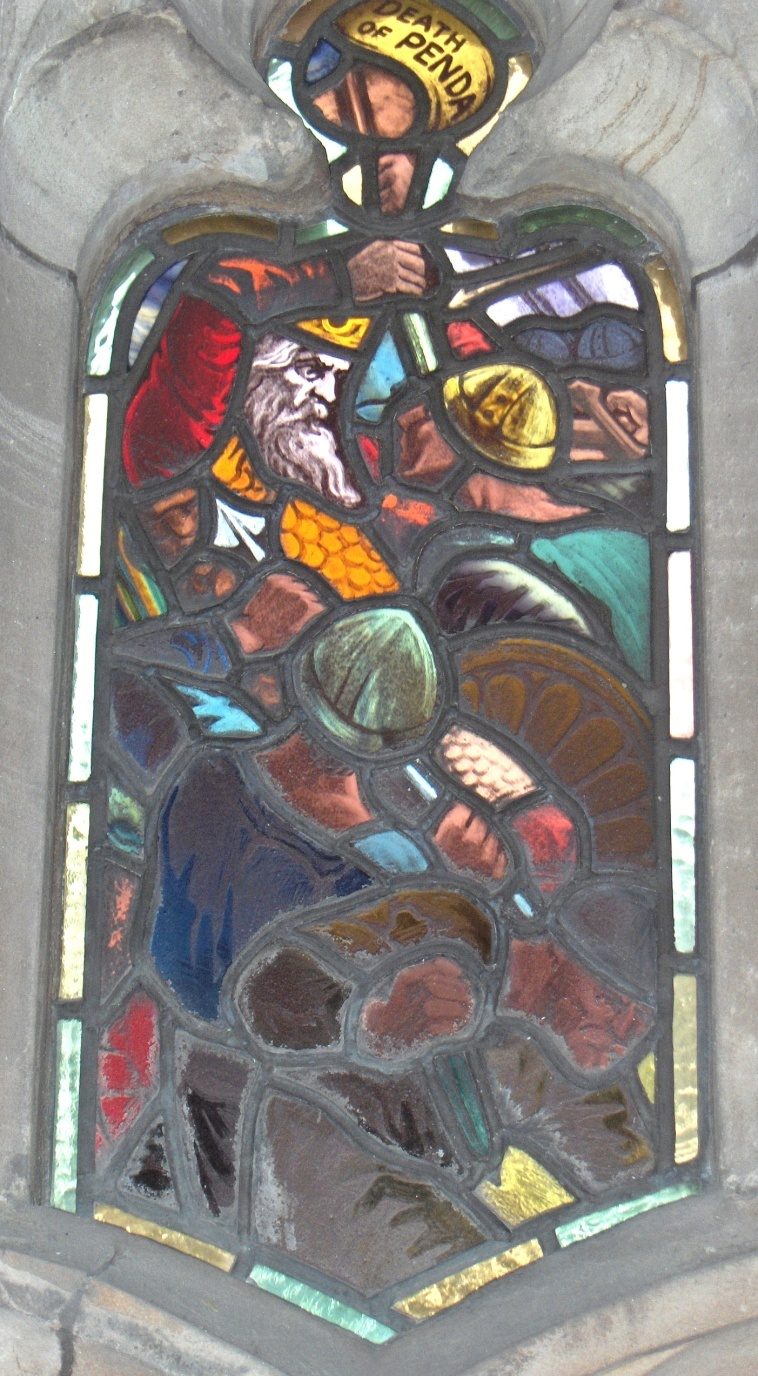
However, it is very unlikely that Margaduc was not directly the son of Stater. This we can discern from chronological evidence. In Book 12 of the Historia Regum Britanniae, Margaduc is shown to still be active as late as the mid-seventh century, during the war between Penda and Oswiu.
Therefore, it is evident that Margaduc was a fairly young king at the time of his first appearance, in the context of the Battle of Chester. Stater, meanwhile, is already presented as one of the most prominent and important kings of Britain at the time of Arthur’s special coronation, so it is unlikely (although not impossible) that he was very young then.
There is nothing impossible about Margaduc being a son of Stater, but the chronology definitely favours the conclusion that he was actually his grandson.
Was Stater, King of Dyfed, Taken from the Harleian Genealogies?
One of the most common beliefs concerning Stater is that Geoffrey took this name from the line of kings of Dyfed found in the Harleian genealogies. The ‘Harleian genealogies’ refers to a collection of lists of descent concerning various kingdoms in medieval Britain found in the Harleian MS 3859. This is the earliest surviving example of such a collection.
In the list of kings of Dyfed, we find the following list:
“Maxim gulecic map Protec map Protector map Ebiud map Eliud map Stater map Pincr misser map Constans map Constantini magni.”
In this list of kings of Dyfed, one of the names is ‘Stater’. Therefore, it is argued that Geoffrey saw that this was a list of kings of Dyfed (that is, Demetia), and therefore chose one of the names essentially at random to use as the name of his fictitious king of Demetia.
Flaws in This Argument
Despite how popular this argument is, there are serious problems with it. For one thing, notice that the name ‘Maxim gulecic’ comes considerably after Stater. This is the name in Welsh tradition for Magnus Maximus.
Geoffrey was well aware of this figure from Welsh and Roman history. It is inconceivable that he would not have recognised this name as being that of Magnus Maximus. This is even more implausible when we consider that this same name appears just two lists further down in the Harleian genealogies, and this latter list explicitly states that he was the one who killed Gratian, king of the Romans.
Therefore, Geoffrey simply cannot have failed to notice that the genealogy which mentions Stater places him long before the time of Magnus Maximus. Therefore, it is entirely illogical to conclude that Geoffrey took the name of Stater from this list in the Harleian genealogies and intentionally applied it to the king of Demetia in King Arthur’s time.
If Geoffrey had been looking through the genealogies for names that he could use, then he cannot have failed to find Aircol or Triphun. Aircol’s son, Vortipor, appears both in the Harleian genealogies and in Geoffrey’s account.
He must have known that Vortipor was of Demetia, since the passage which features Vortipor is based directly and extensively on Gildas’ De Excidio, which explicitly associates Vortipor with Demetia. Hence, if Geoffrey was hoping to find a name for the king of Demetia in the generation or two prior to Vortipor, he would logically have chosen Aircol or Triphun.
Hence, Geoffrey’s use of ‘Stater’ as the name for this king of Demetia, or Dyfed, in King Arthur’s time cannot reasonably be explained as having anything to do with the Harleian genealogies.
The True Identity of Stater
Is there any way of identifying who Stater, king of Dyfed, really was? One way is by looking at other accounts based directly on Geoffrey’s version and seeing how they differ.
In most of the later versions of Geoffrey of Monmouth’s account, such as Wace’s Brut or Layamon’s Brut, Stater of Dyfed does not appear differently to how he does in Geoffrey’s own version. However, there is one adaptation of Geoffrey’s Historia Regum Britanniae which does provide a different perspective.
This is the Brut Tysilio. Unlike the other texts, this is a Welsh record. In numerous instances, it alters the names used by Geoffrey to be more familiar to the Welsh readers. Some of the names are simply presented in different forms (such as ‘Eigr’ for ‘Igerna’), while others are completely changed (such as ‘Madoc’ for ‘Arthgal’).
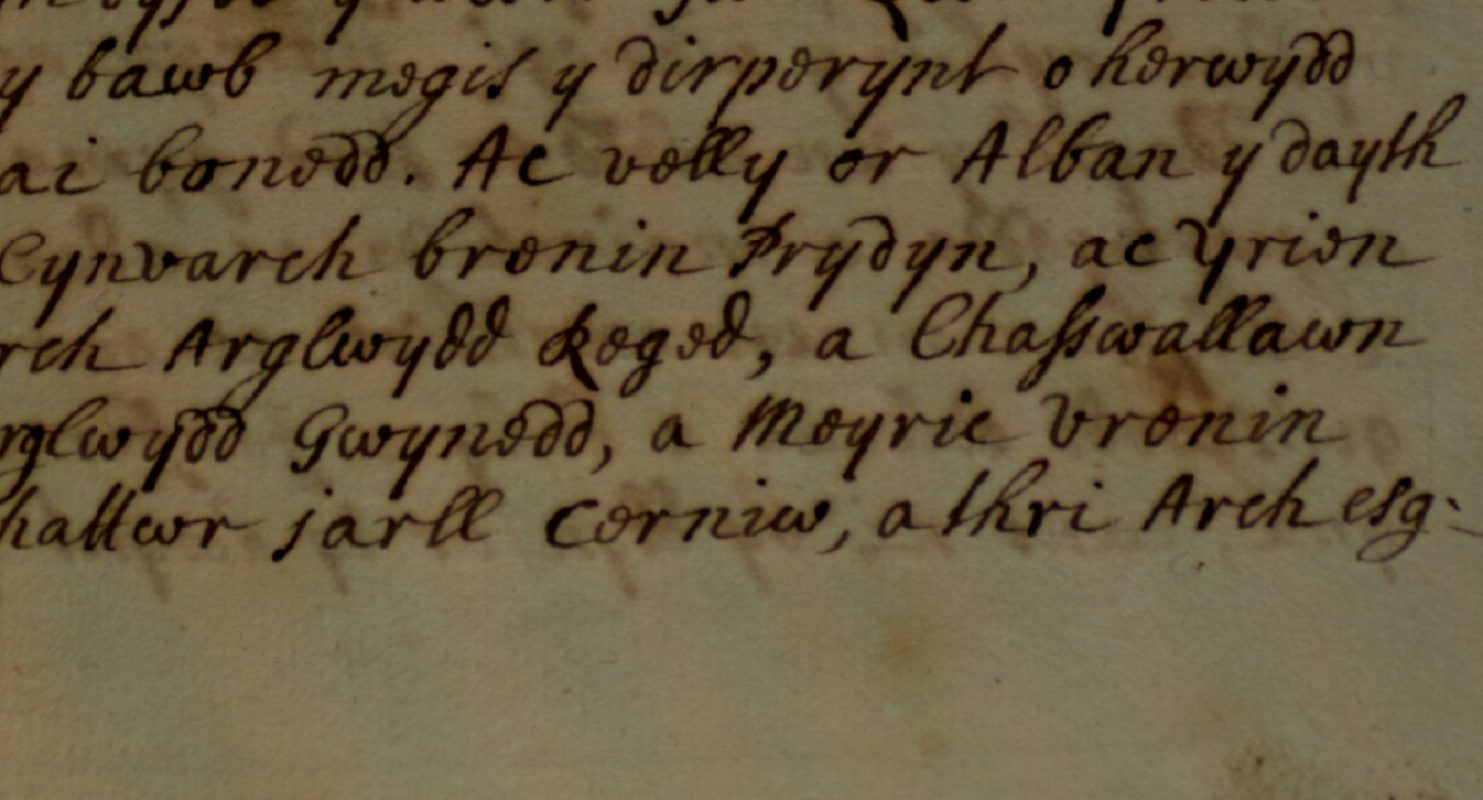
In the case of Stater, king of Dyfed, notice how he appears in the equivalent passage in the Brut Tysilio:
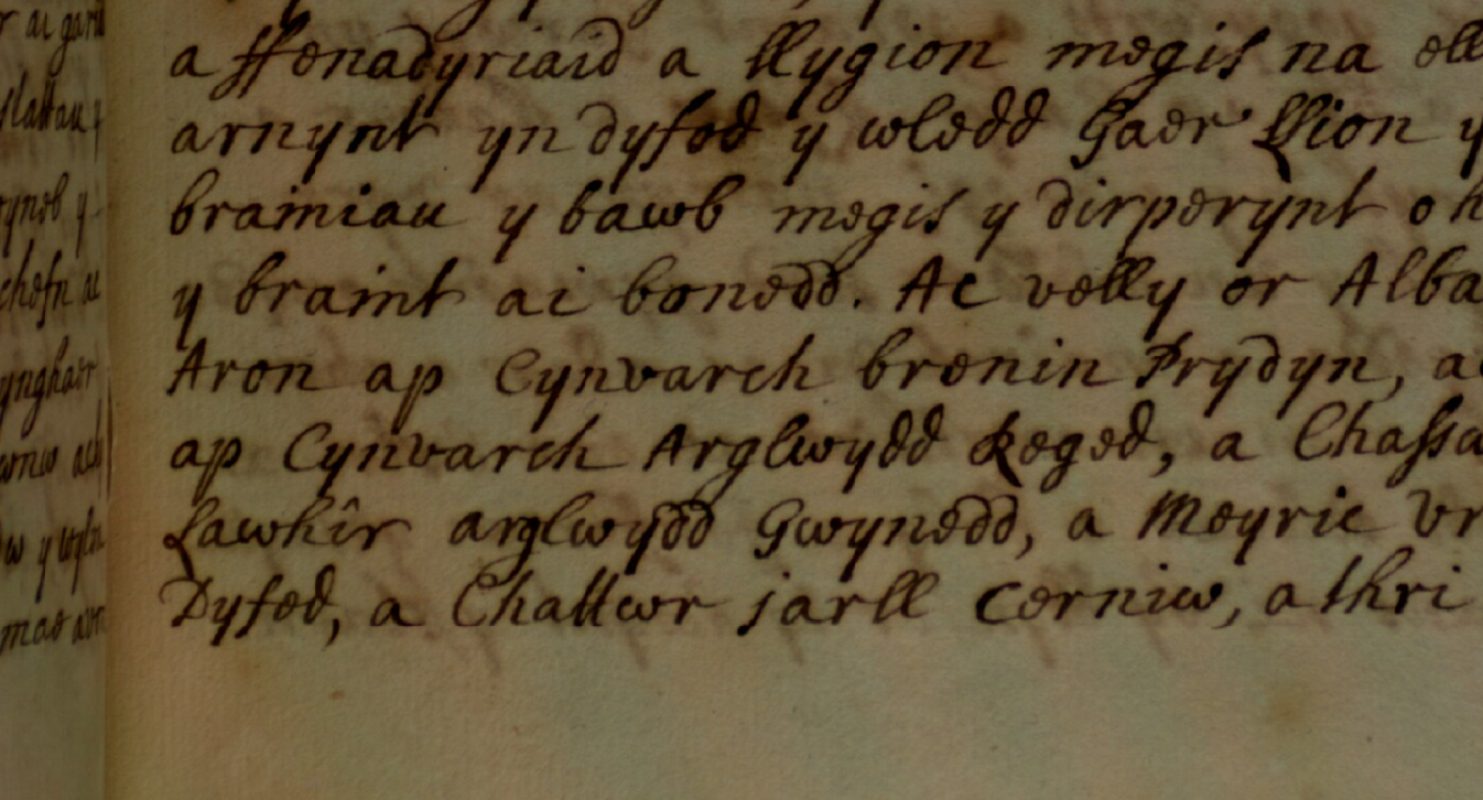
“And so from Alban came Aron, son of Kynvarch, the king of Prydyn; and Yrien, son of Kynvarch, Lord of Reged; and Kasswallawn Lawhir, lord of Gwynedd, and Meyric, King of Dyfed, and Kattwr, Earl of Kerniw.”
As we can see from this, Geoffrey’s Augusel appears as Aron, Urian appears as Yrien, Cadwallo appears as Kasswallawn, and Cador appears as Kattwr. While different, their names are still identifiable as the same (with the first case being a particularly unusual misspelling).
However, in the case of Stater, king of Dyfed, his name is completely different. His name is given as ‘Meyric’. This is highly significant. This indicates that Welsh tradition preserved the information that the king of Dyfed in the time of King Arthur, whom Geoffrey called ‘Stater’, was actually named ‘Meyric’.
Who Was Meyric, King of Dyfed?
This piece of information is immensely useful in establishing who Stater, king of Dyfed, really was. The name ‘Meyric’ is an alternative spelling of the name more commonly written as ‘Meurig’. It is also sometimes seen as Mouric or Meuric.
In any case, how are we to understand this evident tradition that the king of Dyfed in the time of King Arthur was Meurig? Can we identify Meurig from other records?
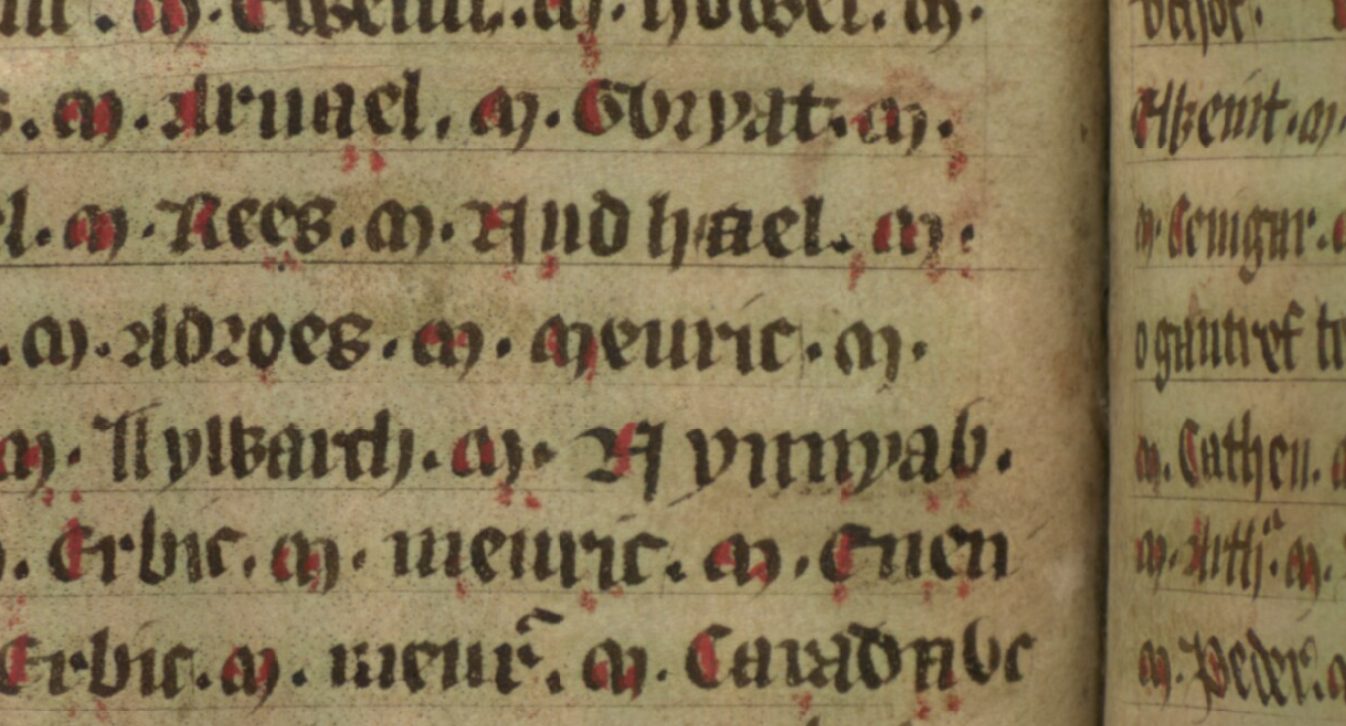
According to Peter Bartrum’s A Welsh Classical Dictionary:
“there is no independent evidence for a king of Dyfed named Meurig in the time of Arthur in history or legend.”
However, this is incorrect. In fact, both legendary and historical records attest to the existence of a king of Dyfed by that name in the sixth century. For example, elsewhere in A Welsh Classical Dictionary Bartrum himself records the existence of a seventeenth century account about Myrddin Wyllt, the mid to late sixth century bard, which makes him the grandson of Meurig, king of Dyfed.
While there is no earlier legendary record which mentions this, as see as early as Geoffrey of Monmouth that Myrddin Wyllt, or Merlin, was associated with the royal line of Dyfed. Geoffrey himself wrote, in the Life of Merlin, the following about Merlin:
“He was a king and prophet; to the proud people of the South Welsh he gave laws.”
In other words, Merlin was a king of the South Welsh, the people whom Geoffrey elsewhere calls Demetians, the people of South Wales. Therefore, although this does not confirm the existence of Meurig, king of Dyfed, it does show that the seventh century reference to Meurig as the grandfather of Myrddin is consistent with this earlier information.
In fact, even Welsh tradition, independent of Geoffrey of Monmouth, supports this inasmuch as it associates Myrddin Wyllt with Dyfed.
Not Meurig ap Mareddud
One suggestion is that Stater, as Meurig king of Dyfed, can be associated with a figure who appears in one genealogical record as Meurig ap Mareddud. This is the genealogy of a family in Dyfed, southwest Wales.
The problem with this identification is that Mareddud is made the son of a certain Predri ap Pliws. Given the geography and the names, it is reasonable to conclude that these names are a corruption of Pryderi ap Pwyll.
Pryderi is the central character of the Four Branches of the Mabinogion. He and his foster father both appear as King Arthur’s allies in the Welsh prose tale Culhwch and Olwen. Therefore, Pryderi cannot have been an elderly ally of Arthur’s. He must have been relatively young for his father to still be alive as one of Arthur’s men.
Therefore, the idea that his grandson, Meurig ap Mareddud, could be identified as the historical Stator, king of Dyfed, at the time of Arthur’s special coronation is completely untenable. In fact, Arthur probably died while this Meurig was still a youth.
Additionally, there is no evidence that Meurig ap Mareddud was a prominent king. He does not appear in other records, and even Pryderi, with his prominence as the central character of the Four Branches, was evidently a relatively minor ruler. The king lists of the rulers of Dyfed never include him. He and his father were apparently not high kings of Dyfed, but only minor rulers.
This clearly does not match what Geoffrey wrote about Stater, king of Dyfed.
The True Territory of Stater
As we have seen so far, the evidence from Brut Tysilio and from the account about Myrddin’s origin shows that there was a tradition of a sixth century king of Dyfed named Meurig. This king was one of the most prestigious of those in Britain at that time. Yet, he does not appear in any of the king lists of Dyfed. What can explain this? Who really was Stater?
The key to identifying Meurig, and thus Geoffrey’s Stater, is to recognise that the term ‘Dyfed’ does not always refer to the kingdom of southwest Wales by that name. In fact, it often does not. We can see this from the Historia Regum Britanniae itself. In Book 4, Geoffrey writes:
“Claudius consented to it, and commanded a city to be built, which after his name is called Kaerglou, that is Gloucester, to this day, and is situated on the confines of Dimetia and Loegria, upon the banks of the Severn.”
According to this, the city of Gloucester was ‘situated on the confines of Dimetia and Loegria, upon the banks of the Severn’. Dimetia is, of course, Demetia, while Loegria is Geoffrey’s term for the territory broadly corresponding to England.
This description requires Demetia to border England. Specifically, it must do so in the region of the Severn River. What does this show? This shows that the term ‘Demetia’ was sometimes used to refer to South Wales as a whole, and not just the kingdom of Dyfed in southwest Wales.
This is also clear from the fact that Geoffrey specifically writes that Stater was the ‘king of the Demetians, or South Wales men’. Hence, Geoffrey makes it clear that he is using the expression ‘Demetia’ to refer to South Wales as a whole.
Evidence from Other Records
Of course, if this explanation were to also apply to the Brut Tysilio and the seventeenth-century account about Myrddin, then we would need proof that this usage was not limited to just Geoffrey of Monmouth. Is there such proof?
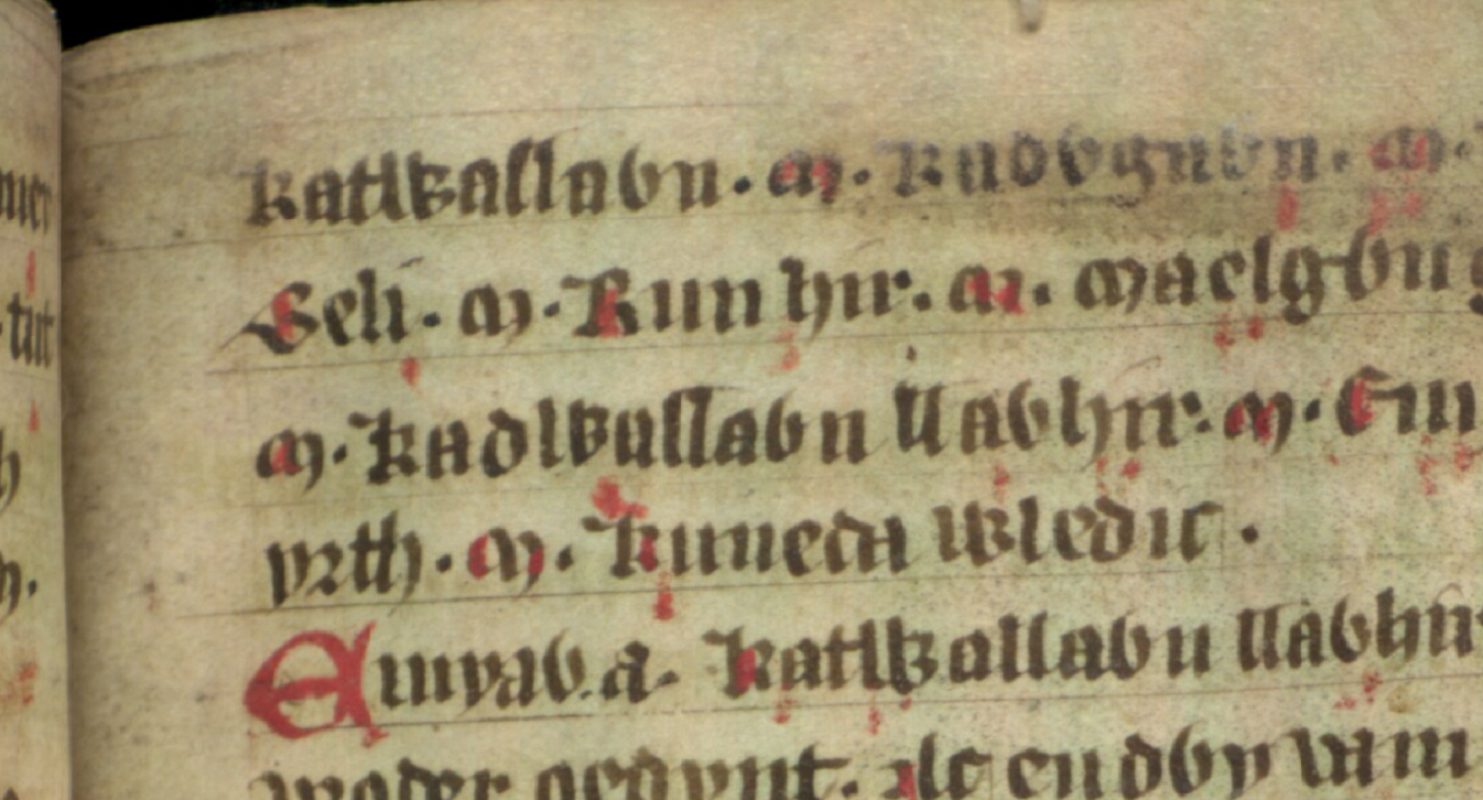
In the document called Cognacio Brychan, we find the following opening statement:
“The Family of Brychan, from whom was named Brecheyniawc, a part of Demetia, that is, South Wales.”
As we can see here, ‘Demetia’ is used as synonymous with South Wales as a whole, and Brycheiniog (which in southeast Wales) is specifically said to have been within it.
We see this same phenomenon in the Life of St Cadoc, where the kingdom of Glywysing (corresponding to modern-day Glamorgan, most of which is in the southeast corner of Wales) is described as being in the region called Dyfed.
Therefore, there can be no doubt that the terms ‘Dyfed’ and ‘Demetia’ could be used to refer to South Wales in general and not just the kingdom of southwest Wales.
When we expand our search for Stater, or Meurig, to the kingdoms of southeast Wales, what do we find?
Meurig ap Tewdrig
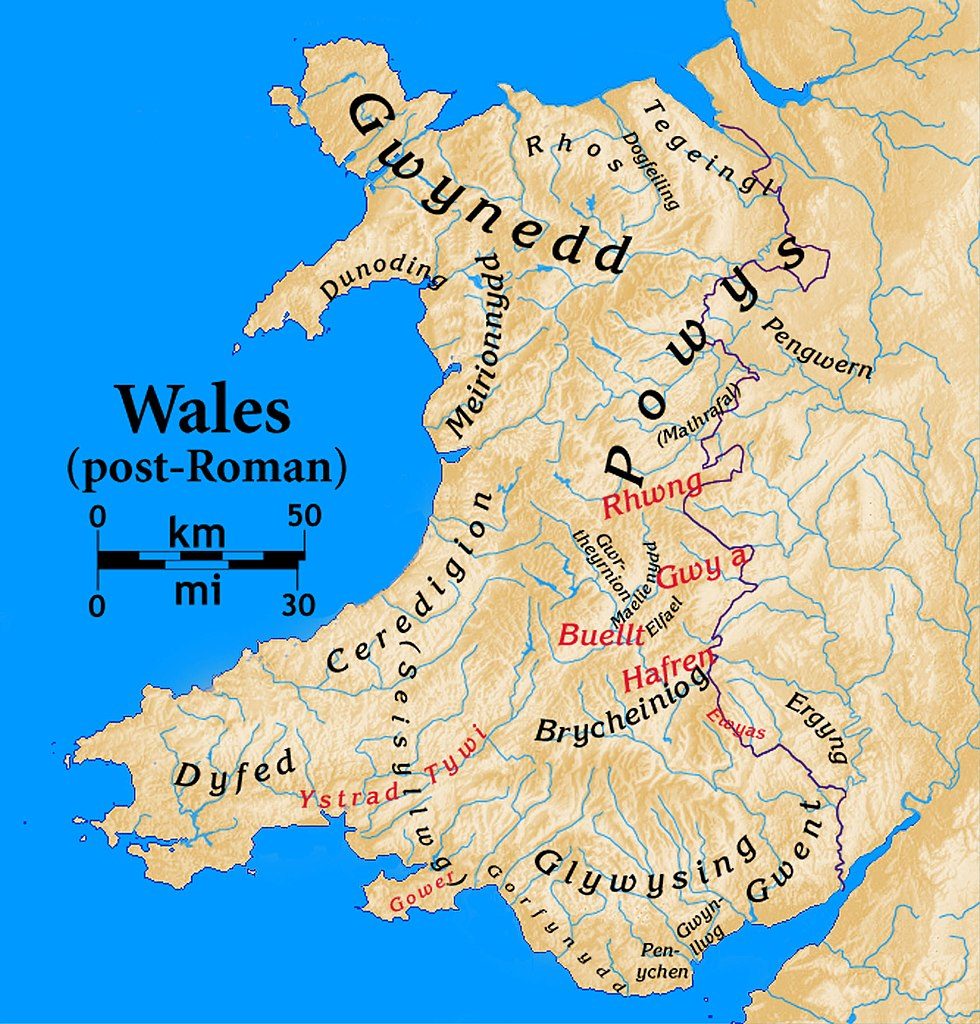
The obvious solution to the mystery of Stater, king of Dyfed, is that he can be identified as King Meurig ap Tewdrig. He ruled over Glywysing and Gwent, and he may have had sovereignty over Ergyng (corresponding to much of Gloucester and Herefordshire) through his marriage to Onbrawst of Ergyng.
In other words, Meurig was a king of a large kingdom, the entirety of southeast Wales. It rivalled, and probably exceeded, the size of the neighbouring kingdom of Dyfed to the west.
Meurig ap Tewdrig appears in numerous records. He appears in virtually all the genealogies of the kings of this territory, as well as the Book of Llandaff and the Llancarfan charters. These show that he was a major king of the area.
When Did Meurig ap Tewdrig Live?
The main objection to this identification is the fact that Meurig ap Tewdrig is often placed by modern scholars in the seventh century, with his birth perhaps being in the late sixth century. Needless to say, this would preclude the possibility that he was Meurig king of Dyfed, the Stator of Geoffrey’s account.
However, what is the basis for this late date? Does it stand up to scrutiny, or is the more traditional date, about a century earlier, more in line with the available facts?
The Basis for the Late Chronology
The primary basis for the late chronology for this dynasty is a reference in the Annales Cambriae to the death of a certain Ffernfael ap Ithel in 775. Meurig is known to have had a great-great-grandson named Ffernfael ap Ithel. On this basis, many scholars feel that this date in the Annales Cambriae can be used to establish the date of Meurig.
By counting back four generations to get to the birth of Meurig, using an average of twenty-five years per generation and assuming that Ffernfael died of old age, we can see that this would place Meurig’s birth in c. 600.
The problem with this argument is that it is a singular piece of evidence. While indentifying one Ffernfael ap Ithel with another is not unreasonable, what would be unreasonable is to assume that this identification is definitive and use it to reject the weight of several other far more direct pieces of evidence that contradict it.
One of the most recent and notable scholars to make this identification is Patrick Sims-Williams, who reaffirmed it in his 2019 publication The Book of Llandaf as a Historical Source. However, even he acknowledged that this identification cannot be taken as definitive. He goes so far as to point out that both names, ‘Ffernfael’ and ‘Ithel’, were popular in this dynasty, so there is a distinct possibility that repetitions of this pair of names could have occurred.
As it happens, the genealogies in the Harleian MS 3859 show that a descendant of Ffernfael ap Ithel, several generations later, was also named Ithel. Could he have had a son named Ffernfael, a popular name in this dynasty? It is entirely possible.
The Basis for the Early Chronology
The basis for the late chronology, as we have seen, is not very strong. However, is there any evidence which actively contradicts it?
In the Life of St Oudoceus, King Budic of Brittany is said to have had a fairly late son named Oudoceus. Since this Budic was born in c. 500 (per Peter Bartrum’s A Welsh Classical Dictionary), this would likely place the birth of Oudoceus in c. 540.
This hagiographical record explains that Oudoceus directly succeeded Teilo as the bishop of Llandaff immediately after the Yellow Plague. Therefore, this would likely have occurred in c. 570. In the account, Meurig is presented as the reigning king with at least two adult sons by his side. Therefore, the Life of St Teilo clearly places Meurig’s birth firmly in the first half of the sixth century, if not earlier.
The charters in the Book of Llandaff likewise show Oudoceus as immediately succeeding Teilo and Meurig as being contemporary with the early part of Oudoceus’ tenure.
Another explicit piece of evidence comes from the Life of St Cadoc, which identifies Tewdrig the father of Meurig as Tewdrig the great-great-grandfather of Cadoc. Since Cadoc’s birth is universally accepted as being near the beginning of the sixth century, this clearly places Meurig’s birth before then.
Meurig’s wife also provides independent confirmation of this. She was Onbrawst, the daughter of Gwrgan ap Cynfyn ap Peibio. This same Peibio appears as the grandfather of Dubricius, a bishop whose birth is generally placed by scholars in c. 465.
With Dubricius and Gwrgan being first cousins, they would have presumably been born at approximately the same time, in the absence of any reason to believe otherwise. Hence, Gwrgan’s daughter Onbrawst would likely have been born in the final quarter of the fifth century, indicating that her husband, Meurig, was probably born in the same general era.
Based on this and many other pieces of evidence, Meurig’s reign can be firmly placed throughout the middle of the sixth century. Therefore, Meurig ap Tewdrig is a perfect chronological match for Geoffrey’s Stater, king of Dyfed in King Arthur’s time.
Was Meurig ap Tewdrig Powerful Enough to Have Been Stater, King of Dyfed?
However, we also need to bear in mind that Geoffrey’s account presents Stater as being exceptionally powerful, on the same level as Arawn of the North, Cadwallon of Gwynedd, and Cado the king of Dumnonia. Can we really say this about Meurig ap Tewdrig?

Meurig, as we have seen, was the king of all of southeast Wales. This was the primary area of activity of Dubricius, widely remembered in Welsh tradition as the leading religious authority in Britain in Arthur’s time. It was also the location of Illtud’s school of Llanilltud Fawr, the centre of religious and secular education in that era.
Archaeology has also revealed that Dinas Powys, a fortress right in the middle of Meurig’s kingdom, was evidently a royal residence with traces of riches surpassing that of any other part of Wales in the sixth and seventh centuries.
Therefore, all the evidence indicates that southeast Wales was exceptionally powerful during the reign of Meurig.
Regarding his father, Tewdrig, the Book of Llandaff claims that he always put his enemies to flight and that the Saxons were afraid of him. Another record, the Life of St Gwinear, claims that Tewdrig deposed a king all the way over in Brittany and installed another one in his place.
In view of all this evidence, it is clear that Meurig ap Tewdrig was definitely powerful enough to have been in the same league as Arawn, Cadwallon, and Cado.
Why Was Meurig Known as Stater?
On the basis of the aforementioned points, we can confidently identify Geoffrey’s Stater as the historical Meurig ap Tewdrig. However, this still leaves the question of why Geoffrey calls this king Stater instead of just calling him Meurig.
As we saw earlier, the suggestion that Geoffrey took the name ‘Stater’ from the list of kings of Dyfed is not viable. Yet, the observation that it comes from a Roman title is surely correct. It would appear to be a form of ‘stator’. So, what was a stator to the Romans?
A stator was an official who served as the attendant of a magistrate. They often served as messengers for such magistrates. The etymology of the word ‘stator’ refers to standing, conveying the idea of a servant standing by the side of the person whom they served.
Why, then, was King Meurig viewed as a stator? The answer appears to lie in the fact that the weight of evidence about Arthur, including the evidence from Geoffrey of Monmouth himself, places Arthur in South Wales, the territory that Geoffrey also assigns to Stater.
The special coronation ceremony at which Stater appears is said by Geoffrey to have occurred at Caerleon-upon-Usk, a prominent Roman city in southeast Wales. This is implied to be Arthur’s capital. Various other records, from both Latin and Welsh sources, place Arthur in this same area.
Therefore, the evidence strongly supports the conclusion that Arthur’s kingdom was South Wales, likely the southeast rather than the southwest. Yet, Geoffrey assigns this same territory to Stater.
If Arthur was the high king, then Stater was logically in a subservient position to him. It may be because of this that he was an ‘attendant to a magistrate’. We know from inscribed stones that Roman titles were still in use in the sixth century, although we do not know how they were used. It may be that Arthur was viewed as a kind of magistrate, in as much as he was a Roman-style ruler of a large territory within Britain.
Hence, a king who represented him and served as a kind of messenger could have been viewed as his stator.
Meurig as the Stator of Athrwys
Although Geoffrey presents Stater as standing before Arthur during the coronation ceremony, and he suggests that they were both part of the same government, there is nothing that definitively places Meurig in the position of a stator, one who attends or serves as a messenger of a Roman ruler.
However, when we consider the records about Meurig ap Tewdrig, we find something that may well be a match. His son, Athrwys, is a popular candidate for the historical King Arthur. As well as being from a powerful kingdom and living in the same time and place as Arthur, he had many family members who appear to match Arthur’s legendary family.
For more evidence for this identification, see the article: Was Athrwys son of Meurig the Real King Arthur?
In the witness list of one of the land grants recorded in the Book of Llandaff, we find the following description of Meurig:
“King Mouric, on behalf of his son Athruis.”
As we can see from this, Meurig is said to have performed the land grant on behalf of Athrwys. In other words, he served as his representative, overseeing the grant of land in Athrwys’ place. This fits well with the concept of a stator, someone who served as a magistrate’s attendant, usually in the capacity of a messenger.
Interestingly, this is the only land grant given on behalf of someone else in the Book of Llandaff, suggesting that it was not a common arrangement.
This apparently means that Meurig and Arthur had an exceptional arrangement in which the former performed certain tasks in the place of the latter. If we accept the theory that Athrwys was the historical King Arthur, then this would explain why Meurig is described as Stater, king of South Wales, in Geoffrey of Monmouth’s account.
Conclusion
In conclusion, Geoffrey of Monmouth refers to Stater as the king of Dyfed in Arthur’s time. He is shown to have been one of the most powerful and prestigious kings of the era. Contrary to what has sometimes been claimed, the evidence suggests that Geoffrey did not take this name from the Harleian genealogies.
Rather, it is likely that the name ‘Stater’ comes from his office. It appears that he served as Arthur’s stator, or official attendant or messenger, in the sense of a representative, since both he and Arthur were rulers over South Wales. The Brut Tysilio shows that his personal name was actually Meurig, and the only viable match for this figure is Meurig ap Tewdrig.
Sources
Bartrum, Peter, A Welsh Classical Dictionary, 1993
Bromwich, Rachel, Trioedd Ynys Prydein: The Triads of the Island of Britain, 2014
Sims-Willians, Patrick, The Book of Llandaf as a Historical Source, 2019
Ashley, Mike, A Brief History of King Arthur, 2013
Howells, Caleb, King Arthur: The Man Who Conquered Europe, 2019
https://brill.com/display/book/edcoll/9789004410398/BP000013.xml?language=en
https://www.celticchristianity.infinitesoulutions.com/Book_of_Llandaff_source.html
https://www.perseus.tufts.edu/hopper/text?doc=Perseus:text:1999.04.0062:entry=stator-harpers