King Cador of Cornwall, Relative of King Arthur

King Cador of Cornwall is an important figure in the legends of King Arthur. He is presented as one of the king’s most important allies, as well as one of his relatives. In fact, Cador’s son Constantine is the one chosen to succeed Arthur as king. What exactly made Cador so important? What do we know about him, and is there any evidence that he was a real person? This article will examine the answers to those questions and others.

Who Was King Cador of Cornwall?
In the legends of King Arthur, Cador is an important ally of Arthur who serves alongside him and aids him in his battles. For example, he had a key role in the defeat of the Saxons at Badon, and he fought alongside Arthur in his war against the Romans. Finally, he was killed at the infamous Battle of Camlann.
Not only was Cador an important and faithful ally, but he was also one of Arthur’s relatives. Generally, the legends do not explain what exactly the family connection between them was. In some versions, Cador’s son Constantine is referred to as Arthur’s cousin.
However, the earliest source for the connection describes Constantine as Arthur’s nephew. This would imply that Cador was Arthur’s brother-in-law. In reality, we will go on to see that it was not quite so simple. Nonetheless, there is evidence that Cador was indeed a close relative of Arthur.
Another reason why King Cador is so interesting is because he is one of the few Arthurian characters who can be identified as a historical figure. Although there are no contemporary references to him, the sources which mention him are early enough that his historicity is generally accepted.
Family
There is extensive information available about the family of Cador. However, this information depends on correctly establishing the identity of Cador himself. Early on, some confusion emerged regarding Cador’s identity due to a misunderstanding surrounding his father.
The Controversy of the Identity of Cador and His Father
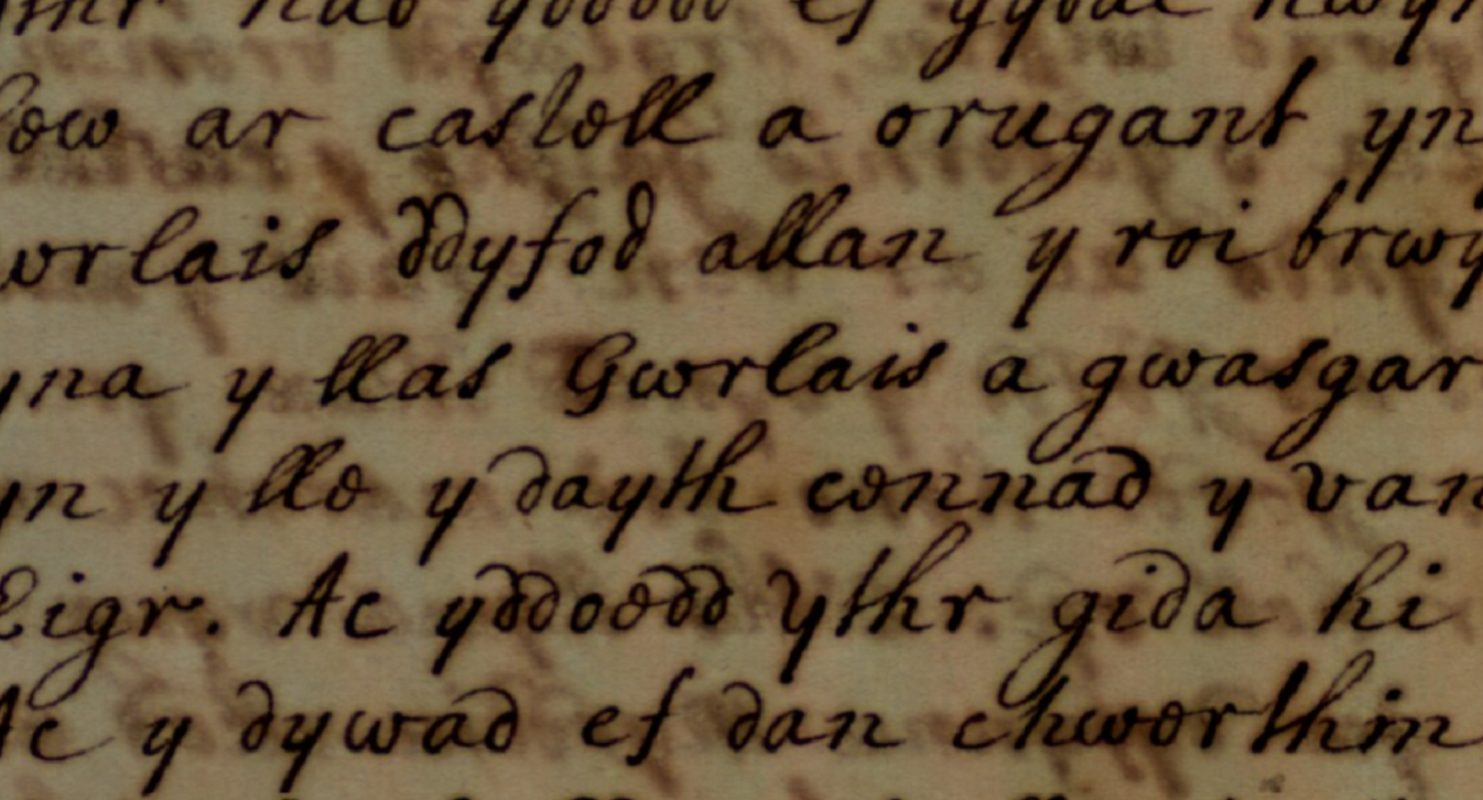
Geoffrey of Monmouth wrote Historia Regum Britanniae in c. 1137. This contains the earliest surviving account of Arthur’s reign. According to this account, the king (or duke) of Cornwall was a ruler named Gorlois. He appears as Gwrlais in Welsh texts.
Gorlois dies near the beginning of the reign of Uther Pendragon, the father of King Arthur. Later on in Geoffrey’s account, after Arthur begins his war against the Saxons, the leader of Cornwall is named Cador.
Hence, for this reason, Cador is often assumed to have been the son of Gorlois, even though this relationship is never explicitly stated by Geoffrey of Monmouth. This assumption is not a modern one, for we also see records to this effect in medieval texts, both Welsh and non-Welsh ones.
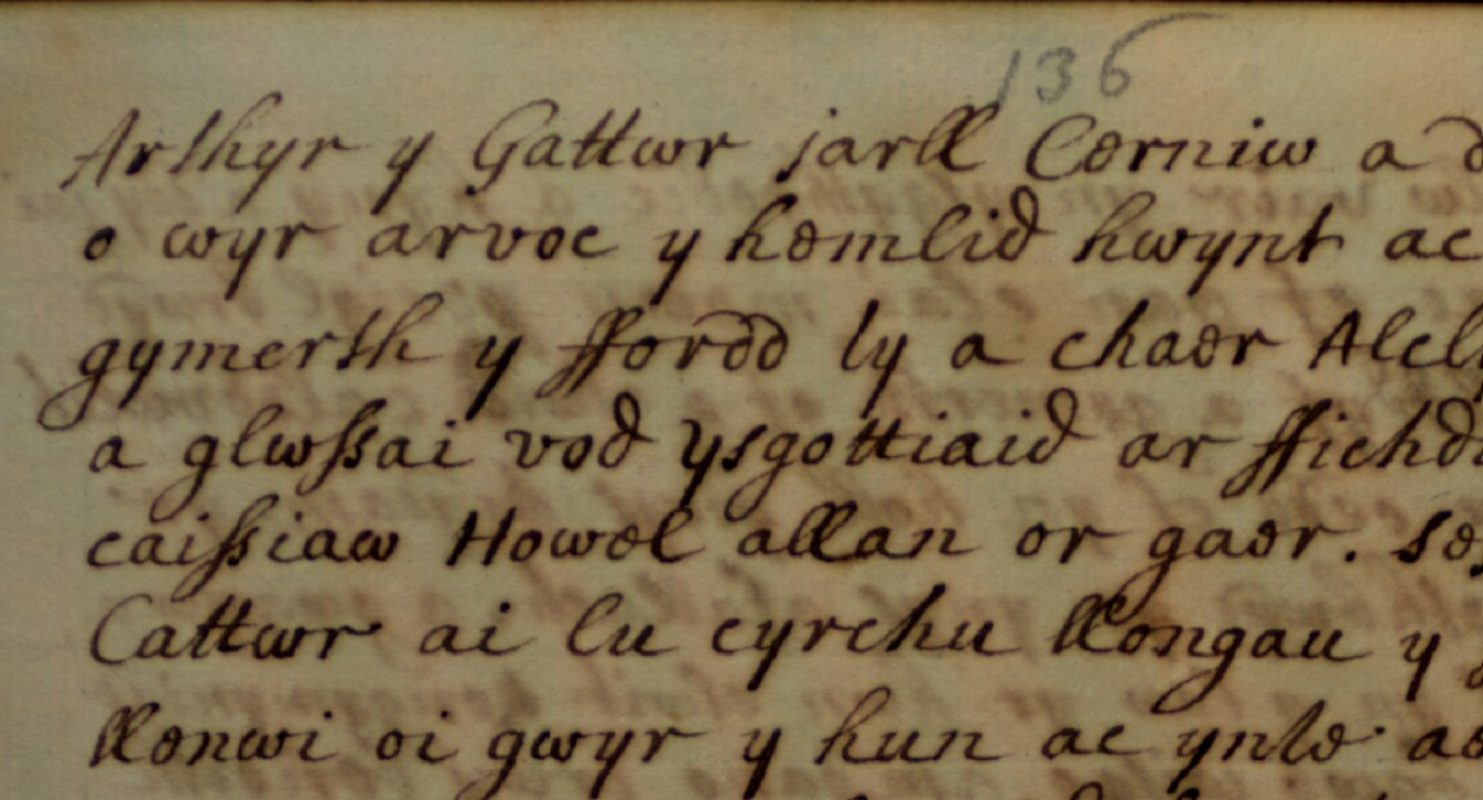
It would appear that the earliest surviving reference to this assumption comes from the Chronicle of John Hardyng, written in the first half of the fifteenth century. This states that Cador was the brother of Arthur on his mother’s side.
Since Arthur’s mother was Igerna, formerly the wife of Gorlois before marrying Uther, this would mean that Cador was Gorlois’ son. The earliest known Welsh reference comes from just a few decades later, in the writings of Gutun Owain.
Cador’s True Identity
The folly of this identification is seen in the fact that various Welsh and Latin sources (many of them not explicitly Arthurian) speak of a king of Dumnonia with a name very similar to ‘Cador’. This name is variously seen as ‘Cado’, ‘Cadwy’, and ‘Gadwr’.
The kingdom of Dumnonia was essentially composed of modern-day Devon and Cornwall, as well as some territory further east. Cornwall was thus a major component of the kingdom. While Geoffrey calls Cador’s son Constantine the king of Cornwall, Gildas (the sixth century writer) refers to him in connection with Dumnonia.
Therefore, it should be obvious that King Cador of Cornwall is identical to King Cado of Dumnonia. Like Geoffrey’s Cador, the historical King Cado is presented as a very close ally of Arthur. In fact, the Life of St Carannog states the following:
“In those times Cadwy and Arthur were reigning in that country, dwelling in Dindraithov [an uncertain location somewhere in Dumnonia].”
This shows that Cadwy and Arthur were very close allies, since they are described as reigning and dwelling in the same country (nonetheless, the passage goes on to show that this territory is fundamentally Cadwy’s, not Arthur’s).
The idea that there was one king named Cador who ruled over Cornwall while another king named Cado (also attested as ‘Gadwr’) ruled over Devon and Cornwall at exactly the same time is obviously improbable. Given that Geoffrey never gives the parentage of Cador of Cornwall, the obvious conclusion is that he should be identified as the Cado of Dumnonia from historical texts.
Father
Now that we have established that King Cador of Cornwall is obviously the same as the King Cado of Dumnonia who lived at the same time, what does this reveal about his parentage? Let us begin by analysing his father.
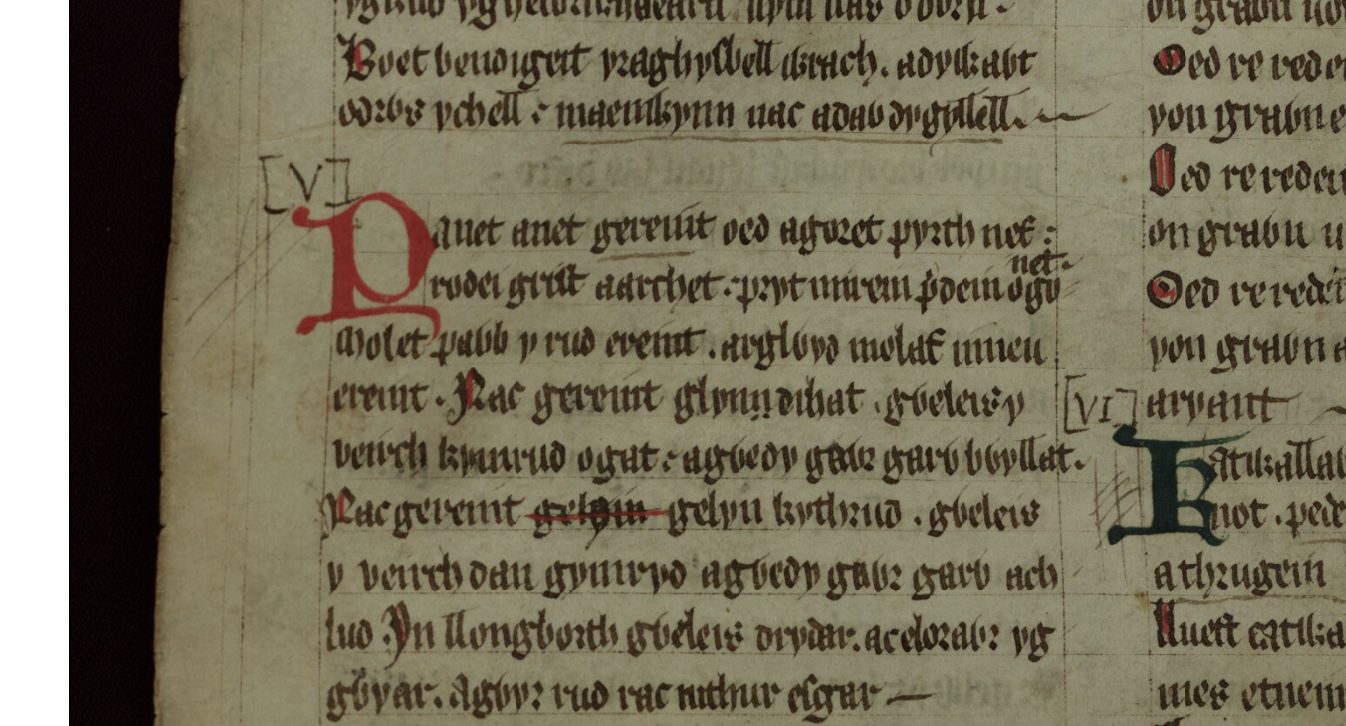
Cado (or Cadwy) appears in various medieval texts. One of the earliest and most useful in terms of establishing his parentage is the Jesus College MS 20. This document contains a large list of genealogies of the various kingdoms of Britain.
In this document, Cado is listed as the son of Geraint ap Erbin. Geraint himself appears as an ally of Arthur in an early Welsh poem, likely dated to c. 900, known as Gereint son of Erbin. This harmonises with the fact that Cador is frequently presented as a firm ally of Arthur.
This poem explains that Geraint died at the Battle of Llongborth. Based on a comparison with various sources, this can likely be identified as the prelude to the Battle of Camlann.
Geraint also appears in the Life of St Teilo, in which his death is also described. Here, it is placed towards the end of the Yellow Plague, at the time in which people were returning to Britain after having fled from the plague for upwards of seven years.
Mother
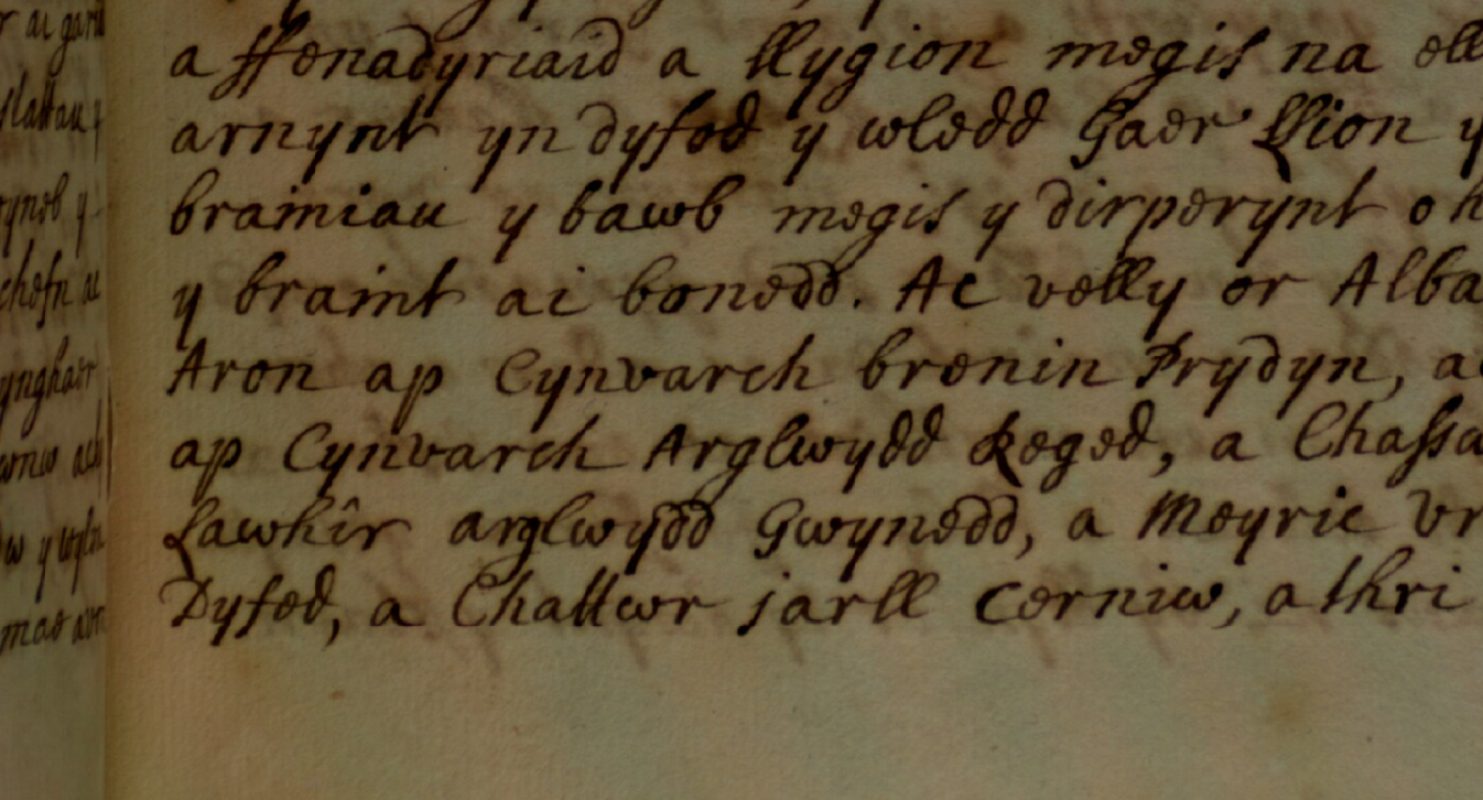
What do we know about the mother of Cador? Regarding this issue, we do well to bear in mind that Cador was supposedly a close relative of Arthur. With this in mind, it is notable that a genealogical record called Bonedd y Saint records the marriage of Geraint to a woman referred to as Gwyar, daughter of Amlawdd Wledig.
The information about Amlawdd Wledig shows that he must have been born in the late fourth century. Therefore, he simply cannot have had a daughter who married Geraint, a man born in the early sixth century.
There is evidence that many of the ‘daughters’ of Amlawdd (for the Welsh texts mention many of them) were actually his later descendants, with Amlawdd being used as a convenient ancestor figure.
With this fact in mind, consider the fact that there is a Welsh genealogical record which states that Cador was the nephew of Arthur on his mother’s side. This would imply that Cador’s mother was Arthur’s sister.
As it happens, various Welsh texts (such as Culhwch and Olwen, a prose tale written in c. 1100) attest to Arthur having a sister named Gwyar.
Hence, it would appear that Geraint’s wife Gwyar, the descendant of Amlawdd, was actually identical to Gwyar the sister of Arthur, also a descendant of Amlawdd. This matches perfectly the statement that Cador was the nephew of Arthur on his mother’s side.
Since Welsh tradition is also firm regarding Gwyar’s marriage to Lot of Lothian and her being the mother of Gwalchmai (Gawain), this would imply that she married twice. For chronological reasons, her marriage to Geraint must have occurred first, with her marriage to Lot occurring much later but while she was still of childbearing age.
King Arthur as His Relative
How does this identification of Cador’s mother relate to other statements about Cador’s connection to King Arthur? The earliest explicit reference to Cador and Arthur being relatives comes from Geoffrey of Monmouth’s Historia Regum Britanniae. In this text, he simply refers to Constantine as Arthur’s kinsman, his relative.
Many sources claim that Geoffrey did not define the relationship between the two man any more specifically than that. However, this is not true. In the Vita Merlini (the Life of Merlin), which Geoffrey wrote in c. 1150, Geoffrey specifically refers to Arthur as Constantine’s ‘avunculus’. This is the Latin word for a maternal uncle.
If, based on a comparison of the Welsh records, Cador was actually the nephew of Arthur through Arthur’s sister, this would mean that Cador’s son Constantine would have been Arthur’s grandnephew.
This is a good match for Geoffrey’s description of Arthur as Constantine’s uncle. Therefore, the earliest evidence supports the conclusion that Geraint really did marry Arthur’s sister Gwyar, and that Cador was therefore the nephew of Arthur.
Support from the Life of St Winwaloe
There is supporting evidence for the idea that Cador was a close relative of Arthur from a non-Arthurian text. This is the Life of St Winwaloe. In this Latin text, Winwaloe is described as the son of Fracan, an illustrious man.
As well as being illustrious, Fracan is described as the cousin of Catovius, king of Dumnonia. This is Cadwy, or Cador. Hence, Fracan was the cousin of the legendary King Cador of Cornwall.
Now, who was Fracan? Notice that he is described as an illustrious man. Furthermore, his association with Cador suggests that he was broadly from the southwest of Britain. Additionally, this narrative places him in the sixth century.
With these facts in mind, Fracan can only be Brychan, king of Brycheiniog. He is the only attested figure from this era with this name. His territory in Brycheiniog is also not far from Dumnonia. His name in the Jesus College MS 20 genealogies appears frequently with ‘V’ at the beginning, equivalent to the ‘F’ in the name ‘Fracan’ (in fact, the letters ‘b’ and ‘f’ were frequently swapped in medieval Welsh texts).
However, how does this support the conclusion that Cador really was a close relative of King Arthur? The reason is that there is strong evidence that the historical Arthur can be identified as a cousin of Brychan known as Athrwys ap Meurig.
Evidence Connecting Athrwys to Arthur
The main reasoning behind the theory that Arthur was actually Athrwys ap Meurig is the fact that they both lived at the same place at the same time. Arthur is most firmly associated with southeast Wales in Welsh tradition and Latin texts, and this is where Athrwys’ dynasty was based.
Although many scholars place Athrwys in the seventh century, there are many others who place him in the sixth century, such as David Farmer, Brian Davies, Michelle Ziegler, Chris Barber, and others. This would mean that not only did Athrwys’ family rule over the same area as Arthur’s main area of activity, but Athrwys was alive at the same time as Arthur too.
Given the similarity between their names (and since ‘Athrwys’ appears to be an alternative form of ‘Arthwys’ and even ‘Arthrwys’), it is plausible to suggest that this is actually a corruption of ‘Arthur’, perhaps through the form ‘Arturus’ or ‘Artus’.
Furthermore, many of Athrwys’ family members can be connected with the family members of King Arthur. For instance, both Arthur and Athrwys are recorded as having a sister named Anna, and there is also evidence that Athrwys had an uncle named Gwrfoddw and an uncle named David, just like Arthur allegedly did.
Family Connection to Brychan
With this plausible identification in mind, how does this relate to Cador’s alleged connection to Arthur? As we saw, Cador is described in the Life of St Winwaloe as a cousin of Fracan – that is, Brychan.
Brychan was the son of Marchell, sister of Meurig. Hence, Athrwys ap Meurig was the first cousin of Brychan. If we assume that the identification of Athrwys with King Arthur is correct, and that Cador really was the son of Arthur’s sister, then this would mean that Brychan and Cador would have been first cousins once removed.
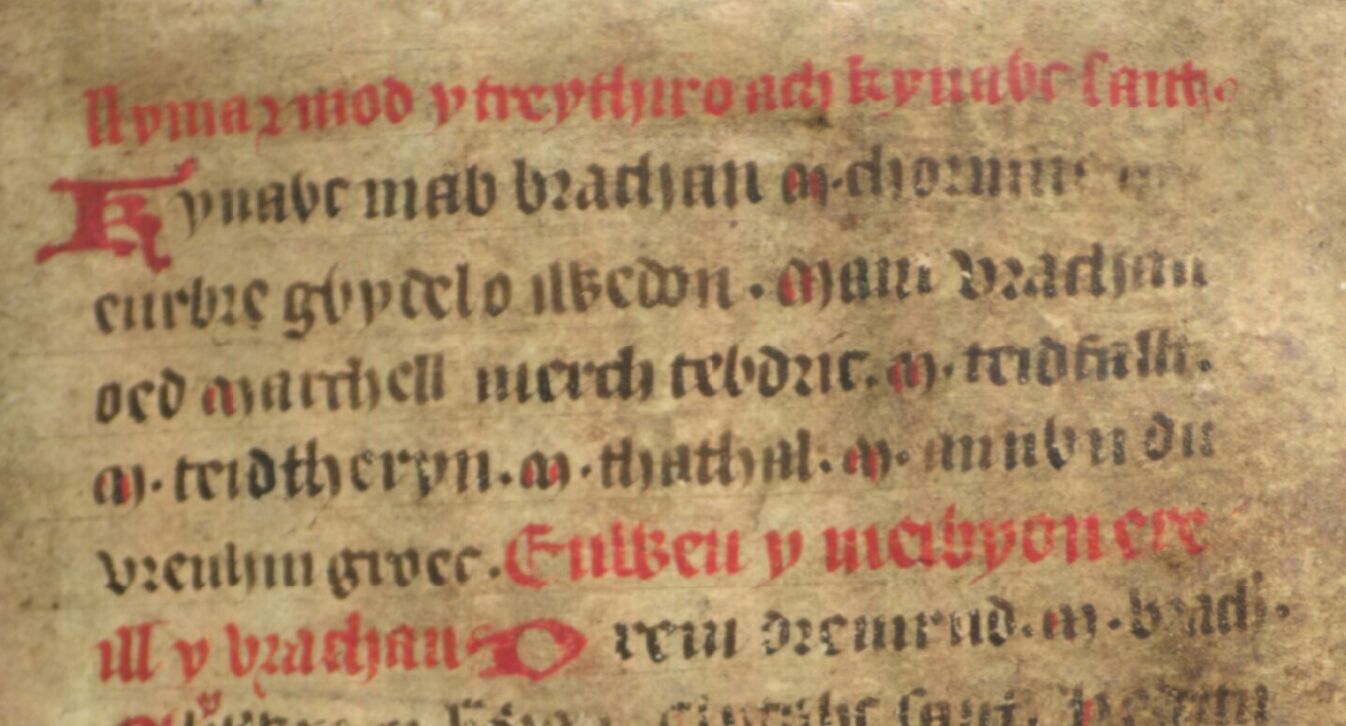
While not a simple case of being first cousins, this is surely a relationship which could be described in a simplified way as ‘cousins’, as the Life of St Winwaloe states. Hence, the statement in the Life of St Winwaloe about Cador and Brychan being cousins, combined with the identification of King Arthur as Athrwys ap Meurig, supports the conclusion that Cador really was the nephew of Arthur.
At the very least, even if this exact relationship is not accurate, something close to it must be. Since Brychan’s father was an Irish king, he was almost certainly a ‘cousin’ of Cador through his Brythonic mother, Marchell, the aunt of Athrwys.
Hence, this essentially confirms that there was a close family relationship between Cador and Athrwys, regardless of whether the Welsh tradition about him being Arthur’s nephew is precisely correct. Nevertheless, it does appear to be correct.
Siblings
Cador is given several siblings in the medieval records, although they do not tend to appear in the Arthurian legends. One record gives Cador a brother named Selyf, although due to chronological considerations, some scholars have argued that he was actually an uncle, a son of Erbin.
However, there are also records which refer to Cador’s father Geraint having a son named Selfyn. This can easily be viewed as another form of ‘Selyf’ (especially since ‘Selyf’ is a shortening of ‘Salomon’).
Another son of Geraint was Iestyn. He was possibly the Iestyn who appears in the Life of St Efflam. Geraint is also recorded as being the father of Cyngar, a religious figure.
Sons
Cador’s son, famously, was King Constantine of Cornwall. He was the successor of Arthur as High King at some point after the Battle of Camlann. He is the Constantine mentioned by Gildas in the sixth century De Excidio.
The Jesus College MS 20 also records Cador as having a son named Pedur. He likely became the king of Dumnonia after his brother Constantine, being the ‘Bledericus’ of Geoffrey’s Historia Regum Britanniae.
When Did Cador Live?
From the information already considered, it is obvious that Cador was a figure of the sixth century. However, we can establish his dates much more firmly than just that. Since a lot of information is known about his family, we can establish with some confidence when he was born.
Counting Forward from Cynan Meriadoc
Helpfully, the medieval genealogical records provide us with Cador’s ancestry going back to a figure named Cynan Meriadoc. He was the legendary founder of Brittany, while also being closely associated with Cornwall.
The genealogy of Cador is the following:
Cador ap Geraint ap Erbin ap Constantine ap Cynfawr ap Tudwal ap Gwrfawr ap Gadeon ap Cynan Meriadoc.
Since Cynan was active in battle in 383, when Magnus Maximus invaded Gaul and allowed Cynan to settle in Armorica and found Brittany, he cannot have been very old by 383. On the other hand, he cannot have been very young either, since he was the nephew of Eudaf Hen, a king who was active in battle in the early fourth century.
Eudaf must have been born no later than about 290, since he fought against the Romans in 312. While this would make him very old at the time of Maximus’ usurpation, this is consistent with his epithet, ‘Hen’ (meaning ‘the Old’).
In view of this information, Cynan was likely born around 335, being a son of a younger brother of Eudaf.
If we count forward eight generations from this starting point, this would take us to approximately 511-535 for the birth of Cador, using an average of twenty-two to twenty-five years per generation.
Evidence from His Father
Information from Cador’s father, Geraint, sheds some light on this. He is described as dying at the Battle of Llongborth, in which he was Arthur’s ally.
Based on the available information about the Battle of Llongborth, as well as a comparison between that event and events described in the Historia Regum Britanniae and the Life of St Teilo, it would appear that this was the prelude to the Battle of Camlann.
The Battle of Camlann is dated to 537 in the Annales Cambriae, but everything else that is known about the battle indicates that it was fought in the latter half of the sixth century. This is consistent with the fact that one of the combatants was Mordred, a nephew of Urien Rheged, a mid- to late-sixth century king.
The easiest way of reconciling this with the date in the Annales Cambriae is concluding that this document accidentally backdated it by thirty-three years due to confusion between Jesus’ birth and his death (there are attested examples of this type of error).
Hence, the Battle of Camlann and therefore the Battle of Llongborth should be dated to c. 570. If Geraint died in that year, in battle, then he is unlikely to have been excessively old. A birth year of around 510 for Geraint would be consistent with this evidence.
This would suggest a birth of around 532 for Cador. This is consistent with the range considered above, based on counting forward from Cynan Meriadoc.
Evidence from His Mother
The evidence from Cador’s mother strongly supports the conclusion that he cannot have been born much earlier than this. As we saw earlier, Cador’s mother was allegedly Gwyar, the sister of King Arthur.
Gwyar is also recorded very firmly in Welsh tradition as the wife of Lot and mother of Gwalchmai. Lot (also seen as ‘Lleuddun’ and ‘Llew’) was the brother of Urien Rheged, the aforementioned mid- to late-sixth century king.
Based on the information about Urien and his activities in battle alongside his adult son Owain, as well as his death in c. 593, it is likely that Urien was born in c. 523. Lot was allegedly born at the same time as Urien (they were two of a set of triplets, along with their brother Arawn).
Lot, therefore, probably started having children in the 540s. This is consistent with the fact that Geoffrey places the birth of Walgan (Gwalchmai) at about the time of the Battle of Badon. When accounting for the thirty-three year error in the case of that battle, its date in the Annales Cambriae should be corrected to 549.
If Gwyar was first married to Geraint and had Cador, but then later married Lot and had Gwalchmai (as well as Lot’s other children), then the two marriages cannot have been separated by very much.
While Lot could plausibly have married a woman older than himself if there was some political advantage to gain from it, she must have still been within childbearing age. It seems very unlikely that he would have married a woman older than thirty years old.
If Gwyar was thirty years old in 545, when Lot’s eldest son Mordred was likely born, then she would have been born in c. 515. That being the case, the earliest realistic limit for Cador’s birth would be c. 530, when Gwyar was fifteen years old.
In view of this information about Gwyar, in addition to the aforementioned information about Geraint, the most likely conclusion is that Cador was born in c. 532.
King Cador’s Career
Now that we have established the dates of Cador, what can we say regarding his career as king? The most extensive information about Cador’s career comes from Geoffrey of Monmouth’s Historia Regum Britanniae. Let us consider what this source claims about him.
Cador in the Historia Regum Britanniae
Cador appears as the king, or duke, of Cornwall throughout Arthur’s career in the Historia Regum Britanniae.
During Arthur’s Saxon Campaign
In Geoffrey’s narrative, Cador first appears early on in King Arthur’s campaign against the Saxons. He is first mentioned as leading a body of troops against the Saxons in the context of the siege of York, which occurred after at least one of the Battles on the Dubglas.
This may well be identical to the Battle of the City of the Legion in the Historia Brittonum. According to Geoffrey, Cador was successful in this battle and put the Saxons to flight.
Cador is not mentioned again until the description of the aftermath of the Battle of Badon. After defeating the Saxons at that battle, a remnant of the enemy flees to the east of the country. Arthur sends Cador in pursuit.
The Saxons are said to flee to the Isle of Thanet. Cador catches up to them and kills their leader, Cheldric (likely the historical Cerdic of Wessex).
The Historical Problem with This Narrative
In reality, despite what Geoffrey of Monmouth claims, it would have been essentially impossible for Cador to have been involved in Arthur’s early battles against the Saxons. His birth, as we have seen, must have been in c. 532. It cannot have been much before that, based on the evidence from his mother.
Yet the Battle of Badon must have taken place in c. 549. This is based on assuming that the date in the Annales Cambriae has been backdated by thirty-three years. There is certainly no evidence that it occurred any later than this.
Therefore, Cador would likely have been about seventeen years old at the time of the Battle of Badon. While it is just about possible that he was a soldier or was in some other way involved in the battle (perhaps as a servant to the soldiers), even this seems unlikely.
In any case, Cador cannot have led a body of troops during that event. He certainly could not have been involved in the previous battles, since Arthur’s campaign against the Saxons likely took place over many years.
A reasonable explanation is that Cador’s name should actually be substituted with the name of his father, Geraint. In several places, Geoffrey refers to Cador simply as ‘the duke of Cornwall’, without actually giving his name.
Perhaps the original narrative had many more instances of that, with Cador’s name only appearing in later passages. Thus, Geoffrey assumed that Cador was the duke of Cornwall in every instance in which he was mentioned during Arthur’s reign, when it was actually his father Geraint in the earlier references.
Educator of Guinevere
Cador is next mentioned in the context of Arthur’s marriage to Guinevere. Geoffrey of Monmouth calls her ‘Guanhumara’. This occurs just after the Battle of Badon.
Guinevere is described as being descended from a noble Roman family and being educated ‘under duke Cador’, which evidently means within his royal court, and not by Cador himself. In reality, they would have been about the same age.
At Arthur’s Special Coronation
Cador next appears in the context of Arthur’s special coronation. This is an event which takes place over twelve years after the Battle of Badon. At Caerleon in southeast Wales, numerous kings and noblemen from all over Britain attend a feast at which Arthur receives a special coronation.
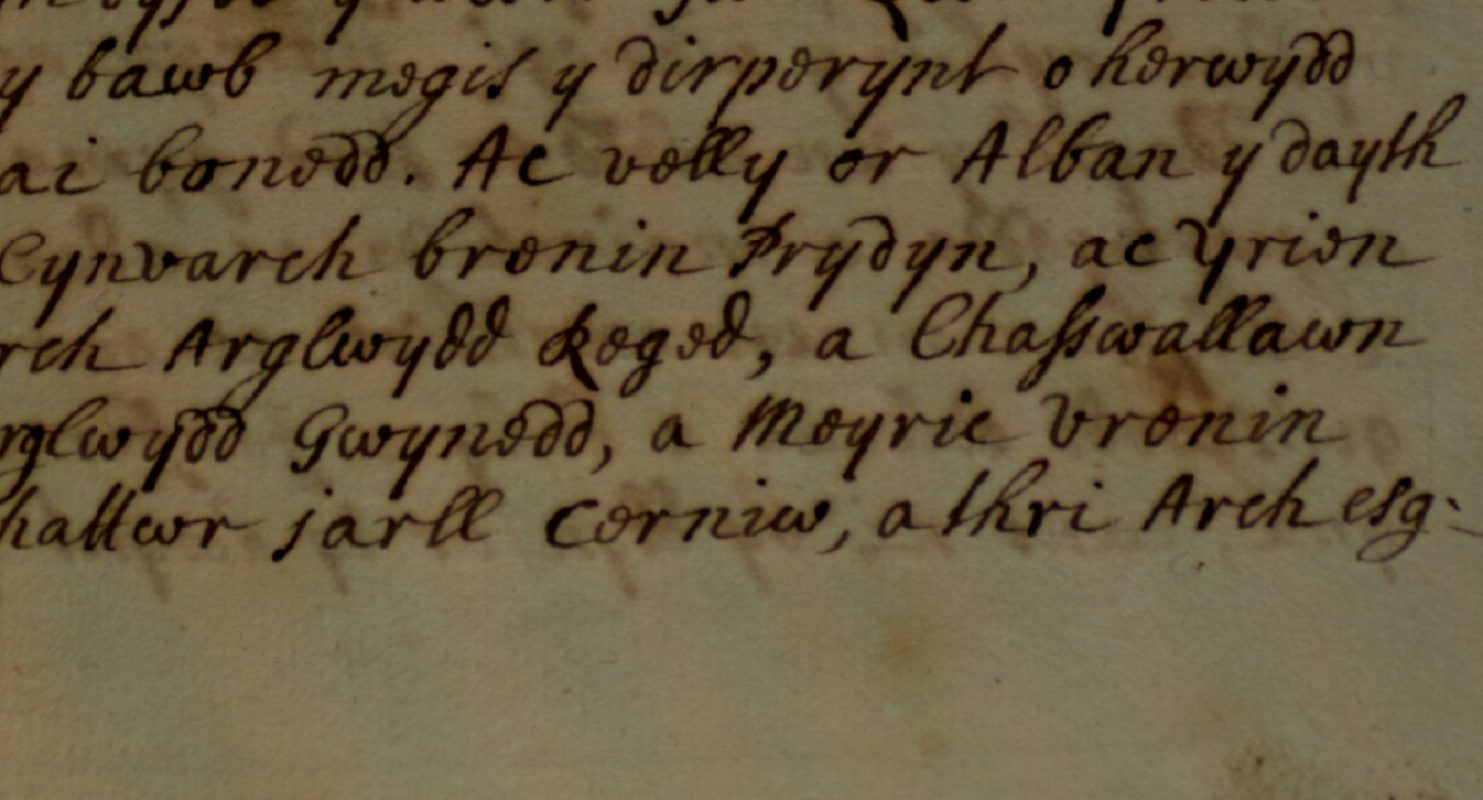
Cador is one of the kings mentioned as attending the event. He is mentioned alongside Augusel and Urien of Scotland, Cadwallon of North Wales, and ‘Stater’ of South Wales (called Meurig in the Brut Tysilio, a Welsh translation in Geoffrey’s book, likely Meurig ap Tewdrig).
Cador and these other kings, aside from Urien, participate directly in the coronation ceremony. Hence, Cador was considered to be one of the most notable and important kings of Britain at that time.
After Arthur receives a letter from the Romans demanding that he pay tribute to them for his conquest of Gaul, Cador is the first one to encourage Arthur to go to war against the Romans.
War Against the Romans
Cador is one of the leading men involved in the war against the Romans. He is placed in charge of the transportation of Roman prisoners, along with Bedivere and two consuls, Borellus and Richerius.
Later, he leads one of the bodies of troops into which Arthur organises his men. This, again, reveals the importance of Cador. This conflict was the Battle of Siesia, the final battle between Arthur and the Romans, who have a large coalition of non-Roman nations on their side.
Cador does not receive much prominence in this battle. After the initial description of him leading one of the main bodies of troops, the account later says that the Romans attempted to make a breach in that body, but were not able to do so. Cador is not mentioned again in this part of the Historia Regum Britanniae.
Death at Camlann
The final appearance of Cador is in the description of the aftermath of the Battle of Camlann. When listing those who died, Geoffrey includes ‘Cador Limenic’.
It has been suggested that ‘Limenic’ is correctly an epithet of Cador. However, it seems more likely that the text has accidently placed the names of two different people together. This is consistent with the fact that Welsh tradition gives Arthur an ally named Llemenig.
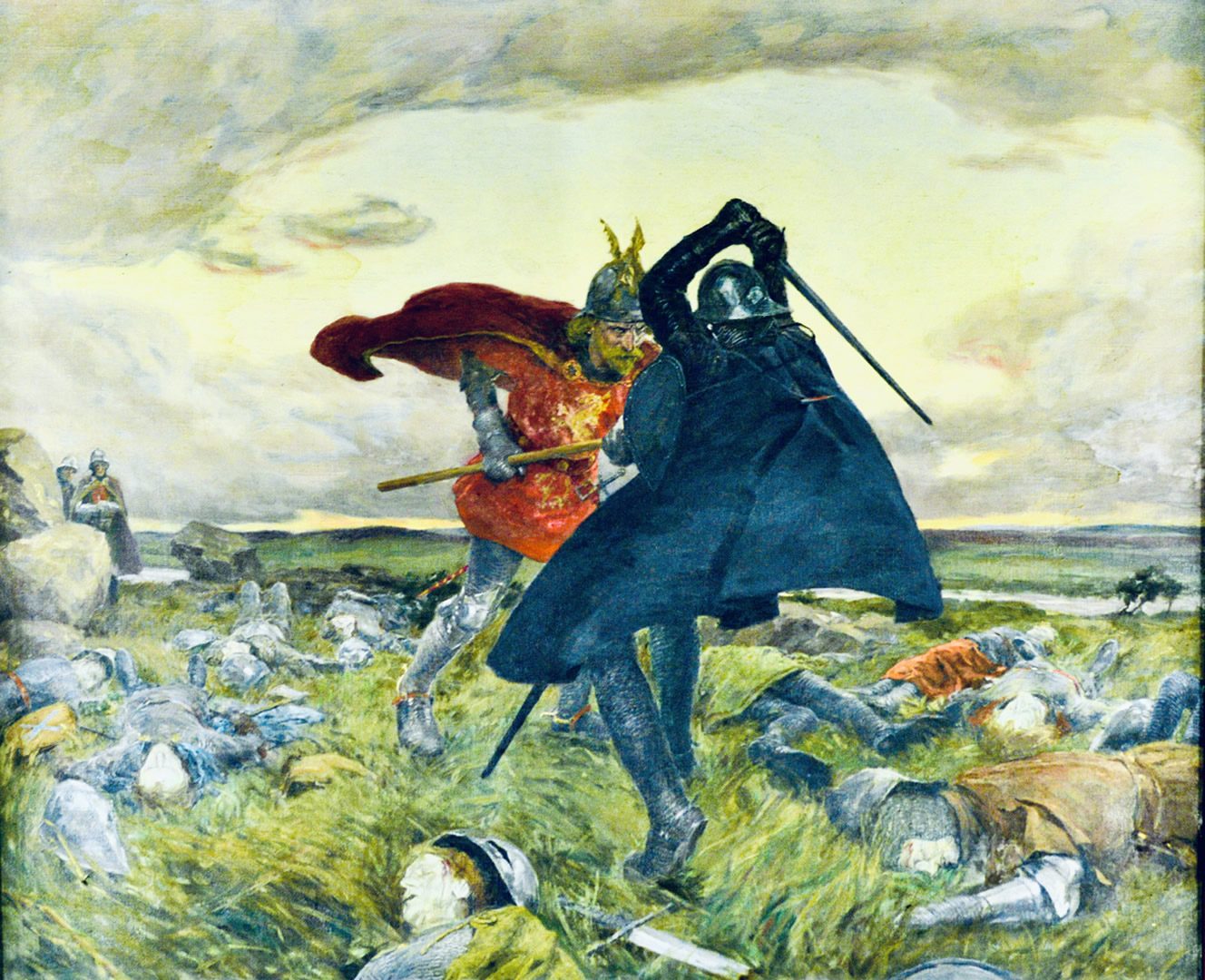
In any case, it is clear that Cador died at the Battle of Camlann, at least according to Geoffrey of Monmouth’s account.
Cador in the Lives of the Saints
Let us now examine Cador’s appearance in the Life of St Winwaloe. In this record, Cador appears as Catovius and is called ‘a man most famous in the eyes of the world’. This record does not provide any more information about him, aside from the detail that he was the cousin of Fracan (Brychan), the father of the titular religious figure.
He has a more prominent appearance in the Life of St Carannog. Here, Cador is described as reigning in Dumnonia with King Arthur, specifically at a place called Dindraithou. There is much speculation about the true location of this court, but a common suggestion is Dunster in Somerset. Some scholars, however, prefer a place in Devon.
The Dragon
In this account, Arthur is described as ‘wandering about’ so as to find a terrible serpent that is terrorising the country. This is evidently a reference to a dragon, confirmed by the fact that the account later describes it as having wings and claws. Several other accounts set in Arthur’s time also refer to a dragon terrorising either southern Britain or Brittany.
Carannog is then described as arriving in that region and meeting Arthur, whom he then blessed. He asked Arthur about an altar which he had previously thrown into the sea, but Arthur first requested for Carannog to bring the serpent to him.
With divine help, the account explains that Carannog successfully called the dragon to him, and it remained docile while with him.
With Arthur, Carannog led the dragon into the royal court of Dindraithou and presented it before Cador. Afterwards, Carannog released the dragon and ordered it to not return nor cause any harm to anyone.
After this, Cador gave Carannog the land of Carrum, where Carannog then built a church. Today, this is thought to be Carhampton, Somerset.
Explaining This Account
As already mentioned, there are other accounts set in Arthur’s reign which describe a dragon terrorising southern Britain or Brittany. This is likely related to an account in Geoffrey’s Historia Regum Britanniae in which Arthur has a dream of a dragon lighting up the earth with a flash from its eyes as he travels to Brittany. This occurs towards the end of his reign.
Chronologically, setting this event in the Life of St Carannog near the end of Arthur’s reign makes sense. With Cador being born around 532, placing the account near the end of Arthur’s reign would allow Cador to have been around thirty years old at the time this happened.
A date of approximately 562 also ties into the fact that Gregory of Tours, a sixth century Frankish historian, referred to a comet which dramatically lit up the sky in 563. This allegedly went on for an entire year, and Gregory associated this with a devastating plague in Gaul.
It is likely that this comet, or another one that occurred in that general era, is behind this story of a dragon in the reign of Cador.
Succession
According to Geoffrey of Monmouth’s account, the successor of King Arthur as High King was Constantine, the son of Cador. The fact that Geoffrey does not portray Cador himself as succeeding Arthur harmonises with what Geoffrey claims concerning Cador’s death at the Battle of Camlann.
Scottish tradition lends some support to this narrative. According to documents concerning Clan Campbell, their ancestor was Smerbe the son of Arthur. Smerbe’s name appears in the earliest records without the initial ‘S’. One early spelling is ‘Mervin’.
With this in mind, it is likely that ‘Smerbe’ can actually be identified as Morgan. He appears in Le Petit Bruit as a son of Arthur, and he is described in such a way as to make it clear that he is a legendary version of the historical Morgan ap Athrwys.
The description of Smerbe in this Scottish tradition, likewise, independently matches Morgan ap Athrwys in many ways.
Therefore, the information in these Scottish documents appears to preserve relatively reliable information concerning the early medieval era. That being the case, it is notable that this tradition also contains the detail that Arthur was succeeded by Constantine.
Although we cannot state it definitively, the evidence best supports the view that Constantine was indeed the direct successor of Arthur as High King, indicating that Cador really had died by that point.
Conclusion
In conclusion, King Cador was an important figure in sixth century Britain and in the Arthurian legends. He was Cadwy, the historical son of Geraint son of Erbin. He was the king of Dumnonia and was a close ally of King Arthur. It would appear that he was Arthur’s nephew, his mother Gwyar being identical to Arthur’s sister by that name.
An analysis of the sources indicates that Cador was likely born in c. 532, and he appears to have died in c. 570 at the Battle of Camlann. His son, Constantine, was allegedly the successor of Arthur as High King.
Sources
Bartrum, Peter, A Welsh Classical Dictionary, 1993
Bromwich, Rachel, Trioedd Ynys Prydein: The Triads of the Island of Britain, 2014
Morris, John, Arthurian Period Sources, Vol 3: Persons, 1995
Howells, Caleb, King Arthur: The Man Who Conquered Europe, 2019
Breeze, Andrew, King Arthur’s Din Draithou and Trevelgue, a Cornish Cliff-Fort, 2020