The Battles on the River Dubglas

In the Arthurian legends, King Arthur was said to have fought mightily against the invading Anglo-Saxons. Several of his battles against them were fought on the River Dubglas. There is not a lot that we know about these battles. This article will examine the little that we do know, as well as the competing theories about them.
What were the Battles on the River Dubglas?
The Battles on the River Dubglas were some of the first of King Arthur’s famous 12 battles against the Anglo-Saxons. Since the first half of the fifth century, the Anglo-Saxons had been progressively conquering more and more of Britain. Arthur was the most prominent war leader who fought against them in the first half of the sixth century.
According to the earliest record about Arthur’s activities (the Historia Brittonum), he fought 12 battles against the invaders. The first occurred at the mouth of a river called the Glein, and then the next few occurred on a river called the Dubglas. According to this early record, this was where he fought his second, third, fourth, and fifth battles against his enemies.
The Historia Brittonum is the earliest source to mention this battle, and since this source dates from about three centuries after these battles supposedly happened, scholars debate whether they are historical. Still, their inclusion in the earliest Arthurian text makes them far more likely to be historical than most other things in the Arthurian legends.
The Battles on the River Dubglas in the Historia Brittonum
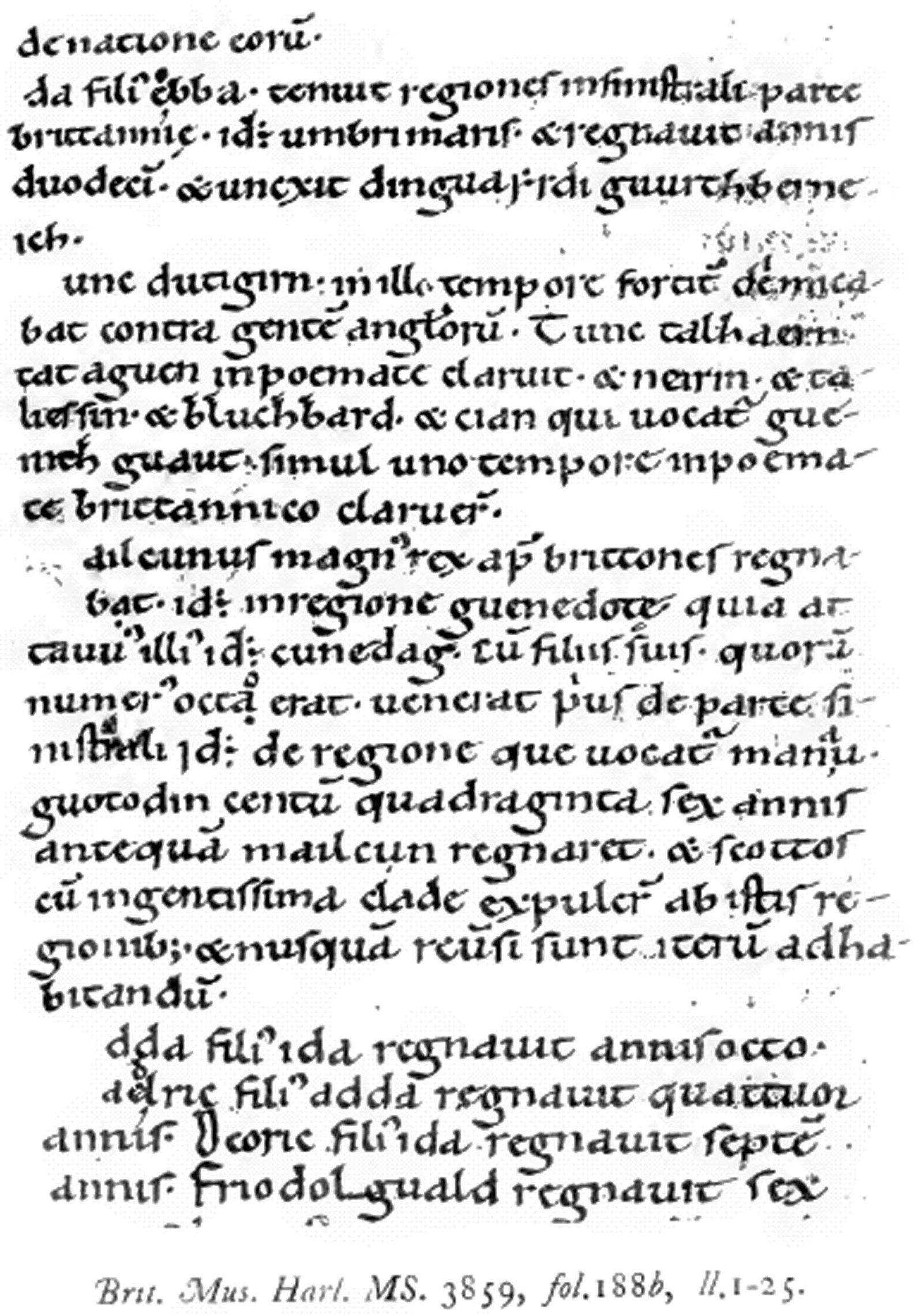
The Historia Brittonum was written in c. 830, some three centuries after the Arthurian events it purports to describe. With that in mind, let us consider the passage in question concerning these battles:
“Then it was that the magnanimous Arthur, with all the kings and military force of Britain, fought against the Saxons. And though there were many more noble than himself, he was twelve times chosen their commander, and was as often conqueror… The second, third, fourth, and fifth were on another river, by the Britons called Dubglas, in the region Linnuis.”
That is all that the Historia Brittonum tells us. Arthur allegedly led the other British kings and military forces in warfare against the Saxons. It tells us that Arthur’s second, third, fourth, and fifth battles were fought at the River Dubglas. That is an impressive and rather suspicious four battles in a row at the same location.
This account also tells us that the River Dubglas was in the region called Linnuis. This is potentially very helpful when it comes to establishing where these battles were fought.
Also, it is notable that the Historia Brittonum here does not say that the battles were fought at the mouth of the river, but simply somewhere on the river, unlike what it said about Arthur’s first battle (on the River Glein). Perhaps these four battles were fought at different locations along the river, hence why no single location could be given by the writer of this passage.
The Battles on the River Dubglas in Later Records
The Battles on the River Dubglas appear in later Arthurian literature in the sense that all 12 battles are collectively referred to every now and then. Aside from that, these four battles do not appear to have had any lasting impact in Welsh tradition, nor in the European romance tales.
Geoffrey of Monmouth’s Historia Regum Britanniae
However, the River Dubglas does make a specific appearance in the Historia Regum Britanniae, written by Geoffrey of Monmouth in c. 1137. It is unclear how, exactly, this appearance corresponds to the description in the Historia Brittonum. Geoffrey does not explicitly describe four different battles on the River Dubglas. This is how his account describes the clash between Arthur and the Saxon forces at that river:
“Hereupon assembling the youth under his command, he marched to York, of which, when Colgrin had intelligence, he met him with a very great army, composed of Saxons, Scots, and Picts, by the river Duglas, where a battle happened, with the loss of the greater part of both armies. Notwithstanding, the victory fell to Arthur, who pursued Colgrin to York, and there besieged him.”
The next portion of the account is devoted to this siege, which ends in Arthur lifting it. A few days later, he and his men go to fight against the Saxons near some rivers again. The names of these rivers are not mentioned, but the account does specifically say regarding the Saxons who died at the battle:
“…part of whom were drowned in the rivers, part fell by the hands of the Britons.”
Therefore, this following battle was closely associated with fighting by the water. It is likely that these two passages, interrupted only by the siege of York, represent an abbreviated version of the four battles on the River Dubglas described by the Historia Brittonum.
An Alternative Scenario
There is an alternative way of harmonising Geoffrey’s account with that of the Historia Brittonum. In Geoffrey’s account, the battle by those two rivers in which a portion of the Saxons drowned is followed by Arthur pursuing the Saxons up to the north of Britain. There, the Battle of the Celidon Wood occurs.
Yet, in the Historia Brittonum, the battles on the River Dubglas are first followed by the battle on the River Bassas, and only then does the Battle of the Celidon Wood occur. So, if we identify Geoffrey’s river battle that comes after the siege of York with one or more of the Battles on the River Dubglas, this would mean that the Battle on the River Bassas has been skipped by Geoffrey entirely.
Some researchers may not like this conclusion. Therefore, they may prefer to connect the Historia Brittonum’s Battles on the River Dubglas with just the one battle on the River Duglas mentioned by Geoffrey. They would then prefer to connect the river battle after the siege of York with the Battle on the River Bassas.
Which Scenario is More Convincing?
In truth, though, quite a few of the 12 battles are skipped completely by Geoffrey. Therefore, there is no pressing need to identify any of the battles mentioned by Geoffrey with the Battle on the River Bassas.
The location that Geoffrey gives for the battle that occurs after the siege of York almost certainly matches the region of Linnuis, which the Historia Brittonum mentions in conjunction with the River Dubglas. We will go on to see the evidence for this in the next section.
Therefore, it is very likely that both battles – the one that Geoffrey specifically names as being on ‘the River Duglas’ and the one which he places after the siege of York – can be connected with the Battles on the River Dubglas described by the Historia Brittonum.
Where was the River Dubglas?
The main controversy surrounding the Battles on the River Dubglas concerns the issue of where they took place. Fortunately, the Historia Brittonum gives us two geographical references. Firstly, it gives us the name of the river at which the battles occurred. Secondly, it gives us the name of the region in which the river was located.
Nonetheless, despite having both names, there are various suggested locations for this battle site – ironically even more so than for the River Glein, despite the fact that we only have the name of the river itself for that battle.
The Place Name ‘Dubglas’
Firstly, let us examine the meaning of the name ‘Dubglas’ and what it might look like today. This river name is composed of two elements: ‘dub’ and ‘glas’. The first part, ‘dub’, is the Brythonic word for ‘black’, seen in modern Welsh as ‘du’. The second part, ‘glas’, is the word for ‘stream’, seen in modern Welsh as ‘glais’.
So the name of the river at which Arthur allegedly fought four battles simply means ‘black stream’. What would the name of this river look like today? Scholars widely agree that it would have evolved into ‘Douglas’. There are several rivers with that name in Britain today.
However, things are not so simple. There is an alternative form that ‘Dubglas’ could have evolved into. It could plausibly have evolved into ‘Devils’, which is a word we do see attached to more than one river in Britain today. There are other variations too, like ‘Divelish’.
Furthermore, it may well be that the name was changed by the Anglo-Saxons after they took over the region. If they translated it directly into English, then the river might presently be called something like ‘Blackwater’, which is the name of several rivers in Britain today.
The Place Name ‘Linnuis’
The next big issue is the place name ‘Linnuis’. Scholars widely agree that this name is related to ‘Lindum’. The suffix ‘uis’ is believed to come from the Latin ‘enses’, which indicates a region. Therefore, ‘Linnuis’ would have originally been something like ‘Lindenses’ or ‘Lindensia’ meaning ‘the region of Lindum’.
The majority of scholars believe that this is most logically a reference to the region around Lincoln, which was known as Lindum Colonia in Roman times. We see the form ‘Lindisia’ (a slightly evolved version of ‘Lindensia’) in Geoffrey’s HRB, which he explicitly identifies as the region of ‘Lindocolinum’ – that is, Lincoln.
However, some researchers argue that ‘Linnuis’ could be a reference to a different location. There was another ‘Lindum’ in Roman Britain. This was in Scotland, in the region now known as Lennox. Some researchers argue that the region of Linnius mentioned in the Historia Brittonum may have been centred on that northern Lindum.
Another possibility is that this place name does not derive from ‘Lindum’, but from a very similar Roman place name. There was a Roman town named Lindinis in Somerset, where Ilchester is today. Some have argued that ‘Linnuis’ is a reference to the region around that town.
An additional theory is that ‘Linnuis’ simply means ‘Lake Region’, since the word ‘linn’ means ‘lake’. This has allowed some researchers to place Linnuis in or near the Lake District.
River Douglas in Lancashire
One of the most popular suggestions for the River Dubglas is the River Douglas in Lancashire. Obviously, this is an attractive suggestion because it has the right name. It is also quite close to Chester, which is one of the most popular locations for another of Arthur’s 12 battles.
Although there was no region named ‘Linnuis’ here, proponents of this theory use the argument that this place name may just be a descriptive term meaning ‘Lake Region’. This could plausibly be a reference to the Lake District.
Objections to This Location
There are two chief objections to this location. Firstly, the connection between this River Douglas and any supposed ‘Lake Region’ is extremely tenuous. There is no great collection of lakes in Lancashire itself, and the Lake District is much too far to the north of this River Douglas to argue that the latter could possibly be described as being within the former.
There is simply no plausible explanation for the connection between this River Douglas and the place name ‘Linnuis’. Even the respected historian Frank D Reno simply had to ignore the reference to Linnuis to argue for this site.
Secondly, this River Douglas is far removed from the core areas of Anglo-Saxon activity in the first half of the sixth century. By the middle of that century, archaeology shows that they had reached Gloucestershire, but their territory extended in almost a straight line from there to the Humber in the northeast. The region to the northeast of that line was virtually completely devoid of Anglo-Saxon presence, and the River Douglas was well within that region.
While it is not impossible that Anglo-Saxons could have raided as far as Lancashire by that period, there is no evidence for it either.
Glen Douglas in Lennox
For those who would prefer to place Arthur further north, the Glen Douglas in Lennox, Scotland, has often been suggested. This is a river which empties into Loch Lomond. As well as having the right name, ‘Douglas’, it is also near to the only other place in Britain called ‘Lindum’ aside from Lincolnshire. Therefore, this region could plausibly have been known as ‘Linnuis’, which would make this a river called Douglas in a region called Linnuis, exactly as the Historia Brittonum says.
Furthermore, the Glen Douglas is overlooked by a mountain known as Ben Arthur. This, naturally, has encouraged researchers to place one of Arthur’s battles here.
Objections to This Location
There are a few issues with this suggestion. One key difficulty is that it is very far north. There is no evidence whatsoever for Anglo-Saxon activity this far northwest within the first half of the sixth century. For that reason, many scholars have understandably dismissed it out of hand.
Furthermore, the Roman fort called Lindum in this area only appears in a single source. It is mentioned in Ptolemy’s Geography from the mid-second century CE, but that is all. There is no evidence whatsoever that this place name endured through to Arthur’s time, nor that it ever gave its name to the surrounding region.
Of course, that does not mean that these things definitely did not happen. But what it does mean is that we have no evidence to actively support this theory.
Devils Brook, Dorset
For those who prefer to place Arthur’s area of activity in the south, the Devils Brook in Dorset is sometimes suggested. The name ‘Devils’ derives from ‘Dubglas’, as does the nearby River Divelish. Furthermore, these two rivers are relatively near Ilchester, where the Roman town of Lindinis once stood.
As we saw previously, ‘Lindinis’ could potentially have evolved (perhaps with help from slight corruptions) into ‘Linnuis’. Therefore, if the region around the town of Lindinis came to be known as Linnuis, then this would be an example of a River Dubglas within a region called Linnuis.
Objections to This Location
There are two principle objections to this theory. Firstly, there is no evidence that the Anglo-Saxons were active in Dorset in the first half of the sixth century. However, this is not a strong objection, since it is not far from where the Kingdom of Wessex was being established at that time. It would probably have been no more than a day’s journey (about 20 miles) from territory that the Anglo-Saxons had already taken. Therefore, this is only a minor issue with the theory.
A more significant objection is the fact that there is no evidence that the Roman town of Lindinis gave its name to the surrounding region. The Devils Brook is about 23 to 30 miles from that town. Could this town, which archaeologists note was small, really have given its name to a whole region stretching well over 20 miles around it? There is no evidence of this.
River Witham, Lincolnshire
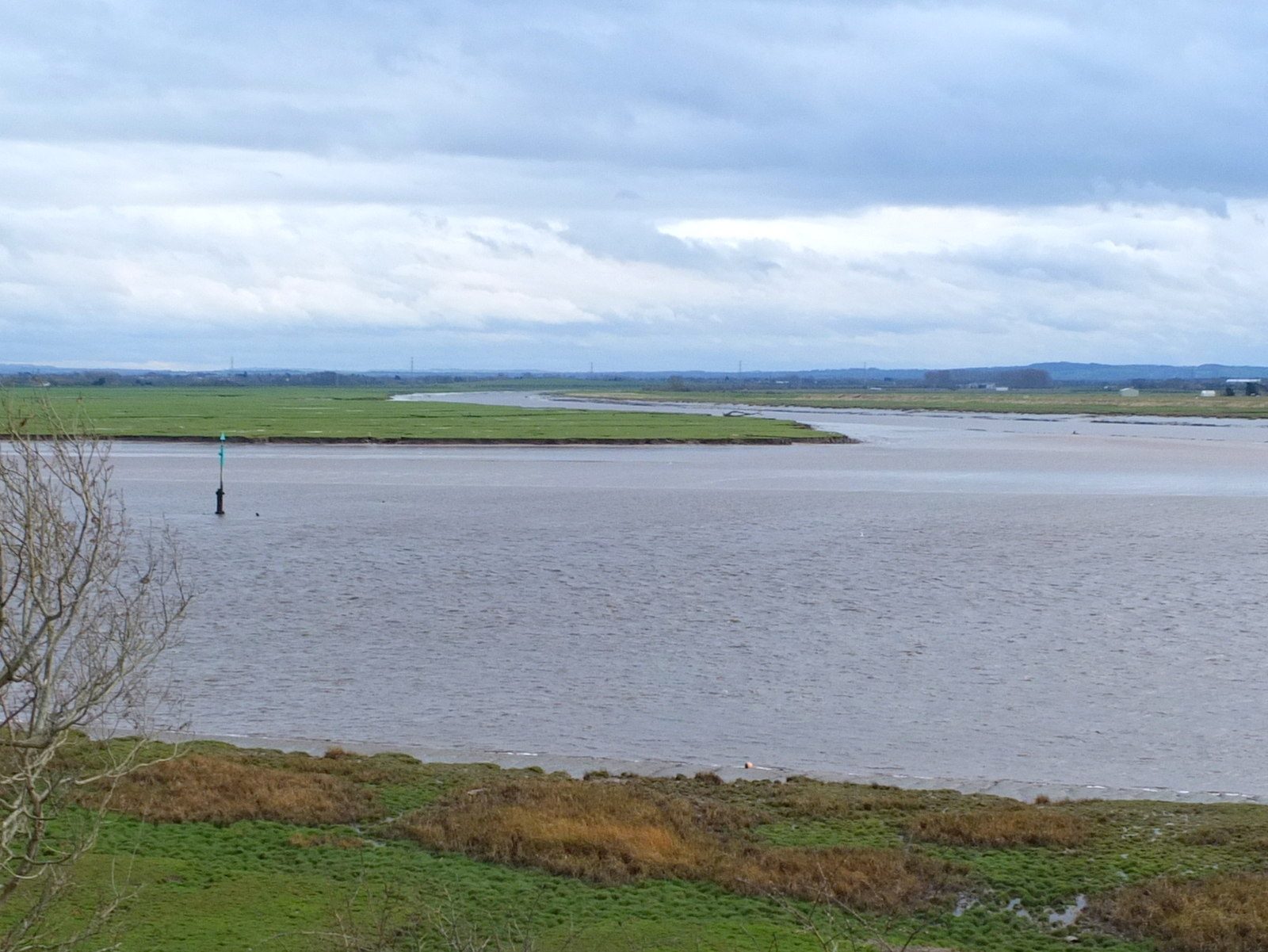
The most popular suggestion among scholars is that the River Dubglas was a river in Lincolnshire. The River Witham is most commonly suggested. The key piece of evidence in favour of this theory is the fact that Lincolnshire is the only region in Britain which is positively known to have been called by a name which could take the form ‘Linnuis’.
In fact, one manuscript version of the Historia Brittonum explicitly uses the place name ‘Lindsey’ in place of ‘Linnuis’, directly identifying it with that region within Lincolnshire.
However, there is no river there today whose name is ‘Douglas’, ‘Blackwater’, or any other variation of this. Nonetheless, this is easily explained by the fact that its name may have been changed into something else entirely after the Anglo-Saxon conquest.
The River Witham has a notably peaty composition, which means that the name ‘Dubglas’ (meaning ‘black stream’) would be perfectly appropriate.
The narrative provided by Geoffrey of Monmouth also clearly supports this theory. He places the initial Battle on the River Dubglas on Arthur’s journey towards York. Since Arthur most likely came from the south (as indicated by Geoffrey’s own narrative and the weight of Welsh tradition), this means that the Dubglas was somewhere south of York.
After the siege of York, the next battle occurs by the two rivers which go either side of the city of Lincoln. This must be a reference to the River Witham and the Foss Dyke. Therefore, Geoffrey’s account clearly supports this theory.
Objections to This Location
The primarily objection against this theory is that the River Witham is supposedly a very old name, going back possibly even to pre-Celtic times. If this were the case, then this might prove that it was never known as the River Dubglas.
However, this idea has been called into question by recent scholarship. As scholar Caitlin Green noted, ‘the river-name Witham is… no longer so certainly an early name as it once seemed to be’.
Conclusion
In summary, the Battles on the River Dubglas were Arthur’s second, third, fourth, and fifth battles against the Anglo-Saxons. They all took place at the River Dubglas, perhaps each at a different spot along the river. This was in a region called Linnius. Geoffrey of Monmouth’s account intersperses these battles with a siege of York. Although there are numerous theories about where this battle site was, the weight of evidence strongly favours identifying it with the River Witham in Lincolnshire.
FREQUENTLY ASKED QUESTIONS
Who Won the Battles on the River Dubglas?
According to all the available records, Arthur led the Britons to victory at these battles.
Why were there Four Battles on the River Dubglas?
Some scholars believe that the writer of the Historia Brittonum invented the detail about four battles being fought here to raise the total number of battles to 12, which was considered a special number. However, it seems strange that all of the extra battles would be lumped together on a single battle site.
More plausibly, there were lots of battles on the River Dubglas because of Lindsey’s status as a near-island at that time, meaning that the Anglo-Saxons may have had to repeatedly try to break out across the natural barriers formed by its rivers.
Where was the River Dubglas?
The most plausible location for the River Dubglas is in Lincolnshire. It can likely be identified with the River Witham.
Sources
Green, Thomas, Britons and Anglo-Saxons: Lincolnshire AD 400-650, 2012
Green, Thomas, Arthuriana: Early Arthurian Tradition and the Origins of the Legend, 2009
Reno, Frank, Historic Figures of the Arthurian Era: Authenticating the Enemies and Allies of Britain’s Post-Roman King, July 2015
Field, P. J. C., Arthur’s Battles, 2008
http://www.legendofkingarthur.co.uk/battles/2-to5-duglas.htm