Books about King Arthur

The Arthurian legends involve an enormous corpus of literature. There are many, many books about the legendary King Arthur, both medieval and modern. If you are trying to learn more about these legends, it can be difficult to know where to start. This article provides an overview of some of the best books available to help you learn about the legends of King Arthur, as well as the history behind the legends.
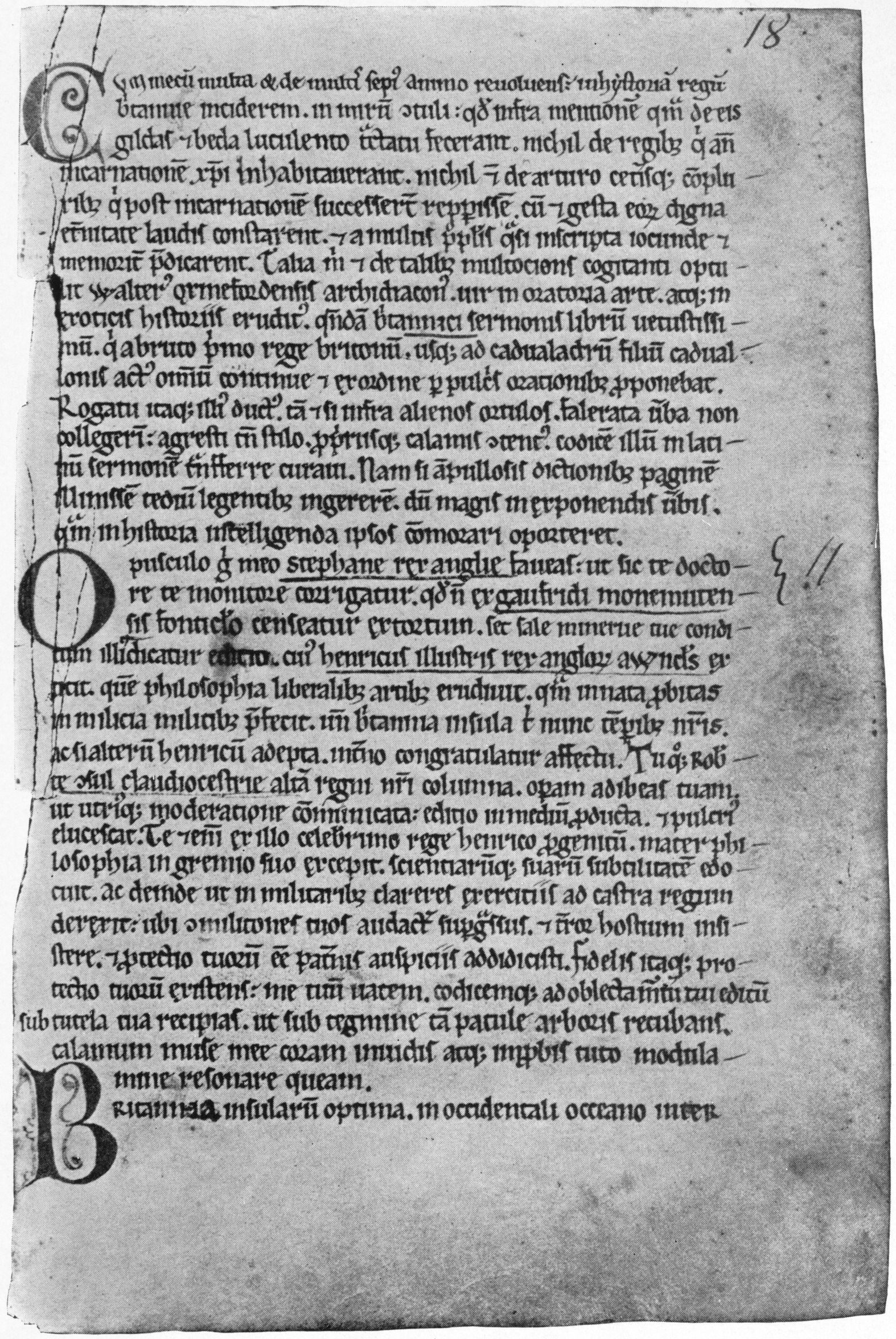
Historia Regum Britanniae, by Geoffrey of Monmouth
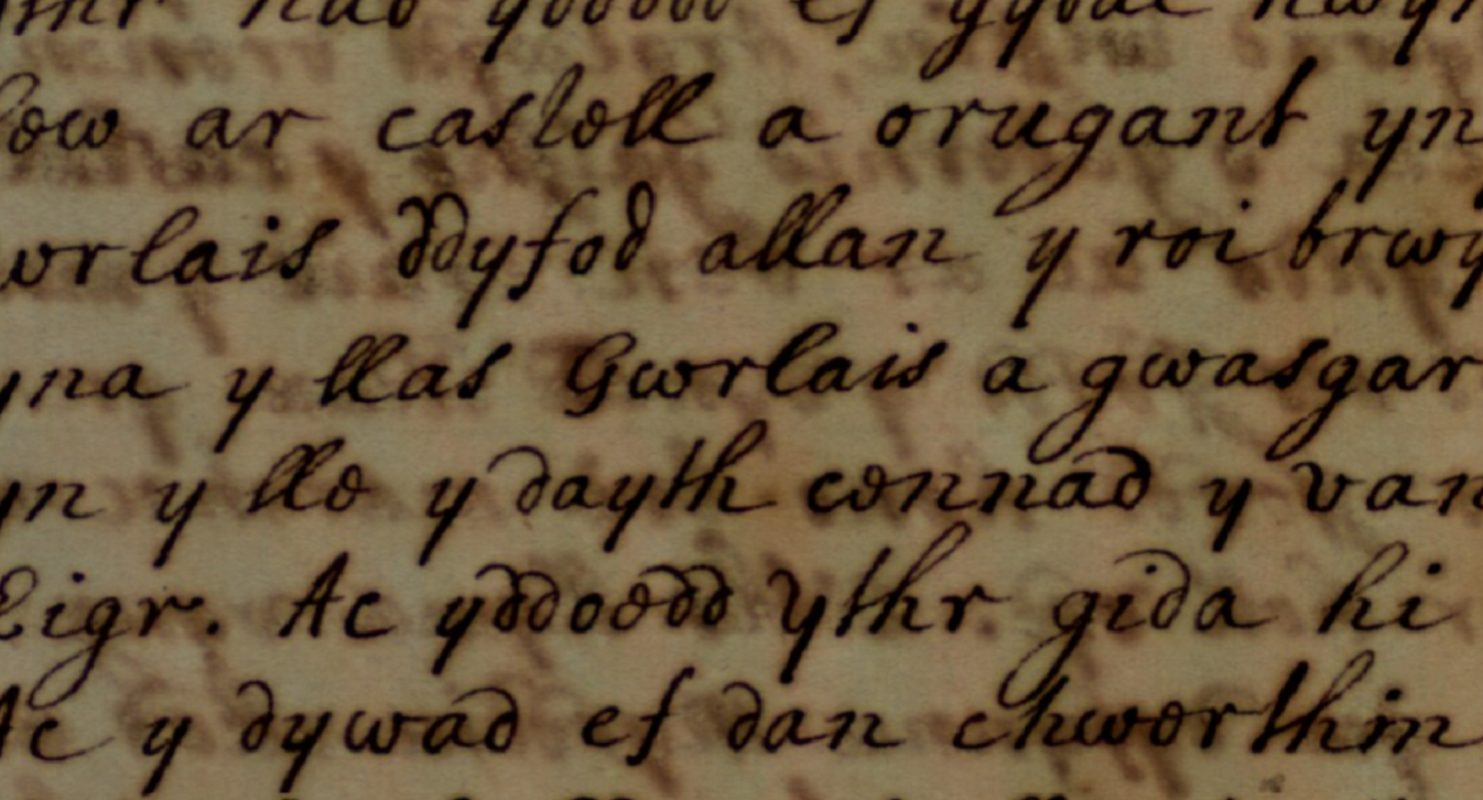
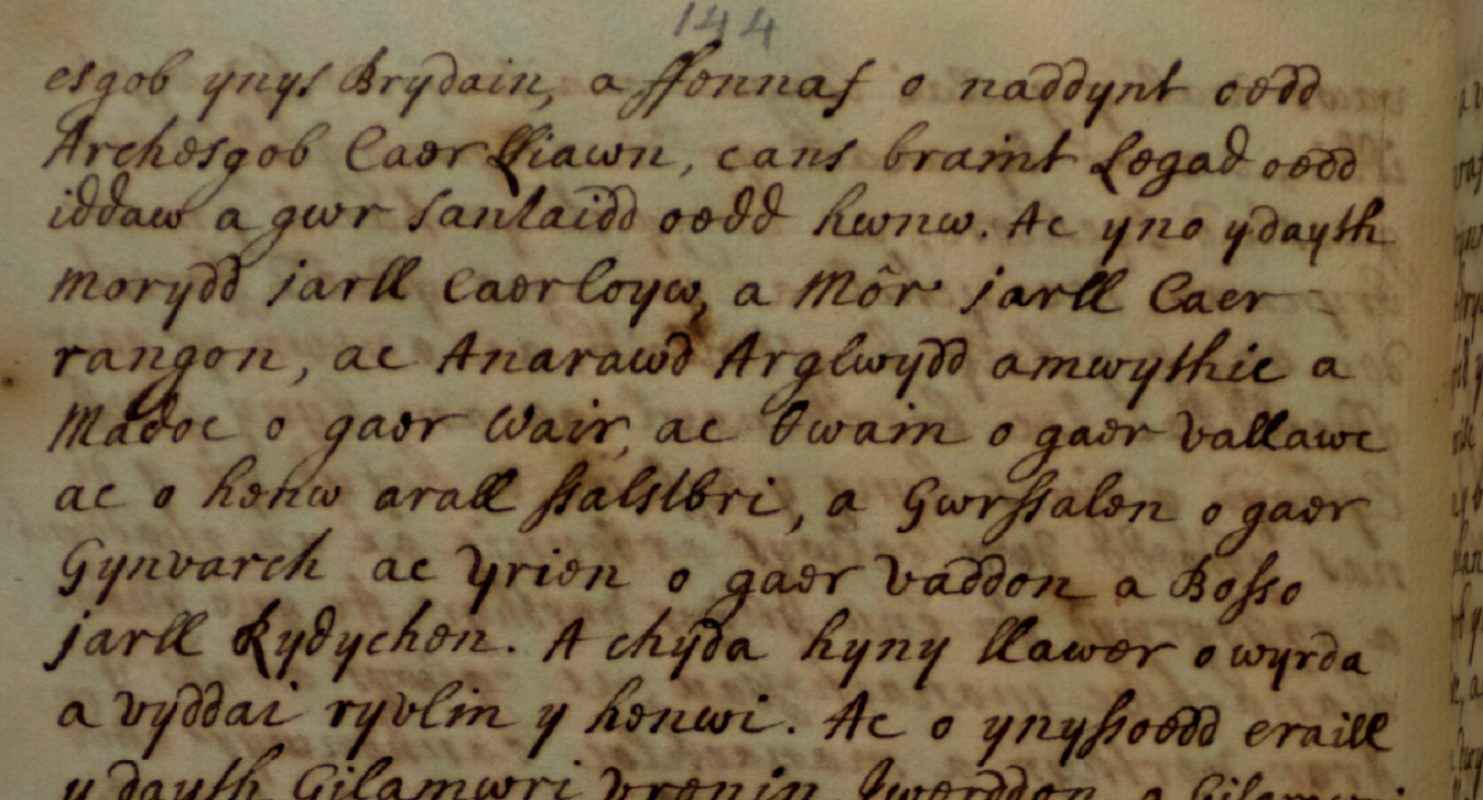
One particularly valuable book about the legends of King Arthur is from the medieval era. This was written by a monk from Wales named Geoffrey of Monmouth in c. 1137. It is called Historia Regum Britanniae, meaning History of the Kings of Britain. Geoffrey claimed that it was a translation of a ‘very ancient book’ written in the British language (probably either Welsh or Breton) that had been given to him by Walter, archdeacon of Oxford.
The majority of scholars do not believe this claim, although some accept that he may have received some Welsh material from Walter to work with. In any case, linguistic and textual evidence makes it clear that Geoffrey’s work does preserve many older Welsh traditions. A huge portion of the book is devoted to King Arthur’s career. In fact, about half of it concerns the period usually called the Arthurian Era. Geoffrey of Monmouth was the first person to present a story of Arthur’s whole career.
This presents a relatively realistic view of Arthur, in contrast to the later medieval legends. It describes Arthur as a powerful king, with many kings across Britain as his allies. It describes his campaigns against the Saxons, his war against the Romans, and the downfall of his reign during the usurpation of his nephew.
The Historia Regum Britanniae is written in prose and is fairly easy to read. A number of translations are available, such as the translation by J. A. Giles (available to read online here: https://en.wikisource.org/wiki/Six_Old_English_Chronicles/Geoffrey%27s_British_History) or the one by Lewis Thorpe.
Amazon link: https://www.amazon.co.uk/History-Kings-Britain-Classics/dp/0140441700/
King Arthur and His Knights of the Round Table, by Roger Lancelyn Green
Many of the more traditional elements of the tales of King Arthur, such as the Round Table, Lancelot, the Sword in the Stone, and the Lady of the Lake, do not appear in the Arthurian legends until after Geoffrey of Monmouth’s book. The modern book King Arthur and His Knights of the Round Table, by Roger Lancelyn Green, is an excellent retelling of the Arthurian legends with all of the famous, traditional parts of the legend included. It is a perfect starting place for anyone just beginning to get interested in the Arthurian legends.
Green wrote this book in 1953. It was originally aimed at children, but it has become a classic publication loved by many who want to read a relatively simple and easy-to-read version of the legend of Arthur. It is primarily based on Sir Thomas Malory’s Le Morte d’Arthur from the 15th century. However, it also includes stories and details from earlier medieval legends about King Arthur.
For anyone who wants to get a simple but inclusive overview of the legend of King Arthur in its most traditional form, this book is ideal. It is also ideal for children, since they were, after all, this book’s original audience.
Amazon link: https://www.amazon.co.uk/Knights-Everymans-Library-CHILDRENS-CLASSICS/dp/1857159101/
The New Arthurian Encyclopedia: New Edition, by Norris J. Lacy
Aside from books which retell the legend of King Arthur, books that analyse these legends and their historical background are also very valuable. One such book is The New Arthurian Encyclopedia: New Edition, edited by Norris J. Lacy in 1995. This massive reference work examines everything to do with the Arthurian legends. It looks at the evolution of the legends over the centuries. It examines how those legends have featured in literature, folklore, and even art and music.
The New Arthurian Encyclopedia also analyses the historical background to the legends. It discusses information that sheds light on the facts that may lie behind certain elements, such as Camelot, Badon, and even the historicity of Arthur himself.
It is a very scholarly work, with input from 130 experts on the subject. It is designed to be so comprehensive that no other book on the Arthurian legends is needed. Indeed, it is widely considered to be a necessity on the self of any King Arthur fan. For anyone interested in learning about the Arthurian legends – whichever aspect of them – this would be hugely valuable.
Amazon link: https://www.amazon.co.uk/New-Arthurian-Encyclopedia-931/dp/0815323034
Oxford Guide to Arthurian Literature and Legend, by Alan Lupack
Essentially a rival to the above, Oxford Guide to Arthurian Literature and Legend was published by Alan Lupack in 2007. Just like the above, this presents a comprehensive overview of the evolution of the Arthurian legends over the centuries, including how they have appeared in modern media.
It also analyses the historical background to the legends and the different theories that have been presented about Arthur. It contains a truly encyclopaedic explanation of countless characters, events, places, and objects from the legends. It also looks at historical and archaeological evidence that has a bearing on them.
The author, Alan Lupack, is a highly respected authority in the world of Arthurian studies. He is the creator of The Camelot Project, an online database of information about King Arthur. Without doubt, his reference work on Arthur is very useful for anyone interested in learning about any part of the legends of Arthur.
Amazon link: https://www.amazon.com/Oxford-Arthurian-Literature-Legend-Reference/dp/019921509X
The Age of Arthur, by John Morris
One of the most famous books analysing the Arthurian legends is The Age of Arthur, published by John Morris in 1973. This work examines not just Arthur himself, but the whole period from 350 to 650. Rather than focusing on the Arthurian legends as such, this work attempts to uncover and reveal the real history of that era.
For this reason, there is much more focus given to figures who appear rarely, if ever, in the traditional legends of Arthur. For example, it discusses historical figures such as King Maelgwn and the monk Gildas. The author accepts Arthur as a historical person and tries to argue for what may have really occurred in Britain during his reign.
Many scholars have criticised this work for being overly optimistic about what the available sources can tell us. Rather than accepting the sources merely as a demonstration of the beliefs of people at the time those sources were written, Morris attempted to use those sources to come to historical conclusions. In the opinion of many scholars, Morris went too far based on too little evidence. Nonetheless, some of his arguments are still compelling.
Amazon link: https://www.amazon.com/Age-Arthur-History-British-Phoenix/dp/1842124773
The World of Arthur, by Christopher Snyder
The World of Arthur has a similar title to Morris’ work, but it is very different. Published in 2000 and written by historian Christopher Snyder, this book is more focused on explaining to the reader what the Arthurian legends are and how they evolved through the centuries. In that sense, it is much closer to The New Arthurian Encyclopedia and Oxford Guide to Arthurian Literature and Legend.
However, unlike those massive reference works, this one is much more visual and easier to read. It is full of illustrations, maps, paintings, and various other types of visual aids. For those who do not like to read page after page of endless paragraphs, this may be the best book to learn about the legends of King Arthur, Merlin, and Camelot.
It also delves somewhat into historical evidence that has a bearing on the legends. However, unlike John Morris, Christopher Snyder does not believe that Arthur was historical. The historical and archaeological evidence included here is mostly about parts of the legend that do not concern Arthur himself.
Amazon link: https://www.amazon.com/World-King-Arthur-Christopher-Snyder/dp/0500051046
Arthur’s Britain: History and Archaeology AD 367–634, by Leslie Alcock
A very similar work to John Morris’ The Age of Arthur, Leslie Alcock wrote Arthur’s Britain: History and Archaeology AD 367–634 in 1972. This book examines the evidence concerning the period between the fourth and the seventh centuries, based on archaeology and literary sources. He outlines what the available evidence reveals about what life was like in Britain during Arthur’s time.
Like Morris, Alcock accepted Arthur as a historical figure in this book (later in life, he expressed more doubt about the matter). He was a big supporter of Arthur’s connection to Cadbury Castle, which was identified as Camelot centuries ago. Alcock was the archaeologist who led the massive excavation of that site decades ago and revealed its importance in Post-Roman Britain. This connection, as well as other archaeological evidence, is explained in this book.
However, it should be noted that this is not a particularly easy book to read. It is very academic. This is not necessarily a bad thing, but the casual Arthurian fan may struggle to stay engaged while trying to read this. Yet, for those with a passionate interest in the subject, this should not be a deterrent.
Amazon link: https://www.amazon.com/Arthurs-Britain-Classic-History-Leslie/dp/0141390697/
The Arthur of the Welsh: The Arthurian Legend in Medieval Welsh Literature, by Rachel Bromwich, A. O. H. Jarmon and Brynley F. Roberts
An even more academic book is The Arthur of the Welsh: The Arthurian Legend in Medieval Welsh Literature. This was edited by Rachel Bromwich, A. O. H. Jarmon and Brynley F. Roberts and was published in 1991. It is a collection of essays by 12 different contributors, many of whom are giants in the world of Arthurian studies.
Rachel Bromwich herself, as well as being one of the general editors, wrote two of the essays. Patrick Sims-Williams also wrote one of them. Both scholars are hugely respected academics in the study of medieval Britain. This is a hugely valuable and well-respected book on the matter of the historicity of Arthur and the development of the Arthurian legend within medieval Welsh texts (which are some of the most important in terms of the question of Arthur’s historicity).
This work does not hold back on the academic intricacies and details, so this is not the ideal book for someone with just a casual interest in Arthur. Nor is it ideal for someone just starting to research the subject. Nonetheless, for someone who is already familiar with the legends and the debates surrounding certain aspects of this issue, this would provide a true wealth of information.
Amazon link: https://www.amazon.co.uk/Arthur-Welsh-Arthurian-Medieval-Literature/dp/0708313078
The Discovery of King Arthur, by Geoffrey Ashe
In 1985, British historian Geoffrey Ashe wrote The Discovery of King Arthur. This presents what has turned out to be one of the most popular theories about Arthur. Rather than presenting an overview of the Arthurian legends or the world in which Arthur lived, this book focuses on a historical explanation for one specific aspect of the legends.
While most books about the ‘historical’ Arthur focus on his campaigns against the Saxons, this book analyses the legends about Arthur fighting on the continent against the Romans. Ashe concluded that this legend must have a historical basis, however distorted or embellished. This book argues that the origin of this legend lies with Riothamus.
Riothamus was a historical king of the Britons who is recorded as fighting a battle in Gaul against the Visigoths. Ashe makes the case that this legend grew into the legend later recorded by Geoffrey of Monmouth. While this has not convinced most scholars, there are some who do accept Riothamus as the historical nucleus, so to speak, of King Arthur.
Amazon link: https://www.amazon.co.uk/Discovery-King-Arthur-Geoffrey-Ashe/dp/0750942118/
King Arthur: The Man Who Conquered Europe, by Caleb Howells
Taking a similar approach to Geoffrey Ashe, Caleb Howells concludes in King Arthur: The Man Who Conquered Europe, published in 2019, that the legend of Arthur fighting a war against the Romans in Europe must have a historical basis. Unlike Ashe, this book argues that Riothamus’ career is not similar enough to Arthur’s for it to have been the basis for the legend.
This book presents a case that the origin of this legend lies with Magnus Maximus’ usurpation of the Western Roman Empire. In particular, it seeks to connect the legendary Arthur with Andragathius, the cavalry commander of Magnus Maximus and general leader of the army.
While some previous scholars had already recognised the possible connection between this historical event and the legend of Arthur, this book is the first to present a detailed, step-by-step comparison of the Arthurian legend with Maximus’ usurpation. By doing so, it attempts to reveal the origin of each distinct episode in the legend of Arthur conquering Europe.
Amazon link: https://www.amazon.co.uk/King-Arthur-Man-Conquered-Europe/dp/1445690837/
King Arthur: Man or Myth?, by Tony Sullivan
In 2020, researcher Tony Sullivan wrote King Arthur: Man or Myth? This book does not argue in favour of any one specific theory. Rather, it analyses the various theories about Arthur’s historicity and presents the evidence to the reader. The author takes great pains to be neutral about the matter, not favouring one side over the other.
This book also examines claims concerning Arthur’s identity. Like with the two abovementioned books, many researchers have identified Arthur with specific individuals known from more contemporary records. In this book, Sullivan presents these arguments to the reader and also shows the counterarguments, allowing the reader to form their own opinion regarding their validity.
This is a valuable book for anyone interested in learning about the potential truth behind Arthur. Rather than making any sensational claims, this book helps the reader to consider the various theories carefully and cautiously.
Amazon link: https://www.amazon.co.uk/King-Arthur-Myth-Tony-Sullivan/dp/1526763672/
King Arthur: The Making of the Legend, by Nicholas J Higham
In 2018, scholar Nicholas Higham wrote King Arthur: The Making of the Legend. This book argues strongly against the conclusion that Arthur was historical. Rather, Higham argues that Arthur never existed at all, and that the legend about him was developed by medieval writers with clear political motives.
Higham analyses the evidence put forward by those who believe that Arthur was real, criticising it all as invalid. He also examines the various theories about Arthur’s identity. He presents the reader with the supposed evidence for these identifications, just like Sullivan above. However, Higham is much more critical of them, almost fiercely so.
He attempts to dismantle these theories in their entirety and demonstrate that Arthur cannot be identified with any known historical figure. For anyone interested in seeing the more critical side of the debate and the arguments against Arthur’s existence, this is a key book to read.
Amazon link: https://www.amazon.co.uk/King-Arthur-N-J-Higham/dp/0300210922/
The Reign of Arthur: From History to Legend, by Christopher Gidlow
Christopher Gidlow wrote The Reign of Arthur: From History to Legend in 2005. This is essentially the counterpart to Nicholas Higham’s abovementioned book. It argues forcefully that there is every reason to accept King Arthur as a historical figure. Far from being inconsistent with the earliest records, such a conclusion is actually the most logical one in view of the sources.
Gidlow’s book focuses on the textual evidence rather than the archaeological side of things. It examines the earliest account of Arthur’s era, an early medieval source which infamously does not mention Arthur himself, and attempts to demonstrate how the information therein is perfectly consistent with the Arthurian legends.
It is important to get both sides of the argument, so along with Higham’s book above, this is an important resource for anyone looking to investigate whether Arthur really existed or not.
Amazon link: https://www.amazon.com/Reign-Arthur-History-Legend/dp/0750934190