Mauron, Earl of Worcester

Mauron of Worcester is a minor but intriguing character in the Arthurian legends. He is described as the earl of Worcester and is said to have been one of King Arthur’s kinsmen. He also plays an important part in one particular conflict with the Saxons, saving Arthur from what could have been a fatal attack. In this article, we will examine this character more closely and consider evidence that he may have been a historical figure.
Who Was Mauron, Earl of Worcester?
Mauron, earl of Worcester, is a figure whose main contribution to the Arthurian legends is simply being listed as one of King Arthur’s allies. However, in some sources, he is given a more active role. He is presented as serving the Saxons as a spy for Arthur.
This role as a spy enabled him to learn of a planned attack against Arthur by Baldulph, a Saxon leader, during Arthur’s siege of York. Mauron was able to inform the king of this intended attack, allowing Arthur the opportunity to send out Cador of Cornwall to intercept and defeat Baldulph.
It is after this that Mauron appears as the earl of Worcester. Since he obviously cannot have been serving as earl of a British territory during his service as a spy in the Saxon ranks, this evidently means that Arthur appointed him to that position subsequent to the defeat of Baldulph.
The records which give Mauron an expanded role also present him as Arthur’s kinsman. Therefore, although the Arthurian tales tell us very little about him, they tell us enough for us to be able to investigate who – if anyone – he may be identified with from Welsh tradition and other records.
Mauron in the Arthurian Legends
Let us now analyse Mauron’s appearances in the Arthurian legends, starting with his first unambiguous appearance. This is seen in Geoffrey of Monmouth’s Historia Regum Britanniae, written in c. 1137.
Geoffrey of Monmouth’s Historia Regum Britanniae
In this account, which is the first detailed narrative of King Arthur’s career, there is a passage in which Arthur holds a feast at Caerleon, southeast Wales. At this feast, numerous allies from all over Britain attend. Some of them are major kings of important kingdoms, while others are relatively minor dukes and consuls.
In the list of consuls who attend the feast, Geoffrey refers to:
“Mauron, of Worcester.”
He appears second in the list, just after Morvid of Gloucester and before Anaraut of Salisbury, with many others listed afterwards. By this ordering, it might be concluded that Mauron was one of the most prominent of Arthur’s lesser allies.
This is all that Geoffrey explicitly says about Mauron.
Mauron’s Unstated Role
However, earlier in his account, he makes reference to something which later accounts attributed to this ruler of Worcester.
Early in Arthur’s career as a war leader against the Anglo-Saxons, he is described by Geoffrey as besieging the city of York, an important Anglo-Saxon stronghold. However, during the siege, the brother of the besieged Saxon king devised a plan. His name was Baldulph, and he was in the same general region of the country but was waiting for reinforcements before attacking.
Geoffrey explains that Baldulph planned to attack Arthur during the night, when he would be least expecting it. However, Geoffrey then says the following:
“But Arthur, having intelligence of his design, sent a detachment of six hundred horse, and three thousand foot, under the command of Cador, duke of Cornwall, to meet him the same night.”
In this account, there is no explanation for how Arthur came to ‘have intelligence of his design’. Later accounts state that Arthur had a spy in Baldulph’s army, and later still, we find the claim that this was Mauron.
Therefore, although Geoffrey does not explicitly mention Mauron here, he does imply the existence of the role later given to him.
Wace’s Roman de Brut
In c. 1155, a writer named Wace wrote a poetic version of Geoffrey’s account, called Roman de Brut. It follows Geoffrey’s narrative closely, although it is somewhat expanded (for instance, Wace provides the first mention of the Round Table, referring to it in the narrative of the feast at Caerleon).
Interestingly, in Wace’s version of Arthur’s court list, it appears that Wace either used an alternative name for Mauron or greatly corrupted it. Wace wrote:
“Morud, Earl of Gloucester; and Guerdon, Earl of Winchester. Anavalt came from Salisbury.”
The first and the third earls mentioned correspond to the first and third consuls mentioned by Geoffrey. The middle one, Guerdon, should correspond to Mauron. There is no one else in Geoffrey’s court list who this could match, which excludes the possibility that Wace has simply changed the order of the allies.
Furthermore, the fact that he is called the Earl of Winchester can be taken as a match for Mauron’s position as the consul of Worcester, given that ‘Winchester’ and ‘Worcester’ are similar enough for one to be corrupted into the other. Indeed, Layamon’s slightly later Brut explicitly makes Mauron the earl of Winchester.
Therefore, it would appear that ‘Guerdon’ is simply Wace’s name for Mauron. Rather than being an alternative name for the same figure, it is likely that this is just a particularly bad corruption of ‘Mauron’.
Mauron’s Unstated Role
Earlier on in the account, in the narrative about the siege of York, Wace wrote:
“He trusted to fall upon Arthur by night, when he was unready, and force him to give over the siege. But certain of the country who had spied Baldulph spread this snare, ran to the king, and showed him of the matter.”
According to this, ‘a certain one of the country’ – that is, a Briton – who was spying on Baldulph became aware of his plan to attack Arthur by night. This spy therefore went and informed Arthur. This is very similar to Geoffrey’s narrative, but it is more explicit in referring to the person who discovered this plan and told Arthur. In contrast, Geoffrey simply stated that Arthur ‘had intelligence’ of the plan.
Layamon’s Brut
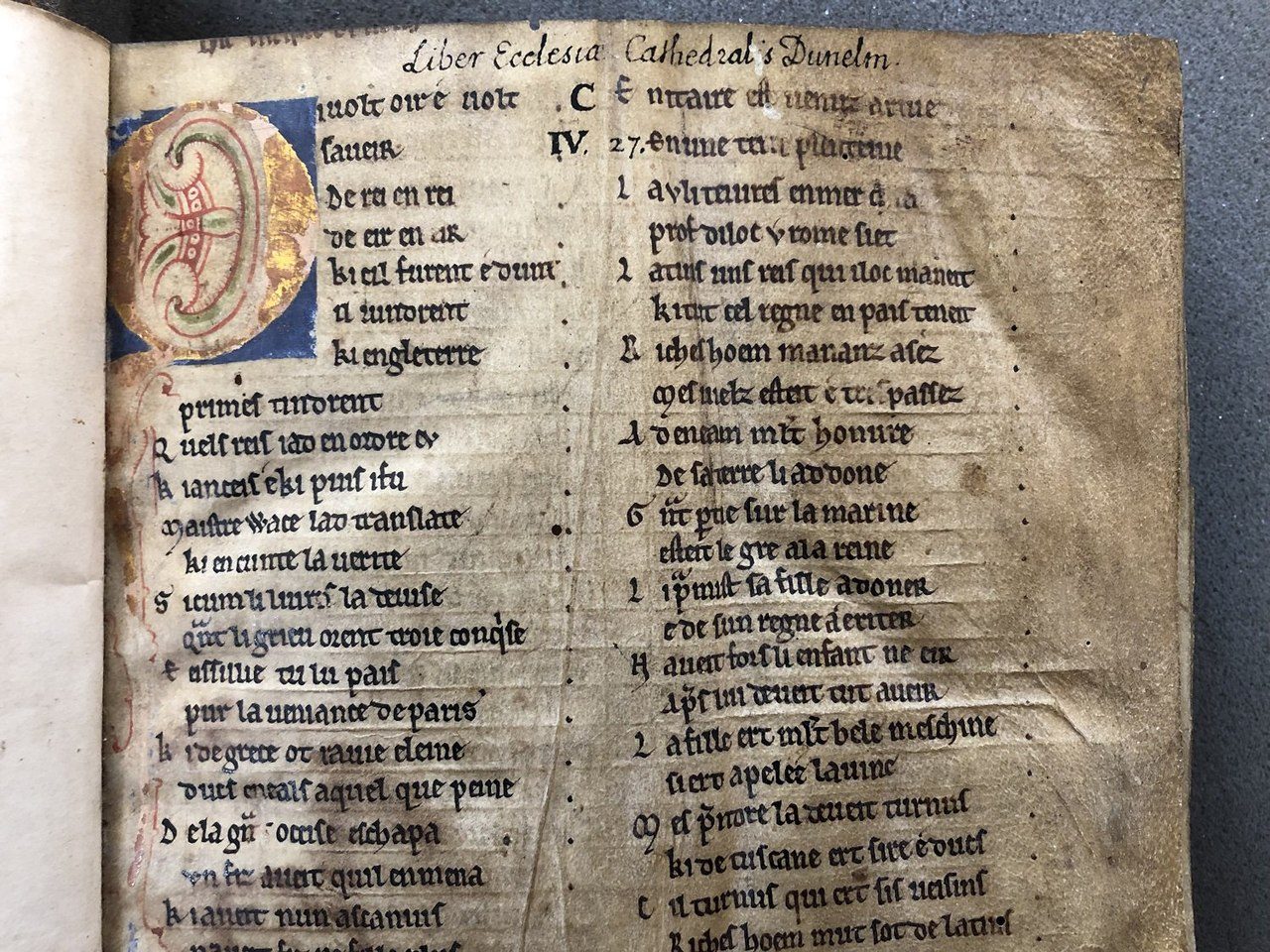
In approximately the year 1200, a writer known as Layamon (occasionally ‘Lawman’) wrote his own Brut, based heavily on Wace’s version. It is in this account that we finally see Mauron with a slightly fuller role in the legends.
In his account of Arthur’s siege of York, Layamon describes the same basic event mentioned by Geoffrey and Wace. However, he adds more information. He explains:
“Baldolf had in his host a British knight; he was Arthur’s relative, named Maurin. Maurin went aside to the wood, through woods and through fields, until he came to Arthur’s tents; and thus said soon to Arthur the king: ‘Hail be thou, Arthur, noblest of kings! I am hither come; I am of thy kindred.’”
Maurin then went on to explain Baldolf’s plan and urged Arthur to send Cador against him. Therefore, the result is the same as in Geoffrey and Wace, but Layamon provides more information about how this information came to Arthur’s ears. This appears to be the first source which specifies Maurin, or Mauron, as a relative of Arthur.
Layamon’s second and final mention of Mauron comes in Arthur’s court list at the feast of Caerleon. Just like in Geoffrey, he appears second in the list of secondary allies, after ‘Morvith’ (Geoffrey’s Morvid). Layamon refers to him as:
“Maurm of Winchester.”
The spelling ‘Maurm’ is likely a mistake for ‘Maurin’, the spelling used earlier by Layamon. Furthermore, we note that his territory is called Winchester, as in Wace, rather than Worcester, as in Geoffrey. While it is tempting to conclude that Layamon got this directly from Wace, this would not explain why he followed Geoffrey’s spelling for the name of this figure rather than Wace’s.
Brut Tysilio
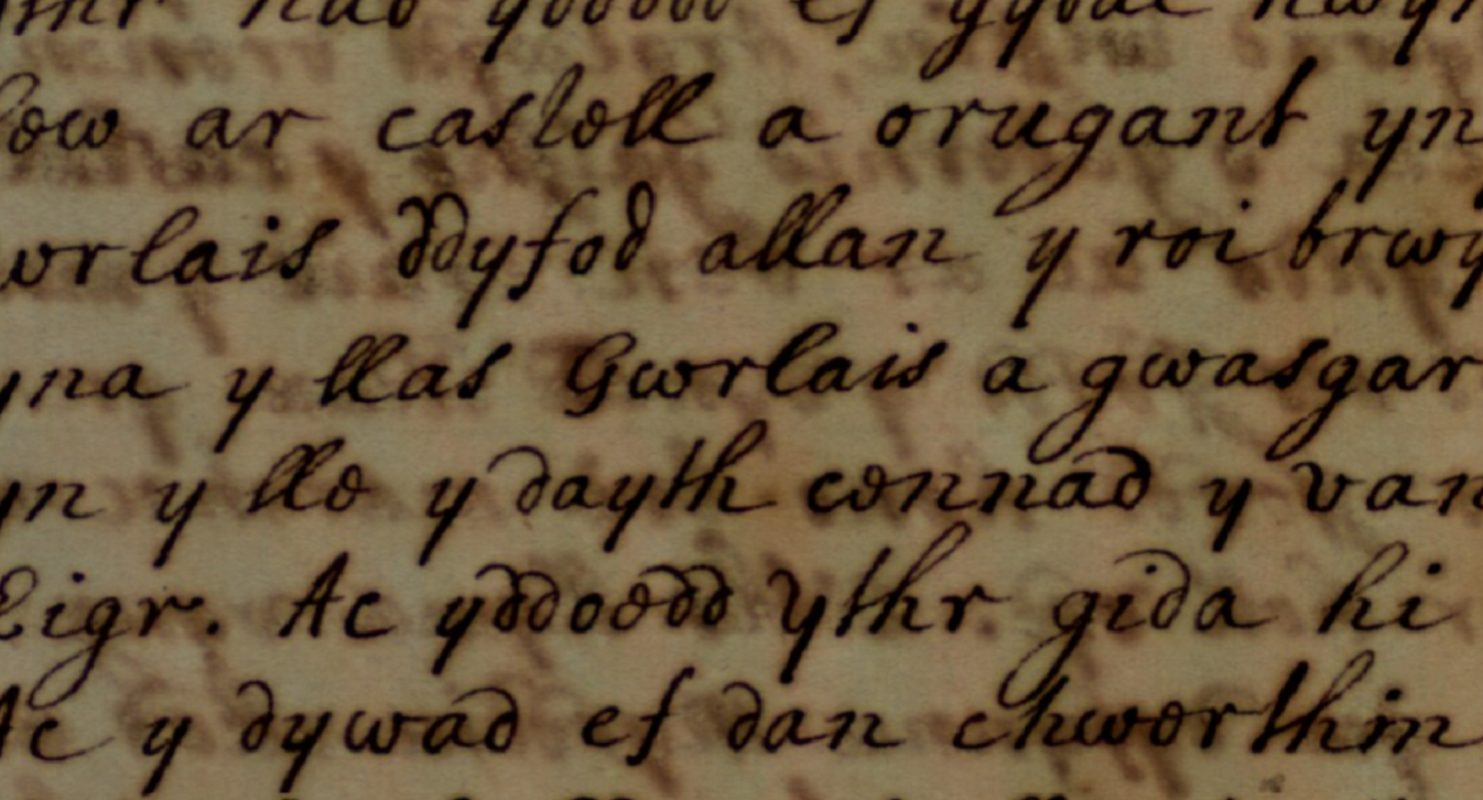
One Welsh source which definitely mentions this figure is Brut Tysilio. This is a Welsh version of Geoffrey of Monmouth’s Historia Regum Britanniae. Many of the names throughout the text are altered to be more familiar to Welsh readers. In some cases, the names are changed completely, evidently to keep the story in line with Welsh tradition which Geoffrey may have misrepresented.
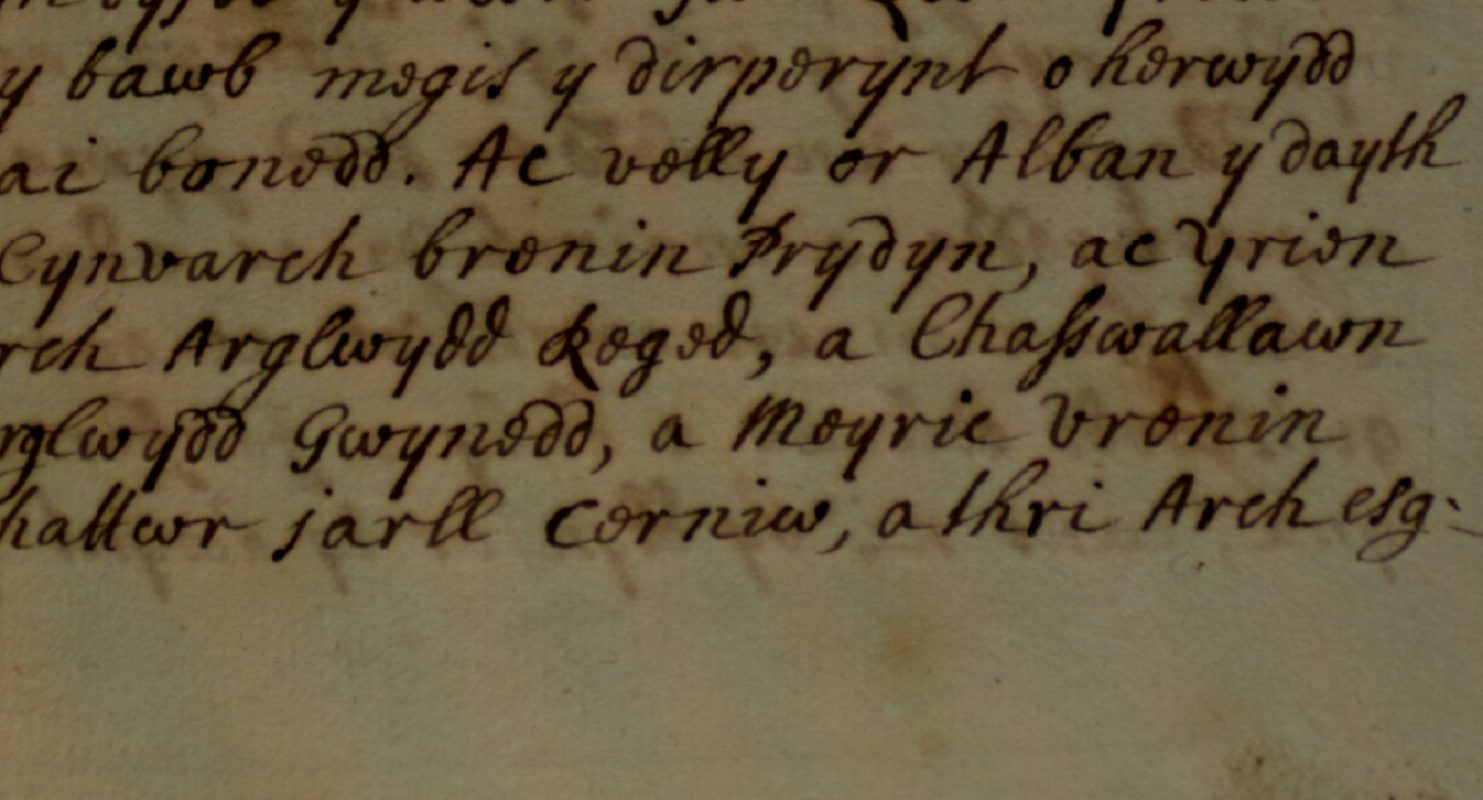
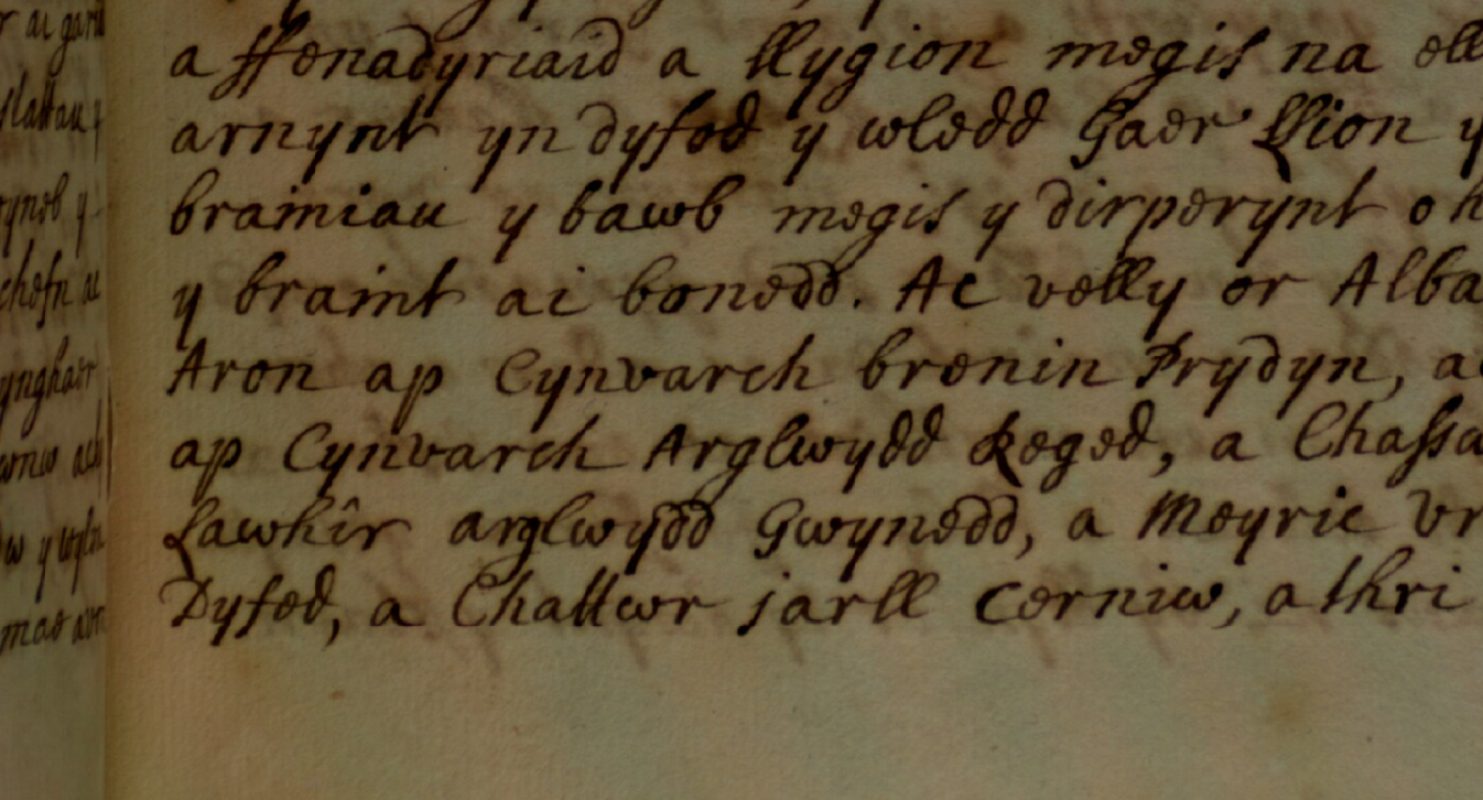
In the case of Mauron, the text of Brut Tysilio reads:
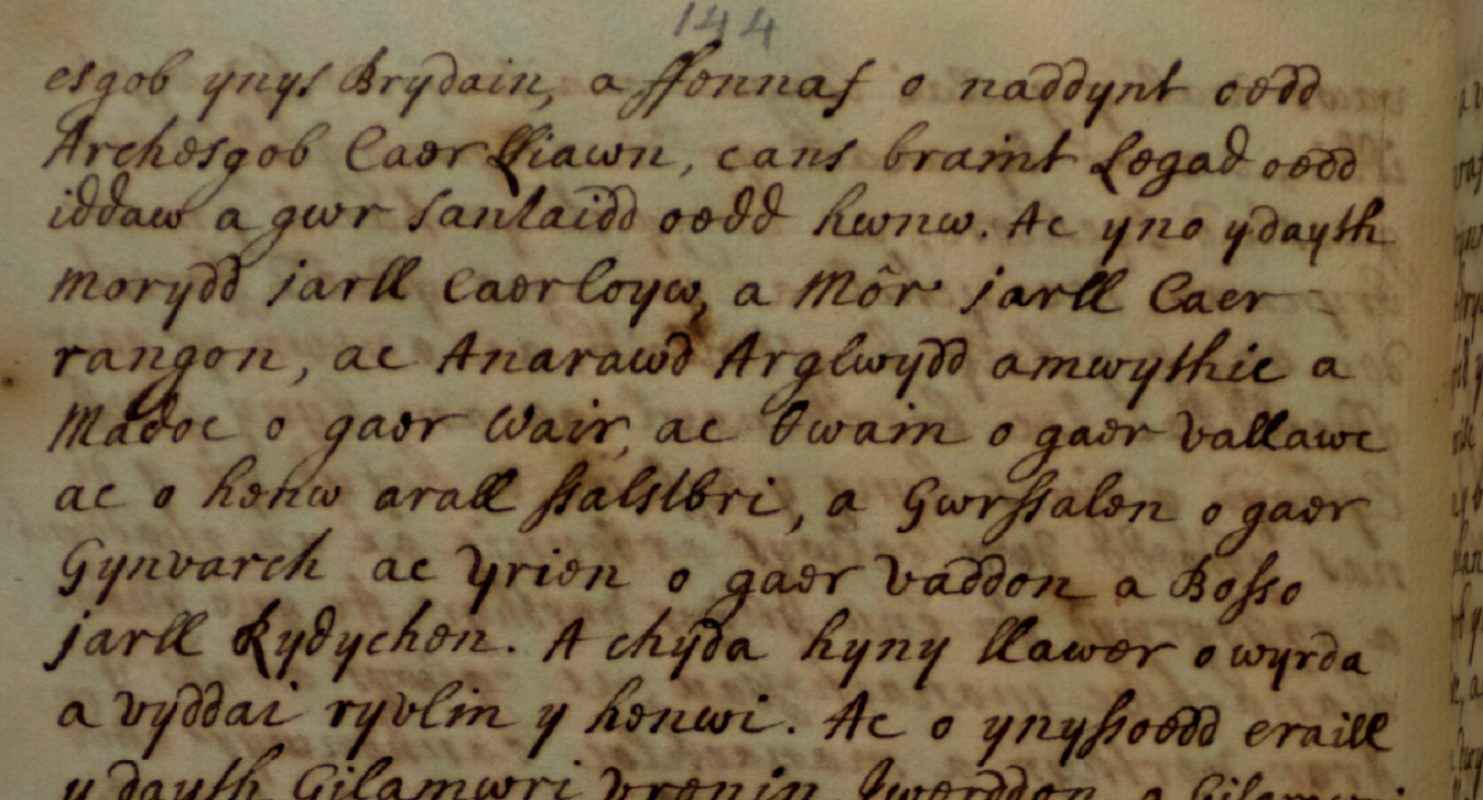
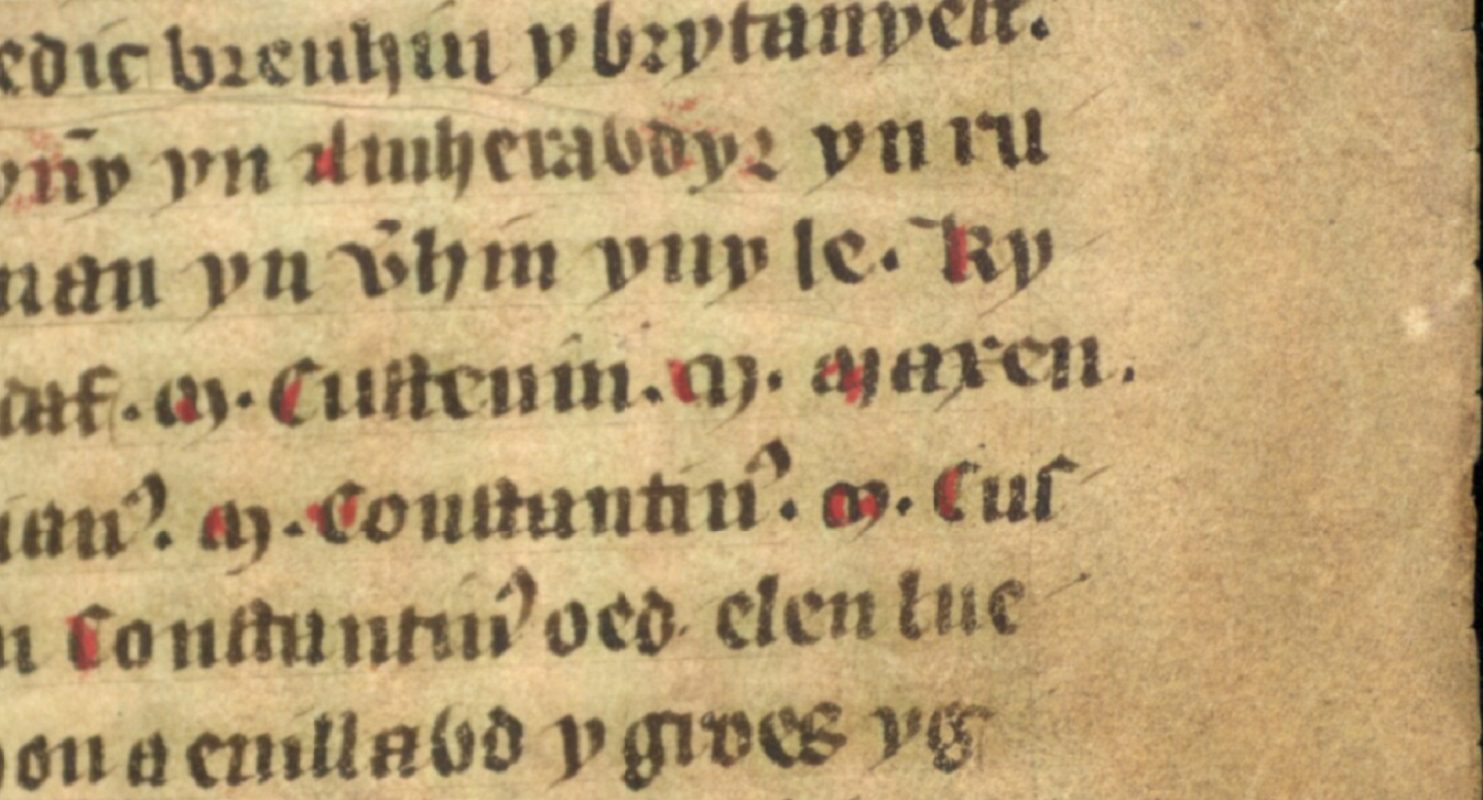
“And thither also came Morydd, Earl of Kaerloyw; and Mor, Earl of Kaer-rangon and Anarawd, Lord of Amwythic.”
As we can see here, the same sequence used by Geoffrey of Monmouth is used here. In positions one and three, we find Morydd and Anarawd respectively, matching the figures mentioned by Geoffrey. Therefore, there is no doubt that the figure between them is intended to match Geoffrey’s Mauron.
In this text, his name is simply spelt ‘Mor’. This could be a case of Geoffrey having expanded this character’s name for his Latin text. An example of this would be the case of Aldroenus, whose name appears as ‘Aldwr’ in Welsh texts.
On the other hand, it could be that the Welsh scribes have shortened his name. An example of this is the case of Llew ap Cynfarch, whose name is known from other records to have been Lleuddun.
In this brief reference, the Brut Tysilio calls Mor the earl of Kaer-rangon. This is Caerwrangon, the Welsh name for Worcester. Therefore, Welsh tradition apparently agrees with this location for Mor, or Mauron.
Can Mauron Be Identified in Welsh Tradition?
The Arthurian legends, ultimately, are based on the history of the Welsh. They come from Welsh tales and records. Characters from the Arthurian legends who can be identified as historical figures can, almost without exception, be seen in Welsh records. This being so, can we identify Mauron, Earl of Worcester, in Welsh tradition?
There appears to only be a single piece of Welsh tradition which refers to a figure by the exact name of ‘Mauron’ or ‘Mawron’. This is contained in the Latin document called the Historia Brittonum, written in c. 830. This document refers to a founding figure named Gloyw who supposedly established Gloucester. One of his children was named Mauron.
However, it is impossible to identify the Mauron of this record with Geoffrey’s Mauron. The reason is that Geoffrey’s account is set in the sixth century, whereas Mauron the son of Gloyw would have lived in the third and early fourth centuries.
In reality, it seems likely that Mauron the earl of Worcester can be identified either as one of the figures seen in Welsh records with the name ‘Mor’, or one of those recorded with the name ‘Morien’.
The Two Mors of Welsh Tradition
Going by Peter Bartrum’s A Welsh Classical Dictionary, it would appear that there are only two figures known as Mor in the Welsh records. Let us examine each of them in turn.
Mar ap Ceneu
The first is the figure usually recorded as Mar ap Ceneu. He is best known as being the supposed father of Arthwys, one of the candidates for the real King Arthur. Many sources claim that he was alternatively known as Maeswig.
In reality, though, Maeswig was a distinct figure to Mar. They appear to have been father and son.
The idea that this Mar was the Mauron of Geoffrey’s account is untenable, since Mar ap Ceneu must have been born in c. 425. He would probably have been dead by the time King Arthur was born.
Mar ap Glywys
The only other relevant Mor known to Welsh tradition is Mar ap Glywys. Since Glywys was an important subking of southeast Wales, ruling over all of Glywysing (which is now Glamorgan), his sons were relatively important figures. However, almost nothing is known of Mar.
Nevertheless, on a chronological basis, he is acceptable as Arthur’s ally Mauron. Furthermore, as a prince from Glamorgan, it may be within reason to view Worcester as close enough for him to be appointed the ruler of it. Admittedly, though, it is still quite far away from where he would expect.
Furthermore, there is strong evidence that Glywys was the historical figure behind the Arthurian character of Gorlois, the first husband of Arthur’s mother, Igerna. This being so, Mor would have been the half-brother of Arthur. This would explain the reference to Mauron as Arthur’s relative.
Problems with This Identification
However, there are a few objections to this identification. The first is that Worcester really is quite far away from Glamorgan for it to have been the territory of a prince from the former, even though it is not impossible.
Secondly, there is reason to believe that Mar, or Mur, ap Glywys should actually be identified as Morfryn. The reason for this is that an examination of the evidence about Morfryn indicates that he was actually the half-brother of Arthur, indicating that he was the son of Glywys (if we accept Glywys as the historical Gorlois). Morfryn, however, appears elsewhere in Geoffrey’s court list (see the article The Mystery of Madoc and Artegall, Brothers of King Arthur) and should thus not be identified with Geoffrey’s Mauron.
Thirdly, it seems unlikely that Mauron would simply be described as a ‘kinsman’ and ‘relative’ of Arthur if he was actually his half-brother.
Therefore, although it is a possible identification, let us see if there is an identification with makes more sense.
The Moriens of Welsh Tradition
Let us now examine the Moriens of Welsh tradition. There are three main candidates for Mauron of Worcester.
Morien of Glastonbury
One Morien appears in the line of kings who ruled the Glastonbury area. He was the son of Morfael ap Glast according to the Harleian MS 3859. Peter Bartrum estimates his date of birth to have been in c. 530. Nothing more is known about him.
Problems with This Identification
While this is an interesting possibility, the available evidence does not really support it. For one thing, his name appears in the Harleian genealogies as ‘Morgen’. It is very unlikely that this could have become ‘Mauron’ to Geoffrey. In his case, the Modern Welsh ‘Morien’ is almost certainly the correct rendering.
Secondly, Bartrum’s estimated date of birth is almost certainly decades too early. Nothing is known about this dynasty, meaning that the dates of each figure has to be estimated simply be counting back from the likely date of the final figure, near the date of composition of the genealogies.
Bartrum appears to have used the implausibly long average generation length of thirty-three years. When we reduce this to a more realistic twenty-five years (and some lineages in this period appear to show averages of as little as twenty years), we reach a date right near the end of the sixth century for the birth of this Morien.
Finally, Glastonbury is even further away from Worcester than Glamorgan is.
Morien Mynog
A far more plausible candidate is Morien Mynog. He appears in the enormous court list of Culhwch and Olwen, a Welsh prose tale about Arthur. He also appears as one of Arthur’s counsellors in a later Welsh prose tale, The Dream of Rhonabwy.
Hence, Morien Mynog is firmly established as an ally of Arthur in Welsh tradition. This puts him in a good position to be the Mauron of Geoffrey’s account.
Evidence from Welsh texts indicate that he was the son of March ap Meirchion. This was the famous King Mark of Cornwall, best known from the legend of Tristan.
Since March’s father, Meirchion, can very probably be identified as the son of Glywys (the historical Gorlois) by that name, this would make Morien a grandnephew of King Arthur through his half-brother. Hence, he would have been a relative of King Arthur, as Mauron was said to have been.
Regarding his name, the earliest appearance of it is in Culhwch and Olwen. There, it appears as ‘Moren’, with no obvious evidence that it was originally ‘Morgen’. Therefore, the rending of ‘Morien’ in modern texts may well be an erroneous assumption. This name could, instead, have come from a form closer to Geoffrey’s ‘Mauron’.
Problems with This Identification
While seemingly promising at first, there are some important problems with this theory. The first is related to his geography.
Morien Mynog’s father, March, was particularly associated with Cornwall and Brittany, although Morien himself (about whom little is known directly) was supposedly the ancestor of a tribe in the northern tip of Anglesey, northwest Wales.
Based on this information, the geography does not favour identifying Morien Mynog as the Mauron of Geoffrey’s account. Cornwall is far from Worcester, and Brittany is even further. Anglesey, likewise, is an unlikely home for the earl of Worcester.
Morien ap Iaen
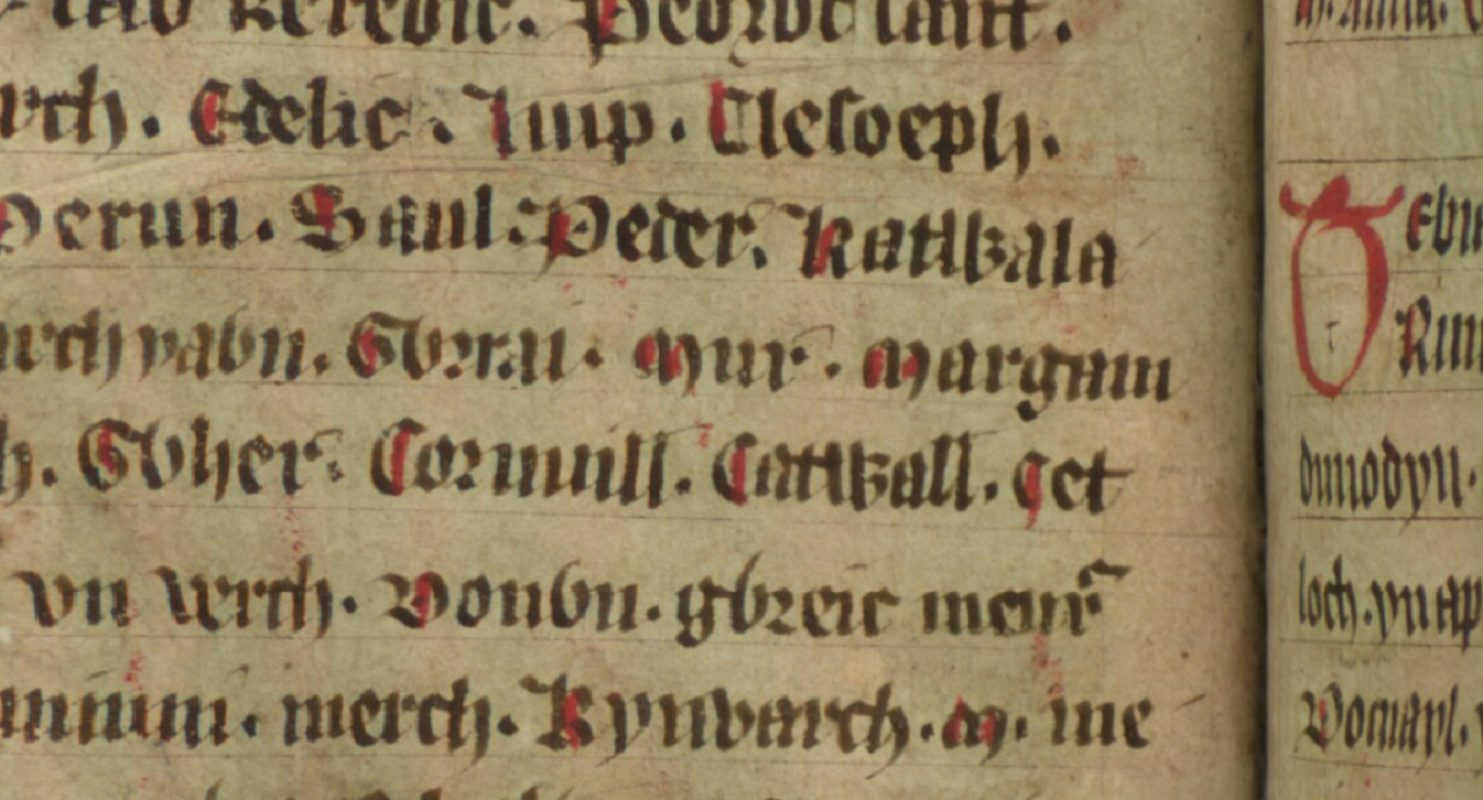
All things considered, the likeliest identification of Geoffrey’s Mauron of Worcester is that he can be identified as Morien ap Iaen. Like the previous Morien, he appears as one of King Arthur’s allies in the tale Culhwch and Olwen.
Therefore, just like Morien Mynog, we have direct evidence from Welsh tradition that this Morien ap Iaen was remembered as an ally of Arthur, thus fitting Mauron.
Regarding his name, it appears in the text as ‘Moren’, not ‘Morien’ or ‘Morgen’. Therefore, this certainly could be a form of ‘Mauron’.
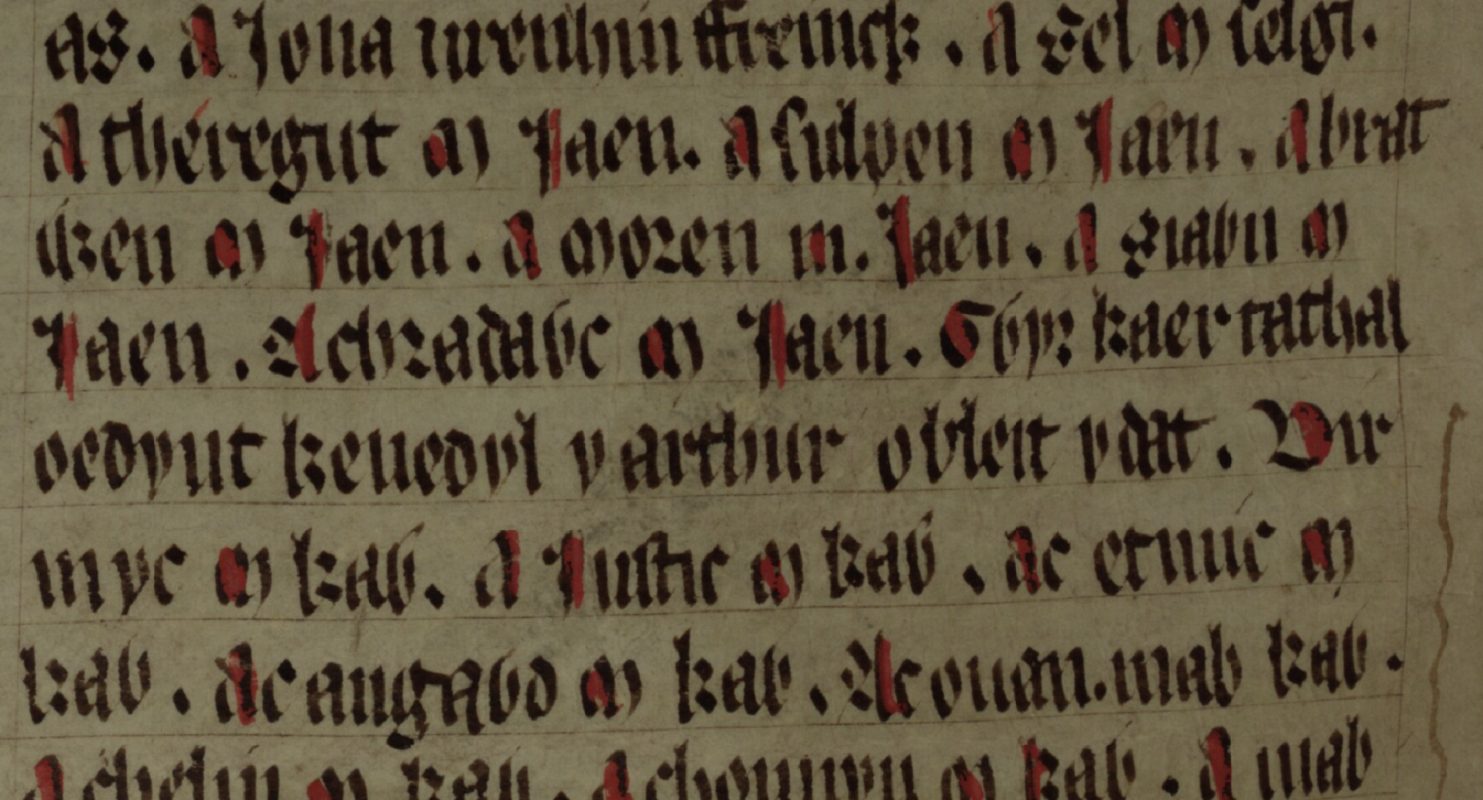
Furthermore, there is the crucial fact that the text of Culhwch and Olwen explicitly states the following regarding Morien and his brothers:
“They were men of Caer Dathal, of Arthur’s kindred on his [or ‘their’] father’s side.”
Morien is explicitly described as being one of Arthur’s kinsmen. Of all the Moriens considered in this investigation, it appears that Morien ap Iaen is the only one known to have been described in this way.
Problems with This Identifications
The only possible objection to this identification is the fact that Morien and his brothers are described as being men of Caer Dathal. This place name appears to be a match for Caer Tathyl, a location mentioned in the Mabinogi and placed in Arfon, northwest Wales.
While not as far northwest as Anglesey, it is still implausibly far from Worcester. However, this is not without a possible explanation.
It is true that the Welsh text of the Brut Tysilio agrees with Geoffrey in placing Mor, or Mauron, at Caerwrangon, or Worcester. Nevertheless, there is always the possibility that this is a mistake.
A place with a similar name is Wrexham. In the thirteenth century, this is recorded as ‘Wyrcessham’. This is not too dissimilar to ‘Wireceastre’, the name of Worcester recorded in the eleventh century. In fact, the only major difference between the two is the termination of ‘ham’ instead of ‘tre’. Apart from that, the two words look like two different spellings for the same place name.
The possibility of similar place names being confused is seen in the case of Anaraut, the figure who comes after Mauron in Geoffrey’s account. While Geoffrey makes him the consul of Salisbury, other versions associate him with Shrewsbury.
Wrexham is not too far from Arfon, just two days’ walking distance away. Therefore, it is within reason that Morien ap Iaen could have been a ruler of that territory.
Was Mauron, Earl of Worcester, a Real Person?
Is there any evidence that Mauron of Worcester (or, as seems more likely, Wrexham) a historical figure?
The first observation is that if the identification of Geoffrey’s Mauron with Culhwch and Olwen’s Morien ap Iaen can be accepted as valid, then this greatly improves the likelihood that he was historical compared to if he first appeared in Geoffrey’s work.
Culhwch and Olwen was likely composed in c. 1100, placing it before Geoffrey’s Historia Regum Britanniae. Furthermore, there is the important fact that neither source displays influence from the other. Therefore, the fact that they both appear to refer to the same person provides strong evidence that the tradition about this character substantially predates 1100.
Nevertheless, can we actually find him in any historical document? While the evidence is not definitive, it appears that we can.
Mawron, Bishop of Glastonbury
In Peter Bartrum’s A Welsh Classical Dictionary, there is an entry for a figure called ‘Mawron’ by Bartrum. He was a bishop of Glastonbury in the very early seventh century.
The record that mentions him is actually De Antiquitate Glastoniensis Ecclesiae, written by William of Malmesbury in the twelfth century. In this record, William quotes a charter from the church of Glastonbury dating to 601.
Of course, accusations could easily be levelled against the authenticity of this charter, given its preservation in a document from so long after the time it allegedly came from. Nevertheless, there is reason to accept it as legitimate. The main reason is that William was not able to provide the name of the king of Dumnonia, for it was illegible.
This strongly suggests that the charter really existed, and that it was old. Even if the document that William quoted did not actually date back to the seventh century, it was clearly from centuries before his own time.
Therefore, there is good reason for accepting Mawron of Glastonbury as a historical figure. The significance of this is that he appears to have had the right name and lived at the right time to be the historical figure behind the character of Mauron of Worcester.
How Mawron of Glastonbury Matches Mauron of Worcester
Firstly, let us consider the name. Although Peter Bartrum spells his name ‘Mawron’, the charter quoted by William of Malmesbury actually spells it ‘Mauuron’. It is obvious that this is the same name as Geoffrey’s Mauron.
Although some might object, on linguistic grounds, to this historical Mawron being identified as Morien ap Iaen, these linguistic objections do not hold much weight.
We have already seen that the Brut Tysilio exchanges Geoffrey’s ‘Mauron’ for ‘Mor’. Additionally, as has already been pointed out, the text of Culhwch and Olwen actually spells Morien ap Iaen’s name as ‘Moren’, with no ‘i’ before the ‘e’.
There is no reason why this figure’s name in surviving Welsh tradition could not simply be a very slight corruption. After all, the Welsh regularly misspelled the name of the famous Magnus Maximus as ‘Maxen’ rather than ‘Maxim’. If they could do that with such a prominent figure as the Roman emperor, then they could certainly do it with a minor ruler.
It is also notable that Layamon, as mentioned earlier, spelled this character’s name ‘Maurin’, with an ‘i’ rather than an ‘o’. With these facts in mind, there is no reason why Mawron of Glastonbury cannot have been the historical figure behind Moren ap Iaen and Geoffrey’s Mauron of Worcester.
Chronological Considerations
Let us now examine the chronology to see how this would work. Mauron of Worcester is presented as an ally of Arthur who was present for his special coronation. Geoffrey of Monmouth places this at the same time as David’s replacement of Dubricius as the chief bishop of South Wales.
This event took place at the Synod of Brefi, which other records indicate occurred in c. 560. See the article Bishop David, Uncle of King Arthur for the evidence for this date. While this might seem impossibly late, given the traditional date of 537 for King Arthur’s Battle of Camlann, there is evidence that this traditional date has actually been backdated by some thirty-three years.
The Historia Brittonum, for example, indicates that the Battle of Badon (which occurred some twenty-one years before Camlann, according to the Annales of Cambriae) occurred in the reign of Ida of Bernicia, whose reign began in 547. See the article When Did King Arthur Really Live? for more details about this and other evidence.
This would mean that Mauron was an adult by c. 560, when Arthur’s special coronation took place. Furthermore, if the tradition about him being the spy who informed Arthur of Baldulph’s intended attack is accurate, then he also must have already been an adult by c. 540 or so, when that event likely took place.
This would mean that his birth was probably in c. 520, if not earlier. Of course, if we reject the connection between Mauron and Baldulph as unhistorical and simply use his presence at Arthur’s coronation as a reference point, then he could have been born as late as c. 540.
In either case, he could plausibly have been Mawron of Glastonbury. The charter in which he appears is dated to 601. Hence, even if we use the earlier estimated birth for Mauron of Worcester, he would still only have been about eighty years old at the time of the charter, which is plausible.
Geographical Issues
The only notable objection to the idea that Mawron of Glastonbury might have been Mauron of Worcester is the geography of the matter. While Worcester and Glastonbury are by no means impossibly far away, the distance becomes much greater when we bear in mind the likely identification of Geoffrey’s Mauron with Culhwch and Olwen’s Moren ap Iaen.
As we saw earlier, the identification of Mauron with Moren ap Iaen indicates that Geoffrey’s ‘Worcester’ is actually a mistake for Wrexham, called ‘Wyrcessham’ in medieval times. This is near northeast Wales. Therefore, this is quite substantially far away from Glastonbury, which is in Somerset beneath southeast Wales.
However, this is not an insurmountable objection. It is important to recognise that Mawron of Glastonbury was not a king or ruler of that territory. Rather, he was a bishop. This allows for the idea that he may have travelled far from his home territory to serve there.
There are numerous hagiographies about religious figures from the Arthurian period, and they regularly portray the individuals in question as travelling great distances. This is even seen in the earliest and most historically reliable hagiographies.
One example is the Life of St Samson, possibly dating as early as the seventh century. This presents Samson as travelling all the way from southeast Wales to Brittany, across the Channel. The historicity of this is not in doubt, and yet this is a much greater relocation than a religious figure moving from Wrexham to Glastonbury.
Therefore, if we accept that Mauron became a religious figure, then there is no issue at all with him having relocated from Wrexham all the way down south to Glastonbury.
From a Secular Ruler to a Religious Ruler
Regarding the concept of a secular ruler becoming a religious figure, this is not unusual either. There are many examples of this. One example is Maelgwn Gwynedd, who at one point retired from the throne to live as a monk.
Another example is Tewdrig of Gwent, who retired from the throne to live as a religious hermit. The life of Illtud is also relevant. Although he was not a ruler as such, he was a military official with a prominent role within the kingdom of Poulentus of Glamorgan. Then, in about 530, he withdrew from that life and became one of the most important religious figures of sixth century Britain.
Therefore, the concept of Mauron being a prince and ruling over Wrexham to becoming a bishop as an elderly man is not by any means unbelievable.
Conclusion
In conclusion, Mauron, Earl of Worcester, is a minor figure from the Arthurian legends who first explicitly appears in Geoffrey of Monmouth’s Historia Regum Britanniae. He is one of King Arthur’s allies. Later versions of the Arthurian legend portray Mauron as the spy who helped Arthur defeat Baldulph, a Saxon leader. Layamon tells us that he was actually the kinsman of Arthur.
Although we cannot state this definitively, the evidence supports the conclusion that Mauron can be identified as a figure known as Morien, or Moren, ap Iaen. Like Mauron, he was specifically known in Arthurian tradition as one of Arthur’s relatives and allies. It appears that he was a prince from northwest Wales. This makes it likely that his territory was actually Wrexham instead of Worcester, going by the similarities in the medieval spellings of those places.
Finally, we have seen that it is likely that he can be identified as Mawron, a bishop of Glastonbury who witnessed a charter in 601. If so, then this would mean that he was almost certainly a historical figure.
Sources
Bartrum, Peter, A Welsh Classical Dictionary, 1993
Bromwich, Rachel, Trioedd Ynys Prydein: The Triads of the Island of Britain, 2014
Howells, Caleb, King Arthur: The Man Who Conquered Europe, 2019
Wilhelm, James J & Lacy, Norris, The Romance of Arthur: An Anthology of Medieval Texts in Translation, 2015
Bromwich, Rachel & Simon Evans, D, Culhwch ac Olwen, 2012
Parker, Will, Culhwch and Olwen Translation (footnote 117), 2016
Mason, Eugene, Wace: The “Arthurian” Portion of the Roman de Brut, 1999
Bruce, Christopher W, The Arthurian Name Dictionary, 1999
Palmer, R Barton & Kibler, William, Medieval Arthurian Epic and Romance: Eight New Translations, 2014
https://nightbringer.se/the-legend-of-king-arthur/arthurian-characters/i-arthurian-characters/iaen/
https://nightbringer.se/the-legend-of-king-arthur/arthurian-characters/i-arthurian-characters/iaen/
https://www.etymonline.com/word/Worcester
https://www.gutenberg.org/cache/epub/14305/pg14305-images.html
https://metseditions.org/read/Q0KDmd6WslY8f7QwSaL3DHzrZR8ldwZ