King Mark of Cornwall

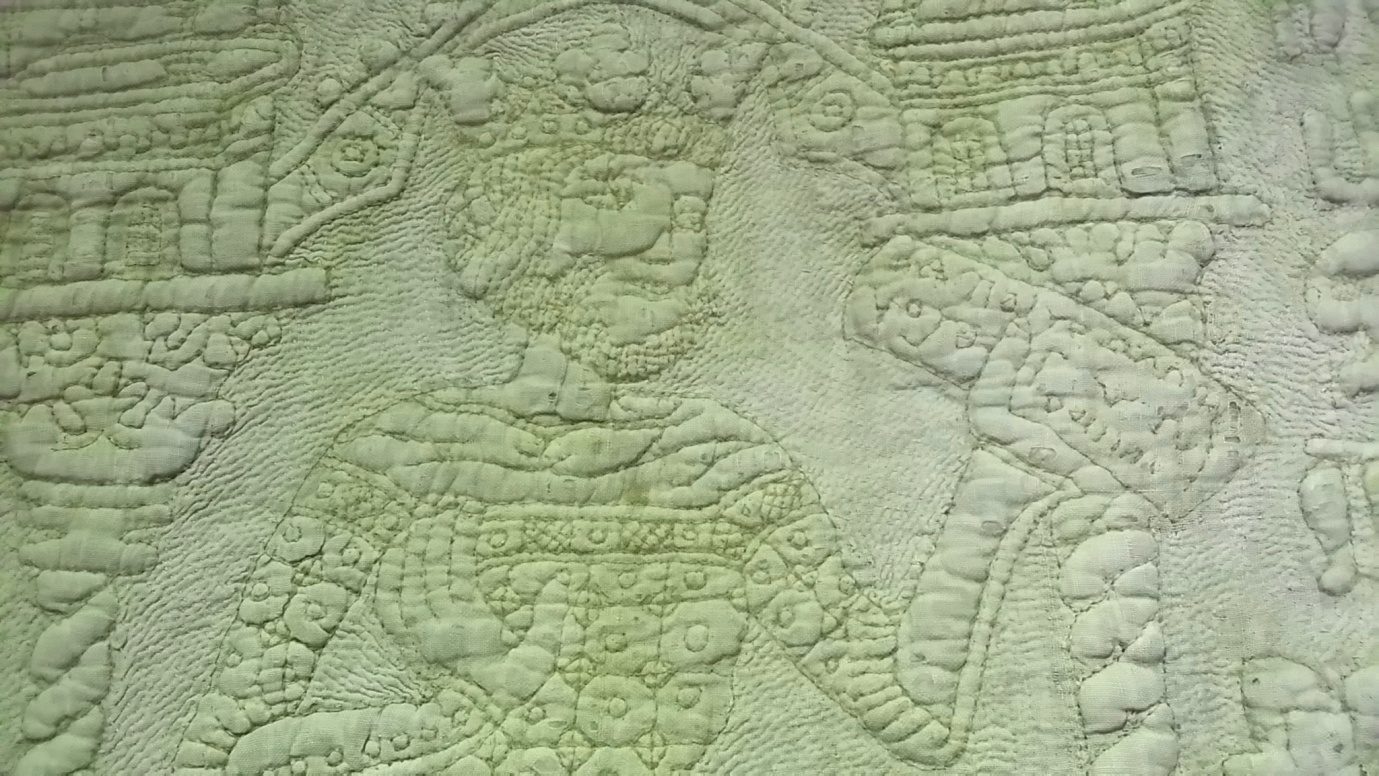
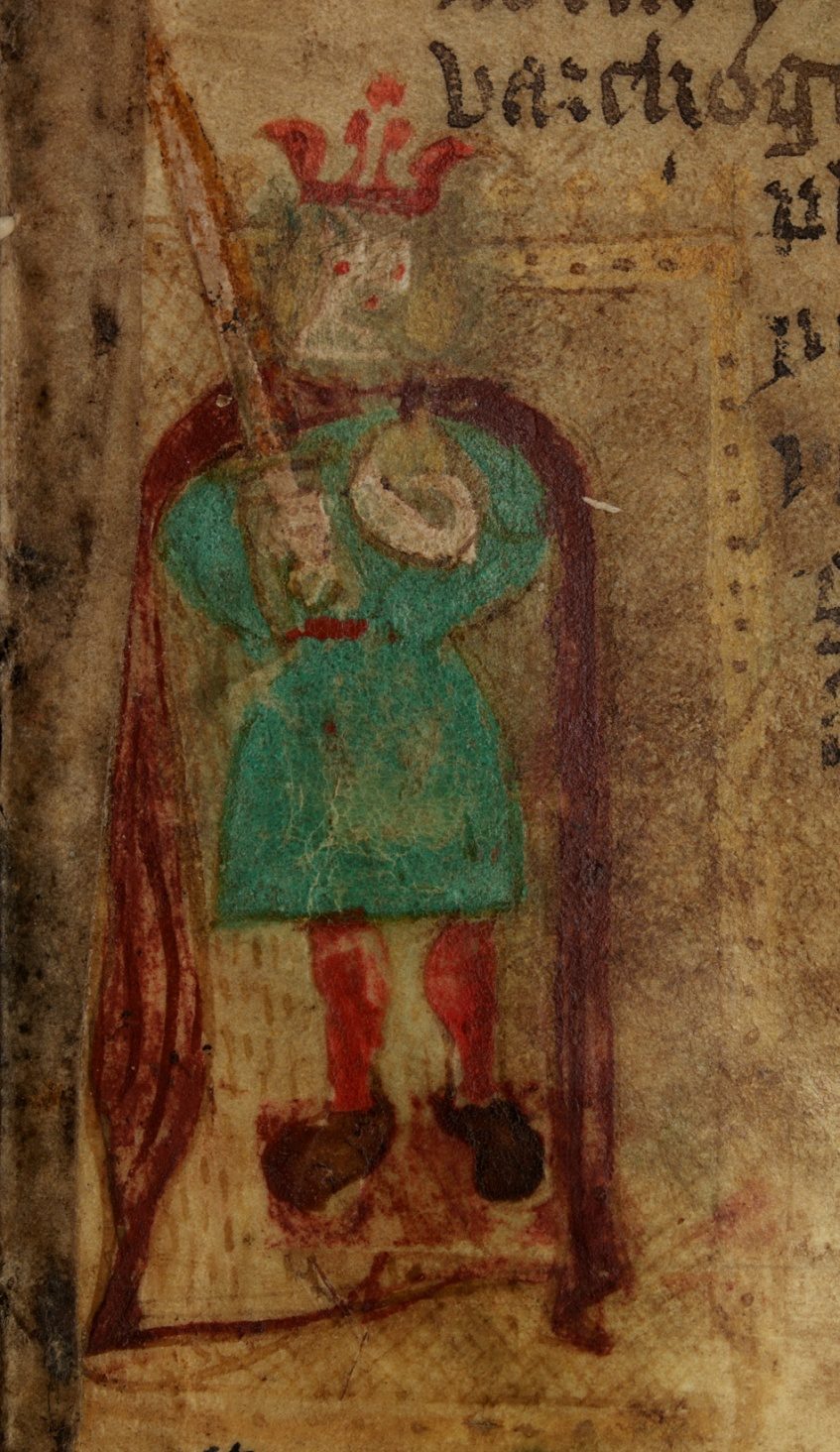
King Mark is a prominent figure in the legends of King Arthur. He is a villain whose most famous role is acting as the main antagonist in the story of Tristan and Iseult’s love. However, he also appears in other contexts. When and where did he live? Who was his family? Is there any evidence that he was a real person? This article will examine the answers to these questions and others.
Who Was King Mark of Cornwall?
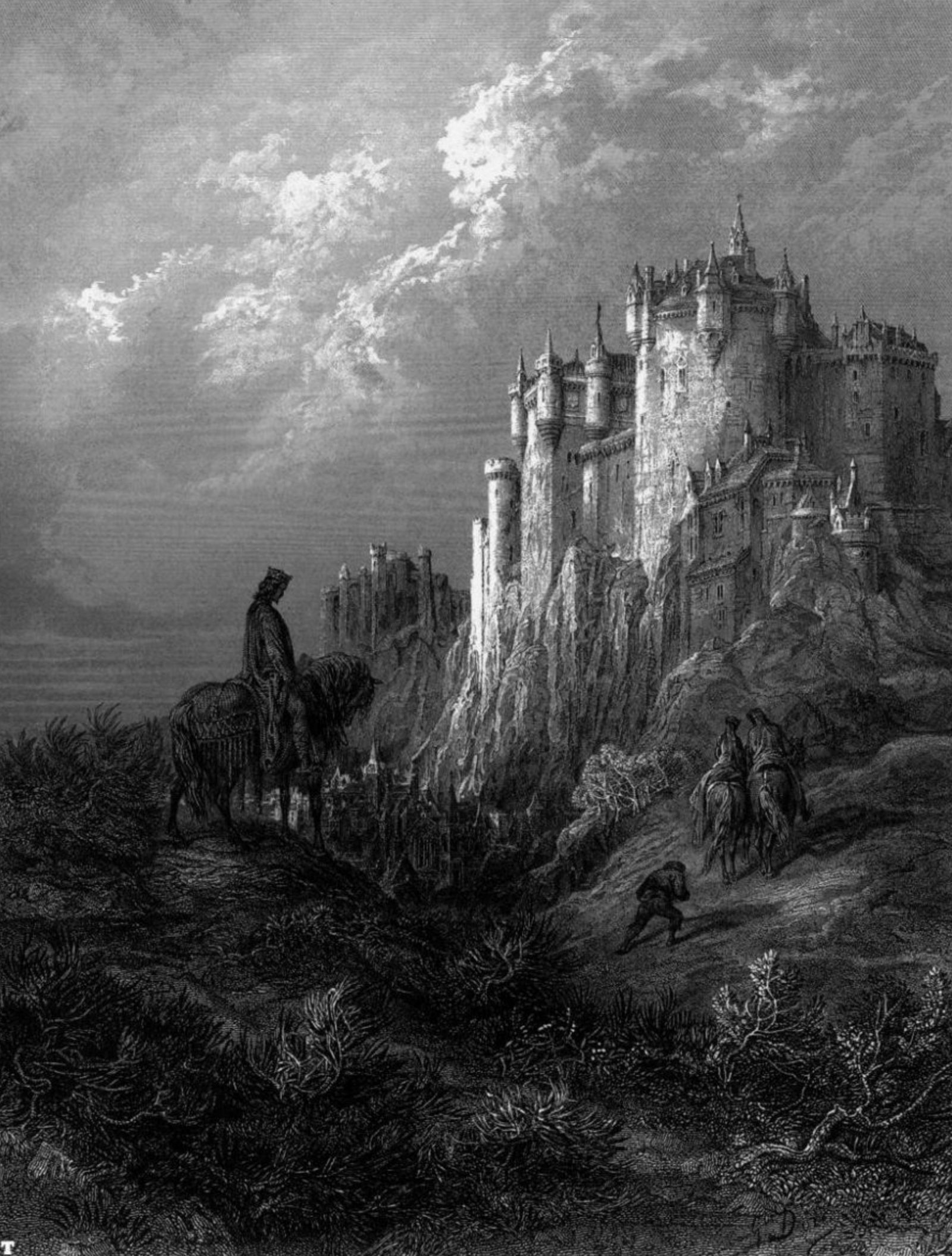
King Mark of Cornwall is described as being a ruler in Cornwall in the time of King Arthur. He was not necessarily the ruler of all of Cornwall, but he ruled over at least some of the territory in that area. Generally, he is portrayed as ruling from Tintagel, the same castle at which Arthur was said to have been conceived by Uther and Igerna.
Mark’s character is not completely consistent across the various Arthurian sources – but then, this is no surprise given how many different sources there are – but he is essentially always presented as an antagonist of sorts. In most versions, he is downright villainous.
According to the most famous version, Mark is a rapist and a murderer. He also firmly opposes Iseult’s love for Tristan, which is understandable given that Iseult is his wife. He is also portrayed as attacking and even destroying Camelot after the death of Arthur in some versions.
Although King Mark is most famous for his appearances in French and English sources, he also appears in Welsh sources. In these, he is called King March. There is good evidence that he can be identified as the historical Conomor of Brittany, despite recent objections.
Family
What do we know about the family members of King Mark? Across the different sources, there are many different claims about how these family members were related to Mark, but there is one who virtually always remains consistent.
Nephew
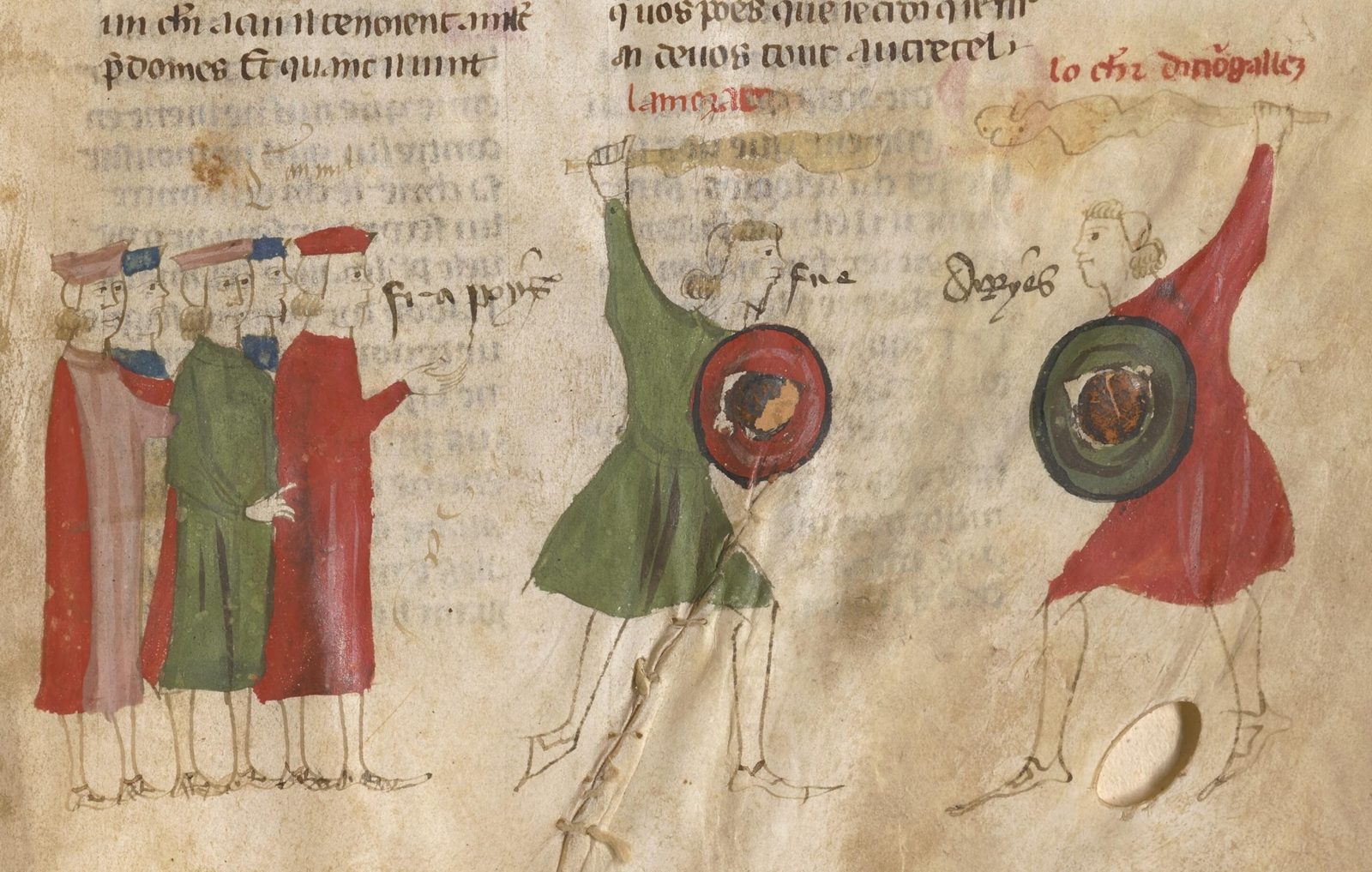
Virtually all sources agree that King Mark was the uncle of Tristan. He is the main character in the legend of Tristan and Iseult’s love story. Tristan was one of King Arthur’s knights, although some scholars believe that the legend of his love of Iseult existed at one time independently of the legends of King Arthur.
However, the way in which Tristan and Mark were related is not always consistent. Some sources make Mark the brother of Tristan’s mother, a woman named Blancheflor. In other versions, this same relationship is kept but this sister is given the name Elizabeth.
Wife
King Mark’s wife, famously, was Iseult. Her name also appears commonly as Isolde. She was said to have been the daughter of the king of Ireland.
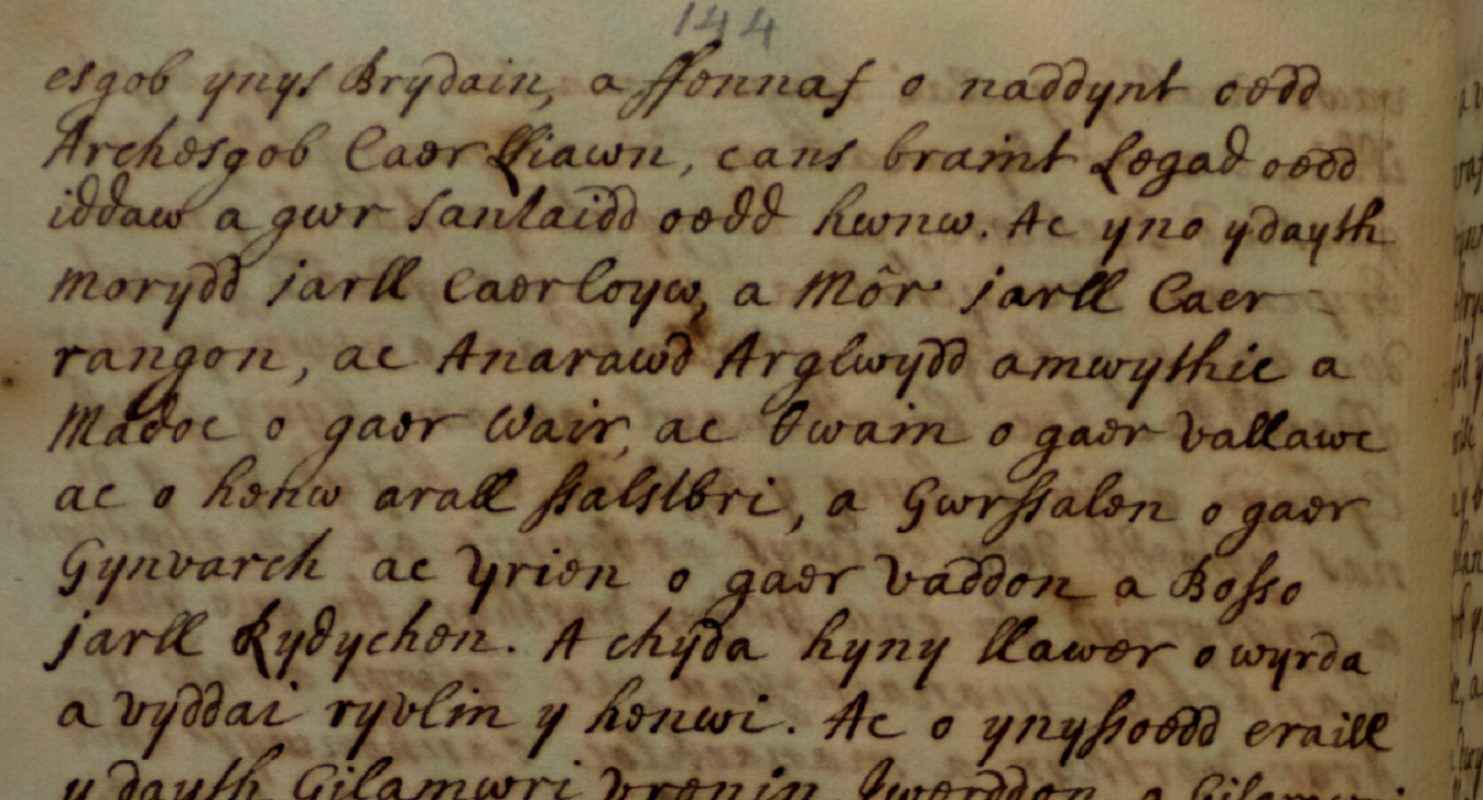
In Welsh tradition, she appears as Esyllt Fynwen, the daughter of Culfanawyd Prydain.
Father
Mark’s father is best known as being King Felix. This is the father given to him in the Prose Tristan and Thomas Malory’s Le Morte d’Arthur, written in the fifteenth century.
On the other hand, Welsh tradition makes Mark (called ‘March’ in those texts) the son of a figure named Meirchion.
The Story of King Mark
The story of Tristan appears in numerous different Arthurian sources, and they are often not consistent in their portrayal of Mark’s life and even his character. In the earliest sources, he was much more sympathetic than in the later ones, although even in the earlier sources he is shown to be decidedly flawed.
In any case, there is general agreement among the sources that Mark of Cornwall was one of the kings who served as an ally of Arthur. He was betrothed to Iseult, daughter of a king of Ireland. Mark then sends Tristan, his nephew, to Ireland to bring Iseult back to Britain.
Unfortunately, due to Tristan’s servant Brangaine leaving a love potion unattended on the boat being used for this journey, Tristan and Iseult end up accidentally falling in love. Since this love is caused by a potion, it is not something that they can simply suppress.
Nevertheless, King Mark and Iseult get married. This naturally leads to the difficult love triangle that characterises the story of Tristan and Iseult.
The two lovers carry on their affair in secret. At various instances, Mark comes across evidence that seems to incriminate the two of them. Every time, they manage to escape being punished through some excuses, which Mark is all too ready to believe.
Eventually, however, Mark ends up banishing Tristan from his realm.
This is the basic outline of the story of King Mark in the earliest references to this legend. One key source includes Béroul’s Le Roman de Tristan, dating to the second half of the twelfth century. In fact, this is the earliest surviving source for the legend of Tristan.
Other important early sources for this basic outline of Mark’s life story are Tristan, written by Thomas of Britain at about the same time as Béroul’s work, and Tristan and Isolt by Gottfreid von Strassburg a few decades later.
The Later Development of Mark’s Legend
The earliest sources, dating from the mid-twelfth to the early thirteenth centuries, tend to provide a nuanced portrayal of Mark. However, from c. 1230 onwards, Mark’s character becomes decidedly more evil.
This started with the Prose Tristan. As well as making King Mark of Cornwall more villainous, it also expanded on other details about his character. For example, it explains that King Mark was subject to an Irish king named Morholt and had to pay an annual tribute.
Tristan proved himself by defeating Morholt, thus freeing Mark of this subjugation. This put Tristan decidedly in Mark’s favour, making the subsequent betrayal and love triangle even more difficult for Mark to accept.
Eventually, at the end of this love affair, Tristan ends up being killed by Mark with a poisoned spear that was given to him by Morgan le Fay, King Arthur’s evil half-sister.
The Prose Tristan is also the source which introduces the details about Mark’s murder of his close relatives, such as his brother Boudwin and his nephew Alexander.
The Post-Vulgate Cycle, written at approximately the same time as the Prose Tristan, has King Mark of Cornwall attack King Arthur’s capital city of Camelot and destroy it after Arthur’s death. He also goes on to desecrate the tombs of Lancelot and Galehaut, pursue the remaining Knights of the Round Table, and almost kill them all. He also kills the Archbishop of Canterbury.
Finally, an obscure knight named Sir Paulas managed to defeat and kill Mark.
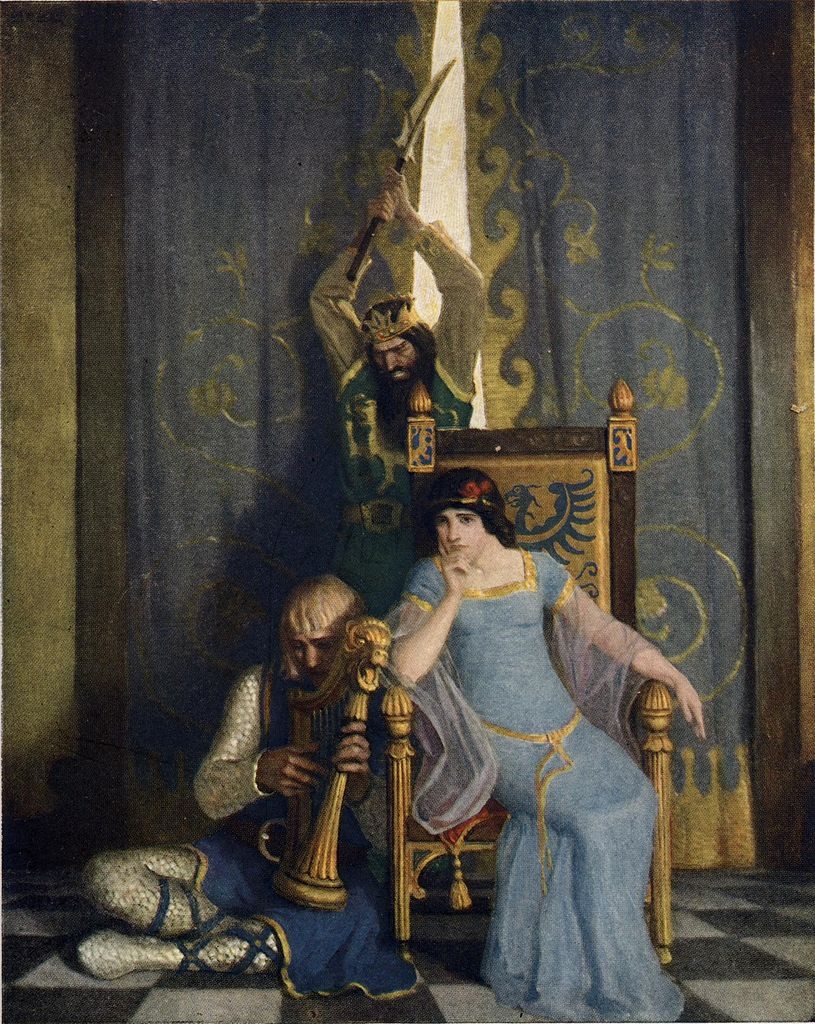
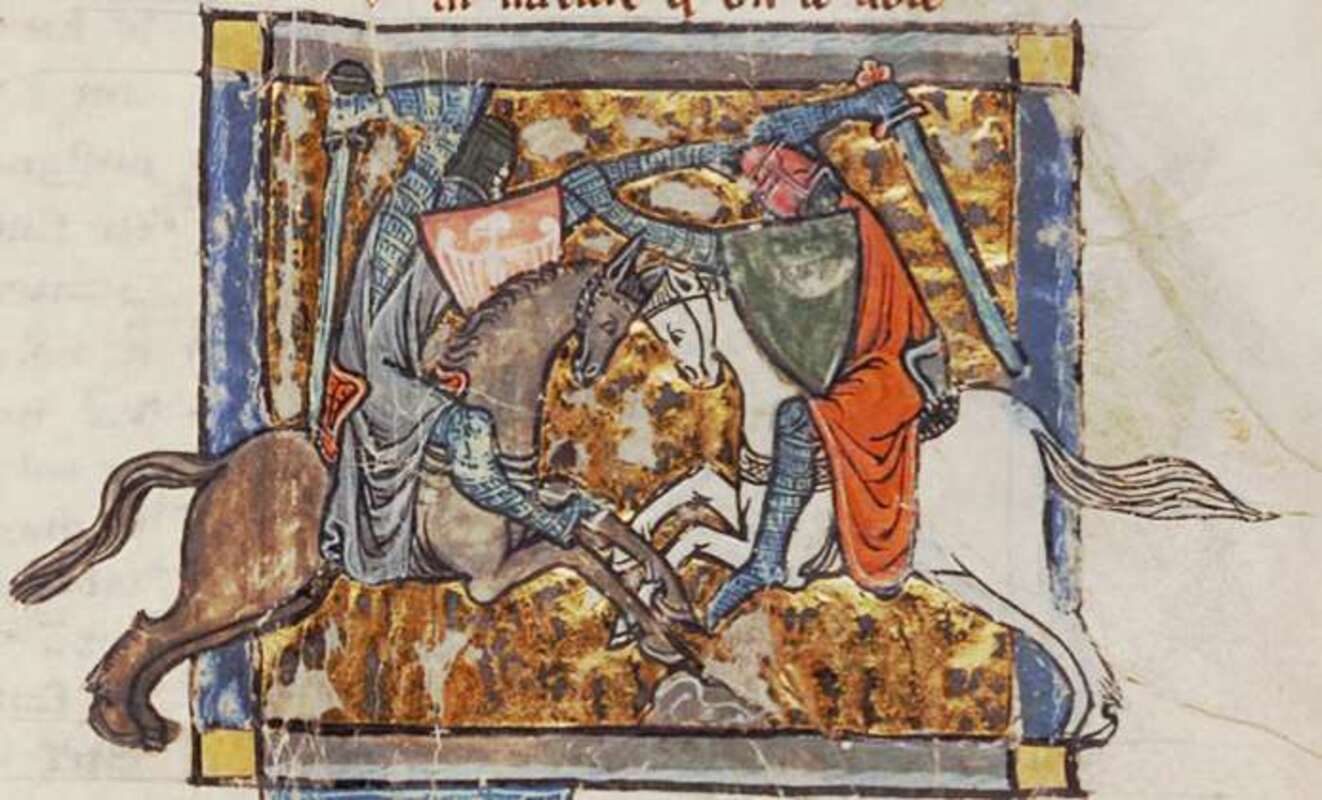
Even before this rampage after Arthur’s death, the Post-Vulgate Cycle shows Mark to have been an enemy of Arthur. At one point, he attacked and besieged Camelot before being driven back by Arthur’s forces.
Still later sources present numerous different versions of Mark’s death, such as presenting him as being killed at the hands of Lancelot, dying of gluttony while captive, or dying as a hermit in Jerusalem.
Horse Ears
An aspect of King Mark of Cornwall which is common to both Welsh tradition and the non-Welsh romances is that Mark was said to have secretly had ears like a horse.
One Welsh tale is all about this fact, explaining that Mark’s barber became ill due to keeping this secret for so long. He went on to tell the ground the secret to remove the weight from his shoulders of keeping it to himself.
However, when musical pipes were made out of the vegetation from the ground, the only sound that these pipes would play was the secret that the barber had spoken.
King Mark in Welsh Tradition
In Welsh tradition, King Mark appears as March ap Meirchion. He appears in a great variety of records, including prose tales, the Welsh Triads, poetry, and genealogies.
Welsh Triads
Let us consider how King Mark appears in the Welsh Triads, a collection of medieval traditions grouped into threes. The first triad in which he appears is Triad 14, entitled ‘The Three Seafarers of the Island of Britain’. Mark’s name is given as the third entry.
Scholar Rachel Bromwich noted the following:
“Both Geraint [who also appears in this triad] and March were represented as early rulers in south-western Britain, and it seems possible that in naming them the triad holds a reference to the contact maintained by sea with Brittany by these princes.”
The next triad which features Mark is Triad 26, entitled ‘The Three Powerful Swineherds of the Island of Britain’. This reads:
“Drystan son of Tallwch, who guarded the swine of March son of Meirchiawn, while the swineherd went to ask Essyllt to come to a meeting with him. And Arthur was seeking to obtain one pig from among them, either by deceit or by force, but he did not get it.”
This does not tell us much about March. All it tells us is that he was the son of a certain Meirchiawn, Drystan (Tristan) was in his service, and he was apparently in some degree of conflict with King Arthur.
The king of Cornwall next appears in Triad 71, the Three Lovers of the Island of Britain. This merely mentions that Drystan son of Tallwch was the lover of Essylt, the wife of his uncle March. This confirms that Welsh tradition recognised Drystan as the nephew of March, conforming to the traditional connection between them in the romances.
Finally, Triad 73 is ‘The Three Peers of Arthur’s Court’. The third entry is:
“Drystan son of March.”
Unusually, this presents Drystan, or Tristan, as the son of March rather than his nephew. Later, we will see some possible support for this.
Prose Tales
There are at least two Welsh prose tales which feature King March.
The Dream of Rhonabwy
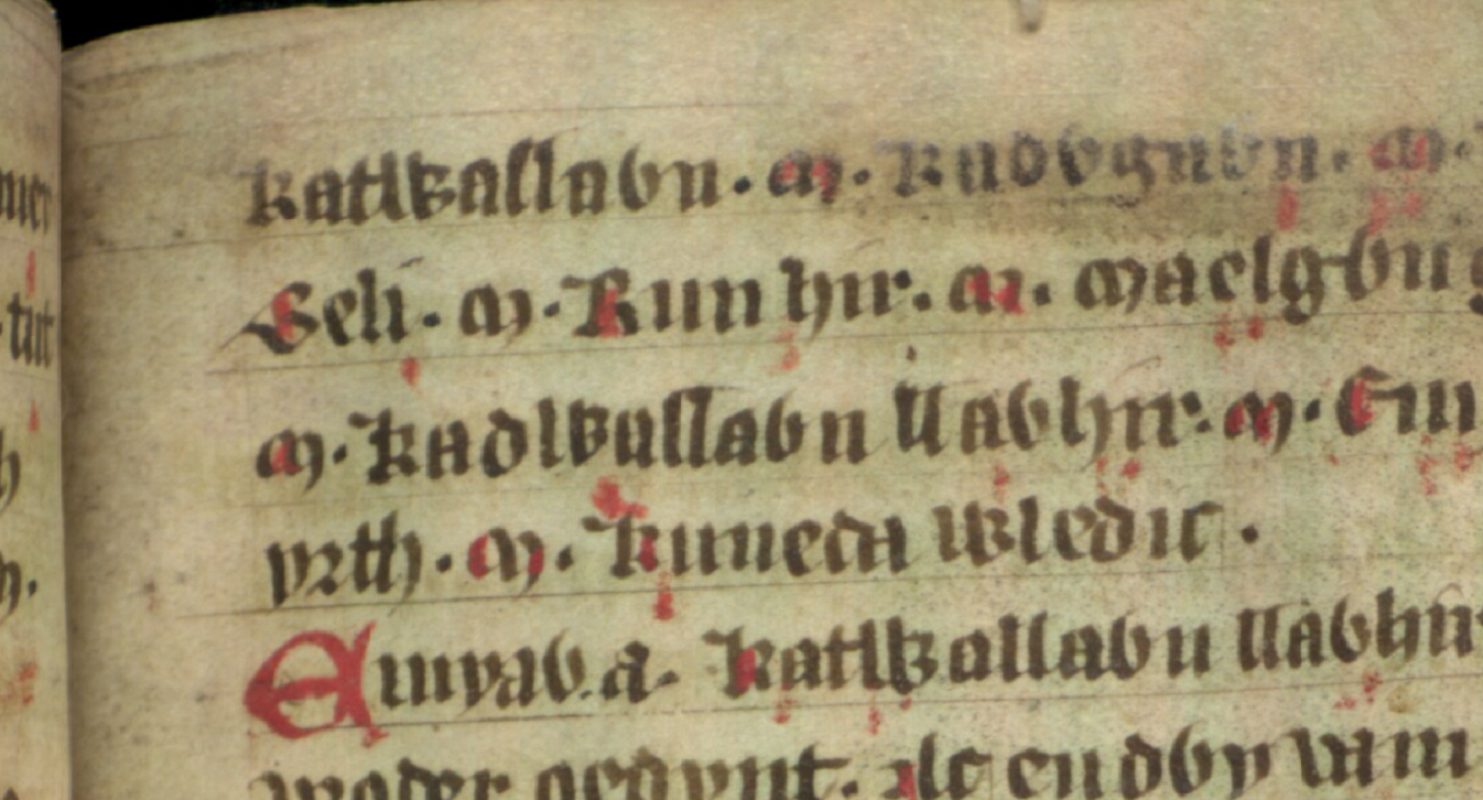
One of these is The Dream of Rhonabwy. This tells the story of the prelude to King Arthur’s Battle of Badon. He is accompanied by numerous allies, and one of these is March. He is listed as one of King Arthur’s twenty-four counsellors.
This is interesting, for it shows that Arthur and March were not always in conflict.
Furthermore, elsewhere in this prose tale, March appears as the leader of a group of men from Llychlyn. This is usually understood as meaning Norway. Of course, the notion of King Mark actually being connected to Norway is untenable in the Arthurian period.
However, the word ‘Llychlyn’ was sometimes used in reference to Scotland. For this reason, some researchers have attempted to identify March ap Meirchion with Cynfarch ap Meirchion, a king of northern Britain in the sixth century.
While this is not impossible, the fact that March is usually associated with the south of Britain makes this unlikely. Another possibility is that ‘Llychlyn’ is actually a mistake for ‘Llydaw’, a mistake which appears to be attested in the case of another triad which speaks of Maxen Wledig (Magnus Maximus) travelling there.
Alternatively, it may be that Scotland really is meant, but that the March ap Meirchion of this particular passage is not actually King Mark of Cornwall, and is instead Cynfarch ap Meirchion.
Ystorya Trystan
The second Welsh prose tale which mentions March is a story called Ystorya Trystan. This presents a Welsh version of the story of Tristan and Iseult’s love affair, which is very different from the standard non-Welsh romance tales.
In this Welsh story, the narrative starts with Tristan and Iseult already in love. They flee together to Coed Celyddon, which is probably the Caledonian Forest near the border of Scotland and England. King Mark then appeals to King Arthur for help on the basis that he is Arthur’s cousin, meaning that Arthur’s familial tie to Mark is stronger than to Tristan.
Arthur sent an army to Coed Celyddon to capture Tristan, but the latter was able to completely evade capture and kill many of Arthur’s men with supernatural help. Eventually, Arthur discerns that the only way to make Tristan return is to persuade him.
He sends Gwalchmai (Gawain) to speak to Tristan. He is able to convince Tristan to withdraw to Arthur and sort out a deal regarding Iseult. However, both Tristan and Mark are determined to be with her. It is then agreed that one of them will have her while the leaves are on the trees, while the other will have her only when there are no leaves on the trees.
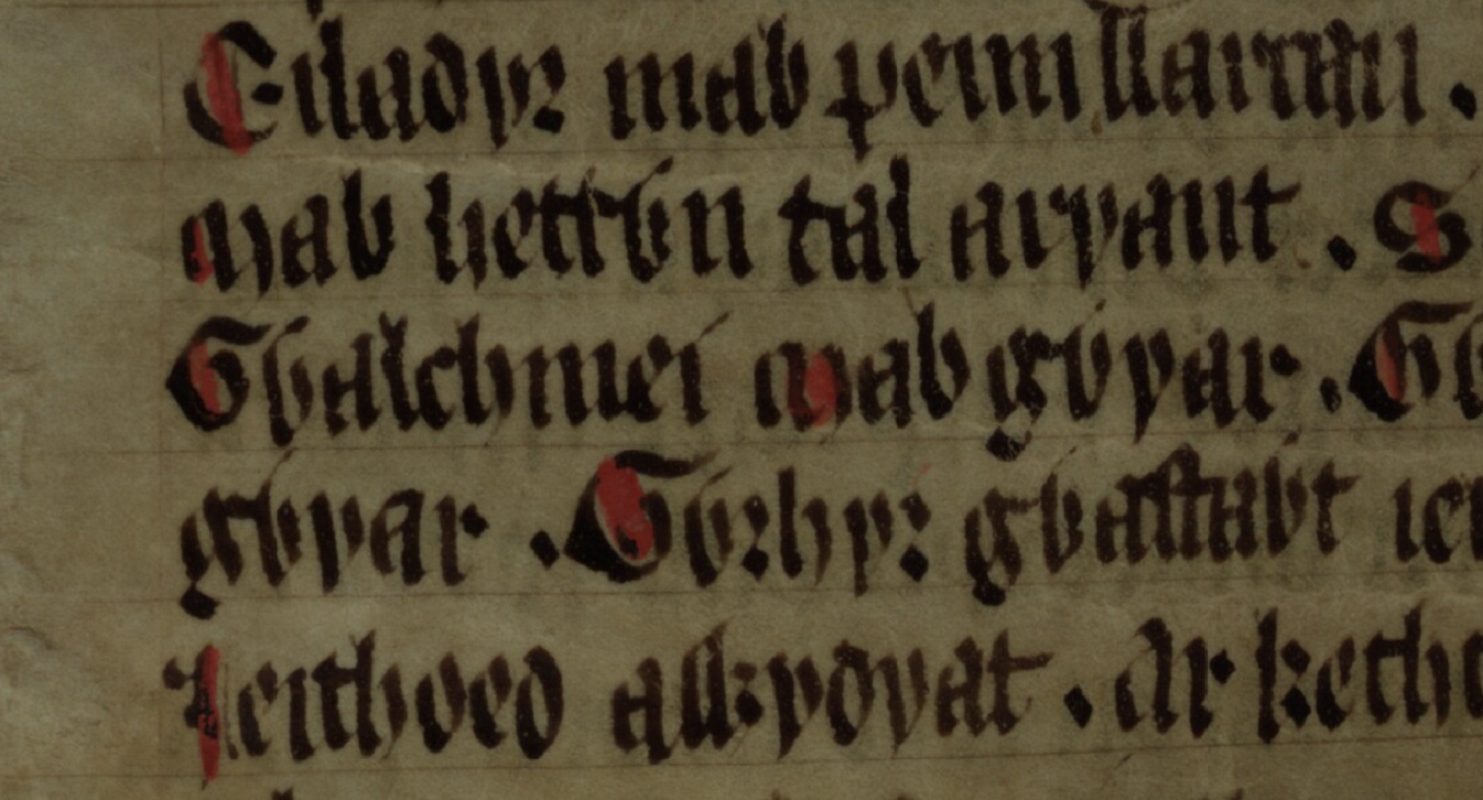
Being her husband, Mark was allowed to choose which of the two he wanted. He chose to have her when the trees had no leaves. However, since Iseult pointed out that some trees maintain their leaves all year round, this meant that was able to stay with Tristan forever, never going back to Mark.
Did King Mark of Cornwall Really Exist?
A key question is, did Mark really exist? Many historians acknowledge that he may well have been real. One of the reasons for this conclusion is that he appears in a source which predates almost all the Arthurian sources.
The source in question is the Life of St Paul Aurelian, which is a hagiography, or religious biography, dating to the ninth century. This tells the story of the life of a religious figure named Paul Aurelian, also known as Paul of Leon.
In one part of this medieval record, mention is made of Paul meeting a king named Marcus. He is said to have been a powerful monarch, and his territory is implied to have been in Cornwall (although the record does not explicitly state where Paul was when he met this king).
This strongly supports the conclusion that there really was a king ruling in Cornwall in the sixth century, since that is when Paul Aurelian lived. As medieval hagiographies go, this is a very early one. Although it cannot be viewed as definitive historical proof, it is very good evidence. This is especially so when we recognise that there are very few documents from that era in Britain, so it is not unusual to not see any earlier references to Marcus.
Identifying King Mark as Conomor
However, the historicity of King Mark could be established with even more certainty if we were to identify him with a different figure whose historicity is beyond reasonable doubt. One figure in question, who is regularly connected to King Mark, is Count Conomor of Brittany.
This historical figure was a famous tyrant of Brittany in the sixth century. He is commonly known as ‘Count’ Conomor because he is known largely through the writings of Gregory of Tours, a contemporary Frankish historian who referred to the kings of Brittany as ‘counts’ to lesser their significance in comparison to the Frankish kings.
Nevertheless, Conomor was the king of Domnonée, one of the main kingdoms in Brittany. He was a usurper. He murdered the previous king, a monarch named Ionas, and married his widow. The son of Ionas, named Iudual, was taken away to protect him from the murderous Conomor.
Many years later, Iudual was able to gather enough support that he managed to raise an army to fight against Conomor. In the ensuing battle, Conomor was slain, allowing Iudual to succeed him as king of Domnonée.
During his reign, later records present Conomor as an evil king who married various different women in succession, each one of them being murdered by the king.
In terms of character, Conomor is clearly a good match for King Mark. However, is there any specific evidence that identifies King Mark and Conomor as the same person? As it happens, there are several very specific pieces of evidence which support this identification.
Evidence from the Life of St Paul Aurelian
The most direct piece of evidence comes from the Life of St Paul Aurelian. As noted earlier, this mentions that Paul met a king named Marcus. However, the full line is especially interesting, because it explicitly states that Marcus was also known as Quonomorius.
The similarities between ‘Quonomorius’ and ‘Conomor’ are so obvious and striking that they can be accepted (as scholars generally do) as different forms of the same name. Hence, this appears to be direct evidence that Marcus was also known by the same name as that of Conomor of Brittany.
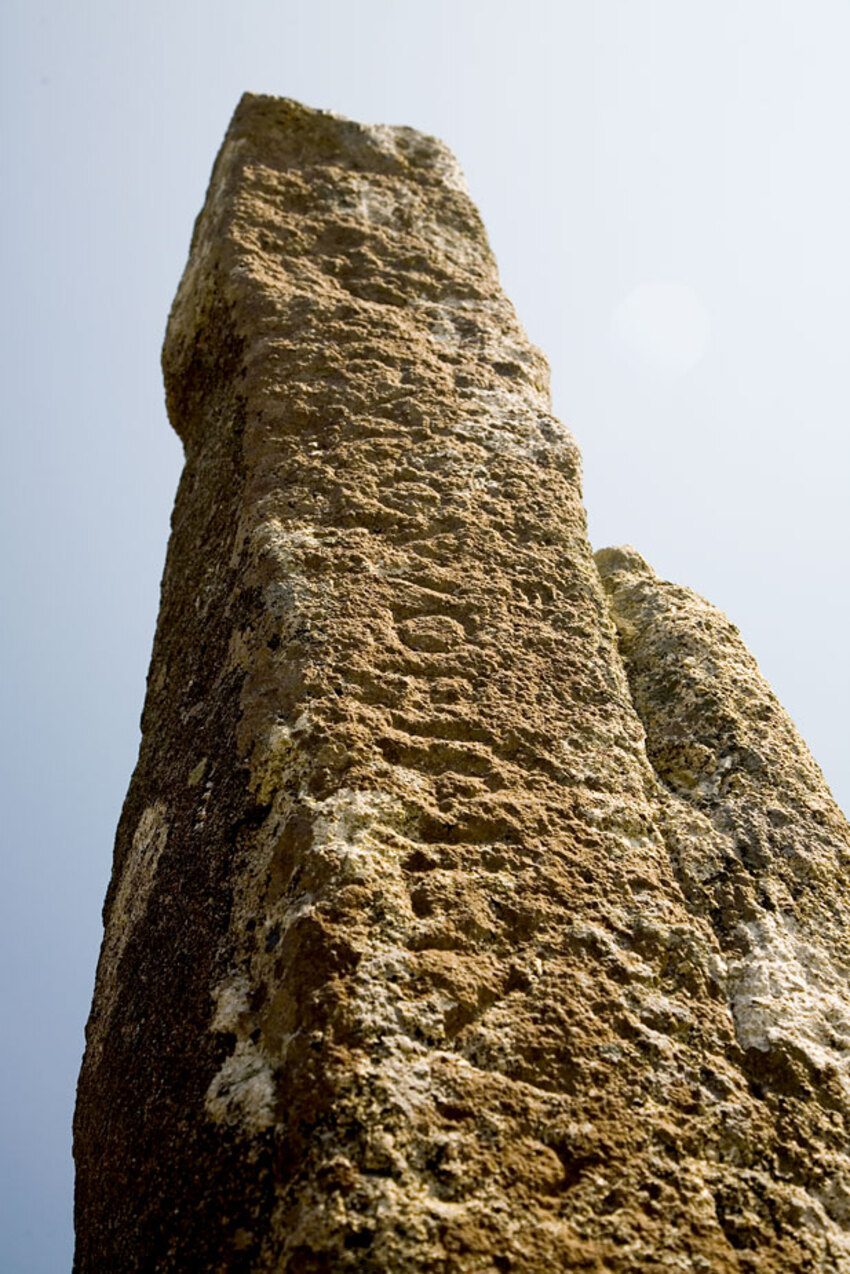
Further evidence for this comes from the so-called Tristan Stone. This large inscribed stone has been dated to the sixth century and contains the name ‘Cvnomori’, or Conomorus. Its large size strongly suggests that it was dedicated to an important ruler. Notably, it was found in Cornwall, near Castle Dor in particular (for this reason, the stone is sometimes known as the Castle Dor Stone).
This provides strong evidence that the Life of St Paul Aurelian was correct in referring to a king in Cornwall with that name at that time.
Evidence from the Tristan Stone
Let us now examine the Tristan Stone more closely. As well as providing strong evidence for the existence of a prominent person, or even king, in Cornwall by the name of Conomor in the sixth century – thus supporting the claim in the Life of St Paul Aurelian – this provides some specific evidence that connects him to King Mark of the Tristan legend.
The stone does not merely mention the name of Conomor. It is actually a memorial inscription to Conomor’s son. The name of this son has been interpreted in various different ways over the years, since it is a faint and difficult-to-read part of the inscription. However, the most common interpretation today is that it reads:
DRUSTANUS HIC IACIT CVNOMORI FILIVS
This appears to confirm that Conomor had a son named Drustanus. This has widely been viewed as a form of the name ‘Tristan’. It is most remarkable to find what is apparently Tristan’s name associated with Conomor.
When we view this piece of evidence in conjunction with the statement in the Life of St Paul Aurelian that Quonomorius was another name for King Marcus, this seems very significant indeed.
While it is true that the legends present Tristan as King Mark’s nephew rather than his son, this does not necessarily negate the connection between this stone and the identification of Mark as Conomor. After all, the legends of Tristan tend to present his father as dying when he was young. Hence, he must have been raised by someone else, and his uncle Mark would be an obvious choice.
This may have led to Tristan being known as the son of Mark even during his lifetime. If Mark was considered to have actually adopted Tristan, then there would be nothing at all incorrect about this.
As it happens, one of the Welsh Triads specifically refers to Tristan – or rather, Drystan – as the son of March. This confirms that Tristan could sometimes be known as Mark’s son rather than his nephew.
Alternatively, it may be that Tristan really was the son of Mark and not his nephew. According to this scenario, the legends (which date from centuries after the fact) simply changed Tristan into Mark’s nephew instead, so as to make the story of the love triangle more acceptable to the European audience. In this case, the Welsh Triads would preserve the more original, historical information.
Whichever scenario is accurate, the direct association between the names ‘Conomorus’ and ‘Drustanus’ provides strong evidence in support of the identification of Mark with Conomor.
Evidence from Tristan’s Parentage
In the earliest versions of the Tristan legend, Tristan’s father is called Riwalin. This is seen in Thomas of Britain’s version as well as Gottfried von Strassburg’s version. His kingdom, Armenie on the English Channel, is obviously a reference to Armorica, or Brittany.
However, versions written slightly later give Tristan’s father the name ‘Meliodas’ or ‘Meliadus’. This Meliadus is said to have had a son named Meliadus the Younger.
Interestingly, medieval non-Arthurian records claim that there was a king of Brittany in the sixth century named Riwal. Other records refer to a king named Meliavus and his brother Rivold. It is very likely that Rivold and Riwal are identical. The idea that Rivold, or Riwal, king of Brittany was the historical figure behind the character of King Riwalin in Brittany is an obviously attractive one.
The fact that his brother, Meliavus, has a name so tantalisingly similar to the other name given to Tristan’s legendary father, Meliadus, surely allows us to identify them as the same figure. The identification of the legendary Meliadus with the probably-historical Meliavus is strengthened by the fact that the latter is recorded as having a son named Melor, or Melaire, reminiscent of the Arthurian Meliadus the Younger.
Furthermore, Meliavus is recorded as dying when his son Melor was young, just as Meliadus was said to have died when Meliadus the Younger and Tristan were young.
Therefore, it is very likely that we can identify Meliavus as the historical basis behind the legendary Meliadus, while his brother Rivold or Riwal can be identified as the historical basis behind the legendary Riwalin, both of whom were recorded in different traditions as being the father of Tristan.
What is the significance of this? How does this help to identify Mark as Conomor? The reason is that the Life of St Melor specifically says that Conomor was married to Melor’s aunt, the sister of Meliavus. Crucially, this would mean that Conomor would have been the uncle of any children of Meliavus or Riwal.
Therefore, whether Tristan was really the son of Meliavus or of Riwal, he would have been the nephew of Conomor.
Admittedly, the relationship between Tristan and Conomor would not have been the same as the legendary relationship between Tristan and Mark. In the former, Conomor was evidently married to Tristan’s aunt. In the latter, Mark was the brother of Tristan’s mother.
Nevertheless, the very fact that family relationships are not consistent across the different sources for the Tristan legend demonstrate that we should not expect any of the surviving sources to necessarily accurately preserve the true, original relationship between Mark and Tristan.
The key point is that Mark and Conomor both had a very similar relationship to Tristan, both being his uncle.
Objections to This Identification
Despite the strength of this evidence, various scholars over the years have seriously questioned or even outright rejected the connection between Mark and Conomor. For example, scholar Peter Bartrum wrote:
“I believe that the identification with ‘Quonomorius’ who is probably Conmor of Brittany, is a mistake on the part of Wrmonoc.”
Elsewhere, he wrote:
“It is surely unparalleled that a king should have two such different names, and it seems probable that the biographer misidentified two different princes with whom St.Paul of Léon came into contact - Marcus in Wales or Cornwall (see March) and Quonomorius (Cunomor) in Léon. Otherwise there is no mention of a prince of Léon in the Life of St.Paul, only the local chief, Withur.”
Helaine Newstead, a scholar writing in 1958, wrote:
“In the first place, the identification of King Mark with Quonomorius rests on this single passage in the Vita; nowhere else does Wrmonoc use the alternative name to refer to the king… since Wrmonoc knew the Vita of St. Samson and elsewhere drew upon it, he might easily have borrowed Quonomorius from the same source as an appropriate name for one who had offended St. Paul Aurelian.”
In 2014, a scan was done on the Tristan Stone which allegedly demonstrated that the initial letter is actually two distinct letters, a ‘C’ and an ‘I’, and is not a backwards ‘D’ as commonly argued. This would eliminate the argument that the Tristan Stone supports the identification of Conomor with Mark by virtue of his association with the name of Tristan.
Are these objections really sound? Let us consider each one of them to see whether they stand up to scrutiny.
Bartrum’s Objections
Firstly, let us consider Bartrum’s claim that it “is surely unparalleled that a king should have two such different names.” Is this really true?
The simple answer is no, this is not correct. In fact, there are numerous examples of kings in fifth and sixth century Britain with multiple names. Not only is Bartrum’s statement uninformed, but the examples in question are by no means obscure.
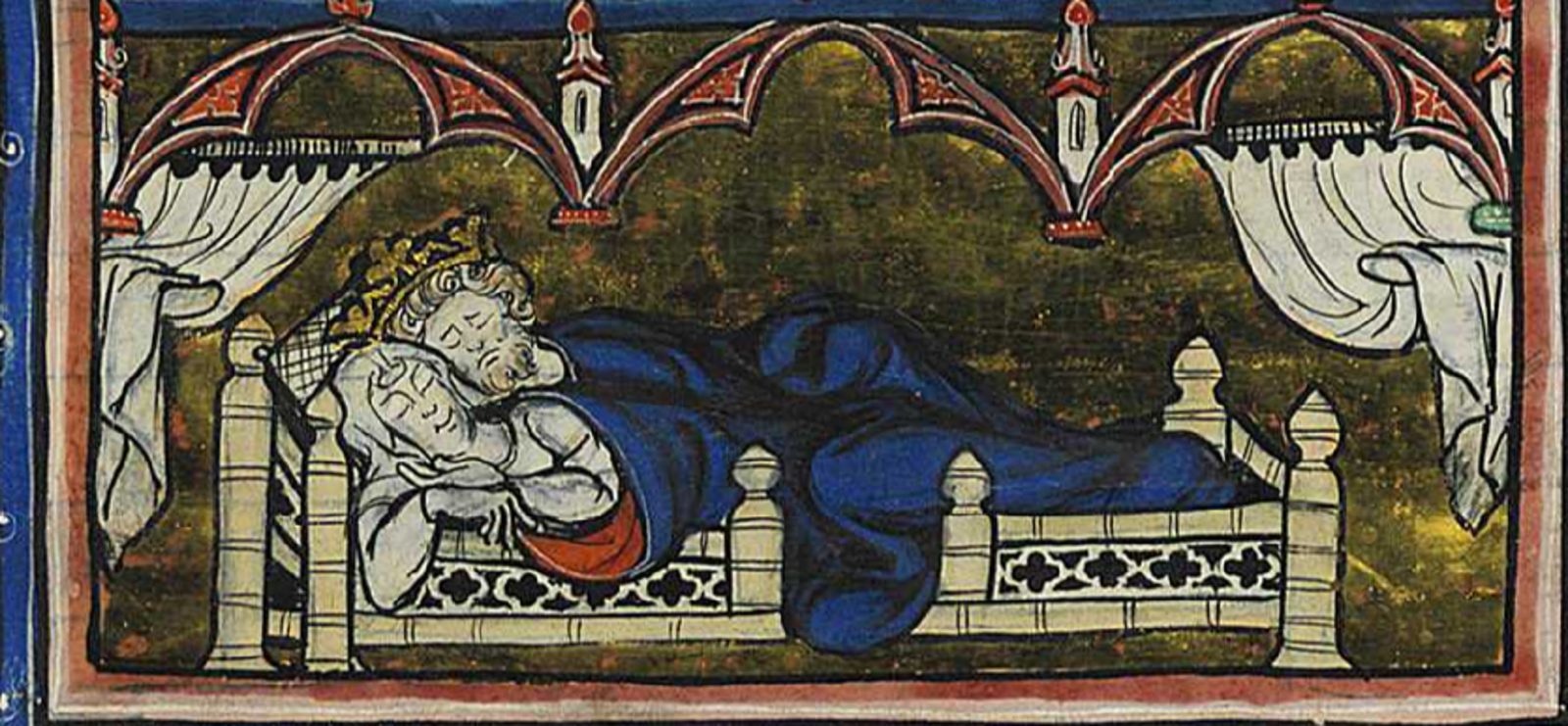
For instance, one of the most famous figures in this era is Ambrosius Aurelianus, mentioned by the near-contemporary Gildas in De Excidio. We can go further than simply note that he had two names. We can actually demonstrate that different traditions knew him primarily by a different one of these two names.
In the Historia Brittonum, for example, he is called Ambrosius. Welsh tradition follows this, calling him ‘Embreis’ and ‘Emrys’, direct evolutions of ‘Ambrosius’. In contrast, Geoffrey of Monmouth most commonly calls him just ‘Aurelius’.
Hence, we have a clear example of one king being alternatively known by one of two different names in different traditions, since he did actually had two names.
Another obvious example is Aurelius Caninus, again from Gildas’ De Excidio. Since the Britons at this time had recently left the Roman Empire and still had firm traces of their former Roman culture, in which multiple names were normal, this is no surprise.
Bartrum’s remark that the Quonomorius of the Life of St Paul Aurelian must have been the ruler of Leon in Brittany, distinct from King Marcus in Cornwall, on the basis that otherwise there would be no reference to a royal ruler of Leon is flawed for one obvious reason.
If the Quonomorius in question is supposed to be understood to be Conomor, as is surely inevitable, then it is obvious that this king held lands in Brittany as well. We know that Conomor was a king in Brittany, not only from Gregory of Tours but also from hagiographies in Britain. Hence, the claim in the Life of St Paul Aurelian is that Conomor held land in Cornwall, not that he was not also a ruler in Brittany. Bartrum ignores the obvious explanation that Conomor held land on both sides of the Channel.
In fact, the passage in question explicitly says that Marcus Quonomorius was “a powerful monarch under whose rule lived people of four different languages.”
This makes no sense if the author of the hagiography believed that this king only ruled in one area. On the other hand, if he ruled on both sides of the Channel, this claim is logical. As well as ruling over speakers of Common Brythonic (the ancestor language of Welsh, Cornish, and Breton) and Old Irish, he would also have ruled over speakers of Frankish and Vulgar Latin.
Helaine Newstead’s Objections
What about Helaine Newstead’s objection that Wrmonoc, the author of the pertinent hagiography, never calls him ‘Quonomorius’ anywhere else? This is a bizarre objection, since King Marcus only appears in this one passage.
As for the dismissal that the writer of the Life of St Paul Aurelian might have just taken the name ‘Quonomorius’ from records about Conomor and applied it to King Marcus, this is another strange objection. Why use the name ‘Marcus’ at all, in that case? Why do we not see other examples of the name ‘Quonomorius’ applied to kings who antagonised religious figures?
The 3D Scan of the Tristan Stone
Finally, what about the 3D scan of the Tristan Stone which supposedly shows that the first part of the name ‘Drustanus’ is actually a separate ‘C’ and ‘I’?
Although this is the claim of the 2014 paper, the actual facts presented within the paper do not support it. The text of the paper reads:
“In Fig. 3a, AO shading was used to examine remains on the area where the archaic form of Tristan is meant to exist. This helped demonstrate clearly that the backwards curve and the vertical line are separate. They represent a ‘C’ and an ‘I’, not a backwards uncial style ‘D’.”
The problem comes when we actually look at Fig. 3a. The image clearly shows no gap whatsoever between the supposed ‘C’ and ‘I’. In fact, it demonstrates very clearly that they are a single letter. Therefore, far from contradicting the ‘Drustanus’ reading, this 3D scan only reinforces it.
King Mark’s True Parentage
As mentioned above, there is some controversy surrounding the reference to March’s father as Meirchion. Was this Meirchion the father of Cynfarch, thus likely identifying March as Cynfarch, a king of the North? The geographical considerations make this very unlikely.
The only other Meirchion known to have lived in this era and whose geographical placement is consistent with that of March is the Meirchion who appears in the Life of St Illtud. This record makes him a king of Glamorgan in the sixth century. He appears to have been identical to Meirchion, or Merchwyn, the son of Glywys.
Based on the strong historical connections between Glamorgan, Cornwall, and Brittany (including connections involving Glywys’ family specifically), it is entirely reasonable to identify Mark’s father as this historical early king of Glamorgan.
Conclusion
In conclusion, what do we know about King Mark of Cornwall? He was the uncle of Tristan, infamous for his murderous role as the antagonist in the tale of Tristan and Iseult. This love triangle started when he sent Tristan to get Iseult from Ireland and take her back to Britain to be his wife, but the two of them fell in love during the journey due to a love potion. He not only appears as the unfortunate antagonist of this specific story, but he also appears as an enemy of Arthur generally, even being the one to destroy Camelot after Arthur’s death.
In real life, it is very likely that King Mark can be identified as the historical Conomor of Brittany. He evidently ruled on both sides of the Channel, over people speaking the languages of Common Brithonic, Old Irish, Vulgar Latin, and Frankish. While many objections have been raised against this identification in recent decades, none of them really stand up to scrutiny.
Sources
Bartrum, Peter, A Welsh Classical Dictionary, 1993
Bromwich, Rachel, Trioedd Ynys Prydein: The Triads of the Island of Britain, 2014
Howells, Caleb, King Arthur: The Man Who Conquered Europe, 2019
Newstead, Helaine, King Mark of Cornwall, 1958
Spring, Adam P & Peters, Caradoc, Developing a low cost 3D imaging solution for inscribed stone surface analysis, 2014
https://www.thecollector.com/historical-background-tristan-isolde/
https://www.ucl.ac.uk/archaeology/cisp/database/stone/cstld_1.html




_Emrys_Wledig.jpg)