Adeluf I and II, Predecessors of King Arthur

In an obscure but fascinating Arthurian source, King Arthur is given two predecessors called Adeluf. These figures, Adeluf I and II, are widely believed to only be found in this one source. What does it reveal about these characters? And can we find them elsewhere?

Who Were Adeluf I and II?
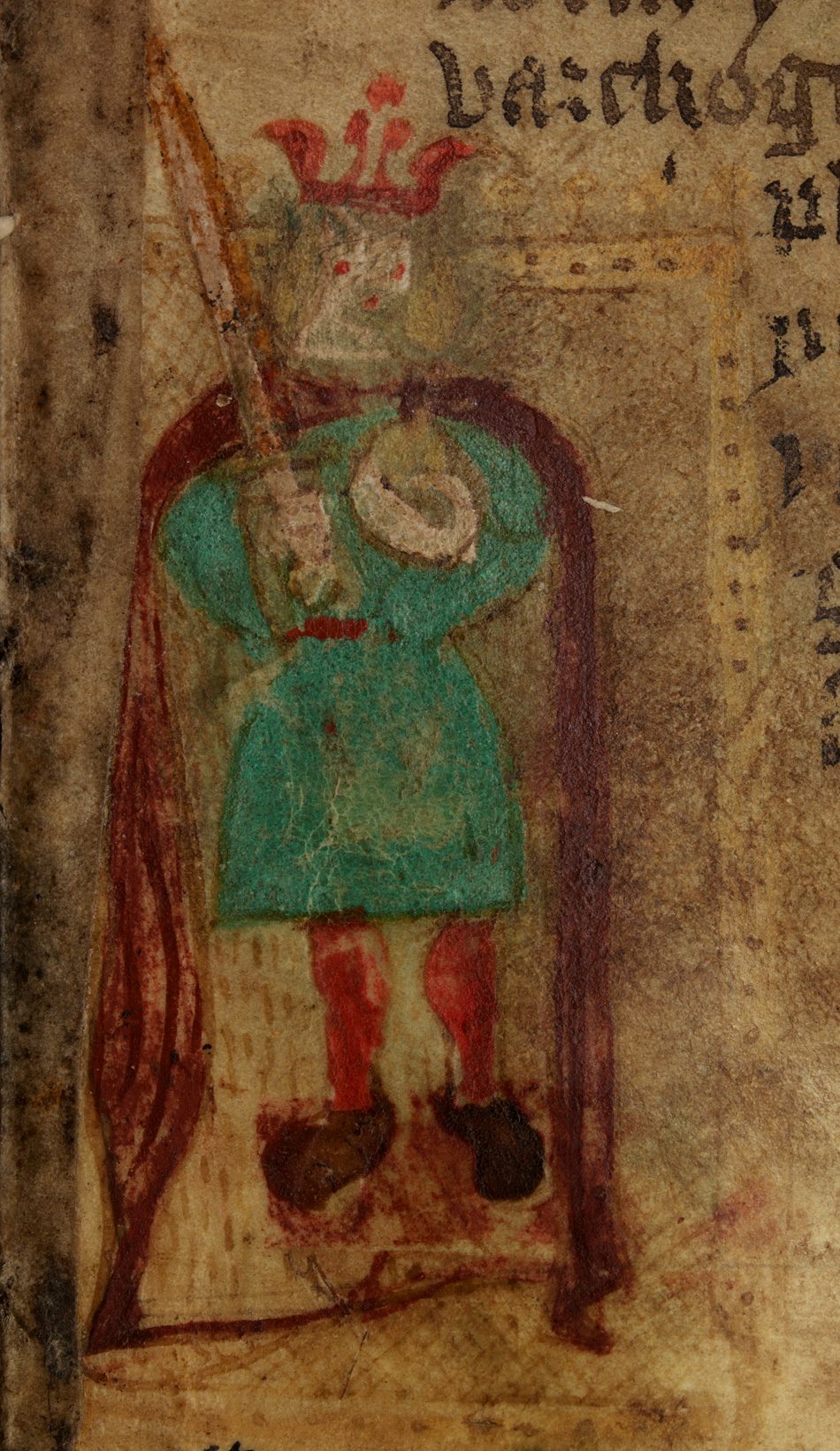
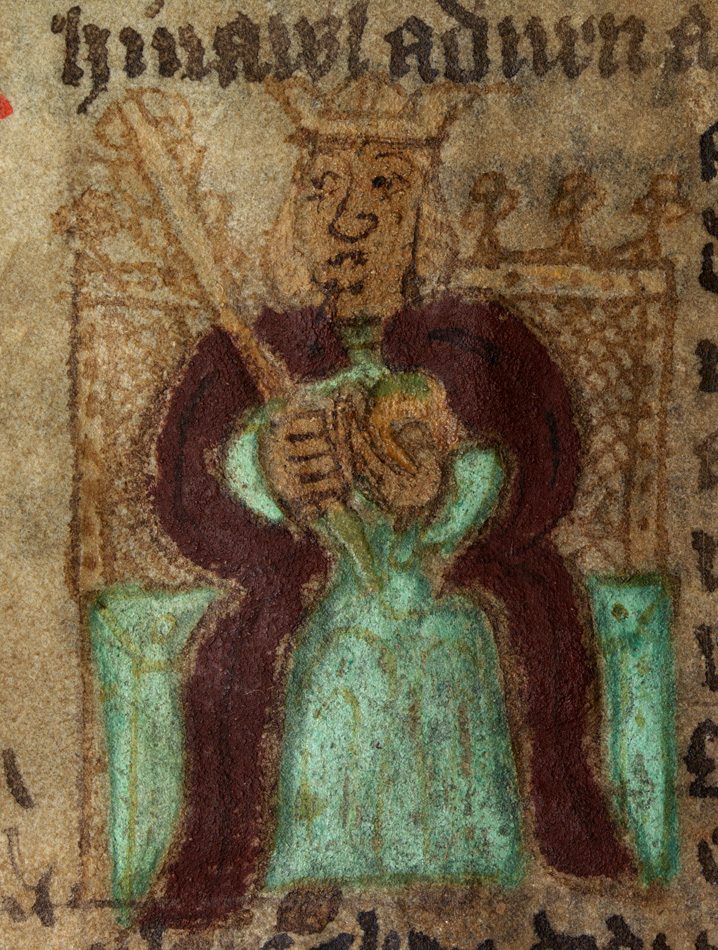
Adeluf I and II were two kings who came before King Arthur. Adeluf I was Arthur’s grandfather, while Adeluf II was Arthur’s uncle. Both of them were kings who reigned over Britain before Arthur was born.
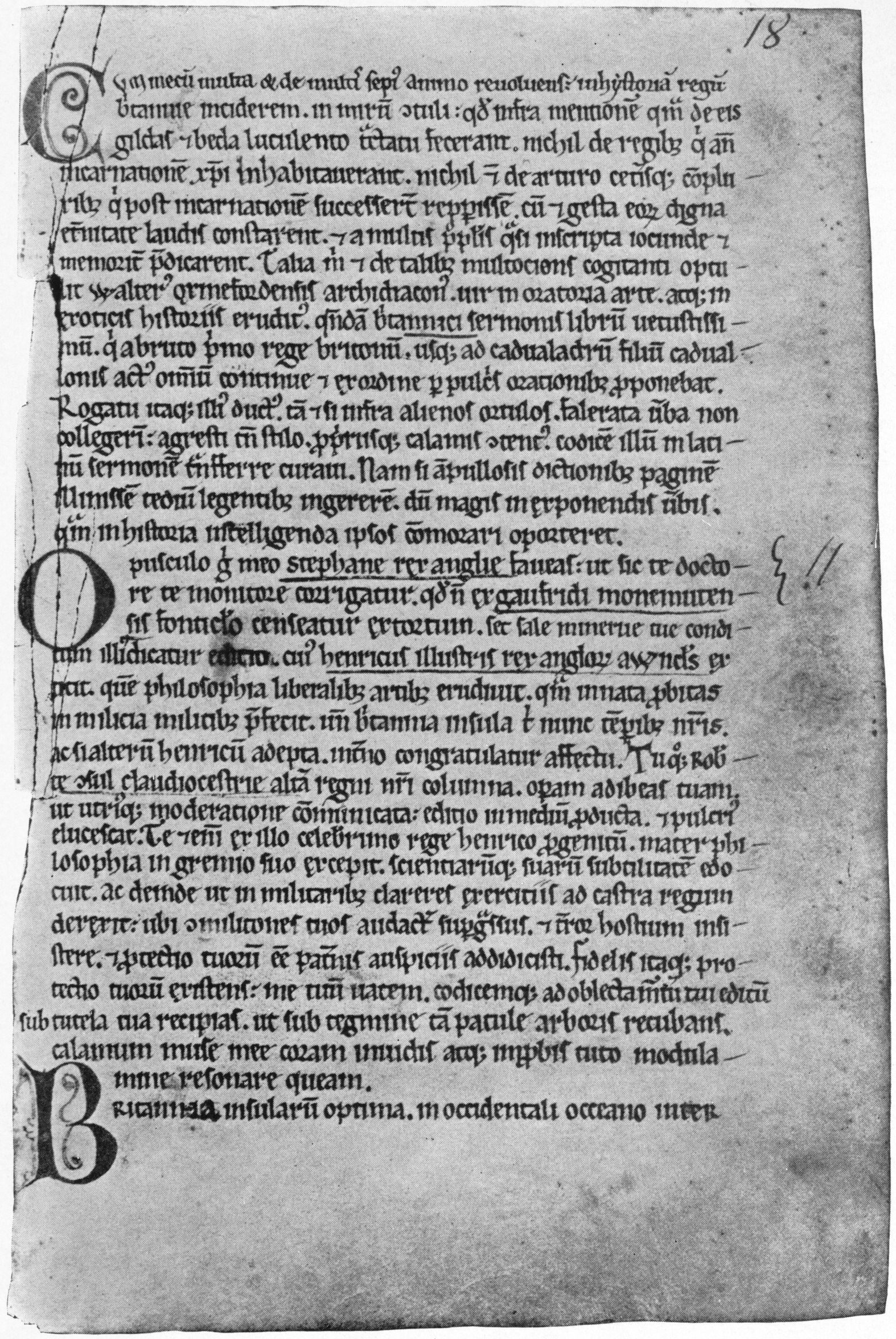
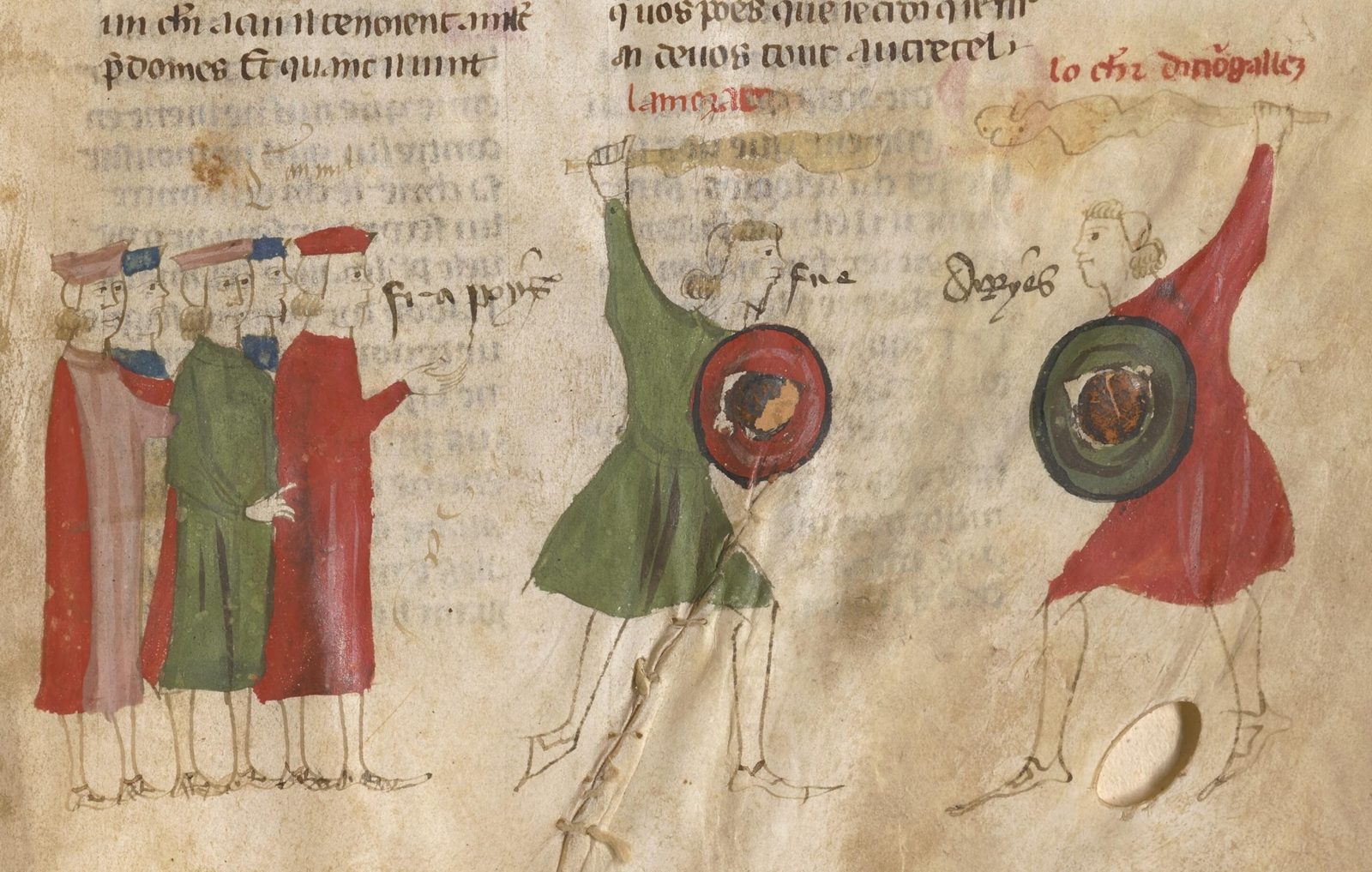
They are mentioned in a source entitled Le Petit Bruit. This was written in the year 1309. Its author was a man named Rauf de Boun, or Ralph de Bohun. According to him, his work was actually an abbreviation of a much longer account of the history of Britain. This account is now lost to us outside of Ralph’s abbreviated version.
Therefore, while we cannot say for sure exactly how far back the tradition of Adeluf I and II goes, it seems very likely that it extends at least as far back as the thirteenth century.
This account presents what is generally accepted as a rather confused account of Britain’s history, one which is very different from most versions of the Arthurian legends.
Adeluf I in Earlier Legends
Here, Adeluf I is the grandfather of Arthur. He is the son of a king named Edbright of Northumbria who ruled over all of England. Adeluf had two brothers, Outrede and Aluf.
Adeluf I’s two children are Adeluf II and Uther, the famous father of King Arthur. Hence, Adeluf I occupies the same place as King Constantine usually does in the legends. Generally, Constantine has three children, Constans, Aurelius Ambrosius, and Uther.
Adeluf II in Earlier Legends
Adeluf II appears to occupy the place of Aurelius Ambrosius. This latter figure is a legendary version of Ambrosius Aurelianus, a historical war leader active in Britain in the fifth century, mentioned by the near-contemporary writer Gildas.
While it is true that Adeluf could theoretically stand in for Constans (Arthur’s oldest uncle in most of the Arthurian legends) rather than Ambrosius, this is not very likely.
The main reason is that the reign of Constans was essentially insignificant, lasting only a very brief period of time and having nothing of note happen within it. In contrast, Ambrosius is presented as a mighty king who fought against the Saxons. Not only is he presented like this in legend, but this is what he historically did, as we know from Gildas’ near-contemporary De Excidio. Therefore, between Constans and Ambrosius, the former is clearly the obvious choice to be ignored by Le Petit Bruit.
The Reigns of Adeluf I and II
Le Petit Bruit, being an abbreviation, does not contain much information about the reigns of Adeluf I and II. In fact, it does not directly tell us anything noteworthy at all concerning the reigns of these kings. However, we can ascertain something that may have happened.
According to Le Petit Bruit, Edbright the father of Adeluf I conquered all of England, bringing it entirely under his rule. By the time we get to King Arthur, the same account tells us that he conquered the whole of the British Isles.
Whether this means that Arthur had to reconquer all of England or not is not fully explained. It may be the case that Le Petit Bruit is suggesting that the dynasty founded by Edbright lost some of its territory by the time Arthur began to rule.
If so, this would have had to have happened at some point within the reigns of Adeluf I, Adeluf II, or Uther.
Did Adeluf I and II Really Exist?
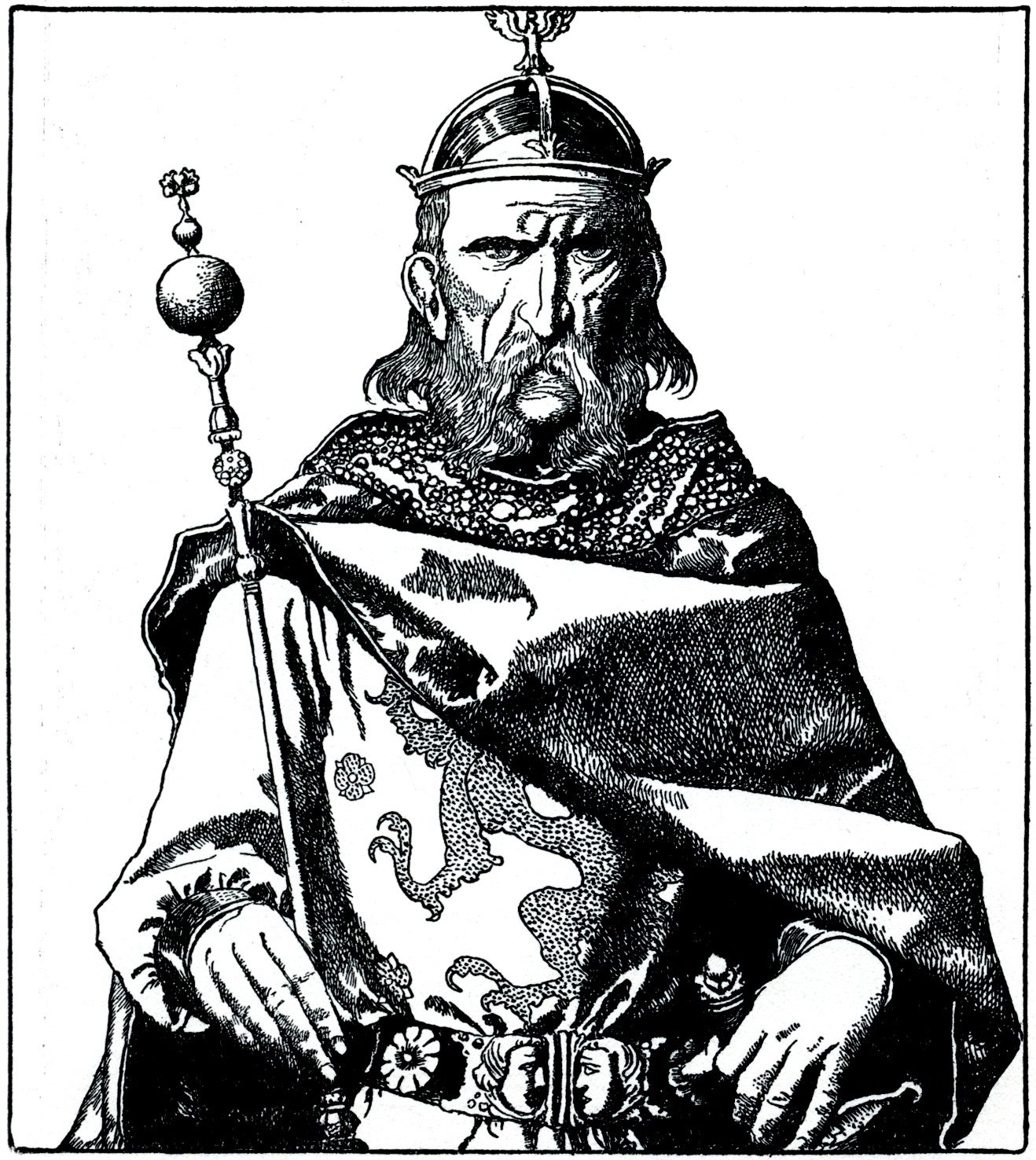
At first glance, it appears certain that Adeluf I and Adeluf II are just late, fictional additions to Arthurian lore. In fact, it seems as though the writer of the original account of which Le Petit Bruit is an abbreviation just invented the figures by placing English-sounding names onto pre-existing Arthurian characters.
Name and Intent
Regarding the name ‘Adeluf’, it is widely accepted by scholars that this is directly inspired by the attested name ‘Athelwulf’. This was the name of a prominent ninth-century Anglo-Saxon king of Wessex.
Additionally, some researchers have argued that Ralph de Bohun’s source attempted to incorporate English supremacy into the Arthurian legends, essentially by making King Arthur an English king.
This is supposedly demonstrated not only by two of his predecessors being named Adeluf, but also by the fact that Arthur’s heir was Adeluf III, explicitly presented as the ancestor of the English kings.
The idea that the writer of Ralph de Bohun’s source was influenced by the name of that Anglo-Saxon king is a reasonable one. However, that does not mean that he simply applied that name to Arthurian characters with no regard for authentic tradition.
Similarly, the idea that Ralph or his source was intentionally manipulating the Arthurian legend to present Arthur as an English king is not the only possible interpretation.
The Identity of King Arthur in Le Petit Bruit
This issue is largely cleared up by establishing who King Arthur in Le Petit Bruit actually was. He is described as spending most of his time in south Wales with his favourite son, Morgan, who thereafter succeeded him in that region.
Based on this description, it is evident that King Arthur in this account is based on Athrwys ap Meurig, a historical king of southeast Wales in the post-Roman era. His son and heir was named Morgan.
There are many researchers who argue that Athrwys was the historical figure behind King Arthur in general. Others argue that he was responsible for just some of the legends. In any case, it is clear that Le Petit Bruit is based largely on him and his children.
How This Explains Adeluf
Regarding Arthur’s son, Adeluf III, he is evidently based in large part on Ithel, one of the attested sons of Athrwys ap Meurig. Based on evidence from the Book of Llandaff and other records, we can conclude that Ithel ap Athrwys ruled as king in approximately 595-600.
This being so, he was an exact contemporary of the similarly-named Athelfrith, a very powerful and important Anglo-Saxon king. The other information about Adeluf III provided in Le Petit Bruit makes it clear that Athelfrith contributed significantly to the character of Adeluf III.
Therefore, it is evident that Athrwys’ historical son Ithel, a Welsh king, became conflated with the historical Athelfrith, an English king. This makes sense of why Arthur’s descendants through Adeluf III are presented in Le Petit Bruit as English kings.
This being the case, there is no reason to conclude that Ralph’s source was intentionally trying to incorporate English supremacy into the legend of King Arthur. It appears that the connection to the English kings was due to a legitimate case of mistaken identity.
It is also evident that ‘Adeluf’ was used by Ralph’s source as a loose approximation of other names, such as ‘Athelfrith’.
With all of this in mind, there is no reason to interpret Adeluf I and II as necessarily fictional kings designed to give King Arthur an English heritage. Rather, it could easily be the case that this name was simply used as a loose equivalent for other names, names which were not English at all (such as the Welsh ‘Ithel’).
Predecessors of Athrwys
In addition to this information, it is also important to bear in mind that the Arthur of Le Petit Bruit is, as we have seen, largely or entirely based on the historical Athrwys ap Meurig. That being the case, could Athrwys’ historical predecessors have had something to do with the legendary Adeluf I and Adeluf II?
Before Meurig and Tewdrig
Historically, the predecessor of Athrwys was Meurig. However, Meurig continued living until not too long before the death of Athrwys himself, so he could not reasonably occupy the role of King Arthur’s predecessor.
It is more reasonable to associate Uther, the legendary father and predecessor of Arthur, with Tewdrig, the grandfather of Athrwys. This is the identification made by those who argue that Athrwys was the historical figure behind the legends of Arthur generally.
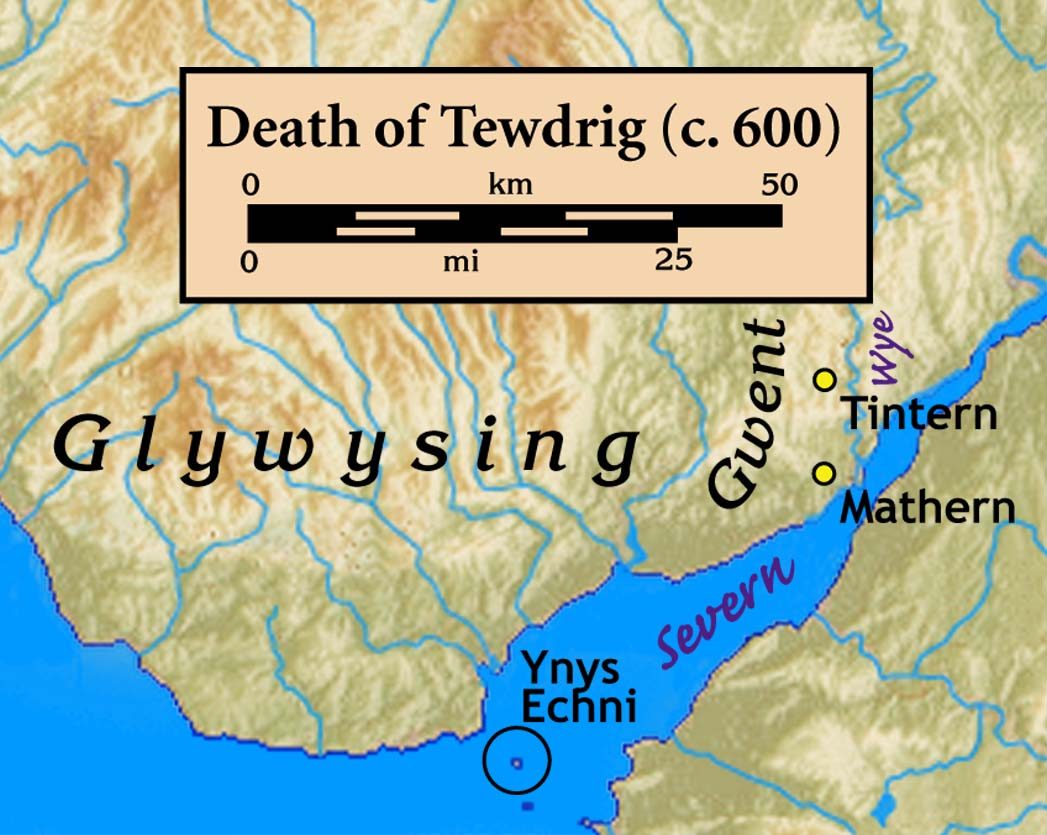
Indeed, Geoffrey of Monmouth’s account of Uther’s career bears some striking similarities to the records about Tewdrig’s career. Their death stories, for example, are almost identical. This would mean that Uther’s predecessors, Adeluf I and II, may well be based on figures from before Tewdrig.
Teithfallt and Tathal
Tewdrig’s ancestry was well known and is found in many medieval documents. One example is the Jesus College MS 20. In the very first genealogy contained in that document, we find the following line:
“tewdric m teidfallt m teidtheryn m thathal.”
Using the spellings more commonly found in modern sources, this would be:
Tewdrig son of Teithfallt son of Teithrin son of Tathal
With this pedigree in mind, can we identify Adeluf I and Adeluf II? It appears that we can. However, we first need to clarify an issue concerning Adeluf II and Ambrosius Aurelianus.
Ambrosius Aurelianus, the Father of Uther
As we saw earlier, Adeluf II, the older brother of Uther in Le Petit Bruit, occupies the place of Aurelius Ambrosius in most other versions of the Arthurian legends. It was not uncommon for rival traditions to give different names to the same character. Teilo, for instance, was also known as Eliud, while King Mark of Cornwall was also known as Conomorus.
Therefore, ‘Adeluf’ is apparently an alternative name for Aurelius Ambrosius used by the tradition preserved in Le Petit Bruit. And Aurelius Ambrosius, in turn, comes directly from the historical Ambrosius Aurelianus, mentioned by Gildas in the near-contemporary De Excidio.
The correspondence between Arthur’s son Morgan and Athrwys’ son Morgan, as well as Adeluf and Ithel, demonstrate that Le Petit Bruit does preserve some authentic information from the post-Roman era. Thus, it is worth examining what we know about the historical Ambrosius Aurelianus.
Gildas, our earliest source for him, specifically describes him as the only surviving Roman of his era, and that he was ‘alone’. There is thus no space for him to have had a warrior brother who fought alongside him and succeeded him, as Uther did in the legends.
Yet, Gildas does tell us that Ambrosius had descendants who were still prominent in his time. Thus, we can plausibly interpret Ambrosius as the father, rather than the older brother, of Uther.
Teithfallt as Adeluf II
With all of the aforementioned information in mind, Adeluf II should be identifiable as the father, not older brother, of Athrwys’ grandfather Tewdrig. Do the historical facts support this expected result based on the claims in Le Petit Bruit?
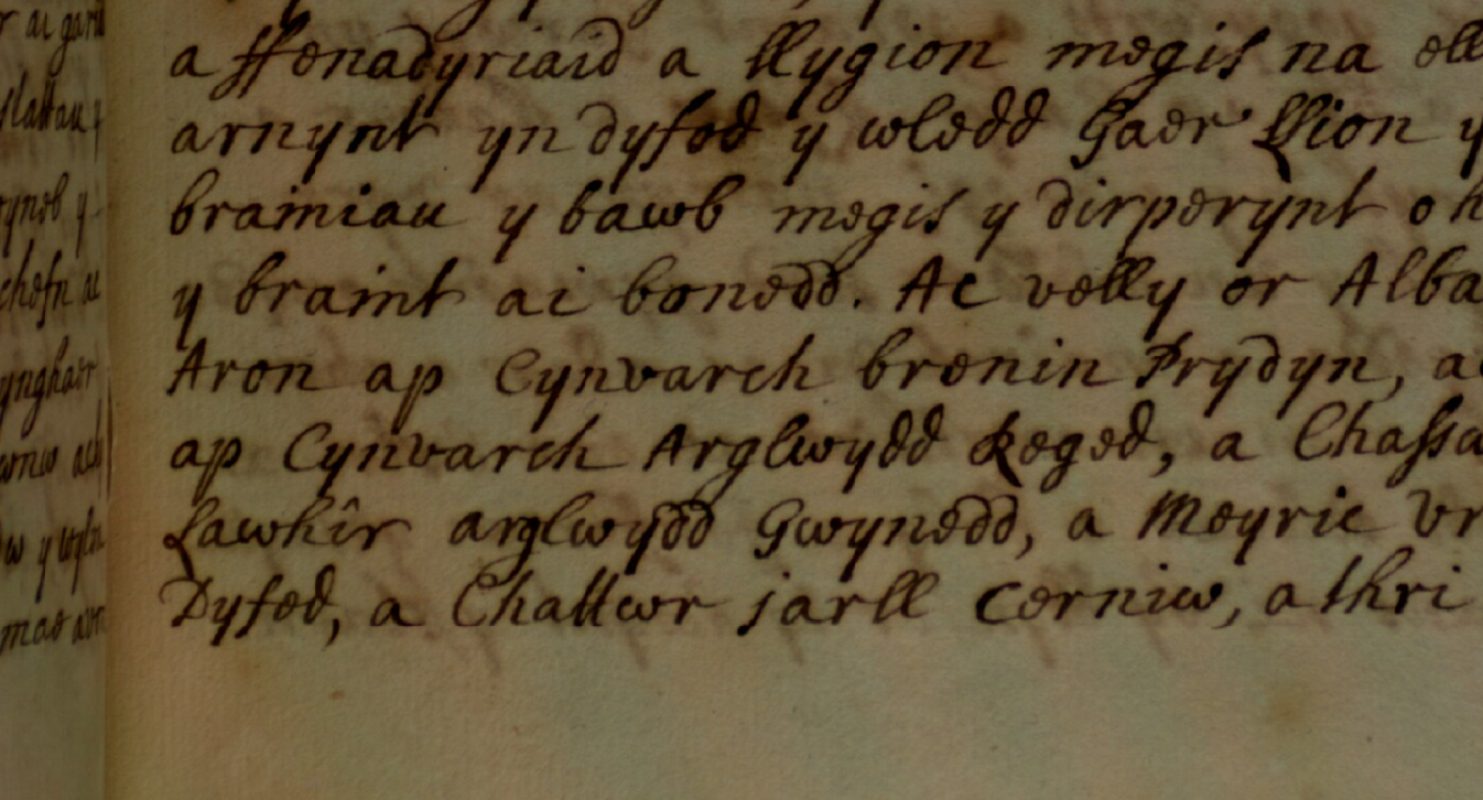
As we saw, the father of Tewdrig is recorded as being a figure named Teithfallt. His name also appears as ‘Teidfallt’, ‘Teithfall’, ‘Teudfall’, and other variations. Could ‘Adeluf’ have been a loose approximation of this name?
This would seem to be a reasonable suggestion. The only substantial obstacle to equating the two names is the presence of the ‘T’ on the beginning of Teithfallt’s name. However, there are many examples of initial consonants disappearing from names in medieval records.
For instance, a figure called Gogfran often appears as ‘Ogfran’. The historical Mandubracius of the first century BCE appears in Welsh tradition with the initial consonant lost as well.
If this same attested corruption occurred in the case of Teithfallt, this would leave ‘Eithfallt’, ‘Eithfall’ or ‘Eudfall’, depending on which spelling of his name we use.
This could surely have been viewed as close enough to ‘Adeluf’ for that to be used as an approximation of it, just like in the case of ‘Ithel’ (earlier spelt ‘Iudhael’) and ‘Athelfrith’.
Supporting evidence from Ambrosius
Recall that Adeluf II, as the supposed older brother of Uther, is evidently an alternative name for Ambrosius Aurelianus. That being so, the identification of the legendary Adeluf II with Teithfallt would logically be strengthened if evidence also exists for identifying Teithfallt directly as Ambrosius.
As it happens, there is such evidence. Although there are not many surviving records about Teithfallt, what little we do have matches well with what the sources say about Ambrosius. For instance, Geoffrey of Monmouth claims that Ambrosius became bedridden towards the end of his life. Teithfallt, meanwhile, appears in one document with the title ‘the Lame’.
Furthermore, this same document refers to Teithfallt as ‘Hawystl’, the Welsh form of ‘Augustulus’. This is the diminutive of Augustus, the title of the Roman emperors. This would suggest that Teithfallt was viewed as a type of emperor, just as the Historia Brittonum calls Ambrosius ‘the great king among the kings of Britain’.
A late document, known as The Genealogy of Iestyn the Son of Gwrgan, records the tradition that Teithfallt was a ‘heroic monarch’, stating that he ‘fought powerfully against the Saxons, and vanquished them’. This fits the profile of Ambrosius excellently.
Even more specifically, that same document claims that Teithfallt was responsible for restoring the churches after his land had been ravaged by the Saxons in his time. This is exactly what Geoffrey writes about Ambrosius in Historia Regum Britanniae.
Tathal as Adeluf I
What about Adeluf I, the father of Adeluf II in Le Petit Bruit? According to the lineage given to Teithfallt in the Welsh genealogical records, he was the son of Teithrin, son of Tathal. The name ‘Adeluf’ is most conveniently explained as a corruption of ‘Tathal’ rather than ‘Teithrin’.
As we have already seen, the loss of an initial consonant is an attested corruption. The resulting ‘Athal’ is clearly similar enough to ‘Adeluf’ for the latter to be used as a loose approximation of the former.
Teithrin, for his part, appears to have just been skipped. The omission of individual generations is also a phenomenon which is thoroughly attested in the medieval manuscripts, so this is not unusual.
In summary, it would appear that Adeluf I is a distorted version of Tathal, while his legendary son Adeluf II is a distorted version of Tathal’s grandson Teithfallt.
Outrede the Brother
Support for this conclusion is to be found in the fact that Adeluf I was said to have had a brother named Outrede. Interestingly, the medieval Welsh genealogies assign Tathal a brother named Ednyfed, also written ‘Eidinet’.
Le Petit Bruit’s ‘Outrede’ is evidently Ralph’s form of the attested Anglo-Saxon name ‘Uhtred’, just as ‘Adeluf’ is his form of the name ‘Athelwulf’. This being the case, we can plausibly understand ‘Outrede’ as a loose English approximation of ‘Eidinet’ or ‘Ednyfed’. The only substantial difference is the ‘n’ instead of the ‘r’, but these letters are visually very similar, being distinguished by a mere stroke of the pen.
Father of Adeluf I
As neat as this all seems, the situation gets more complicated when we look at the father of Adeluf I. According to Le Petit Bruit, this was a certain Edbright son of Edgar. How does this character tie into the identification of Adeluf I as Tathal the ancestor of Athrwys?
There are a few possible explanations for this. It is not entirely obvious which one is correct. In any case, it would be useful to establish some important groundwork. Le Petit Bruit discusses the arrival of a figure it calls Engel, who is described as conquering England. He is evidently supposed to represent the arrival of the Anglo-Saxons, possibly representing Hengest in particular.
Engel’s many sons divide England among themselves, interpreted by some scholars as representing the various Anglo-Saxon kingdoms that emerged after the arrival of the Anglo-Saxons. A few years later, Edbright son of Edgar appears and unites all of England under his rule.
With these facts in mind, who could he be, and how can we harmonise this with the identification of Adeluf I with Tathal?
Egbert the Father of Athelwulf
Ostensibly, the easiest conclusion is that Edbright is Egbert. Historically, he was the father of King Athelwulf. This was the identification suggested by scholar Diana Tyson. She argued that Athelwulf was the historical figure behind both Adeluf I and Adeluf III. Thus, she identified Le Petit Bruit’s Edbright with Egbert.
However, this is not without its serious problems. For one thing, the very idea that the same historical figure appears twice in the same document, in roles that would make him the ancestor of himself, is inherently unlikely and bizarre.
Another issue is the fact that the name of Edbright’s father does not match the name of Egbert’s father. The former is written as ‘Edgar’, while the latter was named Ealhmund. Diana Tyson equated these two characters without hesitation, but aside from the first latter, they bear no similarities to each other whatsoever.
Nonetheless, these objections are not necessarily insurmountable. Rather than Adeluf I and III both being Athelwulf, a more plausible suggestion can be reached based on our identification of Adeluf I with Tathal.
In this case, we could suggest that the compiler of Ralph’s source gave the name of Athelwulf’s father to Tathal’s father, due to conflating the information about Athelwulf with that of Tathal because of their similar names.
Regarding Adeluf I’s grandfather being named Edgar, this might be explained if we understand Le Petit Bruit’s Edbright to actually be a conflation of Egbert and Athelred, the historical son of King Edgar of England. However, this does not seem very plausible, for there is no obvious basis for such a conflation.
A problem which does not seem to have even so much as an implausible explanation is the fact that Edbright is described as coming from the kingdom of Northumbria, which does not match the historical Egbert at all.
Therefore, while it is not impossible that Le Petit Bruit’s Edbright is supposed to be Egbert the father of Athelwulf, it is not remotely likely either.
Edibrith of Bernicia
Another possibility is that the father of Adeluf I is to be identified as Edibrith of Bernicia. He appears in the genealogical record of the kings of Bernicia in the Historia Brittonum. There, he is placed three generations before Ida, the first king of Bernicia.
Ida began his rule in 547. If we assume that he was about forty years old when he became king, and we use an average of twenty-five years per generation, this would place the birth of his ancestor Edibrith in c. 432. This would tie in well with him being one of the first Anglo-Saxon kings after the conquest under ‘Engel’ (that is, Hengest) in the fifth century.
Furthermore, the name of his father is much closer to ‘Edgar’ than that of the father of King Egbert of England. The Historia Brittonum records his father as being named Ingwi. While still not exceptionally close to ‘Edgar’, it is much closer than ‘Ealhmund’ is (we may also note the appearance of the final ‘r’ in the alternate spelling ‘Cadwr’ for ‘Cadwy’).
Even the very name of this figure, ‘Edibrith’, is much closer to Le Petit Bruit’s ‘Edbright’ than ‘Egbert’ is. Additionally, Edibrith’s association with Bernicia is consistent with Edbright’s association with Northumbria in Le Petit Bruit.
Nonetheless, this identification is weakened severely by the fact that Edibrith was a very minor figure. There is no evidence that he was a powerful king who united all of England under his rule in any way. Nothing at all is known about him, nor is there any reason to believe that he was particularly notable, important, or powerful.
Andragathius
A seemingly unlikely but interesting possibility is that the father of Adeluf I in Le Petit Bruit is simply the historical father of Tathal. The surviving medieval genealogies make him a son of a figure named Anthun. He, in other records, appears as the son of Magnus Maximus.
This would put Anthun in the second half of the fourth century. Interestingly, he is described as being the king of Greece. Since Maximus was not from Greece, but he historically engaged in a conquest that almost went as far as that country, his son Anthun being remembered as the king of Greece almost certainly has something to do with that historical conquest.
For this reason, a number of researchers believe that the Anthun of the genealogies should be identified with Andragathius, the cavalry commander of Maximus’ army. This is strongly supported by the fact that Andragathius had a Gothic name, and at least three out of the first four of Anthun’s descendants had Germanic names (Teithrin, possibly from Theodhere; Teithfallt, from Theodbald; and Tewdrig, from Theodoric).
A sequence of Germanic names within what is ostensibly a Brythonic genealogical list is remarkable and possibly unparalleled in the medieval records. Therefore, this provides strong support for the conclusion that Anthun, the ancestor of these men with Germanic names, should indeed be identified with Andragathius the Goth.
Andragathius as Edbright
It appears that Andragathius’ name evolved into ‘Anthun’ in the genealogies by means of only the first part of his name, ‘Andr’ being preserved and then evolving into a more familiar form from that. However, this does not mean that his name evolved in such a way in every tradition that formed about him.
Another way in which his name could be expected to have evolved would have produced something quite similar to ‘Edbright’. An initial ‘A’ becoming an ‘E’ is a normal change, as we see in the case of Ambrosius’ name becoming ‘Embreis’ in the Historia Brittonum.
The consonant cluster ‘ntr’ is also known to have regularly evolved into ‘tr’ in many cases. This could plausibly have occurred in the case of Andragathius, since the ‘d’ and the ‘t’ were often interchanged. By combining these two regular evolutions, and taking off the Latin ending, we get ‘Edragath’. The final ‘th’ would also likely become a ‘t’, as we see in the case of ‘Tewdrig’ from ‘Theodoric’.
This would leave ‘Edragat’. Although this is not identical to ‘Edbright’, the two names are clearly similar enough that the latter could have very easily been used as an English approximation of the former.
Kingdom of Northumbria
As we saw earlier, one of the problems with identifying Edbright with the historical Egbert is the fact that Edbright is described as being from the kingdom of Northumbria. Could this detail be explained if we identify Edbright with Andragathius?
As it happens, there is evidence that Andragathius was associated with the north of Britain. As Anthun, some of his alleged descendants in the medieval genealogies ruled over parts of northern Britain, such as near the border of England and Scotland.
One example is his grandson Tudwal, who is recorded in the Life of Saint Ninian as opposing the titular religious figure in southern Scotland.
Therefore, Edbright’s connection to Northumbria can plausibly be understood as a distorted, English version of Andragathius’ apparent connection to the border region between Scotland and England.
Conquest of England
What about the tradition that Edbright united all of England? This fits well with what we know about Andragathius from other traditions. As scholar Peter Bartrum pointed out, Maximus’ son Anthun (evidently identical to Andragathius, as we have seen) was also known by the name ‘Dynod’.
A Latin version of this, ‘Dionotus’, is used in Geoffrey of Monmouth’s Historia Regum Britanniae for a contemporary of Maximus. In this legendary account, Maximus makes Dionotus the ruler of all of Britain.
This would nicely explain Le Petit Bruit’s claim about Edbright uniting all of England under his rule – again, the tradition is portrayed from an English perspective, but that does not mean that Ralph’s source was intentionally inventing stories for the sake of English supremacy.
After the Arrival of the Saxons
What about the fact that Adeluf I’s father Edbright supposedly appeared on the scene and united England under his rule after the arrival of Engel, the eponymous forefather of the Anglo-Saxons? At first glance, this makes it appear as if Adeluf’s father should be placed well into the fifth century, precluding the identification of him with Andragathius.
However, it is known from Roman records that the Saxons invaded Britain significantly in about the year 360. This could plausibly be interpreted as the arrival of ‘Engel’. About a generation later, according to Le Petit Bruit, Edbright appeared on the scene, which harmonises very well with Andragathius appearing on the scene in 383.
Son of Edgar
What about Edbright being the son of Edgar? Edgar clearly has nothing to with the name ‘Magnus Maximus’. However, with Andragathius being made the king of Britain by Maximus as per the legend of Dionotus, this would make him the successor to the legendary Octavius, whose name is also recorded as Eudaf.
It appears that ‘Edgar’ is a loose English approximation of this name. This is far more plausible than suggesting that ‘Edgar’ is somehow a corruption of ‘Ealhmund’, the father of Egbert, as Diana Tyson argued.
Conclusion
In conclusion, Adeluf I and II were two legendary predecessors of King Arthur in Le Petit Bruit. Although they seem to defy explanation at first glance, they are more easily explained when we understand that the King Arthur of this source was primarily if not entirely based on Athrwys ap Meurig of southeast Wales. Adeluf II, the predecessor of Uther, can be identified with Teithfallt, the predecessor of Tewdrig (Athrwys’ grandfather and very much an Uther-like figure).
Adeluf I, the father of Adeluf II according to Le Petit Bruit, can be identified with Tathal, the grandfather of Teithfallt. Adeluf was supposedly the son of Edbright, a king based in Northumbria who was the son of Edgar and who came to rule all of Britain. The most likely identification of this Edbright is Andragathius, the likely father of Tathal, while his ‘father’ Edgar is likely Eudaf, the previous high king of Britain in Welsh legend.
Sources
Bartrum, Peter*, A Welsh Classical Dictionary*, 1993
Putter, Ad, Arthur’s Children in Le Petit Bruit and the Post-Vulgate Cycle, 2012
Barber, Chris, King Arthur: The Mystery Unravelled, 2016
Howells, Caleb, King Arthur: The Man Who Conquered Europe, 2019
Tyson, Diana, Problem people in the Petit Bruit by Rauf de Boun, 1990