Iaen, Relative of King Arthur

Iaen is a minor character from the legends of King Arthur. He appears in just two sources, neither of which provides much information about him. In one of them, he appears as the father of several of Arthur’s allies. These allies are said to be related to Arthur, although their exact connection to him is not explained. With this minimal information at hand, what can we really say about Iaen?
Who Was Iaen?
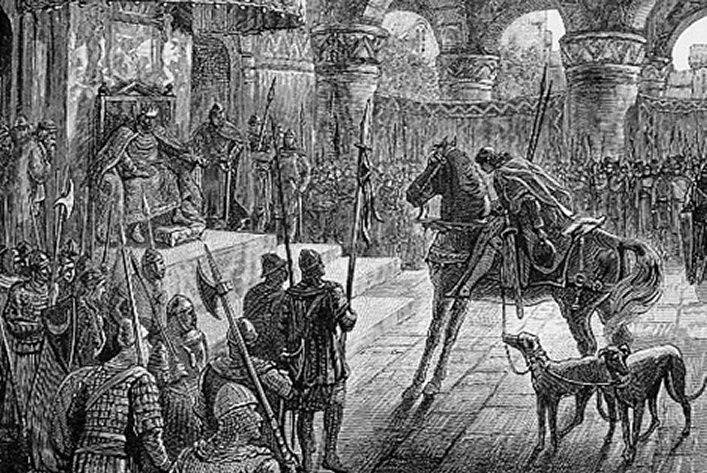
Iaen appears as the father of several of King Arthur’s allies in a Welsh tale known as Culhwch and Olwen. This tale was likely composed around the year 1100. It describes Arthur participating in a number of adventures, the most significant of which was the hunt for a monstrous boar.
During these events, Arthur calls on countless allies. Six of them (named as Teregud, Sulien, Bradwen, Moren, Siawn and Caradog) are the sons of Iaen. After listing these brothers, the text provides the following explanation about them:
“Men of Caer Tathal were they, Arthur’s kindred on his father’s side.”
The text does not explain what their exact relationship to Arthur was. They are just said to be related to him ‘on his father’s side’. However, the textual evidence is not quite clear on this point, as we will go on to see. The familial relationship is much less clear than it first appears.
Iaen’s Family
Nothing is known of Iaen’s ancestors from the two sources in which he appears. Culhwch and Olwen, as we have already seen, just mentions his sons and refers to a connection with Arthur. The same can be said concerning the other source which mentions Iaen.
Iaen’s Complicated Sons
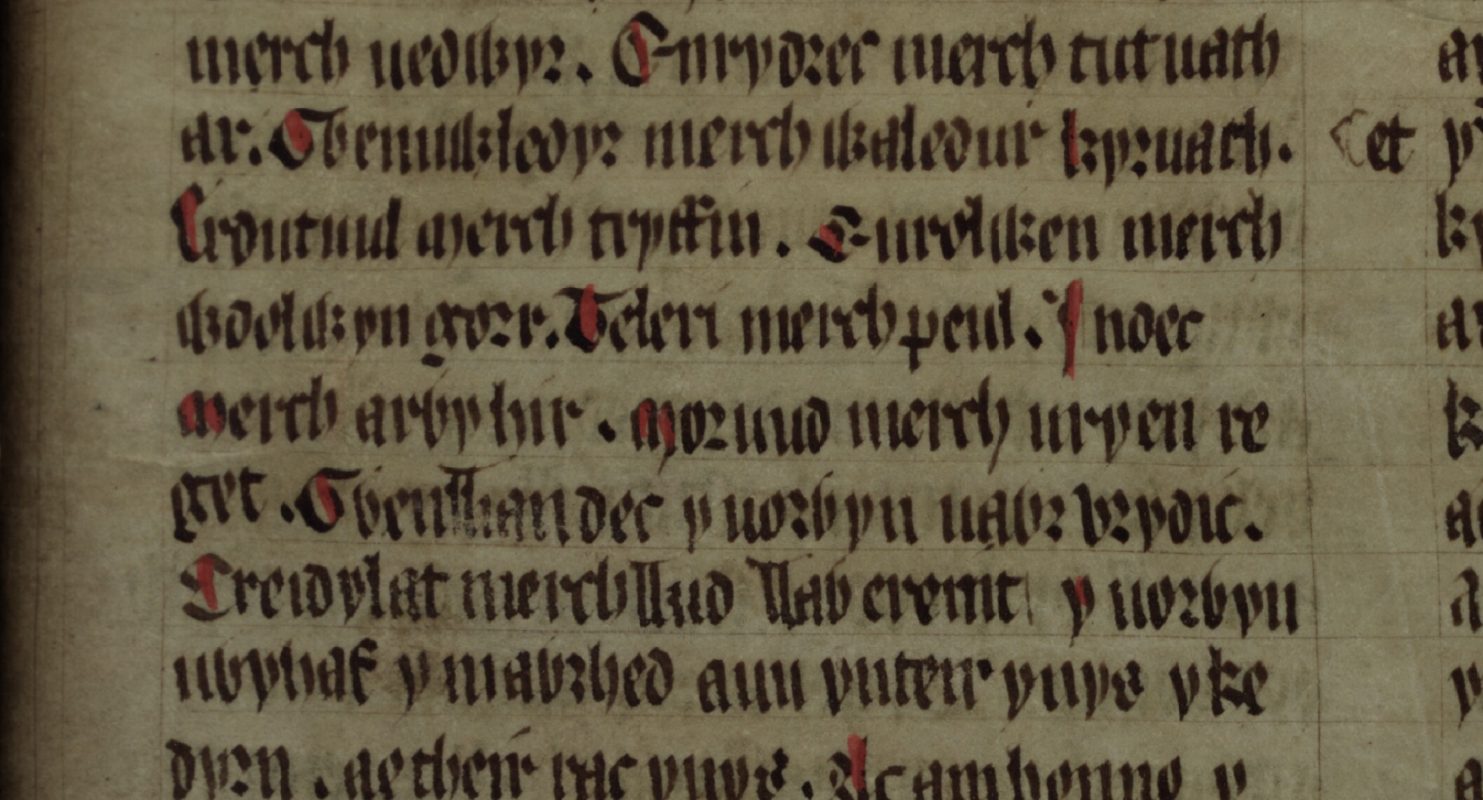
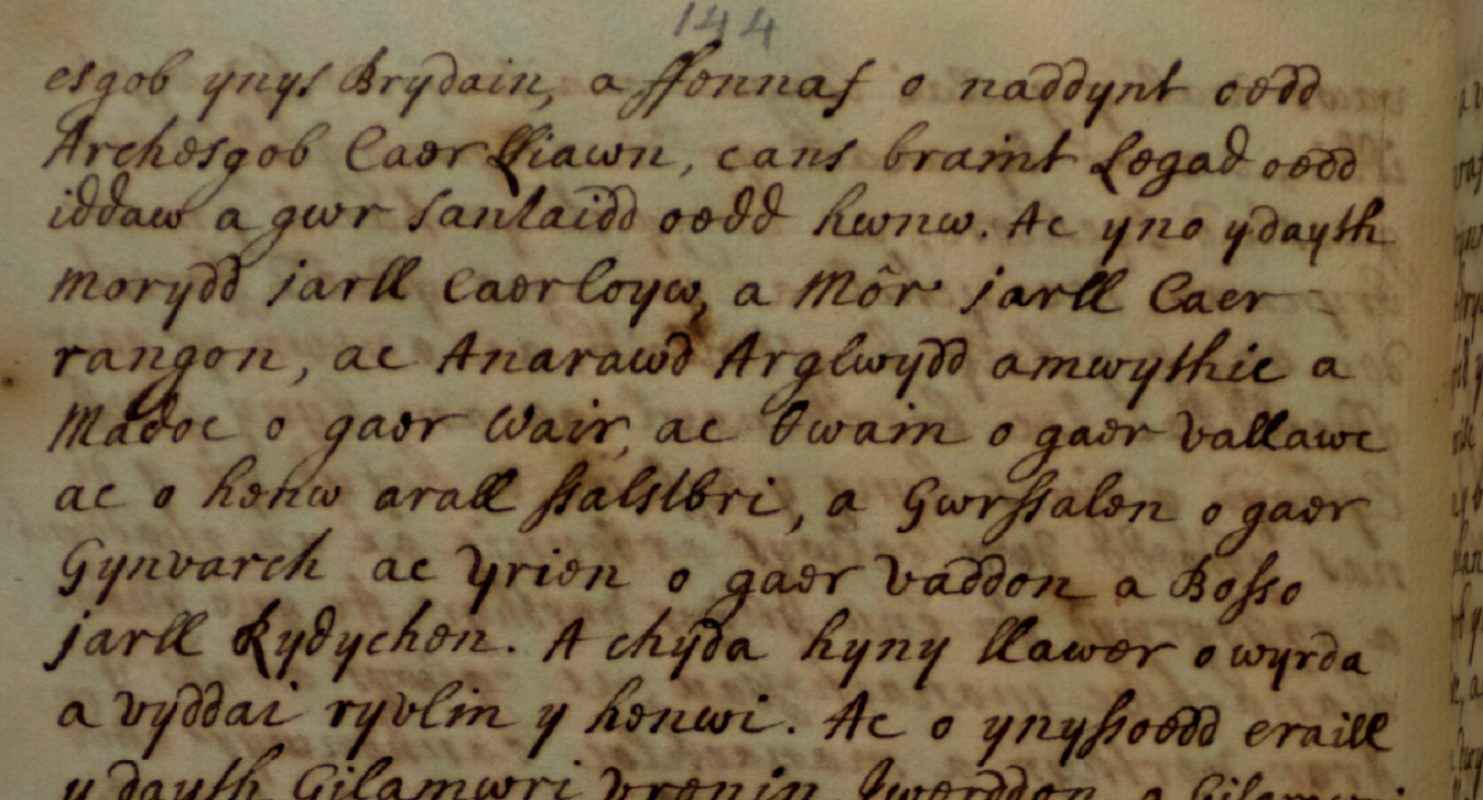
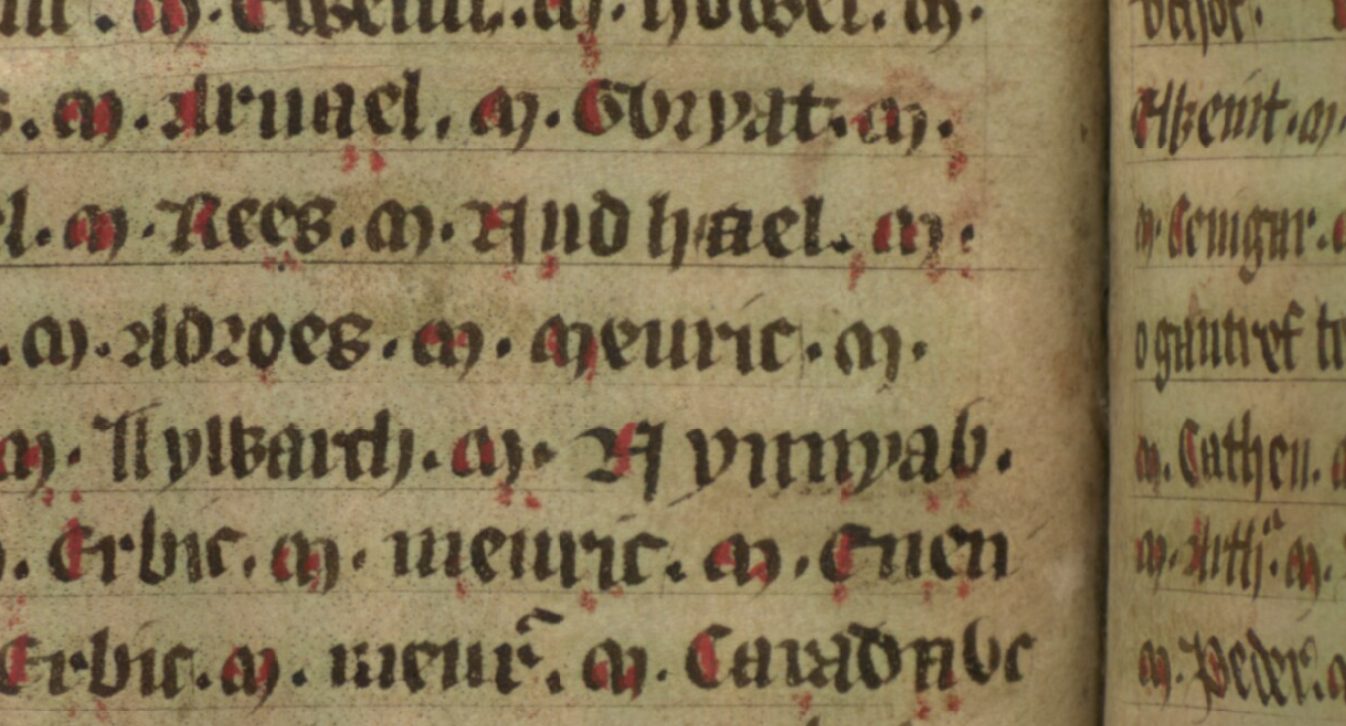
This is a medieval Welsh document known as Hanesyn Hen. In this document, we find Iaen’s sons listed again, along with another stated connection to Arthur. However, there are some differences between the two records.
As we saw above, Culhwch and Olwen lists Iaen’s sons as the following:
Teregud
Sulien
Bradwen
Moren
Siawn
Caradog
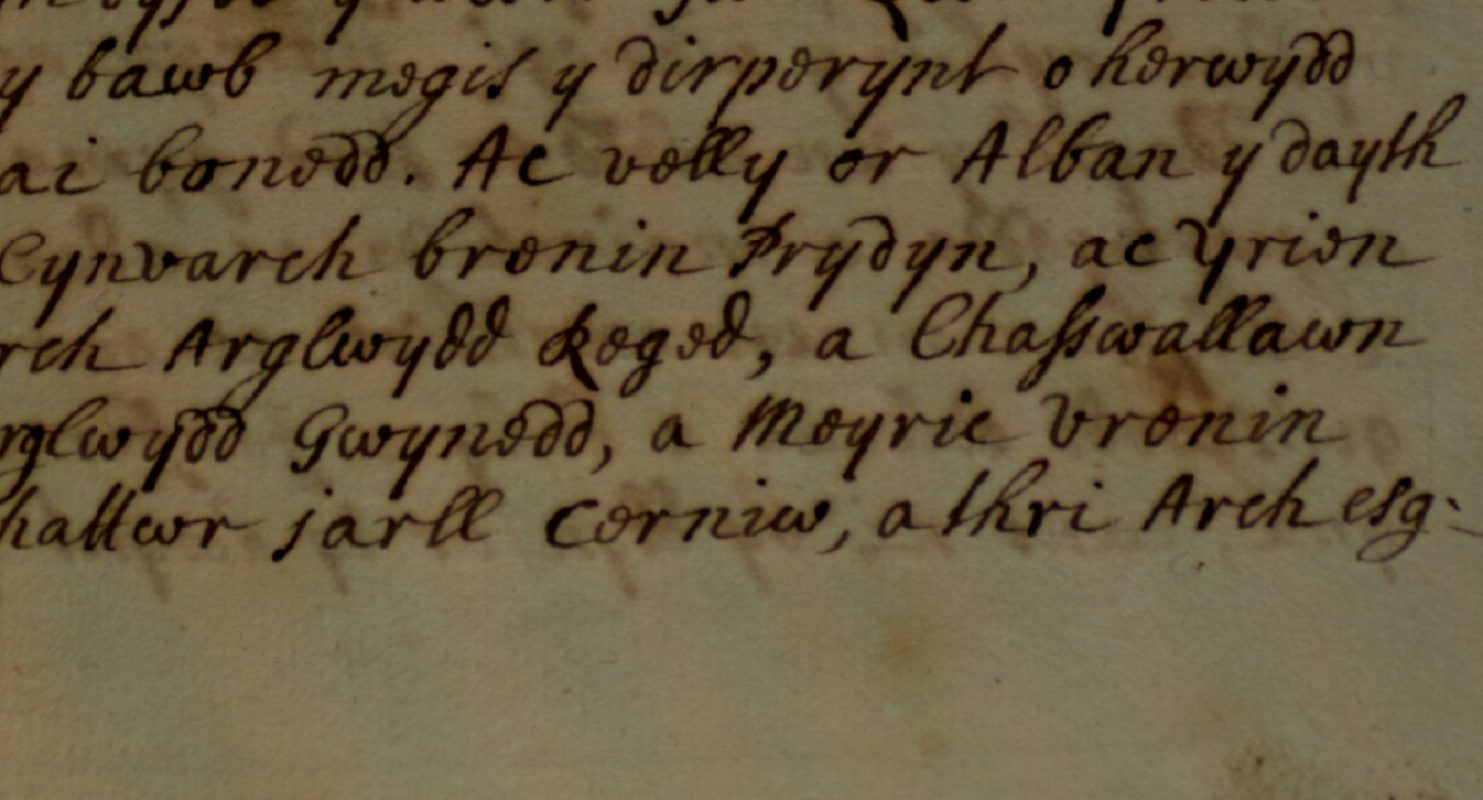
On the other hand, Hanesyn Hen lists Iaen’s sons as:
Dirmig Corneu
Gwyn Goluthon
Siawn
Caradog
Ievannwy
Llychlyn
Only two names are common to both lists – Siawn and Caradog. All the others are different. This is unusual, but not necessarily without explanation.
Harmonising the Differences
One possibility is that neither list contains all the sons of Iaen. Perhaps Iaen actually had ten sons, and both lists only mention six of them.
Another suggestion is that some of the sons might have been known by different names. After all, having more than one name was standard in the Roman era, and it was still an attested custom in early post-Roman Britain. Consider, for instance, Paul Aurelian and Marcus Conomorus.
Similarly, many figures in the medieval Welsh records are recorded as having an epithet as well as their personal name. Sometimes, we see figures referred to simply by their epithet. One example is Gwrgi Garwlwyd. His epithet means ‘rough-grey’. At least one record refers to him by his epithet alone.
Therefore, it could easily be the case that at least some, if not all, of the apparently distinct individuals across both lists are actually the same. Where one of their names is used on one list, their other personal name might be used on the other list. Or, one of the lists might be referring to them by their epithet.
We see an indication of this with the final name in the Hanesyn Hen version, which is ‘Llychlyn’. This is actually a place name. It refers to Scandinavia, but also to Scotland (or parts thereof). Therefore, this is almost certainly the epithet of a son who had relocated to Scotland.
We can compare this to the first name on the Hanesyn Hen list, Dirmig Corneu. His epithet is likewise a place name, denoting Cornwall in this case. Therefore, it is likely that ‘Llychlyn’ was originally attached to a genuine personal name, which name has now been lost. Likely, the personal name has been preserved in the version from Culhwch and Olwen, although it is impossible to know which son we should identify him with.
Iaen’s Daughter
The Hanesyn Hen document also provides another interesting bit of information. Unlike Culhwch and Olwen, this latter source mentions a daughter of Iaen. Her name is Eleirch.
What is particularly interesting is that she is said to have mothered a figure called Cydfan, son of Arthur. This makes her the lover of King Arthur. In turn, this means that Iaen was the grandfather of one of Arthur’s children.
Whether this would also make Iaen the actual father-in-law of Arthur or not depends on whether Arthur and Eleirch were actually married.
The Welsh Triads refer to Arthur’s three queens, all of whom were called Gwenhwyfar. There is also a triad referring to Arthur’s three concubines (or ‘mistresses’ in many online sources). However, none of these are called Eleirch either. There is no reason why Arthur should have only had three concubines, so Eleirch may well have just been one of the less important concubines.
Caer Tathyl
These six brothers are said to be ‘men of Caer Tathal’. The idea of one son travelling off to a land far away from where he grew up is plausible enough, but the idea that all six brothers would travel to the same place after growing up is straining credibility to its breaking point.
This strongly suggests that all six brothers were ‘men of Caer Tathal’ because that was their home. This would mean that their father, Iaen himself, was associated with that location, perhaps being its ruler.
Caer Tathal is usually identified by scholars as Caer Dathyl, a location that appears in another Welsh tale. This location is mentioned in the Fourth Branch of the Mabinogi. In this tale, Caer Dathyl is placed in Arfon, a region of northwest Wales.
An Alternative Location
This is not the only possibility, though. This place name might be related to one of the individuals by the name of ‘Tathal’ who appear in medieval records. One example is Tathal the ancestor of Brychan. This Tathal would thus have been a figure of southeast Wales, which would be consistent with the main setting of the story of Culhwch and Olwen.
Nonetheless, a place actually known as Caer Tathal has not yet been found in southeast Wales, which weakens this suggestion. On the other hand, there does not appear to be any trace of the Caer Dathyl of the Mabinogi in surviving place names either.
If we look further west along the coast of South Wales, we find a place recorded as Llanstadwell in Pembrokeshire, dedicated to a sixth-century religious figure known as Saint Tudwal. This name, Tudwal, is another spelling of Tathal. Therefore, the Caer Tathal mentioned in Culhwch and Olwen might perhaps be identified as Llanstadwell.
All things considered, it appears that there are two main options for the Caer Tathal associated with Iaen. One is the location recorded as Caer Dathyl in the Fourth Branch of the Mabinogi. This was in northwest Wales. The other is modern-day Llanstadwell in southwest Wales, which is much closer to most of the other locations mentioned in the text.
In turn, this would suggest that Iaen was either a man of northwest Wales or southwest Wales.
The Meaning of the Name
The name of this figure is particularly interesting. Of course, all names ultimately have a meaning of some kind, but Iaen’s name is especially noteworthy. It is simply the word for ‘ice’. This does not make much sense as a word to be used as a name.
But regardless of how logical it seems to a modern reader, what is perhaps more significant than that is the fact that this word does not appear to be used as a name anywhere else in the medieval Welsh records.
This fact, combined with the lack of sense that this makes as a name for a person, indicates that ‘Iaen’ is actually a corruption of another name, one which is better attested.
By far the most obvious and logical choice for the original name of which ‘Iaen’ is a corruption is ‘Ieuan’. There are a number of figures from the Arthurian period and later who are recorded as having that name, along with variant spellings such as ‘Euan’.
How Was Iaen Related to Arthur?
The issue of how Iaen was related to Arthur is somewhat controversial. The traditional reading of Culhwch and Olwen, as we saw earlier, makes Iaen’s sons the relatives of Arthur ‘on his father’s side’. This suggests that they were related to Uther, Arthur’s father in Welsh legend.
However, a number of scholars have suggested that a better reading would be ‘on their father’s side’. In other words, Iaen was related to Arthur in some way, and it was through this connection that Iaen’s children were Arthur’s relatives.
Scholar Peter Bartrum suggested this alterative reading in A Welsh Classical Dictionary. It was also supported by Rachel Bromwich. James J Wilhelm and Norris Lacy (Lacy being one of the most authoritative figures on matters concerning the development of the Arthurian legend) felt that this alternative reading was so strong that they used it in the main text of their translation of Culhwch and Olwen.
If this alternative reading is correct, it would mean that Uther did not necessarily have anything to do with Arthur’s relation to Iaen’s sons. Iaen could, for example, have been a maternal uncle of Arthur. Alternatively, he could have been married to one of Arthur’s aunts.
In any case, given that Iaen’s sons are recorded as Arthur’s allies and Iaen’s daughter is recorded as the lover of Arthur, this strongly suggests that Iaen was of the generation above Arthur.
In-Laws of Arthur
From the Hanesyn Hen document, we learn that Iaen’s sons were apparently in-laws of Arthur through their sister Eleirch (at least, assuming that Arthur and Eleirch had some kind of official relationship, such as concubinage, and were not just fleeting lovers).
Some commentators have argued that this is the reason why Iaen’s sons were said to have been related to Arthur. However, this suggestion is obviously flawed.
Regardless of whether ‘on their father’s side’ or ‘on his father’s side’ is the correct reading, neither one is compatible with the explanation that this is based on Eleirch’s relationship with Arthur.
If this relationship was the basis for the comment in Culhwch and Olwen, we would expect the text to have said that they were related to Arthur ‘on their sister’s side’, or possibly ‘on his wife’s side’. However, neither ‘on their father’s side’ nor ‘on his father’s side’ makes any logical sense.
Therefore, it appears that Arthur’s relationship with Eleirch the daughter of Iaen has nothing to do with the fact that Iaen’s sons are mentioned as being related to Arthur.
Did Iaen Really Exist?
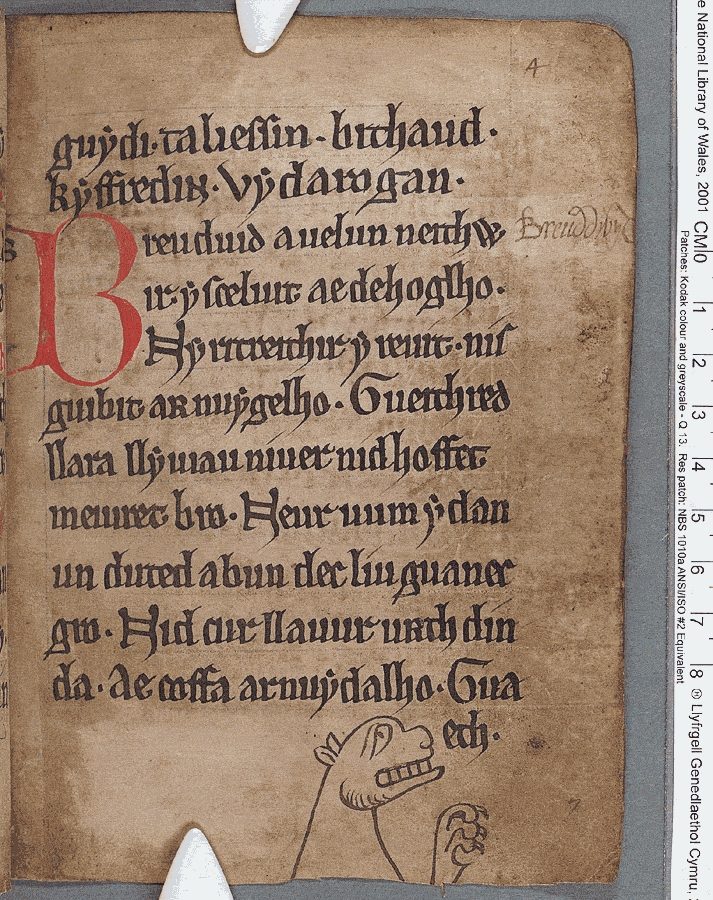
As we said at the outset, there are only two sources which explicitly mention Iaen. However, that does not necessarily mean that he cannot be identified with a figure who appears elsewhere.
Recall the earlier information about ‘Iaen’ likely being a corruption of the better attested ‘Ieuan’. This suggests that we might be able to actually identify Iaen himself with one of those other figures named Ieuan.
Two of the Ieuans who appear in Peter Bartrum’s A Welsh Classical Dictionary are from two or three generations after Rhydderch Hael, which would place them well into the seventh century. Therefore, these do not appear to be viable candidates.
Another one is recorded as a servant of Patrick, the patron saint of Ireland, which would put him at about the right time to be Iaen. However, a further examination of the information about him shows that he actually lived centuries later. His status as a ‘servant of Patrick’, in reality, just means that he followed Patrick’s teachings.
Disciple of Dubricius
One possible candidate for the historical Iaen is found in the Book of Llandaff. He is recorded as a disciple of Dubricius and appears in two charters concerning land grants given by Pebiau, king of Ergyng.
Since Dubricius himself was the grandson of Pebiau, this must have occurred early in Dubricius’ life and late in Pebiau’s reign. With a birth of c. 465 for Dubricius and c. 420 for Pebiau, we may suggest that these charters occurred in approximately the year 500.
The Ieuan (or Iouan, as his name is spelt) who appears as Dubricius’ disciple may have been a young man when these land grants occurred. In any case, this figure is a good chronological match for the Iaen who appears as an older contemporary of Arthur in Culhwch and Olwen.
Uncle of Athrwys
Another interesting possibility is that Iaen can be identified with a figure named Ieuan who appears in the Life of Saint Cadoc. This hagiography was written in the late eleventh century. This document has a collection of charters attached to it, usually known as the Llancarfan charters.
One of these begins with the following statement:
“After an interval of time Euan Buurr slew two men, the sons of his sister, to wit, Atgan and Aidnerth. Wherefore came Cadog and Illtud, and they cursed Euan.”
As we saw earlier, ‘Euan’ is one of the variant spellings of Ieuan. This Euan Buurr is placed in the time of Cadog and Illtud, both of whom died in approximately 580. Therefore, Euan Buurr was definitely a figure of the sixth century.
As such, he is an acceptable chronological fit for Iaen. What is particularly interesting about this figure is the name of one of his nephews: ‘Aidnerth’. This appears to be a variant spelling of Idnerth, an important prince of this very region in the time this record is set.
The narrative in the Llancarfan charters goes on to show that kings got involved in the settling of this murder of Euan’s nephews, supporting the conclusion that they were important figures and not minor noblemen.
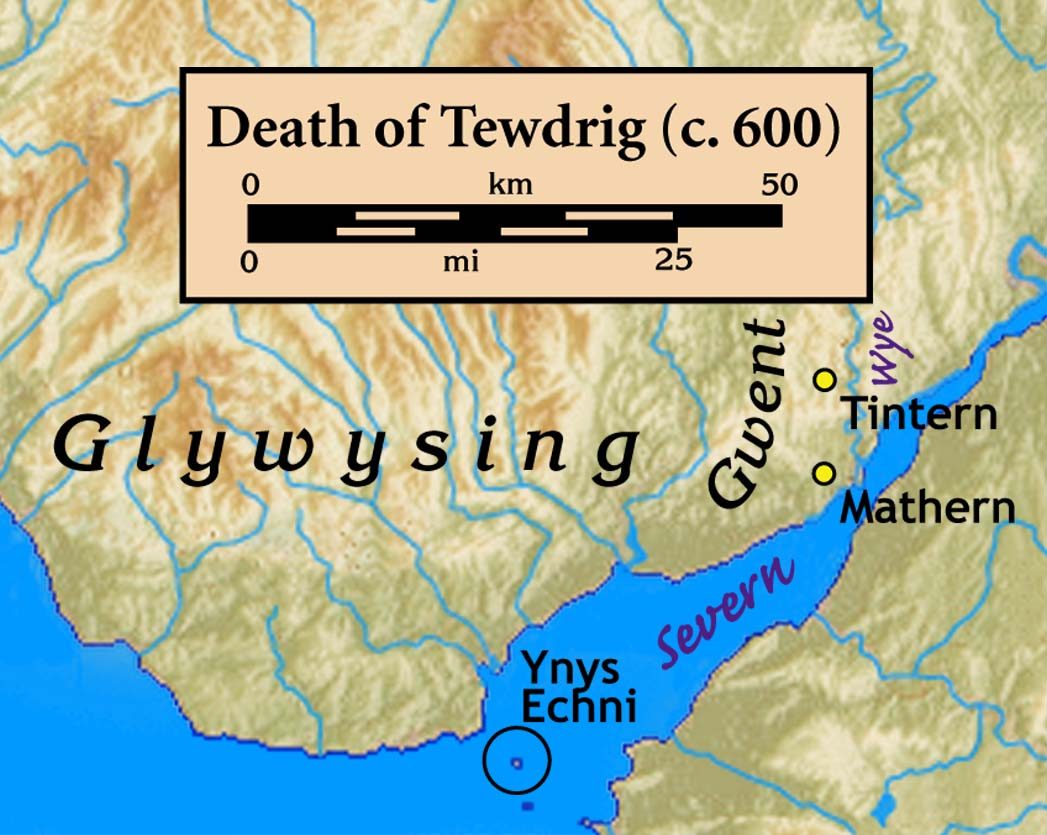
Idnerth appears in the Book of Llandaff as a son of King Meurig, the king who ruled over Glamorgan, Gwent, and possibly Ergyng at one point. Idnerth’s mother was Onbrawst, a princess of Ergyng.
The Connection to King Arthur
What makes this so significant is that Idnerth was the younger brother of Athrwys, a particularly prominent candidate for the historical King Arthur. Even some scholars who do not directly identify Athrwys as Arthur, such as Christopher Gidlow, accept that he may have contributed to the legends.
As the maternal uncle of Aidnerth, or Idnerth, Euan Buurr would also have been the maternal uncle of Athrwys. Whether Athrwys was the real King Arthur or just contributed to the legends about him, this may well be the origin behind the statement in Culhwch and Olwen that Iaen’s sons were related to Arthur on their father’s side.
Conclusion
In conclusion, Iaen is a minor but interesting figure from the Arthurian legends. He only appears in two sources, neither of which provides much information about him. He apparently lived in Caer Tathal, which was probably either in northwest Wales or southwest Wales. His sons were allies of Arthur, and his daughter was Arthur’s lover and the mother of Cydfan.
Although the two lists of Iaen’s sons are seemingly contradictory, we have seen that it may be that many of the sons were known by more than one name or had epithets by which they were sometimes known (such as ‘Llychlyn’). The name ‘Iaen’ appears to be a corruption of ‘Ieuan’, and we have seen that this figure is possibly identifiable as Euan Buurr, the maternal uncle of Athrwys ap Meurig, offering a simple explanation for how Iaen’s sons were remembered as relatives of King Arthur.
Sources
Bartrum, Peter, A Welsh Classical Dictionary, 1993
Barber, Chris, King Arthur: The Mystery Unravelled, 2016
Howells, Caleb, King Arthur: The Man Who Conquered Europe, 2019
Farmer, David, The Oxford Dictionary of Saints: Fifth Edition, 2011
Wilhelm, James J & Lacy, Norris, The Romance of Arthur: An Anthology of Medieval Texts in Translation, 2015
Bromwich, Rachel & Simon Evans, D, Culhwch ac Olwen, 2012
Parker, Will, Culhwch and Olwen Translation (footnote 117), 2016