Was Riothamus, King of the Britons, the Real King Arthur?

One especially popular theory about King Arthur is that he can be identified, at least in part, with a historical figure known as Riothamus. In particular, this theory is designed to explain the legend about Arthur engaging on a grand conquest of much of Western Europe. It does also touch on some of the more traditional aspects of the legend of Arthur. Given its popularity, we would expect it to have considerable evidence supporting it. What is this evidence, and how convincing is it really?
Who Was Riothamus?
Riothamus was a historical figure who appears in certain records about early medieval France. At the time, in the fifth century, the Romans and the Visigoths were in conflict. The Western Roman Empire was about to come to an end. In this tumultuous period, Riothamus appears as ‘king of the Britons’.
There are only two early sources which mention Riothamus. One source is Jordanes, a sixth century historian from the Eastern Roman Empire. In his history of events in the west in the fifth century, he refers to ‘Riotimus’, calling him ‘king of the Britons’.
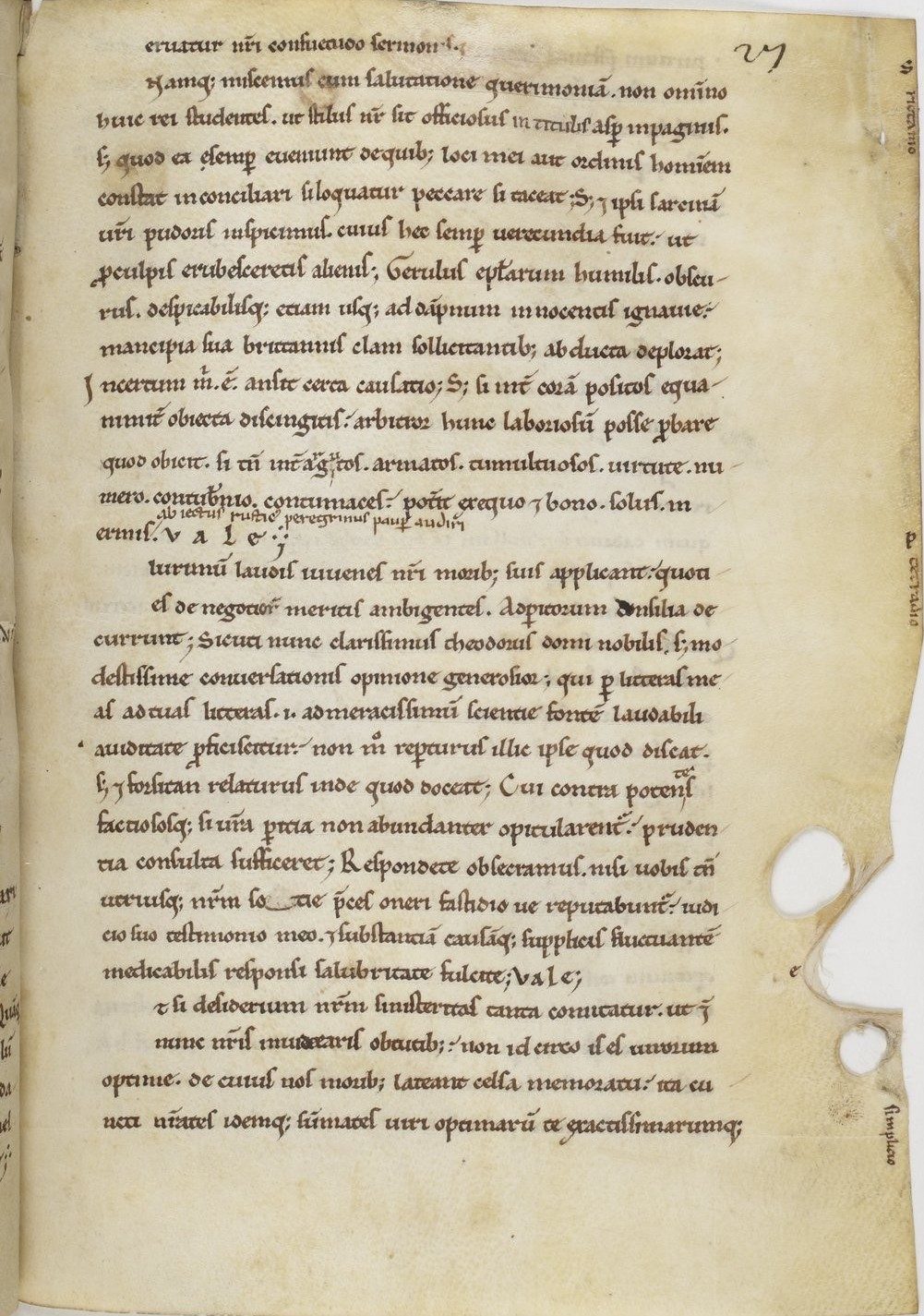
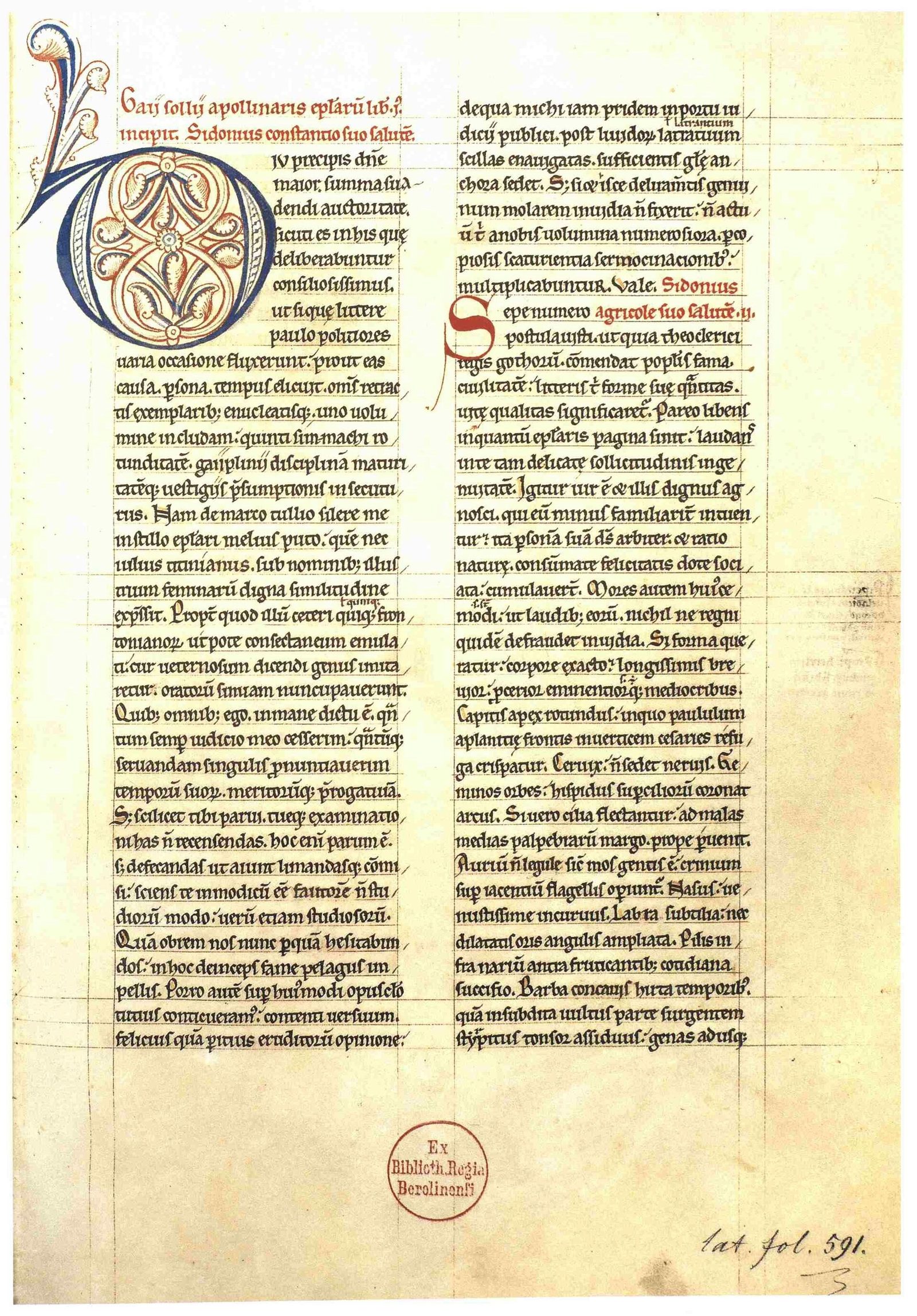
The other source is more contemporary, being an actual letter sent to this king by Sidonius Apollinaris, the bishop of Clermont in France. This letter is addressed to ‘Riothamus’. This form of his name is usually preferred over the ‘Riotimus’ that Jordanes used.
What We Know From Sidonius’ Letter
Despite being contemporary and thus a very valuable source, Sidonius’ letter does not tell us very much. This letter was written on behalf of a poor citizen whose own slaves were being kidnapped by certain Britons. Sidonius sent this letter to appeal to Riothamus to get those Britons to stop.
Sidonius does not directly reveal Riothamus’ position. He does not refer to him as ‘king’, although this does not exclude the possibility that he was. Nevertheless, the content of the letter demonstrates that Riothamus evidently had authority over Britons. The letter does not specifically explain who these Britons were, nor does it associate them with a specific group. They are just generic Britons. Thus, it is evident that Riothamus had authority over Britons in general in that region. This strongly supports the understanding that he was a king.
What We Know From Jordanes’ Account
Jordanes’ sixth-century account is much more explicit regarding Riothamus’ position. He was the ‘king of the Britons’. As we have seen, this is consistent with the information provided by Sidonius’ contemporary letter.
In the pertinent passage, Jordanes explains that Euric, the king of the Visigoths, was attempting to conquer all of Gaul. In response, Roman Emperor Anthemius asked the Britons for help. Jordanes then tells us the following:
“Their King Riotimus came with twelve thousand men into the state of the Bituriges by the way of Ocean, and was received as he disembarked from his ships. Euric, king of the Visigoths, came against them with an innumerable army, and after a long fight he routed Riotimus, King of the Britons, before the Romans could join him. So when he had lost a great part of his army, he fled with all the men he could gather together, and came to the Burgundians, a neighboring tribe then allied to the Romans.”
According to this account, in approximately 470, Riothamus arrived with his army in the state of the Bituriges, which essentially corresponds to the region of Berry in central France.
Riothamus’ army clashed with the Visigothic army of Euric, but before the Romans could arrive to aid their ally, Euric managed to defeat the Brittonic army. As a result, Riothamus was forced to flee. He fled to the Burgundians, further to the east. Nothing more is known about him.
Who Was Riothamus’ Family?
As we have seen, the two early sources for Riothamus do not provide any genealogical information about him whatsoever. However, some researchers claim that he appears in certain medieval genealogies concerning one line of kings of Brittany.
An eleventh-century genealogical record from a hagiography of a religious figure called Iudichael mentions a certain ‘Riatham’ in the genealogical list. This Riatham is made the son of Deroch and the father of Jonas. This latter figure, Jonas, was famously murdered by a tyrant of Brittany named Conomor. Conomor, in turn, ended up being killed by Jonas’ son, Judwal, in 560.
As we can see from this information, identifying Riothamus with the Riatham of this record is an attractive possibility, but not without its chronological problems. Riothamus would have had to have been old by the time he fathered Ionas, which is unlikely, although not impossible.
More significantly, records about Riatham’s father, Deroch, explain that his own father Riwal arrived in Brittany in the time of King Clotaire of the Franks. His reign began in 511. It is impossible for Riwal to have arrived in Brittany in the reign of Clotaire and for his grandson Riatham to have been the Riothamus who fought Euric in 470.
For this reason, many scholars believe that Riatham either was not Riothamus at all, or that Riatham has been misplaced in the genealogy. Perhaps Riatham was the son of an earlier Deroch who appears as the father of Riwal. This would accommodate perfectly his identification as Riothamus. Still, this is entirely speculative.

Evidence That Riothamus Was the Real King Arthur
Now that we understand who Riothamus was, what is the evidence that has been used to try to argue that he was the real King Arthur? This theory makes considerable use of Geoffrey of Monmouth’s Historia Regum Britanniae, which contains the first full account of Arthur’s European conquest. Firstly, let us consider one very fundamental part of the theory.
Riothamus’s Name
Needless to say, the name ‘Riothamus’ is not identical nor remotely similar to ‘Arthur’. So, how could he possibly have anything to do with the legend of the king with that name?
The proposed answer to this issue lies in the etymology of ‘Riothamus’. This name is generally accepted as being composed of two parts, the first of which is the word ‘rio’. This means ‘king’. The second part, ‘thamus’, is a superlative suffix. Thus, ‘Riothamus’ would mean ‘kingliest’.
Due to this, some researchers argue that it was not actually a personal name. Rather, it was a title. This being the case, it would allow for the possibility that his real name was something else – such as ‘Arthur’.
As well as simply being a title and thus allowing for the possibility that he was called ‘Arthur’, the very meaning of the apparent title itself indicates someone of Arthur’s stature. In the legends, King Arthur was the most powerful king in Britain. Therefore, having a title which means ‘kingliest’ would make a great deal of sense.
A King in Britain
Furthermore, Riothamus’ explicit role in the surviving records as a king of the Britons also fits Arthur’s profile. However, an important question arises in this regard: Was Riothamus a king of the Britons in Britain, or in Brittany?
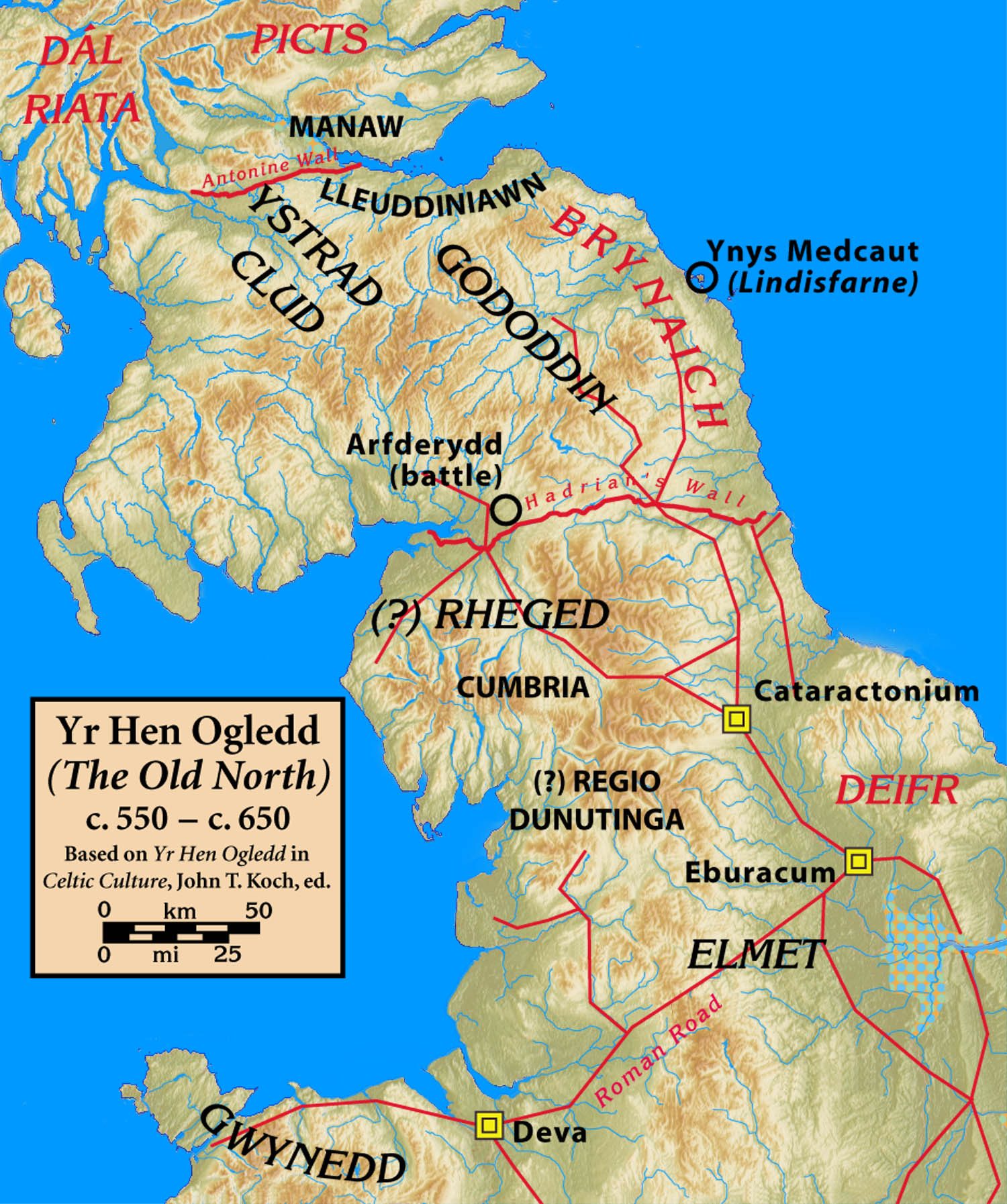
Brittany was a region in the northwest corner of Gaul which had come into the hands of the Britons in the late fourth century. Thus, could it be that Riothamus was actually a king who ruled in that region rather than in Britain? If so, this would severely weaken the similarity between him and Arthur, since Arthur was definitely meant to have been a king in Britain itself.
In support of placing Riothamus in Britain, proponents of this theory have pointed to Jordanes’ wording. He wrote that Riothamus arrived at the state of the Bituriges ‘by way of Ocean’, that is, by way of the Atlantic Ocean. This wording has been used to argue that he came from Britain itself, not Brittany.
European Expedition
Another important part of this theory is the fact that Riothamus engaged in a military expedition on the continent. This is exactly what King Arthur is described as doing. Admittedly, he does not appear in that capacity in the earliest accounts that mention him.
However, at least as early as c. 1137, when Geoffrey of Monmouth wrote Historia Regum Britanniae, we find a detailed account of Arthur travelling to Gaul with a large army and taking over that whole region.
It would be easy to dismiss this account as fictional due to the lateness of the source. Some scholars, though, have argued that this would not fit what we see from the rest of the Historia Regum Britanniae. One example is Geoffrey Ashe, the main proponent of the Riothamus theory.
According to Ashe, an analysis of the Historia Regum Britanniae reveals that Geoffrey of Monmouth did not simply invent things without any basis. Ashe argued that Geoffrey did exaggerate and distort accounts, but there is always some historical (or at least, pre-existing) basis for every major episode in his narrative.
This being the case, Ashe argued that there must be a historical basis for the idea that King Arthur went on a military expedition in Gaul, given that it is such a prominent part of Geoffrey’s account.
In Ashe’s opinion, Riothamus is the only historical figure who is known to have done anything Arthurian. He was, according to proponents of this theory, the only British king known to have travelled to Gaul to engage in military activity in the Arthurian period, meaning that he is the only plausible candidate for the historical figure behind this part of the legend.
Arthurian Characters
To provide further support for this theory, beyond just basic similarities, Ashe pointed to a number of characters from Geoffrey’s account of Arthur’s European conquest who could arguably be identified with people involved (rather peripherally, in some cases) in Riothamus’ campaign of 470.
Emperor Leo
The most obvious example is Emperor Leo. Geoffrey of Monmouth mentions him several times in the account of Arthur’s European campaign. Excluding the emperors who ruled after Rome no longer controlled Gaul, the only emperor with that name ‘Leo’ who matches the details in Geoffrey’s account (that is, an emperor whose reign spanned at least several years) is Emperor Leo I. He ruled from 457 to 474.
This fits very well with the approximate date of 470 for Riothamus’ campaign. Therefore, the historical Emperor Leo I is a good match for the Emperor Leo of the legend.
Lucius Tiberius
Another example is the enemy of the story, Lucius Tiberius. He is the leader of the Roman army. According to this theory, the Historia Regum Britanniae presents him as a Roman emperor. This being the case, was there a Roman emperor by the name of ‘Lucius’ who reigned in the time of Riothamus?
The answer is no, but proponents of this theory argue that there is a basis for believing that Geoffrey of Monmouth may have thought that such an emperor existed.
There is a document called the Chronicle of Sigebert of Gembloux, which was written about two decades before the Historia Regum Britanniae. This chronicle refers to an emperor named Lucerius as having reigned in 469-470 (a mistake for Emperor Glycerius, who ruled in 473-474). The name of this figure is a close match for the Lucius of the Arthurian legend, and the dates assigned to him closely match the date of Riothamus’ campaign.
Pope Supplicius
A third example is a pope who appears in Geoffrey’s account. He is mentioned just before Arthur travels to Gaul, indicating that he lived around the time of that event.
Interestingly, the pope in whose papacy Riothamus fought with King Euric was Simplicius. His papacy lasted from 468 to 483, definitely covering Riothamus’ expedition. The similarity between the names ‘Supplicius’ and ‘Simplicius’ led Ashe to argue that they were identical.
Mordred
A fourth example is Mordred, the famous betrayer of Arthur in the legends. He first appears as ‘Medraut’ in the Annales Cambriae of the tenth century. Geoffrey of Monmouth mentions him as ‘Modred’, where he is made the nephew of Arthur. According to this account and other traces of Welsh tradition, this figure conspired to overthrow Arthur.
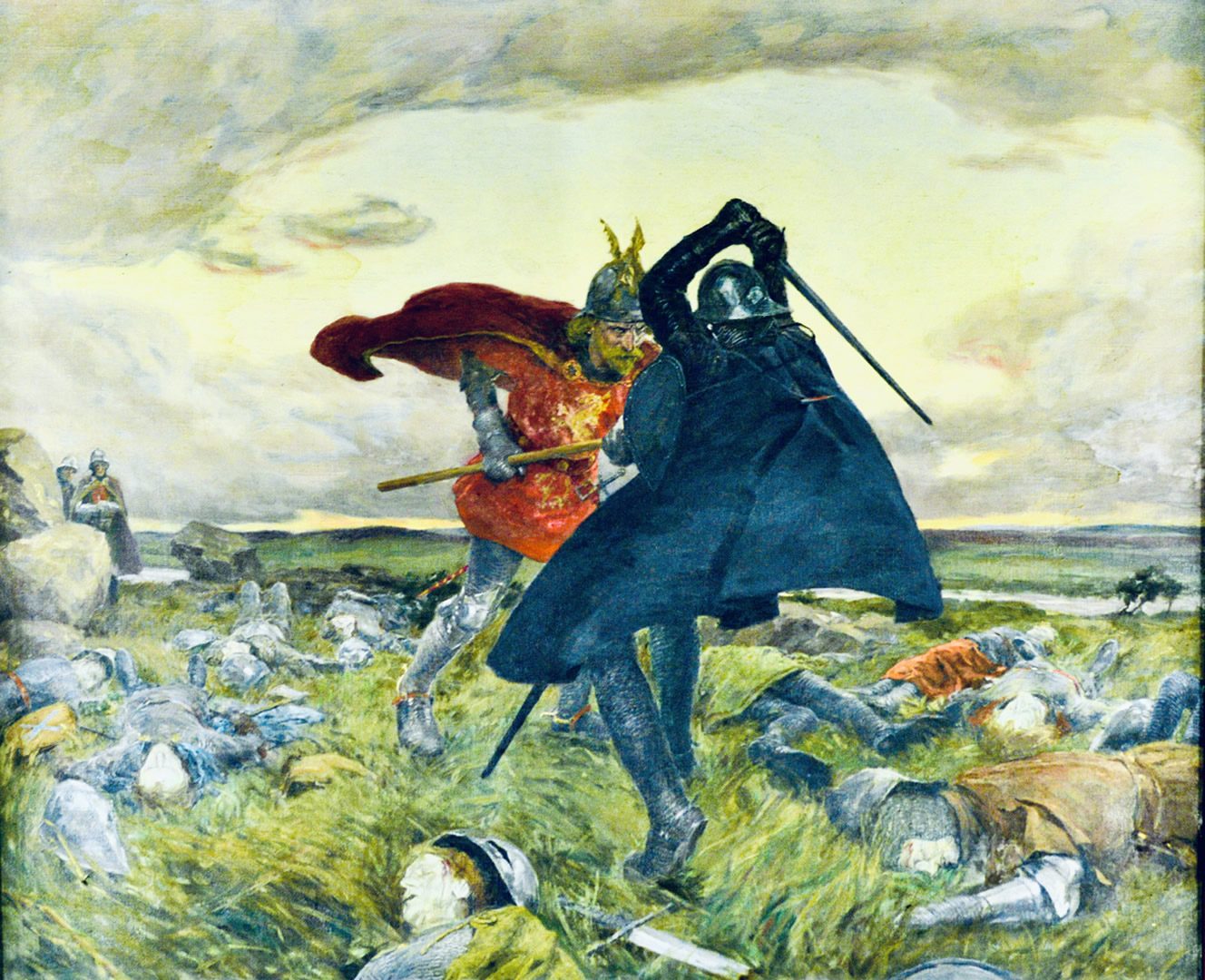
According to Geoffrey’s account, while Arthur was away on his European campaign, Mordred usurped the throne, declaring himself king of Britain. This resulted in a civil war between Arthur and Mordred once the former returned to Britain, culminating in the bloody Battle of Camlann.
According to Ashe, this part of the legend can convincingly be associated with the fact that a man named Arvandus betrayed Riothamus. He incited Euric, king of the Visigoths, to attack the Britons north of the Loire. This, supposedly, led to the war between Riothamus and Euric.
One record, called the Chronicle of Anjou, refers to Mordred as ‘Morvandus’, similar to the name ‘Arvandus’.
Cheldric
One final character from the Arthurian legend which was used by Ashe to argue for this theory is Cheldric. He appears in Geoffrey’s Historia Regum Britanniae as one of Arthur’s main Saxon opponents during his battles in Britain.
According to Ashe, the name ‘Cheldric’ clearly comes from the name ‘Childeric’. This would logically be a reference to Childeric I, the Frankish king who ruled in Gaul from about 457 until 481. Since his reign overlapped with Riothamus’ career, this seems to provide support for the Riothamus theory.
Supporting Chronological Evidence
Additional support for this theory comes from a number of medieval documents which appear to place Arthur precisely in the time of Riothamus.
Legend of Saint Goeznovius
One example of this is the Legenda Sancti Goeznovii, or the Legend of Saint Goeznovius. According to Ashe, this was written in the eleventh century, meaning that it predates Geoffrey of Monmouth’s Historia Regum Britanniae.
In this document, we find the following passage:
“In the course of time, the usurping king Vortigern, to buttress the defence of the kingdom of Great Britain which he unrighteously held, summoned warlike men from the land of Saxony and made them his allies in the kingdom. Since they were pagans and of devilish character, lusting by their nature to shed human blood, they drew many evils upon the Britons. Presently their pride was checked for a while through the great Arthur, king of the Britons.”
This gives the impression that he came immediately after Vortigern. Since Vortigern is generally believed to have been active between c. 425 and c. 470, this would suggest that Arthur was active in the latter part of the fifth century. This would place him in the right time to be Riothamus.
Other Documents
A variety of other documents do explicitly place Arthur in this era. The earliest example appears to be the writings of Alberic of Trois-Fontaines. He wrote an extensive chronicle just over a century after Geoffrey of Monmouth wrote his Arthurian text. In this chronicle, Alberic stated that King Arthur reigned from 459 to 475.
The next document is known as the Salzburg Annals. Although this was written in about the tenth century, a thirteenth century writer added a reference to Arthur’s reign next to the entry for Hilarius’ succession as pope in 461.
More than a century later, the writer Jacques de Guise likewise placed Arthur in the fifth century, during the rule of Aegidius in northern Gaul, which lasted from 461 to 464.
Since these documents associate Arthur with figures who were not mentioned by Geoffrey of Monmouth, such as Hilarius and Aegidius, Ashe argued that they must have been based on sources that were independent of Geoffrey’s narrative.
Arthur’s Fate at Avalon
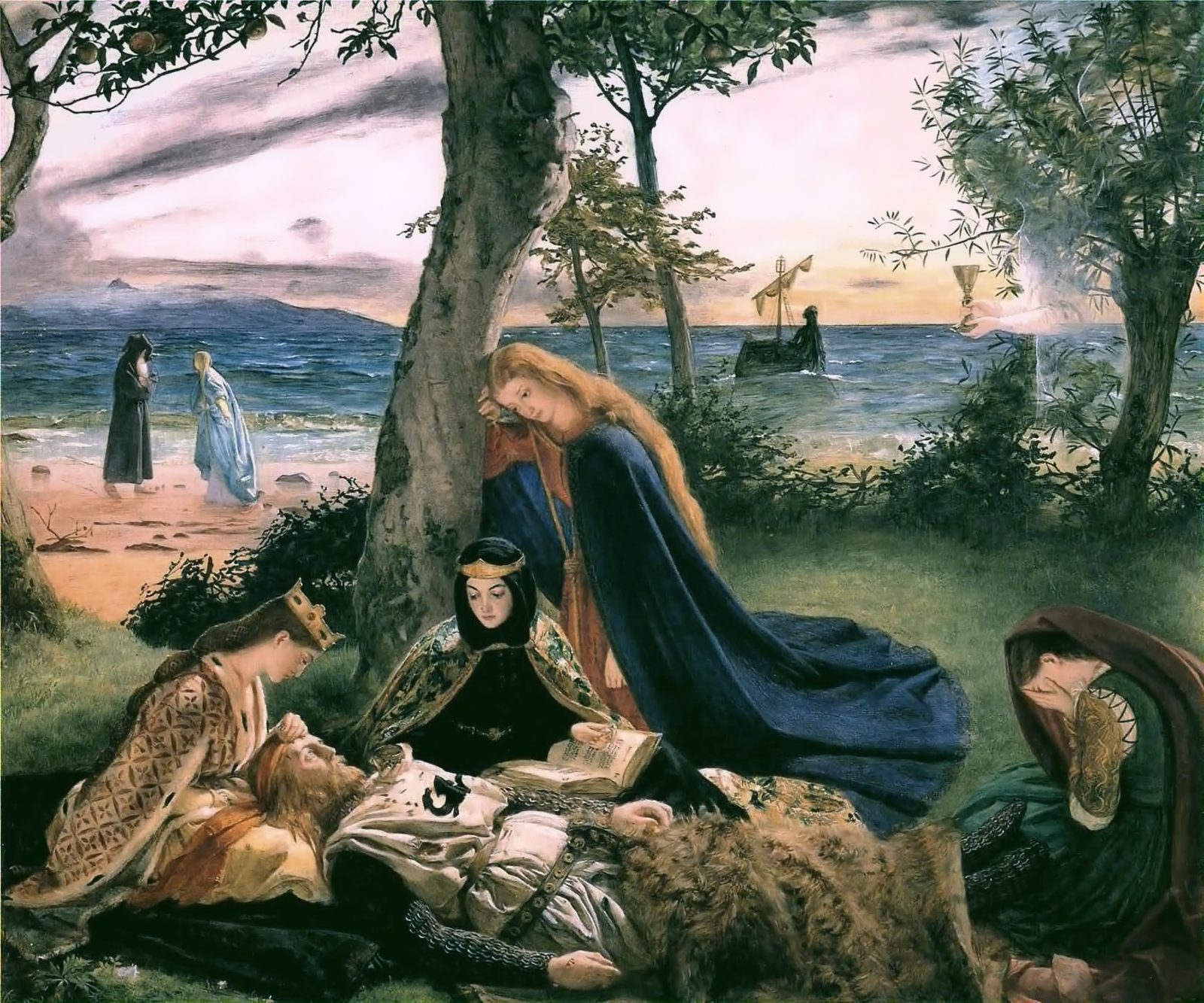
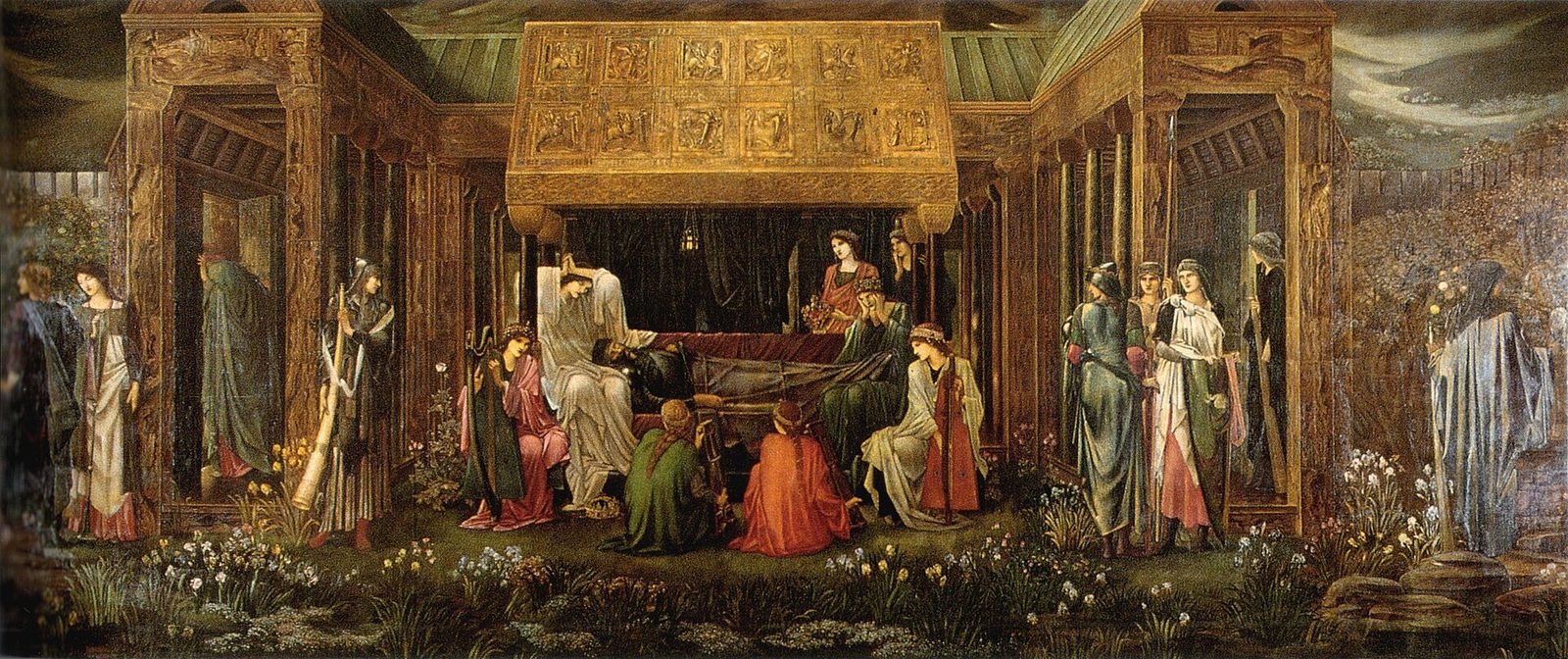
There is one more notable piece of evidence used in the Riothamus theory. According to Geoffrey of Monmouth’s narrative, after King Arthur’s final battle, he was taken to a special place called Avalon to be healed of his wounds.
Recall that Jordanes wrote that Riothamus fled to the territory of the Burgundians after his battle with Euric. As it happens, there was a town called Avallon in that very territory. Thus, Ashe speculated that Riothamus ended up fleeing to that very town, which then evolved into the legend of Arthur being taken to Avalon.
Objections to This Theory
Despite how well developed this theory is compared to many others, and how strongly it appears to be supported by some of the evidence, there are many serious problems with it.
Was ‘Riothamus’ Really Just a Title?
Let us start with the issue of Riothamus’ name. According to this theory, it was just a title. The fact that it means ‘kingliest’ supposedly proves that it was the title of a high king. Yet despite this logic, there is every indication that it was a genuine name.
For one thing, many other Brittonic names from that era display similar etymologies. Many of them are composed of two elements, even including the element ‘rio’, meaning ‘king’. One example is Riochatus. He appears in the writings of Sidonius Apollinaris and was thus a contemporary of Riothamus. His name means ‘Battle King’. Yet, this man was a priest.
The fact is that all names have meanings, and many of the names used by the medieval Britons included the element for ‘king’.
Furthermore, it is very notable that Sidonius referred to this king of the Britons in his personal letter as ‘Riothamus’. Would Sidonus, the bishop, have referred to this king with a title rather than his personal name in a personal letter? That seems very unlikely.
Jordanus, likewise, does not seem to have considered ‘Riothamus’ to have been a title. He refers to him as ‘King Riothamus’, which would be redundant if ‘Riothamus’ itself was a title meaning ‘Highest King’.
Still, it is entirely possible that Riothamus simply had more than one name, like countless others in this era did (Sidonius Apollinaris himself being one example). Therefore, he could still have had the name Arthur, so this does not disprove the theory.
Did Riothamus Really Come from Britain?
Another issue is related to the question of where Riothamus’ kingdom was. Did he rule over the Britons in Britain or in Brittany? As we saw earlier, the conclusion that he ruled in Britain comes from the fact that Jordanes describes him as arriving in the state of the Bituriges by way of the ocean.
However, this evidence arguably points in the other direction. After all, if Riothamus was a king from Britain, then he could only have reached Gaul by way of the ocean. Since there is no bridge, going by way of the ocean was literally the only possible method of getting from Britain to Gaul.
Thus, if Riothamus had been from Britain, it would have gone without saying that Riothamus must have sailed across the sea to reach Gaul. It would be a completely redundant statement. Why would Jordanes have mentioned something so redundant?
Really, the fact that Riothamus is specifically stated to have gone by way of the ocean indicates that an alternative method was possible, hence the necessity for the clarification.
Therefore, this evidence more reasonably points to Brittany rather than Britain. As a king of Brittany, Riothamus could have marched his troops down to the state of the Biturges if he had really wanted to. Therefore, Jordanes evidently felt the need to specify that Riothamus, in this case, had arrived there by way of the ocean.
Additional Support for Riothamus in Brittany
There are at least two addition pieces of evidence that support placing Riothamus in Brittany. Firstly, there is the presence of the name ‘Riatham’, which is clearly a form of the name ‘Riothamus’, in Breton genealogies.
As we saw earlier, there are issues with the idea that this was really our Riothamus. It might have been a slightly later figure with the same name. But even so, this shows that it was a name used by the royals of Brittany. In contrast, there is no trace of this name in the numerous medieval genealogies of the dynasties of Britain.
Secondly, and more significantly, Sidonius’ letter to Riothamus was an appeal to Riothamus to deal with issues that were occurring in Gaul. This clearly places Riothamus in Gaul, not Britain.
Since all the evidence indicates that Riothamus was a king who ruled in Brittany, not Britain, this severely weakens the idea that he could have had anything to do with the legend of Arthur travelling on an expedition from Britain to Gaul.
Were Riothamus’ Activities Really Arthurian?
Another key part of this theory is the supposed fact that Riothamus’ activities in themselves are very similar to King Arthur’s in the legend recorded by Geoffrey of Monmouth. However, despite these claims, Riothamus’ activities could hardly be further from Arthur’s.
For one thing, we have already seen that Riothamus was almost certainly not a king based in Britain, which singlehandedly severely weakens the perceived similarities. But the issues go even further than that.
One crucial fact is that Riothamus lost the one battle which he is recorded as fighting. Riothamus lost against Euric and fled. This is fundamentally different to the legend of Arthur, which describes the king as successfully defeating the Roman ruler of Gaul, conquering that entire region, and holding onto it for years.
Riothamus’ military expedition was much, much smaller scale than the Arthurian legend. Of course, legends do grow over time. It is possible that a successful military expedition could have come to be expanded into legends of a successful conquest.
Yet there is no getting around the fact that Riothamus’ battle against Euric was not successful. He lost the battle and fled. While a victory might have been exaggerated, a defeat does not seem like a good basis for the Arthurian legend. We have no record of any of Riothamus’ other activities, such as successful battles on other occasions, so there is really no basis at all to suggest that his career could have initiated legends of a conquest of Gaul.
Allied with the Romans
Another key difference between Riothamus and King Arthur is that Riothamus was actually an ally of the Romans. On the other hand, King Arthur is portrayed as fighting against the Romans in the legend of his conquest of Gaul. They are the primary enemy of the account.
It is very difficult to see how Riothamus, an ally of the Romans who fought against the Visigoths, could have been construed into an enemy of the Romans. Even if it could be argued that such a change could have occurred as the legend evolved, this still highlights the lack of any active reason to conclude that this historical event had anything to do with the legend.
Did Riothamus Really Flee to Arthur’s Avalon?
What about the question of Avalon? Surely the fact that Riothamus fled to an area where we find a real place called Avallon connects him to King Arthur? While this is an interesting coincidence, there are far more differences between the two locations than similarities.
The Avalon which appears in the Arthurian legends is known in Welsh tradition as ‘Afallach’. Both names, Avalon and Afallach, can both independently be convincingly associated with the north of Britain. This is within the sphere of the traditional insular Arthur. Identifying Arthur with a location on the continent is automatically far less convincing.
Furthermore, Avalon is explicitly described as an island. Arthur is unambiguously described as being taken there in a boat. The town of Avallon in Burgundy is, of course, not an island.
Additionally, Arthur is said to have been taken to Avalon after the Battle of Camlann, which is explicitly set in Britain and comes after Arthur has already returned from his European conquests. Thus, it is completely illogical for Riothamus’ flight to the Burgundians to have anything to do with Arthur being taken to Avalon.
The Problems with the Character Evidence
What about the various characters who have been used to provide further support for this theory? Let us consider them one by one.
Emperor Leo
This is the only one of the character identifications that stands up to scrutiny. The emperor of the Arthurian account really is called Leo, and he really does seem to be based in the east. However, this does not necessarily mean that the account actually comes from historical events that occurred in his reign. This name could be a corruption of another name. Still, in isolation, this is a perfectly reasonable piece of evidence – the first of this theory so far.
‘Emperor’ Lucius
However, the case for ‘Emperor’ Lucius is much weaker. One crucial issue is that Geoffrey never calls Lucius an emperor, despite many online claims. In fact, he only ever presents him as a military commander and a procurator.
The idea that Geoffrey got this character from the mention of Emperor Lucerius, placed in 469-470, in the Chronicle of Sigebert of Gembloux is flawed for multiple significant reasons. For one thing, if Geoffrey got the character of Lucius from this chronicle, why did he refer to Lucius as a procurator rather than an emperor? The chronicle calls Lucerius an emperor (as Glycerius historically was).
Secondly, Geoffrey of Monmouth directly tells us the year in which Arthur abdicated immediately after the Battle of Camlann. He places this event in the year 542. The Battle of Camlann, for its part, comes immediately after Arthur returned to Britain after his European conquests.
This being the case, Geoffrey clearly believed that Arthur’s European conquests were in the second quarter of the sixth century, regardless of when they historically occurred. Since Geoffrey clearly gives the date of 542 for Arthur’s abdication, he obviously would not have looked at information regarding the year 470 in a chronicle to acquire extra details with which to fill his account.
With these facts in mind, it is simply impossible that Geoffrey’s character of Lucius comes from the record of Emperor Lucerius in the Chronicle of Sigebert of Gembloux.
Pope Supplicius
The alleged connection between the legendary Pope Supplicius and the historical Pope Simplicius, despite how attractive this connection might appear at first, is also unsustainable in view of the facts.
The reality is that the Historia Regum Britanniae does not associate this pope with Arthur’s European campaign. In fact, he only appears in a single line. In this line, Geoffrey says that Arthur sent his nephew Walgan (better known as Gawain) to Supplicius to be educated.
Thus, Pope Supplicius is specifically identified as the educator of Gawain. Since Gawain was the son of King Lot of Lothian and thus the nephew of Urien Rheged, whose chronology is firmly established, Gawain cannot have been educated any earlier than the mid-sixth century.
This means that we can almost certainly identify the Pope Supplicius of the account with the historical Pope Pelagius. His papacy lasted from 556 to 561, exactly when any historical nephew of Urien would have been a youth. While the second part of ‘Supplicius’ is clearly a corruption of ‘Pelagius’, the first part is evidently an intrusive prefix, probably from the Old Welsh ‘escop’, meaning ‘bishop’.
Mordred
Regarding the supposed connection between Mordred and Arvandus, their respective natures as traitors have nothing to do with each other. For one thing, there is no evidence that Arvandus was related in any way to Riothamus.
Furthermore, Arvandus ‘betrayed’ Riothamus by inciting Euric to attack the Britons of Brittany. This bears no relation to Mordred’s betrayal, which involved stealing the throne from Arthur.
While the single reference to Mordred as ‘Morvandus’ in a chronicle is interesting, this can undoubtedly be attributed to coincidence. It may be that the writer of the Chronicle of Anjou simply adjusted this strange Brittonic name to something more familiar, in the same vein as names such as Servandus.
Cheldric
Although the names ‘Cheldric’ and ‘Childeric’ are clearly similar, the two characters bear no relation to each other. Childeric was a Frankish king and is not reported to have fought against Riothamus. In contrast, Cheldric was Arthur’s enemy at numerous battles in Britain.
Given chronological and geographical considerations, it is a virtual certainty that Arthur’s Cheldric is the historical Cerdic of Wessex. While the name used by Geoffrey may well have been influenced by the name ‘Childeric’, this does not mean that Childeric I actually had anything to do with Geoffrey’s account.
The Chronological Issue
What about the several documents which do appear to make Arthur an exact contemporary of Riothamus? For one thing, even if these records were reliable independent sources, this would not necessarily prove that Arthur was Riothamus.
Regarding the Legend of Saint Goeznovius, the fact of the matter is that the passage in question is a very brief summary of events across fifth and sixth century Britain. The fact that it mentions Arthur just after Vortigern does not prove in any way that Arthur was imagined to have come immediately after Vortigern. It is simply a very broad summary of events.
More significantly, though, is the fact that none of these documents are demonstrably independent of Geoffrey of Monmouth. All of them date from long after the Historia Regum Britanniae was published.
Although Geoffrey places Arthur’s abdication in 542, he does also place his European campaign in the reign of a certain Emperor Leo. It is not surprising that, over the centuries following Geoffrey’s career, a handful of writers gave more credence to the latter detail than the former one.
Conclusion
In conclusion, the theory that Riothamus was the historical King Arthur is fundamentally rooted in the legends of Arthur conquering much of Europe. Since Riothamus was a historical king of the Britons who fought in Gaul, his career is arguably Arthurian. However, by examining Riothamus’ activities more closely, we can see that the idea that it served as the foundation of the Arthurian legend is exceedingly implausible.
Furthermore, most of the supporting evidence used to strengthen this theory breaks down upon closer examination. For instance, many of the characters whose names appear similar to names of characters in the Arthurian legend actually appear in contexts that make it impossible for the figures in question to be equated, like Pope Supplicius and the historical Pope Simplicius. In short, this theory fails to adequately explain the legend of Arthur conquering Europe in any meaningful way, making it very unlikely that Riothamus contributed anything to the legendary figure of King Arthur.
Sources
Bruce, Christopher, The Arthurian Name Dictionary, 1999
Lacy, Norris; Ashe, Geoffrey & Mancoff, Debra, The Arthurian Handbook: Second Edition, 2014
Ashe, Geoffrey, The Origins of the Arthurian Legend, 1995
Howells, Caleb, King Arthur: The Man Who Conquered Europe, 2019
https://www.maryjones.us/ctexts/goeznovius.html
https://www.maryjones.us/jce/riothamus.html
https://www.earlybritishkingdoms.com/articles/geoffrey_ashe_on_riothamus.html
https://www.nytimes.com/1985/03/19/science/a-new-theory-points-to-model-for-king-arthur.html