Ilinot, Son of King Arthur

Ilinot is the son of King Arthur in the Arthurian legends. He is a very obscure character, only appearing in the works of two German writers, but there is evidence that there were other works which mentioned him. He may, in fact, be a version of a better-established Arthurian character, although this is debatable. What do we know about Ilinot?
Who Was Ilinot?
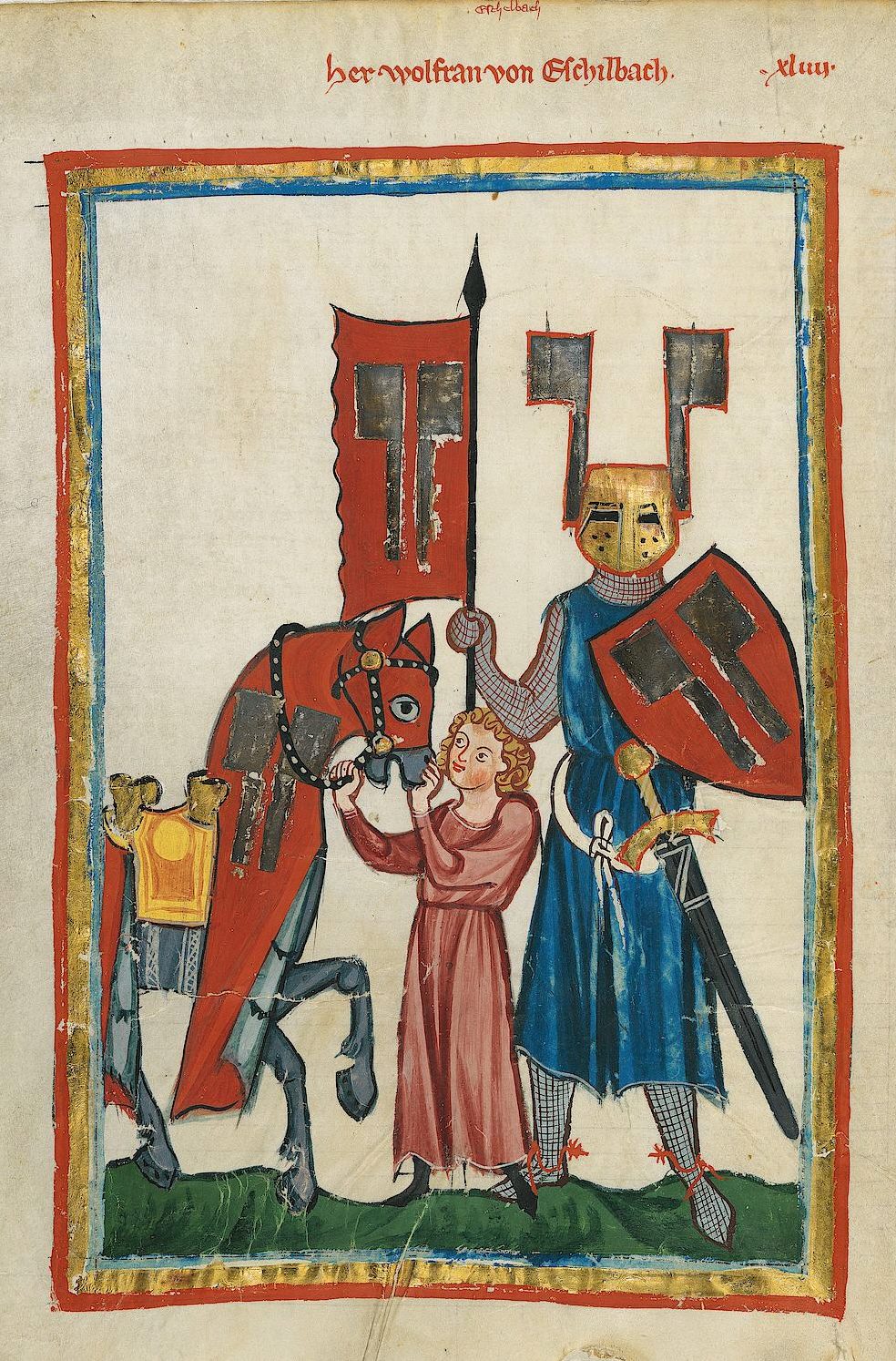
Ilinot was a son of King Arthur who appears in the writings of Wolfram von Eschenbach and Der Pleier. Sometimes his name is spelt ‘Illinot’, with two ‘l’s, but this is uncommon. Despite the claims of many online sources, there is no basis for the idea that he was illegitimate. Rather, he appears to have been the legitimate son of Arthur and his queen, Guinevere.
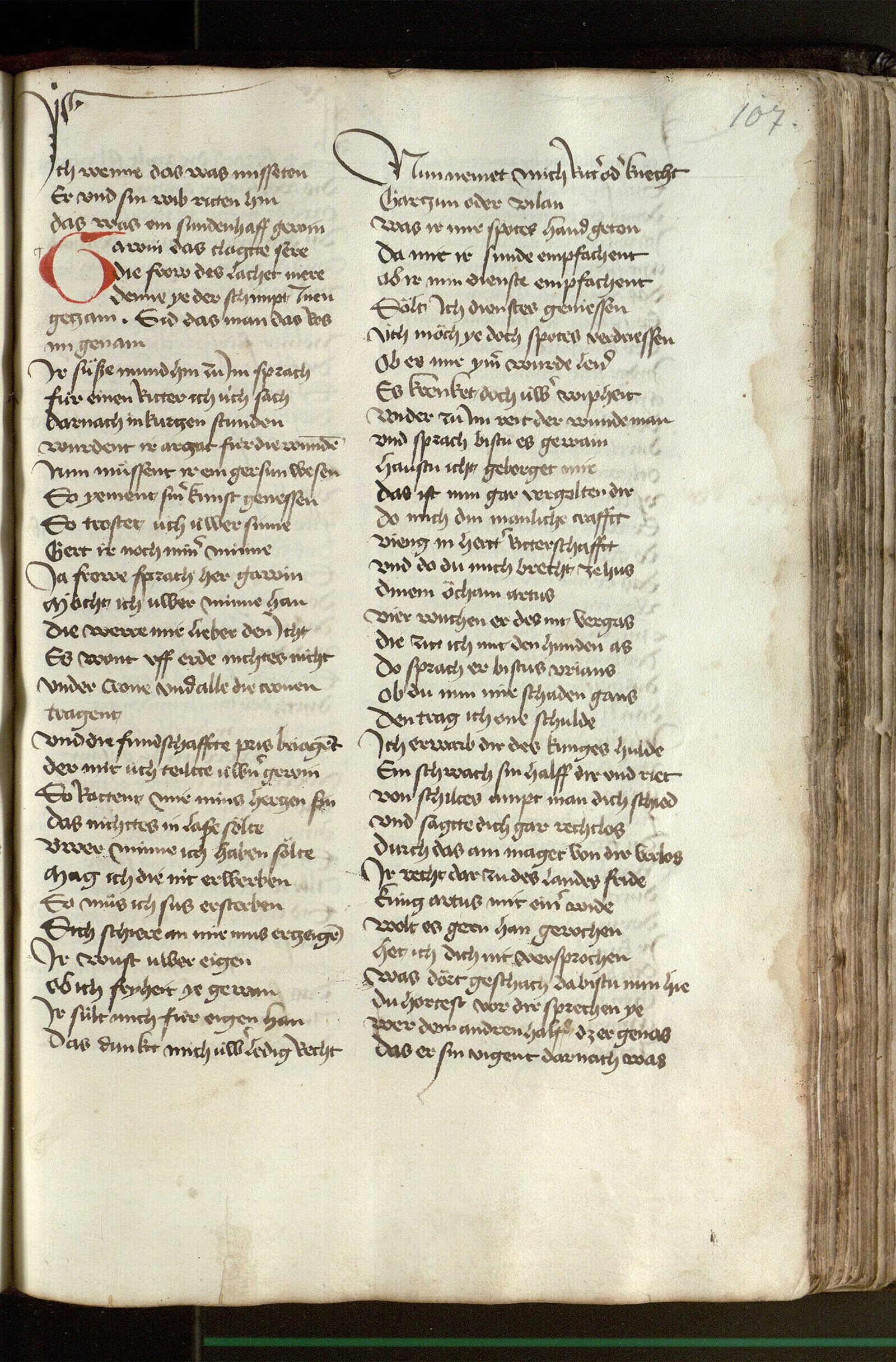
There are three sources in which Ilinot appears, two of them written by Wolfram. The first is Parzival, written in the first quarter of the thirteenth century and focused on the adventures of ‘Parvizal’ – that is, Percival. The second source in which he appears is a prequel to the aforementioned tale, entitled Titurel.
Ilinot does not have a prominent role in Parzival. He is only referred to a handful of times, with his most memorable contribution to the story being his death. In fact, this does not even occur during the main narrative, but it is an event which the narrative refers to as having happened in the past.
Ilinot appears more prominently in Titurel, but not as a participant in the events. Rather, he is mentioned primarily in the context of how his death affected others.
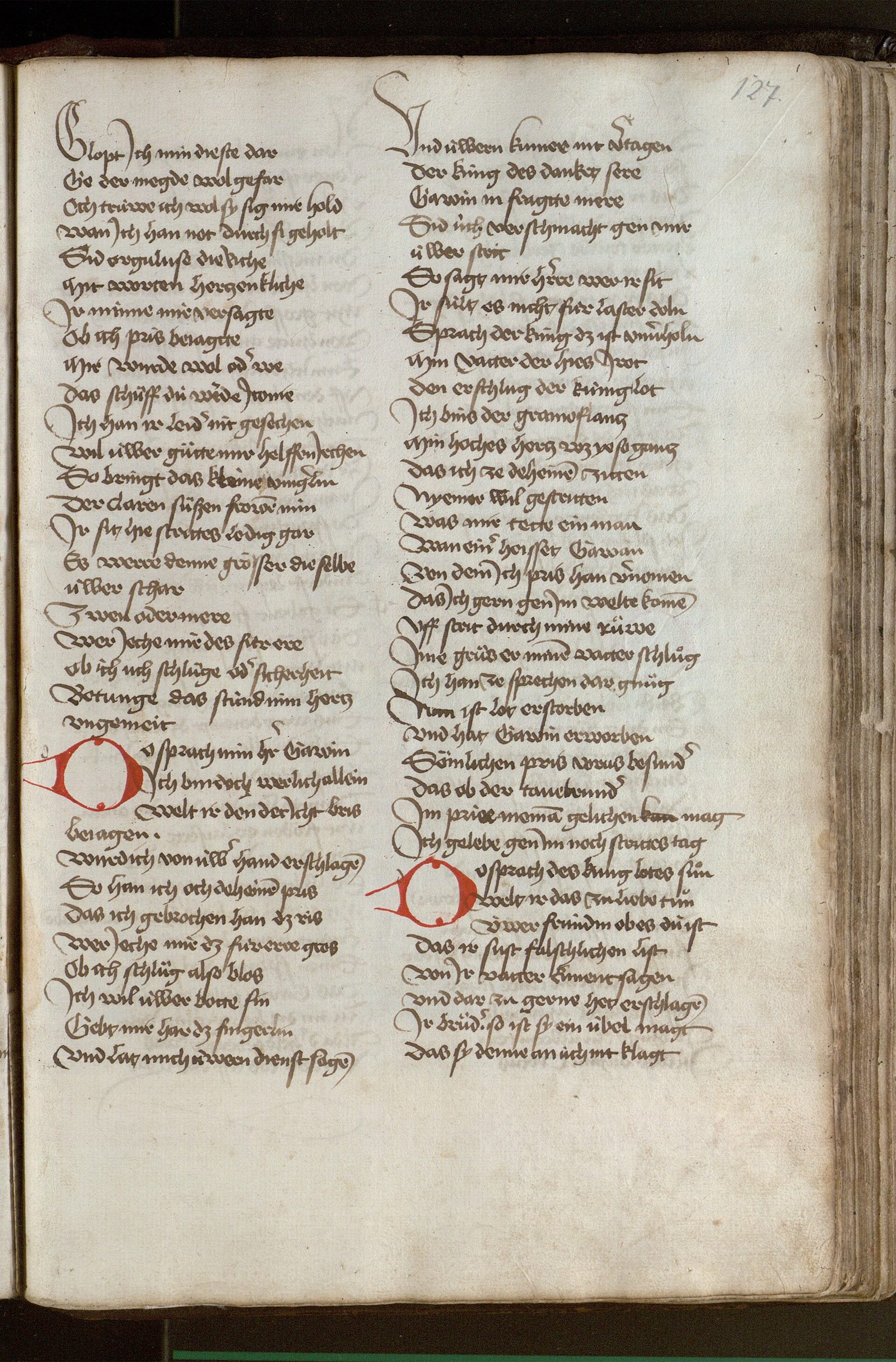
The third source that mentions Ilinot is Garel von dem blühenden Tal, often shortened to simply Garel. This was written by Der Pleier (actually a pseudonym for a writer whose real name is unknown) in about the middle of the thirteenth century.
Did Wolfram Invent Ilinot?
It was a staple of the Arthurian romance tales for writers to add original characters to their own versions of the legends. It might appear that this is the case with Ilinot, given that he does not appear in any previous source. However, as we noted, Wolfram only ever refers to Ilinot’s death as something that has already happened.
Commentators have observed that Wolfram’s references to Ilinot do not give the impression of Wolfram having created this character himself. Rather, they give the impression of him referring to a character whose story should have already been familiar to the audience. One commentator wrote:
“Wolfram seems to have known another version of the story, as he evidently did know a romance dealing with the fate of Arthur’s son, Ilinot, of whom we know nothing.”
Therefore, there was very likely an existing story about Ilinot, a story which pre-dated Wolfram. There is no way of determining how far back this tale goes, but given that there is no surviving trace of it from before Wolfram, it is tempting to think that it does not pre-date him by much. But this, of course, is only speculative.
Ilinot’s Life
What does Wolfram reveal about Ilinot? After making several references to him throughout Parzival, Wolfram finally gives us some background information to this character. Still, even this is brief, but it does give us a broad overview of what happened in Ilinot’s life. The passage in question reads thusly:
“Slay Gawain if thou wilt, as his cousin Ilinot by thine hand was slain,
Since thy power with the bitter torment of desire did the knight constrain,
Till he strove for the love of his lady all the days of his fair young life,
Florie of Kanedig was she, and he served her in many a strife.
And he fled from the land of his fathers in the days of his youth’s unrest,
And was reared by this queen, and Britain ne’er saw him but as a guest.
And the burden of Love weighed on him, and from Florie’s land he fled,
Till the day that in true love’s service, as I told ye, men found him dead.”
A Courtly Romance
These words are being directed to Frau Minne, the personification of courtly love in Middle High German literature. In other words, by stating that Ilinot ‘by thine hand was slain’, the speaker is saying that Ilinot was killed due to his pursuit of love.
This passage names the object of Ilinot’s love as Florie of Kanedig. She was the one whom Ilinot fell in love with.
We also learn from this that Ilinot ‘fled from the land of his fathers in the days of his youth’. This is then immediately followed by the statement that he was ‘reared by this queen’ (that is, by Florie of Kanedig). This suggests that he fled to her realm. The fact that ‘Britain ne’er saw him but as a guest’ implies that Florie’s land was outside of Britain.
This is supported by the fact that Wolfram elsewhere calls Ilinot ‘the Breton’. Therefore, Florie was logically a queen based in Brittany.
The Order of Events
There are two ways of interpreting this passage about Ilinot’s flight from Britain. It would appear that the most common interpretation understands Ilinot to have fled to Florie’s court as a youth for some understated reason, and then he subsequently fell in love with the queen.
On the other hand, we can observe that the text mentions Ilinot falling in love with Florie before it mentions him fleeing to her land. An interpretation that is at least equally as valid as the above is that he fled to her land specifically because of his love for her. While the fact that he was ‘reared’ in her court suggests that he was young, he was still evidently old enough to flee from Britain whichever interpretation we choose, so he was surely old enough to fall in love, even if he was much younger than the object of his passion.
Serving and Leaving the Queen
In whatever order it happened, Wolfram makes it clear that Ilinot largely grew up in Florie’s court and loved the queen. What happened next? He says that he ‘served her in many a strife’, which suggests that he was a knight who fought battles on her behalf.
Wolfram does not give Florie’s side in these events. However, in Garel, by Der Pleier, Florie is described as returning Ilinot’s feelings. The two fell in love, although they did not have a happy ending. Wolfram provides us with the intriguing line:
“And the burden of Love weighed on him, and from Florie’s land he fled.”
There is no explanation as to what exactly happened here. For whatever reason, Ilinot fled Florie’s land. Although Wolfram does not explain why, he implies that it was somehow related to ‘the burden of Love weighing on him’. Perhaps he fled because his love for Florie was forbidden.
Some online sources say that Florie expelled him or banished him from her kingdom, but there is no basis for that.
Ilinot’s Death
The line about Ilinot fleeing Florie’s land is immediately followed by the line:
“Till the day that in true love’s service, as I told ye, men found him dead.”
This is a peculiar statement, for it suggests that Ilinot died while engaging in some service for Florie, such as fighting a battle. This would account for his death being ‘in true love’s service’. Yet, this seems inconsistent with the fact that Ilinot had just been described as fleeing Florie’s land.
Perhaps we can understand that Ilinot ‘fled’ in that he distanced himself from Florie herself, perhaps choosing to go on a faraway expedition. Yet, he was still officially in her service. While Wolfram’s wording is tantalisingly brief and ambiguous, this appears to be, at least, one satisfactory explanation of the text.
Wolfram does not explain what happened to Florie next. However, Der Pleier’s Garel explains that the queen died of grief upon hearing of his death. Her sister, Queen Kloudite, then took the throne.
When Did Ilinot Live?
Neither Wolfram nor Der Pleier give any explicit information about when Ilinot was supposed to have been born within Arthur’s reign, nor when he died. However, the information that they do provide enables us to work out roughly when he must have lived.
For example, Florie’s sister, Kloudite, was married to a king called Ekunaver. He threatened to attack Arthur because the latter’s father, Uther Pendragon, had killed Ekunaver’s father. However, he was stopped by Sir Garel, the maternal cousin of Percival (or ‘Parvizal’, in the German romances).
The fact about Ekunaver’s father being killed by Uther Pendragon, while Ekunaver himself was stopped by Garel the maternal cousin of Percival, allows us to discern roughly when these events must have occurred. After all, Ekunaver’s father must have still been alive during the reign of Uther Pendragon, who died when Arthur was fifteen years old, and yet Arthur had already established his kingdom and the Knights of the Round Table before Percival had become an adult.
What This Means for Ilinot
If Garel was the maternal cousin of Percival, then he, presumably, would have been born at around the same time. He was thus a younger contemporary of Arthur. This is consistent with him also, apparently, being contemporary with Ilinot, given their respective connections to Ekunaver.
The information about Ekunaver, however, helps us to place an upper limit on things. He cannot have been born any later than Arthur’s fifteenth year at the very latest, although he was probably born somewhat before then so as to be able to remember his father’s death at the hands of Uther Pendragon.
In the absence of any evidence to the contrary, we should assume that Florie was approximately the same age as her brother-in-law, Ekunaver. Thus, she would probably have been only somewhat younger than Arthur – perhaps ten years younger or so.
Since Ilinot fell in love with her, the most logical conclusion would be that Ilinot was born quite early in Arthur’s life. This would allow him to not be too much younger than Florie.
This is also consistent with the fact that Ilinot seems to have died long before the end of Arthur’s reign. The fact that the war between Arthur and Ekunaver takes place after Ilinot’s death makes this evident. This fact, in turn, is clear from Der Pleier telling us that Ekunaver received his land, Kanedig (also spelt Kanadic), from his wife Kloudite. As we have already seen, she only inherited it after the death of Florie.
Was Ilinot Really Loholt?
The name ‘Ilinot’ is not borne by any son of King Arthur found in any other sources outside of Wolfram’s and De Pleier’s writings. However, that does not necessarily mean that this character cannot be identified with one of those other sons.
One common suggestion is that Ilinot is a version of a much better attested figure known as Loholt. He even appears in early Welsh tradition as Llacheu, where he is mentioned in a number of poetic sources and even a prose tale.
The basic reason for this conclusion is due to the superficial similarity between their names. Note that Loholt’s name is also sometimes spelt ‘Lohot’. Scholar Margaret Fitzgerald Richey wrote:
“The name Ilinot must be derived in some way from Lohot.”
Perhaps we could suppose that the ‘h’ was misread as an ‘n’, while the initial ‘I’ is simply intrusive. From ‘Lohot’, this would produce ‘Ilonot’. The change from the first ‘o’ to an ‘i’ is essentially inconsequential, as vowels were often mixed up in the medieval writings.
Highly Distorted
On the basis of the name, this is a perfectly reasonably suggestion. However, the actual story assigned to Ilinot bears almost no relation at all to the legend of Loholt, or Llacheu. The only notable similarity is that they are both known for being youths when they died. Aside from this, almost everything is different.
Welsh tradition heavily suggests that Llacheu died at about the time of the Battle of Camlann, right near the end of Arthur’s reign. This occurred while fighting in Arthur’s service. This is completely inconsistent with what Wolfram said about Ilinot’s death being in Queen Florie’s service, as well as the fact that his death is placed well before the end of Arthur’s reign.
While the non-Welsh romance tales do not explicitly place Loholt’s death at Camlann, the German writer Ulrich heavily implies that Loholt died at about the same time as his father Arthur, thus supporting this same conclusion.
Furthermore, the fact that Llacheu (and Loholt) is said to have died as a youth means that he cannot have been born early in Arthur’s reign, as in the case of Ilinot. Additionally, the Dream of Rhonabwy presents Llacheu as serving as one of Arthur’s knights, while Ilinot apparently never served Arthur, having run away as a youth and dying while still in Florie’s service.
In other words, Ilinot is essentially an entirely different character to Loholt. His life story does not actually correspond to that of any other recorded son of King Arthur. If the name came from ‘Loholt’, as it may well have done, then it is clear that the German writers essentially just took the name and his status as Arthur’s son and created what is effectively a completely new character.
Was Ilinot a Real Person?
The question of Ilinot’s historicity depends very much on whether we can consider him to be a version of Loholt, who is, in turn, a version of Llacheu. Of all the characters in the Arthurian legends, Llacheu is one of the best attested. He appears in Pa Gur, which is one of the earliest Arthurian sources, dating to about the tenth century.
Therefore, there is a very good chance that Llacheu was a real person. Thus, if we can consider Ilinot to be a later evolution of this figure, then it would be reasonable to say that Ilinot was likely a real person too.
Yet, as we have seen, Ilinot bears almost no relation to Loholt/Llacheu, with his name and his death as a youth apparently being the only things taken from the original character. Even then, the assumption that Ilinot comes from Loholt relies on the apparent connection between their names, which, while likely, is not certain.
Conclusion
In conclusion, Ilinot was the son of King Arthur. He was a very minor character, appearing in just three sources written by two German writers. Ilinot was born to Arthur and Guinevere evidently quite early in their lives. While still a youth, he fled to the court of Florie in Brittany, whom he loved. He served her faithfully, until eventually, under unclear circumstances, he died after fleeing from her court in some way, though while still in her service.
It is possible, although uncertain, that this character is very loosely based on the figure of Loholt (based, in turn, on the Welsh figure of Llacheu). At the very least, it is possible that his name comes from that of Loholt, although they are different in almost every other way.
Sources
Bruce, Christopher, The Arthurian Name Dictionary, 1999
Richey, Margaret Fitzgerald, THE GERMAN CONTRIBUTION TO THE MATTER OF BRITAIN, WITH SPECIAL REFERENCE TO THE LEGEND OF KING ARTHUR AND THE TABLE ROUND, 1950
Weigand, Hermann, J, Three Chapters on Courtly Love in Arthurian France and Germany: Lancelot—Andreas Capellanus—Wolfram von Eschenbach’s Parzival, 1956
https://www.gutenberg.org/files/47297/47297-h/47297-h.htm