Timeless Myths Logo
Aphrodite Apollo Ares Artemis Athena Atlas Coeus Crius Cronus Demeter Dionysus Gaia Hades Hephaestus Hera Hermes Hestia Hyperion Iapetus Mnemosyne Oceanus Phobos Phoebe Poseidon Prometheus Rhea Tethys Themis Uranus Zeus
Bacchus Ceres Diana Juno Jupiter Mars Mercury Minerva Neptune Pluto Venus Vesta Vulcan
Amun Anubis Aten Atum Babi Bastet Bes Geb Hapi hathor heqet Horus Isis Khepri Khnum Khonsu Maat Nephthys Nut Osiris Ptah Ra Seshat Seth Shu Sobek Thoth
Alfheim Baldur Freya Freyr Frigg Heimdallr Helheim Idun Jotunheim Loki Nerthus Njord Odin Thor Tyr
Aengus Arawn Badb Brigid Cailleach Ceridwen Cernunnos Cu Chulainn Dagda Danu Gwydion Herne the Hunter Lugh Medb Morrigan Neit Nuada Taliesin Taranis
Chalchiuhtlicue Coatlicue Huitzilopochtli Mictlantecuhtli Mixcoatl Ometeotl Quetzalcoatl Tezcatlipoca Tlaloc Tonatiuh Xipe Totec Xochiquetzal Xolotl
Amaterasu Ame no Uzume Benzaiten Bishamonten Daikokuten Ebisu Fujin Fukurokuju Inari Izanagi Kagutsuchi Raijin Susanoo Tsukuyomi
Caishen Cangjie Dragon King Eight Immortals Erlang Shen Fuxi Guanyin Hou Yi Huxian Jade Emperor King Yama Leizi Lu-ban Mazu Nezha Nuwa Pangu Shennong Sun Wukong Xiwangmu Yue Lao Zhong Kui
Norse Classical Celtic Arthurian
Literature Stories Names
Aphrodite Apollo Ares Artemis Athena Atlas Coeus Crius Cronus Demeter Dionysus Gaia Hades Hephaestus Hera Hermes Hestia Hyperion Iapetus Mnemosyne Oceanus Phobos Phoebe Poseidon Prometheus Rhea Tethys Themis Uranus Zeus
Bacchus Ceres Diana Juno Jupiter Mars Mercury Minerva Neptune Pluto Venus Vesta Vulcan
Amun Anubis Aten Atum Babi Bastet Bes Geb Hapi hathor heqet Horus Isis Khepri Khnum Khonsu Maat Nephthys Nut Osiris Ptah Ra Seshat Seth Shu Sobek Thoth
Alfheim Baldur Freya Freyr Frigg Heimdallr Helheim Idun Jotunheim Loki Nerthus Njord Odin Thor Tyr
Aengus Arawn Badb Brigid Cailleach Ceridwen Cernunnos Cu Chulainn Dagda Danu Gwydion Herne the Hunter Lugh Medb Morrigan Neit Nuada Taliesin Taranis
Chalchiuhtlicue Coatlicue Huitzilopochtli Mictlantecuhtli Mixcoatl Ometeotl Quetzalcoatl Tezcatlipoca Tlaloc Tonatiuh Xipe Totec Xochiquetzal Xolotl
Amaterasu Ame no Uzume Benzaiten Bishamonten Daikokuten Ebisu Fujin Fukurokuju Inari Izanagi Kagutsuchi Raijin Susanoo Tsukuyomi
Caishen Cangjie Dragon King Eight Immortals Erlang Shen Fuxi Guanyin Hou Yi Huxian Jade Emperor King Yama Leizi Lu-ban Mazu Nezha Nuwa Pangu Shennong Sun Wukong Xiwangmu Yue Lao Zhong Kui
Norse Classical Celtic Arthurian
Literature Stories Names
  1. Classical Literature
    Greece Rome Other Ancient Civilizations Timeline of Classical Literature Alphabetical List of Authors Index of Individual Works Index of Important Characters Sources About Us
  2. Greece
    Homer Hesiod Aesop Sappho Pindar Aeschylus Sophocles Euripides Aristophanes Menander Apollonius of Rhodes
  3. Aristophanes
    The Acharnians The Knights The Clouds The Wasps Peace The Birds Lysistrata Thesmophoriazusae The Frogs Ecclesiazusae Plutus (Wealth)
  4. Plutus (Wealth)
    Plutus (Wealth)

Plutus (Wealth)

(Comedy, Greek, c. 388 BCE, 1,207 lines)

Introduction

"Plutus" (Gr: "Ploutis") or "Wealth" is a late comedy by the ancient Greek playwright Aristophanes, first produced around 388 BCE or later. It is a kind of allegory about a poor man, Chremylos, who befriends the blinded Plutus, god of wealth, and encourages him to distribute riches to the deserving and the virtuous.

Synopsis

Dramatis Personae

  • CHREMYLUS

  • CARIO, servant of Chremylus

  • PLUTUS, God of Riches

  • BLEPSIDEMUS, friend of Chremylus

  • POVERTY

  • WIFE OF CHREMYLUS

  • A JUST MAN

  • AN INFORMER

  • AN OLD WOMAN

  • A YOUTH

  • HERMES

  • A PRIEST OF ZEUS

  • CHORUS OF RUSTICS

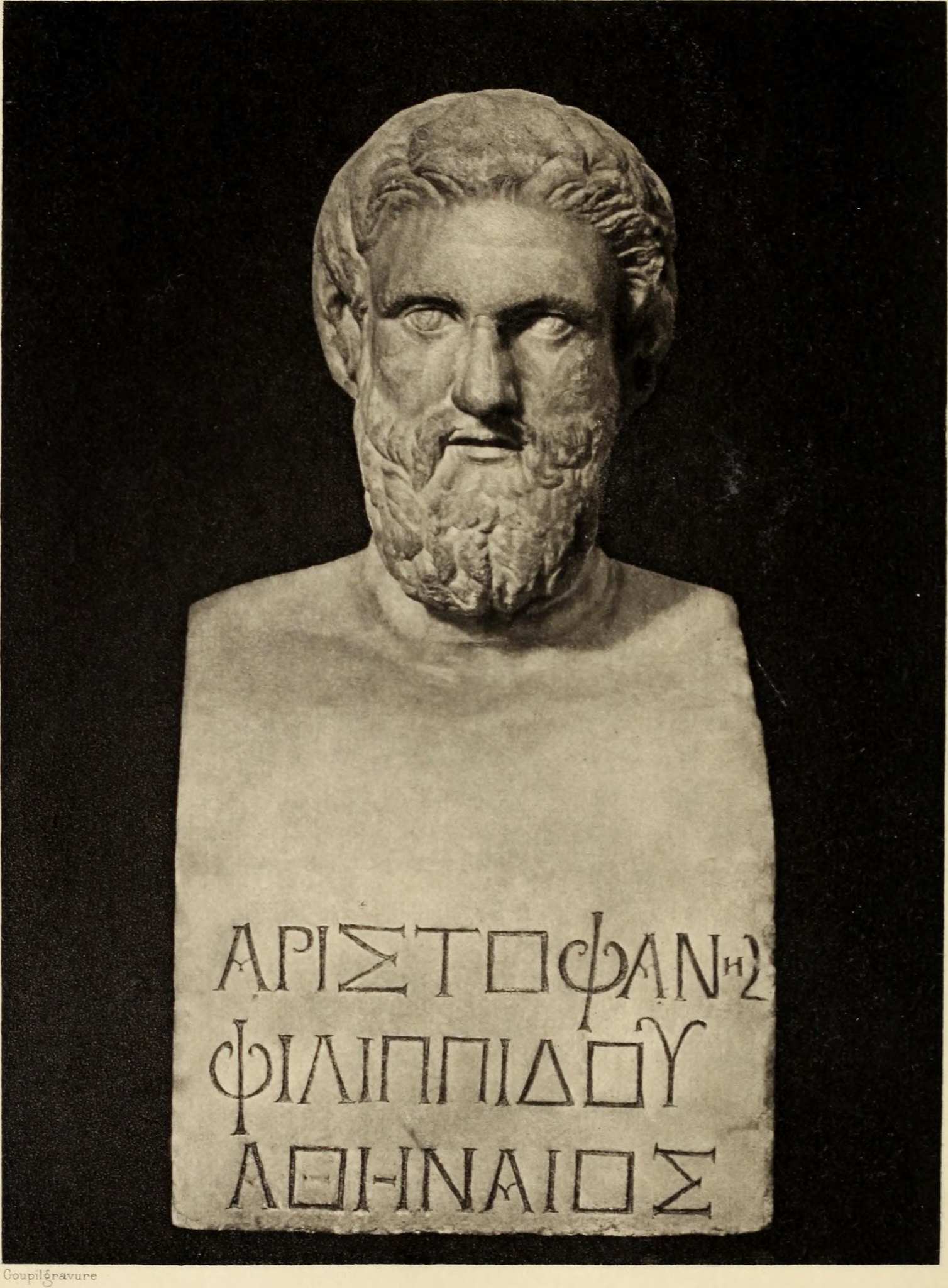
Marble bust of Aristophanes

Marble bust of Aristophanes

Chremylos, an elderly and poor Athenian citizen, and his slave Cario, return to Athens from Delphi, where Chremylos had gone to seek advice from the oracle concerning his son, and whether he should be instructed in injustice and knavery and the other arts whereby worldly men acquire their riches.

Apollo instructs him to follow the first man he meets on leaving the temple and to persuade him to come home with him. The first man he meets happens to be a blind beggar but, when Chremylos persists in following him anyway, he discovers that he is in reality Plutus, the god of wealth, whom Zeus has robbed of his eyesight so that he would be unable to distinguish between the just and the unjust.

After much argument, Plutus is persuaded to enter Chremylos' house. Chremylos is convinced that, if Plutus' eyesight can be restored, then there is hope that wealth will be distributed to the virtuous, rather than randomly, thus making the world a better place. On arriving at the house, they encounter the ragged goddess Poverty, who has been Chremylos' guest for many years. She argues that without poverty there would be no slaves (as every slave would buy his freedom) and no fine goods or luxury foods (as nobody would work if everyone were rich), but Chremylos is unimpressed by her arguments.

Plutus' eyesight is restored at the temple of Asclepius, famous for cures and miracles of this nature, and he formally becomes a member of Chremylos' household. He begins to hand out riches to the more deserving people (including his benefactor, Chremylos) and to remove riches from the unvirtuous, effectively turning the world upside-down economically and socially. Predictably, this gives rise to rancorous comments and claims of unfairness from those who have been deprived of their riches.
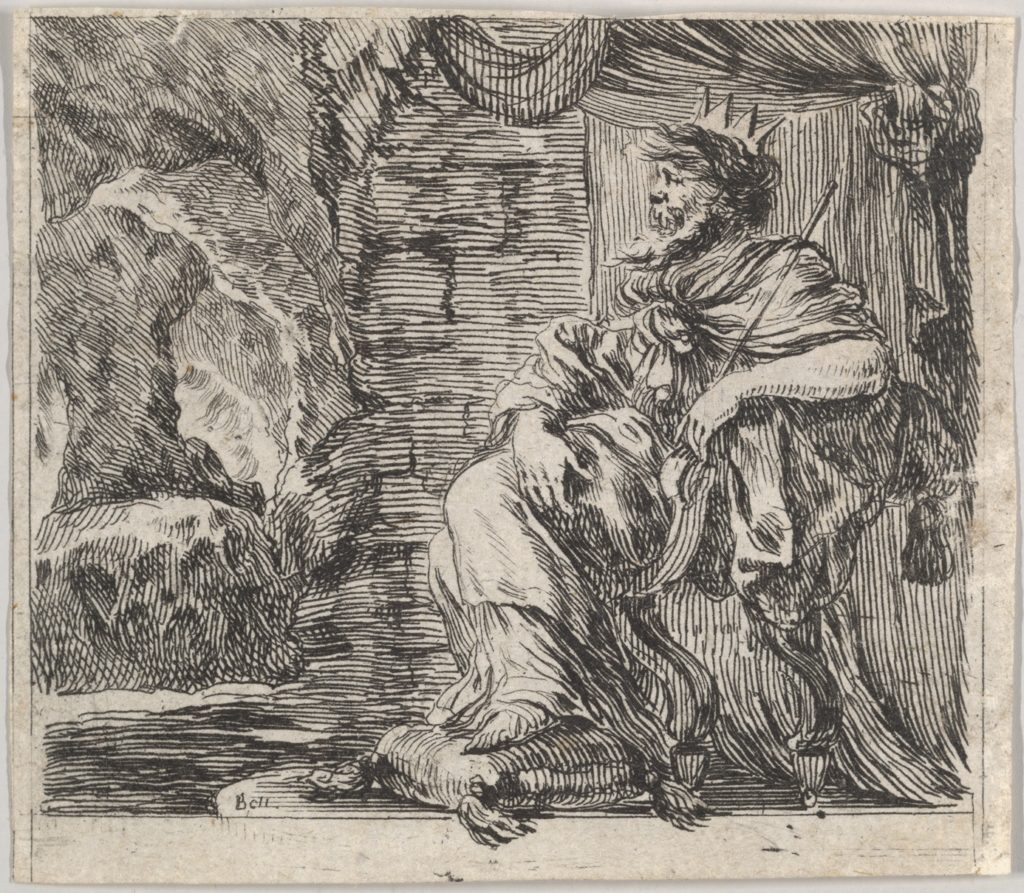
Illustration of Plutus, the Greek god of wealth

Illustration of Plutus, the Greek god of wealth

In the end, the messenger god Hermes arrives to inform Chremylos that the gods are angry because they have been starved of the sacrifices and homage due to the traditional Olympian gods, since all good men have been directing all their attention to Plutus. Hermes, worried about his own predicament, actually offers to work for the mortals, and enters Chremylos' house as a servant on those conditions.

The play concludes with Chremylos' proposal that Plutus should replace Zeus as king of the gods, and they carry him in a solemn procession to the temple and install him in the place of Zeus.

Analysis
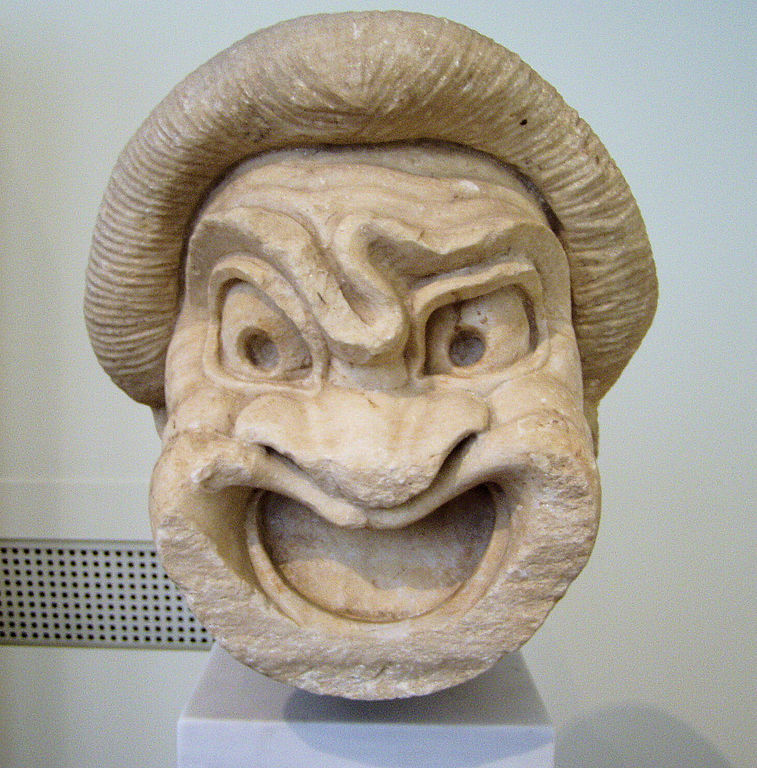
Ancient Greek comedy mask illustration

Ancient Greek comedy mask illustration

"Plutus" is the last, and least humorous, of Aristophanes' extant plays, written shortly before his death, around 388 BCE (or possibly as late as 380 BCE). Indeed, it may have been first staged by Aristophanes' son after his death. It was probably a significant revision of a much earlier play dating from around 408 BCE, and so is often referred to as "Plutus II" or "Wealth II".

Like many of his plays, it is a political satire on contemporary Athens featuring the stupid master, the insubordinate slave and many attacks on the morals of the time. Like "Ecclesiazusae", it also involves the establishment of a kind of utopian community, this time as a solution to the eternal attraction of wealth and prosperity and the problem of the unequal distribution of goods.

The gods are rather severely handled in the play, as are the tricks of the priestcraft and superstition, so that we can perceive that the old reverence for them had passed away, even among men with pretensions to goodness. Although Plutus is recommended to replace Zeus at the end of the play, the priest of Zeus has already lowered his deity by representing him as only anxious for his perquisites and libations.

However, the play is often regarded, even by specialists, as something of an afterthought in the poet's career. In its absence of personal interests and personal satire, and its lack of strong comic incidents, it comes over more as a whimsical allegory than as a comedy proper. Much of Aristophanes' old bitterness is gone, but so is much of the old vigour.

Along with "Ecclesiazusae", it is sometimes considered a product of the "third age" of Aristophanic drama. In an Athens conquered and humbled after the Peloponnesian War, the role of the comic poet had changed significantly and he was no longer expected to be the frank and fearless adviser of the state, reprover of mistaken policy, exposer of trickery and vice in high places and round abuser of his countrymen for their own good. "Plutus" deals, not with political, but with private life, and is usually ranked as belonging to the tradition of Middle Comedy, or at least to the time of transition from Old to New Comedy.

Resources

  • English translation (Internet Classics Archive): classics.mit.edu/Aristophanes/plutus.html

  • Greek version with word-by-word translation (Perseus Project): perseus.tufts.edu/hopper/text.jsp?doc=Perseus:text:1999.01.0039

By Timeless Myths

Aristophanes:

  • • The Acharnians
  • • The Knights
  • • The Clouds
  • • The Wasps
  • • Peace
  • • The Birds
  • • Lysistrata
  • • Thesmophoriazusae
  • • The Frogs
  • • Ecclesiazusae
  • • Plutus (Wealth)
Plutus

Plutus

God of wealth. Plutus was the son of the corn goddess Demeter and the mortal Iasion. Iasion was the son of Zeus and the Pleiad Electra, which made Iasion the brother of Dardanus, ancestor of the Trojan people. Iasion was a farmer from the island o...

September 29th, 2002 • Jimmy Joe
Pluto (Dis)

Pluto (Dis)

Pluto or Dis was a chthonian god of wealth and the Underworld, the world of the dead. His name means "Rich One" and Dis Pater means "Rich Father". He was often referred to as the "Stygian Jupiter" or "Stygian Jove", meaning he was the "Jupiter of ...

September 10th, 2000 • Jimmy Joe
Pluto

Pluto

Pluto: Roman God of Death Pluto, god of death, was the Roman lord of the underworld. He was also the god of anything that could be extracted from the earth, such as diamonds. He abducted Proserpina, who eventually became his wife. This article exp...

April 2nd, 2002 • Timeless Myths
Pallas

Pallas

Pallas was the son of the Titans Crius and Eurybia. He was the brother of Perses and Astraeüs (Astraeus). He married the Oceanid Styx, and became the father of Bia ("Violence"), Cratus ("Strength"), Nike ("Victory") and Zelus ("Emulation").

April 19th, 1999 • Jimmy Joe
Prometheus Bound

Prometheus Bound

(Tragedy, Greek, c. 415 BCE, 1,093 lines)Introduction "Prometheus Bound" (Gr: "Prometheus Desmotes") is a tragedy often attributed to the ancient Greek playwright Aeschylus although it is now usually considered to be almost certainly the work of a...

January 1st, 2025 • Ancient Literature
Graces

Graces

Personification of beauty and grace. They were known to the Greeks as Charties and to the Romans as Gratiae. They were the three daughters of Zeus and Eurynome, who was the daughter of Oceanus and Tethys. The three sisters were named: Charis or Ag...

April 24th, 1999 • Jimmy Joe
Hesiod

Hesiod

(Didactic Poet, Greek, c. 750 – c. 700 BCE)Introduction Hesiod is often paired with his near contemporary Homer as one of the earliest Greek poets whose work has survived. He is considered the creator of didactic poetry (instructive and moralizing...

January 1st, 2025 • Ancient Literature
Tyche

Tyche

Goddess of fortune. Tyche was either an Oceanid (daughter of Oceanus and Tethys), or she could be the daughter of Zeus and Hera. Fortuna was the Roman equivalent of Tyche. There was also Felicitas, goddess of good luck; whoever she might have been...

April 24th, 1999 • Jimmy Joe
The Eumenides

The Eumenides

(Tragedy, Greek, 458 BCE, 1,047 lines)Introduction "The Eumenides" ("The Kindly Ones" or "The Gracious Ones") is the third of the three linked tragedies which make up "The Oresteia" trilogy by the ancient Greek playwright Aeschylus, preceded by "A...

January 1st, 2025 • Ancient Literature
Fortuna

Fortuna

The Roman god of chance or fortune. Fortuna was the Roman equivalent of Tyche, the Greek goddess of fortune. Fortuna was depicted standing on a ball, indicating the uncertainty of chance, fortune or fate. Fortuna was originally a fertility goddess...

September 10th, 2000 • Jimmy Joe
Timeless Myths

Exploring mythology and legends from around the world.

Explore Myths

All Stories Characters All Articles Search Site Map

Mythologies

Norse Mythology Classical Mythology Celtic Mythology Arthurian Legends Mythology Gods Ancient Literature

About Us

Introduction About Jimmy Bibliography FAQs Retro Version

Resources

Timeless Myths All Stories All Articles Characters
© 1999-2026 Timeless Myths • Copyright • Privacy Policy • Cookie Policy • Contact
Follow us: