Antinous in The Odyssey: The Suitor Who Died First
After the war that left the land of Troy riddled in chaos, Odysseus and his men gather to return to their beloved homes. They venture off the land of Troy into the seas and eventually arrive on the isle of the Cicones. Here, they raid and rampage the villages, gaining the attention of the Greek gods and goddesses.
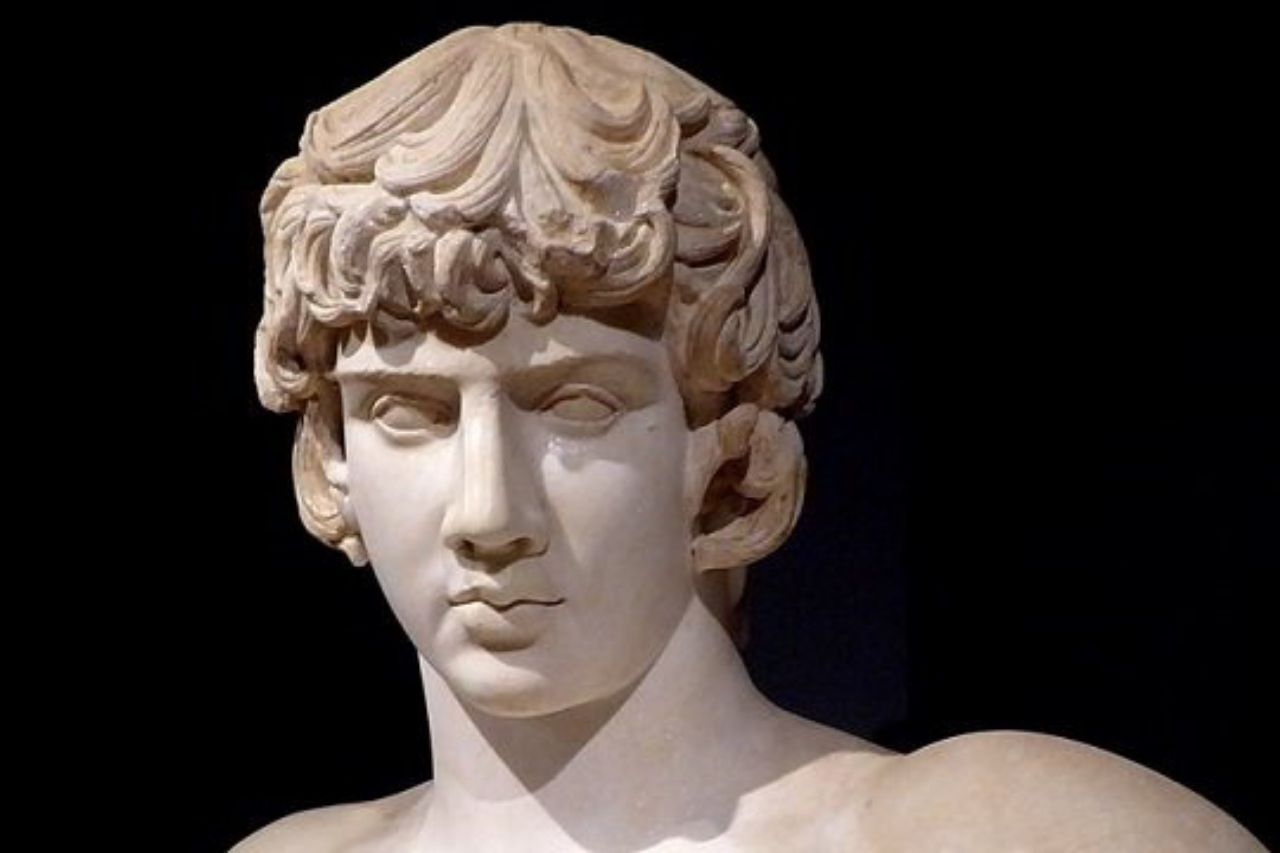
Antinous in The Odyssey
The Odyssey
Throughout their journey, Odysseus and his men land on various islands seeking refuge from the stormy seas. But these islands bring them more harm than good. In the island of Djerba, where the Lotus-Eaters reside, Odysseus almost loses his men to the temptation of the Lotus plant. In Sicily, the land of the Cyclops, Odysseus garners the ire of Poseidon as he blinds the giant who has held them captive in their lands. The hatred of the god of sea poses a threat to their very survival as the god sends storm after storm their way, veering them off course and into dangerous lands.
Finally, after gaining advice from Tiresias in the underworld, Odysseus and his men find a way to go home safely. They were to sail towards but avoid Helios' island, for his golden cattle resided in the land. Poseidon views this as an opportunity to do Odysseus more harm and sends harsh waters to his ship, forcing the Ithacan men to land on the island of the sun god. Hungry and tired, Odysseus ventures off to pray to the gods, leaving his men on the shore. While away, Odysseus' men slaughter the beloved livestock, offering the healthiest one up to the gods.
Odysseus' men committed sins against Helios were grave enough for the young titan to rush up to Zeus and demand justice, threatening to bring down the sun and shining its light to the underworld if they went unpunished. Zeus then sends a thunderbolt their way, killing all Odysseus' men and sparing him only to imprison him on Calypso's island.
While all this is happening, Odysseus' family faces a different type of threat. Penelope, Odysseus' wife, is faced with a dilemma; she wants to wait for her Husband but must entertain suitors to avoid being married off by her father. Antinous son of Eupeithes, leads the band of suitors on their way to the Ithacan queen's heart. Telemachus, son of Odysseus, decides to convene a meeting regarding the fate of his mother's suitors. He calls upon the Ithacan elders and impresses them with his eloquence. However, once he brought upon his concerns to Antinous, the suitor laughed and disregarded his warnings.
Sensing danger brewing towards Telemachus, Athena disguises herself as Mentor and urges the young prince to venture to different lands to search for his father. Antinous, hearing this, plans and leads the suitors' scheme to kill Telemachus upon his return.
Odysseus is finally released from the island of Calypso after Athena begs for his return. While sailing the seas, Poseidon yet again sends a storm his way. He washes ashore the island of the Phaecians, where the daughter of the king escorts him towards the castle. She advises the Ithacan to charm her parents to safely venture the seas. Odysseus recounts his journey and gives the king the entertainment he sought. The king decides to escort him back to Ithaca, giving him a ship and a few men to navigate his return home. Poseidon is the patron to the sea-faring people; he'd promised to guide them and protect them on the sea, allowing Odysseus to traverse the waters smoothly.
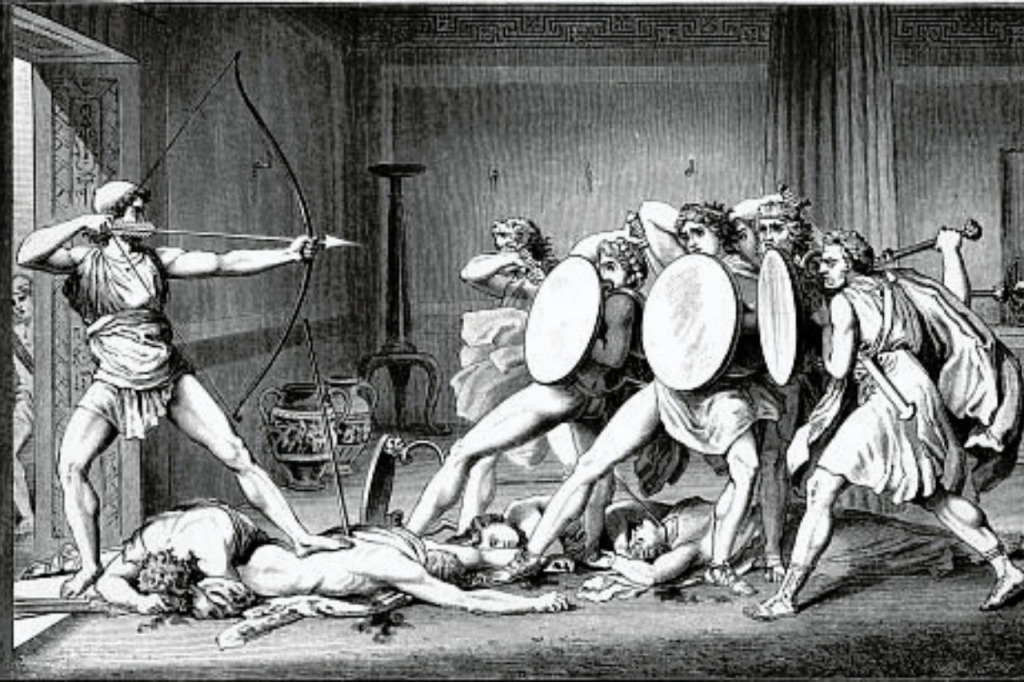
Antinous leading the suitors
Arriving Back Home in Ithaca
Upon arrival, Odysseus meets with his son Telemachus and is advised to disguise himself as a beggar. Telemachus had barely escaped the suitors' assassination attempt and must now tread carefully. Odysseus is to join the competition for Penelope's hand and get rid of the suitors of Penelope that threaten both his home and throne.
The Ithacan king arrives at the castle, wins the competition, and points his bow at his wife's suitors. Odysseus kills the suitors one by one with the help of his son and a few men that recognize him, leaving none of the suitors breathing. An uprising occurred; the suitors' families demanded retribution for their sons' deaths and marched up to harm Odysseus. Athena resolves this, and Odysseus returns to his rightful place as the king of Ithaca.
Who Is Antinous in The Odyssey?
Antinous, one of the suitors in The Odyssey, is a violent and over-confident character who strives hard to take Odysseus' throne. He is one of the two prominent suitors vying for Penelope's hand in marriage and attempting to kill Telemachus. He sends a small group of suitors to intercept Telemachus on his journey home from Menelaus, Odysseus' friend, and kill him. His plan, however, bears no fruit as Telemachus escapes their trap with the aid of the Greek goddess Athena.
Antinous acts as one of the mortal antagonists Odysseus must face in his journey back to his home. Antinous and the suitors pose a threat to our hero's family as he forgoes their custom of "Xenia." Instead of reciprocating food and beverages with stories and respect, Antinous and the other suitors eat their fill, depleting Odysseus' house to the ground. Their lack of respect can be seen as Antinous' arrogance continues. He regards the lower citizens of Ithaca as those beneath him, assaulting a beggar with a chair, who turned out to be Odysseus in disguise.
Antinous treatment of Odysseus, although disguised, lacks respect. He strikes down our hero with a chair and is, in turn, the first suitor to be slain by the Ithacan king.
Massacre of the Suitors
As Odysseus enters the palace as a beggar, he encounters his wife, Penelope. They converse, and the queen announces her decision. A competition will be held for her hand in marriage. The one who can wield her late Husband's bow and shoot it will be her next Husband and king of Ithaca. Each suitor steps up and fails one by one until Odysseus comes and hits perfectly. Antinous strike Odysseus with a chair and is met with an arrow to the neck. Odysseus then points his bow towards the rest, shooting them one by one; Eurymachus, one of Penelope's suitors, tries to place all the blame on Antinous but is cut short as he was slain by the father and son duo.
Importance of the Suitors
The suitors act as Odysseus' mortal antagonist and the final obstacle he has to face before reclaiming his throne and family. Without the suitors' Odysseus' return home would have robbed the viewers of the epic climax the play had offered. They also remind Odysseus' abilities as a king, emphasizing his natural ability to lead compassionately and kindly. Antinous displayed arrogance and greed, exhibiting his thirst for power without the necessary hardships of becoming a leader. He prioritized his desire, drinking, and feasting as he neglected the customs of Odysseus' people. Because of this, the people of Ithaca were more likely to open their arms to Odysseus' return, despite him abandoning them for years.
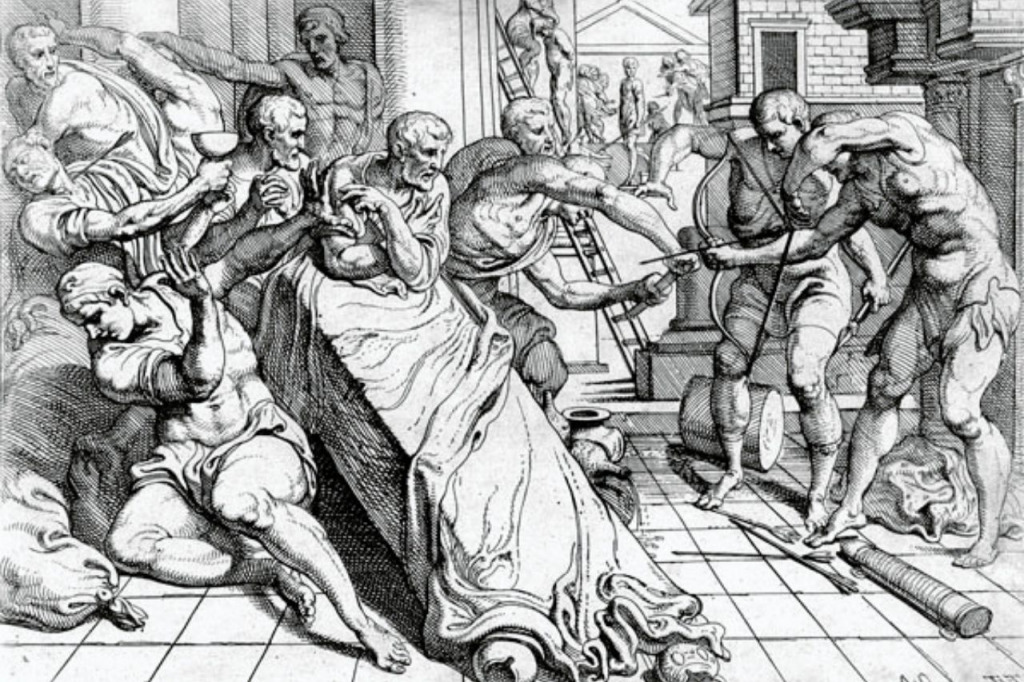
The punishment of the suitors
Conclusion
Now that we've talked about The Odyssey, Antinous, who he is, and his role in the play, let's go over the critical points of this article:
Odysseus encounters various struggles on his way home back to Ithaca.
Because of Odysseus' long journey home, he was regarded as dead, and a new king must be put on the throne in Ithaca.
Penelope had various suitors vying for her hand, and the most prominent ones were Antinous and Eurymachus.
Antinous is arrogant and violent as his and the suitors' greed consume the livestock of Odysseus' house, eating them to the ground.
Antinous foregoes "Xenia" as he rudely conducts himself as the leader of the suitors.
Penelope prolongs the courting process, hoping to delay her decision as long as possible, hoping for her Husband's return home.
Antinous leads the merry band of suitors into his schemes of harming Telemachus as he returns home from his journey.
He sends a band of men to intercept the young prince and murder him in cold blood. Telemachus escapes this trap with the help of Athena.
Antinous' arrogance is shown yet again as he throws a chair towards a beggar. Because of this, he is the first suitor to be slain, awarding him an arrow to the neck.
In conclusion, Antinous is your typical antagonist; arrogant, self-centered, and too greedy for their excellence. His greed and arrogance bring him to his demise as his bodacious acts towards Odysseus and his family come to light. And there you have it! The Odyssey, Antinous, who he is as a person and written in the Homeric Classic.