Timeless Myths Logo

Explore myths and legends from cultures around the world

Featured

Classical Mythology
Classical Mythology Greek and Roman myths, gods, heroes, and epic tales
Norse Mythology
Norse Mythology Vikings, Asgard, Ragnarok, and the nine realms
Celtic Mythology
Celtic Mythology Irish, Welsh, and Gaelic legends and folklore
Ancient Literature
Ancient Literature Classical texts, translations, and literary analysis

All Mythologies

Arthurian Legends King Arthur, Camelot, the Round Table, and the Holy Grail Egyptian Mythology Pharaohs, pyramids, and ancient Nile deities Japanese Mythology Shinto gods, spirits, and legendary creatures Chinese Mythology Dragons, immortals, and celestial beings Aztec Mythology Mesoamerican gods, rituals, and creation myths

Discover gods and goddesses from every pantheon

Featured

Greek Gods
Greek Gods The Olympians, Titans, and primordial deities
Norse Gods
Norse Gods Odin, Thor, Loki, and the Aesir and Vanir
Egyptian Gods
Egyptian Gods Ra, Osiris, Isis, Anubis, and more
Japanese Gods
Japanese Gods Amaterasu, Susanoo, and Shinto kami

All Gods & Deities

Roman Gods Jupiter, Mars, Venus, and the Roman pantheon Celtic Gods The Tuatha Dé Danann and Celtic deities Aztec Gods Quetzalcoatl, Tezcatlipoca, and Aztec deities Chinese Gods Jade Emperor, Dragon Kings, and celestial beings View All 150+ Deities Browse the complete collection of mythological deities
View all gods & deities

Tales, legends, and character profiles from mythology

Featured

All Stories
All Stories Browse 800+ mythology and history stories
Characters
Characters Profiles of 67 mythological heroes, gods, and villains

All Stories

Mythology Stories Ancient myths and legends retold History Stories Historical tales from ancient civilizations Religion & Culture Religious traditions and cultural beliefs
View all stories

Tools, references, and site information

Featured

Name Generators
Name Generators Generate fantasy and mythology-inspired names
All Articles
All Articles Browse 1,800+ articles on mythology and history

All Resources

About Timeless Myths Learn about this mythology resource Bibliography Sources and references used on this site FAQ Frequently asked questions Contact Get in touch with us
Search
Classical Mythology Greek and Roman myths, gods, heroes, and epic tales Norse Mythology Vikings, Asgard, Ragnarok, and the nine realms Celtic Mythology Irish, Welsh, and Gaelic legends and folklore Arthurian Legends King Arthur, Camelot, the Round Table, and the Holy Grail Egyptian Mythology Pharaohs, pyramids, and ancient Nile deities Japanese Mythology Shinto gods, spirits, and legendary creatures Chinese Mythology Dragons, immortals, and celestial beings Aztec Mythology Mesoamerican gods, rituals, and creation myths Ancient Literature Classical texts, translations, and literary analysis
Greek Gods The Olympians, Titans, and primordial deities Roman Gods Jupiter, Mars, Venus, and the Roman pantheon Norse Gods Odin, Thor, Loki, and the Aesir and Vanir Egyptian Gods Ra, Osiris, Isis, Anubis, and more Celtic Gods The Tuatha Dé Danann and Celtic deities Aztec Gods Quetzalcoatl, Tezcatlipoca, and Aztec deities Japanese Gods Amaterasu, Susanoo, and Shinto kami Chinese Gods Jade Emperor, Dragon Kings, and celestial beings View All 150+ Deities Browse the complete collection of mythological deities View all gods & deities
All Stories Browse 800+ mythology and history stories Characters Profiles of 67 mythological heroes, gods, and villains Mythology Stories Ancient myths and legends retold History Stories Historical tales from ancient civilizations Religion & Culture Religious traditions and cultural beliefs View all stories
Name Generators Generate fantasy and mythology-inspired names All Articles Browse 1,800+ articles on mythology and history About Timeless Myths Learn about this mythology resource Bibliography Sources and references used on this site FAQ Frequently asked questions Contact Get in touch with us
Search Search the entire mythology archive
  1. Classical Literature
    Greece Rome Other Ancient Civilizations Timeline of Classical Literature Alphabetical List of Authors Index of Individual Works Index of Important Characters Sources About Us
  2. Rome
    Catullus Vergil (Virgil) Horace Ovid Seneca the Younger Lucan Juvenal Pliny the Younger
  3. Horace
    Carmen Saeculare Ars Poetica Tu ne quaesieris (Odes, Book 1, Poem 11) Nunc est bibendum (Odes, Book 1, Poem 37)
  4. Carmen Saeculare

Carmen Saeculare

(Lyric Poem, Latin/Roman, 17 BCE, 76 lines)

Introduction
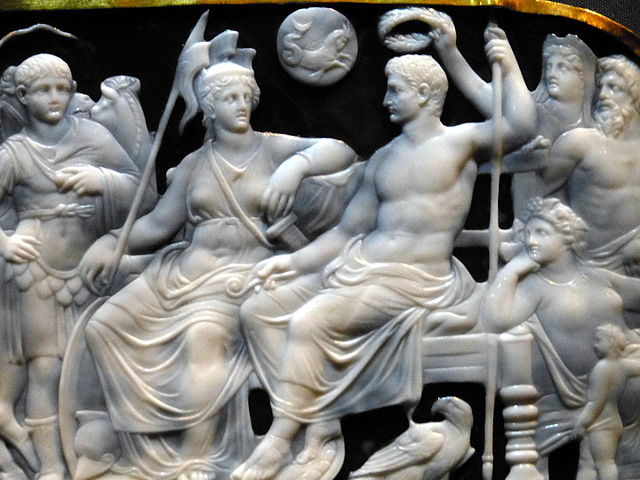
Gemma Augustea cameo showing Augustus and Roman gods

Gemma Augustea - Roman cameo from the Augustan era

"Carmen Saeculare" (literally, "Secular Hymn", usually translated as "Song of the Ages"), sometimes known as "The Carmen" for short, is a hymn or ode by the Roman lyric poet Horace, commissioned by the Roman Emperor Augustus in 17 BCE. It is collection of mythological and religious verses encouraging the restoration of the tradition and the glorification of the gods, particularly Phoebus, Diana, Jupiter and Venus.

Synopsis

The poem takes the the form of a prayer or hymn addressed to Phoebus (or Apollo) and Diana (Artemis).

It asks the gods to bless the great city of Rome and its empire, and praises the achievements of modern Rome and the Emperor Augustus. In particular, it asks for protection for the child-bearing mothers of the city and the sanctity of their marriages, and then asks the Fates and the gods of the earth to bless the harvest and ensure a fruitful yield from the crops. Recalling the glorious past history of Rome, back to its initial founding by the divine-born Aeneas and and his descendant Romulus, the hymn then asks for success in Rome's military endeavours.

The poem ends with a renewed call to Phoebus and Diana to hear the prayers of the children and to extend their protection and championship of Rome and its people.

Analysis
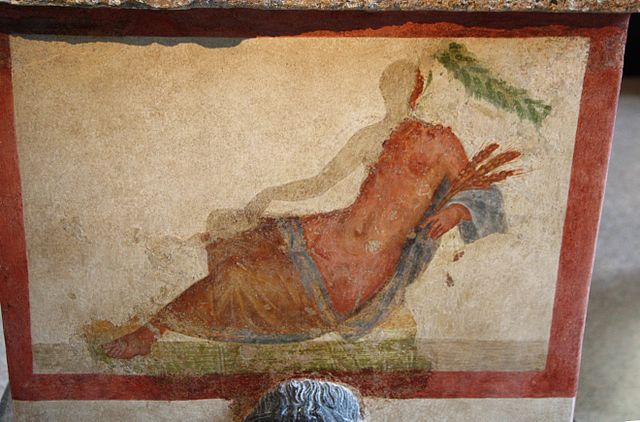
Classical painting of Ceres, goddess of harvest

Ceres, goddess of harvest, who is invoked in the hymn

"The Carmen" is a choral hymn, written by Horace at the command of the Emperor Augustus, to be performed as a festival hymn at the opening ceremony of the "ludi saeculares" ("secular games") by a choir of twenty-seven boys and twenty-seven girls. The "ludi saeculares" were a lavish festival of games, sacrifices and performances held roughly every century throughout the time of the Roman Republic, a custom revived by the Emperor Augustus soon after he had established himself as the supreme power in Rome after his final defeat of Mark Anthony and Cleopatra.

At that time, Horace was virtually in the position of Augustus' poet laureate and it was no surprise that he was called on to compose the festival hymn for the games. It is the first fully preserved Latin hymn whose circumstances of presentation are definitely known, and it is also the only lyric of Horace we can be certain was first presented orally.

It is generally written in an elevated and religious tone, and is composed in the Sapphic metre, consisting of nineteen four-line sapphic stanzas (three hendecasyllabic lines of eleven syllables, and a fourth line of five syllables).

Resources

  • English translation by A. S. Kline (Poetry in Translation): http://www.poetryintranslation.com/PITBR/Latin/HoraceEpodesAndCarmenSaeculare.htm#_Toc98670048

  • Latin version (The Latin Library): http://www.thelatinlibrary.com/horace/carmsaec.shtml

By Timeless Myths

Horace:

  • • Carmen Saeculare
  • • Ars Poetica
  • • Tu ne quaesieris (Odes, Book 1, Poem 11)
  • • Nunc est bibendum (Odes, Book 1, Poem 37)
Pharsalia (De Bello Civili)

Pharsalia (De Bello Civili)

(Epic Poem, Latin/Roman, 65 CE, 8,060 lines)Introduction Pharsalia (also known as De Bello Civili or "On the Civil War") is an epic poem in ten books by the Roman poet Lucan, left unfinished on the poet's death in 65 CE. Although incomplete, it is...

October 25th, 2024 • Timeless Myths
Horace

Horace

(Lyric Poet and Satirist, Roman, 65 – 8 BCE)Introduction Horace was, along with Vergil, the leading Roman poet in the time of Emperor Augustus. He is considered by classicists to be one of the greatest and most original of Latin lyric poets, appre...

October 24th, 2024 • Timeless Myths
Catullus 5

Catullus 5

(Lyric Poem, Latin/Roman, c. 65 BCE, 13 lines)Introduction "Vivamus, mea Lesbia, atque amemus" ("Let us live, my Lesbia, and let us love") is a passionate love poem by the Roman lyric poet Catullus, often referred to as "Catullus 5" or "Carmina V"...

October 25th, 2024 • Timeless Myths
The Georgics

The Georgics

(Didactic Poem, Latin/Roman, 29 BCE, 2,188 lines)Introduction "The Georgics" (Gr: "Georgicon") is a didactic poem, in the tradition of Hesiod, by the Roman poet Vergil. It was Vergil's second major work, published in 29 BCE, after The Bucolics (Ec...

October 25th, 2024 • Timeless Myths
Nunc est bibendum (Odes, Book 1, Poem 37)

Nunc est bibendum (Odes, Book 1, Poem 37)

(Lyric Poem, Latin/Roman, c. 30 BCE, 32 lines)Introduction "Nunc est bibendum" ("Now is the time for drinking"), sometimes known as the "Cleopatra Ode", is one of the most famous of the odes of the Roman lyric poet Horace, published in 23 BCE as P...

October 25th, 2024 • Timeless Myths
Catullus 93 Translation

Catullus 93 Translation

Introduction Catullus lived during the time of Julius Caesar. His father was friends with the senator and general, but Catullus did not respect the man. Caesar was an ally with Pompey and Catullus wrote several verses where he denounced him. In ot...

January 1st, 2025 • Ancient Literature
Apocolocyntosis

Apocolocyntosis

(Satire, Latin/Roman, c. 55 CE, 246 lines)Introduction "Apocolocyntosis" (Greek: "Apokolokyntosis") or "Apocolocyntosis divi Claudii", usually translated as "The Pumpkinification of Claudius", is a political satire on the Roman emperor Claudius, p...

October 25th, 2024 • Timeless Myths
Catullus 96 Translation

Catullus 96 Translation

Introduction Catullus often wrote verses about his friends and this is one of those poems. He wrote about the death of his friend Calvus and his love, Quintilla. The way the poem is written, it seems as though both are dead and they are enjoying t...

January 1st, 2025 • Ancient Literature
Catullus 99 Translation

Catullus 99 Translation

Introduction In Catullus 99, the poet writes about his male lover, Juventius, and he did not like it. The kiss was stolen, according to Catullus. He stole the kiss while Juventius was playing, and Juventius did not like it. Juventius disliked the ...

January 1st, 2025 • Ancient Literature
Catullus 90 Translation

Catullus 90 Translation

Introduction This is another one of Catullus’s poems that focuses on the man he hates: Gellius. In this one, he addresses Gellius’s incestuous relationship with his mother. In the poem, Catullus talks about the relationships resulting in the birth...

January 1st, 2025 • Ancient Literature
Timeless Myths

Exploring mythology and legends from around the world.

Explore Myths

All Stories Characters All Articles Search Site Map

Mythologies

Norse Mythology Classical Mythology Celtic Mythology Arthurian Legends Mythology Gods Ancient Literature

About Us

Introduction About Jimmy Bibliography FAQs Retro Version

Resources

Timeless Myths All Stories All Articles Characters
© 1999-2026 Timeless Myths • Copyright • Privacy Policy • Cookie Policy • Contact
Follow us: