Timeless Myths Logo

Explore myths and legends from cultures around the world

Featured

Classical Mythology
Classical Mythology Greek and Roman myths, gods, heroes, and epic tales
Norse Mythology
Norse Mythology Vikings, Asgard, Ragnarok, and the nine realms
Celtic Mythology
Celtic Mythology Irish, Welsh, and Gaelic legends and folklore
Ancient Literature
Ancient Literature Classical texts, translations, and literary analysis

All Mythologies

Arthurian Legends King Arthur, Camelot, the Round Table, and the Holy Grail Egyptian Mythology Pharaohs, pyramids, and ancient Nile deities Japanese Mythology Shinto gods, spirits, and legendary creatures Chinese Mythology Dragons, immortals, and celestial beings Aztec Mythology Mesoamerican gods, rituals, and creation myths

Discover gods and goddesses from every pantheon

Featured

Greek Gods
Greek Gods The Olympians, Titans, and primordial deities
Norse Gods
Norse Gods Odin, Thor, Loki, and the Aesir and Vanir
Egyptian Gods
Egyptian Gods Ra, Osiris, Isis, Anubis, and more
Japanese Gods
Japanese Gods Amaterasu, Susanoo, and Shinto kami

All Gods & Deities

Roman Gods Jupiter, Mars, Venus, and the Roman pantheon Celtic Gods The Tuatha Dé Danann and Celtic deities Aztec Gods Quetzalcoatl, Tezcatlipoca, and Aztec deities Chinese Gods Jade Emperor, Dragon Kings, and celestial beings View All 150+ Deities Browse the complete collection of mythological deities
View all gods & deities

Tales, legends, and character profiles from mythology

Featured

All Stories
All Stories Browse 800+ mythology and history stories
Characters
Characters Profiles of 67 mythological heroes, gods, and villains

All Stories

Mythology Stories Ancient myths and legends retold History Stories Historical tales from ancient civilizations Religion & Culture Religious traditions and cultural beliefs
View all stories

Tools, references, and site information

Featured

Name Generators
Name Generators Generate fantasy and mythology-inspired names
All Articles
All Articles Browse 1,800+ articles on mythology and history

All Resources

About Timeless Myths Learn about this mythology resource Bibliography Sources and references used on this site FAQ Frequently asked questions Contact Get in touch with us
Search
Classical Mythology Greek and Roman myths, gods, heroes, and epic tales Norse Mythology Vikings, Asgard, Ragnarok, and the nine realms Celtic Mythology Irish, Welsh, and Gaelic legends and folklore Arthurian Legends King Arthur, Camelot, the Round Table, and the Holy Grail Egyptian Mythology Pharaohs, pyramids, and ancient Nile deities Japanese Mythology Shinto gods, spirits, and legendary creatures Chinese Mythology Dragons, immortals, and celestial beings Aztec Mythology Mesoamerican gods, rituals, and creation myths Ancient Literature Classical texts, translations, and literary analysis
Greek Gods The Olympians, Titans, and primordial deities Roman Gods Jupiter, Mars, Venus, and the Roman pantheon Norse Gods Odin, Thor, Loki, and the Aesir and Vanir Egyptian Gods Ra, Osiris, Isis, Anubis, and more Celtic Gods The Tuatha Dé Danann and Celtic deities Aztec Gods Quetzalcoatl, Tezcatlipoca, and Aztec deities Japanese Gods Amaterasu, Susanoo, and Shinto kami Chinese Gods Jade Emperor, Dragon Kings, and celestial beings View All 150+ Deities Browse the complete collection of mythological deities View all gods & deities
All Stories Browse 800+ mythology and history stories Characters Profiles of 67 mythological heroes, gods, and villains Mythology Stories Ancient myths and legends retold History Stories Historical tales from ancient civilizations Religion & Culture Religious traditions and cultural beliefs View all stories
Name Generators Generate fantasy and mythology-inspired names All Articles Browse 1,800+ articles on mythology and history About Timeless Myths Learn about this mythology resource Bibliography Sources and references used on this site FAQ Frequently asked questions Contact Get in touch with us
Search Search the entire mythology archive
  1. Classical Literature
    Greece Rome Other Ancient Civilizations Timeline of Classical Literature Alphabetical List of Authors Index of Individual Works Index of Important Characters Sources About Us
  2. Rome
    Catullus Vergil (Virgil) Horace Ovid Seneca the Younger Lucan Juvenal Pliny the Younger
  3. Seneca the Younger
    Medea Phaedra Hercules Furens Troades (The Trojan Women) Agamemnon Oedipus Apocolocyntosis Thyestes Phoenissae (The Phoenician Women)
  4. Apocolocyntosis
    Apocolocyntosis

Apocolocyntosis

(Satire, Latin/Roman, c. 55 CE, 246 lines)

Introduction

"Apocolocyntosis" (Greek: "Apokolokyntosis") or "Apocolocyntosis divi Claudii", usually translated as "The Pumpkinification of Claudius", is a political satire on the Roman emperor Claudius, probably written by Seneca the Younger around 55 CE. It is a mixture of prose and verse, and follows the late Emperor Claudius as he claims from the gods the right to be considered divine from the gods, as had other Roman emperors before him, but fails miserably when his record of notorious crimes and other failings are taken into account.

Synopsis

Dramatis Personae

  • CLAUDIUS, late emperor of Rome

  • HERCULES

  • VARIOUS VENAL CHARACTERS

  • AUGUSTUS, late emperor of Rome

  • CALIGULA, late emperor of Rome

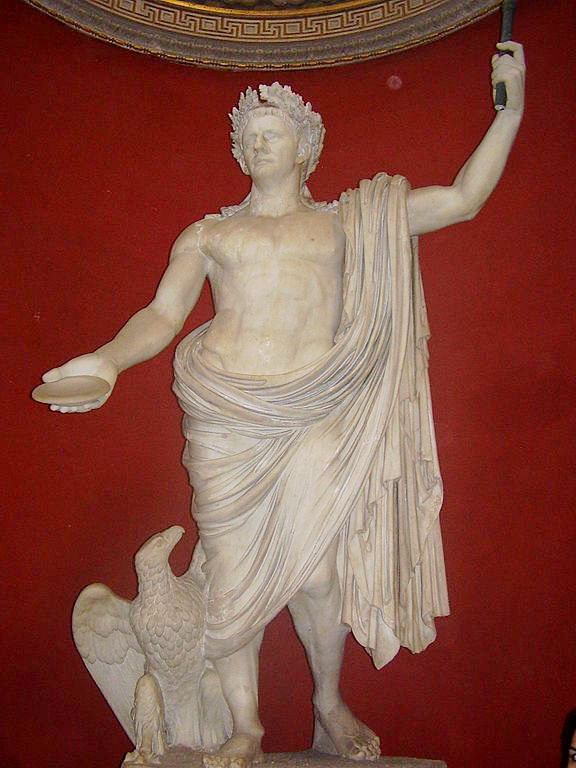
Statue of Emperor Claudius portrayed as Jupiter

Statue of Claudius portrayed as Jupiter

The work traces the death of Claudius, his ascent into heaven and judgment by the gods, and his eventual descent into Hades. At each turn, Seneca mocks the late emperor's personal failings, most notably his arrogant cruelty and his inarticulateness.

After Apollo persuades Clotho (the Fate responsible for spinning the thread of human life) to end the Emperor Claudius' life, he walks to Mount Olympus, where he convinces Hercules to let the gods hear his suit for deification in a session of the divine senate. The proceedings appear to be going in Claudius' favour at first until his illustrious predecessor, the Emperor Augustus, delivers a long and sincere speech listing some of Claudius' most notorious crimes. Eventually, Claudius' suit is refused and Mercury escorts him down to Hades (or Hell).

On the way, they witness Claudius' own funeral procession, in which a crew of venal characters mourn the loss of the perpetual Saturnalia of his reign. In Hades, Claudius is greeted by the ghosts of all the friends he has murdered, who carry him off to be punished. The punishment of the gods is that Claudius (notorious for his gambling, among other vices) is condemned to shake dice forever in a box with no bottom, so that every time he tries to throw the dice they fall out and he has to search the ground for them.

Suddenly, his immediate predecessor Caligula turns up, claiming that Claudius is an ex-slave of his, and hands him over to be a law clerk in the court of the underworld.

Analysis
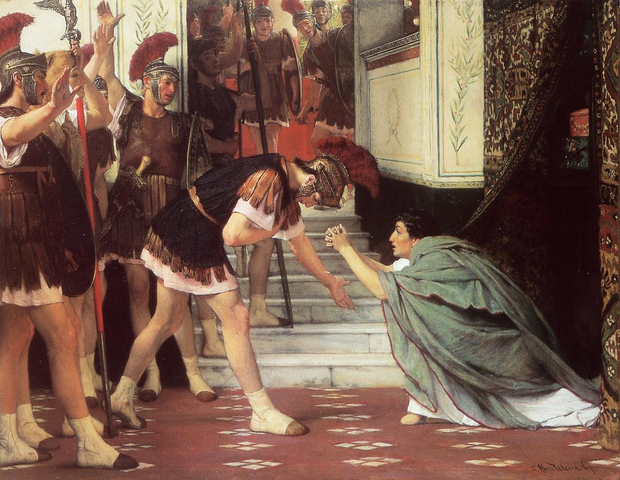
Scene proclaiming Claudius as emperor

Scene proclaiming Claudius as emperor

"Apocolocyntosis" is the only surviving example from the classical era - with the possible addition of the "Satyricon" of Petronius - of what has come to be known as "Menippean satire", a term broadly used to refer to prose satires (as opposed to the verse satires of Juvenal et al) that are rhapsodic in nature, combining many different targets of ridicule into a fragmented satiric narrative similar to a novel.

The play stands very much apart from Seneca's other works, which are serious works of philosophy or tragedies. Unfortunately, there are some large gaps, or lacunae, in the text, including many of the speeches of the gods in Claudius' hearing before the divine senate.

The title "Apocolocyntosis" (Latinized Greek for "pumpkinification" or "gourdification") plays upon "apotheosis", or the exaltation to the level of the divine, the process by which dead Roman emperors were deified or recognized as gods. In the manuscripts, the anonymous work bears the title "Ludus de morte Divi Claudii" ("Play on the Death of the Divine Claudius"), and the title "Apokolokyntosis" or "Apocolocyntosis" was given to it by the 2nd Century Greek-writing Roman historian Dio Cassius, even though no such vegetable is mentioned anywhere in the text. Thus, although the play as it has come down to us is ascribed to Seneca by ancient tradition, it is impossible to prove that it is definitively his, and impossible to prove that it is not.

Seneca had some personal reasons for satirizing Emperor Claudius, as the emperor had banished him to Corsica from 41 to 49 CE, and, by the time of the writing of the play, the political climate after the emperor's death (in 54 CE) may have made attacks on him acceptable. However, alongside these personal considerations, Seneca appears also to have been concerned with what he saw as an overuse of apotheosis as a political tool, arguing elsewhere that, if an emperor as flawed as Claudius could receive such treatment, then people would cease to believe in the gods at all.

Having said that, though, Seneca was not above flattery of the new emperor, Nero, writing for example that Nero would live longer and be wiser than the legendary Nestor. In fact, the "Apocolocyntosis" itself may well have been designed by the author to ingratiate himself with Claudius' successor, Nero, at a time when Seneca himself was a good part of the precarious power behind the throne of the dangerously developing young emperor.

Resources

  • English translation by Allan Perley Ball (Forum Romanum): http://www.forumromanum.org/literature/apocolocyntosis.html

  • Latin version (The Latin Library): http://www.thelatinlibrary.com/sen/sen.apoc.shtml

By Timeless Myths

Seneca the Younger:

  • • Medea
  • • Phaedra
  • • Hercules Furens
  • • Troades (The Trojan Women)
  • • Agamemnon
  • • Oedipus
  • • Apocolocyntosis
  • • Thyestes
  • • Phoenissae (The Phoenician Women)
Thesmophoriazusae

Thesmophoriazusae

(Comedy, Greek, 411 BCE, 1,231 lines)Introduction "Thesmophoriazusae" (literally meaning "The Women Celebrating the Festival of the Thesmophoria", sometimes also called "The Poet and the Women"), is a comedy by the ancient Greek playwright Aristop...

October 25th, 2024 • Timeless Myths
Hercules Furens

Hercules Furens

(Tragedy, Latin/Roman, c. 54 CE, 1,344 lines)Introduction "Hercules Furens" ("The Mad Hercules" or "The Madness of Hercules") is a tragedy by the Roman playwright Seneca the Younger, considered one of his best, written in or before 54 CE. Closely ...

October 25th, 2024 • Timeless Myths
Satire VI

Satire VI

(Satire, Latin/Roman, c. 115 CE, 695 lines)Introduction "Satire VI" ("Satura VI") is a verse satire by the Roman satirical poet Juvenal, written around 115 CE. The poem laments what Juvenal sees as the decay of feminine virtue, and uses a series o...

October 25th, 2024 • Timeless Myths
Pharsalia (De Bello Civili)

Pharsalia (De Bello Civili)

(Epic Poem, Latin/Roman, 65 CE, 8,060 lines)Introduction Pharsalia (also known as De Bello Civili or "On the Civil War") is an epic poem in ten books by the Roman poet Lucan, left unfinished on the poet's death in 65 CE. Although incomplete, it is...

October 25th, 2024 • Timeless Myths
Satire III

Satire III

(Satire, Latin/Roman, c. 110 CE, 322 lines)Introduction "Satire III" ("Satura III") is a verse satire by the Roman satirical poet Juvenal, written around 110 CE or after. The poem is a monologue by a friend of Juvenal called Umbricius who is leavi...

October 25th, 2024 • Timeless Myths
Thyestes

Thyestes

(Tragedy, Latin/Roman, c. 62 CE, 1,112 lines)Introduction "Thyestes" is a tragedy by the Roman playwright Seneca the Younger, probably written late in his career, around 62 CE. One of the few of Seneca's plays not obviously following a Greek origi...

October 25th, 2024 • Timeless Myths
Satire X

Satire X

(Satire, Latin/Roman, c. 120 CE, 366 lines)Introduction "Satire X" ("Satura X") is a verse satire by the Roman satirical poet Juvenal, written around 120 CE. The poem, sometimes known by the title "The Vanity of Human Wishes", is couched in brilli...

October 25th, 2024 • Timeless Myths
Catullus 54 Translation

Catullus 54 Translation

Introduction In this poem, Catullus addresses several leaders who might be offended by his poetry. The allusions he makes in the poem include Otho, Erius, Libo, and Fuficius. At the end of the poem, Catullus mentions a general, but not by name. Mo...

January 1st, 2025 • Ancient Literature
Epistulae X.96

Epistulae X.96

(Letters, Latin/Roman, c. 111 CE, 38 lines)Introduction "Epistulae X" ("Letters 10", also known as the "Correspondence with Trajan") is a book of letters by the Roman lawyer and author Pliny the Younger to the Emperor Trajan between 109 and 111 CE...

October 25th, 2024 • Timeless Myths
Epistulae VI.16 & VI.20

Epistulae VI.16 & VI.20

(Letters, Latin/Roman, c. 107 CE, 63 + 60 lines)Introduction "Epistulae VI" ("Letters 6") is the sixth of ten books of letters by the Roman lawyer and author Pliny the Younger, mainly written around 106 to 107 CE. Of these, Letters 16 and 20 are t...

October 25th, 2024 • Timeless Myths
Timeless Myths

Exploring mythology and legends from around the world.

Explore Myths

All Stories Characters All Articles Search Site Map

Mythologies

Norse Mythology Classical Mythology Celtic Mythology Arthurian Legends Mythology Gods Ancient Literature

About Us

Introduction About Jimmy Bibliography FAQs Retro Version

Resources

Timeless Myths All Stories All Articles Characters
© 1999-2026 Timeless Myths • Copyright • Privacy Policy • Cookie Policy • Contact
Follow us: