Timeless Myths Logo
Aphrodite Apollo Ares Artemis Athena Atlas Coeus Crius Cronus Demeter Dionysus Gaia Hades Hephaestus Hera Hermes Hestia Hyperion Iapetus Mnemosyne Oceanus Phobos Phoebe Poseidon Prometheus Rhea Tethys Themis Uranus Zeus
Bacchus Ceres Diana Juno Jupiter Mars Mercury Minerva Neptune Pluto Venus Vesta Vulcan
Amun Anubis Aten Atum Babi Bastet Bes Geb Hapi hathor heqet Horus Isis Khepri Khnum Khonsu Maat Nephthys Nut Osiris Ptah Ra Seshat Seth Shu Sobek Thoth
Alfheim Baldur Freya Freyr Frigg Heimdallr Helheim Idun Jotunheim Loki Nerthus Njord Odin Thor Tyr
Aengus Arawn Badb Brigid Cailleach Ceridwen Cernunnos Cu Chulainn Dagda Danu Gwydion Herne the Hunter Lugh Medb Morrigan Neit Nuada Taliesin Taranis
Chalchiuhtlicue Coatlicue Huitzilopochtli Mictlantecuhtli Mixcoatl Ometeotl Quetzalcoatl Tezcatlipoca Tlaloc Tonatiuh Xipe Totec Xochiquetzal Xolotl
Amaterasu Ame no Uzume Benzaiten Bishamonten Daikokuten Ebisu Fujin Fukurokuju Inari Izanagi Kagutsuchi Raijin Susanoo Tsukuyomi
Caishen Cangjie Dragon King Eight Immortals Erlang Shen Fuxi Guanyin Hou Yi Huxian Jade Emperor King Yama Leizi Lu-ban Mazu Nezha Nuwa Pangu Shennong Sun Wukong Xiwangmu Yue Lao Zhong Kui
Norse Classical Celtic Arthurian
Literature Stories Names
Aphrodite Apollo Ares Artemis Athena Atlas Coeus Crius Cronus Demeter Dionysus Gaia Hades Hephaestus Hera Hermes Hestia Hyperion Iapetus Mnemosyne Oceanus Phobos Phoebe Poseidon Prometheus Rhea Tethys Themis Uranus Zeus
Bacchus Ceres Diana Juno Jupiter Mars Mercury Minerva Neptune Pluto Venus Vesta Vulcan
Amun Anubis Aten Atum Babi Bastet Bes Geb Hapi hathor heqet Horus Isis Khepri Khnum Khonsu Maat Nephthys Nut Osiris Ptah Ra Seshat Seth Shu Sobek Thoth
Alfheim Baldur Freya Freyr Frigg Heimdallr Helheim Idun Jotunheim Loki Nerthus Njord Odin Thor Tyr
Aengus Arawn Badb Brigid Cailleach Ceridwen Cernunnos Cu Chulainn Dagda Danu Gwydion Herne the Hunter Lugh Medb Morrigan Neit Nuada Taliesin Taranis
Chalchiuhtlicue Coatlicue Huitzilopochtli Mictlantecuhtli Mixcoatl Ometeotl Quetzalcoatl Tezcatlipoca Tlaloc Tonatiuh Xipe Totec Xochiquetzal Xolotl
Amaterasu Ame no Uzume Benzaiten Bishamonten Daikokuten Ebisu Fujin Fukurokuju Inari Izanagi Kagutsuchi Raijin Susanoo Tsukuyomi
Caishen Cangjie Dragon King Eight Immortals Erlang Shen Fuxi Guanyin Hou Yi Huxian Jade Emperor King Yama Leizi Lu-ban Mazu Nezha Nuwa Pangu Shennong Sun Wukong Xiwangmu Yue Lao Zhong Kui
Norse Classical Celtic Arthurian
Literature Stories Names
  1. Classical Literature
    Greece Rome Other Ancient Civilizations Timeline of Classical Literature Alphabetical List of Authors Index of Individual Works Index of Important Characters Sources About Us
  2. Rome
    Catullus Vergil (Virgil) Horace Ovid Seneca the Younger Lucan Juvenal Pliny the Younger
  3. Horace
    Carmen Saeculare Ars Poetica Tu ne quaesieris (Odes, Book 1, Poem 11) Nunc est bibendum (Odes, Book 1, Poem 37)

Horace

(Lyric Poet and Satirist, Roman, 65 – 8 BCE)

Introduction

Horace was, along with Vergil, the leading Roman poet in the time of Emperor Augustus. He is considered by classicists to be one of the greatest and most original of Latin lyric poets, appreciated for his technical mastery, his control and polish, and his mellow, civilized tone. As well as his lyric or love poetry, he wrote many biting satires and hymns.
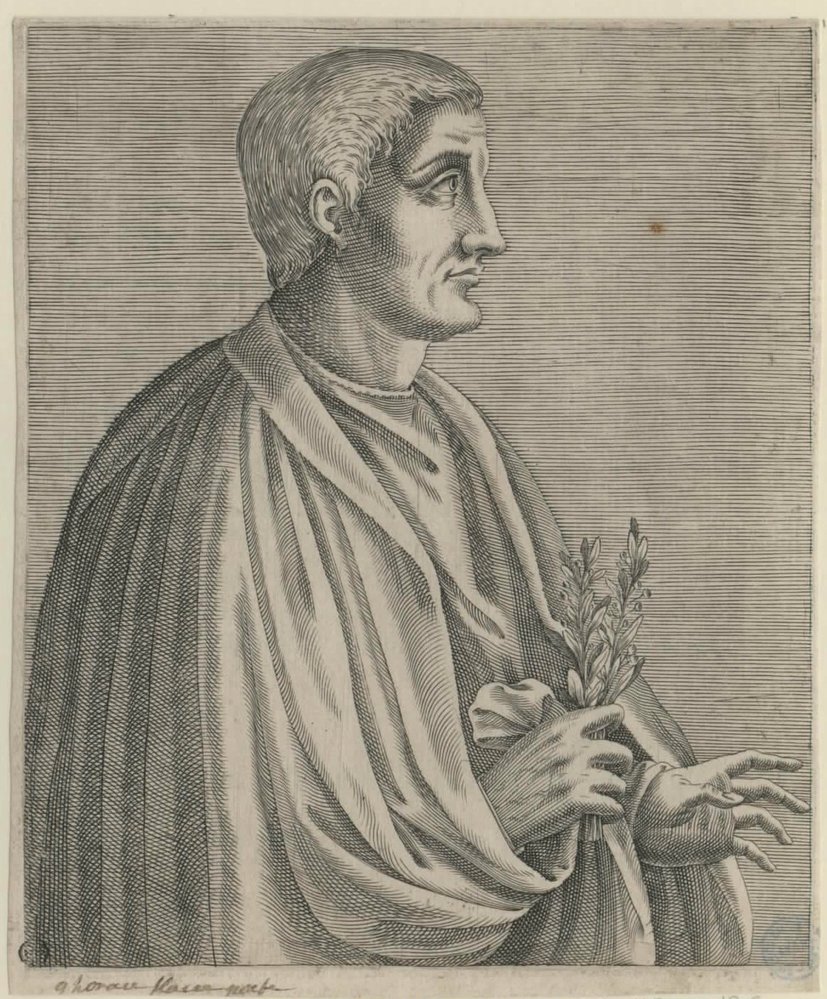
Portrait of Horace, ancient Roman lyric poet

Portrait of Horace

Biography

Quintus Horatius Flaccus (known as Horace in the English-speaking world) was born in 65 BCE in Venusia in southern Italy, the son of a freed slave who owned a small farm and also worked as a tax collector. He later moved to Rome, where his father was able to provide him with a good education, first in Rome and then in Athens, where he studied Greek and philosophy.

After the assassination of Julius Caesar in 44 BCE, Horace joined the army, serving under the generalship of Brutus and fighting as a staff officer in the Battle of Philippi. He returned to Italy in 39 BCE, when an amnesty was declared for those who had fought against the victorious Octavian (later to be called Augustus), only to find his father's estate had been confiscated. Although Horace claimed to have been reduced to poverty, he nevertheless still had the means to purchase a profitable life-time appointment as a scribe and Treasury official, which allowed him to live comfortably and practice his poetic art.

The young Horace attracted the attention of Vergil, and he soon became a member of a literary circle that included Vergil and Lucius Varius Rufus. Through them, he became a close friend of Maecenas (himself a friend and confidant of Augustus), who became his patron and presented him with an estate in the Sabine Hills near fashionable Tibur. He had the temerity to refuse Augustus' offer of a position as his personal secretary, although he does not seem to have lost any favour with the Emperor for it. He is described as short and fat and prematurely grey. Although he never married, he had a hedonistic tendency and carried on an active sexual life anyway, and was apparently addicted to obscene pictures.

He died in Rome in 8 BCE, at the age of 57, leaving his estate to the Emperor Augustus, in the absence of any heirs of his own. He was buried near the tomb of his friend and patron Maecenas.
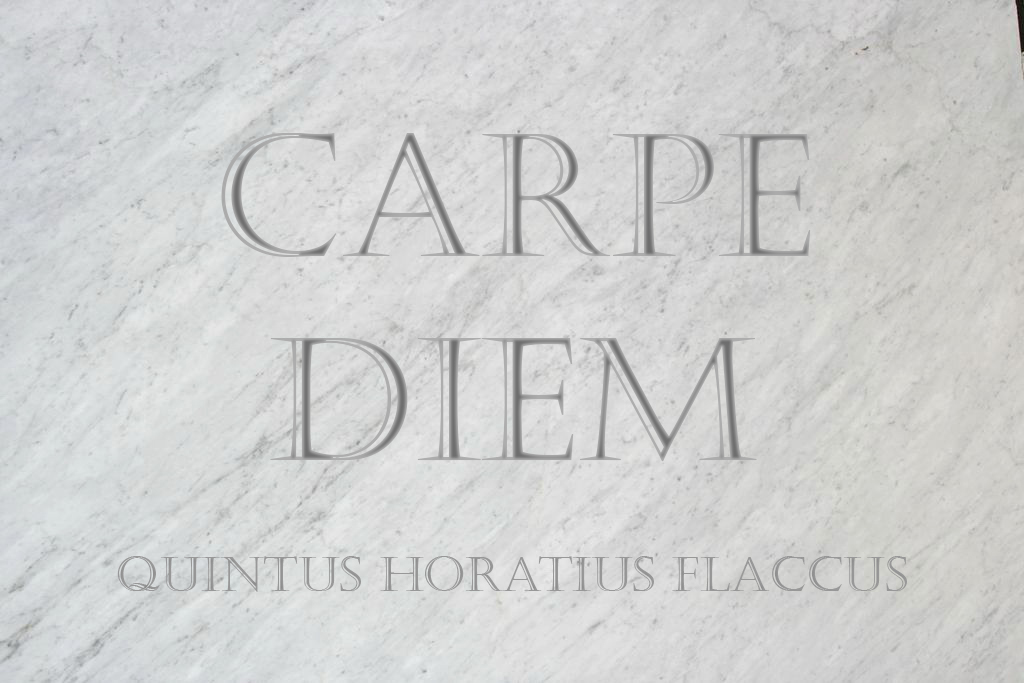
Carpe Diem - famous phrase coined by Horace

Carpe Diem - Horace's famous phrase

Writings

The surviving works of Horace include two books of satires, a book of epodes, four books of odes, three books of letters or epistles, and a hymn. Like most Latin poets, his works make use of Greek metres, especially the hexameter and alcaic and sapphic stanzas.
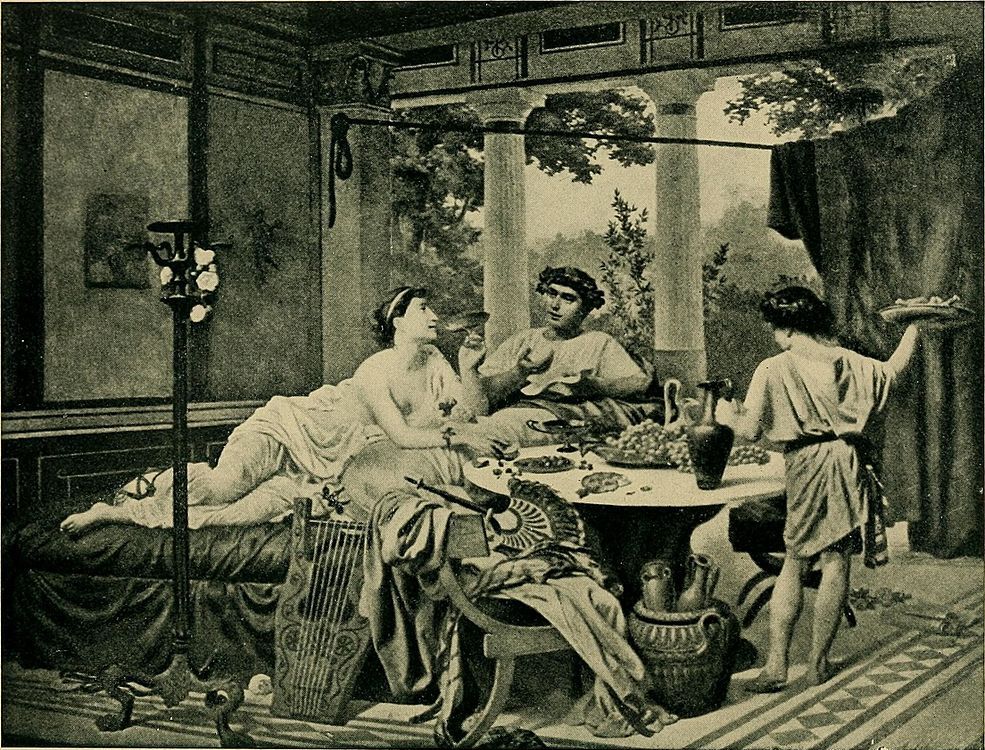
Horace at Tibur, painting by Auguste Leloir

Horace at Tibur by Auguste Leloir

The "sermones" or satires are his most personal works, and perhaps the most accessible to contemporary readers since much of his social satire is just as applicable today as it was then. They were Horace's first published works (the first book of ten satires in 33 BCE and the second book of eight in 30 BCE), and they established him as one of the great poetic talents of the Augustan age. The satires extol the Epicurean ideals of inner self-sufficiency and moderation and the search for a happy and contented life. Unlike the unrestrained and often vituperative satires of Lucilius, though, Horace discoursed with gentle irony about faults and foibles which everyone possesses and should confront.

The "carmina" or odes, published in 23 BCE and 13 BCE, are his most admired works, however, and were developed as a conscious imitation of the short lyric poetry of the Greek originals of Pindar, Sappho and Alcaeus, adapted to the Latin language. They are lyric poems dealing with the subjects of friendship, love and the practice of poetry. The epodes, actually published before the odes, in 30 BCE, represented a new form of verse for Latin literature at that time.

After 23 BCE, Horace's interests shifted back to the discursive mode of his earlier satires and he explored the possibilities of poetic moral essays, written in hexameter but in the form of letters, publishing 20 short epistles in 20 BCE. One of them, the "Ars Poetica" ("The Art of Poetry"), is usually referred to as a separate work, and outlines a theory of poetry. The "Carmen Saeculare" ("Song of the Ages") is a hymn commissioned by the Emperor Augustus for the Secular Games of 17 BCE, proposing the restoration of the traditions of the glorification of the gods Jupiter, Diana and Venus.

Many Latin phrases coined in his poems remain in use today, such as "carpe diem" ("seize the day"), "dulce et decorum est pro patria mori" ("it is sweet and fitting to die for one's country"), "nunc est bibendum" ("now we must drink"), "sapere aude" ("dare to be wise") and "aurea mediocritas" ("golden mean").

Major Works

  • "Carmen Saeculare" ("Song of the Ages")

  • "Ars Poetica" ("The Art of Poetry")

  • "Tu ne quaesieris" (Odes, Book 1, Poem 11)

  • "Nunc est bibendum" (Odes, Book 1, Poem 37)

By Timeless Myths

Rome:

  • • Catullus
  • • Vergil (Virgil)
  • • Horace
  • • Ovid
  • • Seneca the Younger
  • • Lucan
  • • Juvenal
  • • Pliny the Younger
Ars Poetica

Ars Poetica

(Didactic Poem, Latin/Roman, c. 18 BCE, 476 lines)Introduction "Ars Poetica" ("The Art of Poetry" or "On the Nature of Poetry"), sometimes known under its original title, "Epistula Ad Pisones" ("Letters to the Pisos"), is a treatise or literary es...

October 25th, 2024 • Timeless Myths
Homer

Homer

(Epic Poet, Greek, c. 750 - c. 700 BCE)Introduction Homer is traditionally held to be the author of the ancient Greek epic poems "The Iliad" and "The Odyssey", widely thought to be the first extant works of Western literature. He is considered by ...

January 1st, 2025 • Ancient Literature
Ovid

Ovid

(Epic, Elegiac and Didactic Poet, Roman, 43 BCE – c. 17 CE)Introduction Ovid was a prolific Roman poet, straddling the Golden and Silver Ages of Latin literature, who wrote about love, seduction and mythological transformation. He is considered a ...

October 24th, 2024 • Timeless Myths
Hesiod

Hesiod

(Didactic Poet, Greek, c. 750 – c. 700 BCE)Introduction Hesiod is often paired with his near contemporary Homer as one of the earliest Greek poets whose work has survived. He is considered the creator of didactic poetry (instructive and moralizing...

January 1st, 2025 • Ancient Literature
Nunc est bibendum (Odes, Book 1, Poem 37)

Nunc est bibendum (Odes, Book 1, Poem 37)

(Lyric Poem, Latin/Roman, c. 30 BCE, 32 lines)Introduction "Nunc est bibendum" ("Now is the time for drinking"), sometimes known as the "Cleopatra Ode", is one of the most famous of the odes of the Roman lyric poet Horace, published in 23 BCE as P...

October 25th, 2024 • Timeless Myths
Seneca the Younger

Seneca the Younger

(Tragic Playwright, Roman, c. 4 BCE – 65 CE)Introduction Seneca the Younger was a Roman philosopher, statesman and dramatist of the Silver Age of Latin literature. Although generally considered inferior to their corresponding Greek dramas, his tra...

October 24th, 2024 • Timeless Myths
The Georgics

The Georgics

(Didactic Poem, Latin/Roman, 29 BCE, 2,188 lines)Introduction "The Georgics" (Gr: "Georgicon") is a didactic poem, in the tradition of Hesiod, by the Roman poet Vergil. It was Vergil's second major work, published in 29 BCE, after The Bucolics (Ec...

October 25th, 2024 • Timeless Myths
Aesop

Aesop

(Fabulist, Greek, c. 620 – c. 560 BCE)Introduction Aesop was by tradition a Greek slave, and he is known today exclusively for the genre of fables ascribed to him. "Aesop's Fables" (most of which have anthropomorphic animals as the main characters...

January 1st, 2025 • Ancient Literature
Heroides

Heroides

"Heroides" ("The Heroines"), also known as "Epistulae Heroidum" ("Letters of Heroines") or simply "Epistulae", is a collection of fifteen epistolary poems (poems in the form of letters) by the Roman lyric poet Ovid, published between 5 BCE and 8 C...

October 25th, 2024 • Timeless Myths
Tu ne quaesieris (Odes, Book 1, Poem 11)

Tu ne quaesieris (Odes, Book 1, Poem 11)

(Lyric Poem, Latin/Roman, c. 23 BCE, 8 lines)Introduction "Tu ne quaesieris" ("Do not ask") is the most famous of the odes of the Roman lyric poet Horace, published in 23 BCE as Poem 11 in the first book of Horace's collected "Odes" or "Carmina". ...

October 25th, 2024 • Timeless Myths
Timeless Myths

Exploring mythology and legends from around the world.

Explore Myths

All Stories Characters All Articles Search Site Map

Mythologies

Norse Mythology Classical Mythology Celtic Mythology Arthurian Legends Mythology Gods Ancient Literature

About Us

Introduction About Jimmy Bibliography FAQs Retro Version

Resources

Timeless Myths All Stories All Articles Characters
© 1999-2026 Timeless Myths • Copyright • Privacy Policy • Cookie Policy • Contact
Follow us: