Timeless Myths Logo

Explore myths and legends from cultures around the world

Featured

Classical Mythology
Classical Mythology Greek and Roman myths, gods, heroes, and epic tales
Norse Mythology
Norse Mythology Vikings, Asgard, Ragnarok, and the nine realms
Celtic Mythology
Celtic Mythology Irish, Welsh, and Gaelic legends and folklore
Ancient Literature
Ancient Literature Classical texts, translations, and literary analysis

All Mythologies

Arthurian Legends King Arthur, Camelot, the Round Table, and the Holy Grail Egyptian Mythology Pharaohs, pyramids, and ancient Nile deities Japanese Mythology Shinto gods, spirits, and legendary creatures Chinese Mythology Dragons, immortals, and celestial beings Aztec Mythology Mesoamerican gods, rituals, and creation myths

Discover gods and goddesses from every pantheon

Featured

Greek Gods
Greek Gods The Olympians, Titans, and primordial deities
Norse Gods
Norse Gods Odin, Thor, Loki, and the Aesir and Vanir
Egyptian Gods
Egyptian Gods Ra, Osiris, Isis, Anubis, and more
Japanese Gods
Japanese Gods Amaterasu, Susanoo, and Shinto kami

All Gods & Deities

Roman Gods Jupiter, Mars, Venus, and the Roman pantheon Celtic Gods The Tuatha Dé Danann and Celtic deities Aztec Gods Quetzalcoatl, Tezcatlipoca, and Aztec deities Chinese Gods Jade Emperor, Dragon Kings, and celestial beings View All 150+ Deities Browse the complete collection of mythological deities
View all gods & deities

Tales, legends, and character profiles from mythology

Featured

All Stories
All Stories Browse 800+ mythology and history stories
Characters
Characters Profiles of 67 mythological heroes, gods, and villains

All Stories

Mythology Stories Ancient myths and legends retold History Stories Historical tales from ancient civilizations Religion & Culture Religious traditions and cultural beliefs
View all stories

Tools, references, and site information

Featured

Name Generators
Name Generators Generate fantasy and mythology-inspired names
All Articles
All Articles Browse 1,800+ articles on mythology and history

All Resources

About Timeless Myths Learn about this mythology resource Bibliography Sources and references used on this site FAQ Frequently asked questions Contact Get in touch with us
Search
Classical Mythology Greek and Roman myths, gods, heroes, and epic tales Norse Mythology Vikings, Asgard, Ragnarok, and the nine realms Celtic Mythology Irish, Welsh, and Gaelic legends and folklore Arthurian Legends King Arthur, Camelot, the Round Table, and the Holy Grail Egyptian Mythology Pharaohs, pyramids, and ancient Nile deities Japanese Mythology Shinto gods, spirits, and legendary creatures Chinese Mythology Dragons, immortals, and celestial beings Aztec Mythology Mesoamerican gods, rituals, and creation myths Ancient Literature Classical texts, translations, and literary analysis
Greek Gods The Olympians, Titans, and primordial deities Roman Gods Jupiter, Mars, Venus, and the Roman pantheon Norse Gods Odin, Thor, Loki, and the Aesir and Vanir Egyptian Gods Ra, Osiris, Isis, Anubis, and more Celtic Gods The Tuatha Dé Danann and Celtic deities Aztec Gods Quetzalcoatl, Tezcatlipoca, and Aztec deities Japanese Gods Amaterasu, Susanoo, and Shinto kami Chinese Gods Jade Emperor, Dragon Kings, and celestial beings View All 150+ Deities Browse the complete collection of mythological deities View all gods & deities
All Stories Browse 800+ mythology and history stories Characters Profiles of 67 mythological heroes, gods, and villains Mythology Stories Ancient myths and legends retold History Stories Historical tales from ancient civilizations Religion & Culture Religious traditions and cultural beliefs View all stories
Name Generators Generate fantasy and mythology-inspired names All Articles Browse 1,800+ articles on mythology and history About Timeless Myths Learn about this mythology resource Bibliography Sources and references used on this site FAQ Frequently asked questions Contact Get in touch with us
Search Search the entire mythology archive
  1. Classical Literature
    Greece Rome Other Ancient Civilizations Timeline of Classical Literature Alphabetical List of Authors Index of Individual Works Index of Important Characters Sources About Us
  2. Greece
    Homer Hesiod Aesop Sappho Pindar Aeschylus Sophocles Euripides Aristophanes Menander Apollonius of Rhodes
  3. Pindar

Pindar

(Lyric Poet, Greek, c. 522 – c. 443 BCE)

Introduction

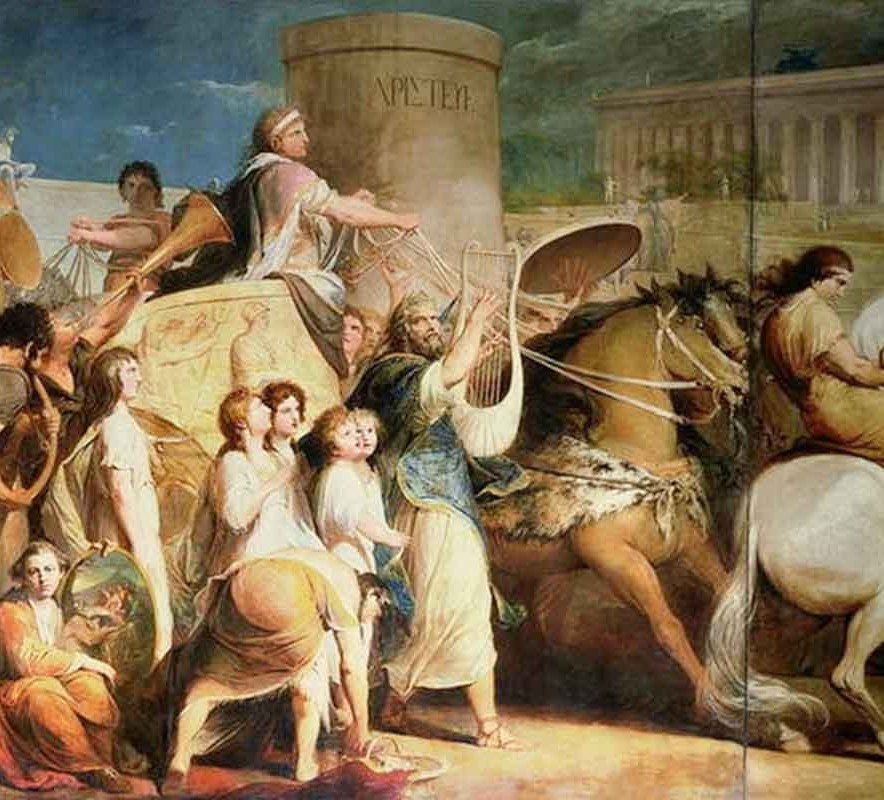
Pindar was one of the most famous ancient Greek lyric poets, and perhaps the best known of the canonical nine lyric poets of ancient Greece.

He was regarded in antiquity as the greatest of Greek poets and the esteem of the ancients may help explain why a good portion of his work was carefully preserved (most of the other Greek lyric poems come down to us only in fragments, but nearly a quarter of all Pindar's poems survive complete).

He is particularly known for his epinicia (or victory odes) in honour of notable personages and winners of athletic games.
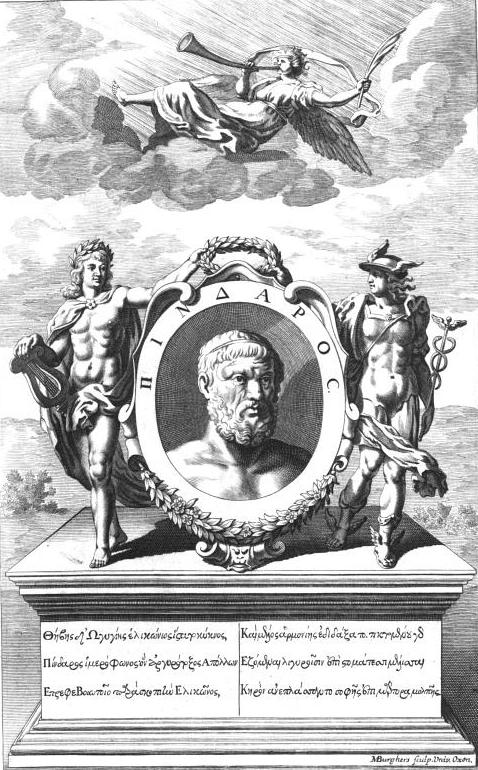
pindar

Biography

Pindar was born around the year 522 or 518 BCE in the village of Cynoscephalae near Thebes in Boeotia, the son of Daiphantus and Cleodice. His family traced their line to the noble clan of the Aegidae of Thebes, and thence back to the legendary founder of Thebes, Cadmus. He married Megacleia and they had two daughters, Eumetis and Protomache, and a son, Daiphantus.

Although Pindar was probably related to individuals and groups who sided with Persia during the the Medean wars in 490 and 480 BCE, his career does not seem to have suffered much by this association, and, soon after the war, his reputation as a poet spread throughout the Greek world and its colonies. His house in Thebes was deliberately spared by Alexander the Great in recognition of the complimentary works Pindar had composed about and for his ancestor, King Alexander I of Macedon.

Pindar travelled extensively throughout the Greek world to attend to his various patrons, including trips to the court of Hieron of Syracuse in 476 BCE (where he may have met some of the other great poets of the time who were attracted to Syracuse, including Aeschylus and Simonides), to the courts of Theron of Acragas and Arcesilas of Cyrene, and to the cities of Delphi and Athens. Eleven of his 45 odes were written for Aeginetans, which makes it likely that he also visited the powerful island of Aegina.

He had a long and illustrious career. His oldest extant ode dates from 498 BCE, when Pindar was only 20, and the latest is usually dated to 446 BCE, when he was 72. The peak of his literary activity, though, is generally seen as from 480 to 460 BCE.

He is believed to have died at Argos in 443 or 438 BCE, at the age of around eighty.
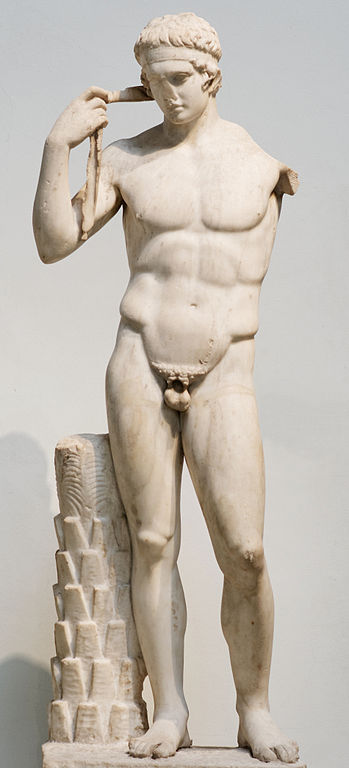
Farnese Diadumenos Statue

Farnese Diadumenos Statue

Writings

Pindar wrote many choral works, such as paeans, songs and hymns for religious festivals, known to us only by quotations in other ancient authors or from papyrus scraps unearthed in Egypt. However, 45 of his "epinicia" survive in complete form and these are anyway considered his masterworks. An "epinicion" is a lyric ode in honour of notable personages (such as winners of the athletic games which were so popular in ancient Greece), designed to be sung by a Chorus in celebration of a victory. His extant victory odes are grouped in four books based on the games in which the celebrated winner had competed, the Olympian, Pythian, Isthmian and Nemean games, the most famous being “Olympian Ode 1” and “Pythian Ode 1” (from 476 BCE and 470 BCE respectively).

Pindar’s odes are complex in construction and rich and allusive in style, packed with dense parallels between the athletic victor and his illustrious ancestors, as well as allusions to the myths of deities and heroes which underlie the athletic festivals. They employ the traditional triadic or three stanza structure, comprising a strophe (first stanza, chanted when the Chorus danced to the left), an antistrophe (second stanza, chanted when the Chorus danced to the right) and a concluding epode (third stanza, in a different metre, chanted when the Chorus stood still mid-stage).
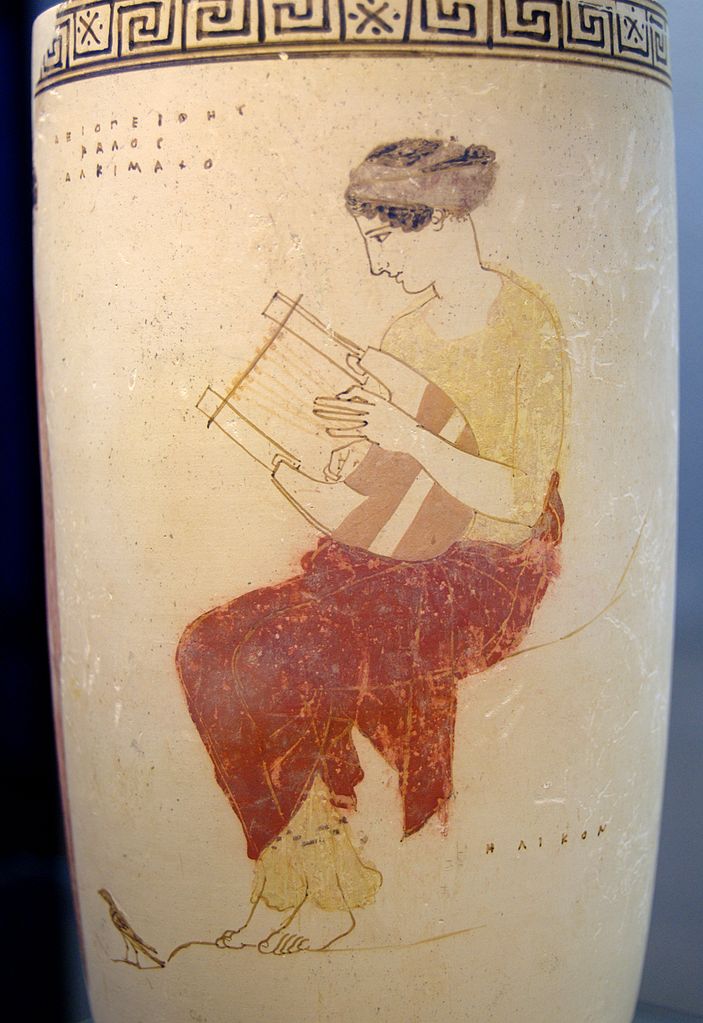
Major Works

Olympian Ode 1

Olympian Ode 1

Pythian Ode 1

Pythian Ode 1

By Ancient Literature

Greece:

  • • Homer
  • • Hesiod
  • • Aesop
  • • Sappho
  • • Pindar
  • • Aeschylus
  • • Sophocles
  • • Euripides
  • • Aristophanes
  • • Menander
  • • Apollonius of Rhodes
Pythian Ode 1

Pythian Ode 1

(Lyric Poem, Greek, 470 BCE, 100 lines)Introduction "Pythian Ode 1" is one of the better known of the many victory poems (or "epinicia") of the ancient Greek lyric poet Pindar. Like "Olympic Ode 1", it celebrates a victory of the Sicilian tyrant H...

January 1st, 2025 • Ancient Literature
Sappho

Sappho

(Lyric Poet, Greek, c. 630 – c. 570 BCE)Introduction - Who is Sappho Sappho was the quintessential lyric poet of ancient Greece. Although the bulk of her poetry has been lost, she was well-known and greatly admired throughout antiquity as one of t...

January 1st, 2025 • Ancient Literature
Olympic Ode 1

Olympic Ode 1

(Lyric Poem, Greek, 476 BCE, 116 lines)Introduction "Olympian Ode 1" is one of the best known of the many victory poems of the ancient Greek lyric poet Pindar. It celebrates the victory of Hieron, the tyrant of Syracuse, in the prestigious single ...

January 1st, 2025 • Ancient Literature
Menander

Menander

(Comic Playwright, Greek, c. 342 – c. 291 BCE)Introduction Menander (Menandros) was a Hellenistic Greek dramatist. He was the best-known representative of Athenian New Comedy, and one of the favourite writers of antiquity, immensely popular in his...

October 24th, 2024 • Timeless Myths
Ovid

Ovid

(Epic, Elegiac and Didactic Poet, Roman, 43 BCE – c. 17 CE)Introduction Ovid was a prolific Roman poet, straddling the Golden and Silver Ages of Latin literature, who wrote about love, seduction and mythological transformation. He is considered a ...

October 24th, 2024 • Timeless Myths
Apollonius of Rhodes

Apollonius of Rhodes

(Epic Poet, Greek, 3rd Century BCE)Introduction Apollonius of Rhodes (Apollonius Rhodius) was an innovative and influential Hellenistic Greek epic poet, best known as the author of the epic poem "The Argonautica", the popular myth of Jason and the...

October 24th, 2024 • Timeless Myths
Hesiod

Hesiod

(Didactic Poet, Greek, c. 750 – c. 700 BCE)Introduction Hesiod is often paired with his near contemporary Homer as one of the earliest Greek poets whose work has survived. He is considered the creator of didactic poetry (instructive and moralizing...

January 1st, 2025 • Ancient Literature
Phaedra

Phaedra

(Tragedy, Latin/Roman, c. 50 CE, 1,280 lines)Introduction "Phaedra" (sometimes known as "Hippolytus") is a tragedy by the Roman playwright Seneca the Younger, written around 50 CE. Adapted from "Hippolytus" by Euripides, it tells the story of Phae...

October 25th, 2024 • Timeless Myths
Nunc est bibendum (Odes, Book 1, Poem 37)

Nunc est bibendum (Odes, Book 1, Poem 37)

(Lyric Poem, Latin/Roman, c. 30 BCE, 32 lines)Introduction "Nunc est bibendum" ("Now is the time for drinking"), sometimes known as the "Cleopatra Ode", is one of the most famous of the odes of the Roman lyric poet Horace, published in 23 BCE as P...

October 25th, 2024 • Timeless Myths
Pliny the Younger

Pliny the Younger

(Correspondent, Roman, 61 – c. 112 CE)Introduction Pliny the Younger was a successful lawyer, administrator and author of ancient Rome. Through his many detailed letters ("Epistulae") to friends and associates, he has become one of the best-known ...

October 24th, 2024 • Timeless Myths
Timeless Myths

Exploring mythology and legends from around the world.

Explore Myths

All Stories Characters All Articles Search Site Map

Mythologies

Norse Mythology Classical Mythology Celtic Mythology Arthurian Legends Mythology Gods Ancient Literature

About Us

Introduction About Jimmy Bibliography FAQs Retro Version

Resources

Timeless Myths All Stories All Articles Characters
© 1999-2026 Timeless Myths • Copyright • Privacy Policy • Cookie Policy • Contact
Follow us: