Timeless Myths Logo
Aphrodite Apollo Ares Artemis Athena Atlas Coeus Crius Cronus Demeter Dionysus Gaia Hades Hephaestus Hera Hermes Hestia Hyperion Iapetus Mnemosyne Oceanus Phobos Phoebe Poseidon Prometheus Rhea Tethys Themis Uranus Zeus
Bacchus Ceres Diana Juno Jupiter Mars Mercury Minerva Neptune Pluto Venus Vesta Vulcan
Amun Anubis Aten Atum Babi Bastet Bes Geb Hapi hathor heqet Horus Isis Khepri Khnum Khonsu Maat Nephthys Nut Osiris Ptah Ra Seshat Seth Shu Sobek Thoth
Alfheim Baldur Freya Freyr Frigg Heimdallr Helheim Idun Jotunheim Loki Nerthus Njord Odin Thor Tyr
Aengus Arawn Badb Brigid Cailleach Ceridwen Cernunnos Cu Chulainn Dagda Danu Gwydion Herne the Hunter Lugh Medb Morrigan Neit Nuada Taliesin Taranis
Chalchiuhtlicue Coatlicue Huitzilopochtli Mictlantecuhtli Mixcoatl Ometeotl Quetzalcoatl Tezcatlipoca Tlaloc Tonatiuh Xipe Totec Xochiquetzal Xolotl
Amaterasu Ame no Uzume Benzaiten Bishamonten Daikokuten Ebisu Fujin Fukurokuju Inari Izanagi Kagutsuchi Raijin Susanoo Tsukuyomi
Caishen Cangjie Dragon King Eight Immortals Erlang Shen Fuxi Guanyin Hou Yi Huxian Jade Emperor King Yama Leizi Lu-ban Mazu Nezha Nuwa Pangu Shennong Sun Wukong Xiwangmu Yue Lao Zhong Kui
Norse Classical Celtic Arthurian
Literature Stories Names
Aphrodite Apollo Ares Artemis Athena Atlas Coeus Crius Cronus Demeter Dionysus Gaia Hades Hephaestus Hera Hermes Hestia Hyperion Iapetus Mnemosyne Oceanus Phobos Phoebe Poseidon Prometheus Rhea Tethys Themis Uranus Zeus
Bacchus Ceres Diana Juno Jupiter Mars Mercury Minerva Neptune Pluto Venus Vesta Vulcan
Amun Anubis Aten Atum Babi Bastet Bes Geb Hapi hathor heqet Horus Isis Khepri Khnum Khonsu Maat Nephthys Nut Osiris Ptah Ra Seshat Seth Shu Sobek Thoth
Alfheim Baldur Freya Freyr Frigg Heimdallr Helheim Idun Jotunheim Loki Nerthus Njord Odin Thor Tyr
Aengus Arawn Badb Brigid Cailleach Ceridwen Cernunnos Cu Chulainn Dagda Danu Gwydion Herne the Hunter Lugh Medb Morrigan Neit Nuada Taliesin Taranis
Chalchiuhtlicue Coatlicue Huitzilopochtli Mictlantecuhtli Mixcoatl Ometeotl Quetzalcoatl Tezcatlipoca Tlaloc Tonatiuh Xipe Totec Xochiquetzal Xolotl
Amaterasu Ame no Uzume Benzaiten Bishamonten Daikokuten Ebisu Fujin Fukurokuju Inari Izanagi Kagutsuchi Raijin Susanoo Tsukuyomi
Caishen Cangjie Dragon King Eight Immortals Erlang Shen Fuxi Guanyin Hou Yi Huxian Jade Emperor King Yama Leizi Lu-ban Mazu Nezha Nuwa Pangu Shennong Sun Wukong Xiwangmu Yue Lao Zhong Kui
Norse Classical Celtic Arthurian
Literature Stories Names
  1. Classical Literature
    Greece Rome Other Ancient Civilizations Timeline of Classical Literature Alphabetical List of Authors Index of Individual Works Index of Important Characters Sources About Us
  2. Greece
    Homer Hesiod Aesop Sappho Pindar Aeschylus Sophocles Euripides Aristophanes Menander Apollonius of Rhodes
  3. Pindar
    Olympic Ode 1 Pythian Ode 1
  4. Olympic Ode 1
    Olympic Ode 1

Olympic Ode 1

(Lyric Poem, Greek, 476 BCE, 116 lines)

Introduction

"Olympian Ode 1" is one of the best known of the many victory poems of the ancient Greek lyric poet Pindar. It celebrates the victory of Hieron, the tyrant of Syracuse, in the prestigious single horse race at the Olympic Games of 476 BCE. Such a victory ode (or "epinicion") would generally have been commissioned by a member of the victor's family, and would usually have been sung and danced on the victor's return to his home town.
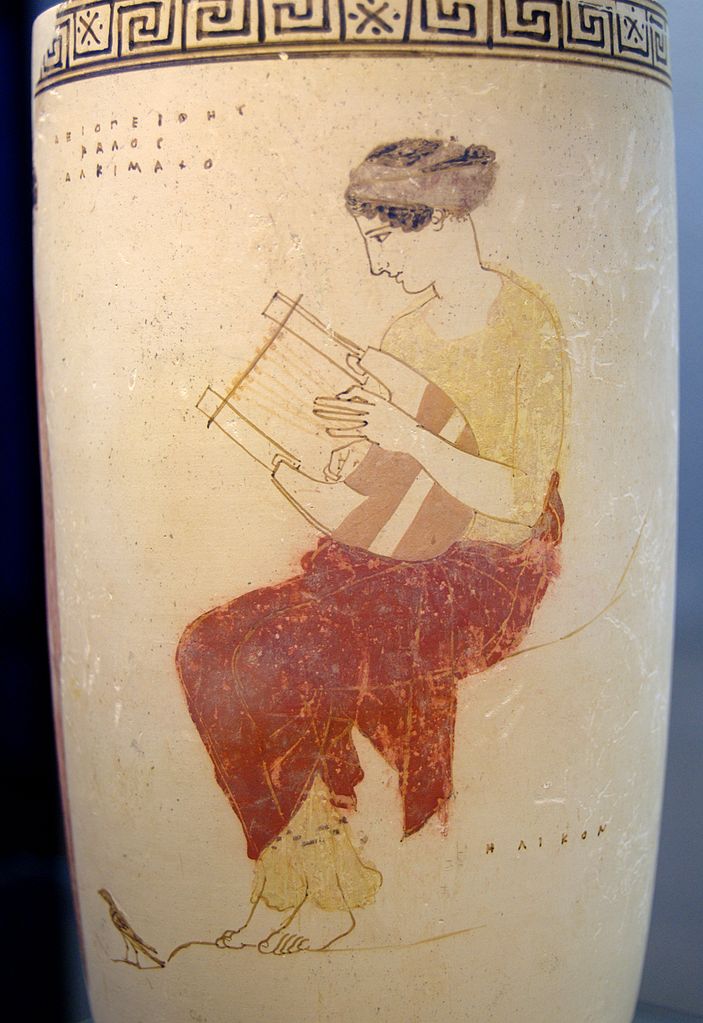
Ancient Greek Vase olympic ode 1

Ancient Greek Vase

Synopsis

The poem begins with a "priamel", a literary device common in ancient Greek poetry where a series of listed alternatives (in this case, water and gold, considered the best in their respective realms) serve as foils to the true subject of the poem (in this case, the Olympic Games). Hieron is then briefly praised for his wealth, hospitality, political power and achievements, and in particular for the Olympic victory of his horse, Pherenikos.

In the central section of the poem, which comprises about two-thirds of the total 116 lines, Pindar relates a version of the myth of Pelops, son of Tantalos, and he attributes the appeal of such gruesome tales to the charm of exaggerated story-telling.

Finally, Pindar talks about the fame and satisfaction resulting from being among the exalted ranks of Olympic victors, praises Hieron as the most knowledgeable and powerful host of his time, and expresses hopes that he will be able to celebrate a future victory in the chariot race (the chariot races being considered even more prestigious than the single horse races).
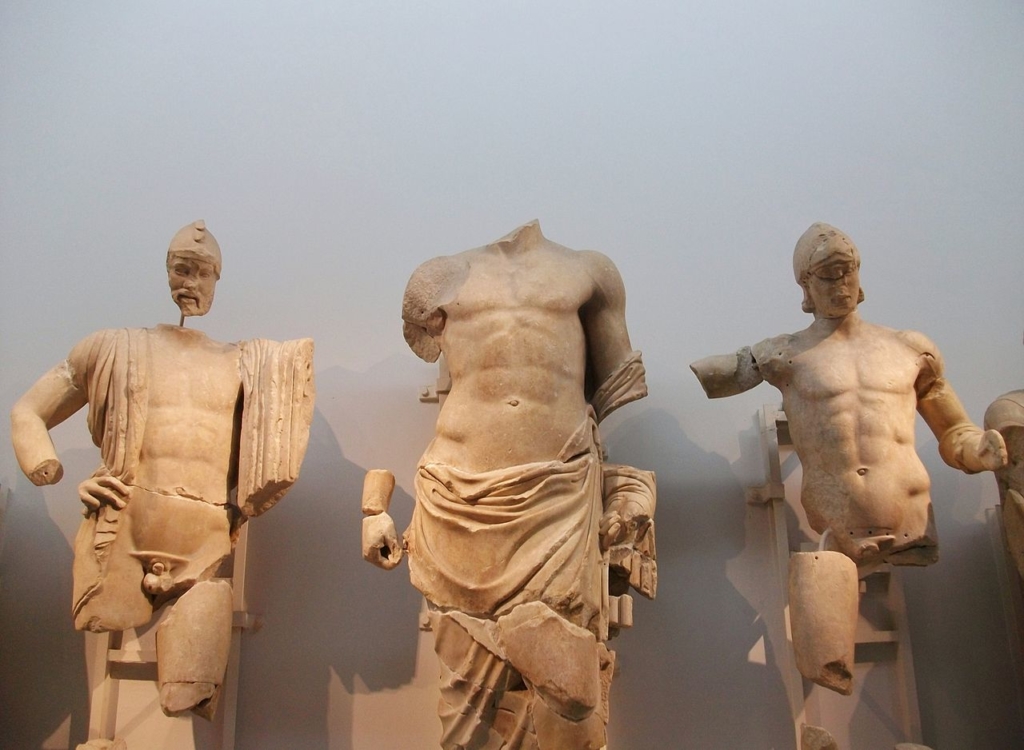
Ancient Greek Statues olympic ode 1

Ancient Greek Statues

Analysis

Like all Pindaric odes, "Olympic Ode 1", which runs to almost 120 lines, is composed in a series of triads, each consisting of strophe, antistrophe and epode, with the strophes and antistrophes having the same metrical pattern, and with the concluding epodes of each triad having a different metre but corresponding metrically with each other. It employs the Aeolian metre, historically associated with the lyric poetry of Sappho.

According to some sources, "Olympian Ode 1" was possibly placed first in the compilation of Pindar's Olympian odes because of its praise for the Olympic Games in general, and its reference to the myth of Pelops (whose cult developed into the founding myth of the Olympic Games).

Resources

  • English translation of Olympian Ode 1 (Perseus Project)

  • Greek text of Olympian Ode 1 with word-by-word translation (Perseus Project)

By Ancient Literature

Pindar:

  • • Olympic Ode 1
  • • Pythian Ode 1
Pythian Ode 1

Pythian Ode 1

(Lyric Poem, Greek, 470 BCE, 100 lines)Introduction "Pythian Ode 1" is one of the better known of the many victory poems (or "epinicia") of the ancient Greek lyric poet Pindar. Like "Olympic Ode 1", it celebrates a victory of the Sicilian tyrant H...

January 1st, 2025 • Ancient Literature
Invocation of the Muse Odyssey: The Author's Prayer

Invocation of the Muse Odyssey: The Author's Prayer

Invocation of the muse Odyssey, in Greek mythology, refers to the act of the author, Homer, requesting the muse to give him inspiration and blessing as he begins to write his work of literature, The Odyssey. Read on to discover more details about ...

February 16th, 2024 • Ancient Literature
Hymn to Aphrodite

Hymn to Aphrodite

(Lyric Poem, Greek, c. 570 BCE, 28 lines)Introduction “Hymn to Aphrodite” (sometimes referred to as "Ode to Aphrodite" or “Fragment 1”) is the only poem of the ancient Greek lyric poet Sappho to survive in its entirety. Although she is recorded in...

January 1st, 2025 • Ancient Literature
Olympia

Olympia

Olympia was a small town, west of Pisa, on the river Alpeius, of the region of Elis. Olympia was the town that founded the famous Olympic Games, which were held every four years. Historically, the Olympics didn't exist until 776 BC, yet writers of...

August 8th, 1999 • Jimmy Joe
Ovid

Ovid

(Epic, Elegiac and Didactic Poet, Roman, 43 BCE – c. 17 CE)Introduction Ovid was a prolific Roman poet, straddling the Golden and Silver Ages of Latin literature, who wrote about love, seduction and mythological transformation. He is considered a ...

October 24th, 2024 • Timeless Myths
Ars Poetica

Ars Poetica

(Didactic Poem, Latin/Roman, c. 18 BCE, 476 lines)Introduction "Ars Poetica" ("The Art of Poetry" or "On the Nature of Poetry"), sometimes known under its original title, "Epistula Ad Pisones" ("Letters to the Pisos"), is a treatise or literary es...

October 25th, 2024 • Timeless Myths
The Odyssey

The Odyssey

(Epic Poem, Greek, c. 725 BCE, 12,110 lines)Introduction “The Odyssey” (Gr: “Odysseia”) is the second of the two epic poems attributed to the ancient Greek poet Homer (the first being “The Iliad”), and usually considered the second extant work of ...

January 1st, 2025 • Ancient Literature
Nunc est bibendum (Odes, Book 1, Poem 37)

Nunc est bibendum (Odes, Book 1, Poem 37)

(Lyric Poem, Latin/Roman, c. 30 BCE, 32 lines)Introduction "Nunc est bibendum" ("Now is the time for drinking"), sometimes known as the "Cleopatra Ode", is one of the most famous of the odes of the Roman lyric poet Horace, published in 23 BCE as P...

October 25th, 2024 • Timeless Myths
Works and Days

Works and Days

(Didactic Poem, Greek, c. 700 BCE, 828 lines)Introduction "Works and Days" (Gr:"Erga kaí Hemérai"; Lat: “Opera et Dies”) is a didactic poem written by the very early ancient Greek poet Hesiod. It was probably written around 700 BCE or earlier and ...

January 1st, 2025 • Ancient Literature
Pindar

Pindar

(Lyric Poet, Greek, c. 522 – c. 443 BCE)Introduction Pindar was one of the most famous ancient Greek lyric poets, and perhaps the best known of the canonical nine lyric poets of ancient Greece. He was regarded in antiquity as the greatest of Greek...

January 1st, 2025 • Ancient Literature
Timeless Myths

Exploring mythology and legends from around the world.

Explore Myths

All Stories Characters All Articles Search Site Map

Mythologies

Norse Mythology Classical Mythology Celtic Mythology Arthurian Legends Mythology Gods Ancient Literature

About Us

Introduction About Jimmy Bibliography FAQs Retro Version

Resources

Timeless Myths All Stories All Articles Characters
© 1999-2026 Timeless Myths • Copyright • Privacy Policy • Cookie Policy • Contact
Follow us: