Timeless Myths Logo
Aphrodite Apollo Ares Artemis Athena Atlas Coeus Crius Cronus Demeter Dionysus Gaia Hades Hephaestus Hera Hermes Hestia Hyperion Iapetus Mnemosyne Oceanus Phobos Phoebe Poseidon Prometheus Rhea Tethys Themis Uranus Zeus
Bacchus Ceres Diana Juno Jupiter Mars Mercury Minerva Neptune Pluto Venus Vesta Vulcan
Amun Anubis Aten Atum Babi Bastet Bes Geb Hapi hathor heqet Horus Isis Khepri Khnum Khonsu Maat Nephthys Nut Osiris Ptah Ra Seshat Seth Shu Sobek Thoth
Alfheim Baldur Freya Freyr Frigg Heimdallr Helheim Idun Jotunheim Loki Nerthus Njord Odin Thor Tyr
Aengus Arawn Badb Brigid Cailleach Ceridwen Cernunnos Cu Chulainn Dagda Danu Gwydion Herne the Hunter Lugh Medb Morrigan Neit Nuada Taliesin Taranis
Chalchiuhtlicue Coatlicue Huitzilopochtli Mictlantecuhtli Mixcoatl Ometeotl Quetzalcoatl Tezcatlipoca Tlaloc Tonatiuh Xipe Totec Xochiquetzal Xolotl
Amaterasu Ame no Uzume Benzaiten Bishamonten Daikokuten Ebisu Fujin Fukurokuju Inari Izanagi Kagutsuchi Raijin Susanoo Tsukuyomi
Caishen Cangjie Dragon King Eight Immortals Erlang Shen Fuxi Guanyin Hou Yi Huxian Jade Emperor King Yama Leizi Lu-ban Mazu Nezha Nuwa Pangu Shennong Sun Wukong Xiwangmu Yue Lao Zhong Kui
Norse Classical Celtic Arthurian
Literature Stories Names
Aphrodite Apollo Ares Artemis Athena Atlas Coeus Crius Cronus Demeter Dionysus Gaia Hades Hephaestus Hera Hermes Hestia Hyperion Iapetus Mnemosyne Oceanus Phobos Phoebe Poseidon Prometheus Rhea Tethys Themis Uranus Zeus
Bacchus Ceres Diana Juno Jupiter Mars Mercury Minerva Neptune Pluto Venus Vesta Vulcan
Amun Anubis Aten Atum Babi Bastet Bes Geb Hapi hathor heqet Horus Isis Khepri Khnum Khonsu Maat Nephthys Nut Osiris Ptah Ra Seshat Seth Shu Sobek Thoth
Alfheim Baldur Freya Freyr Frigg Heimdallr Helheim Idun Jotunheim Loki Nerthus Njord Odin Thor Tyr
Aengus Arawn Badb Brigid Cailleach Ceridwen Cernunnos Cu Chulainn Dagda Danu Gwydion Herne the Hunter Lugh Medb Morrigan Neit Nuada Taliesin Taranis
Chalchiuhtlicue Coatlicue Huitzilopochtli Mictlantecuhtli Mixcoatl Ometeotl Quetzalcoatl Tezcatlipoca Tlaloc Tonatiuh Xipe Totec Xochiquetzal Xolotl
Amaterasu Ame no Uzume Benzaiten Bishamonten Daikokuten Ebisu Fujin Fukurokuju Inari Izanagi Kagutsuchi Raijin Susanoo Tsukuyomi
Caishen Cangjie Dragon King Eight Immortals Erlang Shen Fuxi Guanyin Hou Yi Huxian Jade Emperor King Yama Leizi Lu-ban Mazu Nezha Nuwa Pangu Shennong Sun Wukong Xiwangmu Yue Lao Zhong Kui
Norse Classical Celtic Arthurian
Literature Stories Names
  1. Classical Literature
    Greece Rome Other Ancient Civilizations Timeline of Classical Literature Alphabetical List of Authors Index of Individual Works Index of Important Characters Sources About Us
  2. Rome
    Catullus Vergil (Virgil) Horace Ovid Seneca the Younger Lucan Juvenal Pliny the Younger
  3. Horace
    Carmen Saeculare Ars Poetica Tu ne quaesieris (Odes, Book 1, Poem 11) Nunc est bibendum (Odes, Book 1, Poem 37)
  4. Ars Poetica
    Ars Poetica

Ars Poetica

(Didactic Poem, Latin/Roman, c. 18 BCE, 476 lines)

Introduction

"Ars Poetica" ("The Art of Poetry" or "On the Nature of Poetry"), sometimes known under its original title, "Epistula Ad Pisones" ("Letters to the Pisos"), is a treatise or literary essay on poetics by the Roman poet Horace, published around 18 or 19 BCE.
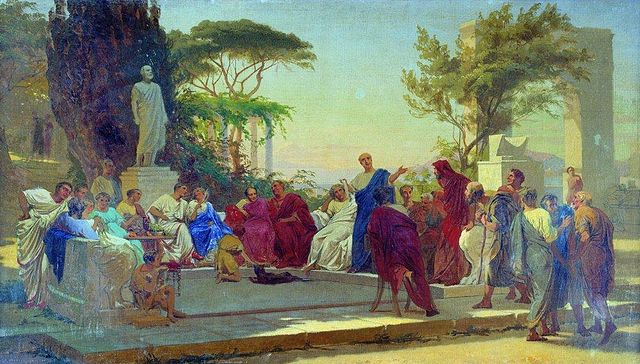
Horace reads before Maecenas

Horace reads before Maecenas

Synopsis

The poem takes the form of a letter of advice on the pursuit of literature, addressed to a father and two sons, known only as the Pisos, whose identity is uncertain. The work is often split up into sections as follows (although other splits have also been suggested):

  • Lines 1 – 37: On unity and harmony.

  • Lines 38 – 72: The writer's aims.

  • Lines 73 – 118: What the tradition dictates (decorum).

  • Lines 119 – 152: Invention vs. imitation (be consistent if you are original).

  • Lines 153 – 188: On characterization (the four ages of man).

  • Lines 189 – 219: On the gods, chorus and music (in tragic drama).

  • Lines 220 – 250: On style (especially in satyr plays).

  • Lines 251 – 274: On metre and versification.

  • Lines 275 – 294: Tragedy and comedy, Greek and Roman poets.

  • Lines 295 – 332: How to be a good poet (talent versus art).

  • Lines 333 – 365: Combine instruction with pleasure.

  • Lines 366 – 407: Avoid mediocrity (errors are permissible if there are compensating pleasures).

  • Lines 408 – 437: Study and talent are both needed, but beware of the flattery of critics.

  • Lines 438 – 476: Know your faults and keep your wits.

Analysis

The actual purpose of the "Ars Poetica" has puzzled critics. As a treatise, it is far from systematic and, whereas Aristotle's "Poetics" is analytical and descriptive, Horace is impressionistic, personal and allusive. The transitions from one subject to another seem to occur abruptly, and the subjects are arranged quite haphazardly. Its concentration on the epic and dramatic forms also seems somewhat irrelevant to the contemporary Roman literary scene of his day. However, the lively autobiographical approach of the "Ars Poetica" and its expression of personal standards in literature make it unique as a work of criticism in the ancient world.
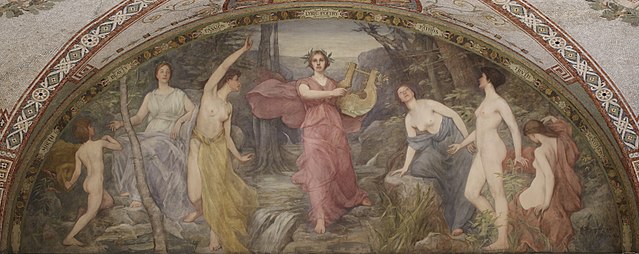
Lyric poetry, photograph by Walker Highsmith

Lyric poetry, photograph by Walker Highsmith

A few quotes in particular from the work have passed into common literary parlance, including: "in medias res" (literally, "in the middle of things", describing a popular narrative technique that appears frequently in ancient epics and remains popular to this day, where the narrative starts in the middle of the story and the characters, setting and conflict are introduced through a series of flashbacks or through characters relating past events to each other); "bonus dormitat Homerus" (literally, "the good Homer nods", an indication that even the most skilled poet can make continuity errors); "purpureus pannus" (literally, "the purple patch", describing passages, or sometimes entire literary works, written in prose so overly extravagant, ornate or flowery as to break the flow and draw attention to itself); and "ut pictura poesis" (literally "as painting, so poetry"), meaning that poetry merits the same careful interpretation that was reserved for painting in Horace's day).

In later ages, the work exercised a great influence on Renaissance European literature, notably on French drama through Nicholas Boileau's "L'Art Poétique" of 1674, which was written in imitation of Horace's work. It was first translated into English by Ben Jonson in 1640.

Resources

  • English translation by A. S. Kline (Poetry in Translation)

  • Latin version (The Latin Library)

By Timeless Myths

Horace:

  • • Carmen Saeculare
  • • Ars Poetica
  • • Tu ne quaesieris (Odes, Book 1, Poem 11)
  • • Nunc est bibendum (Odes, Book 1, Poem 37)
Ars Amatoria

Ars Amatoria

(Didactic/Elegiac Poem, Latin/Roman, 1 CE, 2,330 lines)Introduction "Ars Amatoria" ("The Art of Love") is a collection of 57 didactic poems (or, perhaps more accurately, a burlesque satire on didactic poetry) in three books by the Roman lyric poet...

October 25th, 2024 • Timeless Myths
Horace

Horace

(Lyric Poet and Satirist, Roman, 65 – 8 BCE)Introduction Horace was, along with Vergil, the leading Roman poet in the time of Emperor Augustus. He is considered by classicists to be one of the greatest and most original of Latin lyric poets, appre...

October 24th, 2024 • Timeless Myths
Nunc est bibendum (Odes, Book 1, Poem 37)

Nunc est bibendum (Odes, Book 1, Poem 37)

(Lyric Poem, Latin/Roman, c. 30 BCE, 32 lines)Introduction "Nunc est bibendum" ("Now is the time for drinking"), sometimes known as the "Cleopatra Ode", is one of the most famous of the odes of the Roman lyric poet Horace, published in 23 BCE as P...

October 25th, 2024 • Timeless Myths
Pythian Ode 1

Pythian Ode 1

(Lyric Poem, Greek, 470 BCE, 100 lines)Introduction "Pythian Ode 1" is one of the better known of the many victory poems (or "epinicia") of the ancient Greek lyric poet Pindar. Like "Olympic Ode 1", it celebrates a victory of the Sicilian tyrant H...

January 1st, 2025 • Ancient Literature
The Georgics

The Georgics

(Didactic Poem, Latin/Roman, 29 BCE, 2,188 lines)Introduction "The Georgics" (Gr: "Georgicon") is a didactic poem, in the tradition of Hesiod, by the Roman poet Vergil. It was Vergil's second major work, published in 29 BCE, after The Bucolics (Ec...

October 25th, 2024 • Timeless Myths
Catullus 95 Translation

Catullus 95 Translation

Introduction Catullus is friends with interesting people, like the poet Cinna. In this poem, Cinna spent nine harvests-tides and winters writing a book titled Smyrna. Another man, Hortensius, who is an orator who occasionally wrote poetry publishe...

January 1st, 2025 • R.D.M
Catullus 91 Translation

Catullus 91 Translation

Introduction The poet addresses Gellius in Catullus 91. In it, he addresses Gellius and how he had a relationship with a woman who was not a mother or a sister of his. In lines one and two, Catullus hoped that Gellius would be true to him through ...

January 1st, 2025 • Ancient Literature
Catullus 97 Translation

Catullus 97 Translation

Introduction This is another poem that many readers find offensive. In it, Catullus writes about a disgusting person named Aemilius. The first two lines make the reader wonder where Catullus is going with this because he says it doesn’t matter if ...

January 1st, 2025 • R.D.M
Invocation of the Muse Odyssey: The Author's Prayer

Invocation of the Muse Odyssey: The Author's Prayer

Invocation of the muse Odyssey, in Greek mythology, refers to the act of the author, Homer, requesting the muse to give him inspiration and blessing as he begins to write his work of literature, The Odyssey. Read on to discover more details about ...

February 16th, 2024 • Ancient Literature
Catullus 93 Translation

Catullus 93 Translation

Introduction Catullus lived during the time of Julius Caesar. His father was friends with the senator and general, but Catullus did not respect the man. Caesar was an ally with Pompey and Catullus wrote several verses where he denounced him. In ot...

January 1st, 2025 • Ancient Literature
Timeless Myths

Exploring mythology and legends from around the world.

Explore Myths

All Stories Characters All Articles Search Site Map

Mythologies

Norse Mythology Classical Mythology Celtic Mythology Arthurian Legends Mythology Gods Ancient Literature

About Us

Introduction About Jimmy Bibliography FAQs Retro Version

Resources

Timeless Myths All Stories All Articles Characters
© 1999-2026 Timeless Myths • Copyright • Privacy Policy • Cookie Policy • Contact
Follow us: