Timeless Myths Logo
Aphrodite Apollo Ares Artemis Athena Atlas Coeus Crius Cronus Demeter Dionysus Gaia Hades Hephaestus Hera Hermes Hestia Hyperion Iapetus Mnemosyne Oceanus Phobos Phoebe Poseidon Prometheus Rhea Tethys Themis Uranus Zeus
Bacchus Ceres Diana Juno Jupiter Mars Mercury Minerva Neptune Pluto Venus Vesta Vulcan
Amun Anubis Aten Atum Babi Bastet Bes Geb Hapi hathor heqet Horus Isis Khepri Khnum Khonsu Maat Nephthys Nut Osiris Ptah Ra Seshat Seth Shu Sobek Thoth
Alfheim Baldur Freya Freyr Frigg Heimdallr Helheim Idun Jotunheim Loki Nerthus Njord Odin Thor Tyr
Aengus Arawn Badb Brigid Cailleach Ceridwen Cernunnos Cu Chulainn Dagda Danu Gwydion Herne the Hunter Lugh Medb Morrigan Neit Nuada Taliesin Taranis
Chalchiuhtlicue Coatlicue Huitzilopochtli Mictlantecuhtli Mixcoatl Ometeotl Quetzalcoatl Tezcatlipoca Tlaloc Tonatiuh Xipe Totec Xochiquetzal Xolotl
Amaterasu Ame no Uzume Benzaiten Bishamonten Daikokuten Ebisu Fujin Fukurokuju Inari Izanagi Kagutsuchi Raijin Susanoo Tsukuyomi
Caishen Cangjie Dragon King Eight Immortals Erlang Shen Fuxi Guanyin Hou Yi Huxian Jade Emperor King Yama Leizi Lu-ban Mazu Nezha Nuwa Pangu Shennong Sun Wukong Xiwangmu Yue Lao Zhong Kui
Norse Classical Celtic Arthurian
Literature Stories Names
Aphrodite Apollo Ares Artemis Athena Atlas Coeus Crius Cronus Demeter Dionysus Gaia Hades Hephaestus Hera Hermes Hestia Hyperion Iapetus Mnemosyne Oceanus Phobos Phoebe Poseidon Prometheus Rhea Tethys Themis Uranus Zeus
Bacchus Ceres Diana Juno Jupiter Mars Mercury Minerva Neptune Pluto Venus Vesta Vulcan
Amun Anubis Aten Atum Babi Bastet Bes Geb Hapi hathor heqet Horus Isis Khepri Khnum Khonsu Maat Nephthys Nut Osiris Ptah Ra Seshat Seth Shu Sobek Thoth
Alfheim Baldur Freya Freyr Frigg Heimdallr Helheim Idun Jotunheim Loki Nerthus Njord Odin Thor Tyr
Aengus Arawn Badb Brigid Cailleach Ceridwen Cernunnos Cu Chulainn Dagda Danu Gwydion Herne the Hunter Lugh Medb Morrigan Neit Nuada Taliesin Taranis
Chalchiuhtlicue Coatlicue Huitzilopochtli Mictlantecuhtli Mixcoatl Ometeotl Quetzalcoatl Tezcatlipoca Tlaloc Tonatiuh Xipe Totec Xochiquetzal Xolotl
Amaterasu Ame no Uzume Benzaiten Bishamonten Daikokuten Ebisu Fujin Fukurokuju Inari Izanagi Kagutsuchi Raijin Susanoo Tsukuyomi
Caishen Cangjie Dragon King Eight Immortals Erlang Shen Fuxi Guanyin Hou Yi Huxian Jade Emperor King Yama Leizi Lu-ban Mazu Nezha Nuwa Pangu Shennong Sun Wukong Xiwangmu Yue Lao Zhong Kui
Norse Classical Celtic Arthurian
Literature Stories Names
  1. Classical Literature
    Greece Rome Other Ancient Civilizations Timeline of Classical Literature Alphabetical List of Authors Index of Individual Works Index of Important Characters Sources About Us
  2. Rome
    Catullus Vergil (Virgil) Horace Ovid Seneca the Younger Lucan Juvenal Pliny the Younger
  3. Pliny the Younger

Pliny the Younger

(Correspondent, Roman, 61 – c. 112 CE)

Introduction

Pliny the Younger was a successful lawyer, administrator and author of ancient Rome. Through his many detailed letters ("Epistulae") to friends and associates, he has become one of the best-known of all Roman writers.
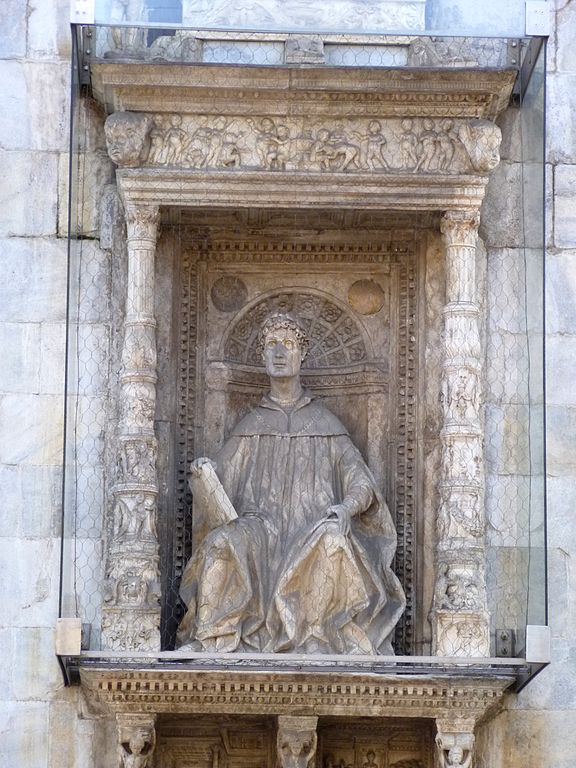
Statue of Pliny the Younger, Roman author and administrator

Statue of Pliny the Younger

Biography

Gaius Plinius Caecilius Secundus (known as Pliny the Younger in the English-speaking world, to distinguish him from his uncle, Gaius Plinius Secundus or Pliny the Elder) was born in 61 CE in Novum Comum (modern-day Como in northern Italy). He was by birth of high equestrian rank, the lower of the two Roman aristocratic orders that monopolized senior civil and military offices during the early Roman Empire.

His father died when Pliny was still young, and he was adopted by his uncle, Pliny the Elder, the celebrated author of the "Naturalis Historia", whom Pliny had revered from an early age. During his uncle's many absences on state business, he lived with his mother and was tutored at home for a time by the consul and army commander Lucius Verginius Rufus (who was later to suppress a rebellion against the Emperor Nero and then to refuse the imperial crown).

To further his education, he also travelled to Rome, where he was taught rhetoric by the great teacher and author Quintilian, and where he became closer to his uncle, before the latter's death in the eruption of Vesuvius in 79 CE. As heir to his successful uncle's estate, he inherited several large estates and an impressive library.

He was considered an honest and moderate young man and rose quickly through the "cursus honorum", the series of civil and military offices of the Roman Empire. He was elected a member of the Board of Ten in 81 CE, and progressed to the position of quaestor in his late twenties (unusual for an equestrian), then tribune, praetor and prefect, and finally consul, the highest office in the Empire.
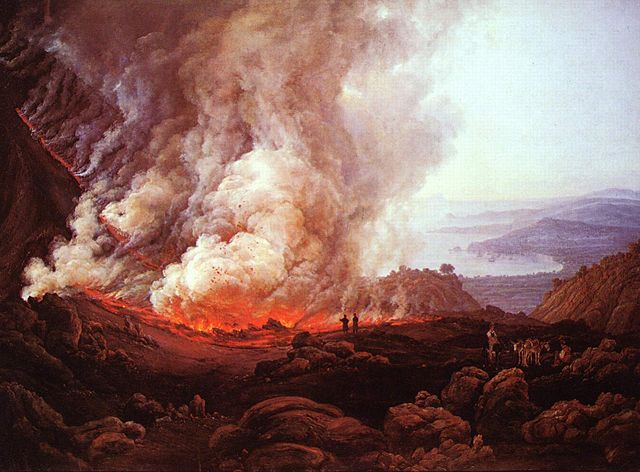
Painting depicting the eruption of Mount Vesuvius in 79 CE

Eruption of Vesuvius

He became active in the Roman legal system, and was well-known for prosecuting and defending at the trials of a series of provincial governors, managing to survive the erratic and dangerous rule of the paranoid Emperor Domitian and establishing himself as a close and trusted adviser to his successor, Emperor Trajan.

He was a close friend of the historian Tacitus, and also employed the biographer Suetonius on his staff, but he also came into contact with many other well-known intellectuals of the period, including the poet Martial and the philosophers Artemidorus and Euphrates. He married three times (although he had no children), firstly when he was just eighteen to a stepdaughter of Veccius Proculus, secondly to the daughter of Pompeia Celerina, and thirdly to Calpurnia, daughter of Calpurnius and granddaughter of Calpurnus Fabatus of Comum.

Pliny is thought to have died suddenly around 112 CE, following his return to Rome from an extended political appointment in the troubled province of Bithynia-Pontus, on the Black Sea coast of Anatolia (modern-day Turkey). He left a large amount of money to his native town of Comum.

Writings

Pliny started writing at the age of fourteen, penning a tragedy in Greek, and over the course of his life he wrote a quantity of poetry, most of which has been lost. He was also known as a notable orator, although only one of his orations has survived, the "Panegyricus Traiani", a lavish speech in praise of the Emperor Trajan.

However, the largest body of Pliny's work which survives, and the main source of his reputation as a writer, is his "Epistulae", a series of personal letters to friends and associates. The letters in Books I to IX were apparently specifically written for publication (which some consider a new literary genre), with Books I to III probably written between 97 and 102 CE, Books IV to VII between 103 and 107 CE, and Books VIII and IX covering the period 108 and 109 CE. The letters of Book X (109 to 111 CE), sometimes referred to as the "Correspondence with Trajan", are addressed to or from the Emperor Trajan personally, and are stylistically much simpler than their precursors, not being intended for publication.
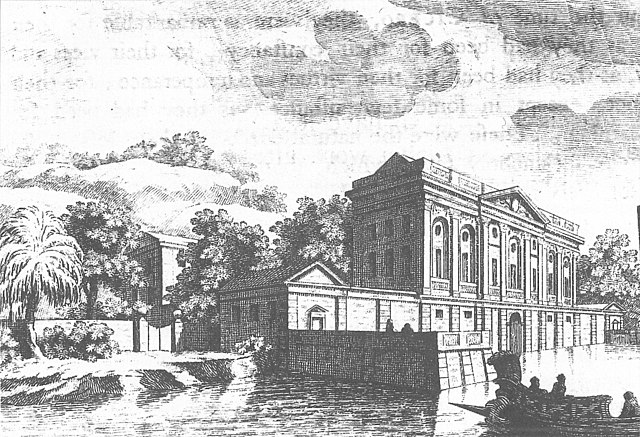
Roman comedy mosaic from the Villa of Pliny the Younger

Comedy, Villa of Pliny the Younger

The "Epistulae" are a unique testimony of Roman administrative history and everyday life in the 1st Century CE, incorporating a wealth of detail on Pliny's life at his country villas, as well as his progression though the sequential order of public offices followed by aspiring politicians in ancient Rome. Especially noteworthy are two letters in which he describes the eruption of Mount Vesuvius in 79 CE and the death of his uncle and mentor, Pliny the Elder ("Epistulae VI.16" and "Epistulae VI.20"), and one in which he asks the Emperor Trajan for instructions regarding official policy concerning Christians ("Epistulae X.96"), considered the earliest external account of Christian worship.

Major Works

  • "Epistulae VI.16 and VI.20"

  • "Epistulae X.96"

By Timeless Myths

Rome:

  • • Catullus
  • • Vergil (Virgil)
  • • Horace
  • • Ovid
  • • Seneca the Younger
  • • Lucan
  • • Juvenal
  • • Pliny the Younger
Seneca the Younger

Seneca the Younger

(Tragic Playwright, Roman, c. 4 BCE – 65 CE)Introduction Seneca the Younger was a Roman philosopher, statesman and dramatist of the Silver Age of Latin literature. Although generally considered inferior to their corresponding Greek dramas, his tra...

October 24th, 2024 • Timeless Myths
Epistulae X.96

Epistulae X.96

(Letters, Latin/Roman, c. 111 CE, 38 lines)Introduction "Epistulae X" ("Letters 10", also known as the "Correspondence with Trajan") is a book of letters by the Roman lawyer and author Pliny the Younger to the Emperor Trajan between 109 and 111 CE...

October 25th, 2024 • Timeless Myths
Juvenal

Juvenal

(Satirist, Roman, c. 55 – c. 138 CE)Introduction Juvenal was a Roman poet of the Silver Age of Latin literature, the last and most powerful of all the Roman satirical poets. His biting "Satires" could be read as a brutal critique of pagan Rome, al...

October 24th, 2024 • Timeless Myths
Epistulae VI.16 & VI.20

Epistulae VI.16 & VI.20

(Letters, Latin/Roman, c. 107 CE, 63 + 60 lines)Introduction "Epistulae VI" ("Letters 6") is the sixth of ten books of letters by the Roman lawyer and author Pliny the Younger, mainly written around 106 to 107 CE. Of these, Letters 16 and 20 are t...

October 25th, 2024 • Timeless Myths
Horace

Horace

(Lyric Poet and Satirist, Roman, 65 – 8 BCE)Introduction Horace was, along with Vergil, the leading Roman poet in the time of Emperor Augustus. He is considered by classicists to be one of the greatest and most original of Latin lyric poets, appre...

October 24th, 2024 • Timeless Myths
Lucan

Lucan

(Epic Poet, Roman, 39 – 65 CE)Introduction Lucan was a Roman epic poet during the reign of Emperor Nero. Despite his short life, he is regarded as one of the outstanding figures of the Silver Age of Latin literature, and his youth and speed of com...

October 24th, 2024 • Timeless Myths
Ovid

Ovid

(Epic, Elegiac and Didactic Poet, Roman, 43 BCE – c. 17 CE)Introduction Ovid was a prolific Roman poet, straddling the Golden and Silver Ages of Latin literature, who wrote about love, seduction and mythological transformation. He is considered a ...

October 24th, 2024 • Timeless Myths
Apollonius of Rhodes

Apollonius of Rhodes

(Epic Poet, Greek, 3rd Century BCE)Introduction Apollonius of Rhodes (Apollonius Rhodius) was an innovative and influential Hellenistic Greek epic poet, best known as the author of the epic poem "The Argonautica", the popular myth of Jason and the...

October 24th, 2024 • Timeless Myths
Pharsalia (De Bello Civili)

Pharsalia (De Bello Civili)

(Epic Poem, Latin/Roman, 65 CE, 8,060 lines)Introduction Pharsalia (also known as De Bello Civili or "On the Civil War") is an epic poem in ten books by the Roman poet Lucan, left unfinished on the poet's death in 65 CE. Although incomplete, it is...

October 25th, 2024 • Timeless Myths
Vergil (Virgil)

Vergil (Virgil)

(Epic and Didactic Poet, Roman, 70 – c. 19 BCE)Introduction Vergil (or Virgil) was one of ancient Rome's greatest poets. His influence on the world's literature has been immeasurable, and his works (along with those of Seneca, Cicero, Ovid, Aristo...

October 24th, 2024 • Timeless Myths
Timeless Myths

Exploring mythology and legends from around the world.

Explore Myths

All Stories Characters All Articles Search Site Map

Mythologies

Norse Mythology Classical Mythology Celtic Mythology Arthurian Legends Mythology Gods Ancient Literature

About Us

Introduction About Jimmy Bibliography FAQs Retro Version

Resources

Timeless Myths All Stories All Articles Characters
© 1999-2026 Timeless Myths • Copyright • Privacy Policy • Cookie Policy • Contact
Follow us: