Timeless Myths Logo
Aphrodite Apollo Ares Artemis Athena Atlas Coeus Crius Cronus Demeter Dionysus Gaia Hades Hephaestus Hera Hermes Hestia Hyperion Iapetus Mnemosyne Oceanus Phobos Phoebe Poseidon Prometheus Rhea Tethys Themis Uranus Zeus
Bacchus Ceres Diana Juno Jupiter Mars Mercury Minerva Neptune Pluto Venus Vesta Vulcan
Amun Anubis Aten Atum Babi Bastet Bes Geb Hapi hathor heqet Horus Isis Khepri Khnum Khonsu Maat Nephthys Nut Osiris Ptah Ra Seshat Seth Shu Sobek Thoth
Alfheim Baldur Freya Freyr Frigg Heimdallr Helheim Idun Jotunheim Loki Nerthus Njord Odin Thor Tyr
Aengus Arawn Badb Brigid Cailleach Ceridwen Cernunnos Cu Chulainn Dagda Danu Gwydion Herne the Hunter Lugh Medb Morrigan Neit Nuada Taliesin Taranis
Chalchiuhtlicue Coatlicue Huitzilopochtli Mictlantecuhtli Mixcoatl Ometeotl Quetzalcoatl Tezcatlipoca Tlaloc Tonatiuh Xipe Totec Xochiquetzal Xolotl
Amaterasu Ame no Uzume Benzaiten Bishamonten Daikokuten Ebisu Fujin Fukurokuju Inari Izanagi Kagutsuchi Raijin Susanoo Tsukuyomi
Caishen Cangjie Dragon King Eight Immortals Erlang Shen Fuxi Guanyin Hou Yi Huxian Jade Emperor King Yama Leizi Lu-ban Mazu Nezha Nuwa Pangu Shennong Sun Wukong Xiwangmu Yue Lao Zhong Kui
Norse Classical Celtic Arthurian
Literature Stories Names
Aphrodite Apollo Ares Artemis Athena Atlas Coeus Crius Cronus Demeter Dionysus Gaia Hades Hephaestus Hera Hermes Hestia Hyperion Iapetus Mnemosyne Oceanus Phobos Phoebe Poseidon Prometheus Rhea Tethys Themis Uranus Zeus
Bacchus Ceres Diana Juno Jupiter Mars Mercury Minerva Neptune Pluto Venus Vesta Vulcan
Amun Anubis Aten Atum Babi Bastet Bes Geb Hapi hathor heqet Horus Isis Khepri Khnum Khonsu Maat Nephthys Nut Osiris Ptah Ra Seshat Seth Shu Sobek Thoth
Alfheim Baldur Freya Freyr Frigg Heimdallr Helheim Idun Jotunheim Loki Nerthus Njord Odin Thor Tyr
Aengus Arawn Badb Brigid Cailleach Ceridwen Cernunnos Cu Chulainn Dagda Danu Gwydion Herne the Hunter Lugh Medb Morrigan Neit Nuada Taliesin Taranis
Chalchiuhtlicue Coatlicue Huitzilopochtli Mictlantecuhtli Mixcoatl Ometeotl Quetzalcoatl Tezcatlipoca Tlaloc Tonatiuh Xipe Totec Xochiquetzal Xolotl
Amaterasu Ame no Uzume Benzaiten Bishamonten Daikokuten Ebisu Fujin Fukurokuju Inari Izanagi Kagutsuchi Raijin Susanoo Tsukuyomi
Caishen Cangjie Dragon King Eight Immortals Erlang Shen Fuxi Guanyin Hou Yi Huxian Jade Emperor King Yama Leizi Lu-ban Mazu Nezha Nuwa Pangu Shennong Sun Wukong Xiwangmu Yue Lao Zhong Kui
Norse Classical Celtic Arthurian
Literature Stories Names
  1. Classical Literature
    Greece Rome Other Ancient Civilizations Timeline of Classical Literature Alphabetical List of Authors Index of Individual Works Index of Important Characters Sources About Us
  2. Rome
    Catullus Vergil (Virgil) Horace Ovid Seneca the Younger Lucan Juvenal Pliny the Younger
  3. Pliny the Younger
    Epistulae VI.16 & VI.20 Epistulae X.96
  4. Epistulae X.96
    Epistulae X.96

Epistulae X.96

(Letters, Latin/Roman, c. 111 CE, 38 lines)

Introduction
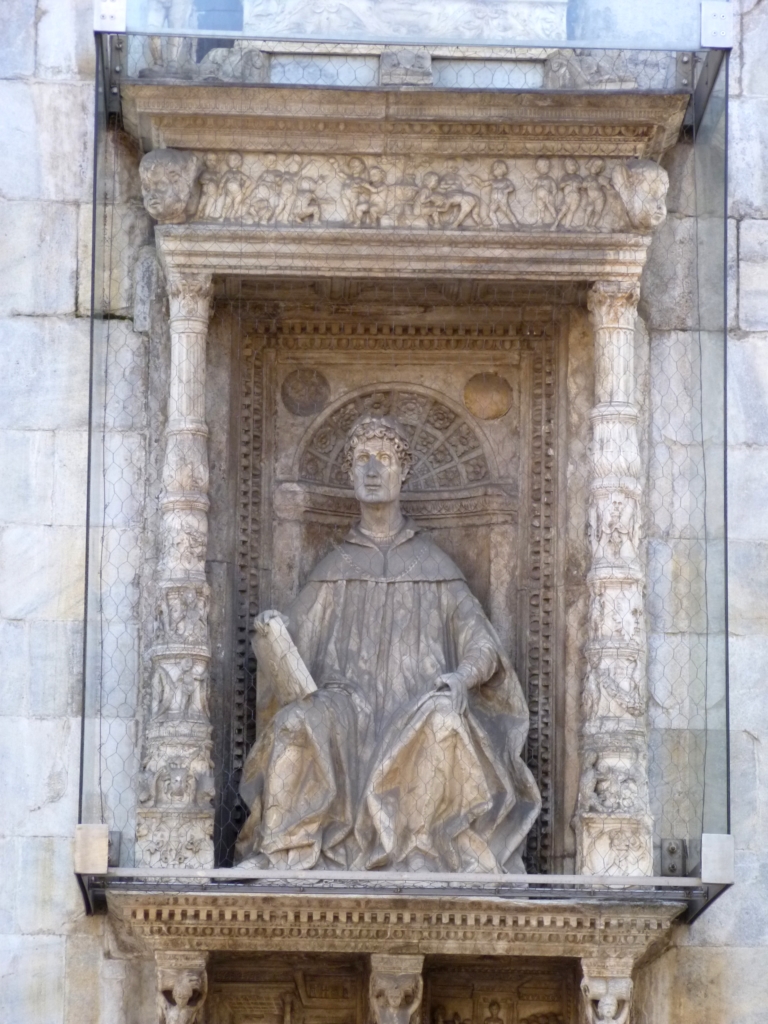
Monument statue of Pliny the Younger

Pliny the Younger monument statue

"Epistulae X" ("Letters 10", also known as the "Correspondence with Trajan") is a book of letters by the Roman lawyer and author Pliny the Younger to the Emperor Trajan between 109 and 111 CE. Letter 96 is the most famous of the collection, and it contains the earliest external account of Christian worship, and details what was to become the standard Roman policy toward Christians for the rest of the pagan era.

Synopsis
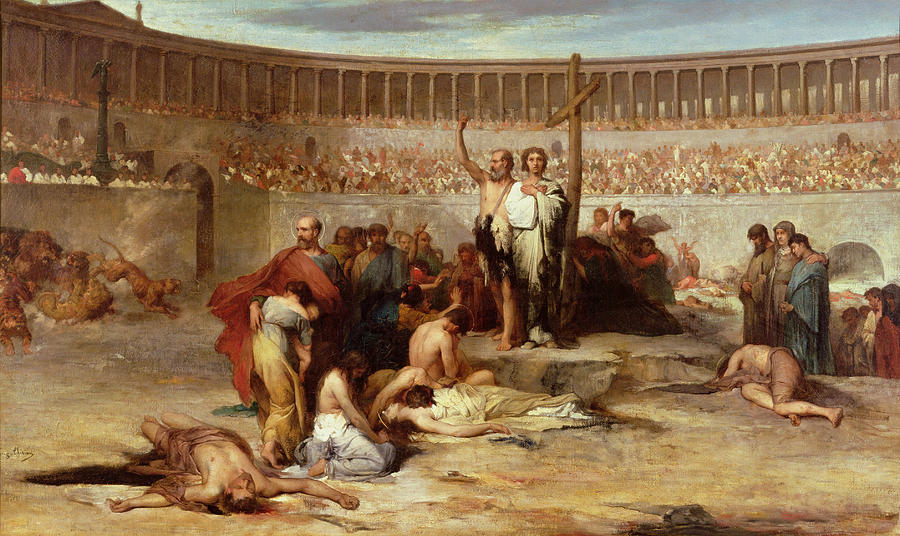
Triumph of Faith painting by Eugene Thirion

Triumph of Faith by Eugene Thirion

Pliny, the recently instated governor of the Roman province of Bithynia, admits to the Emperor Trajan that he has never taken part in formal trials of Christians, and is therefore unfamiliar with precedents as to the extent of the investigation required and as to the degree of punishment. He feels that a distinction might be drawn between adults and those of more tender years, and also that allowance might be made for anyone who recanted.

He also brings up the question of whether anyone should be punished simply for claiming the name of Christian, or only if he was found guilty of "crimes associated with that name". Hitherto, in the case of those who were brought before him, he has asked them three distinct times whether they were Christians and, if they persisted in the admission, has ordered them to be taken to execution. Whatever might be the real character of their profession, Pliny holds that such obstinate persistence ought to be punished. There are others, no less "demented", who, being Roman citizens, would be sent to Rome for trial.

As the natural consequence of these proceedings, Pliny has received an anonymous statement giving a list of accused persons, and a variety of cases has come to his notice. Some of the accused have denied that they had ever been Christians, have consented to pray to the Roman gods and to adore the image of the Emperor, and to blaspheme Christ, and these cases have been dismissed.

Others admitted that they had once been Christians, but then presently denied it, adding that they have ceased to be Christians for some years now. These also worshipped images of the Roman gods and of the Emperor, and blasphemed Christ, and averred that the sum and substance of their "fault" was that they had been accustomed to meet on a fixed day before daylight to sing in turns a hymn to Christ as God, and to bind themselves by a solemn oath to abstain from theft or robbery, and from adultery, perjury and dishonesty, after which they were would separate and then meet again for a common meal. This, however, they had ceased to do as soon as Pliny had published a decree against "collegia", in accordance with the Emperor's edict.

To ascertain the truth, Pliny had also put to the torture two maid-servants described as deaconesses, but had discovered nothing beyond a perverse and extravagant superstition. He had accordingly put off the formal trial with a view to consulting the Emperor directly. Pliny considers the question worthy of such a consultation, especially in view of the number of persons of all ages and ranks, and of both sexes, who are imperilled, the contagion having spread through towns and villages and the open country.

However, he feels that further spread might still be stayed, and a large a number might be reclaimed, if only room were granted for repentance. Roman temples that had been almost deserted were already beginning to be frequented again, rites long intermitted were being renewed, and the trade in fodder for sacrificial victims was reviving.

Analysis
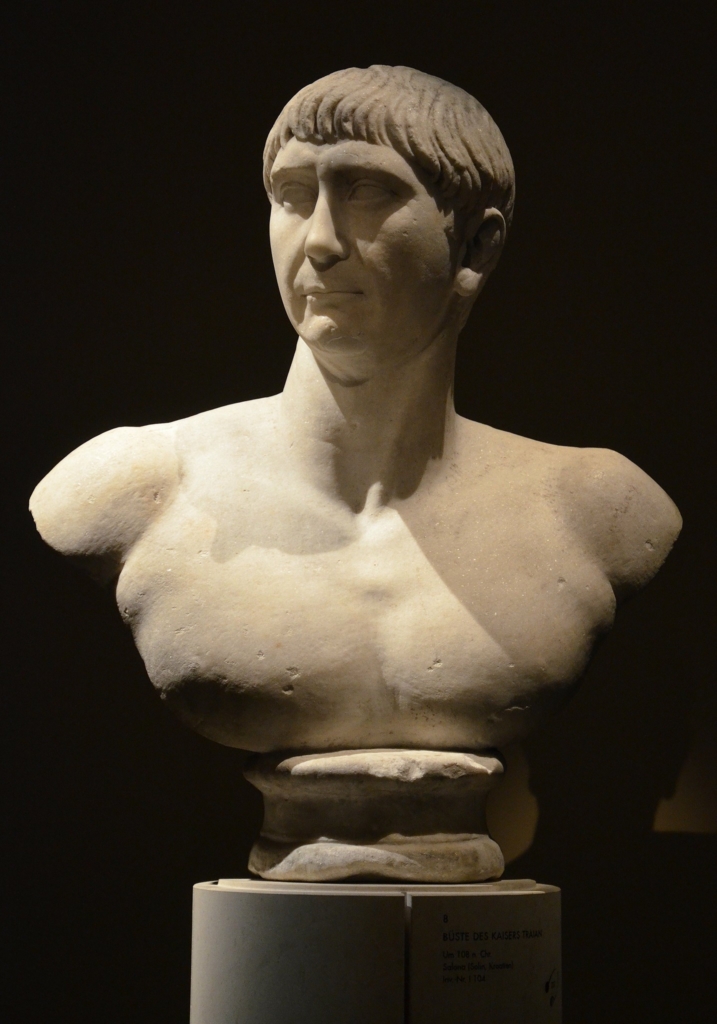
Bust statue of Roman Emperor Trajan

Roman Emperor Trajan bust statue

The letters of Book 10 are addressed to or from the Emperor Trajan in their entirety, during the time Pliny was employed as governor of the distant Roman province of Bithynia (around 109 to 111 CE), and it is generally assumed that we have received them verbatim. As such, they offer a unique insight into the administrative functions of a Roman province of the time, as well as the machinations of the Roman system of patronage and the wider cultural mores of Rome itself. They reflect great credit on the strict and almost punctilious conscientiousness of Pliny as governor, as well as on the assiduity and high principles which animated the Emperor Trajan. However, in addition, the corruption and apathy which occurred at various levels of the provincial system can be seen clearly.

Stylistically, Book 10 is much simpler than its precursors, largely because, unlike the first nine books of his letters, the letters of the "Correspondence with Trajan" collection were not written for publication by Pliny. It is generally assumed that this book was published after Pliny's death, and Suetonius, as a member of Pliny's staff, has been suggested as one possible publisher and editor.

Letter 96 contain the earliest external account of Christian worship, and reasons for the execution of Christians. Pliny had never taken part in formal trials of Christians, and was therefore unfamiliar with precedents as to the extent of investigation and the degree of punishment deemed appropriate. Trajan's reply to Pliny's queries and requests is also part of the collection (Letter 97), making the anthology even more valuable, and the letters thus allow us a glimpse of the personalities of both Pliny and Trajan.

The letter deserves special mention because its contents were, in the view of many historians, to become the standard policy toward Christians for the rest of the pagan era. Taken together, Pliny's letter and Trajan's response constituted a fairly loose policy toward Christians, namely that they were not to be sought out, but were to be executed if brought before a magistrate by a reputable means of accusation (no anonymous charges were permitted), where they were to be given the opportunity to recant. While some persecutions represent a departure from this policy, many historians have concluded that these precedents were nominal for the Empire across time.

Resources

  • English translation by William Melmoth (VRoma): http://www.vroma.org/~hwalker/Pliny/Pliny10-096-E.html

  • Latin version (The Latin Library): http://www.thelatinlibrary.com/pliny.ep10.html

By Timeless Myths

Pliny the Younger:

  • • Epistulae VI.16 & VI.20
  • • Epistulae X.96
Epistulae VI.16 & VI.20

Epistulae VI.16 & VI.20

(Letters, Latin/Roman, c. 107 CE, 63 + 60 lines)Introduction "Epistulae VI" ("Letters 6") is the sixth of ten books of letters by the Roman lawyer and author Pliny the Younger, mainly written around 106 to 107 CE. Of these, Letters 16 and 20 are t...

October 25th, 2024 • Timeless Myths
Catullus 96 Translation

Catullus 96 Translation

Introduction Catullus often wrote verses about his friends and this is one of those poems. He wrote about the death of his friend Calvus and his love, Quintilla. The way the poem is written, it seems as though both are dead and they are enjoying t...

January 1st, 2025 • Ancient Literature
Catullus 95 Translation

Catullus 95 Translation

Introduction Catullus is friends with interesting people, like the poet Cinna. In this poem, Cinna spent nine harvests-tides and winters writing a book titled Smyrna. Another man, Hortensius, who is an orator who occasionally wrote poetry publishe...

January 1st, 2025 • R.D.M
Catullus 97 Translation

Catullus 97 Translation

Introduction This is another poem that many readers find offensive. In it, Catullus writes about a disgusting person named Aemilius. The first two lines make the reader wonder where Catullus is going with this because he says it doesn’t matter if ...

January 1st, 2025 • R.D.M
Catullus 90 Translation

Catullus 90 Translation

Introduction This is another one of Catullus’s poems that focuses on the man he hates: Gellius. In this one, he addresses Gellius’s incestuous relationship with his mother. In the poem, Catullus talks about the relationships resulting in the birth...

January 1st, 2025 • Ancient Literature
Catullus 93 Translation

Catullus 93 Translation

Introduction Catullus lived during the time of Julius Caesar. His father was friends with the senator and general, but Catullus did not respect the man. Caesar was an ally with Pompey and Catullus wrote several verses where he denounced him. In ot...

January 1st, 2025 • Ancient Literature
Catullus 99 Translation

Catullus 99 Translation

Introduction In Catullus 99, the poet writes about his male lover, Juventius, and he did not like it. The kiss was stolen, according to Catullus. He stole the kiss while Juventius was playing, and Juventius did not like it. Juventius disliked the ...

January 1st, 2025 • Ancient Literature
Catullus 91 Translation

Catullus 91 Translation

Introduction The poet addresses Gellius in Catullus 91. In it, he addresses Gellius and how he had a relationship with a woman who was not a mother or a sister of his. In lines one and two, Catullus hoped that Gellius would be true to him through ...

January 1st, 2025 • Ancient Literature
Catullus 26 Translation

Catullus 26 Translation

Introduction Catullus addresses Furius in this poem. The exact relationship between Furius and Catullus is uncertain, but some thing that Furius is a rival poet who may have had an affair with Juventius who was one of Catullus’s lovers. Catullus i...

January 1st, 2025 • R.D.M
Satire VI

Satire VI

(Satire, Latin/Roman, c. 115 CE, 695 lines)Introduction "Satire VI" ("Satura VI") is a verse satire by the Roman satirical poet Juvenal, written around 115 CE. The poem laments what Juvenal sees as the decay of feminine virtue, and uses a series o...

October 25th, 2024 • Timeless Myths
Timeless Myths

Exploring mythology and legends from around the world.

Explore Myths

All Stories Characters All Articles Search Site Map

Mythologies

Norse Mythology Classical Mythology Celtic Mythology Arthurian Legends Mythology Gods Ancient Literature

About Us

Introduction About Jimmy Bibliography FAQs Retro Version

Resources

Timeless Myths All Stories All Articles Characters
© 1999-2026 Timeless Myths • Copyright • Privacy Policy • Cookie Policy • Contact
Follow us: