Timeless Myths Logo
Aphrodite Apollo Ares Artemis Athena Atlas Coeus Crius Cronus Demeter Dionysus Gaia Hades Hephaestus Hera Hermes Hestia Hyperion Iapetus Mnemosyne Oceanus Phobos Phoebe Poseidon Prometheus Rhea Tethys Themis Uranus Zeus
Bacchus Ceres Diana Juno Jupiter Mars Mercury Minerva Neptune Pluto Venus Vesta Vulcan
Amun Anubis Aten Atum Babi Bastet Bes Geb Hapi hathor heqet Horus Isis Khepri Khnum Khonsu Maat Nephthys Nut Osiris Ptah Ra Seshat Seth Shu Sobek Thoth
Alfheim Baldur Freya Freyr Frigg Heimdallr Helheim Idun Jotunheim Loki Nerthus Njord Odin Thor Tyr
Aengus Arawn Badb Brigid Cailleach Ceridwen Cernunnos Cu Chulainn Dagda Danu Gwydion Herne the Hunter Lugh Medb Morrigan Neit Nuada Taliesin Taranis
Chalchiuhtlicue Coatlicue Huitzilopochtli Mictlantecuhtli Mixcoatl Ometeotl Quetzalcoatl Tezcatlipoca Tlaloc Tonatiuh Xipe Totec Xochiquetzal Xolotl
Amaterasu Ame no Uzume Benzaiten Bishamonten Daikokuten Ebisu Fujin Fukurokuju Inari Izanagi Kagutsuchi Raijin Susanoo Tsukuyomi
Caishen Cangjie Dragon King Eight Immortals Erlang Shen Fuxi Guanyin Hou Yi Huxian Jade Emperor King Yama Leizi Lu-ban Mazu Nezha Nuwa Pangu Shennong Sun Wukong Xiwangmu Yue Lao Zhong Kui
Norse Classical Celtic Arthurian
Literature Stories Names
Aphrodite Apollo Ares Artemis Athena Atlas Coeus Crius Cronus Demeter Dionysus Gaia Hades Hephaestus Hera Hermes Hestia Hyperion Iapetus Mnemosyne Oceanus Phobos Phoebe Poseidon Prometheus Rhea Tethys Themis Uranus Zeus
Bacchus Ceres Diana Juno Jupiter Mars Mercury Minerva Neptune Pluto Venus Vesta Vulcan
Amun Anubis Aten Atum Babi Bastet Bes Geb Hapi hathor heqet Horus Isis Khepri Khnum Khonsu Maat Nephthys Nut Osiris Ptah Ra Seshat Seth Shu Sobek Thoth
Alfheim Baldur Freya Freyr Frigg Heimdallr Helheim Idun Jotunheim Loki Nerthus Njord Odin Thor Tyr
Aengus Arawn Badb Brigid Cailleach Ceridwen Cernunnos Cu Chulainn Dagda Danu Gwydion Herne the Hunter Lugh Medb Morrigan Neit Nuada Taliesin Taranis
Chalchiuhtlicue Coatlicue Huitzilopochtli Mictlantecuhtli Mixcoatl Ometeotl Quetzalcoatl Tezcatlipoca Tlaloc Tonatiuh Xipe Totec Xochiquetzal Xolotl
Amaterasu Ame no Uzume Benzaiten Bishamonten Daikokuten Ebisu Fujin Fukurokuju Inari Izanagi Kagutsuchi Raijin Susanoo Tsukuyomi
Caishen Cangjie Dragon King Eight Immortals Erlang Shen Fuxi Guanyin Hou Yi Huxian Jade Emperor King Yama Leizi Lu-ban Mazu Nezha Nuwa Pangu Shennong Sun Wukong Xiwangmu Yue Lao Zhong Kui
Norse Classical Celtic Arthurian
Literature Stories Names
  1. Classical Literature
    Greece Rome Other Ancient Civilizations Timeline of Classical Literature Alphabetical List of Authors Index of Individual Works Index of Important Characters Sources About Us
  2. Rome

Rome

Roman literature, written in the Latin language, remains an enduring legacy of the culture of ancient Rome. Some of the earliest extant works are historical epics telling of the early military history of Rome, followed (as the Republic expanded) by poetry, comedies, histories and tragedies.
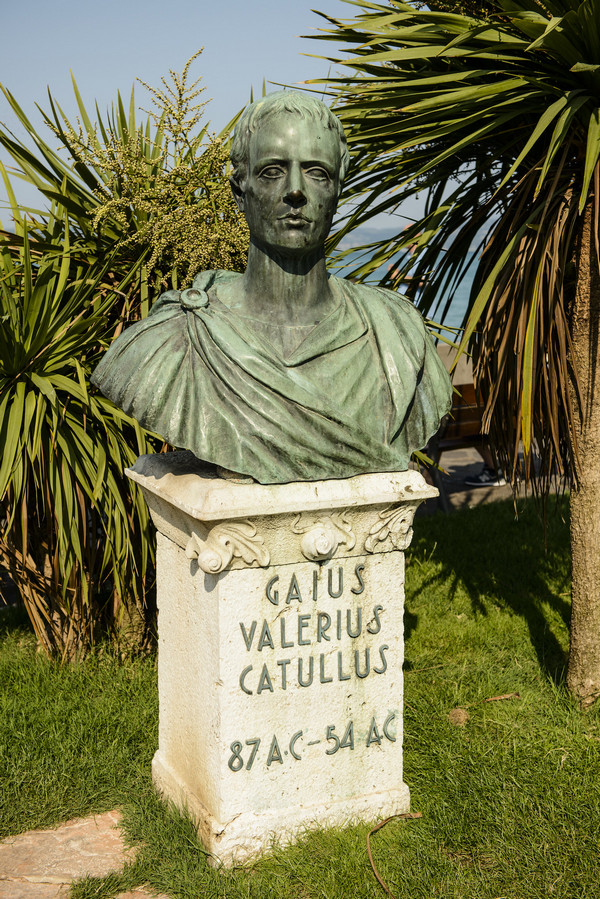
Catullus bust statue

Catullus bust statue

Latin literature drew heavily on the traditions of other cultures, particularly the more matured literary tradition of Greece, and the strong influence of earlier Greek authors is readily apparent. Few works remain of Early and Old Latin, although a few of the plays of Plautus and Terence have come down to us.

The “Golden Age of Roman Literature” is usually considered to cover the period from about the start of the 1st Century BCE up to the mid-1st Century CE.

Catullus pioneered the naturalization of Greek lyric verse forms into Latin in his very personal (sometimes erotic, sometimes playful, and frequently abusive) poetry.

The Hellenizing tendencies of Golden Age Latin reached their apex in the epic poetry of Vergil, the odes and satires of Horace and the elegiac couplets of Ovid.

The “Silver Age of Roman Literature” extends into the 2nd Century CE, a period during which the eloquent, sometimes bombastic, poetry of Seneca the Younger and Lucan gave way to the more restrained, classicized style of Pliny the Younger’s letters and the powerful satires of Juvenal.

Latin Verse

As in Greek verse, lines of Latin verse are composed of “feet”, defined by long and short forms of the vowels rather than by stressed and unstressed syllables as in English poetry. The feet may be spondees (long-long), dactyls (long-short-short) or trochees (long-short), and they may be combined a variety of ways depending on the particular metre (plus there may be some flexibility in the patterns, particularly in the first and last feet, even within a particular metre).

A number of different metres are commonly used in classical Latin poetry, almost all inspired by Greek and Hellenstic originals.
The most common is dactylic hexameter (the traditional epic metre of six feet per line), followed by elegiac couplets (a line of dactylic hexameter followed by a second line of modified dactylic pentameter, often used in love poetry) and hendecasyllabic verse (where each line has eleven syllables, including a four syllable choriamb of long-short-short-long).

When a word ends in a vowel or diphthong (and sometimes also words ending in “m”), and the next word begins with a vowel, diphthong or the letter “h”, the vowel (optionally, plus the “m”) of the first word does not count metrically (known as elision), unless the poet chooses to deliberately keep them separate as an exception to the rule (known as hiatus).

A caesura (when a word ends in the middle of a foot, sometimes but not always accompanied by a sense break and punctuation) can be used to divide a line in two and allow the poet to vary the basic metrical pattern he is working with. When a caesura correlates with a sense break, a slight pause should be made in reading.

Brief mention should also be made here of a lesser known genre, that of the ancient novel or prose fiction. Two such Ancient Roman novels have come down to us, the "Satyricon" of Gaius Petronius (1st Century CE) and "The Golden Ass" (or "Metamorphoses") of Lucius Apuleius (2nd Century CE).
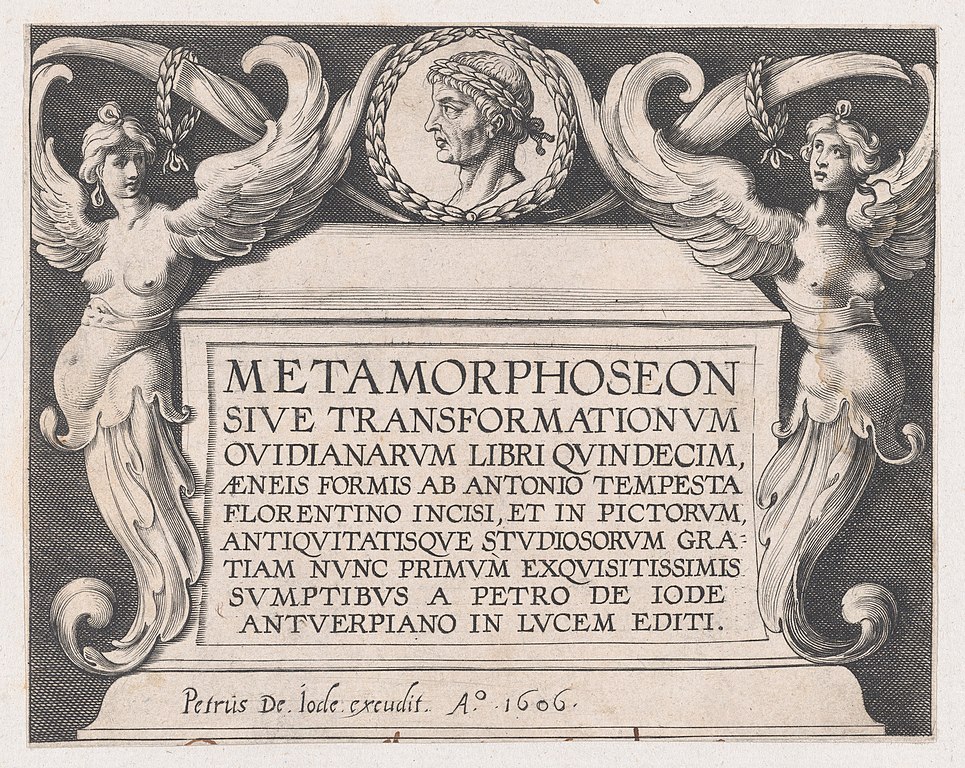
ovid metamorphoses title page

Metamorphoses by Ovid title page

Roman literature written after the mid-2nd Century CE is often disparaged and largely ignored, and Medieval Latin was usually dismissed as “Dog-Latin”. However, long after the Roman Empire had fallen, the Latin language continued to play a central role in Western European civilization.

Main Authors:

  • Catullus (lyric and elegiac poet, 1st Century BCE)

  • Vergil (epic and didactic poet, 1st Century BCE)

  • Horace (lyric poet and satirist, 1st Century BCE)

  • Ovid (didactic and elegiac poet, 1st Century BCE - 1st Century CE)

  • Seneca the Younger (tragic playwright and satirist, 1st Century CE)

  • Lucan (epic poet, 1st Century CE)

  • Juvenal (satirist, 1st - 2nd Century CE)

  • Pliny the Younger (correspondent, 1st - 2nd Century CE)

By Ancient Literature

Classical Literature:

  • • Greece
  • • Rome
  • • Other Ancient Civilizations
  • • Timeline of Classical Literature
  • • Alphabetical List of Authors
  • • Index of Individual Works
  • • Index of Important Characters
  • • Sources
  • • About Us
Rome

Rome

Rome (Roma) was a city-state on the banks of River Tiber, located in the region of ancient Latium. Although Rome is now larger than it was back then, Rome in ancient times occupied seven hills: Palatine, Capitoline, Quirinal, Viminal, Esquiline, C...

February 4th, 2008 • Jimmy Joe
Tales of Rome

Tales of Rome

Rome was a city on the south-east bank of the Tiber River, in the region called Latium. Rome was often called Roma, which is the proper name for the city. The site was prominently situated on seven hills. Romulus was the legendary founder of Rome....

September 10th, 2000 • Jimmy Joe
All Things Roman

All Things Roman

Some more miscellaneous and background information about Roman myths and legends that may interest you.

July 12th, 2001 • Jimmy Joe
Latium

Latium

Ancient Latium corresponded to the geographical region of Lazio. The tribe of Italic people living in this area spoke the language of Latin, which included those living in the city of Rome. However, in classical mythology, Rome was not originally ...

February 4th, 2008 • Jimmy Joe
Seven Kings & Hills of Rome

Seven Kings & Hills of Rome

Seven Kings of Rome Seven Hills of RomeSeven Kings of Rome Below is a list of kings who ruled Rome before the time of the Republic (c. 509 BC). Information and the history or legends about each king can be found on the Tales of Rome page. Please n...

July 12th, 2001 • Jimmy Joe
Romulus

Romulus

Romulus was the founder and first king of Rome. Romulus was the son of Mars and Ilia (or Rea Silvia), daughter of Numitor of Alba Longa. Romulus was the brother of Remus. Romulus and his small group of followers first settled on the Palatine Hill....

September 10th, 2000 • Jimmy Joe
Houses of the Rome

Houses of the Rome

Alba Longa Monarchy of RomeRelated Pages Tales of Rome House of Troy House of Troy (genealogy)Alba Longa The genealogy of Alba Longa shows how Romulus was the descendant of Aeneas from the royal house of Troy (Dardanian line). Romulus was the foun...

September 22nd, 2002 • Jimmy Joe
Carmen Saeculare

Carmen Saeculare

(Lyric Poem, Latin/Roman, 17 BCE, 76 lines)Introduction "Carmen Saeculare" (literally, "Secular Hymn", usually translated as "Song of the Ages"), sometimes known as "The Carmen" for short, is a hymn or ode by the Roman lyric poet Horace, commissio...

October 25th, 2024 • Timeless Myths
Foundation of Rome

Foundation of Rome

Alba Longa Romulus and Remus Alternative Accounts of the FoundationAlba Longa Aeneas founded a new city called Lavinium or the hero renamed the city of Lauretum to Lavinium, after his new wife. Aeneas and Lavinia had a son named Silvius. His reign...

September 10th, 2000 • Jimmy Joe
Ardea

Ardea

The capital of the Rutali people or the Rutalians, and home of Turnus. Ardea was a city on the Latin coast. According to the Aeneid, Turnus led the Rutalians into war because Latinus favoured Aeneas as his son-in-law. Turnus was originally betroth...

February 4th, 2008 • Jimmy Joe
Timeless Myths

Exploring mythology and legends from around the world.

Explore Myths

All Stories Characters All Articles Search Site Map

Mythologies

Norse Mythology Classical Mythology Celtic Mythology Arthurian Legends Mythology Gods Ancient Literature

About Us

Introduction About Jimmy Bibliography FAQs Retro Version

Resources

Timeless Myths All Stories All Articles Characters
© 1999-2026 Timeless Myths • Copyright • Privacy Policy • Cookie Policy • Contact
Follow us: