Timeless Myths Logo
Aphrodite Apollo Ares Artemis Athena Atlas Coeus Crius Cronus Demeter Dionysus Gaia Hades Hephaestus Hera Hermes Hestia Hyperion Iapetus Mnemosyne Oceanus Phobos Phoebe Poseidon Prometheus Rhea Tethys Themis Uranus Zeus
Bacchus Ceres Diana Juno Jupiter Mars Mercury Minerva Neptune Pluto Venus Vesta Vulcan
Amun Anubis Aten Atum Babi Bastet Bes Geb Hapi hathor heqet Horus Isis Khepri Khnum Khonsu Maat Nephthys Nut Osiris Ptah Ra Seshat Seth Shu Sobek Thoth
Alfheim Baldur Freya Freyr Frigg Heimdallr Helheim Idun Jotunheim Loki Nerthus Njord Odin Thor Tyr
Aengus Arawn Badb Brigid Cailleach Ceridwen Cernunnos Cu Chulainn Dagda Danu Gwydion Herne the Hunter Lugh Medb Morrigan Neit Nuada Taliesin Taranis
Chalchiuhtlicue Coatlicue Huitzilopochtli Mictlantecuhtli Mixcoatl Ometeotl Quetzalcoatl Tezcatlipoca Tlaloc Tonatiuh Xipe Totec Xochiquetzal Xolotl
Amaterasu Ame no Uzume Benzaiten Bishamonten Daikokuten Ebisu Fujin Fukurokuju Inari Izanagi Kagutsuchi Raijin Susanoo Tsukuyomi
Caishen Cangjie Dragon King Eight Immortals Erlang Shen Fuxi Guanyin Hou Yi Huxian Jade Emperor King Yama Leizi Lu-ban Mazu Nezha Nuwa Pangu Shennong Sun Wukong Xiwangmu Yue Lao Zhong Kui
Norse Classical Celtic Arthurian
Literature Stories Names
Aphrodite Apollo Ares Artemis Athena Atlas Coeus Crius Cronus Demeter Dionysus Gaia Hades Hephaestus Hera Hermes Hestia Hyperion Iapetus Mnemosyne Oceanus Phobos Phoebe Poseidon Prometheus Rhea Tethys Themis Uranus Zeus
Bacchus Ceres Diana Juno Jupiter Mars Mercury Minerva Neptune Pluto Venus Vesta Vulcan
Amun Anubis Aten Atum Babi Bastet Bes Geb Hapi hathor heqet Horus Isis Khepri Khnum Khonsu Maat Nephthys Nut Osiris Ptah Ra Seshat Seth Shu Sobek Thoth
Alfheim Baldur Freya Freyr Frigg Heimdallr Helheim Idun Jotunheim Loki Nerthus Njord Odin Thor Tyr
Aengus Arawn Badb Brigid Cailleach Ceridwen Cernunnos Cu Chulainn Dagda Danu Gwydion Herne the Hunter Lugh Medb Morrigan Neit Nuada Taliesin Taranis
Chalchiuhtlicue Coatlicue Huitzilopochtli Mictlantecuhtli Mixcoatl Ometeotl Quetzalcoatl Tezcatlipoca Tlaloc Tonatiuh Xipe Totec Xochiquetzal Xolotl
Amaterasu Ame no Uzume Benzaiten Bishamonten Daikokuten Ebisu Fujin Fukurokuju Inari Izanagi Kagutsuchi Raijin Susanoo Tsukuyomi
Caishen Cangjie Dragon King Eight Immortals Erlang Shen Fuxi Guanyin Hou Yi Huxian Jade Emperor King Yama Leizi Lu-ban Mazu Nezha Nuwa Pangu Shennong Sun Wukong Xiwangmu Yue Lao Zhong Kui
Norse Classical Celtic Arthurian
Literature Stories Names
  1. Classical Literature
    Greece Rome Other Ancient Civilizations Timeline of Classical Literature Alphabetical List of Authors Index of Individual Works Index of Important Characters Sources About Us
  2. Rome
    Catullus Vergil (Virgil) Horace Ovid Seneca the Younger Lucan Juvenal Pliny the Younger
  3. Lucan
    Pharsalia (De Bello Civili)

Lucan

(Epic Poet, Roman, 39 – 65 CE)

Introduction

Lucan was a Roman epic poet during the reign of Emperor Nero. Despite his short life, he is regarded as one of the outstanding figures of the Silver Age of Latin literature, and his youth and speed of composition set him apart from other poets. His masterwork "Pharsalia" was perhaps most celebrated during the Middle Ages, but his work also had tremendous influence on the poetry and drama of the 17th Century.
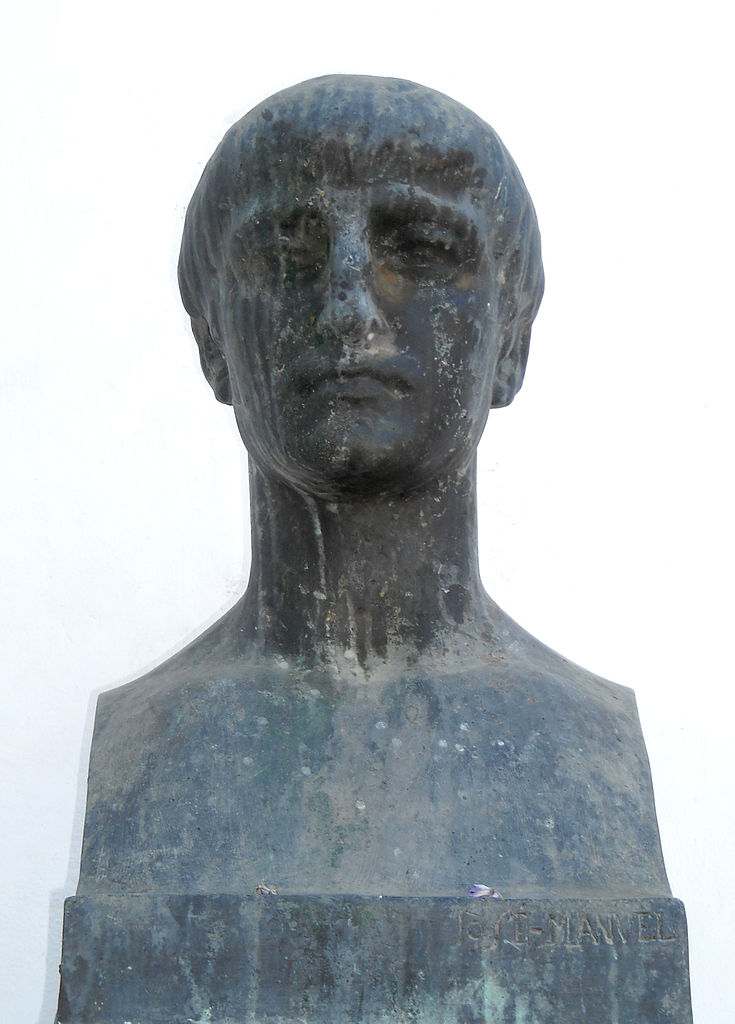
Bust statue of Lucan, Roman epic poet

Bust of Lucan

Biography

Marcus Annaeus Lucanus (known in the English-speaking world as Lucan) was born in 39 CE in Corduba in the Hispania Baetica (modern-day Córdoba, Spain). He was the grandson of Seneca the Elder and grew up under the tutelage of his uncle, Seneca the Younger. Born into a wealthy family, he was able to study rhetoric at Athens and was probably provided with a philosophical and Stoicist education by his uncle and others.

He found favour with the Emperor Nero, due to his early promise as a rhetorician and orator, and the two became close friends. Lucan was rewarded with a quaestorship in advance of the legal age, and then an appointment to the augurate in 60 CE, after he had won a prize at the quinquennial Neronia (a grand Greek-style arts festival established by Nero). During this time, he circulated the first three books of his epic poem, "Pharsalia" ("De Bello Civili"), which told the story of the civil war between Julius Caesar and Pompey in epic fashion.

At some point, however, Lucan lost favour with Nero and further readings of his poetry were banned, either because Nero became jealous of Lucan or just lost interest in him. It is also claimed, though, that Lucan wrote insulting poems about Nero, suggesting (as had others) that Nero was responsible for the Great Fire of Rome of 64 CE. Certainly the later books of "Pharsalia" are distinctly anti-Imperial and pro-Republic, and come close to specifically criticizing Nero and his emperorship.

Lucan later joined the conspiracy of Gaius Calpurnius Piso against Nero in 65 CE. When his treason was discovered, he first incriminated his own mother among others in hopes of a pardon, but he was nevertheless obliged to commit suicide at the age of 25 by opening a vein in the traditional manner. His father was condemned as an enemy of the state, although his mother escaped.

Writings

The epic poem "Pharsalia" on the war between Julius Caesar and Pompey is considered Lucan's magnum opus, although it remained unfinished at his death, stopping abruptly in the middle of the 10th book. Lucan skilfully adapts Virgil's "Aeneid" and the traditional elements of the epic genre (often by inversion or negation) as a kind of negative compositional model for his new "anti-epic" purpose. The work is renowned for its verbal intensity and power of expression, although Lucan also makes good use of the rhetorical techniques that dominate much of Silver Age Latin literature. The style and vocabulary are often commonplace and the metre monotonous, but the rhetoric is often lifted into real poetry by its energy and flashes of fire, such as in the magnificent funeral speech of Cato on Pompey.
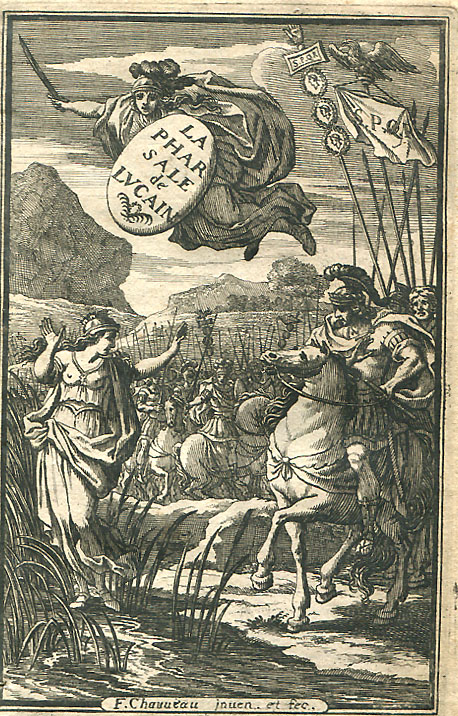
Illustration from Pharsalia by Lucan

Illustration from Pharsalia

Lucan also frequently intrudes the authorial persona into the narrative, thus all but abandoning the neutrality of the traditional epic. Some see the passion and anger Lucan demonstrates throughout the "Pharsalia" as directed at those responsible for the collapse of the Roman Republic, or as a deeply-felt horror at the perversity and cost of civil war. It is perhaps the only major Latin epic poem that eschewed the intervention of the gods.

"Laus Pisonis" ("Praise of Piso"), a tribute to a member of the Piso family, is also often attributed to Lucan (although to others as well), and there is a lengthy list of lost works, including part of a Trojan cycle, a poem in praise of Nero and one on the Roman fire of 64 CE (possibly accusing Nero of arson).

Major Works

  • "Pharsalia" ("De Bello Civili")

By Timeless Myths

Rome:

  • • Catullus
  • • Vergil (Virgil)
  • • Horace
  • • Ovid
  • • Seneca the Younger
  • • Lucan
  • • Juvenal
  • • Pliny the Younger
Lucan the Butler

Lucan the Butler

Lucan was better known as Lucan the Butler (some sources said that Bedivere was the butler). Lucan was the wine-steward in Chretien de Troyes' Erec and Enide. Lucan was the brother of Bedivere the Cupbearer. Lucan was cousin to Girflet, son of Do ...

February 4th, 2000 • Jimmy Joe
Pharsalia (De Bello Civili)

Pharsalia (De Bello Civili)

(Epic Poem, Latin/Roman, 65 CE, 8,060 lines)Introduction Pharsalia (also known as De Bello Civili or "On the Civil War") is an epic poem in ten books by the Roman poet Lucan, left unfinished on the poet's death in 65 CE. Although incomplete, it is...

October 25th, 2024 • Timeless Myths
Seneca the Younger

Seneca the Younger

(Tragic Playwright, Roman, c. 4 BCE – 65 CE)Introduction Seneca the Younger was a Roman philosopher, statesman and dramatist of the Silver Age of Latin literature. Although generally considered inferior to their corresponding Greek dramas, his tra...

October 24th, 2024 • Timeless Myths
Hercules Furens

Hercules Furens

(Tragedy, Latin/Roman, c. 54 CE, 1,344 lines)Introduction "Hercules Furens" ("The Mad Hercules" or "The Madness of Hercules") is a tragedy by the Roman playwright Seneca the Younger, considered one of his best, written in or before 54 CE. Closely ...

October 25th, 2024 • Timeless Myths
Catullus 5

Catullus 5

(Lyric Poem, Latin/Roman, c. 65 BCE, 13 lines)Introduction "Vivamus, mea Lesbia, atque amemus" ("Let us live, my Lesbia, and let us love") is a passionate love poem by the Roman lyric poet Catullus, often referred to as "Catullus 5" or "Carmina V"...

October 25th, 2024 • Timeless Myths
Bucolics (Eclogues)

Bucolics (Eclogues)

(Pastoral Poem, Latin/Roman, 37 BCE, 829 lines)Introduction "The Bucolics" (Lat: "Bucolica"), also known as "The Eclogues" (Lat: "Eclogae"), is a collection of ten pastoral poems by the Roman poet Vergil. It was Vergil's first major work, publishe...

October 25th, 2024 • Timeless Myths
Catullus Translations

Catullus Translations

This page provides access to English translations of all 116 poems (carmina) by the Roman lyric poet Catullus. The poems are traditionally divided into three sections: the polymetra (poems 1-60), longer poems (61-68), and the epigrams (69-116). No...

October 25th, 2024 • Timeless Myths
Pliny the Younger

Pliny the Younger

(Correspondent, Roman, 61 – c. 112 CE)Introduction Pliny the Younger was a successful lawyer, administrator and author of ancient Rome. Through his many detailed letters ("Epistulae") to friends and associates, he has become one of the best-known ...

October 24th, 2024 • Timeless Myths
Ovid

Ovid

(Epic, Elegiac and Didactic Poet, Roman, 43 BCE – c. 17 CE)Introduction Ovid was a prolific Roman poet, straddling the Golden and Silver Ages of Latin literature, who wrote about love, seduction and mythological transformation. He is considered a ...

October 24th, 2024 • Timeless Myths
Catullus 58 Translation

Catullus 58 Translation

Introduction Catullus loved Lesbia. Caelius also loved Lesbia. In fact, Caelius was the man that Lesbia turned to after her husband died. In this poem, Catullus writes to Caelius and his relationship with Lesbia. He talks about how he loved her mo...

January 1st, 2025 • Ancient Literature
Timeless Myths

Exploring mythology and legends from around the world.

Explore Myths

All Stories Characters All Articles Search Site Map

Mythologies

Norse Mythology Classical Mythology Celtic Mythology Arthurian Legends Mythology Gods Ancient Literature

About Us

Introduction About Jimmy Bibliography FAQs Retro Version

Resources

Timeless Myths All Stories All Articles Characters
© 1999-2026 Timeless Myths • Copyright • Privacy Policy • Cookie Policy • Contact
Follow us: