Timeless Myths Logo
Aphrodite Apollo Ares Artemis Athena Atlas Coeus Crius Cronus Demeter Dionysus Gaia Hades Hephaestus Hera Hermes Hestia Hyperion Iapetus Mnemosyne Oceanus Phobos Phoebe Poseidon Prometheus Rhea Tethys Themis Uranus Zeus
Bacchus Ceres Diana Juno Jupiter Mars Mercury Minerva Neptune Pluto Venus Vesta Vulcan
Amun Anubis Aten Atum Babi Bastet Bes Geb Hapi hathor heqet Horus Isis Khepri Khnum Khonsu Maat Nephthys Nut Osiris Ptah Ra Seshat Seth Shu Sobek Thoth
Alfheim Baldur Freya Freyr Frigg Heimdallr Helheim Idun Jotunheim Loki Nerthus Njord Odin Thor Tyr
Aengus Arawn Badb Brigid Cailleach Ceridwen Cernunnos Cu Chulainn Dagda Danu Gwydion Herne the Hunter Lugh Medb Morrigan Neit Nuada Taliesin Taranis
Chalchiuhtlicue Coatlicue Huitzilopochtli Mictlantecuhtli Mixcoatl Ometeotl Quetzalcoatl Tezcatlipoca Tlaloc Tonatiuh Xipe Totec Xochiquetzal Xolotl
Amaterasu Ame no Uzume Benzaiten Bishamonten Daikokuten Ebisu Fujin Fukurokuju Inari Izanagi Kagutsuchi Raijin Susanoo Tsukuyomi
Caishen Cangjie Dragon King Eight Immortals Erlang Shen Fuxi Guanyin Hou Yi Huxian Jade Emperor King Yama Leizi Lu-ban Mazu Nezha Nuwa Pangu Shennong Sun Wukong Xiwangmu Yue Lao Zhong Kui
Norse Classical Celtic Arthurian
Literature Stories Names
Aphrodite Apollo Ares Artemis Athena Atlas Coeus Crius Cronus Demeter Dionysus Gaia Hades Hephaestus Hera Hermes Hestia Hyperion Iapetus Mnemosyne Oceanus Phobos Phoebe Poseidon Prometheus Rhea Tethys Themis Uranus Zeus
Bacchus Ceres Diana Juno Jupiter Mars Mercury Minerva Neptune Pluto Venus Vesta Vulcan
Amun Anubis Aten Atum Babi Bastet Bes Geb Hapi hathor heqet Horus Isis Khepri Khnum Khonsu Maat Nephthys Nut Osiris Ptah Ra Seshat Seth Shu Sobek Thoth
Alfheim Baldur Freya Freyr Frigg Heimdallr Helheim Idun Jotunheim Loki Nerthus Njord Odin Thor Tyr
Aengus Arawn Badb Brigid Cailleach Ceridwen Cernunnos Cu Chulainn Dagda Danu Gwydion Herne the Hunter Lugh Medb Morrigan Neit Nuada Taliesin Taranis
Chalchiuhtlicue Coatlicue Huitzilopochtli Mictlantecuhtli Mixcoatl Ometeotl Quetzalcoatl Tezcatlipoca Tlaloc Tonatiuh Xipe Totec Xochiquetzal Xolotl
Amaterasu Ame no Uzume Benzaiten Bishamonten Daikokuten Ebisu Fujin Fukurokuju Inari Izanagi Kagutsuchi Raijin Susanoo Tsukuyomi
Caishen Cangjie Dragon King Eight Immortals Erlang Shen Fuxi Guanyin Hou Yi Huxian Jade Emperor King Yama Leizi Lu-ban Mazu Nezha Nuwa Pangu Shennong Sun Wukong Xiwangmu Yue Lao Zhong Kui
Norse Classical Celtic Arthurian
Literature Stories Names
  1. Classical Literature
    Greece Rome Other Ancient Civilizations Timeline of Classical Literature Alphabetical List of Authors Index of Individual Works Index of Important Characters Sources About Us
  2. Rome
    Catullus Vergil (Virgil) Horace Ovid Seneca the Younger Lucan Juvenal Pliny the Younger
  3. Seneca the Younger
    Medea Phaedra Hercules Furens Troades (The Trojan Women) Agamemnon Oedipus Apocolocyntosis Thyestes Phoenissae (The Phoenician Women)
  4. Hercules Furens
    Hercules Furens

Hercules Furens

(Tragedy, Latin/Roman, c. 54 CE, 1,344 lines)

Introduction

"Hercules Furens" ("The Mad Hercules" or "The Madness of Hercules") is a tragedy by the Roman playwright Seneca the Younger, considered one of his best, written in or before 54 CE. Closely modelled on Euripides’ play "Heracles", the play describes the fortunes of the demi-god Hercules (Heracles in Greek) as he is sent mad by the goddess Iris and the Furies and kills his own wife and children.

Synopsis

Dramatis Personae

  • HERCULES

  • JUNO

  • AMPHITRYON, husband of Hercules’ mother, Alcmena

  • THESEUS, king of Athens

  • LYCUS, the usurping king of Thebes

  • MEGARA, wife of Hercules and daughter of Creon

  • CHORUS OF THEBANS

Marble bust of Hercules

Marble bust of Hercules

The play begins with the goddess Juno giving vent to her anger at Hercules and her frustration at not being able to overcome him, and she determines to use whatever means she can to finally destroy him.

Hercules' father Amphitryon, his wife Megara and all their children, are gathered together at the altar of Jupiter for protection against the tyrant Lycus, who has slain Creon and taken control of the city of Thebes during Hercules’ absence. Amphitryon admits his helplessness against the might of Lycus. When Lycus threatens to kill Megara and her children, she declares herself willing to die and merely asks for some time to prepare herself.

However, Hercules then returns from his Labours and, hearing of Lycus’ plans, awaits his enemy’s return. When Lycus does come back to execute his plans against Megara, Hercules is ready for him and slays him.

The goddess Iris and one of the Furies then appear, at Juno’s request, and excite Hercules to madness and, in his madness, he kills his own wife and children. When he recovers from his insanity, he is mortified by what he has done, and is on the point of killing himself when Theseus arrives and persuades his old friend to give up all ideas of suicide and to follow him to Athens.

Analysis
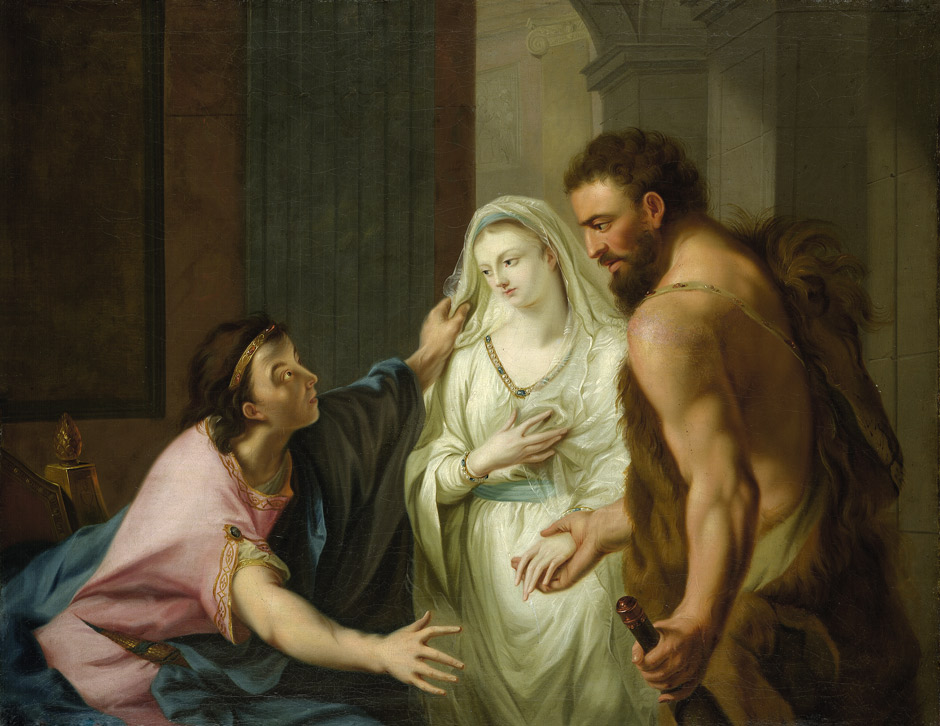
Hercules with Megara and their children in a classical painting

Hercules with Megara and their children in a classical painting

Although "Hercules Furens" suffers from many of the defects of which Seneca’s plays in general are accused (for instance, its excessively rhetorical style and its apparent lack of concern for the physical requirements of the stage), it is also recognized as containing passages of unsurpassed beauty, great purity and correctness of language and faultless versification. It seems to have been designed, no less than the Renaissance dramas of Marlowe or Racine, for its effect on the ear, and indeed may have been written to be read and studied rather than performed on a stage.

Although the plot of the play is clearly based on "Heracles", Euripides’ much earlier version of the same story, Seneca deliberately avoids the main complaint levelled at that play, namely that the unity of the play is actually destroyed by the addition of Hercules’ madness, effectively introducing a separate, secondary plot after the main plot has reached its satisfactory conclusion. Seneca achieves this by introducing, right at the start of the drama, the idea of Juno’s determination to overcome Hercules by any means possible, after which Hercules’ madness becomes no longer just an awkward appendage but rather the most interesting part of the plot, and one which has been foreshadowed since the start of the drama.

While Euripides interpreted Hercules’ madness as a demonstration of the gods’ total lack of concern for man’s suffering and an indication of the impassable distance between the human world and the divine, Seneca uses temporal distortions (particularly the initial prologue by Juno) as a means to reveal that Hercules’ madness is not just a sudden occurrence, but a gradual internal development. It allows much more exploration of psychology than Euripides’ more static approach.

Seneca also manipulates time in other ways, such as where time seems to be completely suspended in some scenes while, in others, much time passes and much action occurs. In some scenes, two simultaneous events are described linearly. Amphitryon’s long and detailed description of Hercules’ murders, late in the play, creates an effect similar to a slow motion sequence in a movie, as well as catering to his audience’s (and his own) fascination with horror and violence.
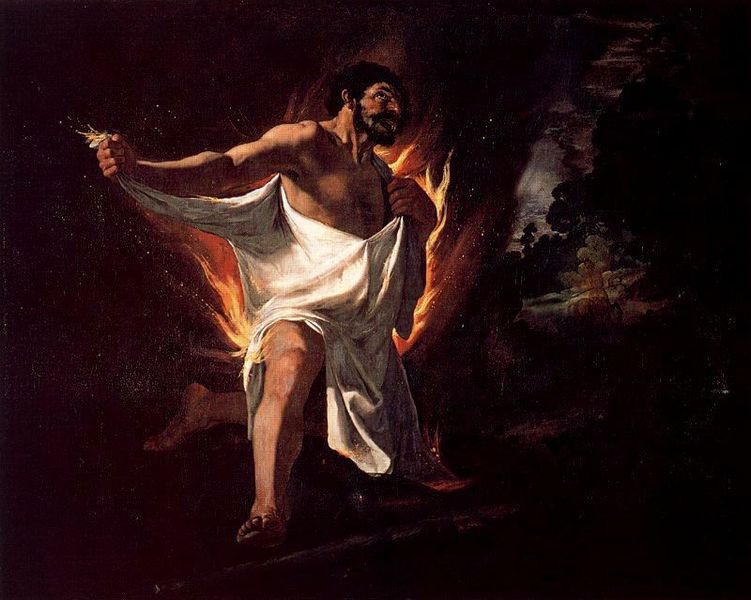
Hercules driven to madness in a classical painting

Hercules driven to madness in a classical painting

Thus, the play should not be seen merely as a poor imitation of a Greek original; rather, it exhibits originality in both theme and style. It is a peculiar blend of rhetorical, mannerist, philosophical and psychological drama, distinctly Senecan and definitely not an imitation of Euripides.

In addition, the play is full of epigrams and quotable quotes, such as: "Successful and fortunate crime is called virtue"; "The first art of a monarch is the power to endure hatred"; "Things that were hard to bear are sweet to remember"; "He who boasts of his ancestry praises the merits of another"; etc.

Resources

  • English translation by Frank Justus Miller (Theoi.com): http://www.theoi.com/Text/SenecaHerculesFurens.html

  • Latin version (Google Books): https://books.google.ca/books?id=NS8BAAAAMAAJ&dq=seneca%20hercules%20furens&pg=PA2

By Timeless Myths

Seneca the Younger:

  • • Medea
  • • Phaedra
  • • Hercules Furens
  • • Troades (The Trojan Women)
  • • Agamemnon
  • • Oedipus
  • • Apocolocyntosis
  • • Thyestes
  • • Phoenissae (The Phoenician Women)
Heracles (Euripides)

Heracles (Euripides)

(Tragedy, Greek, c. 416 BCE, 1,428 lines)Introduction "Heracles" or "The Madness of Heracles" (Gr: "Herakles Mainomenos"; Lat: "Hercules Furens") is a tragedy by the ancient Greek playwright Euripides. It describes the frenzy of divinely induced m...

October 25th, 2024 • Timeless Myths
The Trachiniae

The Trachiniae

(Tragedy, Greek, c. 440 BCE, 1,278 lines)Introduction “The Trachiniae” (Gr: “Trachiniai”, also known as “The Trachinian Women”, “The Women of Trachis” or “The Maidens of Trachis”) is a tragedy by the ancient Greek playwright Sophocles. It was prob...

January 1st, 2025 • Ancient Literature
Pharsalia (De Bello Civili)

Pharsalia (De Bello Civili)

(Epic Poem, Latin/Roman, 65 CE, 8,060 lines)Introduction Pharsalia (also known as De Bello Civili or "On the Civil War") is an epic poem in ten books by the Roman poet Lucan, left unfinished on the poet's death in 65 CE. Although incomplete, it is...

October 25th, 2024 • Timeless Myths
Euripides

Euripides

(Tragic Playwright, Greek, c. 480 – c. 406 BCE)Introduction Euripides was the last of the three great tragedians of classical Greece (the other two being Aeschylus and Sophocles). Largely due to an accident of history, eighteen of Euripides' ninet...

October 24th, 2024 • Timeless Myths
The Trojan Women

The Trojan Women

(Tragedy, Greek, 415 BCE, 1,332 lines)Introduction "The Trojan Women" (Gr: "Troädes") is a tragedy by the ancient Greek playwright Euripides. It was first presented at the City Dionysia of 415 BCE, along with two other unconnected tragedies, "Alex...

October 25th, 2024 • Timeless Myths
Heroides

Heroides

"Heroides" ("The Heroines"), also known as "Epistulae Heroidum" ("Letters of Heroines") or simply "Epistulae", is a collection of fifteen epistolary poems (poems in the form of letters) by the Roman lyric poet Ovid, published between 5 BCE and 8 C...

October 25th, 2024 • Timeless Myths
The Phoenician Women

The Phoenician Women

"The Phoenician Women" (Gr: "Phoinissai"; Lat: "Phoenissae") is a tragedy by the ancient Greek playwright Euripides. It was written between 411 and 409 BCE, and is a variant of the story Aeschylus treated in his play "Seven Against Thebes" in whic...

October 25th, 2024 • Timeless Myths
Helen (Euripides)

Helen (Euripides)

(Tragedy, Greek, 412 BCE, 1,692 lines)Introduction "Helen" (Gr: "Elene"; Lat: "Helena") is a tragedy by the ancient Greek playwright Euripides, first produced in 412 BCE for the annual Dionysia competition in Athens. Although technically a tragedy...

October 25th, 2024 • Timeless Myths
The Suppliants

The Suppliants

(Tragedy, Greek, 423 BCE, 1,234 lines)Introduction "The Suppliants" (also known as "The Suppliant Women"; Gr: "Hiketides"; Lat: "Supplices") is a tragedy by the ancient Greek playwright Euripides, first produced in 423 BCE. Not to be confused with...

October 25th, 2024 • Timeless Myths
The Suppliants

The Suppliants

(Tragedy, Greek, c. 469 BCE, 1,073 lines)Introduction "The Suppliants" (Gr: "Hiketides"; Lat: "Supplices") is a tragedy by the ancient Greek playwright Aeschylus. It is sometimes known as "The Suppliant Women" or "The Suppliant Maidens". Along wit...

January 1st, 2025 • Ancient Literature
Timeless Myths

Exploring mythology and legends from around the world.

Explore Myths

All Stories Characters All Articles Search Site Map

Mythologies

Norse Mythology Classical Mythology Celtic Mythology Arthurian Legends Mythology Gods Ancient Literature

About Us

Introduction About Jimmy Bibliography FAQs Retro Version

Resources

Timeless Myths All Stories All Articles Characters
© 1999-2026 Timeless Myths • Copyright • Privacy Policy • Cookie Policy • Contact
Follow us: