Timeless Myths Logo
Aphrodite Apollo Ares Artemis Athena Atlas Coeus Crius Cronus Demeter Dionysus Gaia Hades Hephaestus Hera Hermes Hestia Hyperion Iapetus Mnemosyne Oceanus Phobos Phoebe Poseidon Prometheus Rhea Tethys Themis Uranus Zeus
Bacchus Ceres Diana Juno Jupiter Mars Mercury Minerva Neptune Pluto Venus Vesta Vulcan
Amun Anubis Aten Atum Babi Bastet Bes Geb Hapi hathor heqet Horus Isis Khepri Khnum Khonsu Maat Nephthys Nut Osiris Ptah Ra Seshat Seth Shu Sobek Thoth
Alfheim Baldur Freya Freyr Frigg Heimdallr Helheim Idun Jotunheim Loki Nerthus Njord Odin Thor Tyr
Aengus Arawn Badb Brigid Cailleach Ceridwen Cernunnos Cu Chulainn Dagda Danu Gwydion Herne the Hunter Lugh Medb Morrigan Neit Nuada Taliesin Taranis
Chalchiuhtlicue Coatlicue Huitzilopochtli Mictlantecuhtli Mixcoatl Ometeotl Quetzalcoatl Tezcatlipoca Tlaloc Tonatiuh Xipe Totec Xochiquetzal Xolotl
Amaterasu Ame no Uzume Benzaiten Bishamonten Daikokuten Ebisu Fujin Fukurokuju Inari Izanagi Kagutsuchi Raijin Susanoo Tsukuyomi
Caishen Cangjie Dragon King Eight Immortals Erlang Shen Fuxi Guanyin Hou Yi Huxian Jade Emperor King Yama Leizi Lu-ban Mazu Nezha Nuwa Pangu Shennong Sun Wukong Xiwangmu Yue Lao Zhong Kui
Norse Classical Celtic Arthurian
Literature Stories Names
Aphrodite Apollo Ares Artemis Athena Atlas Coeus Crius Cronus Demeter Dionysus Gaia Hades Hephaestus Hera Hermes Hestia Hyperion Iapetus Mnemosyne Oceanus Phobos Phoebe Poseidon Prometheus Rhea Tethys Themis Uranus Zeus
Bacchus Ceres Diana Juno Jupiter Mars Mercury Minerva Neptune Pluto Venus Vesta Vulcan
Amun Anubis Aten Atum Babi Bastet Bes Geb Hapi hathor heqet Horus Isis Khepri Khnum Khonsu Maat Nephthys Nut Osiris Ptah Ra Seshat Seth Shu Sobek Thoth
Alfheim Baldur Freya Freyr Frigg Heimdallr Helheim Idun Jotunheim Loki Nerthus Njord Odin Thor Tyr
Aengus Arawn Badb Brigid Cailleach Ceridwen Cernunnos Cu Chulainn Dagda Danu Gwydion Herne the Hunter Lugh Medb Morrigan Neit Nuada Taliesin Taranis
Chalchiuhtlicue Coatlicue Huitzilopochtli Mictlantecuhtli Mixcoatl Ometeotl Quetzalcoatl Tezcatlipoca Tlaloc Tonatiuh Xipe Totec Xochiquetzal Xolotl
Amaterasu Ame no Uzume Benzaiten Bishamonten Daikokuten Ebisu Fujin Fukurokuju Inari Izanagi Kagutsuchi Raijin Susanoo Tsukuyomi
Caishen Cangjie Dragon King Eight Immortals Erlang Shen Fuxi Guanyin Hou Yi Huxian Jade Emperor King Yama Leizi Lu-ban Mazu Nezha Nuwa Pangu Shennong Sun Wukong Xiwangmu Yue Lao Zhong Kui
Norse Classical Celtic Arthurian
Literature Stories Names
  1. Classical Literature
    Greece Rome Other Ancient Civilizations Timeline of Classical Literature Alphabetical List of Authors Index of Individual Works Index of Important Characters Sources About Us
  2. Greece
    Homer Hesiod Aesop Sappho Pindar Aeschylus Sophocles Euripides Aristophanes Menander Apollonius of Rhodes
  3. Aesop
    Fables

Aesop

(Fabulist, Greek, c. 620 – c. 560 BCE)

Introduction

Aesop was by tradition a Greek slave, and he is known today exclusively for the genre of fables ascribed to him. "Aesop's Fables" (most of which have anthropomorphic animals as the main characters) have remained popular throughout history, and are still taught as moral lessons and used as subjects for various entertainments, especially children's plays and cartoons.
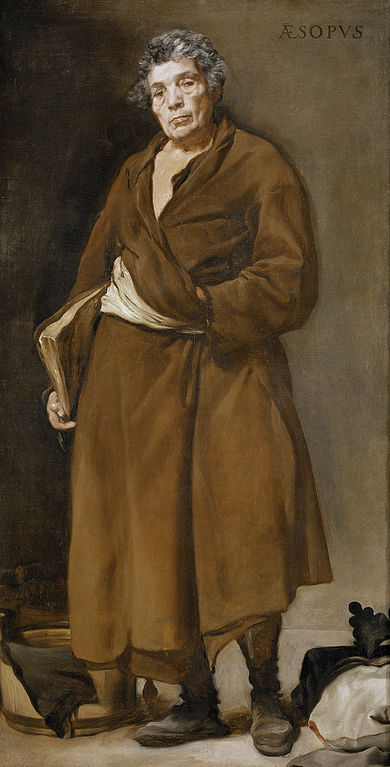
aesop painting

Aesop

Biography

Very little is known about Aesop's origins. Amorium, Phrygia, Egypt, Ethiopia, Samos, Athens, Sardis, Thrace and many other places have been suggested by different authors as his place of birth. Some claim that his name may be derived from "Aethiopian", a word often used by the ancient Greeks to refer to any dark-skinned people from the African interior. His date of birth is likewise uncertain, but the best estimate may be around 620 BCE. According to some medieval traditions, he was extremely ugly and deformed, although there is no contemporary evidence to that effect.

Like his birth, the rest of his life is also shrouded in obscurity. He is said to have lived for some time as a slave to a man called Xanthus in Samos. At some stage he must have been freed (possibly by his second master, Jadon, as a reward for his learning and wit) as he is later recorded as conducting the public defense of a demagogue on the Greek island of Samos. Other reports have him subsequently living at the court of Croesus, the king of Lydia, where he met (and apparently impressed with his wit) Solon and the Seven Sages of Greece, and he was also said to have visited Athens during the reign of Peisistratus.

According to the historian Herodotus, Aesop met with a violent death at the hands of the inhabitants of Delphi, although various different reasons for this have been put forward. The best estimate for his date of death is around 560 BCE.

Writings

It is probable that Aesop himself never committed his "Fables" to writing, but that the stories were transmitted orally. It is thought that even Aesop's original fables were probably a compilation of tales from various sources, many of which originated with authors who lived long before Aesop. Certainly, there were prose and verse collections of "Aesop's Fables" as early as the 4th Century BCE. They were in turn translated into Arabic and Hebrew, further enriched by additional fables from these cultures. The collection with which we are familar today is probably based on a 3rd Century CE Greek version by Babrius, itself a copy of a copy of a copy.

His fables are some of the most well known in the world, and are the source of many phrases and idioms in everyday use (such as "sour grapes", "crying wolf", "dog in a manger", "lion's share", etc).
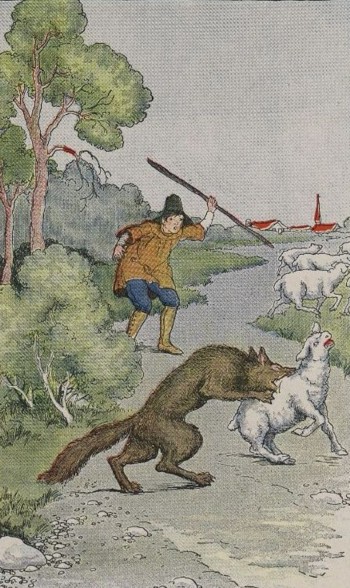
the boy who cried wolf

The Boy Who Cried Wolf

Among the most famous are:

  • The Ant and the Grasshopper

  • The Bear and the Travellers

  • The Boy Who Cried Wolf

  • The Boy Who Was Vain

  • The Cat and the Mice

  • The Cock and the Jewel

  • The Crow and the Pitcher

  • The Deer without a Heart

  • The Dog and the Bone

  • The Dog and the Wolf

  • The Dog in the Manger

  • The Farmer and the Stork

  • The Farmer and the Viper

  • The Frog and the Ox

  • The Frogs Who Desired a King

  • The Fox and the Crow

  • The Fox and the Goat

  • The Fox and the Grapes

  • The Goose that Laid the Golden Eggs

  • The Honest Woodcutter

  • The Lion and the Mouse

  • The Lion's Share

  • The Mice in Council

  • The Mischievous Dog

  • The North Wind and the Sun

  • The Tortoise and the Hare

  • The Town Mouse and the Country Mouse

  • The Wolf in Sheep's Clothing

Major Works

  • "Aesop's Fables"

By Ancient Literature

Greece:

  • • Homer
  • • Hesiod
  • • Aesop
  • • Sappho
  • • Pindar
  • • Aeschylus
  • • Sophocles
  • • Euripides
  • • Aristophanes
  • • Menander
  • • Apollonius of Rhodes
Aeschylus

Aeschylus

(Tragic Playwright, Greek, c. 525 – c. 455 BCE)Introduction Aeschylus (Aiskhylos) is often recognized as the father of tragedy, and is the first of the three early Greek tragedians whose plays survive extant (the other two being Sophocles and Euri...

January 1st, 2025 • Ancient Literature
Hesiod

Hesiod

(Didactic Poet, Greek, c. 750 – c. 700 BCE)Introduction Hesiod is often paired with his near contemporary Homer as one of the earliest Greek poets whose work has survived. He is considered the creator of didactic poetry (instructive and moralizing...

January 1st, 2025 • Ancient Literature
Fables

Fables

(Fables, Greek, c. 550 BCE)Introduction "Aesop's Fables" (Lat: "Aesopica") refers to a collection of well-known fables credited to Aesop, a slave and story-teller who lived in ancient Greece in the 6th Century BCE. It is also sometimes used as a b...

January 1st, 2025 • Ancient Literature
Aristophanes

Aristophanes

(Comic Playwright, Greek, c. 446 – c. 386 BCE)Introduction Aristophanes was a prolific and much acclaimed comic playwright of ancient Greece, sometimes referred to as the Father of Comedy. Eleven of his forty plays have come down to us virtually c...

October 24th, 2024 • Timeless Myths
Euripides

Euripides

(Tragic Playwright, Greek, c. 480 – c. 406 BCE)Introduction Euripides was the last of the three great tragedians of classical Greece (the other two being Aeschylus and Sophocles). Largely due to an accident of history, eighteen of Euripides' ninet...

October 24th, 2024 • Timeless Myths
Horace

Horace

(Lyric Poet and Satirist, Roman, 65 – 8 BCE)Introduction Horace was, along with Vergil, the leading Roman poet in the time of Emperor Augustus. He is considered by classicists to be one of the greatest and most original of Latin lyric poets, appre...

October 24th, 2024 • Timeless Myths
Ovid

Ovid

(Epic, Elegiac and Didactic Poet, Roman, 43 BCE – c. 17 CE)Introduction Ovid was a prolific Roman poet, straddling the Golden and Silver Ages of Latin literature, who wrote about love, seduction and mythological transformation. He is considered a ...

October 24th, 2024 • Timeless Myths
Ars Poetica

Ars Poetica

(Didactic Poem, Latin/Roman, c. 18 BCE, 476 lines)Introduction "Ars Poetica" ("The Art of Poetry" or "On the Nature of Poetry"), sometimes known under its original title, "Epistula Ad Pisones" ("Letters to the Pisos"), is a treatise or literary es...

October 25th, 2024 • Timeless Myths
Works and Days

Works and Days

(Didactic Poem, Greek, c. 700 BCE, 828 lines)Introduction "Works and Days" (Gr:"Erga kaí Hemérai"; Lat: “Opera et Dies”) is a didactic poem written by the very early ancient Greek poet Hesiod. It was probably written around 700 BCE or earlier and ...

January 1st, 2025 • Ancient Literature
Homer

Homer

(Epic Poet, Greek, c. 750 - c. 700 BCE)Introduction Homer is traditionally held to be the author of the ancient Greek epic poems "The Iliad" and "The Odyssey", widely thought to be the first extant works of Western literature. He is considered by ...

January 1st, 2025 • Ancient Literature
Timeless Myths

Exploring mythology and legends from around the world.

Explore Myths

All Stories Characters All Articles Search Site Map

Mythologies

Norse Mythology Classical Mythology Celtic Mythology Arthurian Legends Mythology Gods Ancient Literature

About Us

Introduction About Jimmy Bibliography FAQs Retro Version

Resources

Timeless Myths All Stories All Articles Characters
© 1999-2026 Timeless Myths • Copyright • Privacy Policy • Cookie Policy • Contact
Follow us: