Tydeus: The Story of the Hero Who Ate Brains in Greek Mythology
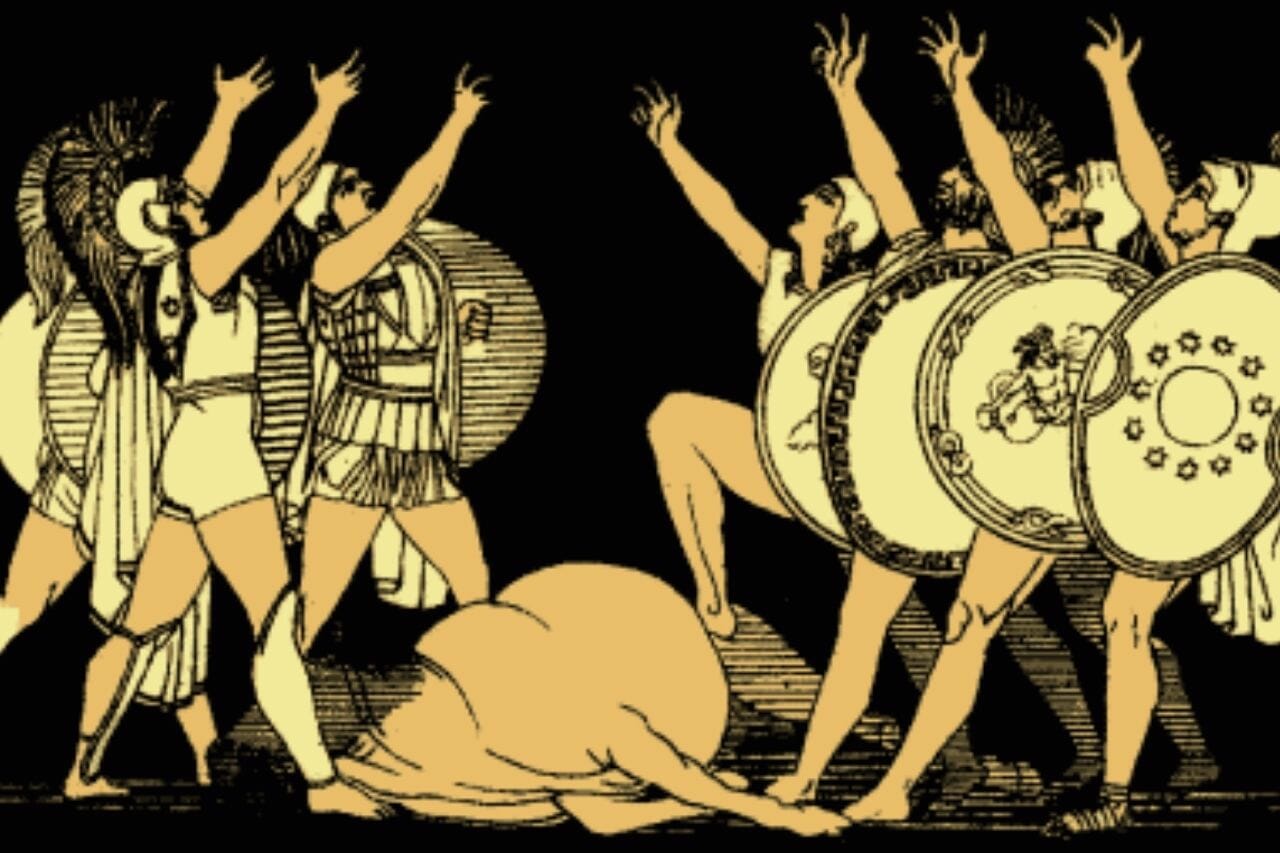
Tydeus - The oath against Thebes
Tydeus was a leader of the Argive army that fought against the Thebans to remove their King, Eteocles, and to hand over the throne to Polynices, the brother of Eteocles. As the war progressed, Tydeus fought bravely but was gravely wounded by a Theban soldier named Melanippus.
Tydeus was on the verge of death when Athena, the goddess of war, brought medicine that would make him immortal but before that could happen, Amphiaraus gave Tydeus the brains of an opponent to eat. Read what happened to Tydeus after he ate the brains of his enemy.
The Family of Tydeus
The parents of Tydeus were Oeneus, a Calydonian king, and his wife Periboea but other versions name Gorge, the daughter of Oeneus, as the mother of Tydeus. Later in the myth, Tydeus married Deipyle, a Princess of Argos, and the couple gave birth to Diomedes, the Argive general who fought during the Trojan War.
The Adventure to Argos
Tydeus' uncle, Agrius, drove him away from Calydon for killing some of his relatives. Depending on the version of the myth, Tydeus either murdered another uncle, his brother, or six of his cousins. He, therefore, wandered about for a while and finally settled in Argos where he was warmly received by King Adrastos. While there, he was put in the same lodge as Polynices, the exiled son of the Theban king, Creon.
Polynices had fought his brother, Eteocles, over the throne of Thebes with Eteocles emerging the victor, causing Polynices to seek refuge at Argos.
Conflict With Polynices
One night, Adrastos woke up to a racquet coming from the lodge of Tydeus and Polynices. On reaching there, he realized that the two princes were engaged in a fierce brawl and observed them for a while. That was when he remembered a prophecy given to him that he should marry his daughters to a lion and a boar.
King Adrastus quickly deduced that Polynices was the lion and Tydeus the boar. How he came to that conclusion depends on the version of the myth for some versions say he observed the way the two princes fought. According to that version, Tydeus brawled like a boar while Polynices fought like a lion. Other versions also indicate that Adrastus observed either the animal skins they wore or the animals emblazoned on their shields.
Deipyle as His Bride
Without wasting time, King Adrastus fulfilled the prophecy by giving his daughters Argia and Deipyle to Polynices and Tydeus respectively, making Diomedes Tydeus son. With both men now Princes of Argos, King Adrastus promised them he would help restore their kingdoms.
King Adrastrus Organizes the Seven Against Thebes
King Adastrus brought together the largest Greek army led by seven great warriors to help Polynices overthrow his brother and install him as king. The seven great warriors became known as Seven Against Thebes and they included Capaneous, Tydeus, Hippomedon, Polynices, Amphiaraus, Parthenopaeus, and Adrastus himself. Once the army was ready, they set out on a journey with only one goal in mind– to restore the Theban kingdom to Polynices.
The Army at Nemea
When the men got to Nemea, they learned that a snake had killed the young son of the Nemean King, Lycourgos. The men then chased after the serpent and killed it after which they buried the young Prince of Nemea. After the burial, they organized the first Nemean games in honor of the young prince. At the games, a boxing bout was organized among the soldiers with Tydeus emerging the overall winner.
However, alternate sources indicate that the first Nemean Games were organized by Heracles to celebrate his victory over the vicious Nemean lion.
Being Sent to Thebes
When the army arrived at Cithaeron, they sent Tydeus to Thebes to negotiate for the return of the throne to Polynices. Despite several attempts to gain the attention of Eteocles and his men, Tydeus was ignored. Therefore, he challenged the Theban warriors to a duel in a bid to get their attention and table his demands. The Theban warriors agreed to the duel but each of them was defeated by Tydeus with the help of Athena, the goddess of war.
Tydeus then set out back to Cithaeron to present his report on what he had witnessed in Cithaeron only to be ambushed by 50 Theban soldiers led by Maeon and Polyphontes. This time, Tydeus killed each of them but spared the life of Maeon due to the intervention of the gods. Tydeus finally arrived at the camp of the Seven Against Thebes and narrated all that he had been through at the hands of the Thebans. This annoyed Adrastus and they declared war against the city of Thebes.
The War Against Thebes
The Seven Against Thebes in their armies marched on the city of Thebes and waged a relentless war. Tydeus defeated most of the Theban warriors that he encountered but was mortally wounded by the Theban hero, Melanippus. Seeing her favorite Greek soldier die deeply worried Athena and she decided to make Tydeus immortal. Therefore, she went to Zeus and pleaded with him to give her the immortality potion.
Meanwhile, Amphiaraus, one of the Seven Against Thebes, hated Tydeus for convincing the Argives to attack the Thebans contrary to what he had recommended. Since he was a seer, Amphiaraus was able to discern what Athena was about to do for Tydeus. Thus, he plotted to frustrate his plans for Athena. As part of his plans, Amphiaraus attacked Melanippus and killed him.
He then cut off Melanippus' head, removed the brains, and gave it to Tydeus to eat. Tydeus obliged and ate the brains of Melanippus much to the disgust of Athena who had just arrived with the medicine. Witnessing that horrible scene disturbed her and she returned with the immortality medicine. That was how Tydeus' eating brains cost him immortality and that imagery has always represented the elusive quest for immortality.
Meaning and Pronunciation
The meaning of the name is not stated but several sources describe him as the father of Diomedes and a member of the Seven Against Thebes.
As for the pronunciation, the name is pronounced as "|tai-di-es|"
In Literature and Arts
According to the Greek poet Mimnermus in one of his poems, Tydeus killed Ismene the daughter of the Theban king, Creon. The scene of Tydeus killing Ismene was painted on a container during the sixth century in the city of Corinth and is currently on display at the Louvre Museum in Paris, France.
The ancient Greek dramatist, Aeschylus, featured Tydeus as a character in his play Seven Against Thebes while Euripides featured his character in his play The Phoenician Women. All the plays mentioned followed the same format as the original Greek myth where Tydeus killed Melanippus and ate his brains to the disgust of Athena.
Conclusion
So far, we've studied the family and life of the Greek hero Tydeus and how he almost attained immortality. Here is a recap of all that we've discovered about Tydeus so far:
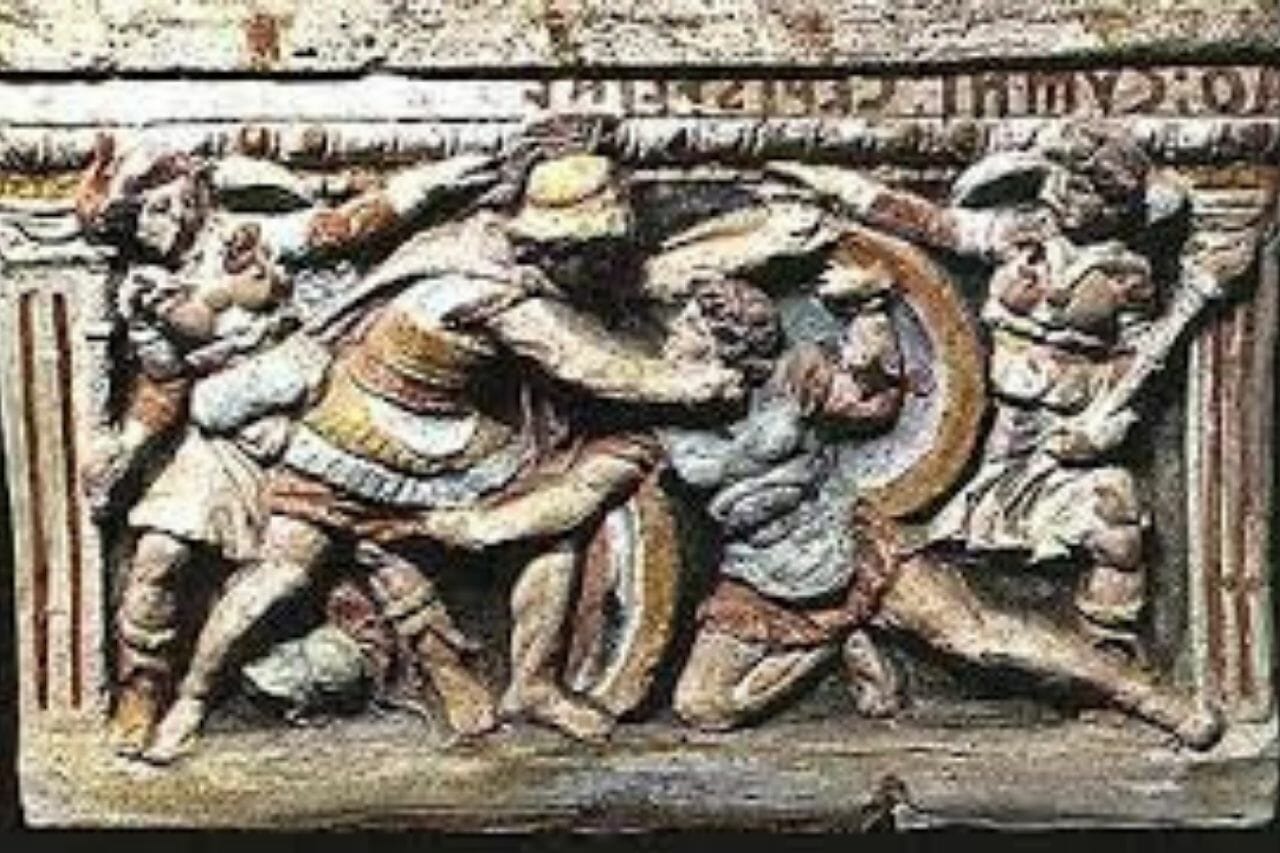
Tydeus in Greek mythology
Tydeus was a Calydonian Prince, who was born to Oeneus and his wife Periboea or his daughter, Gorge, depending on the version of the myth.
Later, his uncle, Agrius, drove him out of Calydon after he was found guilty of murdering either another uncle, brother, or six of his cousins.
Tydeus traveled to Argos where King Adrastus welcomed him and put up with Polynices who was also escaping his brother Eteocles.
Adrastrus gave his daughters to both Tydeus and Polynices after he found them brawling and formed the Seven Against Thebes to wage war against the Thebans.
Athena wanted to make Tydeus immortal after Melanippus mortally wounded him but she changed her mind when she witnessed Tydeus eat the brain of Melanippus.
Tydeus lost the chance to become immortal and represents man's quest for elusive immortality.