Gwenhwyfar III, Wife of King Arthur
Gwenhwyfar III was the third wife of King Arthur. As such, she is a prominent and important character in the Arthurian legends. But what do we really know about her? Who was her family? When did she marry Arthur? This article will examine the answers to these questions and many others.
Who Was Gwenhwyfar III?
According to the Arthurian legends, particularly in Welsh tradition, King Arthur had three wives. All of them are recorded as being named Gwenhwyfar. This article is about the third one these wives, whom we shall call Gwenhwyfar III.
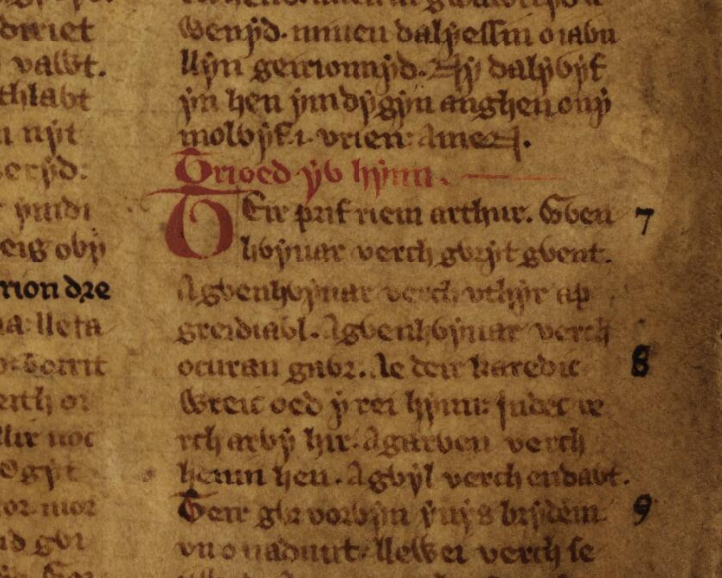
The clearest reference for the tradition of Arthur’s three wives is to be found in the Welsh Triads, a collection of various traditions from the medieval era grouped into sets of threes. The triad regarding the three Gwenhwyfars is called Arthur’s Three Great Queens. The entry mentioning Gwenhwyfar III reads:
“Gwenhwyfar daughter of Gwythyr son of Greidiawl.”
According to this entry, Arthur’s wife was the daughter of a man named Gwythyr and granddaughter of a man named Greidiawl. No more information is provided about this wife in this source.
Name
Given the fact that all three wives are recorded as being called ‘Gwenhwyfar’, it is very likely that this was not a genuine, personal name. This is especially so in view of the fact that this was not a common name in the medieval era, so the odds of three woman with this same name just coincidently being married to the same man are essentially zero.
Therefore, it is almost certain that this is a throne name of some kind. There are other examples of apparent throne names in this era, such as in the case of the three wives of King Brychan of Brycheiniog.
Regarding the meaning of ‘Gwenhwyfar’, the first part is clearly the Welsh word for ‘white’. The second part, ‘hwyfar’, is understood by most scholars to mean ‘phantom’, ‘spirit’, or ‘fairy’. Thus, this apparent throne name meant something like ‘White Phantom’.
Which Wife Was This Gwenhwyfar?
An important point which needs to be addressed in the numbering of this Gwenhwyfar. While we have called her Gwenhwyfar III, she is actually the second of the three who appear in the abovementioned triad. On this basis, it could be assumed that she was actually the second wife.
However, there is good reason to believe that Arthur’s second and third wives are listed the wrong way around in that triad. The evidence is largely from information about Arthur’s children. An analysis of each one of his attested sons indicates that they can be separated into three distinct groups, each group belonging to a different era of Arthur’s reign.
Given the fact that Arthur allegedly had three wives, it is entirely logical that each group of children can be assigned to one of the three wives.
Llacheu’s Death and the Second Wife of King Arthur
One of Arthur’s sons was called Llacheu. Several references to him show that he was a youth when he died. This seems to have occurred at around the time of the Battle of Camlann. It appears that he was seriously wounded at the Battle of Llongborth, which was very likely a prelude to Camlann, and then eventually succumbed to his wounds near Llandrinio in Powys.
Since Llacheu was a youth at the time, it is clearly evident that he was from Arthur’s second wife, not his first, since Arthur had a son (Gwydre) who was already an adult by the time of the Battle of Badon, some twenty years before Camlann. In other words, Arthur must have been with his second wife, at least, by the time of Camlann.
Welsh tradition is in firm agreement that the Gwenhwyfar who was with Arthur at the time of that civil war was Gwenhwyfar the daughter of Gogfran Gawr. However, this Gwenhwyfar cannot have been Arthur’s final wife, since the third group of children appears to have been born just after Camlann. Indeed, Welsh tradition provides strong evidence that Arthur outlived that battle by at least several years.
Hence, the evidence logically supports the conclusion that Arthur married his third and final wife after Camlann. Therefore, we come to the conclusion that Gwenhwyfar the daughter of Gogfran, the wife who became Mordred’s wife during the civil war that led to Camlann, must have been Arthur’s second wife, not his third.
The Father of the Third Gwenhwyfar
Nevertheless, how do we know that it was not the first Gwenhwyfar listed in the triad who was actually Arthur’s third wife, married to him just after the Battle of Camlann?
The reason is that evidence from Scottish tradition, which we will examine in more detail later, indicates that Arthur’s final wife was the daughter of a ruler of France who also had connections to Scotland.
Of the three Gwenhwyfars, the only one whose father fits that profile is Gwenhwyfar the daughter of Gwythyr. Therefore, the weight of evidence supports the conclusion that the daughter of Gwythyr was, in fact, Gwenhwyfar III, despite being listed second in the triad.
Family
What do we know about the family of Gwenhwyfar III? The most obvious fact is that she was the wife of King Arthur.
Beyond that, as we have already seen, she was the daughter of a man named Gwythyr, whose own father was named Greidiawl. What do we know about this family?
Roman Ancestry
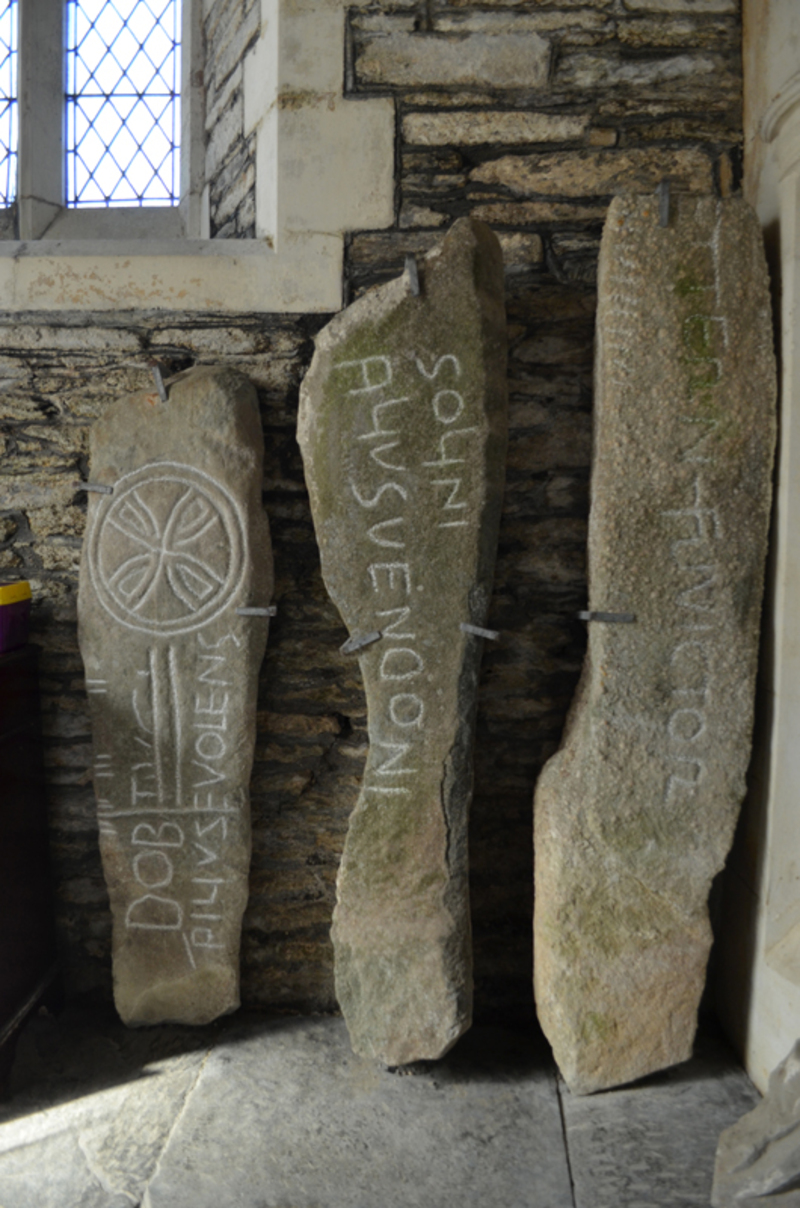
The truth is that we do not know very much. However, there are a number of records which report the ancestry of this line of rulers. One triad, known as the Three Enemy-Subduers of the Island of Britain, provides the information that Greidiawl was the son of a man named Enfael Adrann.
Further information is provided by a medieval genealogical record known as Bonedd yr Arwyr. This provides a full genealogy for Gwythyr. It includes Enfael as the father of Greidiawl, and extends the line back even more through the following generations:
Deigyr
Dyfnwal
Ednyfed
Maximus
The Maximus in question is Magnus Maximus, as shown by a comparison with the Harleian MS 3859. Various medieval records attest to Maximus as a prominent founding figure of several Welsh dynasties. The figure called Ednyfed in this record is elsewhere shown to be the son of a figure alternatively called Anthun or Dunod, who was, himself, the son of Maximus.
The kings who descended from this alleged son of Maximus, Anthun, were powerful and important. One line eventually came to rule over Dyfed, ousting the Irish dynasty in c. 500. Another line ruled over all the kingdoms of southeast Wales, including Glywysing, Gwent, and Brycheiniog. Yet another line ruled in the north of Britain, probably in Galloway before being confined to the Isle of Man.
Therefore, this Gwenhwyfar was apparently descended from this important and powerful Roman figure.
Where Her Family Lived
The kings who descended from Anthun’s grandson Dyfnwal were those who ruled in the north. However, Dyfnwal’s son Deigyr was not the one who succeeds him in the records of those northern kings. Hence, Deigyr was evidently not the heir to his father’s kingdom.
Supporting this is the fact that Deigyr is associated in Welsh tradition with South Wales. For example, a late document associates him with Tredegyr, a site in Glamorgan. Even before this, we find evidence of him associated with that region.
Bonedd yr Arwyr lists another one of Deigyr’s sons as Gwyddien Astrus. A person by this very same name appears in Culhwch and Olwen, a Welsh tale written in c. 1100, and places him in South Wales.
Therefore, it would appear that Deigyr left his father’s kingdom and moved his family to the south, establishing himself as a minor ruler in Glamorgan. This would have made him a subking under King Arthur’s dynasty.
Identifying Her Father
Let us now consider more closely the father of Gwenhwyfar III. His name is recorded as ‘Gwythyr’, which is the Welsh form of the Latin name ‘Victor’. He appears in Culhwch and Olwen, in which a significant conflict is described between him and a figure from the north of Britain called Nudd. This war was resolved semi-peacefully by having the two men engage in combat each year.
In the Life of St Paul Aurelian, written perhaps as early as the tenth century, there is a reference to a ruler in Brittany named Withur. This is another form of the name ‘Gwythyr’. This account is set in the sixth century, the same era as when Gwythyr would have lived.
Could Withur and Gwythyr have been the same person? This is made more likely by the fact that the Arthurian legends outside of Welsh tradition make Gwenhwyfar’s father, whom they call ‘Leodegrance’ (or some variant thereof), a ruler in Brittany.
Cywryd, the father of the first Gwenhwyfar had the epithet ‘Gwent’, with no known connection to Brittany. Gogfran, the father of the second Gwenhwyfar, is strongly associated with Powys, again with no known connection to Brittany.
Therefore, the obvious explanation for the origin of the legend that Guinevere’s father was a ruler in Brittany is that this came from Gwythyr, whose name is identical to that of an attested ruler in that country. It is very likely, then, that Gwythyr and Withur should be identified as the same person.
When Gwenhwyfar Married King Arthur
When exactly did Gwenhwyfar III marry King Arthur? As we said earlier, there is some evidence that Arthur married again after the Battle of Camlann, and that this final wife was Gwenhwyfar the daughter of Gwythyr. What exactly is this evidence?
Evidence from Le Petit Bruit
One key piece of evidence comes from Le Petit Bruit. This was written in 1309. Although this is a relatively late source, we will soon see why it merits our trust. According to this source, Arthur had three sons: Adeluf, Morgan, and Patrick. This document specifically notes that Morgan was educated by Gawain.
The reason that this is so interesting is that Gawain was the younger brother of Mordred and nephew of Urien Rheged. As such, he would have only recently become an adult by c. 570. Thus, it is very unlikely that Morgan, the son of Arthur according to Le Petit Bruit, would have been born prior to that late period. Since these three sons were allegedly sons of the same mother, this would place all of them in that general era.
This Morgan is described as becoming the king of Wales and living in South Wales for most of his life. With this information in view, it is obvious that this is a description of Morgan ap Athrwys, a historical king of South Wales in the medieval era. His father, Athrwys, is a prominent and likely candidate for the historical King Arthur.
Since the reference to Morgan is obviously not fictional but preserves a genuine tradition concerning that historical figure, this relatively late source is demonstrably worthy of some degree of trust.
Marrying After Camlann
The question is, why would Arthur have married and had children at such a late point in his life, as late as c. 570? The answer becomes clear when we consider the fact that all of Arthur’s children known from Welsh tradition (Gwydre, Amhar, Duran and Llacheu) are all recorded as dying during Arthur’s reign, the latest death being at the Battle of Camlann.
Yet, there is also evidence from the Welsh Triads and other sources of Welsh tradition that Arthur survived the Battle of Camlann for at least several years. Hence, with his sons having all died by that point, it is evident that Arthur was left without an heir.
Therefore, it would have been logical for him to have married again so as to secure an heir.
Evidence from Scottish Tradition
The claims made in Le Petit Bruit are not the only pieces of evidence for this conclusion. Scottish tradition speaks of a son of Arthur named Smerbe. In the earliest records about him, his name is spelt ‘Meirbi’, ‘Mervin’, and other variations. Thus, it is most likely that this is a corruption of the ‘Morgan’ mentioned in Le Petit Bruit.
According to this Scottish tradition, Arthur’s son did not succeed him as king (evidently meaning as High King), because he was ‘unknown and lurking’ at the time of the succession. Yet, the same tradition also claims that he grew up to be famous and even married into the powerful dynasty of Dal Riada.
This might seem internally inconsistent at first. Yet, it is easily explainable if we understand Smerbe, identical to Morgan, to have been born just after the Battle of Camlann. As we saw earlier, Welsh tradition indicates that Arthur survived after Camlann, but he must have been old at the time and therefore cannot have continued living for very long.
The reason that this is significant is because it means that Arthur’s sons born of this final marriage, such as Morgan, would obviously have still been children at the time of Arthur’s death. This would perfectly explain how Smerbe, or Morgan, could have been passed over in the succession due to being ‘lurking and unknown’, while still growing up to become powerful and famous later.
Therefore, both Scottish tradition and the tradition preserved in Le Petit Bruit harmonise to suggest that Arthur married after Camlann but then died (at this point as an old man) while his children were still young.
The Wife of Arthur in Scottish Tradition
Regarding the fact that this marriage was specifically Gwenhwyfar the daughter of Gwythyr, it is important to observe that this tradition from Scotland specifies that the mother of ‘Smerbe’ was the daughter of the king of France.
Of the three Gwenhwyfars, the only one whose father is made a ruler in France is the daughter of Gwythyr, as we saw earlier.
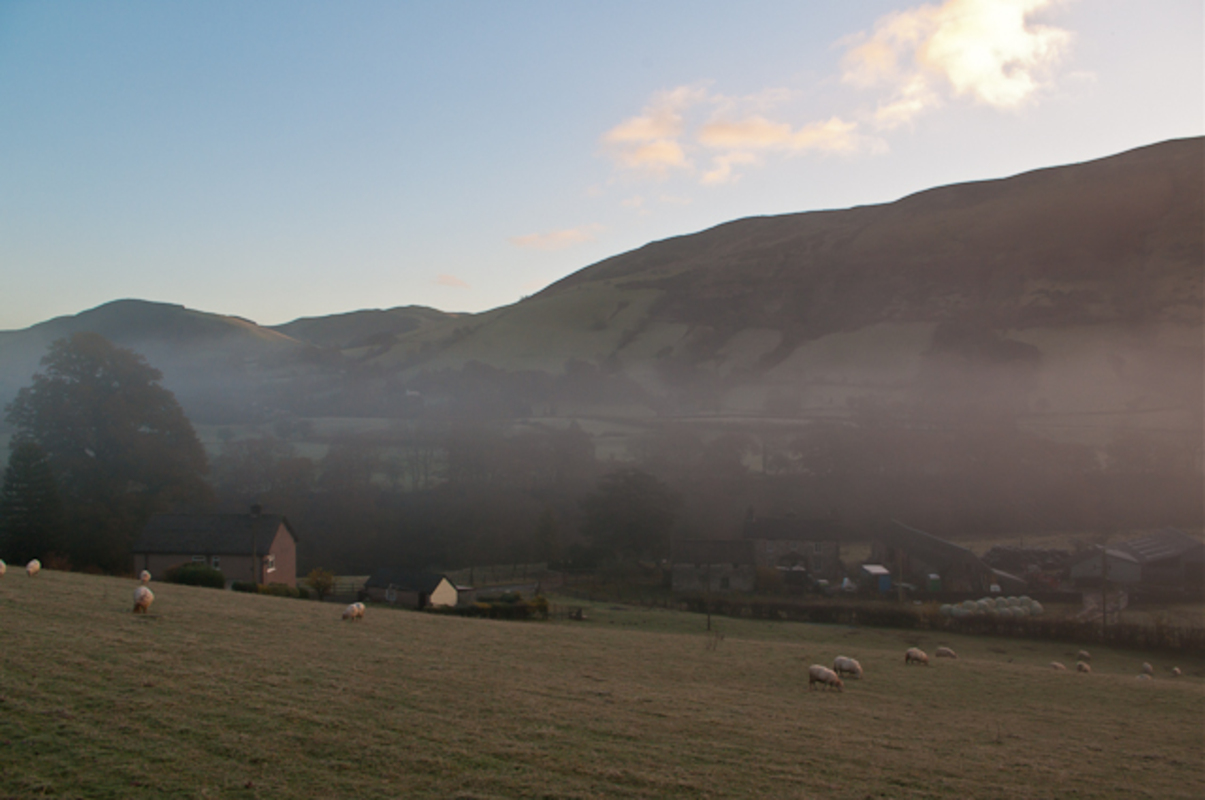
Furthermore, this same Scottish tradition presents Arthur’s wife as giving birth to Smerbe at Dumbarton Rock. As we saw earlier, Gwythyr is described in Culhwch and Olwen as fighting against Nudd, a northern ruler, every year.
While do not know any specific details, this does show that Gwythyr has an attested connection to the general region of southern Scotland. Hence, the idea of Arthur’s wife, the daughter of the king of France, giving birth to her child at Dumbarton Rock is perfectly consistent with identifying her as the daughter of Gwythyr.
The Name of Gwenhwyfar III
One very interesting part of this Scottish tradition is that it actually provides the personal name of Arthur’s wife. It does not call her ‘Gwenhwyfar’ (which, as explained earlier, was almost certainly a throne name of some sort).
Rather, it calls her ‘Elizabeth’. There is no evidence that this name was actually used among the Britons in this era. However, this is an attested name from this era which is very similar. The name in question is ‘Eiliwedd’. This is the name of a daughter of Brychan. Her name variously appears as:
Eiliueth
Elyuet
Elinedd
Aelivedha
While this is not identical to ‘Elizabeth’, it is very easy to see how one name could be confused for the other. The first part of both names are basically identical.
The ending ‘ueth’ on the earliest spelling of her name, appearing later as ‘uet’, ‘ved’, and ‘wedd’ (as well as the corrupt ‘nedd’), could easily be interpreted as ‘beth’. The letters ‘u’ and ‘v’ were often used in place of a ‘b’ in medieval British manuscripts.
The notable difference, therefore, is the lack of the middle ‘za’ syllable from ‘Elizabeth’ in the name ‘Eiliwedd’. However, for someone who was not familiar with that Welsh name, it would be logical to adapt the name into the more familiar ‘Elizabeth’, well known from the Bible.
The Life of Gwenhwyfar III
At this point, it would be helpful to provide a summary of what we can discern regarding the life of Gwenhwyfar III. She was the daughter of Gwythyr, a prince of subking from South Wales who became a king in Brittany. Her personal name was likely Eiliwedd.
Due to her father’s constant conflicts with a ruler from the North, her family may have had a semi-permanent residence in that area. After Mordred’s defeat at the Battle of Camlann, King Arthur continued on his campaign to put down the supporters of Mordred. This took him to Mordred’s court in the North, which Arthur ravaged, as described in the Welsh Triads.
As a fairly elderly man and now without an heir, Arthur saw the need to marry again. He married Eiliwedd (as was likely her name), daughter of Gwythyr, and gave her the throne name ‘Gwenhwyfar’.
This new queen then gave birth to Morgan, Arthur’s heir. On the basis of Scottish tradition, this occurred at Dumbarton Rock. This was the capital of one of the allies of Arthur’s kingdom.
Gwenhwyfar’s husband, Arthur, died several years later. Morgan was too young to inherit the position of High King, so that role was given to Constantine of Dumnonia. Later, however, Gwenhwyfar III’s son Morgan did inherit the throne of Arthur’s personal kingdom in South Wales.
Gwenhwyfar III’s Death
What became of Gwenhwyfar III after the death of King Arthur? We get an indication of this in Geoffrey of Monmouth’s Historia Regum Britanniae.
After describing Arthur’s initial successes in battle against the forces of Mordred, Geoffrey tells us the following:
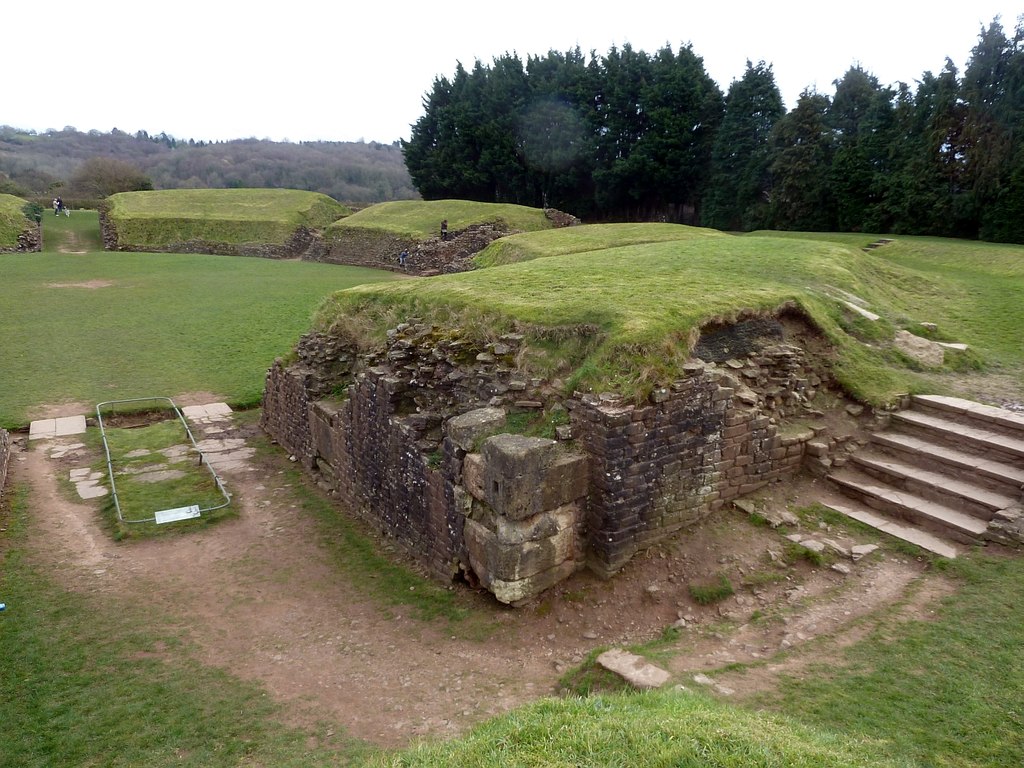
“As soon as queen Guanhumara heard this, she immediately, despairing of success, fled from York to the City of Legions, where she resolved to live a chaste life among the nuns in the church of Julius the Martyr, and entered herself one of their order.”
Geoffrey presents this as being the queen who married Mordred and thus betrayed Arthur. However, there is reason to doubt this claim.
The ‘Treachery’ of Gwenhwyfar II
Hector Boece, writing in the early sixteenth century, recorded a tradition that Guinevere became a prisoner of the Picts after Arthur’s death. The land of the Picts is a very long distance from Caerleon in southeast Wales, where Geoffrey places the queen. These two traditions do not seem to be compatible.
We should also bear in mind the fact that Welsh tradition remembers Gwenhwyfar II, the daughter of Gogfran, as a traitor. A comparison of the various traditions about her suggests that she did not necessarily join Mordred willingly, but that he forced himself on her. Nonetheless, she was remembered as a traitor, and this may well reflect the attitude at the time.
If so, then this lends further support to the idea that Gwenhwyfar II was made a prisoner. Likely, she was captured by Arthur’s men and then taken with them as they campaigned north, where they then attacked the court of Mordred as mentioned in the Welsh Triads.
After putting down the rebellion, Arthur could have then imprisoned Gwenhwyfar II in the land of the Picts, handing her over to his allies in that region.
How This Relates to Gwenhwyfar III
The aforementioned scenario appears to be the best explanation for how to harmonise the information from Welsh tradition about the treachery of Gwenhwyfar II, Arthur’s northern campaign to attack Mordred’s court, and the tradition recorded by Boece regarding Guinevere being made a prisoner in the land of the Picts.
In contrast, Geoffrey’s tradition about Arthur’s queen becoming a nun in Caerleon seems to be completely inconsistent with this. It is much more easily interpretable as a tradition concerning Arthur’s final queen, whom he married after the Battle of Camlann.
Therefore, the weight of evidence suggests that it was Gwenhwyfar III, the daughter of Gwythyr, who became a nun at Caerleon after Arthur’s eventual death. This would, contrary to what Geoffrey wrote, have occurred quite a few years after Arthur’s successes in battle against Mordred.
When Did Gwenhwyfar III Live?
Now that we have seen the rough story of her life, what can we say regarding when exactly she lived? Since she was of marrying age at the time of the Battle of Camlann, and was evidently chosen specifically so that she could have children with Arthur so as to produce an heir, she was probably between no younger than sixteen but no older than twenty-five when that battle occurred.
Therefore, her absolute dates depend on establishing when the Battle of Camlann took place.
When Did the Battle of Camlann Occur?
The Annales Cambriae places the Battle of Camlann in 537. However, this date is contradicted by all the other information about the conflict. Crucially, Arthur’s enemy at the battle was Mordred. All available tradition agrees that he was the son of King Lot, also known as Llew or Lleuddun, of Lothian.
Since Lot was the brother of Urien Rheged, this would make Mordred the nephew of Urien and first cousin of Urien’s son, Owain. All the evidence about these figures places them firmly in the second half of the sixth century.
For example, the Historia Brittonum presents Urien as fighting against Theodric of Bernicia, who ruled in the 570s. It also presents Urien as fighting against Hussa of Bernicia, whose reign lasted from about 585 until 592.
Therefore, it is inconceivable that Urien’s nephew, Mordred, would have been fighting in battle as early as 537. The simplest explanation is that the entry in the Annales Cambriae for the Battle of Camlann has been accidentally backdated by about thirty-three years. This was an error which sometimes occurred in the medieval records due to confusion between events sometimes being dated from the death, rather than birth, of Jesus.
If we assume that such an error occurred here, then that would place the Battle of Camlann in 570. This is significantly more harmonious with the rest of the information about Mordred and the Battle of Camlann itself.
The Dating of Gwenhwyfar III
With this being the case, we can conclude that Gwenhwyfar III was probably between sixteen and twenty-five years old in 570. Therefore, she was evidently born between 545 and 554. Her father, therefore, would have probably been born between twenty and thirty years before that, or in other words, between 515 and 534.
On the other hand, we have no information about when Gwenhwyfar died. It may have been towards the end of the sixth century, but it is by no means impossible that she lived until the early seventh century.
Conclusion
In conclusion, Gwenhwyfar III appears most prominently in the Welsh Triads, where she is made the daughter of Gwythyr and wife of King Arthur. A comparison of the various pieces of Welsh tradition makes it clear that she was indeed his third wife, despite her appearing second in the triad in which she appears. Her father, Gwythyr, was believed to be a descendant of Magnus Maximus.
The real name of Gwenhwyfar III was probably Eiliwedd, with Scottish tradition later remembering her as ‘Elizabeth’. The most likely scenario for her marriage to Arthur is that Arthur rejected and punished Gwenhwyfar II for her perceived treachery with Mordred. With all his sons up until that point having died, Arthur married Gwenhwyfar III to produce an heir, which was Morgan. This occurred in c. 570.
Sources
Bartrum, Peter, A Welsh Classical Dictionary, 1993
Bromwich, Rachel, Trioedd Ynys Prydein: The Triads of the Island of Britain, 2014
Breverton, Terry, Wales: A Historical Companion, 2009
Howells, Caleb, King Arthur: The Man Who Conquered Europe, 2019