Was Plato’s Account of Atlantis Just an Allegory?

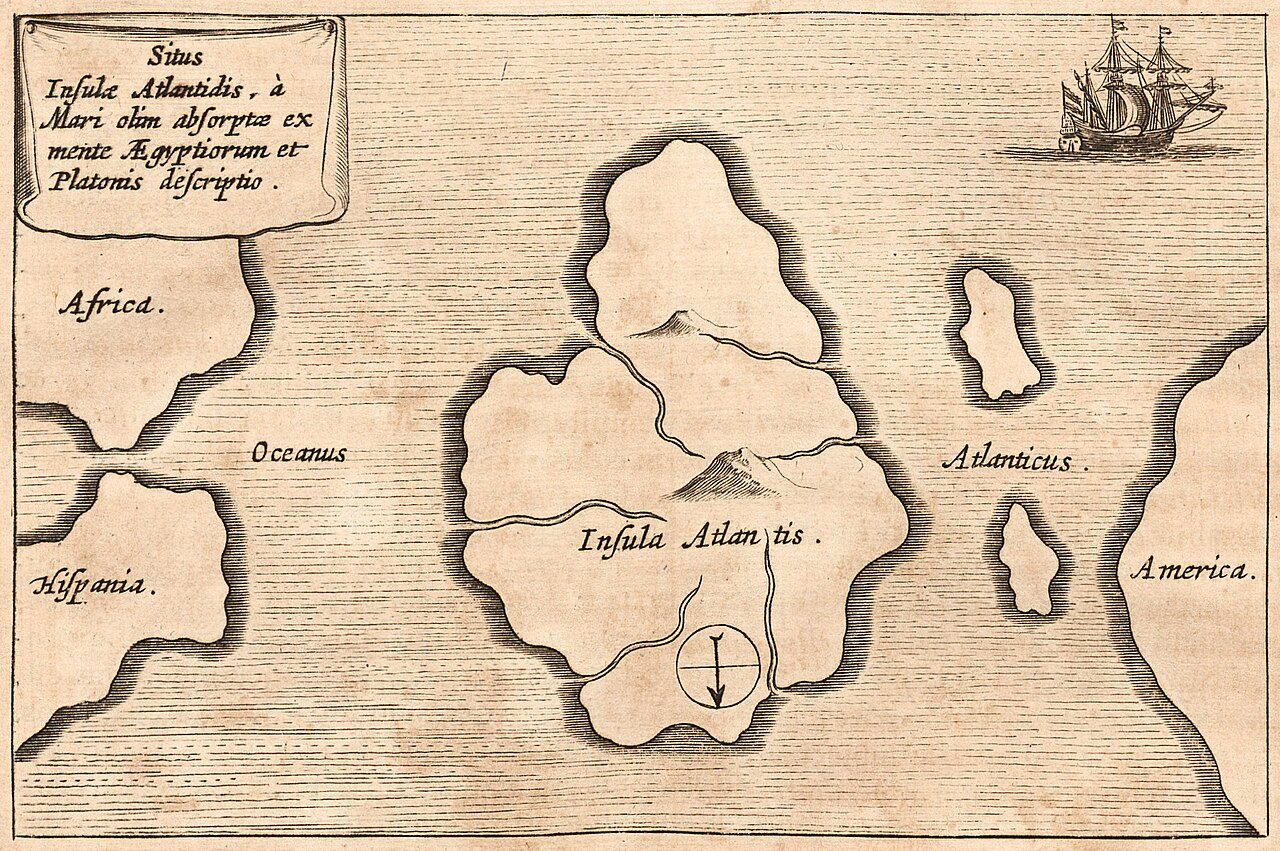
The legend of Atlantis comes from the writings of the ancient Greek intellectual Plato. Despite its Greek origin, many sources do not consider this legend to be a part of genuine Greek mythology. The logic behind this argument is that Plato was not recording a story that actually circulated among the Greeks. Rather, he invented the story entirely himself, intending for it to simply be an allegory. On this same basis, many modern sources argue that it is utterly fruitless to attempt to link Plato’s account of Atlantis with any historical place or nation. Not everyone agrees with this perspective. What do the facts really show? This article will examine the evidence.
What We Know About Plato’s Dialogues
The source texts for the tale of Atlantis are Timaeus and Critias, both written by Plato in approximately 360 BCE. Therefore, to be able to properly understand the origin of this famous legend, we need to understand Plato’s writing. Did he write historical narratives? Did he record real conversations? Was he a compiler of existing Greek myths? Did he just create his own stories for his writings? We need to understand the answers to these questions to be able to really understand the issue surrounding Atlantis.
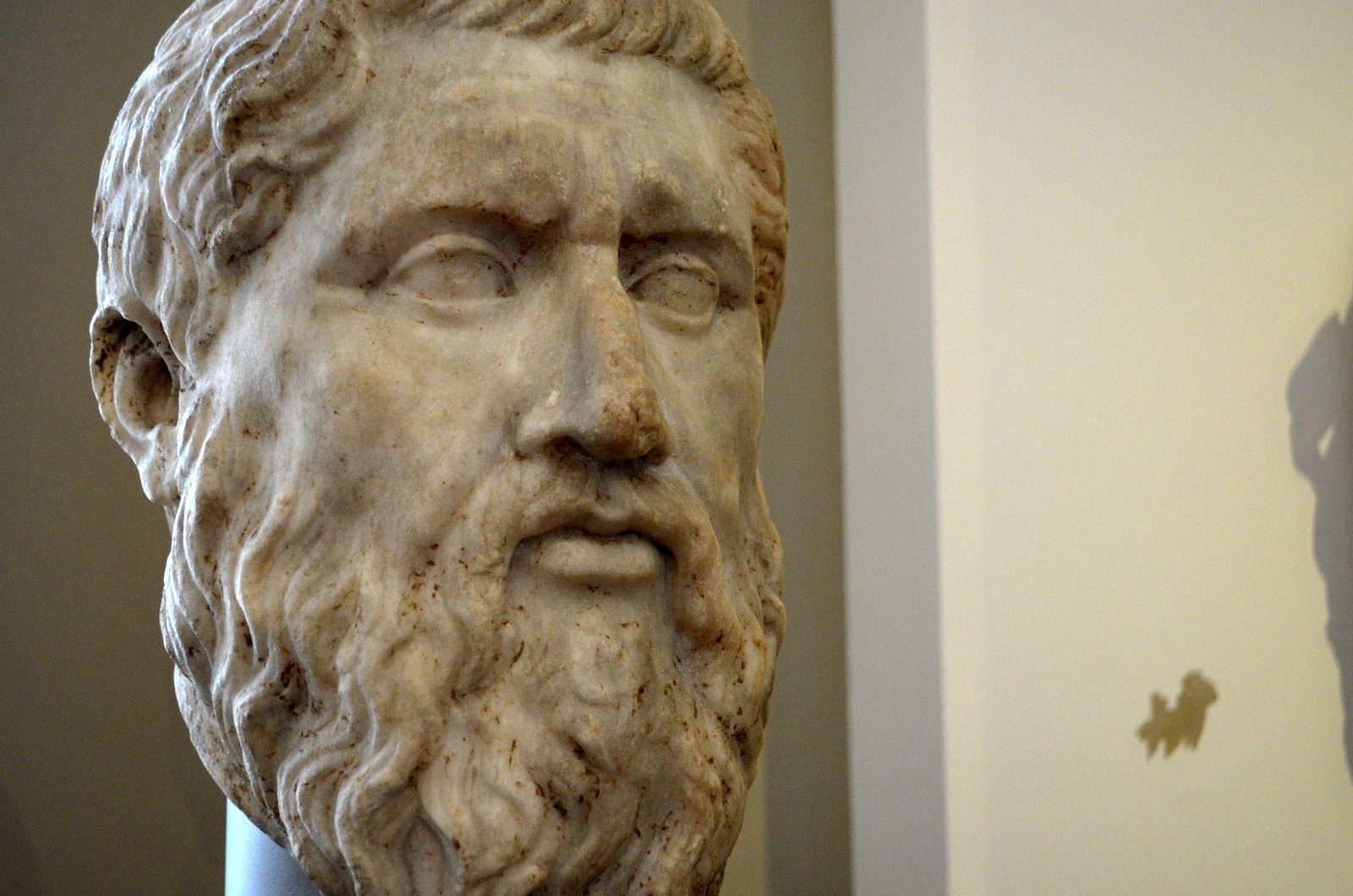
Plato’s writings take the form of dialogues. This means that they are presented in the form of conversations between several individuals. Many, although not all, of the individuals in these dialogues can be identified as historical figures. Plato himself almost never appears. Rather, the philosopher Socrates usually acts as Plato’s ‘voice’, so to speak, in the dialogues.
Socrates in the Dialogues
Socrates in Plato’s dialogues does not always strictly reflect Plato’s own viewpoint, but he is used throughout the dialogue to enable Plato to make his point. After all, Plato was a philosopher. The point of the dialogues was to present an argument about a certain philosophical point or idea. Rather than presenting his ideas through prose, Plato chose to present them through these conversations.
With this background in mind, it is evident that the conversations, in general, are almost certainly fictional. To suggest otherwise would be to suggest that Plato was simply a reporter. Yet, the documented historical evidence overwhelmingly shows that he was truly a philosopher. Why would his many written works simply be records of other people’s conversations?
Ancient records support the idea that Plato was not simply repeating what Socrates had really said. Diogenes Laertius, a Greek biographer of the early third century CE, recorded an interesting incident in which Socrates read the content of one of Plato’s dialogues, Lysis. Diogenes reports that Socrates exclaimed:
“By Heracles, what a number of lies this young man is telling about me.”
A similar account, from the Prolegomena to Platonic Philosophy, has Socrates say the following:
“This young man takes me wherever he likes and as far as he likes and makes me talk to whomever he likes.”
According to these late anecdotes, Plato did not really record what Socrates said. The second quotation, in particular, shows that Plato was understood to have simply used Socrates as a mouthpiece in his dialogues, as per the modern understanding.
What This Means for the Account of Atlantis
With these facts in mind, many modern sources argue that Plato’s narrative of Atlantis is historically worthless. After all, consider what he actually says about the origin of the story in Timaeus. There, Plato presents the story as being told by a character called Critias, who might have been the famous tyrant of Athens at the end of the fifth century BCE.
This Critias explains that he heard the story from his grandfather, also named Critias, who in turn heard it from his father Dropides. This man was told the story by Solon, the famous Athenian lawmaker. According to Plato’s dialogue, Critias explains that Solon had been told this story by the Egyptian priests of Sais when he travelled to Egypt.
Bearing in mind the intent of Plato’s dialogues, the logic used by many is that there is no reason whatsoever to consider any of this narrative to be historical. Since the entire conversation was likely fictional (in line with its purpose of being a device for Plato to propound certain philosophical ideas), the narrative about Solon receiving the story from the Egyptian priests and then it eventually passing to Critias is certainly fictional as well.
Therefore, this would mean that the entire story of Atlantis is just fictional, made up by Plato for the sake of the dialogue.
Why Would Plato Invent the Tale of Atlantis?
Of course, this raises a question. Why would Plato invent the story of Atlantis for this dialogue? Well, the answer to that is quite simple. The dialogue itself explains the motive for the story being told.
At the beginning of Timaeus, Socrates reminds his interlocutors of his description of the ideal state. He then remarks that his description is merely a static idea, but that he would love to hear a story about such a state in action to show how it actually behaves in the real world. In response, Critias states that he could tell Solon a story which he heard from his grandfather. Critias describes it as ‘a tale which, though strange, is certainly true.’
Therefore, the entire reason for telling the story of Atlantis in Timaeus is to provide an example of Socrates’ ideal state in action. Athens stands for the ideal state in the story, while Atlantis is a powerful enemy which it overcomes.
A Closer Look at This Logic
At first glance, this logic seems sound. However, the reality, as is so often the case, is more complicated than this.
For one thing, we know that at least some of Plato’s dialogues are based on real conversations. Obviously, he was not merely a reporter, but when he was in the presence of a great philosopher engaging in debate with others, Plato could certainly write about that for the purpose of promoting ideas that he agreed with.
In other words, the purpose of Plato’s dialogues does not require all of them to have been fictional conversations, and we know that some of them were rooted in reality.
Historical Facts in the Dialogues
Even when Plato’s dialogues were not based on real conversations, this does not mean that he did not base them around historical facts. The very story of how Solon came to hear about the account of Atlantis is an example of this.
The basis for Critias’ account is that Solon, the friend of his great-grandfather, travelled to Egypt. This visit to Egypt by Solon is attested by many other historical sources, including Herodotus. The evidence also indicates that he really did visit Sais, like Plato records Critas as saying. Herodotus notes that Solon was received by King Amasis II, and this king ruled from Sais. Furthermore, a surviving line of Solon’s poetry mentions the Canopic branch of the Nile, where Sais is.
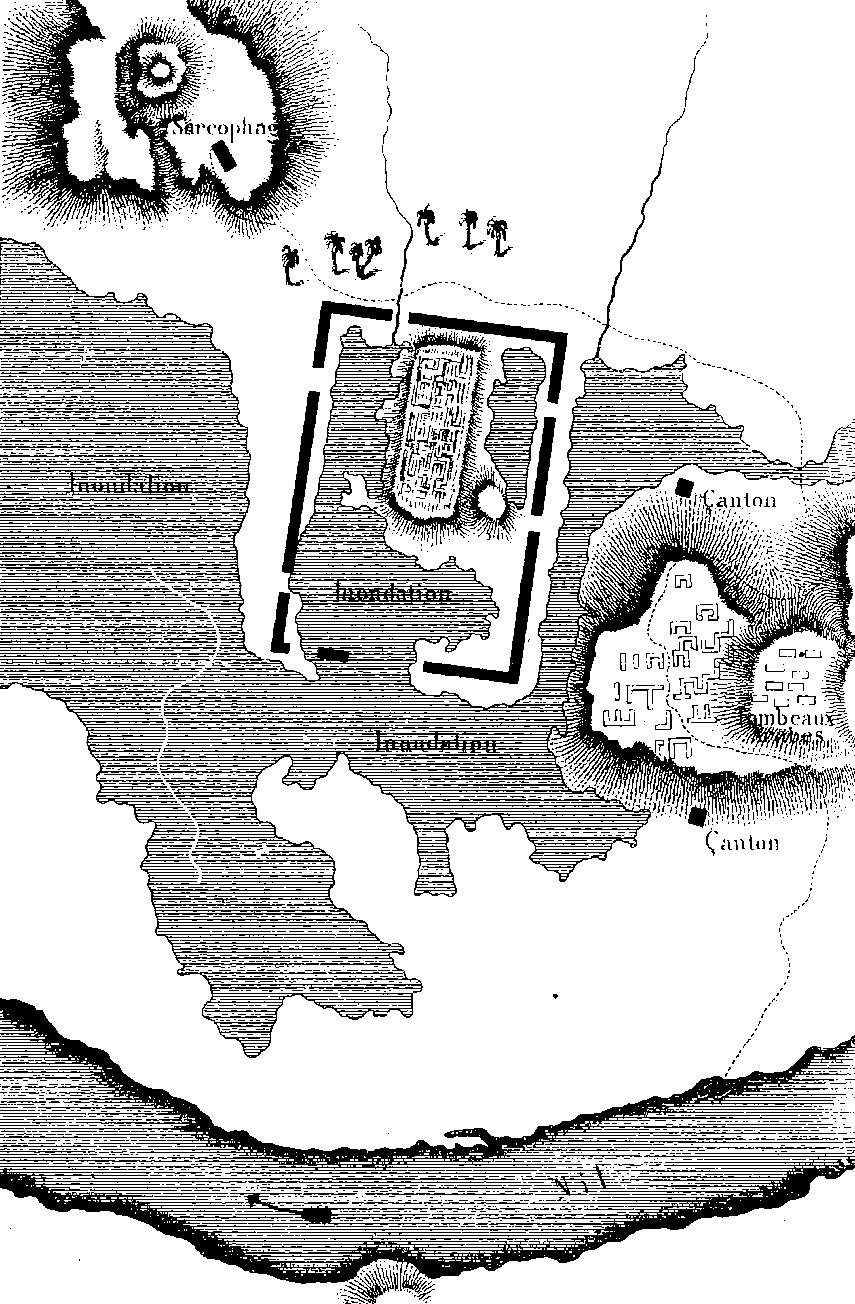
Regarding Sais itself, Critias mentions the temple of Neith at the city. This temple really existed, showing that the specific setting of the story is historical.
The timing of the visit is also historical. Critias mentions that Solon was not able to devote himself to the pursuit of poetry when he returned to Greece ‘by reason of the factions and troubles which he found stirring in his own country when he came home.’ This is exactly what happened. When Solon returned, he immediately came into opposition with the tyrant Pisistratus.
That Solon, while primarily a statesman, did write some poetry is also known to be a historical fact. Although hardly any of it survives, the fact that one surviving line concerns the Canopic branch of the Nile (as mentioned above) supports Critias’ statement that Solon began writing poetry based on his visit to Egypt.
What This Means for the Atlantis Story
As we can see, the background to the story of Atlantis is clearly rooted in reality. It is transparently true that even if this dialogue is entirely fictional, and no such conversation between Critias and Socrates ever took place, Plato created the dialogue based on historical facts.
Since Solon really did visit Sais, it is evident that at least part of Critias’ account in this fictional conversation is historically accurate. Of course, it is possible that Plato merely took these known facts and used them as a basis to introduce a completely fictional allegory. That is possible, of course. But is there any active reason to conclude this?
If the story of Atlantis was intended by Plato to be understood as an allegory by his readers, then why go to such lengths to create such an extensively detailed and also factual, historical background for it? There would be no need to connect it to Solon’s historical visit to Egypt and go into such detail about how the story came to Critias. This would only make sense if he was intentionally trying to deceive his readers, but this would not really fit the genre of his dialogues.
Did Plato Really Have to Invent an Allegory?
There is another flaw in the logic commonly used to argue that Plato’s account of Atlantis is merely an allegory. While it is clear that the story serves a definite purpose in the dialogue, this really has no bearing at all on whether or not Plato made the story up.
After all, there is no issue whatsoever with the idea that Plato could have used a story that already existed to make the pertinent point in his dialogue. With the hundreds of myths and legends in Greek mythology, it would be the easiest thing in the world to think of at least one which demonstrates essentially any basic moral or philosophical concept.
In the case of the Timaeus, the concept in question is not a complicated one. Socrates simply wants to hear about his ideal state in action. His ideal state, for that matter, is not particularly complex. In response, Critias tells the brief story of Atlantis being beaten by the city of Athens, which fits the profile of Socrates’ ideal state.
The role of the legend of Atlantis in this dialogue is really a very simple one. There is no reason at all why it would have to have been invented, as if it were something incredibly specific.
Authentic Myth or Allegory?
Rather than simply working from these hypotheticals, consider a few demonstrable facts. Crucially, Plato does use real, pre-existing myths in many of his dialogues. True, some of his dialogues contain allegories which seem to have been completely invented by Plato. However, many of them do not.
Furthermore, the invented allegories are usually clearly marked as such. For instance, a comparison which is often made by those who argue that Atlantis was just an allegory is that looking for Atlantis is like looking for Plato’s Cave. This is the famous allegory about people in a cave who see the shadows of objects cast on the wall of the cave and are unaware that they are merely representatives of the true reality.
Needless to say, searching for the true location of this cave is pointless, since it is just an allegory. According to many, the same applies to Atlantis. Yet, there is a very obvious issue with this comparison. Plato’s account of the cave, which is found in The Republic, is explicitly described as an allegory. Plato, through his mouthpiece Socrates in the dialogue, directly calls it that.
In complete contrast, Plato, through Critias, explicitly says that the story of Atlantis is ‘certainly true’ (note that Socrates does not act as Plato’s mouthpiece in Timaeus and Critias – rather, that role is occupied by the titular speakers).
There can be no confusion about this. Plato does not present Atlantis as an allegory. He presents it as a real account. We see that both from the statement about it being ‘certainly true’ and the historical heritage he gives it by connecting it to the historical facts about Solon. Of course, Plato could just be trying to deceive his readers, but there is no active evidence of this.
Authentic Myths in the Dialogues
As already mentioned, the logic in favour of Atlantis being an allegory also ignores the fact that Plato uses various pre-existing myths in his dialogues. There are plentiful examples of this.
For instance, consider Plato’s Menexenus, in which Socrates gives a lengthy funeral speech. During this dialogue, various authentic myths from Greek mythology are mentioned. Socrates mentions wars involving the descendants of Cadmus, the descendants of Heracles, the Amazons, and others. He even mentions the Greco-Persian wars, which go beyond authentic myth right into the realm of authentic history.
Another example is Plato’s famous dialogue called Laws. Throughout this dialogue, numerous mythological figures are mentioned, such as the gods Zeus and Apollo, as well as the legendary king of Crete named Minos.
What these examples demonstrate is that the mere fact that Plato was writing fictional conversations and was writing for a philosophical purpose rather than a historical one does not mean that he necessarily invented the tales contained in the dialogues.
Authentic Myths in Timaeus
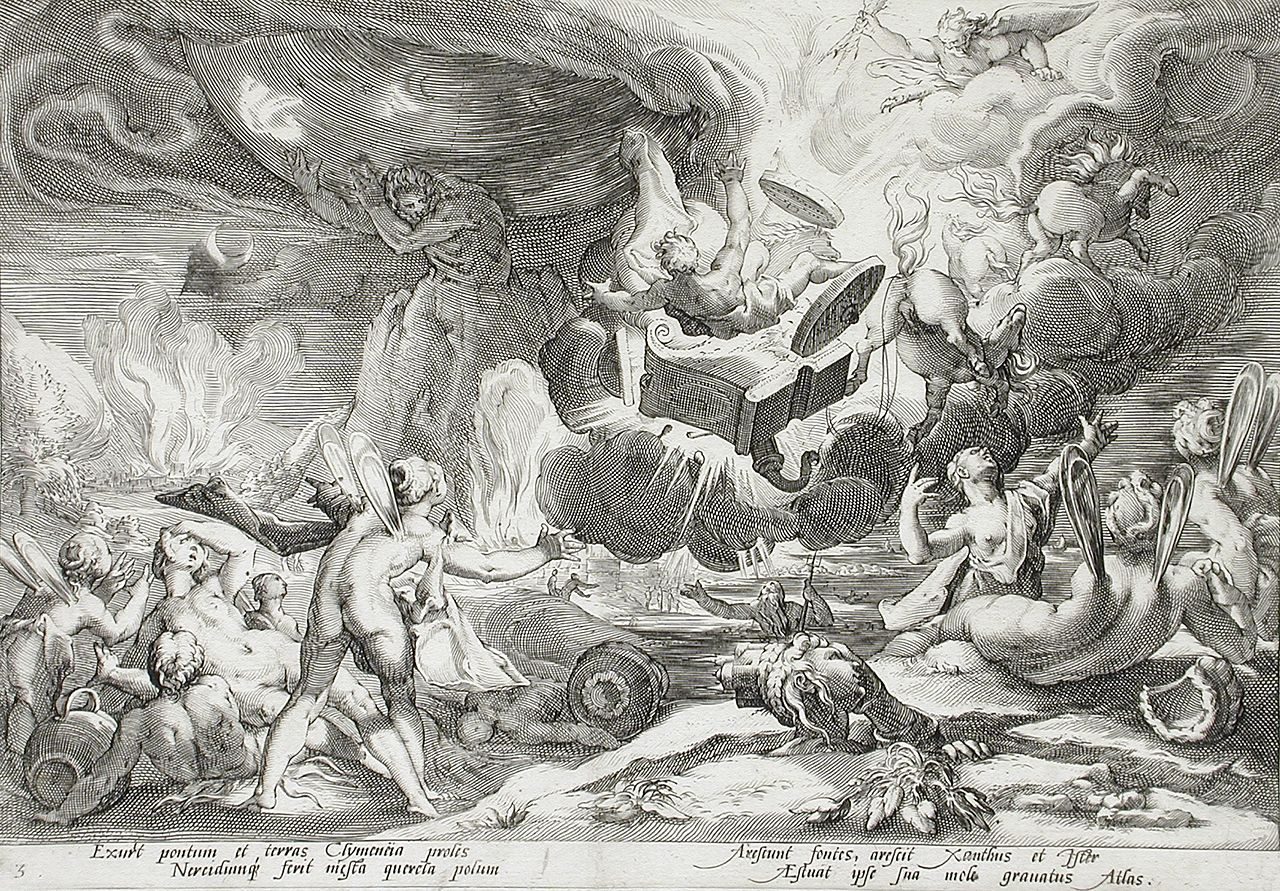
Several notable examples are actually seen in Timaeus itself. In the account of Solon speaking to the Egyptian priests, Plato (through the character Critias relating Solon’s words) refers to the Greek myths of Phoroneus, Niobe, and the Flood of Deucalion.
The Egyptian priest responds to Solon by mentioning another Greek myth, the story of Phaethon son of Helios burning up the surface of the earth. This story serves a very important narrative purpose, just like the story of Atlantis itself. The Egyptian priest explains that this myth is actually about a ‘declination of the bodies moving in the heavens around the earth, and a great conflagration of things upon the earth.’
As the priest explains, this great destruction and others like it caused the Greeks to lose all memory of their most ancient past. On the other hand, the Egyptians have not been destroyed by these disasters, which means that they have preserved far more ancient traditions than those that the Greeks are aware of.
This is the explanation for how the Egyptians are aware of the story of Atlantis while the Greeks are not. As we can see, this brief recounting of the myth of Phaethon serves a vital narrative purpose. Just as the story of Atlantis exists in the dialogue to provide an example of the ideal state in action, the story of Phaethon exists in the dialogue to provide an explanation of how the Atlantis story exists in the context in which it supposedly does.
If the Atlantis story serving a narrative purpose proves that Plato simply made it up as an allegory, then the same should apply to the Phaethon story. Yet, we know categorically that Plato did not make this up, since it is mentioned by several Greek writers from before Plato’s time.
The Usage of the Atlantis Story in the Dialogue
Furthermore, the actual usage of the story of Atlantis makes it clear that it was not meant to be understood as an allegory. Certainly, the characters in the dialogue do not take it for an allegory, which flies in the face of Plato’s use of allegories elsewhere.
As we have seen, Critias directly calls it ‘certainly true’. Later on, after Critias has finished telling the story of Atlantis, he asks something very interesting to Socrates:
“Consider then, Socrates, if this narrative is suited to the purpose, or whether we should seek for some other instead.”
In response, Socrates affirms that it fits the purpose excellently. He even comments that this story has the ‘very great advantage of being a fact, and not a fiction’. So again, we see that the story is presented in the dialogue as being true, not an allegory. Socrates’ statement here specifically requires it to be a genuine account. If it were not, then it would not have the advantage that Socrates just mentioned.
Furthermore, the very question that Critias asked Socrates emphasises this even more. If it were just a story, an allegory, then Critias would have asked ‘whether we should adjust it instead’. But he does not say that. Rather, he asks ‘whether we should seek for some other [narrative] instead’. An allegory can easily be adjusted or modified, but a historical account is what it is. This, again, shows that Critias’ story of Atlantis is taken as a genuine account, not a fictional tale or allegory.
The Imperfect Fit
Another point worth noting is that Critias’ account does not actually perfectly fit what Socrates asked. What Socrates asks for is this:
“I should like to hear someone tell of our own city carrying on a struggle against her neighbours, and how she went out to war in a becoming manner, and when at war showed by the greatness of her actions and the magnanimity of her words in dealing with other cities a result worthy of her training and education.”
Notice that Socrates asks for the account to include information about his city’s ‘magnanimity of words in dealing with other cities’. Yet, Critias’ story of Atlantis does not include anything like that. It only matches the overall point of what Socrates wanted, without actually fitting everything he asked for.
If Plato had created the Atlantis story himself as an allegory for this dialogue, there is no reason at all why it should not have been a perfect fit for what Socrates requested.
The Purpose of the Story
This issue brings us to another important point. The entire point of Critias telling the Atlantis story is because Socrates wants to hear about his ideal state in action. As we have just seen, Critias’ story of Atlantis satisfies Socrates. Yet, the account of Atlantis and its war against Athens told by Critias is very simple and brief.
This tells us something very interesting. It tells us what Socrates meant when he said that he wanted to hear about his ideal state (Socrates’ own city, Athens, being the ideal state) in action. The fact that he was satisfied with Critias’ brief account shows that it is not the case that Socrates wanted to hear a wonderful story with flowery language eloquently put across. In literary terms, Critias’ account of Atlantis is nothing special or interesting. Nor does he go into any detail whatsoever about how Athens’ victory was accomplished.
Evidently, then, it was not the story of his ideal state being victorious that Socrates was interested in, but simply the record of the fact that such an impressive accomplishment took place. If a fictional story would suffice, anyone could create something as basic and brief as the story told by Critias. Socrates could come up with that in his own head in seconds, as could anyone.
Clearly then, what satisfied Socrates was hearing an actual account of Athens achieving a great victory (regardless of the eloquence, or lack thereof, with which the story was told).
Of course, the entire Timaeus is very likely a fictional conversation like many other of Plato’s dialogues. Yet, the dialogues need to make rational sense for them to be effective as teaching devices. If Atlantis was actually a fictional account, this would contradict the entire purpose for its existence within the dialogue.
Evidence That Plato’s Account Must Be Genuine
There is also internal evidence within Critias’ account that the information supposedly conveyed by the Egyptian priest is genuine, and was not invented by Plato. As mentioned earlier, the Egyptian priest explains to Solon that the Greeks lost all record of their most ancient past due to the disasters that struck their land.
In this context, the Egyptian priest specifically mentions that the Greeks lost the ability to write at that time. He refers to the fact that the survivors of the disasters which struck Greece were ‘destitute of letters and education’ and that the Greeks thereafter had to ‘begin all over again’.
How This Matches the Historical Facts
This sounds very much like the historical Bronze Age Collapse. The Mycenaean Greeks were thriving, but then a series of severe issues began to afflict their civilisation after c. 1200 BCE. There is still debate regarding the exact causes, but most scholars today agree that environmental factors were involved.
It is likely that flooding, droughts, and other environmental problems contributed significantly to the downfall of the Mycenaean Greek civilisation. There is even some dendrochronological evidence that debris from a comet or meteor may have been involved (which may well be connected to the myth of Phaethon).
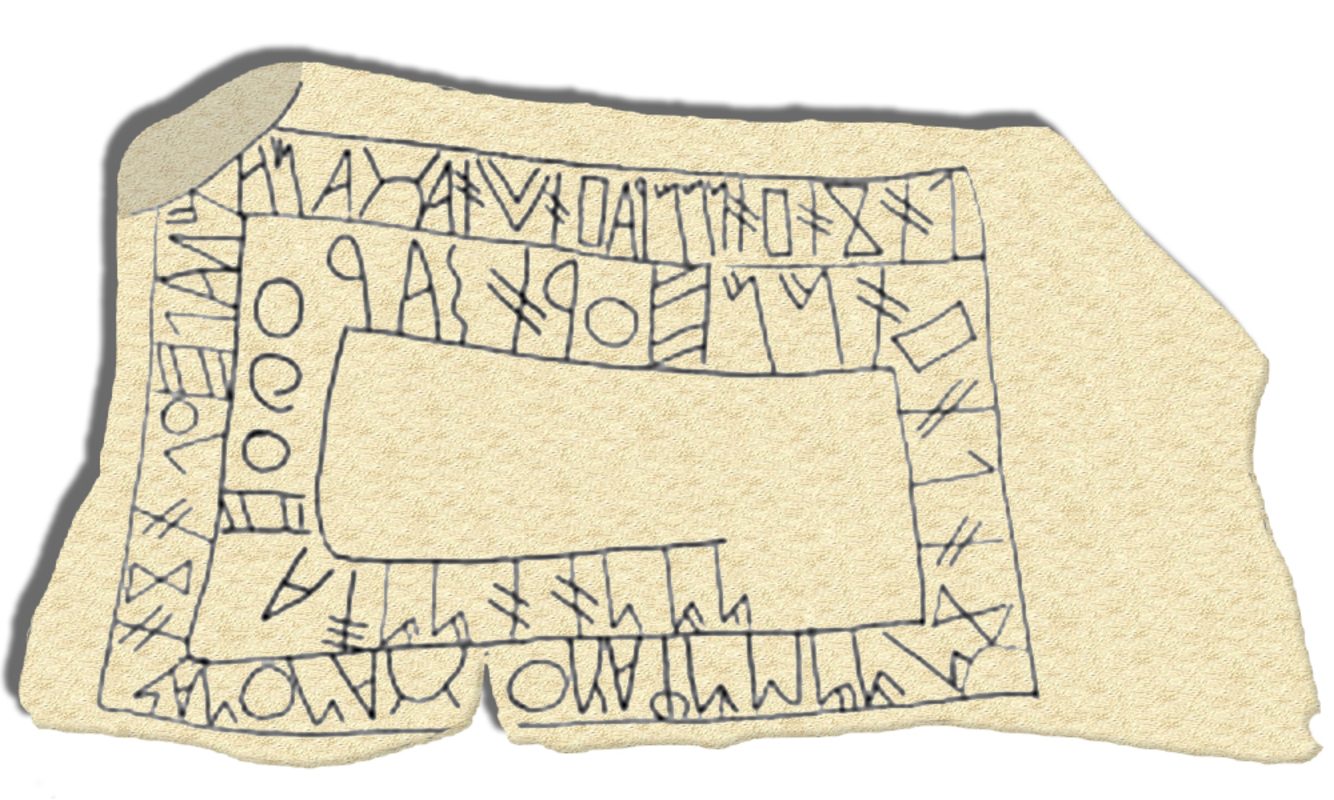
During the Mycenaean Era, the Greeks were literate. They used the script known as Linear B. But during the Bronze Age Collapse in the 12th century BCE, this script fell out of use and they became illiterate. It was only later, it the ninth century BCE, when the Greeks became literate again after they adopted the Phoenician alphabet.
How Did Plato Know?
Therefore, we can see that the Egyptian priest’s account of the Greeks suffering disasters and falling into illiteracy for a while, before finally learning to write again, is confirmed by the historical facts. This is immensely significant.
If Plato simply created this account himself, how could he have known these historical facts? Was this common knowledge among the Greeks? Were there other records of this that Plato could have got this information from?
The Egyptian priest himself affirms that the Greeks were unaware of this most ancient history of theirs. This does, indeed, seem to be the case. Prior to Plato, there does not appear to be any record of the Greeks having used a written language prior to their adoption of the Phoenician alphabet.
Take, for example, Herodotus’ account of the adoption of that form of writing. He explains that it was the Phoenician prince Cadmus who brought it to Greece. His account tells us:
“These Phoenicians who came with Cadmus and of whom the Gephyraeans were a part brought with them to Hellas, among many other kinds of learning, the alphabet, which had been unknown before this, I think, to the Greeks.”
According to Herodotus, the Greeks had not known any kind of writing prior to this. It seems that it is only in records from after Plato’s time that we find the claim in other Greek works that there was a previous script which was lost (we see this, for example, in Diodorus Siculus, who was well aware of Plato’s account of Atlantis).
Given the lack of evidence for this tradition among the Greeks prior to Plato, this strongly suggests that the account of the Egyptian priest telling Solon about their past is genuine (regardless of whether the conversation between Critias and Socrates really occurred or not).
Conclusion
In summary, we can see that the positive claim that Atlantis was definitely an allegory by Plato has a very weak premise. It is founded on the fact that Plato’s dialogues are, with some exceptions, essentially just fictional conversations used by him to present philosophical ideas. Given this fundamental premise and the fact that he uses allegories in other dialogues, some researchers argue that it is clearly evident that Atlantis is just another allegory, an excuse to demonstrate Athens acting as the ideal state and defeating a powerful enemy.
In reality, Plato’s dialogues demonstrate that he was perfectly capable of using pre-existing tales to advance the ideas in his dialogues. For example, the myth of Phaethon, which is also in Timaeus and serves an important narrative purpose, predates Plato. There is thus no basis for the claim that Plato would have had to have invented the story of Atlantis simply because it serves a narrative purpose in the dialogue. Furthermore, he clearly places it in the firm historical context of Solon’s visit to Sais. Plato goes to great lengths to convince the reader that Atlantis was a historical account. In fact, we have seen that the entire purpose of the tale relies on it not being a mere allegory. Furthermore, the information supposedly provided by the Egyptian priest contains a clear reference to the Bronze Age Collapse and the loss of Greek literacy, which is not found anywhere else in Greek tradition independent of Plato.
Therefore, although the conversations found in Timaeus and Critias may well be completely fictional, the information they contain about Solon’s trip to Egypt (and likely the claim of the tale passing on to Critias’ family) is almost certainly historical. Atlantis was therefore not an allegory, but was a genuine legend.
Sources
Moore, Kenneth Royce, Plato, Politics and a Practical Utopia: Social Constructivism and Civic Planning in the ‘Laws’, 2011
Pappas, Nickolas and Zelcer, Mark, Politics and Philosophy in Plato’s Menexenus, 2015
Hall, Jonathan M., A History of the Archaic Greek World: Ca. 1200-479 BCE, 2007
https://classics.mit.edu/Plato/laws.1.i.html
https://classics.mit.edu/Plato/timaeus.html
https://classics.mit.edu/Plato/critias.html
https://www.gutenberg.org/files/1682/1682-h/1682-h.htm
https://donaldrobertson.name/2018/04/29/was-socrates-a-real-person-and-other-questions/