Was the Real Atlantis in Morocco?

Numerous researchers since at least as early as the 19th century have suggested that Atlantis can be placed in Morocco. Some have argued that it can be identified with Morocco as a whole, whereas others have sought to place it in a specific spot within that country. This is a theory which seems to have a lot of evidence in support of it. What is this evidence, and are there any good counterarguments that need to be considered?
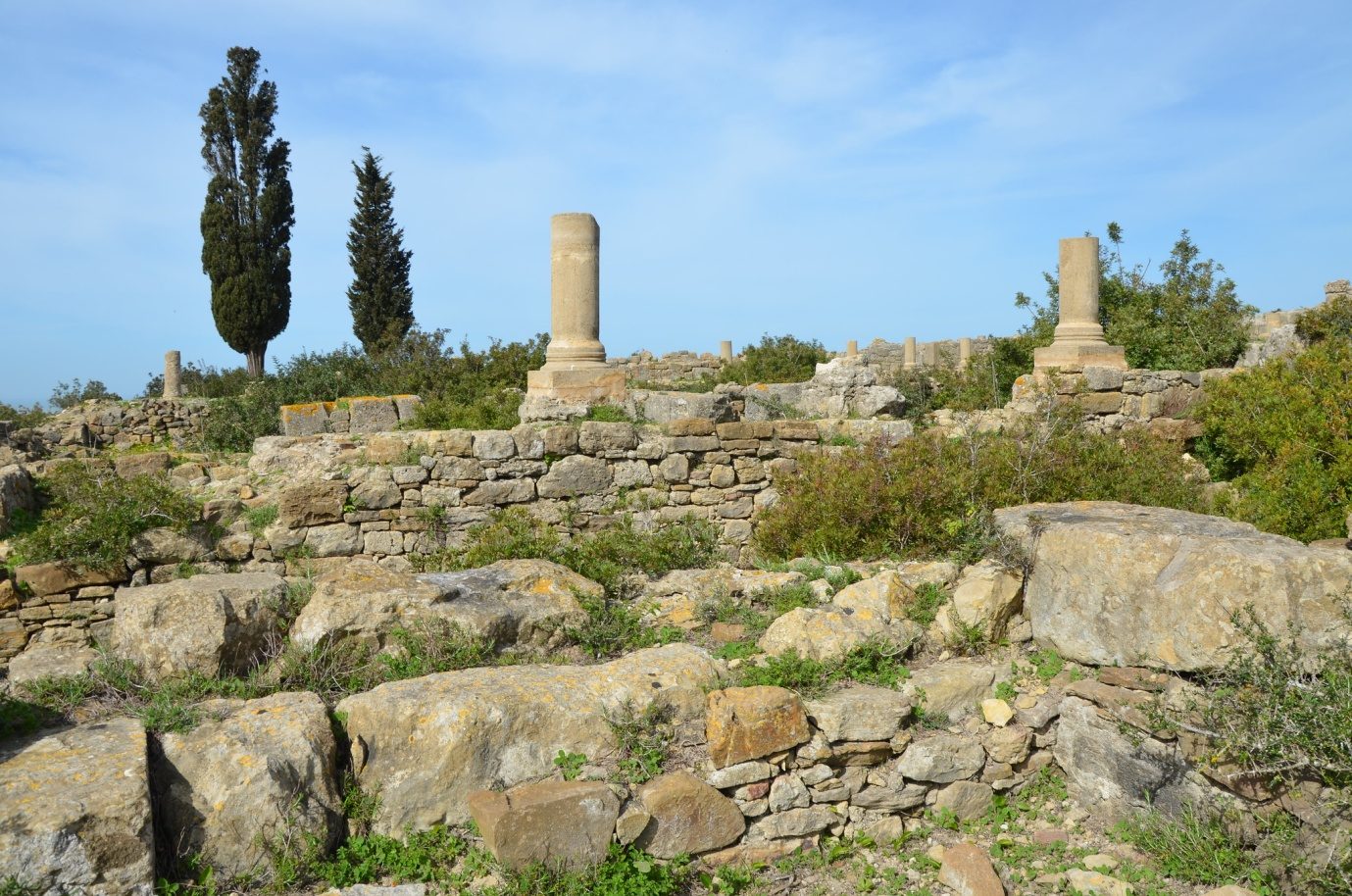
An Overview of Morocco
Firstly, let us consider where Morocco is. This is the modern country which occupies much of what was anciently the Kingdom of Mauretania (not the modern country called Mauritania, which is further south). It is located in the northwest corner of Africa. It is the only country in Africa which has both an Atlantic and a Mediterranean coast.
The Atlas Mountains cover much of the border region of the country, effectively separating it from the rest of Africa. They stretch from the northeast to the southwest of Morocco. This association with the Atlas Mountains has done much to encourage the connection with Atlantis.
Arguments That the Real Atlantis Was in Morocco
Various authors have written books, articles and papers arguing for Atlantis being in Morocco. Due to this, there are many variations to this basic theory, many of which are mutually contradictory. However, most of them share at least some common traits.
Geographical Arguments
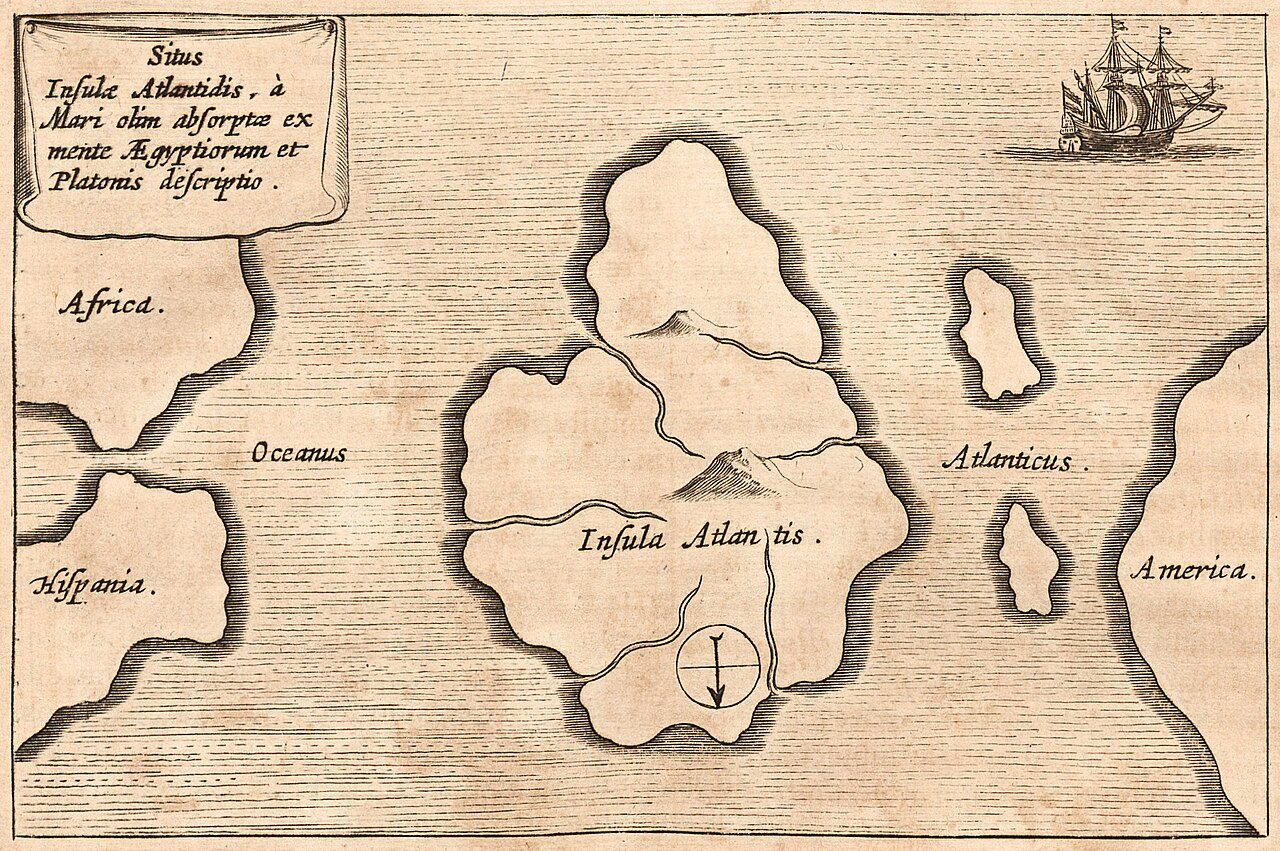
One common claim regarding why Atlantis must be placed in Morocco is that this location is the clearest fit with the geographical information provided by Plato in his two dialogues, Timaeus and Critias.
Of all the geographical markers that Plato provides, two stand out as particularly noteworthy to most researchers (including respected scholars). One is that Plato places Atlantis ‘in front of the Pillars of Heracles’, and the other is that he places it in the ‘Atlantic Sea’.
Pillars of Heracles
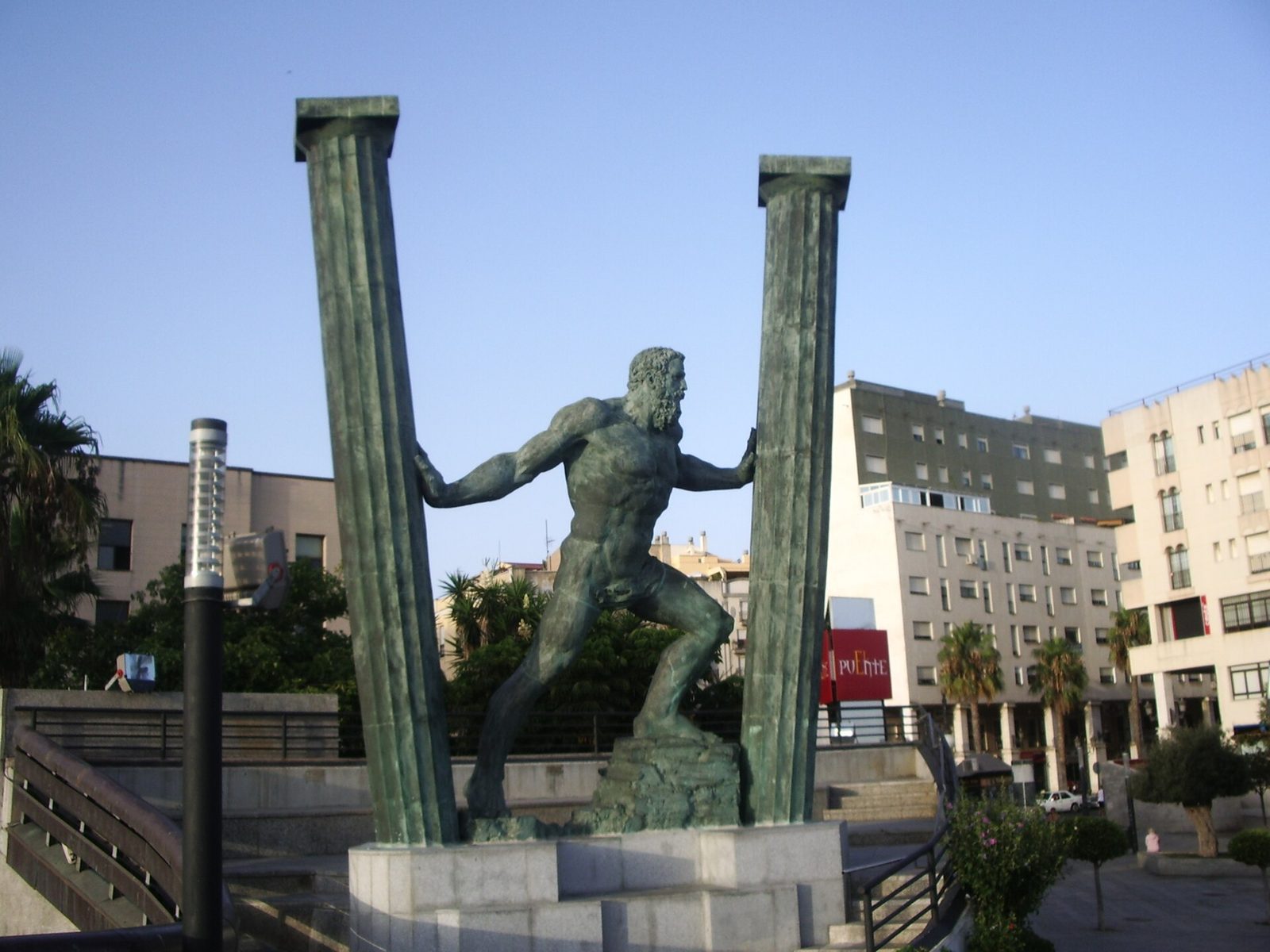
The reference to Atlantis being ‘in front of the Pillars of Heracles’ is almost always understood to mean that it was beyond, or outside, those pillars. The expression ‘Pillars of Heracles’ was used by the Greeks to denote limits, both geographical and metaphorical. This expression was applied to a variety of locations in the ancient world.
However, by far the most common location designated by this term was the Strait of Gibraltar. Some ancient writers believed that they were two literal pillars which were set up by Heracles in southern Spain. The most traditional view, though, which persists until today, is that the pillars were two mountains either side of this strait.
Not all of Morocco is past the Strait of Gibraltar, so this would obviously argue against Morocco as a whole being Atlantis. However, the western part of the country is indeed past that strait. Therefore, this part of it could be described as being beyond, or ‘in front of’, the Pillars of Heracles.
Atlantic Ocean
Another key part of Plato’s description of Atlantis is the fact that he describes this nation as being a power which ‘came forth out of the Atlantic Sea’. Most translations render the word ‘sea’ as ‘ocean’, based on the assumption that Plato’s ‘Atlantic Sea’ is the Atlantic Ocean.
The Atlantic Ocean does indeed seem to be the only body of water to have been known as the ‘Atlantic Sea’ by the ancient Greeks, so this is a reasonable conclusion. The fact that Morocco has a coast on the Atlantic Ocean would fit the description of the Atlanteans ‘coming forth from the Atlantic Sea’.
If Atlantis was a settlement or civilisation near the western coast of Morocco, then it is not unreasonable to think that its people may have travelled into the Mediterranean by means of sailing in the Atlantic Ocean and going through the Strait of Gibraltar, rather than travelling over land to the Mediterranean coast.
Description of the Rule of Atlantis Within the Mediterranean
Plato describes the area that Atlantis managed to conquer. This description has been used to argue for a location in Morocco. Notice the following description from the Timaeus:
“The men of Atlantis had subjected the parts of Libya within the Pillars of Heracles as far as Egypt, and of Europe as far as Tyrrhenia.”
According to the standard interpretation of this line, which places the Pillars of Heracles at the Strait of Gibraltar, this would have to mean that the men of Atlantis had conquered the entire Western Mediterranean, getting as far as northern Italy on the European coast and as far as the border of Egypt on the southern coast.
This is interpreted as meaning that all of this territory that Atlantis conquered was to the east of Atlantis itself. Hence, Atlantis would have to be outside the Mediterranean, which fits Morocco.
Elephants
Much has been made of the fact that Plato mentions that there were elephants on Atlantis. The distribution of elephants in the ancient world was much greater than it is now, but it was still limited. To the west of Egypt, Libya was supposedly the only place which had elephants.
Based on this, proponents of this theory argue that Atlantis must have been in Libya. But in harmony with the aforementioned pieces of evidence, it must be placed in the very far west, past the Strait of Gibraltar. This takes us to Morocco.
Nesos of Atlantis
What about the fact that Plato described Atlantis as an island, whereas Morocco is not an island? More than one explanation has been offered for this, depending on the specific theory and researcher.
However, one argument is that the Greek word ‘nesos’, meaning ‘island’, does not necessarily mean that it was entirely surrounded by water. Instead, it could mean that it was an isolated area, cut off from the surrounding territory by means other than just water.
In the case of Morocco, it is bordered by the Atlantic Sea on one side and the Mediterranean Sea on the other. The Atlas Mountains and the Sahara Desert to the south and to the east essentially cut it off from the rest of Africa. Due to this, there is the argument that it is an ‘island’ in the sense that it is cut off from everything else around it.
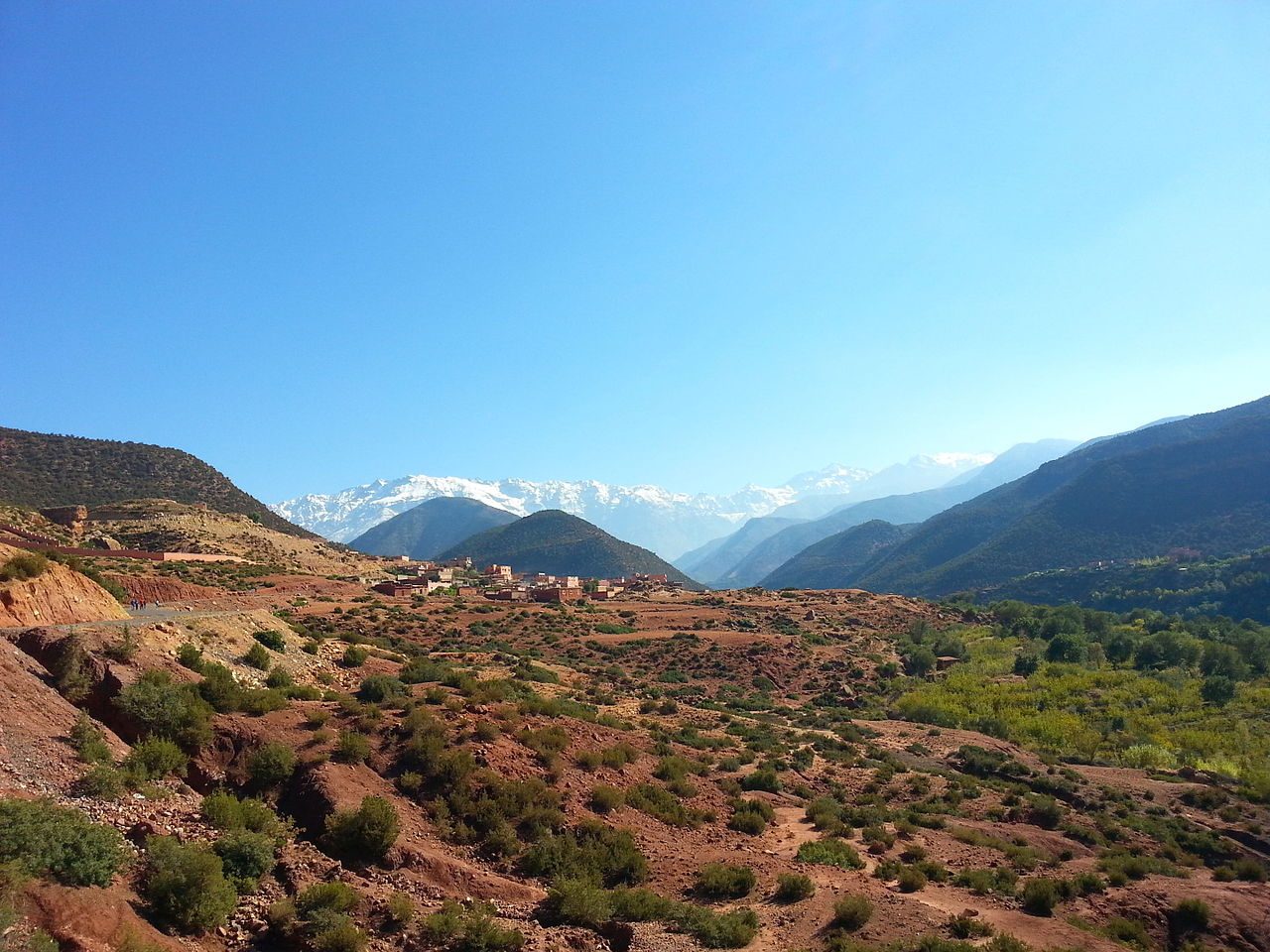
Another version of this theory, which identifies Atlantis with the Souss-Massa plain, identifies the ‘island’ with this plain itself. It is bordered on the west by the Atlantic Sea, the north by the High Atlas mountain range, and across the southeast by the Anti-Atlas range.
Near Gadeira
Plato provides us with a description which seems very useful in assessing where Atlantis was. He wrote:
“To his twin brother, who was born after him, and obtained as his lot the extremity of the island towards the Pillars of Heracles, facing the country which is now called the region of Gaderia in that part of the world, he gave the name which in the Hellenic language is Eumelus, in the language of the country which is named after him, Gadeirus.”
According to this, the part of Atlantis which was closest to the Pillars of Heracles faced the region called Gadeira (also called Gades, modern Cadiz in Spain). This part of Atlantis was, itself, also known as Gadeira.
Since the Pillars of Heracles is interpreted by this theory as being at the Strait of Gibraltar, the Gadeira in question really can only be Cadiz, the place called Gadeira by the ancient Greeks. Significantly, in the northern part of the Souss-Massa plain, in the direction of Cadiz, there is an ancient settlement called Agadir. The name is clearly looks similar to ‘Gadeira’, and it is thought that it may actually come from the same original word.
Other Details
A huge variety of other details have been presented in support of this theory, principally by Michael Hübner. Numerous pieces of evidence are extremely minor and generic, or are incredibly strained connections. However, here we will consider some of the more convincing connections presented in support of the theory.
Continent Sized
Famously, Plato referred to Atlantis as ‘greater than Libya and Asia put together’. This is usually interpreted to mean ‘greater’ in the sense of size. To the ancient Greeks in the time of Solon, it appears that ‘Asia’ just meant Asia Minor. Libya, meanwhile, meant North Africa, sometimes excluding Egypt but sometimes including it.
In any case, it is clear that Atlantis was described as being continent sized according to the standard interpretation of ‘greater’ in this line. At least one version of this Morocco theory, the one presented by Michael Hübner, rejects this on the basis that it would not be possible for a continent sized landmass to sink into the sea in one day and night, as Plato described.
Therefore, the theory proposes that the island of Atlantis was actually one small part of a greater continent, and that there has been some slight confusion in the account. Morocco, or part thereof, could arguably be described as an ‘island’ within a greater continent, Africa.
Plain with Mountains to the North
In the Critias, Plato described the presence of a large plain on Atlantis. He explained that the plain was:
“surrounded by mountains which descended towards the sea… This part of the island looked towards the south, and was sheltered from the north. The surrounding mountains were celebrated for their number and size and beauty.”
Based on this, the plain of Atlantis should be immediately south of some very high mountains. This fits the Souss-Massa plain, which is sheltered to the north by the High Atlas Mountains, which are, needless to say, very high mountains. This plain also has access to the sea, which is another requisite from Plato’s description.
Red, White and Black Bedrock
Plato describes the construction work that went on in Atlantis, referring to the fact that the people there quarried stone of three different colours. Some stones were red, others were white, and still others were black.
At the Souss-Massa plain, there are quarries where one can find red stones, white stones, and black stones.
Metallurgy
According to Plato’s account, the Atlanteans made extensive use of metal. He mentions gold, silver, tin, brass, and iron. All of these metals are present in Morocco, which has rich ore deposits.
The Name of Atlantis
The name of Atlantis is something which has an obvious match at Morocco. Because of the presence of the Atlas Mountains, the word ‘Atlas’ was likely applied to other things in the area. For example, Herodotus documents a tribe who lived near the Atlas Mountains whom he calls the Atlantes (meaning ‘people of Atlas’).
The name ‘Atlantis’ simply means ‘Island of Atlas’. Therefore, if there was a location here which was viewed as an island, then it could very plausibly have been referred to as ‘Atlantis’.
Garden of the Hesperides
In Greek mythology independent of Plato’s account, there is the famous legend of the Garden of the Hesperides. This was said to have been located to the far west. The Hesperides themselves were the daughters of Atlas the Titan.
Given that Atlantis was also said to have been inhabited by the children of Atlas, this indicates that the Garden of the Hesperides may have been in Atlantis. Furthermore, there was said to have been a special tree, or a whole grove according to some versions, which produced golden apples.
With this in mind, it is notable that Morocco has the argan fruit, which has an appearance broadly similar to an apple and with a somewhat gold colouring.
Objections to This Theory
Proponents of this theory claim (like virtually all do) that it is the only place which matches Plato’s account so closely. However, a closer examination of the evidence reveals that this supposed connection is simply not very strong at all.
The Evasive Pillars of Heracles
It is true that the Pillars of Heracles were most commonly applied to the Strait of Gibraltar. However, it is also a fact that this expression was applied to various other locations as well. There is clear evidence that it was used to denote the limits of the four cardinal directions, either in terms of Greek territory or Greek activity.
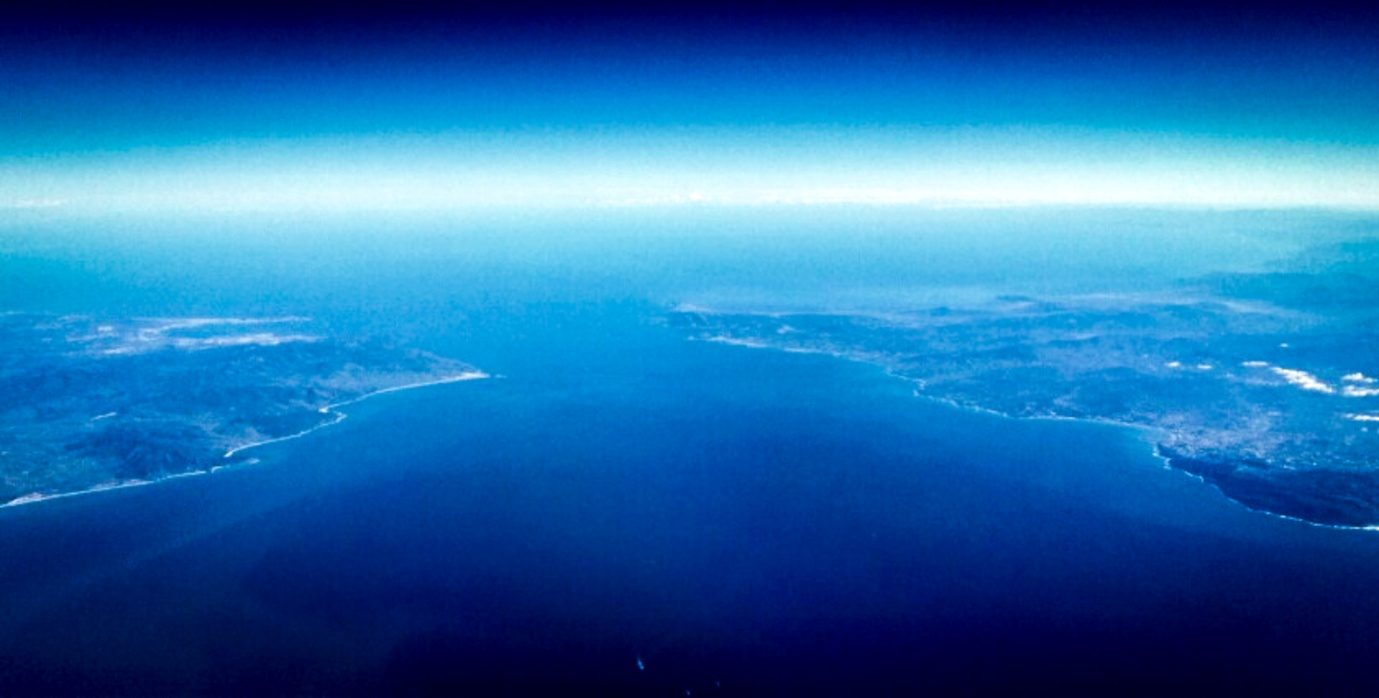
Therefore, there are a large variety of places around the Mediterranean that could be described as the Pillars of Heracles. This strongly weakens the argument for Atlantis being beyond the Strait of Gibraltar.
The Sea of Atlas
Much the same could be said regarding the Atlantic Sea. This expression simply means the ‘Sea of Atlas’. It is true that this term only appears in surviving Greek records concerning the Atlantic Ocean. However, the reason why the Atlantic Ocean received that name is because of the placement of Atlas the Titan in Northwest Africa.
However, there is clear evidence that Atlas was originally conceived as being in the sea immediately to the west of Greece. In fact, there are other records which place him in a variety of different places, including in the Aegean. The fact of the matter is that all manner of locations could have originally been known as the ‘Sea of Atlas’.
It just so happens that the first recorded use of the expression ‘Atlantic Sea’ comes from after the location of Atlas had already been standardised, so we do not see it being used concerning anywhere else. Nonetheless, the original ‘Atlantic Sea’ is far from certain.
Within the Pillars of Heracles as Far as Egypt and Tyrrhenia
Despite these uncertainties, Plato’s description of Atlantis’ domain supposedly proves that the traditional identifications of those two geographical markers are correct. However, this argument is flawed as well.
The idea that Atlantis conquering ‘Libya within the Pillars of Heracles and Europe as far as Tyrrhenia’ requires it to have come from outside the Mediterranean Sea is based on some key assumptions that Plato simply does not say.
One assumption is that this conquest occurred in only one direction. There is no guarantee of this. Atlantis might have headed in one direction while conquering Libya as far as Egypt and gone in another direction while conquering Europe. Atlantis itself could have been situated somewhere between Egypt and Tyrrhenia.
Therefore, despite what this theory claims, there is nothing in Plato’s text that requires Atlantis to have originated from the west of Tyrrhenia.
Atlantis Impeding Sea-Travel from Egypt or Greece
One notable detail in Plato’s account that this theory ignores is that the subsidence of Atlantis is said to have caused a shoal of mud. Describing this situation, the character of Critias in Plato’s dialogue, referring to the account of the Egyptian priest, explained that Atlantis:
“became an impassable barrier of mud to voyagers sailing from here to any part of the sea.”
It is unclear if Critias is using his own words here, or if he is quoting the Egyptian priest. This would impact whether ‘here’ meant Egypt or Greece. In either case, for Atlantis to have become an impassable barrier of mud to those sailing from Egypt or Greece to ‘any part of the sea’, this requires Atlantis to have been in the vicinity of one or both of those locations.
If Atlantis was outside of the Mediterranean, this would simply be impossible. Therefore, Atlantis must have been within the Mediterranean, somewhere in the vicinity of either Greece or Egypt.
The Issue with the Plain and the Island
A further issue arises when we consider the argument that Morocco, or part thereof, could be described as an ‘island’. According to Michael Hübner, this ‘island’ is the Souss-Massa plain. The problem is that this theory also identifies the plain of Atlantis, which was surrounded by mountains, with the Souss-Massa plain.
Obviously, this is not compatible with Plato’s explanation. Atlantis could not be described as having a plain in the centre if the island of Atlantis itself was the plain.
Alternatively, if we subscribe to the idea that Morocco as a whole was the ‘island’ of Atlantis, then the Souss-Massa plain cannot be identified as the plain in the centre of the island, since it is much too far to the south.
As well as not being in the right position, the Souss-Massa plain also does not fit the rectangular shape described by Plato.
The Issue with Gadeira and Agadir
This leads directly to another issue. While it is true that the names of Gadeira and Agadir appear to be related, this does not fit what Plato described. He said that the part of Atlantis which had this name was in the extremity of the island nearest the Pillars of Heracles.
While Agadir could arguably fit that description if we consider the Souss-Massa plain to be Atlantis, we have just seen why this cannot have been the case. Atlantis was substantially more than just its own plain, per Plato’s description.
Yet, if we associate Atlantis with Morocco as a whole, as it would have to be, then Agadir is nowhere near the Strait of Gibraltar. In fact, it is nearer the other end of Morocco.
Greater Than Libya and Asia Put Together
To get around the fact that Atlantis is apparently described as continent sized, this theory proposes that there was some confusion in Plato’s account, with Atlantis actually being a small part of a large continent.
While this is the kind of speculation which, by its nature, cannot really be disproven, there is a crucial issue that it does not address. The issue is that by saying that Atlantis was greater than Libya and Asia put together, this obviously means that Atlantis itself did not comprise part of either Libya or Asia.
Morocco, of course, is part of ancient Libya. Therefore, it is impossible for it to be considered greater than Libya and Asia put together.
Notably, this objection applies regardless of whether we take ‘greater’ to mean literally bigger or politically more powerful. Atlantis cannot, itself, have been part of Libya.
Atlas the Titan
A massive attraction in this theory is the fact that it identifies Atlantis in the very location where Atlas the Titan was located by the ancient Greeks in general. Since Atlas was supposed to have been the king of Atlantis, this appears highly significant at first. However, there are a number of fundamental issues with this.
Was Atlas the King the Same as Atlas the Titan?
One problem is that there is no real evidence that Atlas the king in Plato’s account was the same as the Titan of that name in standard Greek mythology. The Titan was the son of Iapetus and Asia, both divine beings. He was assigned the burden of holding up the sky.
On the other hand, Atlas the king of Atlantis was the son of Poseidon, Iapetus’ brother. Also, his mother was Cleito, a mortal woman. Furthermore, there is no hint of Atlas’ burden of holding up the sky in Plato’s account of Atlantis.
Admittedly, it could just be that the two figures are so dissimilar because they stem from a single origin which diverged into these two separate traditions many centuries before the earliest surviving records of either of them.
Where Atlas Originally Stood
Even this argument has a fatal flaw. As the Encyclopedia Britannica notes, Atlas the Titan was originally held to have been “in the sea immediately beyond the most western horizon, but later the name of Atlas was transferred to a range of mountains in northwestern Africa.”
This earlier belief existed at least as late as Homer’s Odyssey. This being the case, the name ‘Atlas’ would not have been associated with Morocco until much later than the time in which the story of Atlantis is set.
In fact, Homer wrote the Odyssey in the latter part of the seventh century BCE. Solon visited Egypt in c. 590 BCE, just a few decades later. Therefore, the name ‘Atlas’ was almost certainly still associated with the area immediately west of Greece in the time in which Solon allegedly got this story from the Egyptian priests.
The key point is that the evidence placing Atlas in Northwest Africa is simply inadmissible for this theory, because it is a very late tradition.
The Garden of the Hesperides Next to Greece
Exactly the same issue applies to the argument regarding the Garden of the Hesperides. As tempting as it may be to associate the golden apples of this garden with the argan fruit, this is not possible. The Garden of the Hesperides, like Atlas, was originally imagined to have been to the immediate west of Greece, in the same vicinity as Atlas himself.
It was only in later tradition that this garden was placed as far as the Strait of Gibraltar. Therefore, once again, this evidence does not work as an argument in favour of this theory.
The Destruction of Atlantis
Another major issue with this theory is that it ignores numerous details about the account that do not fit with Morocco. It does this in an effort to maintain the appearance that Morocco matches all the details of Plato’s account. In reality, it only matches those which are selected by the proponents of the theory, while completely failing to match those which are not included in considerations of the theory.
One significant omission is the actual destruction of Atlantis. There is no evidence for anything like this at Morocco. Michael Hübner proposes at least three suggestions for what could have led to the tradition of Atlantis disappearing beneath the sea. One suggestion is that a mega-tsunami swept across the region. Another is that an earthquake caused parts of the coastline to slip into the sea.
However, what is common between all the suggestions is that there is no evidence that any of these actually happened. They are just hypotheticals.
The Lack of a Major Civilisation
An incredibly strong objection to the Morocco theory is that there is no evidence for any major ancient civilisation there that could be the Atlantean empire described by Plato. There are some ancient and even Neolithic remains there, but there is nothing which indicates the presence of a major civilisation in that area.
In fact, it appears that the first major cities in Morocco only appeared when the Phoenicians began colonising the coastal areas, which was well into the Iron Age.
With the lack of a major civilisation, it cannot have been Atlantis. To add to this, we should note that Plato presents Atlantis as being a centre of international trade. There is absolutely no evidence for anything like this at ancient Morocco prior to the Iron Age (even after the Phoenicians began colonising it, it still could not be accurately described as a centre of international trade).
Conclusion
In conclusion, the theory that the real Atlantis was in Morocco is superficially appealing, but ultimately it cannot explain the legend. It does fit some of the details of Plato’s account, but only when certain assumptions are made. In numerous other aspects, though, it requires stretching the meaning of words (such as the word for ‘island’), or it involves mutually exclusive lines of reasoning (such as identifying the Souss-Massa plain as the island of Atlantis and also identifying it as the plain which was on part of Atlantis).
Crucially, it fails to account for the most vital parts of the tale of Atlantis, which include the fact that it was a mighty naval civilisation, the fact that it served as a centre of international trade, and the fact that it fought and lost a war against Greece. None of these key aspects of the legend are explained by the Morocco theory.
Sources
Hübner, Michael, Circumstantial Evidence for Plato’s Island Atlantis in the Souss-Massa plain in today’s South-Morocco, 2012
https://www.britannica.com/topic/Atlas-Greek-mythology
https://atlantipedia.ie/samples/bergman-jonas/
https://www.atlantis-in-morocco.com/the-souss-hypothesis/