Was the Real Atlantis in the Black Sea?

The Black Sea was a major body of water within the realm of ancient Greek geographical activity. Partially for this reason, some researchers have argued that Atlantis may be found in that vicinity. Furthermore, there is evidence that the Black Sea experienced a major flooding event in the distant past, which some have attempted to connect to the legend of the sinking of Atlantis. This article will examine these arguments and assess whether they fit the evidence.
An Overview of the Black Sea
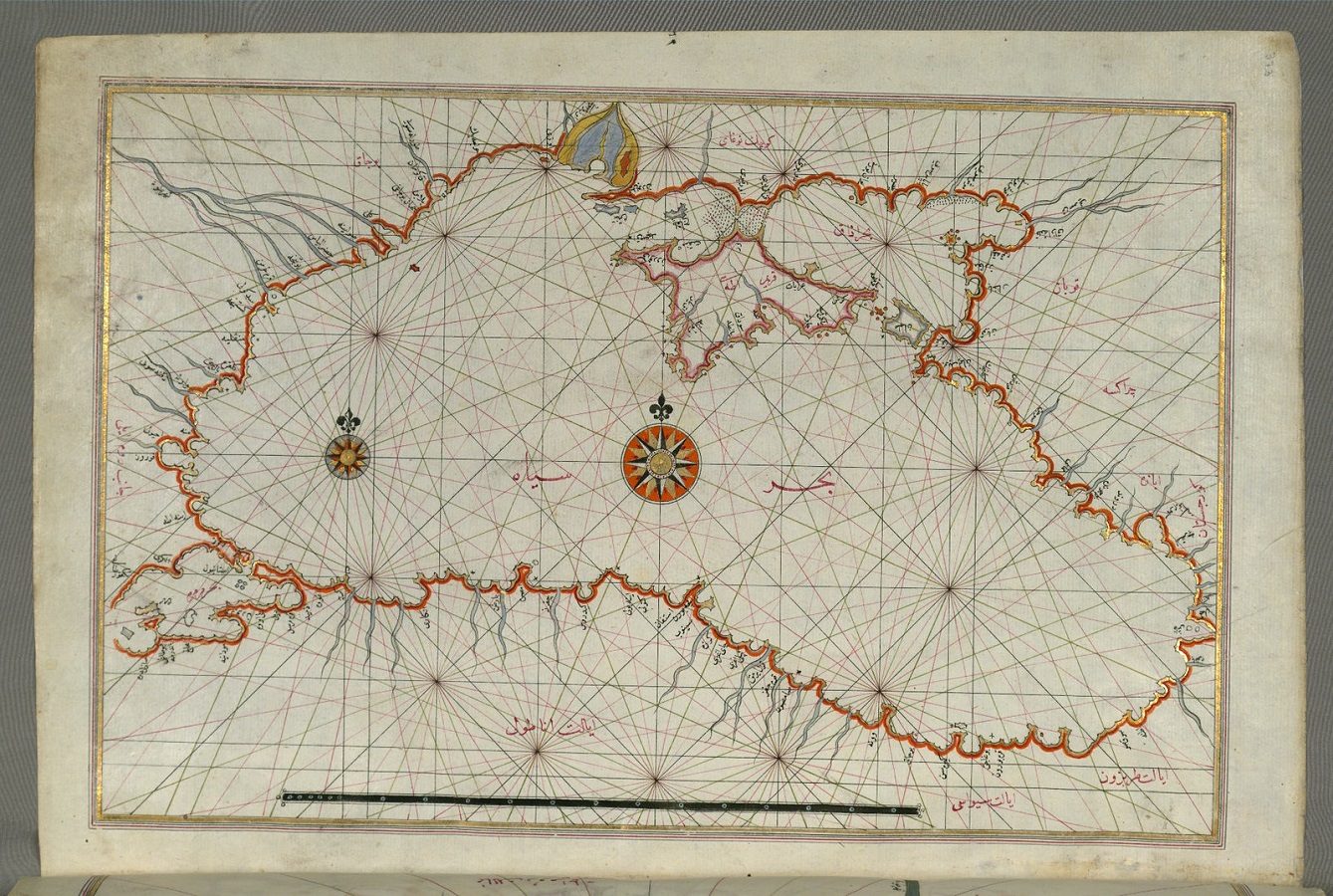
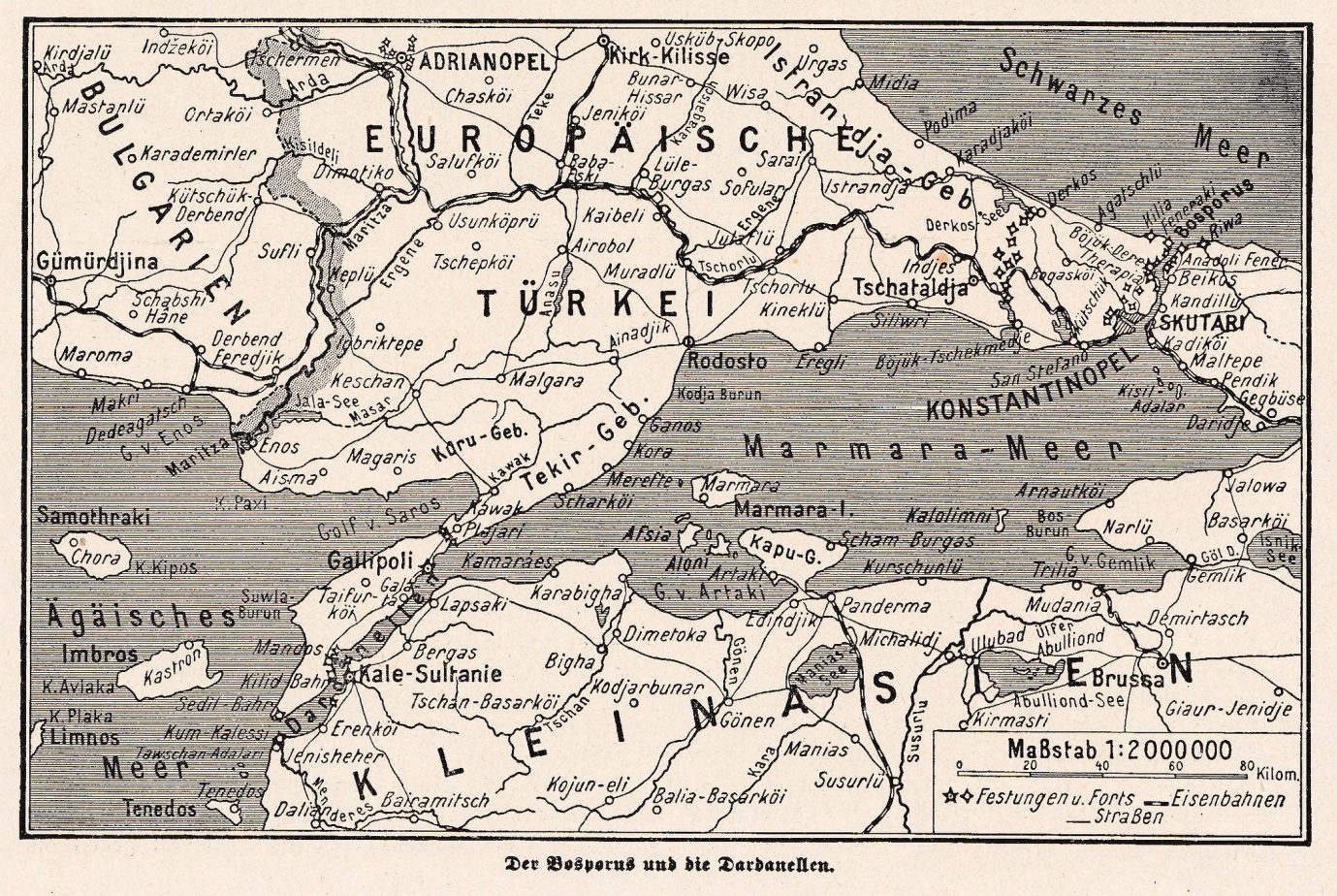
The Black Sea is attached to the Mediterranean Sea by two narrow channels. Going from the Aegean Sea, which is part of the north-eastern corner of the Mediterranean, there is the Dardanelles Strait, the first of these two channels. This opens up into the Sea of Marmara, which is a relatively small body of water between the two channels.
From there, one reaches the second of the two channels, the Bosporus Strait. This leads from the Sea of Marmara directly into the south-western corner of the Black Sea.
The Black Sea is an enormous body of water. Although it is much smaller than the Mediterranean Sea, it has virtually no islands at all in it, meaning that it is just one massive, open body of water. It is far more dangerous than the Mediterranean. Storms have a tendency to start suddenly, and even the coasts are relatively unsafe.
The Greek colonisation of the shores of the Black Sea in the eighth and seventh centuries BCE was a major achievement for their culture. It was like the conquest of a formidable beast that had seemed impossible to tame. The Greeks knew it as the ‘Inhospitable Sea’, and then later ironically as the ‘Hospitable Sea’.
Arguments That the Real Atlantis Was in the Black Sea
Why do some researchers argue that the real Atlantis of Plato’s account was in the Black Sea? It seems that the primary thing which helped this theory to become popular is the theory, first proposed in 1997, that the Black Sea experienced a devastating flooding event many thousands of years ago. This shares some obvious similarities with the tale of Atlantis disappearing into the sea.
However, this Atlantis theory is not solely dependent on the proposed flooding event. Many other arguments have been presented in support of it. In this section, we will start with a consideration of the geographical arguments and how the suggested location of Atlantis supposedly fits the placement described by Plato.
Geographical Arguments
Plato’s account of Atlantis provides a relatively detailed description of its location. However, this geographical description has been interpreted by various researchers in a variety of different ways.
The geographical arguments involved in this Black Sea theory attempt to refute the traditional understanding of Atlantis being out in the Atlantic Ocean. One line of reasoning is that various geographical expressions were originally applied to places far away from where they later came to be associated (such as the ‘Pillars of Heracles’).
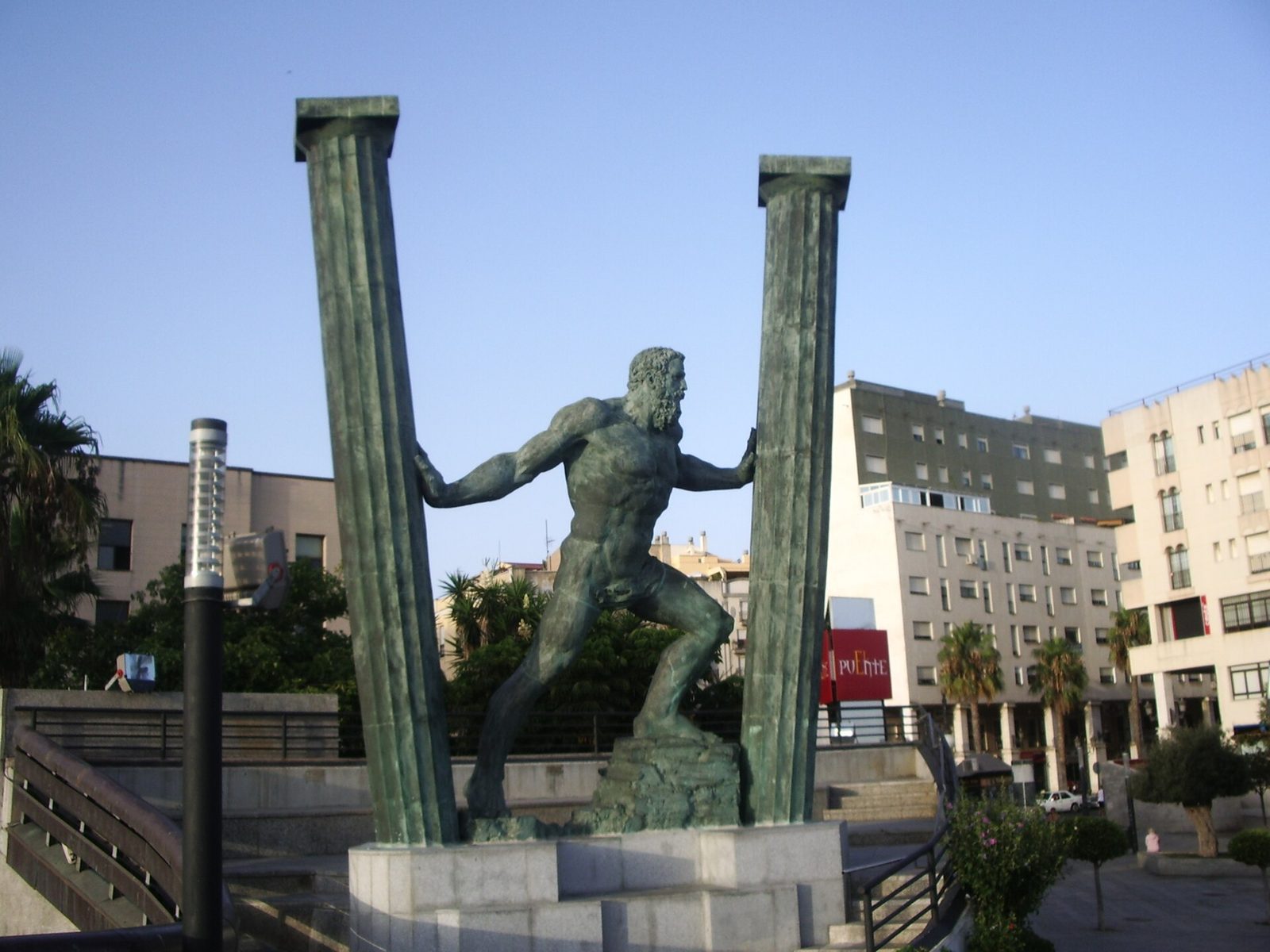
Pillars of Heracles
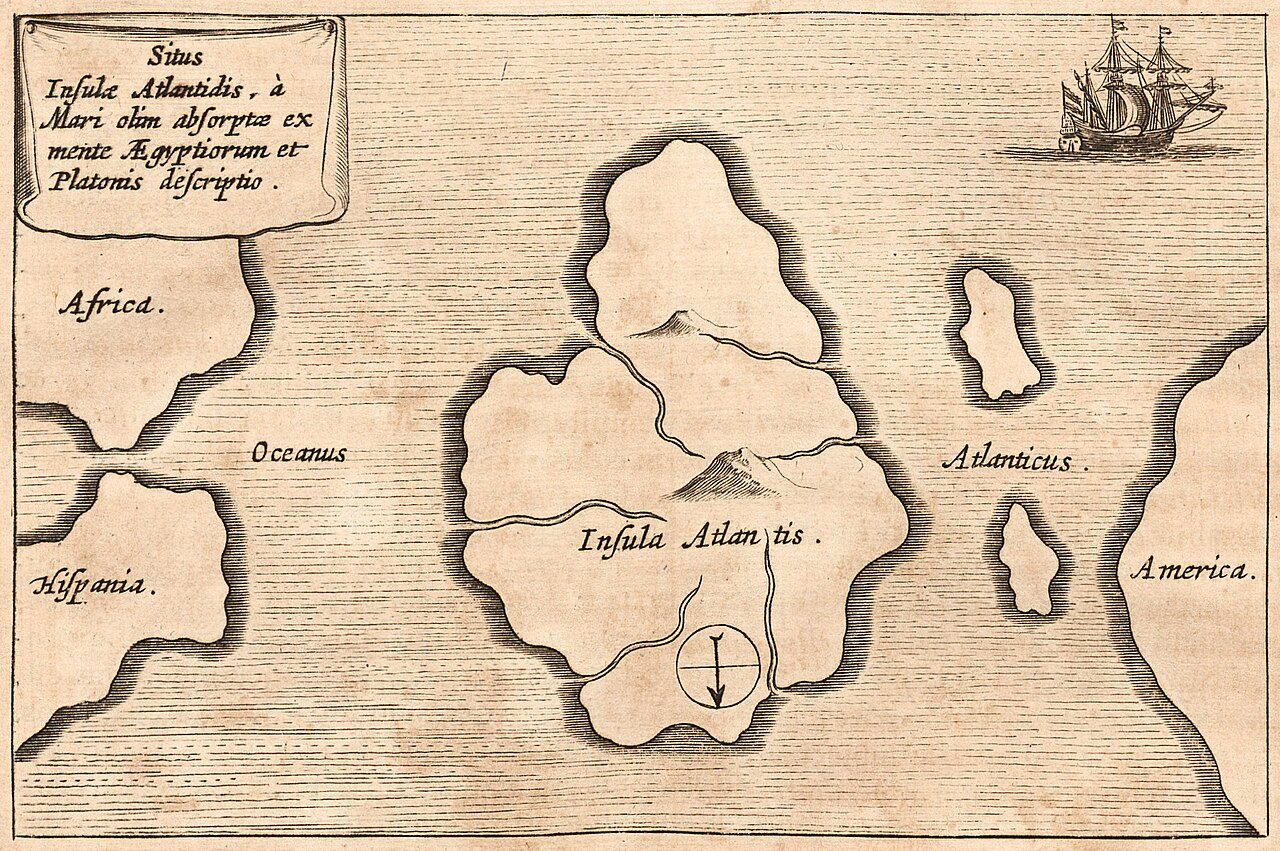
In Plato’s account of Atlantis, we find two key geographical markers. The first is that Atlantis was in the Atlantic Sea, and the second is that it was ‘in front of’ the Pillars of Heracles. This is usually understood to mean that it was beyond those pillars.
Traditionally, the Pillars of Heracles have been placed at the Strait of Gibraltar. This is the most common placement in antiquity, and it continues to be viewed as the standardised placement today. Because of this, it has widely been held that Atlantis must have been outside of the Mediterranean, in the Atlantic Ocean.
Evidence from Isocrates
However, there is evidence that the ‘Pillars of Heracles’ did not always refer to the Strait of Gibraltar. Perhaps the most direct piece of evidence for this comes from Isocrates. He wrote in the early fourth century BCE. The relevant passage reads:
“For he [Heracles] made an expedition against Troy… and with a small expedition, easily took the city by storm. After this, he put to death to a man all the princes of the tribes who dwelt along the shores of both continents… When he had done these things, he set up the Pillars of Heracles, as they are called, to be a trophy of victory over the barbarians, a monument to his own valour and the perils he had surmounted, and to mark the bounds of the territory of the Hellenes.”
According to this, Heracles set up the Pillars of Heracles in the vicinity of Troy to mark the (evidently eastern) limit of Greek territory. This is near the entrance to the Black Sea. By way of comparison, since the Pillars of Heracles in the west applied to the Strait of Gibraltar, it could be logically argued that the Pillars of Heracles in the east applied to some comparable strait. This would either be the Dardanelles Strait or the Bosporus Strait.
The Harbour-Like Sea
In Plato’s references to the Pillars of Heracles, he contrasts two different bodies of water. He refers to one sea as being inside the Pillars of Heracles. He states:
“for this sea which is within the Straits of Heracles is only a harbour, having a narrow entrance, but that other is a real sea, and the surrounding land may be most truly called a boundless continent.”
Notice the confirmation that the Pillars of Heracles were a strait, as deduced earlier. But more significantly, we see here that the sea ‘within the Straits of Heracles’ is described as a mere harbour. It is contrasted with some other sea, which is a ‘real sea’.
According to this theory, this ‘harbour-like sea’ is the Sea of Marmara. This is within the Pillars of Heracles if we place them at the Bosporus. The ‘real sea’, in contrast, is outside, or beyond, that strait. It is identified as the Black Sea.
The entrance to the Sea of Marmara, whether defined as the Dardanelles or the Bosporus, is indeed narrow, just like Plato says.
The Atlantic Sea
What about the Atlantic Sea? If Atlantis was just beyond, or in front of, the Pillars of Heracles, and Atlantis was in the Atlantic Sea, then logically the Atlantic Sea must be the body of water immediately beyond those pillars.
Since proponents of this Black Sea theory place the Pillars of Heracles at the Bosporus, this would clearly identify the Atlantic Sea as the Black Sea. This dovetails with the aforementioned identification of the Black Sea with the ‘real sea’ of Plato’s account. Indeed, almost all interpretations of Plato’s account equate the Atlantic Sea with the ‘real sea’ that is contrasted with the harbour-like sea.
Plato’s account of Atlantis in the Timaeus begins with:
“This power came forth out of the Atlantic Sea, for in those days the Atlantic was navigable.”
This, of course, suggests that it was not navigable when this account was told. The Greeks in the historical era knew the Black Sea as the Inhospitable Sea, showing that it was viewed as being very difficult to navigate.
Pontos
One piece of evidence for this identification comes from the following line from Plato’s Timaeus:
“[Atlantis] was the way to other islands, and from these you might pass to the whole of the opposite continent which surrounded the true ocean.”
The word translated here as ‘ocean’ is actually the Greek word ‘pontos’. This is more correctly translated as ‘sea’. However, this was not the only Greek word for sea, and this word in particular had a special association with one specific body of water.
The word ‘pontos’ came to be applied specifically to the Black Sea. In fact, it eventually became the proper name for this body of water. Sometimes, the Greeks called it the Pontos Axeinos, meaning the Inhospitable Sea. Later, this was changed ironically to the Pontos Euxeinos, meaning the Hospitable Sea. However, it was very often called simply ‘Pontos’. To the Greeks, this was the definitive sea, the Pontos. On this basis, it is logical to associate the ‘pontos’ mentioned by Plato with the Black Sea.
Arguments Against the Traditional Identification
Not content to just present the arguments in favour of these geographical identifications, the proponents of this theory argue that the traditional placement of Atlantis in the Atlantic Ocean is impossible.
According to the traditional view, the ‘harbour-like sea’ is the Mediterranean Sea, while the ‘real sea’ is the Atlantic Ocean. However, this theory argues that people in the Iron Age did not know that the Mediterranean Sea was completely surrounded by land, like a massive harbour. The people of Iron Age Europe, supposedly, believed that the landmass of Europe was entirely surrounded by water. Therefore, describing the Mediterranean as a harbour would not make any sense.
Furthermore, the traditional view would have the ancients believe that there was a giant landmass surrounding the Atlantic Ocean. Such a landmass does not exist, nor did the ancient Greeks believe that it did. Therefore, it could be logically argued that Plato could not have been describing the Atlantic Ocean.
Relocating the Mediterranean Nations
Another key component to the geographical aspect of this theory is that it relocates several of the nations which lived on the Mediterranean Sea in historical times.
The reason that this is necessary is due to Plato’s description of Atlantis’ domain. According to his account:
“The men of Atlantis had subjected the parts of Libya within the columns of Heracles as far as Egypt, and of Europe as far as Tyrrhenia. This vast power, gathered into one, endeavoured to subdue at a blow our country and yours.”
Given that Atlantis supposedly existed in the distant past, before the vast empires of antiquity, how could we conclude that there was a war between an Atlantis in the Black Sea and the Greeks, Egyptians, and other nations on the northern and southern shores of the Mediterranean?
The explanation of this is the idea that the ancestors of the Greeks and the Egyptians (as well as other neighbouring nations) originally lived in Anatolia, on the southern shore of the Black Sea. They lived in that region when the events described in Plato’s account occurred. Then, in a subsequent period, they migrated to their present locations.
Atlas the Titan
One supposed piece of evidence for this is related to Atlas the Titan. The Greeks famously placed him far to the west of their country, in Northwest Africa. According to this theory, Atlas was originally placed to the west of their earlier territory by the Black Sea.
In Northwest Africa, Atlas had mountains named after him. Therefore, it could be argued that there should be mountains at his original location too. As it happens, on the western shore of the Black Sea, we find the River Olt, which flows from the Carpathian Mountains. In antiquity, the River Olt was called the ‘Alutus’ or ‘Aluta’.
According to proponents of this theory, this name is a corruption of ‘Atlas’. The Carpathian Mountains, therefore, are the original Atlas Mountains. This supposedly proves that the Greek world was originally centred on the Black Sea, the Carpathian Mountains denoting the western limits of the world just as the Atlas Mountains in Northwest Africa did in historical times.
Pontocentric Maps
Another argument used in favour of the idea that the Greeks originally lived on the shores of the Black Sea is the fact that, allegedly, their ancient maps are centred on the Black Sea. This is discerned from descriptions of the world from writers such as Herodotus. Although he did not personally create a physical map of the world, more modern researchers have created such maps based on Herodotus’ descriptions.
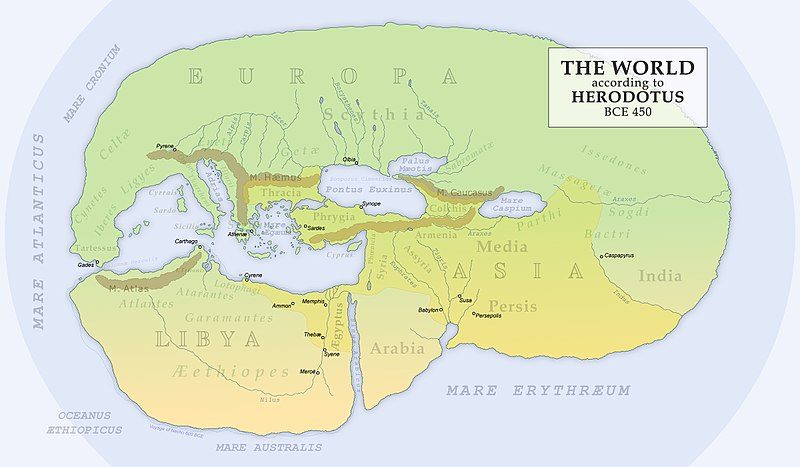
As can be seen by any cursory glance at one of these maps based on Herodotus’ writings, they do indeed appear to be centred on the Black Sea. Supposedly, this demonstrates that the Greeks still had a trace of the memory of their earlier homeland centred on the Black Sea.
Heracles in Iberia
An additional argument is related to the legend of Heracles travelling to the far west, to the region of Iberia. This is always understood as being a reference to the Iberian Peninsula, taking in what is now Spain and Portugal.
However, proponents of this theory argue that this story originally came from records of Heracles travelling to the region known as Iberia on the eastern coast of the Black Sea. While not in the west, it is a kind of limit, and it is not absurd to argue that the story may have simply be moved from one direction to another.
The Island of Atlantis
What about the fact that Atlantis was supposed to have been an island? How does placing Atlantis in the Black Sea accommodate Plato’s description in this regard?
As we saw earlier, there are almost no islands at all in the Black Sea. One exception is Snake Island, which is a Ukrainian island off the delta of the Danube River. This, supposedly, was the capital, the island of Atlantis. It would have been much, much bigger and actually connected to the mainland in the era before the flooding of the Black Sea, in which the water level was between 30 and 80 meters lower than it is today.
How could Atlantis be described as an island if it was actually connected to the mainland before the flood occurred? This theory argues that the Egyptian hieroglyph for ‘island’ is not distinct from ‘foreign country’, meaning that the description of Atlantis as an ‘island’ is a mistranslation.
The Chronology of Atlantis
Aside from establishing where Atlantis was, it is also necessary to clarify when Atlantis was supposed to have existed, since this has an impact on the civilisation (which we will see in the following section). According to this theory, Atlantis was a civilisation which existed on the shores of the Black Sea until about 5500 BCE, when it was wiped out.
Evidence from Writing
The proponents of this theory form their conclusion on when Atlantis existed based on some reasoning regarding the use of writing. They reason that if the Egyptians had already developed their writing system by the time Atlantis was destroyed, they could have accurately said exactly when and where it happened. However, the Egyptian priest relating the story to Solon places it in the distant past.
Therefore, the argument goes that the destruction of Atlantis must have occurred before the Egyptians developed their writing. Yet, it cannot have happened too long before this, otherwise all memory of the events would have been lost.
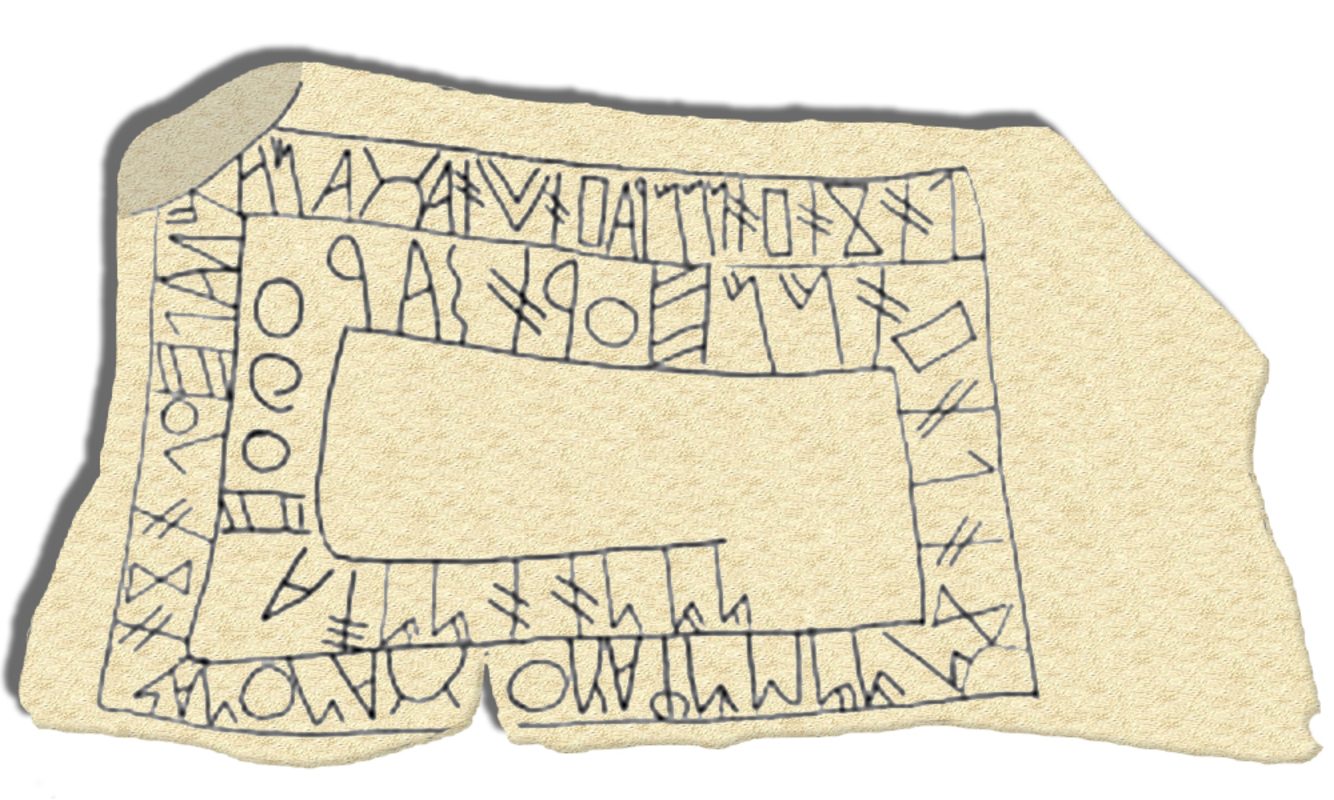
Furthermore, the proponents of this theory argue that Atlantis itself had its own writing system as per Plato’s account. This, according to the theory, matches the Vinča script, which appears on various artefacts from south-eastern Europe, very close to the proposed location for the large country of Atlantis on the western coast of the Black Sea.
This script has been dated by archaeologists to as early as 5300 BCE, not too far removed from the theorised flooding of the Black Sea in c. 5500 BCE. This evidence thus appears to converge on that very era as the era of the destruction of Atlantis.
The Civilisation of Atlantis
Now that we have seen how this theory argues for a geographical match with Plato’s account, and how it argues that Atlantis existed in c. 5500 BCE, what about the actual civilisation of Atlantis?
A Centre of International Trade
Atlantis was supposed to have been a rich and powerful civilisation, a centre of international trade. In harmony with this, it is pointed out that locating Atlantis on the western shore of the Black Sea makes a lot of sense.
As we noted earlier, Snake Island is off the delta of the Danube River. This river stretches all across the entirety of south-eastern Europe. In fact, it goes through much of Central Europe too, almost as far as France. Also nearby is the Dniester River.
Due to the close proximity with these rivers, any major settlement in that area would logically have had excellent access to the trade routes that went along them. This ties in well with Plato’s description in the Critias, as can be seen here:
“many things were brought to them from foreign countries… the largest of the harbours were full of vessels and merchants coming from all parts.”
Orichalcum
Plato refers to a special type of material which was used in Atlantis. He describes it this way, saying:
“That which is now only a name and was then something more than a name, orichalcum, was dug out of the earth in many parts of the island, being more precious in those days than anything except gold.”
In other parts of the Critias, Plato describes how the Atlanteans decorated certain parts of the city with orichalcum, along with silver and gold. As we can see from this fact and from the above quotation, orichalcum was very precious. Yet at the same time, it was something which the Egyptians and the Greeks were no longer familiar with.
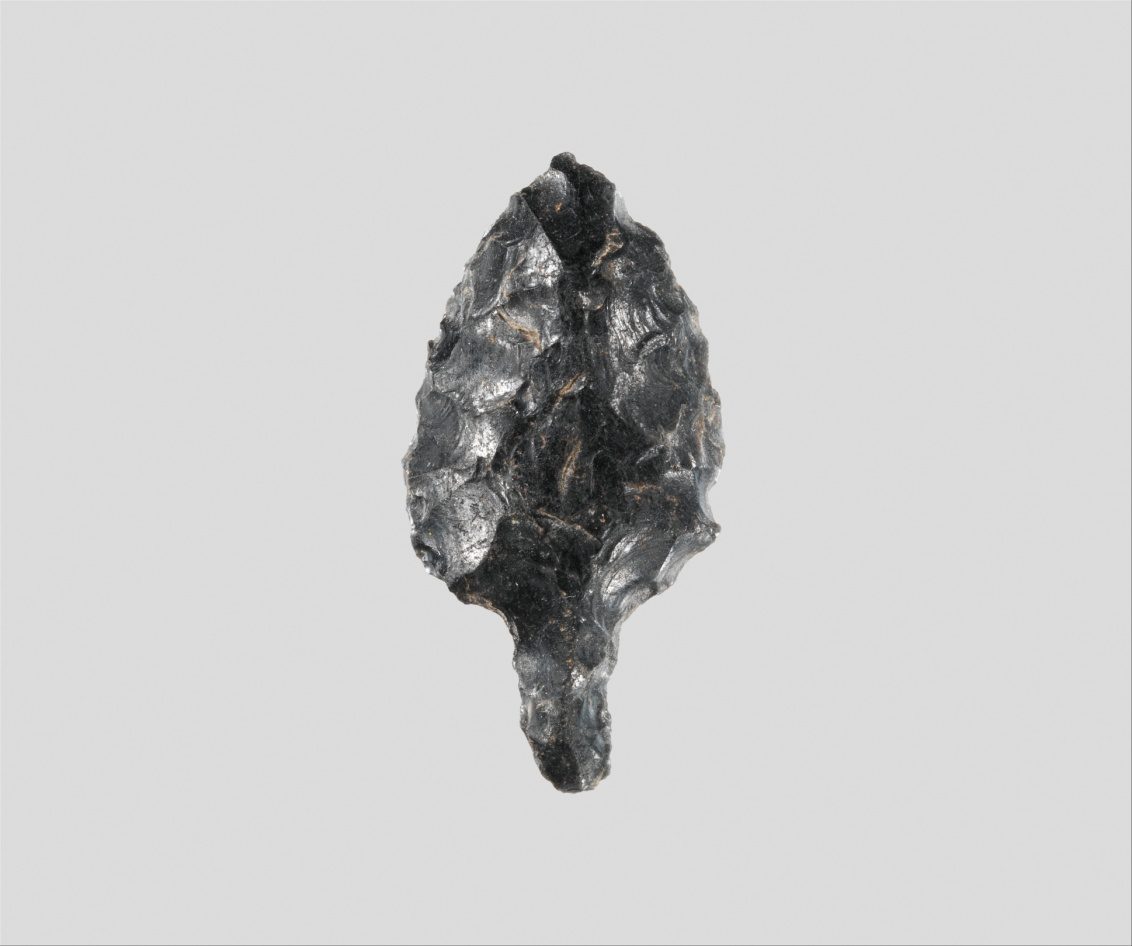
There is evidence that obsidian was very valuable in the Neolithic era of Europe, at the time and place in which this theory places Atlantis. However, in the historical era, obsidian was hardly ever used as a valuable commodity, if at all. It was definitely something more firmly associated with Neolithic Europe. Thus, this theory identifies obsidian as the orichalcum of Plato’s account.
The Kings of Atlantis
Additional support for this theory comes from the kings of Atlantis that Plato mentions. He records ten of them, including each of their names. The most famous was Atlas, the eldest of the ten sons of Poseidon. Three of them receive particular attention by proponents of this theory.
Gadeirus
Plato’s account includes the following information:
“To his [Atlas’] twin brother, who was born after him, and obtained as his lot the extremity of the island towards the Pillars of Heracles, facing the country which is now called the region of Gadeira in that part of the world, he gave the name which in the Hellenic language is Eumelus, in the language of the country which is named after him, Gadeirus.”
So according to this passage, one of the kings of Atlas was named Gadeirus. His territory was closest to the Pillars of Heracles and it was named after him.
South of Snake Island, in the direction of the Pillars of Heracles at the Bosporus, there was the territory of the ancient Getae. This theory suggests that ‘Getae’ comes from ‘Gadeirus’.
Mestor
Another one of the ten sons of Poseidon was Mestor. No other information is revealed about him, other than that he was one of the ten original kings of Atlantis.
According to this theory, the Dniester River was named after him. Apart from the first letter, the name of this river is admittedly very similar to the name of Plato’s king, Mestor.
Diaprepes
A similar example is Diaprepes. Like Mestor, nothing is known about him other than that he was one of the ten original kings. His name bears a similarity to the name of the Dnieper River, leading to the suggestion that the river was named after this king.
Destruction of Atlantis
What about the legendary submersion of Atlantis? As we have already seen, this was supposedly a result of the catastrophic flooding that occurred in the Black Sea in c. 5500 BCE. This occurred due to the Bosporus breaking open, allowing water from the Mediterranean Sea to flood into the Black Sea.
This would have completely inundated an enormous part of the north and north-eastern coasts of that sea, where this theory places Atlantis. Thus, a considerable portion of the former country of Atlantis was submerged.
Objections to This Theory
This theory is filled with serious problems, more so than many other theories about Atlantis.
The Problem with the Pillars of Heracles
The argument that the expression ‘the Pillars of Heracles’ was sometimes applied to the entrance to the Black Sea is correct. As well as the evidence from Isocrates, there is also evidence from Servius’ Commentary on Virgil’s Aeneid, where Servius specifically notes that there are Pillars of Heracles both at Spain and the Black Sea.
However, Plato’s account clearly says that the war between Atlantis and Greece was a war between those inside the Pillars of Heracles and those outside. This makes nonsense of the argument that the Greeks originally lived in Anatolian, on the southern shore of the Black Sea. If that were the case, then both the Greeks and the Atlanteans would have been on the same side of the Pillars of Heracles.
The Problem with the Boundless Continent
The idea that the Black Sea was the ‘true sea’ mentioned in Plato’s account is not without its merits. However, notice again how Plato refers to this sea and the continent that surrounded it:
“[Atlantis] was the way to other islands, and from these you might pass to the whole of the opposite continent which surrounded the true sea.”
With the true sea being the Black Sea, the ‘opposite continent which surrounded the true sea’ must be Eurasia. Yet this theory places Atlantis itself on that very same stretch of coastland which surrounds the Black Sea. This contradicts Plato’s account, which clearly distinguishes between Atlantis and the surrounding continent.
The Navigability of the Atlantic Sea
Identifying the ‘true sea’ with the Atlantic Sea of Plato’s account, this theory argues that the Black Sea being known as ‘Inhospitable’ by the Greeks is related to the fact that Plato referred to the Atlantic Sea as not being navigable anymore.
One major problem with this is the simple fact that being inhospitable is not the same as not being navigable at all. Furthermore, Plato’s account goes on to explain in what way the Atlantic Sea was no longer navigable. As the Egyptian priest explained to Solon:
“…the island of Atlantis in like manner disappeared in the depths of the sea. For which reason the sea in those parts is impassable and impenetrable, because there is a shoal of mud in the way; and this was caused by the subsidence of the island.”
As we can see here, the account does not actually say that the Atlantic Sea as a whole was not navigable. Rather, it says that it is not navigable simply because there is a shoal of mud in the way. This has nothing to do with why the Black Sea was known as inhospitable.
Relocating the Mediterranean
The idea that the nations of the Mediterranean actually lived on the shores of the Black Sea does not just exist to try to explain how Atlantis could have engaged in war against Greece and Egypt. It also exists to explain away the quotation provided earlier, in which Atlantis was said to have subjugated Europe as far as Tyrrhenia and Libya as far as Egypt.
This is an extremely implausible suggestion. Not only do we have to assume that the nations that lived near the Black Sea preserved their national identities over thousands of years as they migrated from one place to another. We also have to assume that they managed to maintain their approximate geographical relationships with each other.
For example, we need to assume that the Egyptians had previously been associated with a larger area that was likewise formerly named after the Libyans, exactly identical to the situation in Africa in historical times.
Furthermore, we need to assume that the Tyrrhenians (that is, the Etruscans) had previously resided in a region formerly known as Europe, exactly as they did in historical times. Such assumptions strain credibility to their breaking limits. This is especially difficult in the case of the Etruscans, since they actually migrated to Italy from the Black Sea in historical times.
No Confusion Between Island and Foreign Country
What about the argument that Atlantis could have been a large country on the shore of the Black Sea, on the basis that the Egyptians actually had no hieroglyph to specify an island? This is simply false. The Egyptians did have one specific sign for ‘island’ in contrast to ‘foreign country’.
The sign for ‘island’ looked like a flat platform, indicating a sandbank. The sign for ‘foreign country’ was a platform with three peaks to denote hills.
Illogical Argument Concerning Writing
According to this theory, Atlantis must have existed before the Egyptians developed their own script, since the Egyptians would have known exactly when and where Atlantis existed if they had already had their own writing system when it was destroyed.
Of course, this argument relies on the preconceived conclusion that the information provided by the Egyptian priest to Solon was inaccurate, since he does tell Solon specifically how far in the past Atlantis existed: 9000 years. This theory first assumes that this is inaccurate and then uses this preconceived conclusion to deduce when it must really have existed.
It is evident that there is no basis at all for this logic. It is also an argument that relies on cherry picking, since when we consider all the details presented by Plato, we see that he sets the account in the era in which the Greeks themselves could write. That would place the narrative no earlier than about 1500 BCE.
In addition, the idea that the Vinča script is an actual writing system is highly controversial.
Why Orichalcum Cannot Have Been Obsidian
While the idea that obsidian was a highly-valued commodity in the Neolithic period of south-eastern Europe is true, this cannot be connected to the orichalcum of Atlantis. In one passage, Plato refers to a wall around the citadel of Atlantis which “flashed with the red light of orichalcum”.
This shows that orichalcum was evidently some kind of reddish metal. Obsidian, on the other hand, is a type of black, volcanic glass. It is not red, and it certainly does not flash with red light.
The Weak Connections with the Kings of Atlantis
The main problem with the argument regarding the kings of Atlantis is the simple fact that the connections are very weak. Of the ten kings, only three of them can be connected to the names of surrounding features. The features themselves are not consistent either. In two cases, the names of rivers are used, whereas in another case, it is the name of a people.
It is not surprising that a few vague similarities can be found in the large area that covers the north-western shore of the Black Sea. This can be put down to coincidence.
However, even the connections that do exist can, in at least two cases, be shown to be invalid. The Dnieper River, for example, was actually known as the Borysthenes in ancient Greek and Roman records. Clearly, this has nothing to do with the king named Diaprepes.
The Dniester River, similarly, had a different name in antiquity. It was called the Tyras. Again, this clearly has nothing to do with the king named Mestor.
The Debatable Flooding of the Black Sea
Even the flooding of the Black Sea, which would explain the destruction of Atlantis according to this theory, is not universally accepted by scientists. The evidence is controversial and complicated, and it is not worth examining it in depth here, since we have already seen adequate reason to conclude that this theory does not stand up to scrutiny.
Nonetheless, the fact that many scientists argue that the ‘flooding’ of the Black Sea was a very gradual process that took place over centuries is worth noting.
Conclusion
In conclusion, the theory that Atlantis was really in the Black Sea is based on the idea that the Pillars of Heracles mentioned by Plato were actually at the Bosporus, not the Strait of Gibraltar. While this is a reasonable start, it requires various enormous leaps of faith to create a plausible scenario for how such a civilisation could have fought a war against the Greeks and the Egyptians, arguing strenuously that those nations originally lived in Anatolia. As we have seen, the arguments used strain credibility to its breaking point. Many of the connections in this theory are extremely weak, such as those involving the names of the kings of Atlantis. Furthermore, this theory fails to even attempt to explain the various specific aspects of Plato’s description, such as the worship and temple of Poseidon, the bull fighting, the harbours, and numerous other aspects.
Sources
https://web.archive.org/web/20190830053312/https://www.black-sea-atlantis.com/black-sea-atlantis/
https://atlantipedia.ie/samples/archive-5099-n/
https://atlantipedia.ie/samples/927/
https://atlantipedia.ie/samples/schoppe-christian-siegfried/
https://atlantipedia.ie/samples/pillars-of-herakles-revised/
https://www.sciencedirect.com/science/article/abs/pii/S0277379112000650